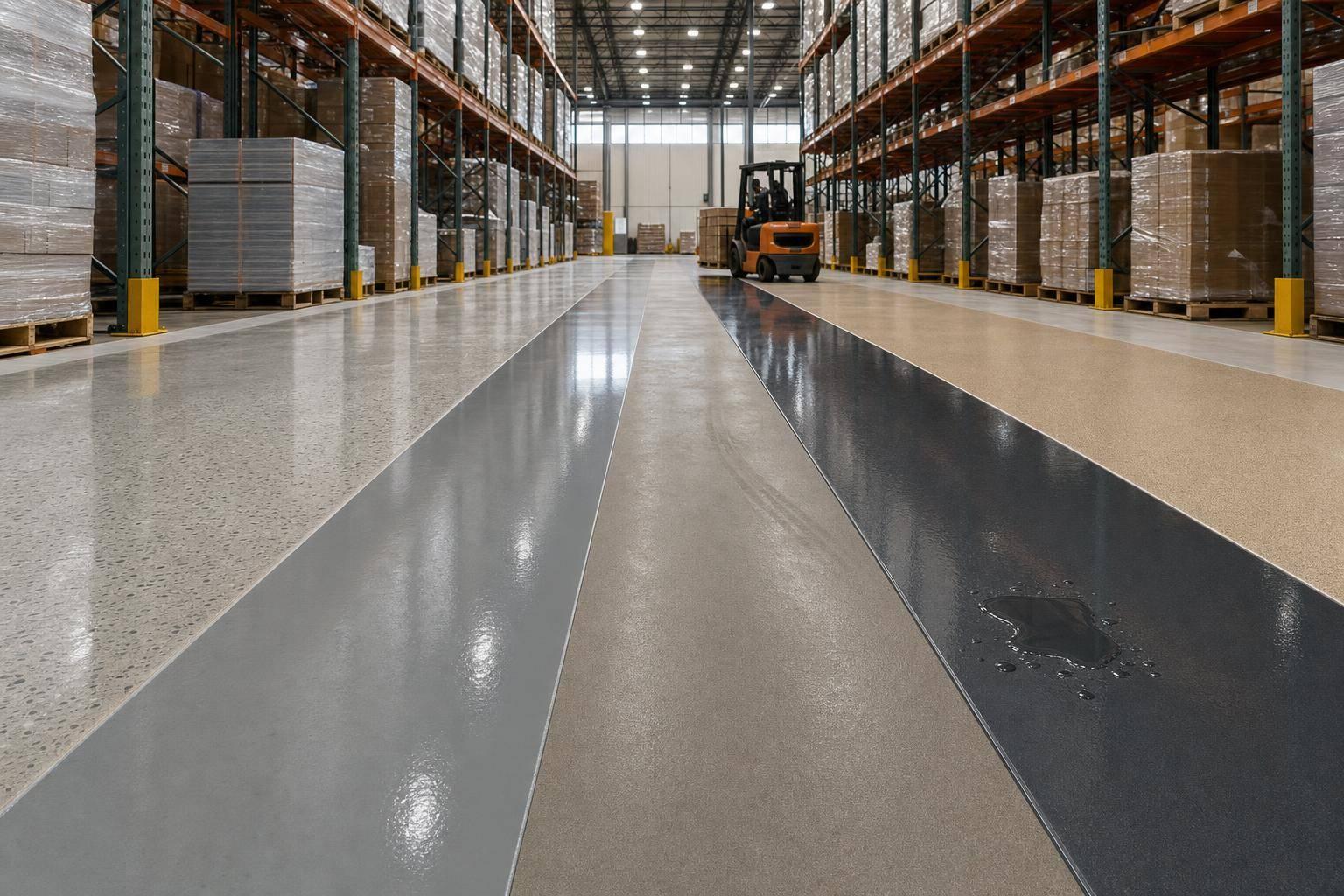
If you run a busy warehouse, the best floor depends on three things: traffic, spills, and downtime. From what I see in this article, polished concrete fits dry storage, epoxy fits general indoor use, polyurethane fits wear-heavy areas with some sunlight, polyurea/polyaspartic fits tight shutdown windows, and urethane cement fits wet, hot, or chemical-heavy zones.
Here’s the short version:
- Polished concrete: Long life, low upkeep, weak against acids and heavy chemical exposure
- Epoxy-coated concrete: Good spill resistance, but forklift lanes can wear faster
- Polyurethane-coated concrete: Better wheel-turn wear and UV resistance than epoxy
- Polyurea/polyaspartic: Very short return-to-service time, but install quality matters a lot
- Urethane cement: Best fit for washdowns, steam, heat, and harsh chemicals, but costs more upfront
A few numbers stand out:
- Polished concrete: often 20–30+ years
- Epoxy: about 5–20 years, based on traffic and prep
- Polyurea: 15–25+ years
- Polyaspartic: 12–20+ years
- Urethane cement: 15–20+ years
- Poor surface prep causes about 60–80% of early coating failures
- Urethane cement often costs about $7–$15 per sq. ft.
- Fast-cure polyaspartic can cut downtime from roughly 120–168 hours to about 24 hours
If I had to boil it down even more: use polished concrete for dry zones, resin systems for spill-prone zones, and urethane cement only where heat, moisture, or chemicals are tough on floors.
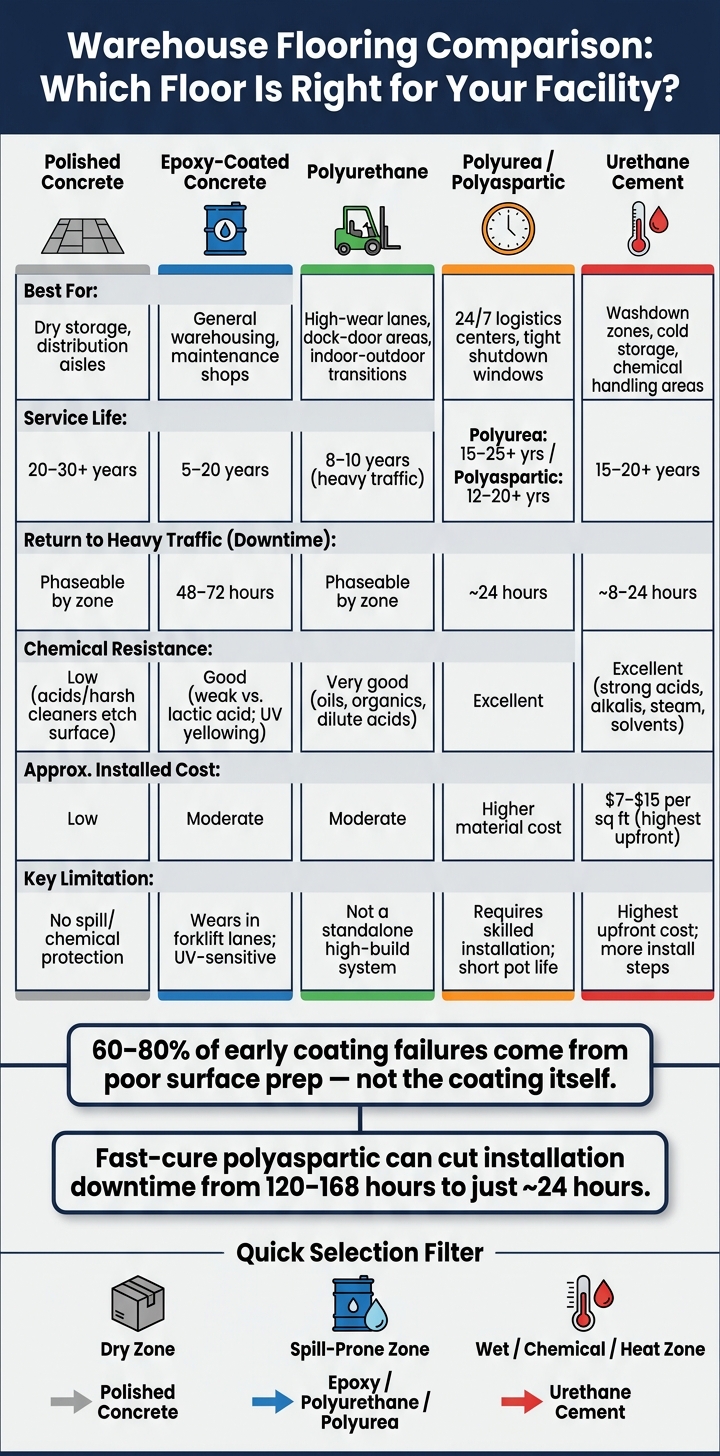
Warehouse Flooring Comparison: Which Floor Is Right for Your Facility?
Which Concrete Coating Should You Use? | FULL COMPARISON
sbb-itb-a0e5ae3
Quick Comparison
| Flooring type | Best for | Main downside | Downtime |
|---|---|---|---|
| Polished concrete | Dry storage, distribution aisles | Limited spill and chemical protection | Can be phased by area |
| Epoxy-coated concrete | General warehouse use, maintenance areas | Can wear in forklift lanes; UV yellowing compared to polyaspartic | Often 48–72 hours before heavy traffic |
| Polyurethane-coated concrete | High-wear lanes, dock-door areas, indoor-outdoor transitions | Often used as part of a system, not by itself | Can be phased by area |
| Polyurea/polyaspartic | 24/7 sites, tight shutdown schedules | Higher install skill needed | Very short |
| Urethane cement | Washdown zones, cold storage, chemical areas | Higher upfront cost | Heavy traffic in about 8–24 hours |
Use this as a simple filter: dry vs. wet, light spills vs. acids, and days of shutdown vs. hours. That will rule out the wrong floor fast.
1. Polished Concrete
Polished concrete isn’t a coating. It’s the slab itself, ground and refined with diamond tooling, then treated with a chemical densifier that hardens the top layer. That matters for one simple reason: the surface you use every day is the concrete. There isn’t a film sitting on top that can peel, crack, or delaminate when traffic gets heavy.
Forklift durability
The densifying step helps the floor stand up better to abrasion, so it takes longer to wear down. Under heavy hard-wheel forklift traffic, the surface can even become more burnished over time. It tends to do well with rubber-tired forklifts and pallet jacks, but steel wheels can gouge it.
That said, polishing doesn’t fix a weak slab. The base concrete still needs to be right for the job. Compressive strength, joint layout, and slab thickness all matter before polishing even begins.
Chemical and stain resistance
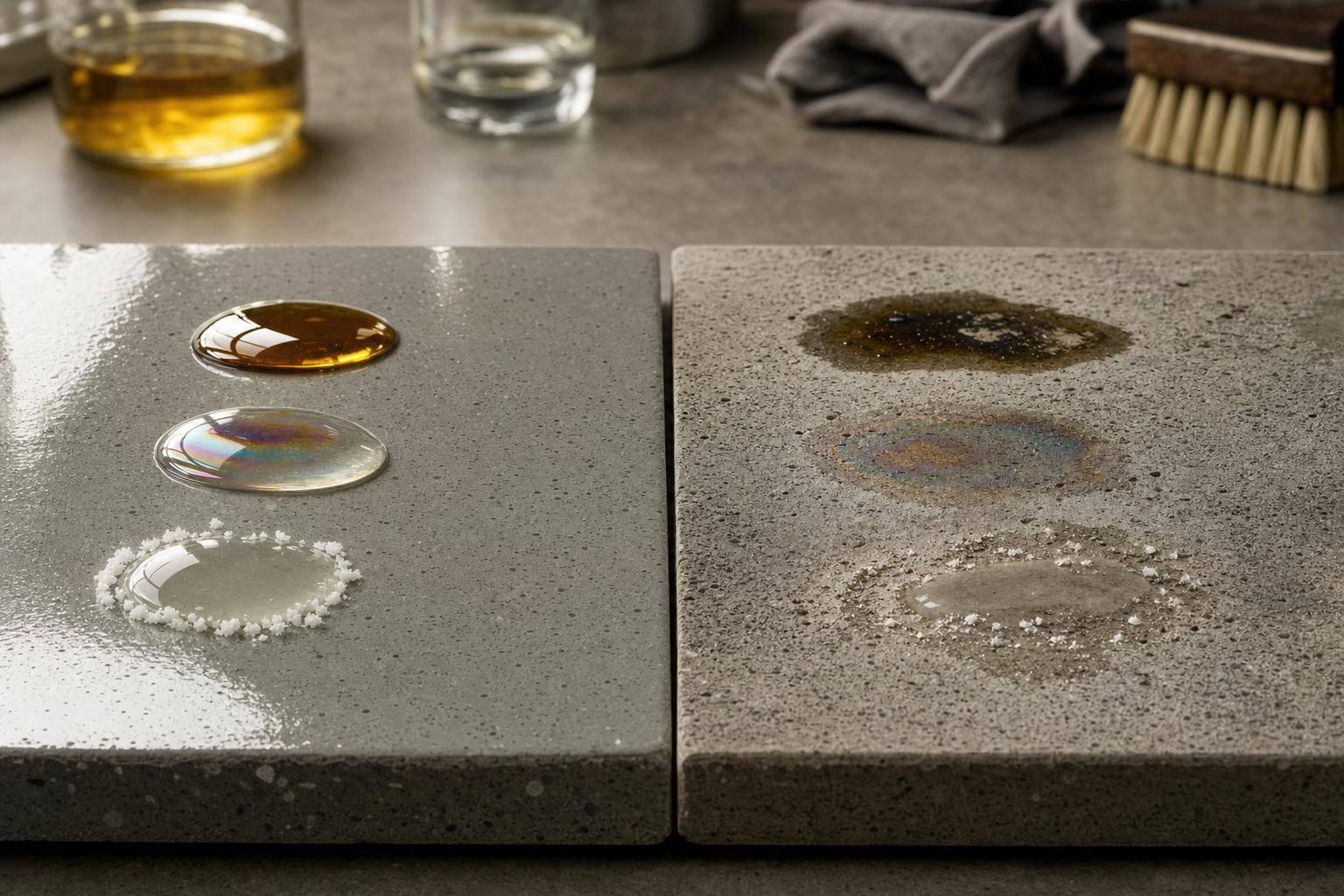
With a densifier and a penetrating stain protector, polished concrete gives you some chemical resistance in dry storage and distribution spaces. Light oil drips and hydraulic fluid are usually manageable.
But this is where the limits show up. Polished concrete is not a sealed resin layer. Strong acids, harsh cleaners, and frequent washdowns can etch or stain the surface. So if you’re dealing with battery charging areas or chemical handling zones, a resin floor usually makes more sense.
Cleanup and maintenance
Day-to-day care is pretty straightforward:
- Dust mop with microfiber
- Auto-scrub with a pH-neutral cleaner
- Avoid bleach, ammonia, citrus-based products, and solvent cleaners
Those harsher products can dull or etch the surface. Periodic burnishing with high-speed diamond-impregnated pads, usually monthly to semi-annually based on traffic, helps bring back gloss without adding a new coat.
Annual maintenance costs often land around $0.17 to $0.25 per sq ft.
Service life and downtime
When it’s maintained the right way, polished concrete often lasts 20–30+ years and, in many cases, as long as the slab itself. Another plus: the work can be phased by zone, which helps cut downtime during installation.
The tradeoff is pretty clear. Polished concrete holds up well under traffic, but it doesn’t offer much protection from spills and chemicals. That’s where coated systems start to look like the better fit.
2. Epoxy-Coated Concrete
Epoxy-coated concrete puts a sealed wear layer over the slab. That layer helps protect the floor from forklift traffic, spills, and the day-to-day mess that builds up in a warehouse.
Forklift durability
Epoxy does well under rubber-tired forklifts and pallet jacks when you choose the right system. In high-traffic aisles and loading areas, a high-build epoxy or epoxy mortar system is usually the smarter pick. Those thicker systems stand up better to wheel wear and concentrated loads from rack feet.
That said, most failures don’t start at the top. They start in the slab itself. Moisture, contamination, or weak surface prep can lead to delamination, which is why shot blasting or grinding is a must.
Chemical and stain resistance
Epoxy resists oils, grease, fuels, hydraulic fluids, and many other contaminants. Spills stay on the surface instead of soaking in, which makes cleanup faster and helps limit staining.
There’s one catch worth knowing. Epoxy performs poorly against lactic acid, and UV exposure can cause yellowing over time. So it makes more sense in indoor spaces where sunlight is limited.
Cleanup and maintenance
Maintenance is pretty straightforward, but it does need consistency.
- Sweep or dust mop on a regular basis
- Damp mop or machine scrub weekly with a neutral-pH cleaner
- Check high-traffic areas monthly for chips or delamination
- Skip abrasive pads, which can dull the finish
Some systems also benefit from a maintenance topcoat every 3–5 years to help extend service life.
Service life and downtime
In a well-maintained warehouse with moderate traffic, epoxy can last 10–20 years. In tougher conditions, like constant forklift lanes, chemical exposure, or poor prep, that range can drop to 5–10 years.
Downtime is another big part of the decision. Standard epoxy usually needs 48–72 hours before heavy equipment can return, plus 5–7 days to reach full cure and maximum chemical resistance. In plain English: you usually need a shutdown window, or you install it in phases by zone so the facility can keep moving.
For warehouses that need more give under heat or impact, the next resin system tends to handle those conditions better.
3. Polyurethane-Coated Concrete
Epoxy is all about hardness. Polyurethane takes a different route: it adds flexibility. That makes it a strong fit for lanes that deal with constant turning, rolling loads, and day-in, day-out forklift traffic.
In warehouses, polyurethane helps the floor stand up to wear without giving up adhesion or chemical protection at the base layer.
Forklift durability
Polyurethane’s flexibility helps it deal with forklift turning stress and minor slab movement better than epoxy. Taber testing also shows lower abrasion loss than standard epoxy, as seen in polyurethane vs. epoxy abrasion resistance comparisons.
For high-traffic forklift lanes, that can mean a longer service life and fewer headaches in the spots that usually wear out first.
Chemical and stain resistance
Polyurethane handles many common warehouse spills well, including oils, greases, hydraulic fluids, dilute acids, and cleaning agents. It also resists UV-related yellowing, which matters near dock doors or skylights where sunlight lands on the floor.
For concentrated solvents or strong mineral acids, polyurethane works best as a topcoat over a novolac epoxy base.
Cleanup and maintenance
Routine cleaning is pretty simple. Dust, spills, and tire marks wipe up easily, and auto-scrubbers work well. It’s smart to check forklift paths and turning zones on a regular basis so wear doesn’t reach the base layer.
Service life and downtime
A well-installed polyurethane system in a heavy-use warehouse can last 8–10 years. That longer service life matters most in warehouses where lane wear and recoating downtime are a big deal.
Installation can also be phased by zone, so the facility doesn’t need to shut down all at once.
| Feature | Polyurethane Performance |
|---|---|
| Abrasion resistance | Up to 4× better than epoxy |
| Typical service life (heavy traffic) | 8–10 years |
| Install time | Can be phased by zone |
| UV resistance | High – helps prevent yellowing near dock doors |
| Flexibility | Excellent – handles slab movement and turning stress |
| Chemical resistance | Very good for oils, organics, and dilute acids |
When cure speed matters more than this amount of flexibility, the next resin system is the faster pick.
4. Polyurea/Polyaspartic Resin Flooring
When a warehouse doesn’t have much room for downtime, speed matters just as much as toughness. That’s where polyurea and polyaspartic floors stand out. Among resin flooring options, these are the fastest to get back into service. Applied over properly prepared concrete, they create a seamless wear surface that holds up well under busy warehouse traffic. In practice, that makes them a strong choice for docks, aisles, and other high-turn areas.
Forklift durability
These floors can handle heavy forklift traffic when they’re installed at the right thickness over a sound substrate. In tougher zones, a thicker build or a reinforced system makes more sense. That’s especially true in turning lanes, dock areas, and steel-wheel zones.
Those areas take the biggest beating. Turning lanes, dock aprons, and load-out areas deal with the most stress, so the system choice and build thickness matter most there.
Chemical and stain resistance
Because the finish is non-porous, oils, greases, salts, hydraulic fluids, and many industrial cleaners tend to stay on the surface instead of soaking into the slab. That gives staff more time to spot spills and clean them up.
Still, don’t assume it handles everything. Check product compatibility before specifying the system for acids, solvents, battery chemicals, and harsh degreasers.
Cleanup and maintenance
Maintenance is simple:
- Sweep
- Dust mop
- Damp-clean with a neutral cleaner
There’s no need for stripping or waxing.
Service life and downtime
When installed well, polyurea systems can last 15–25+ years, while polyaspartic systems can last 12–20+ years. The biggest factors behind service life are surface prep and installation quality.
For warehouses that can’t afford a long shutdown, fast return to service is one of the biggest selling points.
The tradeoff is pretty clear: these systems can last a long time, but that lifespan depends heavily on slab prep and installation quality.
| Feature | Polyurea | Polyaspartic |
|---|---|---|
| Cure time | Very fast | Fast |
| Typical service life | 15–25+ years | 12–20+ years |
| UV resistance | Excellent | Excellent |
| Chemical resistance | Excellent | High |
| Flexibility | High | High |
| Downtime | Minimal | Short |
5. Urethane Cement Flooring
For warehouses that deal with moisture, heat, washdowns, and nonstop traffic, urethane cement goes further than standard resin floors. Its thick, cement-based makeup stands up to impact, thermal stress, and slab movement better than thinner coatings. If the goal is to avoid replacing the floor any time soon, this is one of the strongest options on the table.
Forklift durability
Urethane cement is made for heavy forklift use. Systems with compressive strength around 7,500–7,800 psi and impact resistance of 160+ in-lb fit well in forklift aisles, dock aprons, and racking zones where loaded trucks brake and turn over and over again.
When you’re reviewing products, check that the system is rated for steel-wheeled carts and pallet jacks. It’s also smart to review the manufacturer’s test data yourself instead of relying on a sales sheet alone.
Chemical and stain resistance
Urethane cement holds up against strong acids, alkalis, solvents, caustic cleaners, steam, and hot-water washdowns. That makes it a good match for spaces with harsh cleaning routines. Its dense surface also helps block stains.
Cleanup and maintenance
Daily care is pretty simple. In most cases, routine cleaning and maintenance comes down to sweeping, dust mopping, and wet scrubbing with pH-neutral or manufacturer-approved detergents.
Service life and downtime
The main downside is cure time. Compared with fast-set resin systems, urethane cement usually needs a longer window before full use.
Still, the lifespan can make that wait worth it. A properly installed urethane cement floor can last 15–20+ years in heavy-use settings. Most systems are ready for foot traffic in 12–24 hours and forklift traffic in about 8–24 hours, with full chemical cure in roughly 7 days at 77°F.
| Feature | Urethane Cement |
|---|---|
| Typical thickness | 3/16–3/8 in. |
| Compressive strength | ~7,500–7,800 psi |
| Temperature range | –13°F to +248°F |
| Service life | 15–20+ years |
| Return to heavy traffic | ~8–24 hours |
Pros and Cons of Each Warehouse Flooring Option
Every warehouse floor has a sweet spot. It also has a point where it starts to fall short.
Polished concrete can cut lighting energy use by about 10–20% because it reflects more light. That can help in big spaces with long aisles and tall racks. The downside is simple: it doesn’t do much to protect against spills, oils, or acids.
Epoxy-coated concrete works well when you need chemical resistance and a surface that’s easy to clean. But there’s a catch. In busy forklift lanes, wear builds up over time, and recoating can add to long-term epoxy and polyaspartic costs.
Polyurethane works best as a UV-stable, abrasion-resistant topcoat, especially in exposed areas or spots that take a lot of wear. Think of it as a strong finishing layer, not the whole system.
Polyurea/polyaspartic resin flooring stands out for one big reason: it gives you the fastest return to service. That’s a huge deal if shutdown time is tight. Still, installation has to be done by people who know the material well, because timing matters a lot.
Urethane cement is the go-to pick for wet, hot, or chemically harsh zones. It’s also the most expensive option up front and takes more time to install. Installed costs are often around $7–$15 per sq ft.
Use the chart below to compare industrial floor coatings with traffic levels, spill risk, and how much downtime your facility can handle.
| Flooring Type | Best Advantages | Key Limitations | Best Warehouse Use Case |
|---|---|---|---|
| Polished Concrete | Low maintenance; long life; reflects light | Limited chemical/spill protection; shows slab imperfections | Dry storage; high-bay distribution aisles |
| Epoxy-Coated Concrete | Chemical resistant; easy to clean; customizable finishes | Less flexible; wears in forklift zones; needs periodic recoating; UV-sensitive without topcoat | General warehousing; manufacturing floors; maintenance shops |
| Polyurethane | UV-stable; flexible; strong abrasion resistance as topcoat | Sensitive to site conditions; not a standalone high-build system | Dock aprons; indoor-outdoor transitions; high-abrasion aisles |
| Polyurea/Polyaspartic | Fastest return to service; high impact and chemical resistance; UV-stable | Higher material cost; short pot life; requires skilled installation | 24/7 logistics centers; facilities with tight shutdown windows |
| Urethane Cement | Handles thermal shock, steam, and aggressive chemicals; long service life | Highest upfront cost; more installation steps; fewer decorative options | Washdown zones; cold storage; chemical handling areas |
Next, narrow the choice by forklift load, cleaning demands, and shutdown window.
How to Pick the Right Floor for Your Warehouse
Start with the space itself. Traffic, moisture, heat, and chemical exposure will tell you a lot about which floor makes sense. And don’t treat the whole warehouse as one big box. Look at each zone on its own.
Dry, climate-controlled areas can often handle polished concrete or a high-quality epoxy system. Wet areas, steam-cleaned zones, or spaces with harsh chemical exposure usually call for urethane cement.
Next, look at the chemical load. This is where a bad match can get expensive fast. Battery charging areas, for example, need acid-resistant flooring because sulfuric acid can pit unprotected concrete.
Temperature is another big one, and it trips up more teams than you’d think. In freezer rooms, or in areas that move between hot washdowns and cold storage, standard epoxy can turn brittle under cold conditions or repeated hot-cold cycling. Urethane cement tends to perform better in those settings because it moves with the slab more effectively. At loading docks that deal with freeze-thaw cycles, flexible polyurethane or polyaspartic systems usually last longer than rigid options.
Heavy point loads need a different kind of check. If you have racking columns, machinery pads, or other concentrated loads, inspect the slab before you pick a coating. A floor system can’t fix a slab that’s too thin, poorly reinforced, or not properly supported.
After you’ve looked at the environment and temperature, the slab becomes the next screen. This part matters A LOT. Industry data shows that 60–80% of early coating failures come from poor surface prep, not the coating itself.
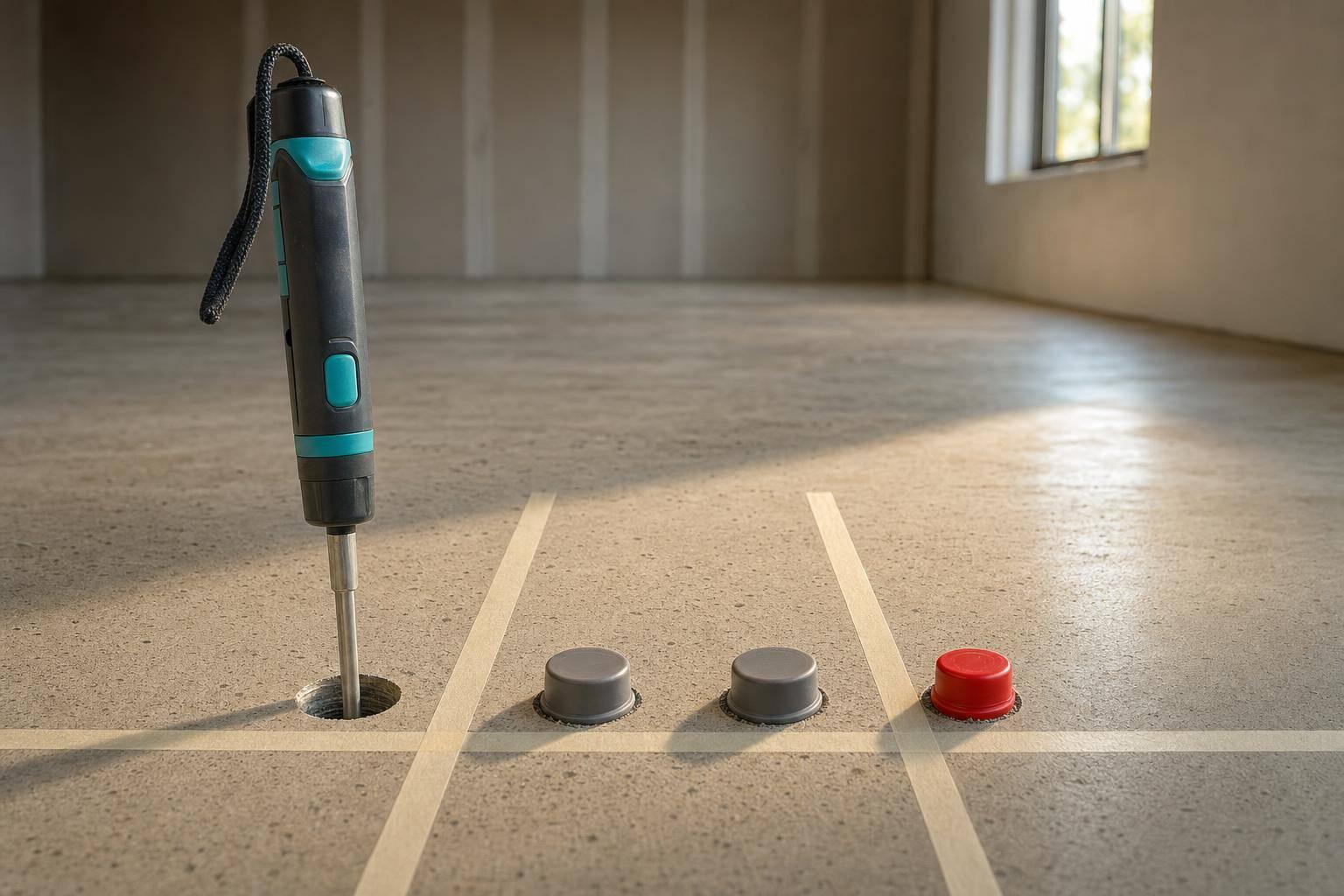
Moisture is one of the main trouble spots. Most epoxy and polyurethane systems need a dry slab, so don’t guess. Ask for ASTM F1869 or ASTM F2170 moisture readings before installation. If those readings come back high, use a vapor-mitigation primer or a moisture-tolerant system.
Then compare lifecycle cost, not just the install quote. The lower upfront price can look good on paper and still cost more over time. A 20-year cost model for a 50,000 sq ft warehouse puts polished concrete at about $400,000 total ($20,000 per year), while epoxy comes in around $900,000 total ($45,000 per year).
In chemically harsh or thermally demanding areas, urethane cement often earns its higher install price. It usually runs $8–$15 per sq ft, yet it can still deliver a 30–50% lower 10-year total cost than standard epoxy once you factor in fewer replacements and less downtime.
Downtime can be the deciding factor too. Fast-cure polyaspartic systems can cut total installation downtime from 120–168 hours to about 24 hours. If shutdown time is the main constraint, that kind of speed can change the whole decision.
Use cost, downtime, and slab condition to narrow the final choice.
Conclusion
There isn’t one best warehouse floor for every space. The right pick comes down to what your facility faces each day: traffic patterns, moisture, chemicals, temperature swings, and how much downtime you can afford.
When you weigh traffic, moisture, chemicals, temperature, and downtime, the path gets pretty clear. Dry areas are a good fit for polished concrete. Spill-prone areas need resinous systems. Harsh washdown areas are where urethane cement makes sense. A zone-based approach usually works best: polished concrete in open storage aisles, resinous coatings in maintenance bays and battery charging rooms, and urethane cement only in places where extreme conditions justify the higher upfront cost.
The strongest results come from matching each zone to its actual conditions.
Work with an installer who has warehouse experience and handles moisture testing and proper surface prep.
Match the floor to the conditions, not the other way around.
FAQs
How do I choose one floor for different warehouse zones?
Start by assessing the risk level in each zone. Look at traffic volume, chemical exposure, and temperature shifts.
Use durable, impact-resistant flooring in forklift lanes and loading docks. For areas with temperature swings or outdoor exposure, go with flexible, UV-stable coatings. Where floors may get wet or handle heavy traffic, add slip-resistant textures.
What floor works best for constant forklift traffic?
For constant forklift traffic, polyurea-based systems are often the best fit. They stay flexible and resist impact, which helps them handle heavy loads, sharp turns, and sudden stops without cracking or chipping.
Croc Coatings offers the proprietary Penntek Evolution industrial coating system. It’s 4x stronger than traditional epoxy and built to handle forklifts up to 15,000 pounds. You also get chemical resistance and fast curing, which helps cut downtime.
When is urethane cement worth the higher cost?
Urethane cement costs $10 to $18 per square foot when your facility needs performance that other coatings just can’t deliver.
It’s the go-to choice for food and beverage processing, commercial kitchens, and pharmaceutical manufacturing because it stands up to thermal shock from −40°F to 250°F, daily steam cleaning, and exposure to lactic acid, citric acid, and animal fats. It’s also used in spaces where USDA or FDA compliance applies.