You’ve probably heard it while comparing quotes: “It’s the same polyurea.” Maybe it is. But “polyurea” and “polyaspartic” name a type of coating, not one product, and many installers say the same things about grinding, flake, topcoats and one-day installs.
Short answer: ask every installer three questions. Who makes the coating? Who certified you to install it? Who backs the warranty if you go out of business? Get every answer in writing. Our answers are why a Croc floor is a better long-term investment. The eight questions below cover those three and the rest of the job. Ask every installer you’re considering, including us.
Penntek polyurea vs. a generic polyurea product: what’s actually different?
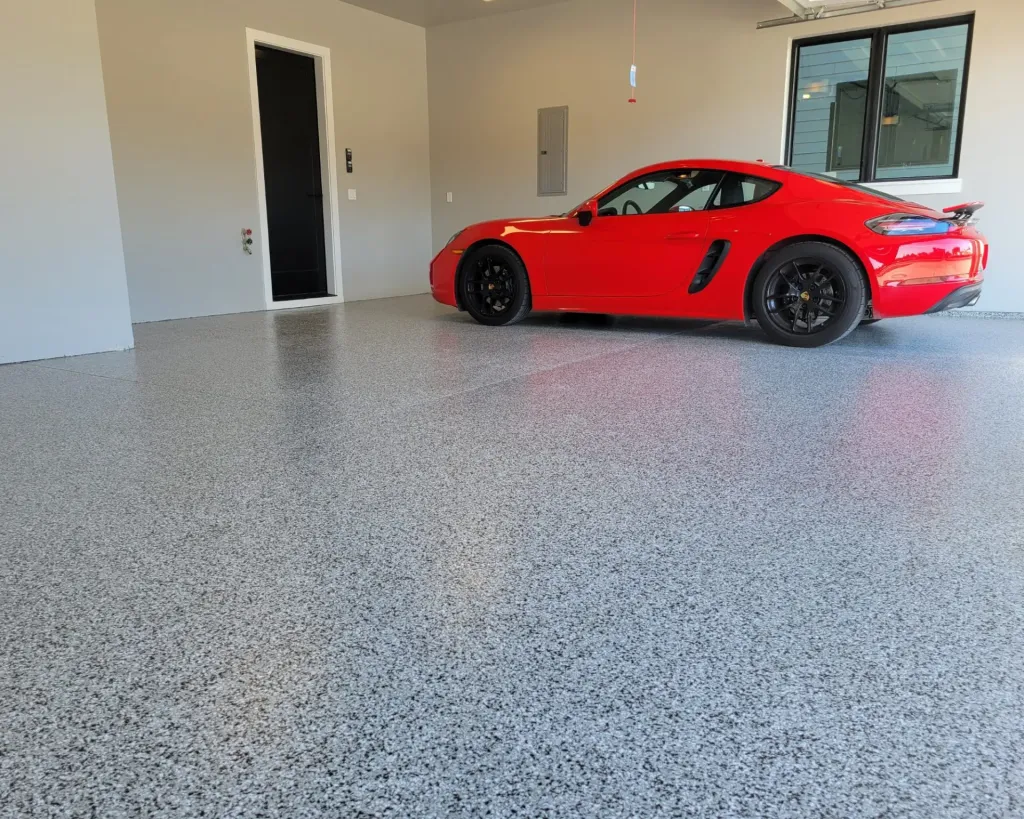
A polyurea floor is only as good as the product, the crew and the warranty behind it. A relabeled or generic product may not come with a maker you can look up. Penntek is a named manufacturer that sells only through authorized installers, and Croc is the only Penntek certified installer in Eastern Washington and North Idaho. You can watch Penntek’s durability, stretch, UV stability and stain tests on The Penntek Advantage. The stretch and UV stability tests put Penntek side by side with epoxy and a common polyurea. The questions below help you check any quote, whatever’s in the bucket.
1. Who backs the warranty, and what does it cover?
Why it matters: “Lifetime warranty” can mean very different things. A warranty that comes only from the installer depends on that installer. A manufacturer-backed warranty has the coating maker behind it too. It’s also worth knowing exactly what it covers.
What to ask: “Can I see your warranty in writing? Who backs it, and what exactly does it cover? What happens to my warranty if your company closes?”
How Croc answers: Every residential Croc floor comes with a written lifetime warranty on materials, backed by the manufacturer, Penntek, not just the installer: Penntek Limited Lifetime Residential Warranty, covering peeling, blistering, chipping, delamination and UV yellowing of the topcoat, plus Croc’s own workmanship warranty. If Croc ever closes? Your warranty is issued by Penntek, the manufacturer, not by us. Your rep goes over the full written warranty with you along with your quote, before you sign. See our written warranty.
2. Who makes the coating?
Why it matters: A coating’s maker stands behind its formula and its data sheet. If you can’t tell who made a product, it’s hard to look up what it is or who supports it later.
What to ask: “Who manufactures the coating, and is it sold under its own name?”
How Croc answers: Penntek, a known manufacturer. It isn’t a relabeled or generic product, and Penntek sells only through authorized installers.
3. Are you certified by the manufacturer?
Why it matters: A good product put down the wrong way can still fail. Manufacturer certification means the installer is certified by the coating’s maker on that specific system.
What to ask: “Are you certified by the manufacturer to install this coating? Can you show me?”
How Croc answers: We’re the only Penntek certified installer in Eastern Washington and North Idaho.
4. What % solids is it, and can I see the data sheet?
Why it matters: Percent solids tells you how much of what goes on the floor stays on the floor once it cures. The data sheet (or tech sheet) lists it, along with the product’s other specs. Any installer should be able to show you theirs.
What to ask: “What % solids is the coating? Can I see your data sheet?”
How Croc answers: Our Penntek base coat is 99% solids. Tech sheet available on request.
Get the rest in writing
The next four are steps many installers say they do. They’re still worth asking about, because the answer belongs in your written quote, not just in the sales conversation.
5. Do you test the slab first?
Why it matters: Every slab is different. Testing before coating tells the crew what they’re working with.
What to ask: “Do you moisture-test and hardness-test my concrete before you start? Will you put that in writing?”
How Croc answers: We moisture-test and hardness-test every floor.
6. How do you prep the concrete?
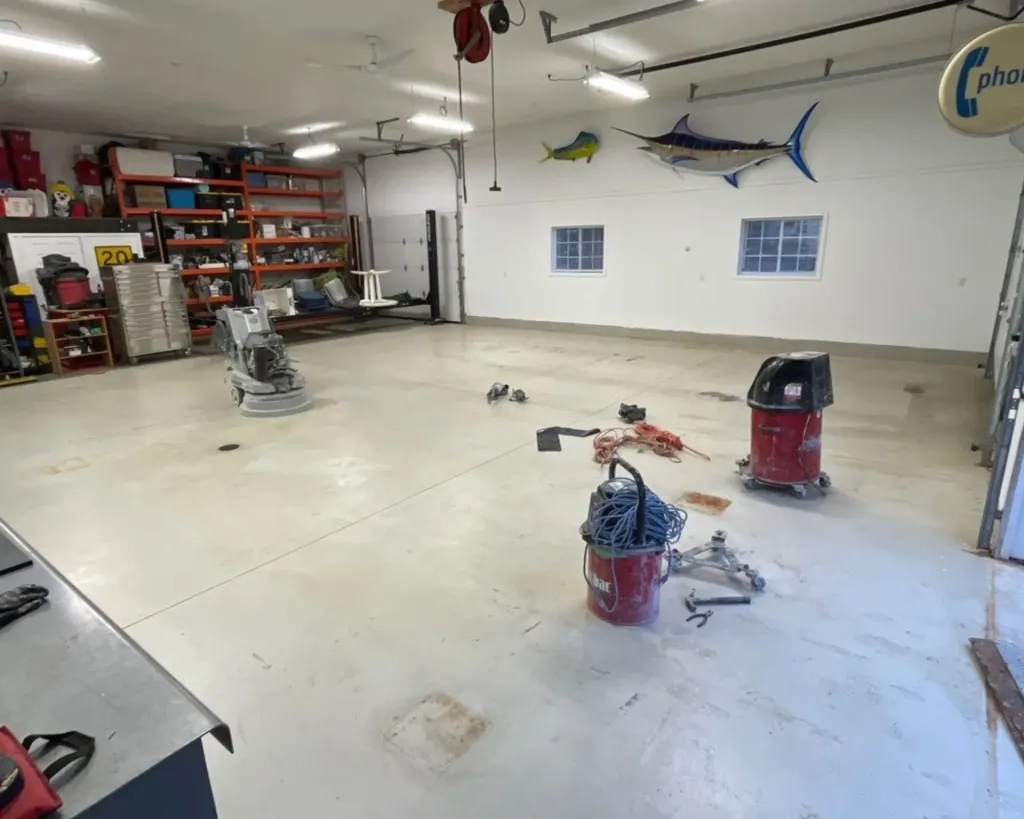
Why it matters: The coating bonds to the concrete, so prep matters, and it’s the part of the job you can’t see once the floor is done. Diamond grinding and acid etching are different methods. Your quote should say which one you’re paying for.
What to ask: “Do you diamond grind or acid etch? Is all the prep in the written quote?”
How Croc answers: We diamond grind every floor.
7. Is it a full flake broadcast with a UV-stable topcoat?
Why it matters: Two quotes can both say “flake floor” and mean different things.
What to ask: “Is the flake a full broadcast across the whole floor? Is there a UV-stable topcoat? Is that written in the quote?”
How Croc answers: Full-broadcast flake in the color you choose, plus a UV-stable topcoat.
8. Who does the install?
Why it matters: The crew in your garage does the work. It’s fair to ask whether they work for the company you’re hiring.
What to ask: “Will your own employees install my floor, or subcontractors? Is that in writing?”
How Croc answers: Croc employee crews, not subs.
Comparing quotes side by side
Two quotes can look different because they count different work or a different warranty. These questions help you compare the same job. With Croc, the prices on What We Charge are starting prices by size, and the same page shows what a Croc floor costs per year you own it. Crack repair may be added to your price depending on the size of the cracks. We check your slab and tell you before you decide anything. For a line-by-line guide, see How to Compare Garage Floor Coating Quotes.
We’ve installed 1,700+ floors across Eastern Washington, North Idaho and the Tri-Cities, and earned 370+ 5-star Google reviews.
Get your number
Start with a Quick Quote. It shows your estimated price and emails it to you. Then book a free in-home consultation for your final quote. An on-site visit is required before we give a final quote.