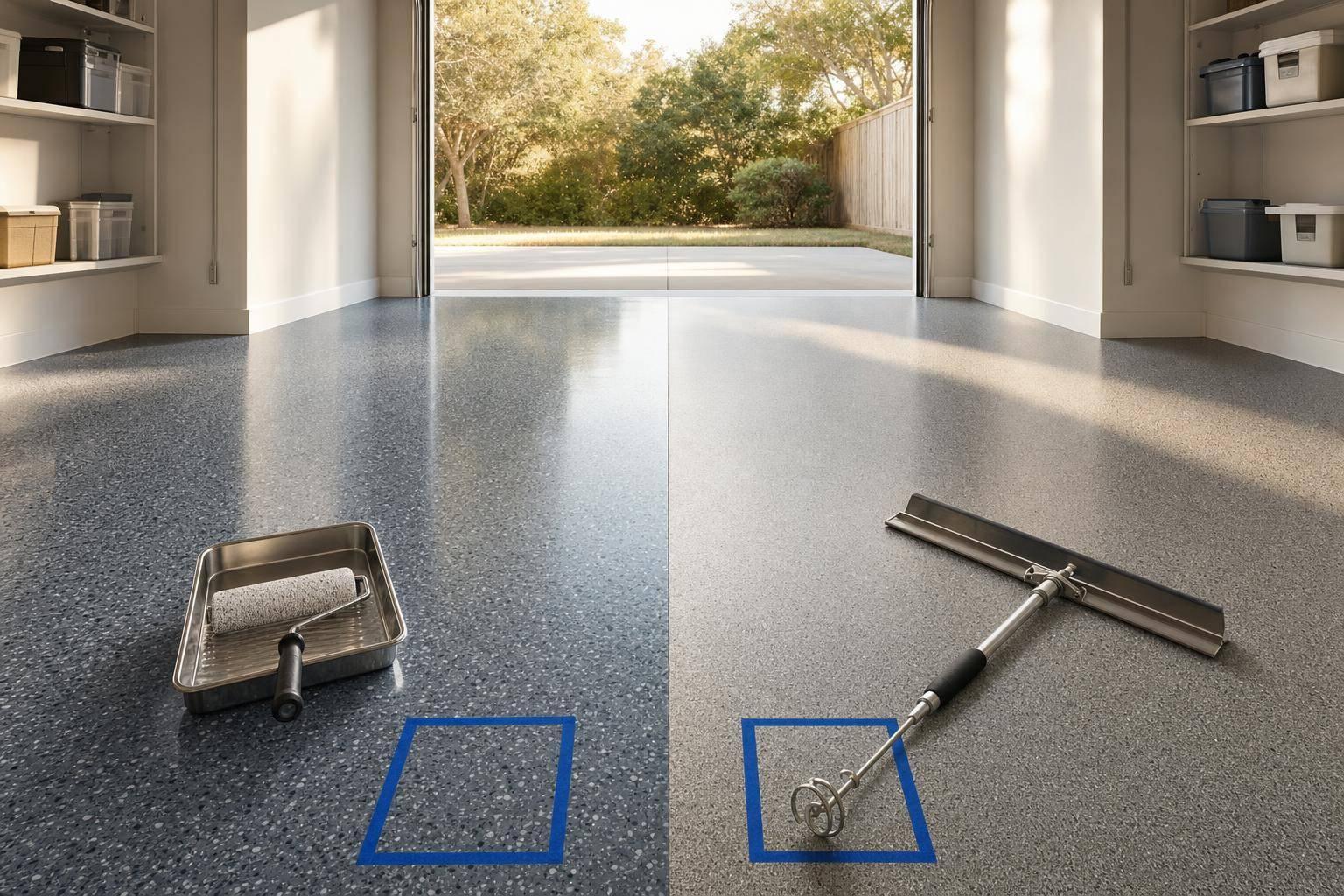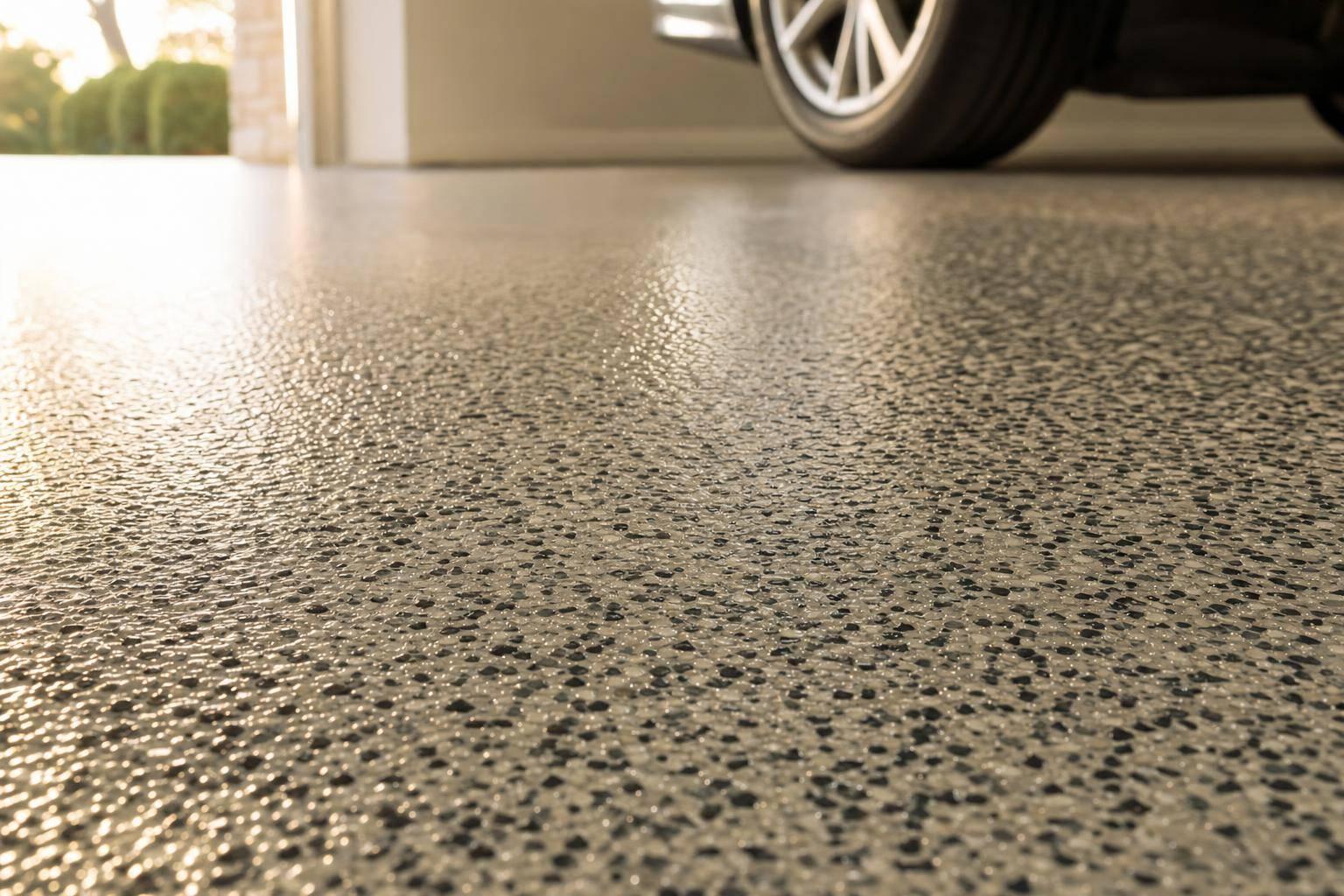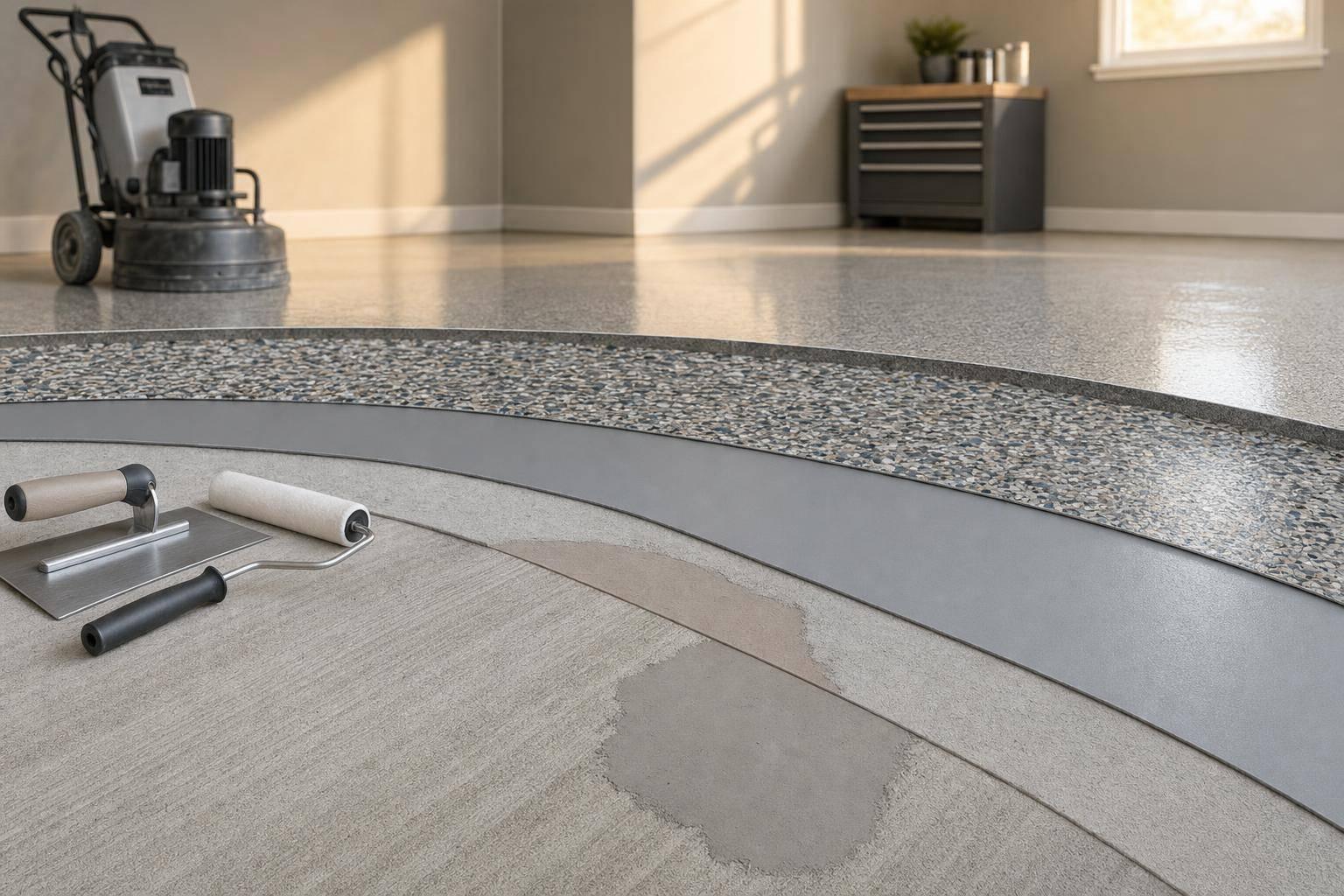
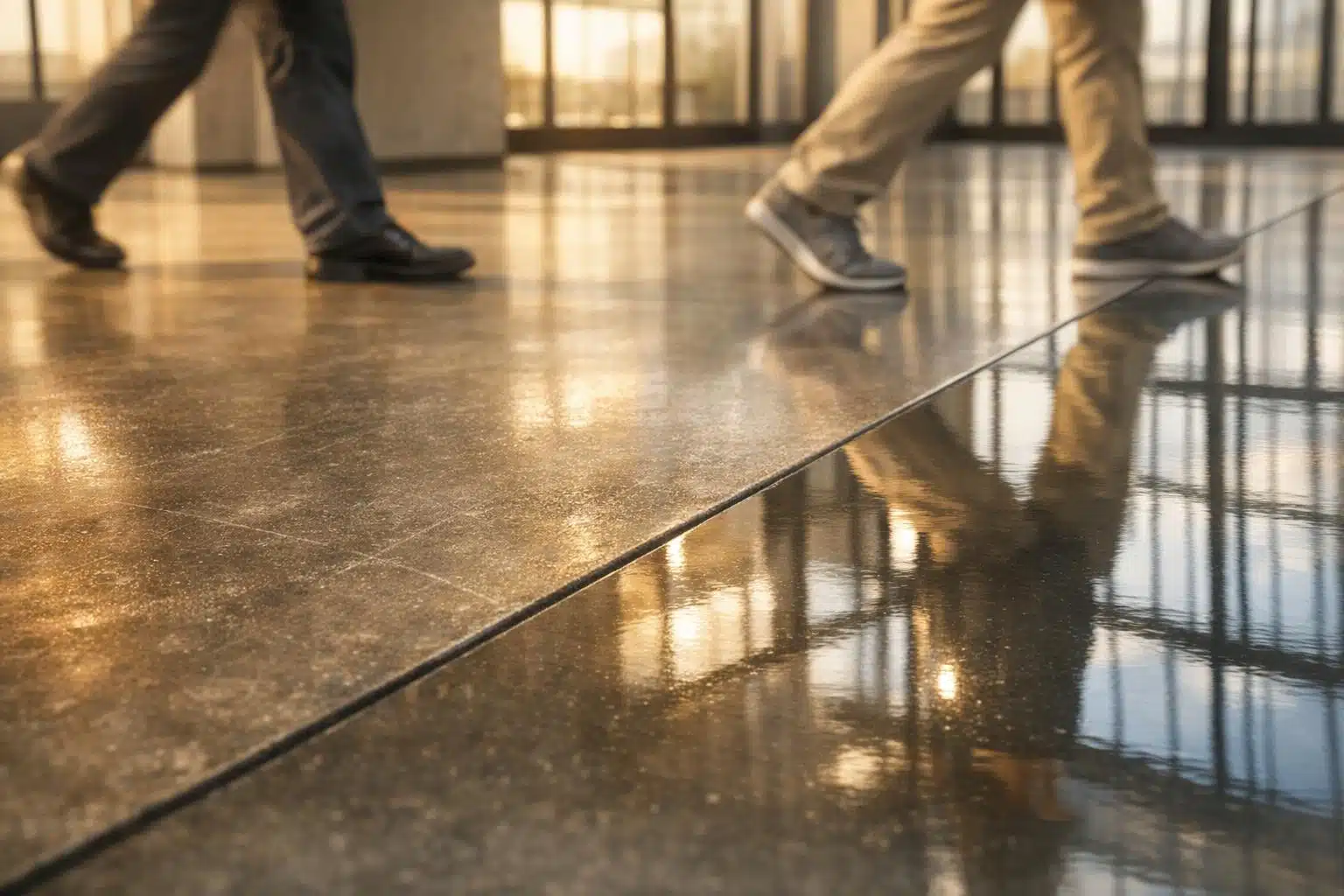
Which floor coating is better for high-traffic areas? Polyaspartic coatings outperform epoxy in durability, UV resistance, and curing time, making them ideal for heavy use and outdoor spaces. Epoxy, while cheaper upfront, is less durable, prone to yellowing, and requires more maintenance over time. For a complete overview, see our guide to epoxy vs polyaspartic garage floors.
Key Differences:
- Durability: Polyaspartic coatings are 4x stronger and 10x more abrasion-resistant than epoxy.
- Curing Time: Polyaspartic cures in 4–6 hours; offering significant fast-cure advantages over traditional systems, epoxy takes 2–5 days.
- UV Resistance: Polyaspartic resists yellowing; epoxy fades under sunlight.
- Cost: Polyaspartic has a higher initial cost but requires fewer repairs, saving money long-term.
- Application Temperature: Polyaspartic can be applied in freezing conditions, unlike epoxy.
Quick Comparison:
| Feature | Polyaspartic Coatings | Epoxy Coatings |
|---|---|---|
| Durability | High (resists cracking) | Moderate (prone to cracks) |
| Curing Time | 4–6 hours | 2–5 days |
| UV Resistance | Excellent | Poor (yellows over time) |
| Cost | Higher upfront | Lower upfront |
| Best Use | High-traffic, outdoor | Indoor, low-traffic |
Polyaspartic coatings are the better choice for long-lasting, low-maintenance flooring in demanding environments. Epoxy is suitable for lower-traffic indoor spaces where budget is a priority.
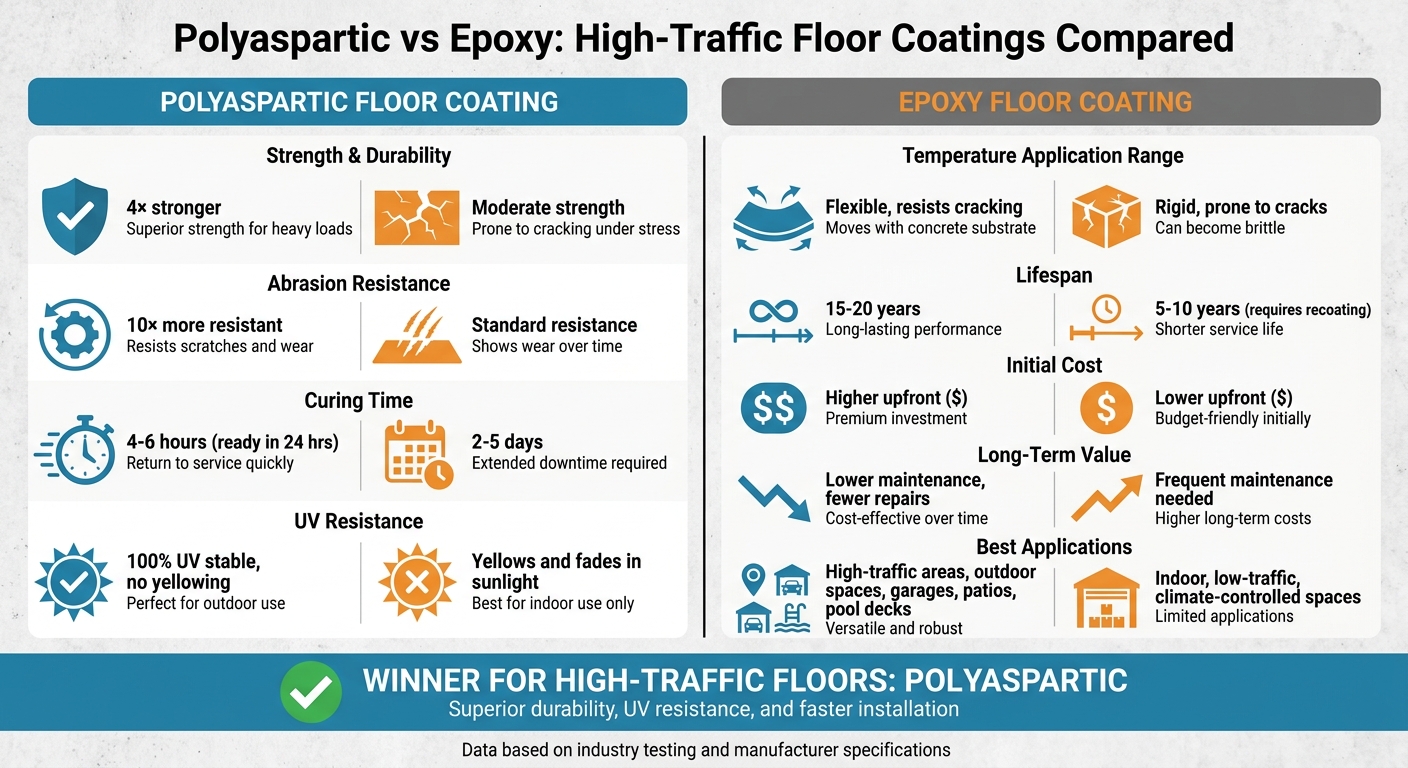
Polyaspartic vs Epoxy Floor Coatings Comparison Chart
Epoxy vs Polyaspartic Garage Flooring Explained by Donald Sanderson!
sbb-itb-a0e5ae3
What Are Epoxy Coatings?
Epoxy coatings are a type of thermosetting polymer created by mixing two components: epoxy resin (Part A) and a hardener (Part B). When these are combined, a chemical reaction occurs, resulting in a tough, non-porous surface that bonds directly to concrete. Most commercial-grade epoxy systems are 100% solids, meaning they don’t contain volatile ingredients. This ensures the thickness of the cured coating matches its wet application thickness. True epoxy resins typically have tensile strengths ranging from 5,000 to 8,000 psi, offering exceptional durability. However, lower-quality "epoxy paint" products only include a small amount of epoxy mixed with acrylic, providing limited durability improvements.
Epoxy coatings are popular in industrial, commercial, and residential environments because of their strong adhesion (≥200 psi) when applied correctly. If you’re considering costs, DIY materials usually fall between $2 and $3 per square foot, while professional installation ranges from $5 to $8 per square foot.
Benefits of Epoxy Coatings
Epoxy coatings come with several advantages:
- Chemical Resistance: They can withstand oil, grease, and most industrial chemicals, making them ideal for automotive shops or manufacturing facilities.
- Low Maintenance: Cleaning is straightforward – sweeping or mopping is usually enough.
- Longevity: Compared to vinyl, laminate, or linoleum, epoxy coatings last much longer, making them a cost-effective option over time despite the higher upfront expense.
- Customizable Traction: While the surface can become slippery when wet, grit additives can be included during application to improve traction in high-traffic areas.
Drawbacks of Epoxy Coatings
Despite their benefits, epoxy coatings have some limitations:
- UV Sensitivity: Exposure to ultraviolet light can lead to chalking or discoloration. For outdoor use, a UV-resistant topcoat is often necessary.
- Lengthy Curing Time: The curing process can take several days, which may result in extended downtime during installation.
- Short Pot Life: Once mixed, the epoxy becomes less workable as batch size increases because the chemical reaction generates heat, accelerating the curing process.
- Surface Preparation: Proper preparation is critical. Failing to prep correctly is one of the most common epoxy garage floor mistakes made during installation. Contaminants like grease or oil must be completely removed. For example, applying muriatic acid to the surface can help detect contaminants – if no reaction occurs, contaminants are likely present. Additionally, moisture testing is recommended. A simple way to test is by taping a 3-foot square sheet of polyethylene to the floor for 24 hours to check for condensation.
What Are Polyaspartic Coatings?
Polyaspartic coatings are a specialized type of polyurea coating, crafted using aliphatic polyurea chemistry. These coatings are formed through a reaction involving a polyaspartic ester, resulting in a surface that’s both flexible and highly durable. Unlike traditional epoxy systems, polyaspartic coatings cure to create a non-porous finish, effectively repelling liquids like oil, chemicals, and water. This means spills remain on the surface instead of seeping into tiny pores.
What sets polyaspartic coatings apart is their molecular structure, which makes them four times stronger than standard epoxy coatings. Thanks to their aliphatic compounds, they offer 100% UV stability, ensuring they won’t yellow, chalk, or fade – even under constant sunlight. This makes them a great choice for outdoor areas exposed to the elements.
Another key difference is their curing speed. Epoxy coatings often require higher temperatures and several days to fully cure, but polyaspartic coatings cure much faster – even in colder conditions. For example, while epoxy might need three to five days to handle vehicle traffic, polyaspartic coatings are ready in just 24 hours. Foot traffic? That’s possible in as little as four to six hours.
Polyaspartic coatings also outperform epoxy in temperature adaptability. They can be applied in freezing conditions as low as 0°F, unlike epoxy, which generally needs at least 50°F to cure properly. Once cured, polyaspartic coatings maintain flexibility, allowing them to bridge small cracks and adjust to temperature changes. This flexibility helps prevent the cracking and chipping often seen in rigid epoxy floors, making them a reliable choice for demanding environments.
Benefits of Polyaspartic Coatings
The standout qualities of polyaspartic coatings lie in their durability and efficiency. In abrasion tests, polyaspartic coatings proved to be 10 times more resistant to wear than epoxy when exposed to heavy tools and wire brushes. This level of toughness ensures floors can withstand impacts and heavy use without cracking, making them ideal for high-traffic or industrial settings.
Another major advantage is their UV stability. Tests have shown that 100% polyaspartic coatings remain unchanged after 1,000 hours under a QUV lamp, while blended alternatives yellowed noticeably. This makes polyaspartic coatings perfect for outdoor spaces like patios, pool decks, and driveways – areas where epoxy often falls short.
Their flexibility is another game-changer. Unlike brittle epoxy, polyaspartic coatings can move with the concrete as it expands and contracts due to temperature changes. This flexibility helps prevent cracks and chips, ensuring a smooth, seamless finish over time. They can also bridge small cracks in the concrete substrate, maintaining their appearance and integrity.
The fast curing time is a huge bonus, especially for commercial projects. Businesses can have the coating installed in a single day and resume operations within 24 hours – something that would take nearly a week with epoxy. And despite the speed, the bond formed during application is permanent, provided the surface is properly prepared.
Drawbacks of Polyaspartic Coatings
While polyaspartic coatings offer impressive performance, there are some drawbacks to consider. The most notable is their higher upfront cost compared to epoxy. Proper installation requires diamond grinding to prepare the concrete surface, which adds to the initial expense.
That said, this initial investment often pays off over time. Epoxy coatings generally need frequent reapplication, especially in areas with heavy traffic or constant UV exposure, which can lead to costly maintenance. Polyaspartic coatings, on the other hand, are built to last, requiring little more than routine cleaning to maintain their look and performance. Over the lifespan of the floor, they often prove to be the more economical choice.
Another factor to keep in mind is application thickness. Polyaspartic coatings don’t perform well when applied too thickly, unlike epoxy, which can be laid down in heavy layers. These coatings work best as thin-film systems, which means professional installation is crucial. DIY kits simply can’t match the durability or performance of a professionally applied polyaspartic coating.
Polyaspartic vs Epoxy: Side-by-Side Comparison
Durability and Performance Comparison
When it comes to durability, polyaspartic coatings outshine epoxy by a significant margin. Polyaspartic coatings are flexible and adapt to the natural movement of concrete, making them resistant to cracking. On the other hand, epoxy coatings are rigid, which makes them more prone to developing cracks over time. This flexibility in polyaspartic coatings also contributes to their better overall performance, particularly in environments where concrete shifts or expands.
| Feature | Epoxy Coatings | Polyaspartic Coatings |
|---|---|---|
| Flexibility | Rigid; prone to cracking | Flexible; resistant to cracking |
| Film Thickness | Can be applied in thick layers | Best applied in thinner, multiple coats |
| Durability | Lower; breaks down faster | Higher; more resilient over time |
Source:
Curing Time and Installation Downtime
For commercial spaces that can’t afford long downtimes, curing time is a game-changer. Epoxy coatings take about 48 hours to fully cure, which can disrupt operations for days. Polyaspartic coatings, however, cure in just 4–6 hours, allowing for same-day service. This faster curing time not only minimizes downtime but also makes polyaspartic coatings a more practical choice for busy environments. Another advantage is their ability to cure at lower temperatures, even below freezing, which makes them versatile for year-round installations in harsh climates.
| Feature | Epoxy Coatings | Polyaspartic Coatings |
|---|---|---|
| Curing Time (Dry) | ~2 days | 4–6 hours |
| Installation Downtime | High (several days) | Low (same-day service) |
| Min. Application Temp | 50°F | Below freezing |
Source:
UV Resistance and Lifespan
Exposure to UV light is another area where polyaspartic coatings outperform epoxy. Epoxy coatings are susceptible to yellowing and fading when exposed to sunlight, which is a common issue for garages in the United States, where 95% of them receive direct sunlight on their upper floor surfaces. Polyaspartic coatings, however, are UV stable and have shown impressive resistance to yellowing – even after 1,000 hours of testing under a QUV lamp. Their flexibility also extends their lifespan, meaning fewer recoating cycles over time. As Floor Shield Coatings explains:
"While you will probably pay more for a polyaspartic coating initially, the long-term investment will mean you save more in the long run, as you won’t have to recoat your floor nearly as often."
| Feature | Epoxy Coatings | Polyaspartic Coatings |
|---|---|---|
| UV Stability | Low; prone to yellowing | High; test-proven to be UV stable |
| Best Use | Heavy machinery floors | High-traffic and outdoor areas |
| Temperature Range | Limited; requires >50°F | Broad; can be applied below freezing |
Source:
Cost, Maintenance, and Best Uses
Initial and Long-Term Costs
Polyaspartic coatings come with a higher upfront price, often costing about twice as much per square foot as epoxy when professionally installed. However, they’re built to last – typically 15–20 years – while epoxy floors often need recoating or major repairs within 5–10 years. This extended durability, combined with less frequent upkeep, makes the higher initial expense more reasonable over time.
Another key factor is downtime. Rapid cure coatings like polyaspartic cure in just 24 hours, allowing for quick use, whereas epoxy requires 3–5 days to fully cure. This faster turnaround minimizes disruptions, particularly in commercial or high-traffic areas.
Cleaning and Maintenance Needs
Maintenance is another area where polyaspartic coatings shine. Once cured, they form a non-porous surface that resists stains from substances like oil, gas, or wine. Spills sit on the surface and can be wiped away easily with soap and water. In contrast, epoxy’s microscopic porosity can allow liquids to seep in, leading to permanent stains.
Epoxy floors also face challenges like "hot tire pickup", where heat from tires can peel the coating. Polyaspartic coatings are engineered to be four times stronger and ten times more resistant to abrasion than epoxy, which means fewer repairs and less hassle over time.
Best Applications for Each Coating
These differences in durability and maintenance make different industrial floor coatings better suited to specific environments. Polyaspartic coatings are highly versatile and perform well in areas like garages, patios, pool decks, driveways, warehouses, and basements. They’re resistant to UV damage, making them perfect for outdoor spaces exposed to sunlight, and their moisture resistance prevents peeling or bubbling in damp conditions. Plus, they can be applied even in freezing temperatures as low as 0°F, making them a reliable year-round option.
Epoxy coatings, on the other hand, are better for indoor spaces with no UV exposure, such as storage rooms or climate-controlled workshops. For those prioritizing lower upfront costs and willing to accept more frequent maintenance, epoxy can still be a practical choice.
Why Polyaspartic Coatings from Croc Coatings Are the Better Choice
When choosing high-traffic floor coatings, durability and quick turnaround are non-negotiable. Croc Coatings offers a standout solution with its Penntek Evolution polyaspartic coating, delivering performance that leaves epoxy in the dust by addressing its common flaws.
The standout feature? Flexibility. While epoxy is rigid and prone to cracking under pressure or concrete movement, the Penntek system stays flexible. This means it can absorb impacts and adjust to shifts in the concrete, giving it a clear edge in resilience.
Another major perk is the one-day installation process. Within just 24 hours, your floor is ready to handle foot and vehicle traffic. Thanks to professional surface preparation, the coating forms a permanent chemical bond, eliminating issues like hot tire pickup – a common problem with epoxy floors.
Croc Coatings also backs the Penntek Evolution system with a lifetime warranty against cracking, peeling, and UV damage and yellowing. Its UV-stable aliphatic chemistry ensures the floor remains vibrant and fade-resistant, even under direct sunlight.
For homes and businesses across North Idaho, Spokane, and the Tri-Cities area, this combination of strength, speed, and long-lasting protection makes Penntek Evolution the go-to choice for demanding environments.
Conclusion: Which Coating Is Right for Your Floor?
Deciding between polyaspartic and epoxy coatings for high-traffic floors comes down to how they perform, their durability, and the overall value they offer. While epoxy might seem like a budget-friendly option, it has some notable downsides. It’s brittle, prone to cracking under stress, yellows when exposed to UV light, and takes a lengthy 3–5 days to fully cure.
Polyaspartic coatings, on the other hand, tackle these issues head-on. They are 4× stronger and offer 10× the abrasion resistance compared to epoxy. Their flexibility allows them to move with the concrete, reducing the risk of cracks and delamination. Understanding the causes of concrete coating failures can help you avoid these common issues. Plus, their UV stability keeps them looking vibrant even under direct sunlight. And let’s not forget the convenience – polyaspartic coatings cure fast, allowing vehicle traffic in just 24 hours. This quick turnaround minimizes downtime, which is a huge advantage in busy spaces.
For homeowners and businesses in North Idaho, Spokane, and the Tri-Cities, Croc Coatings’ Penntek Evolution system is a standout choice. With expert surface preparation, one-day installation, and a lifetime warranty covering cracking, peeling, and UV damage, it’s built to last. If your floor needs both exceptional durability and minimal disruption, polyaspartic coatings deliver on all fronts. They’re a smart solution for spaces that demand resilience and a polished finish. For the full verdict, read is polyaspartic better than epoxy?.
FAQs
How do I know if my concrete is ready for coating?
To prepare your concrete for coating, it’s crucial to ensure the surface is clean, dry, and free of dust, oil, or any contaminants. The concrete should be fully cured – meaning it’s at least 28 days old – and free of cracks. Additionally, the surface needs to be properly roughened or etched to help the coating adhere effectively. Before applying the coating, repair any cracks and verify that moisture levels are within acceptable limits.
Can polyaspartic be applied in cold weather?
Polyaspartic coatings stand out for their quick curing times and their ability to perform well under different conditions, even in colder temperatures. This makes them an excellent option for projects that need to be completed quickly, especially in busy, high-traffic spaces. To achieve the best outcome, it’s essential to stick to the manufacturer’s instructions and seek advice from professionals, particularly when working in colder environments.
Is polyaspartic worth the higher upfront cost?
Polyaspartic coatings often justify their higher upfront price thanks to their exceptional strength, fast application, and minimal maintenance needs. These coatings are four times stronger than epoxy, making them perfect for areas with heavy foot traffic or wear and tear. Plus, they can be installed in just a single day and often come with a lifetime warranty. While the initial cost may seem steep, their long-term advantages – like less frequent maintenance and a longer lifespan – make them a smart, cost-effective solution for challenging environments.