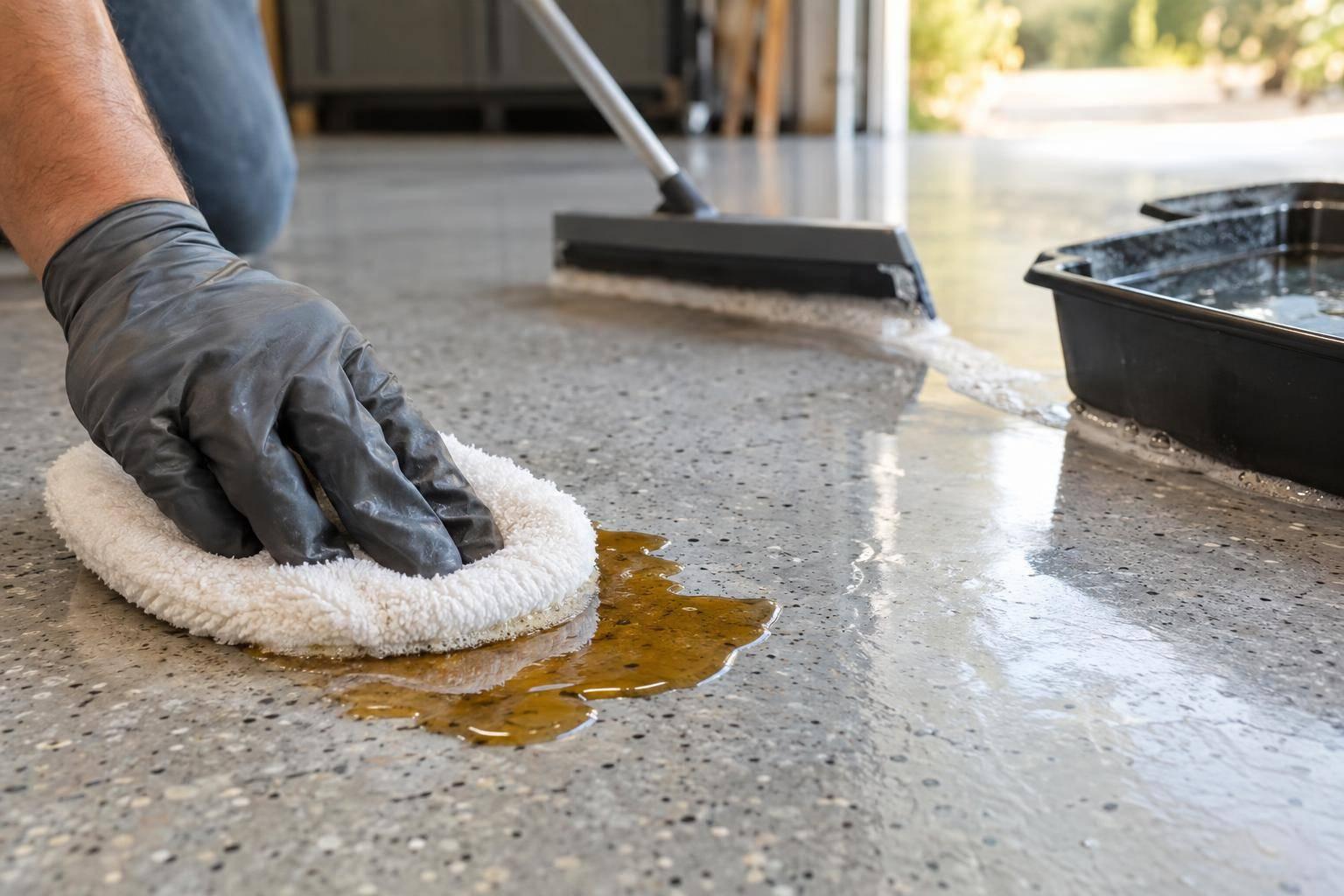
I use 4 steps to clean oil off a epoxy or polyaspartic garage floor: absorb, clean, rinse, and dry. Blot the spill or cover it with clay-based kitty litter, then remove the remaining film with a manufacturer-approved, pH-neutral cleaner.
My rule: gentle cleaning beats harder scrubbing. I test the cleaner in a hidden spot, use microfiber or a soft nylon brush, and avoid abrasive tools. I keep people and pets clear until the floor is dry and no longer slippery.
<u>Don’t wash oil into a drain or driveway.</u> Collect the oily waste and rinse water for disposal under local rules. If a mark remains after gentle cleaning – or the coating looks dull, chipped, or peeling – I stop and contact the installer.
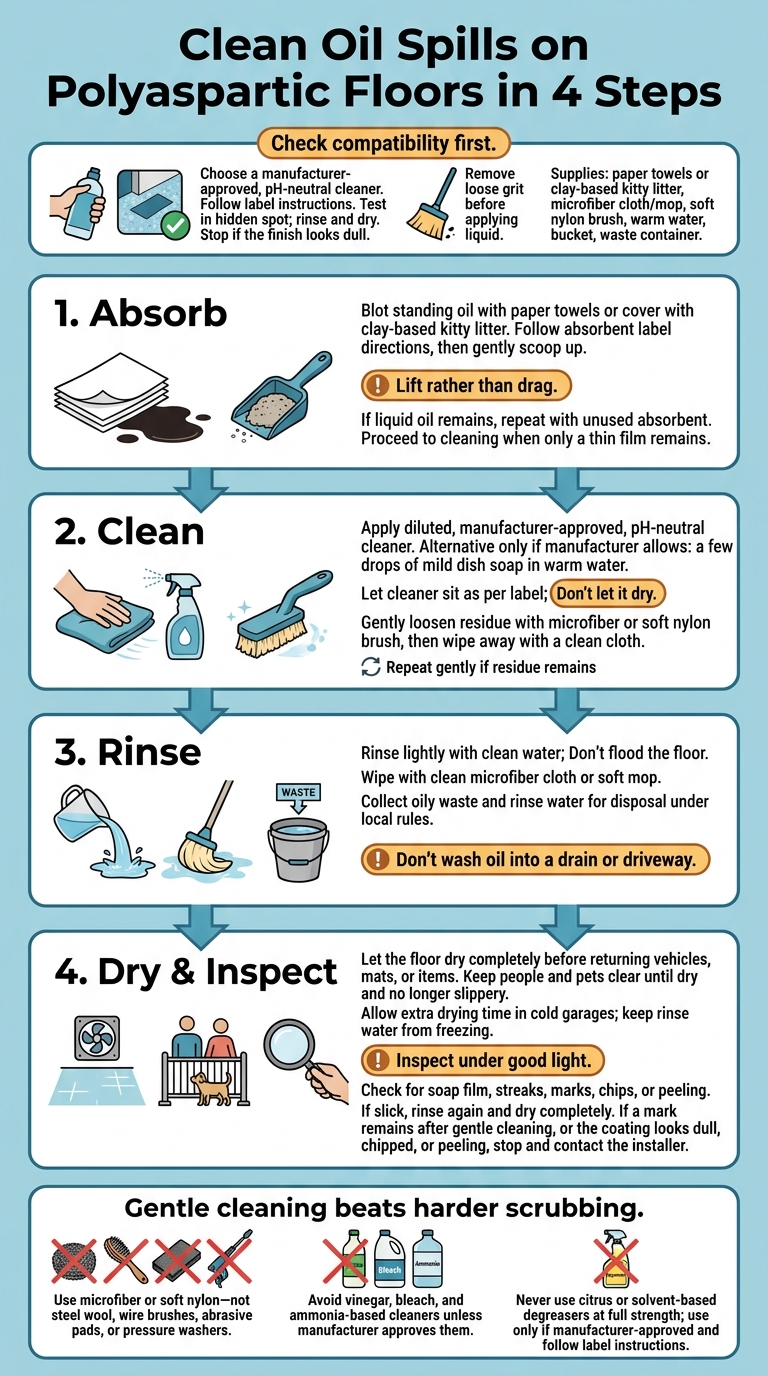
Clean Oil Spills on Polyaspartic Floors in 4 Steps
Gather Supplies and Check Cleaner Compatibility
Once the oil is absorbed, gather what you need to remove the remaining film: paper towels or clay-based kitty litter, a soft nylon brush, warm water, a bucket, and a waste container.
Choose a manufacturer-approved, pH-neutral cleaner to remove residue without damaging the coating. If the manufacturer allows it, you can use a few drops of mild dish soap in warm water instead. Remove loose grit before applying any liquid.
Read Care Instructions and Test the Cleaner
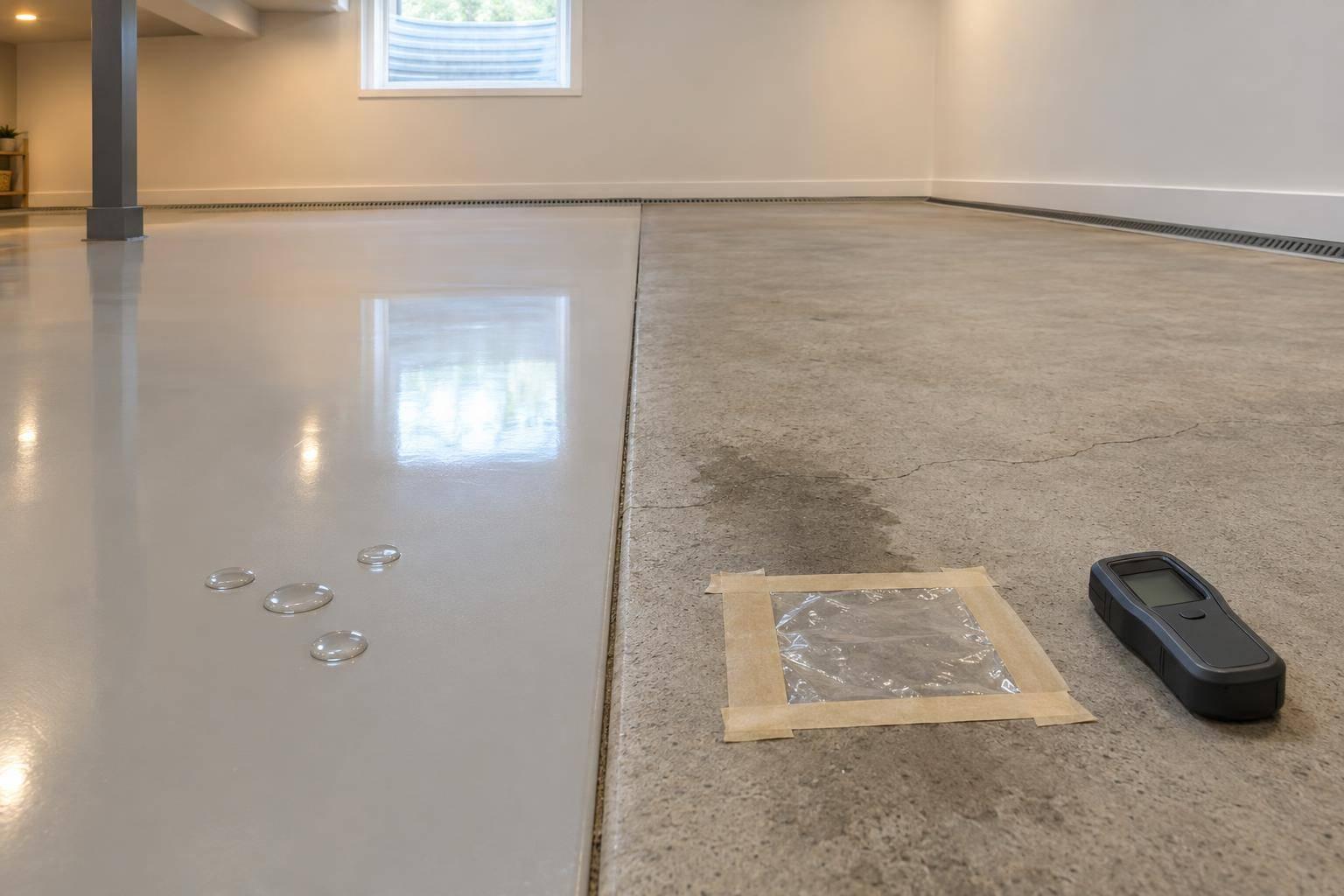
Check the cleaner label and polyaspartic floor-care instructions for dilution and rinsing directions. If compatibility isn’t listed, test the diluted cleaner on a small, hidden spot. Rinse it and let it dry before cleaning the rest of the area. Stop if the finish looks dull.
Use soft nylon bristles or microfiber – not steel wool, wire brushes, abrasive pads, or pressure washers. Avoid vinegar, bleach, and ammonia-based cleaners unless the manufacturer approves them.
Never use citrus or solvent-based degreasers at full strength. If you use one, dilute it according to the label and rinse thoroughly.
sbb-itb-a0e5ae3
Absorb the Oil and Remove Residue
Cover and Collect Spilled Oil
Blot standing oil with paper towels, or cover the spill with absorbent kitty litter. Follow the absorbent’s label directions, then gently scoop it up. Lift rather than drag the material to avoid scratching the finish.
If liquid oil remains, repeat with unused absorbent. If only a thin film remains, move straight to a mild cleaner.
Clean Older Oil Residue Gently
Apply eco-friendly cleaning solutions like diluted cleaner or a few drops of mild dish soap mixed with warm water. Let it sit for the time listed on the label, but don’t let it dry.
Gently loosen the softened film with a microfiber cloth or soft nylon brush. Wipe it away with a clean cloth before it dries. If residue remains, repeat the mild cleaning instead of using a stronger cleaner or scrubbing harder.
Match the Treatment to the Spill
Whether you’re treating a recent spill, old residue, or stubborn spots, use the gentlest method that works. Once the residue lifts, rinse with clean water and dry the area completely before use.
Rinse, Dry, and Inspect the Floor
Rinse Gently and Collect the Water
Once the residue lifts, rinse lightly with clean water to remove any cleaner film. Don’t flood the floor. Wipe with a clean microfiber cloth or soft mop, then squeegee the water toward a drain or out of the garage, or let the surface air-dry.
Avoid blasting the floor at close range, which can damage the epoxy or polyaspartic coating edges.
Check the Dry Floor Before Use
Let the floor dry completely before returning vehicles, mats, or stored items. Allow extra drying time in cold garages, and keep rinse water from freezing.
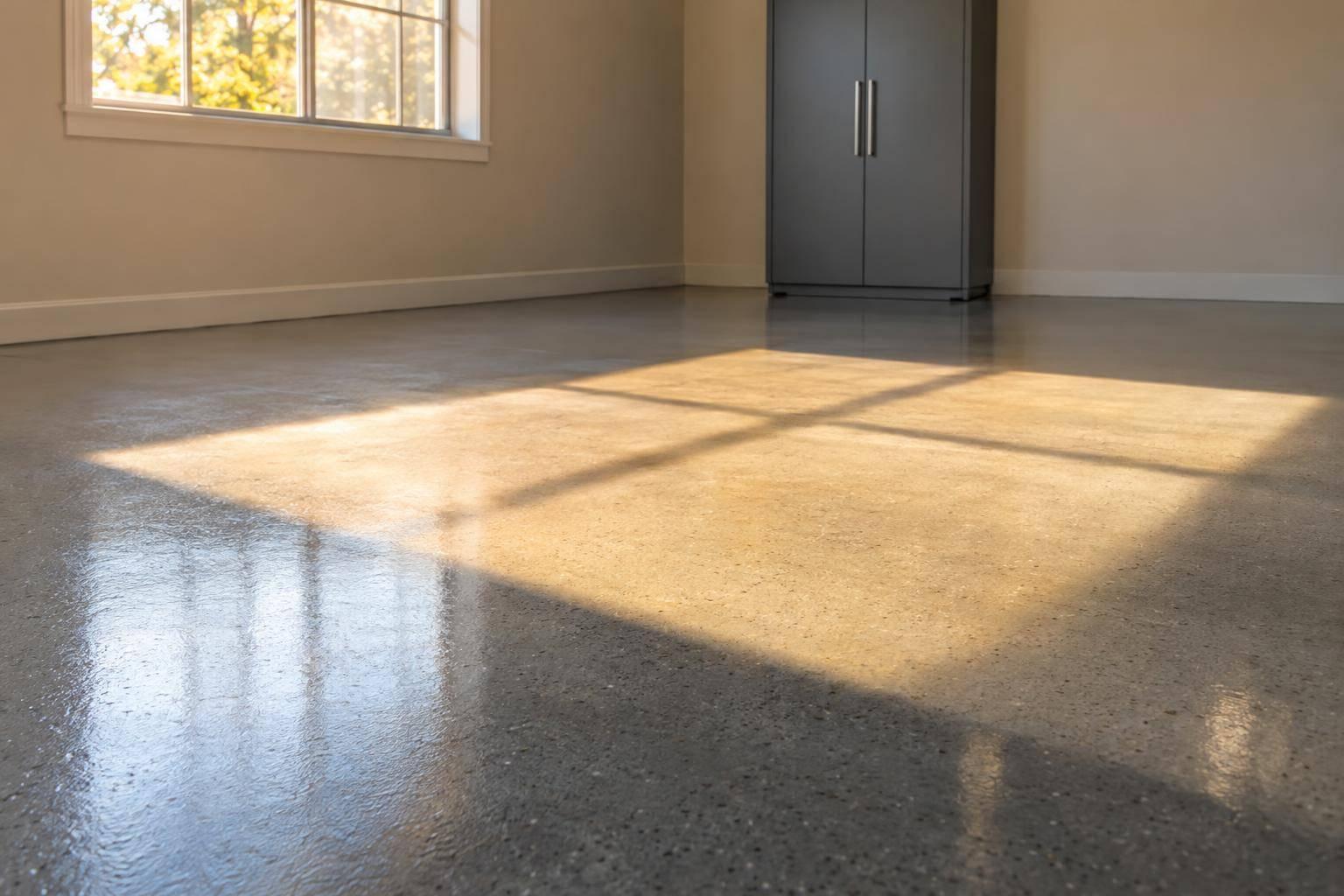
Check the dry surface under good light for soap film, streaks, rust rings, or tire marks. If it still feels slick, rinse again to remove soap film. If you find chips or peeling, stop using the floor and have the coating inspected.
Conclusion: Absorb, Clean, Rinse, and Dry
Absorb the oil, gently clean the area, and rinse away residue. Then dry and inspect the floor before use. If residue remains, repeat the gentle cleaning step before drying again.
Keep Supplies Ready for Future Spills
Keep a small cleanup kit for your garage floor coating with paper towels, kitty litter, and a microfiber mop within reach.
For routine washing, use warm water with a mild, pH-neutral cleaner or a few drops of dish soap. Never let cleaner dry on the surface. This is also a key step when maintaining polyurea-coated outdoor floors.
If a Mark Remains
If the spot is still visible after rinsing and drying, stop cleaning and check with the installer. Ask which cleaner is approved and what dilution ratio to use.
FAQs
Can old oil spills permanently stain my polyaspartic floor?
Yes. Polyaspartic coatings form a nonporous, chemical-resistant barrier, but old oil spills can still leave permanent stains. Oil that sits on the surface for hours increases the risk of lasting discoloration.
Chips, cracks, and pits can trap oil, making cleanup harder and lasting marks more likely. Clean spills promptly to protect your floor’s finish.
How can I tell oil residue from coating damage?
Oil residue often looks slick, sticky, or dark. Rub it with a microfiber cloth and warm water. If it comes off, it’s surface buildup – not coating damage.
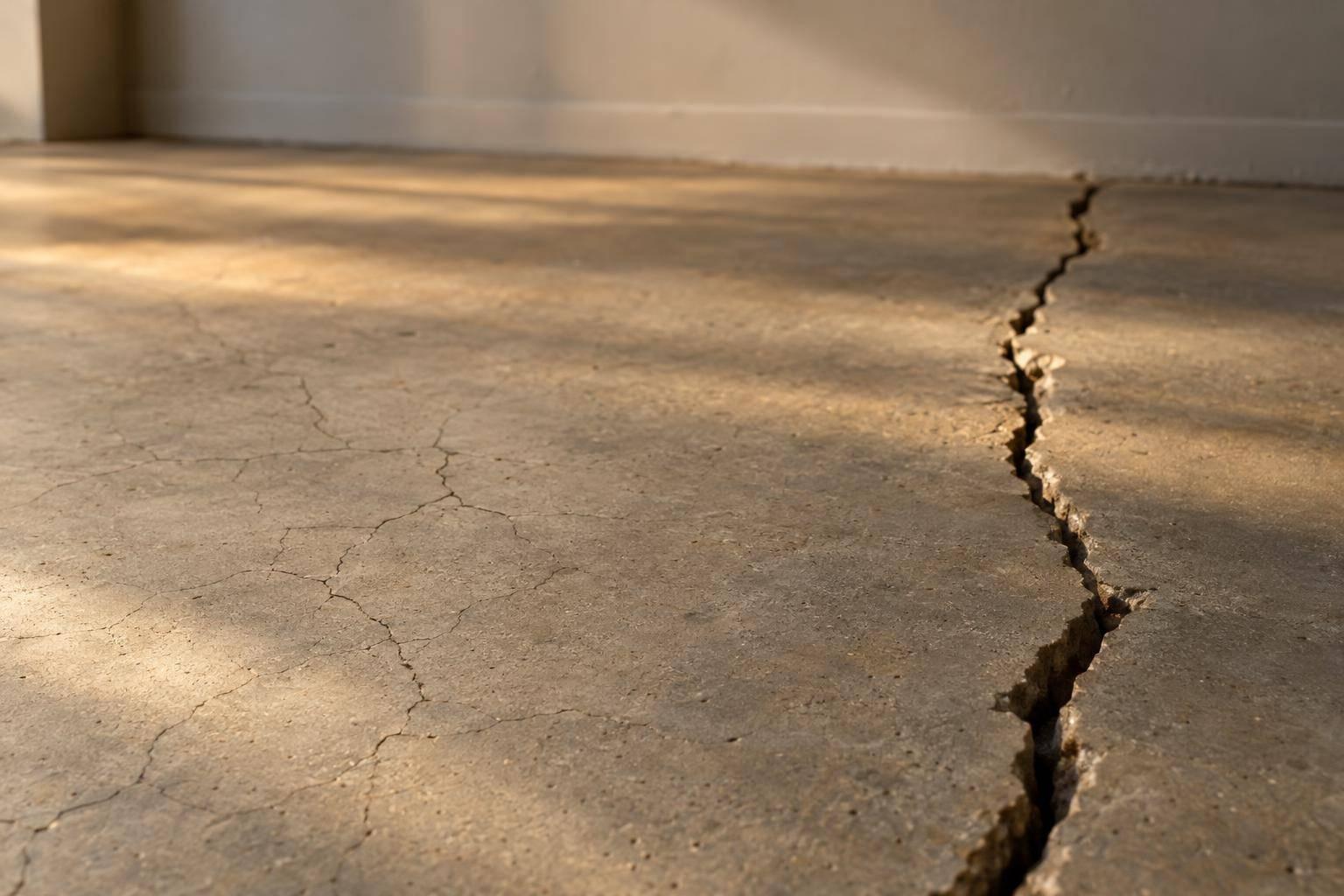
Coating damage can show up as dull or rough patches caused by chemical etching, peeling, flaking, pitting, or cracks. Areas that stay sticky or gooey after proper cleaning may point to improper curing and could need professional attention.
How do I collect and dispose of oily rinse water?
Keep oily rinse water out of storm drains and off soil. Motor oil and chemical degreasers can harm the environment. Collect the rinse water with a shop vacuum rated for liquids or soak it up with absorbent rags or pads.
Dispose of the liquid and soaked materials according to local household hazardous waste guidelines. Contact your local Pacific Northwest waste management facility to find drop-off locations or collection events for automotive fluids and chemical runoff.