How to Maintain Hard Floors and Concrete Coatings Without Fighting a Losing Battle
Hard floors are supposed to make life easier. In reality, they often become one of the most demanding parts of a building to maintain.
That is especially true in high-traffic spaces: garages, shop floors, commercial entrances, restrooms, cafeterias, airports, production areas, and public buildings where people keep moving whether the floor is ready or not. The webinar behind this article brought together facility professionals who manage exactly those kinds of environments, and their central message was simple: good floor care is less about one miracle product and more about systems, timing, and discipline.
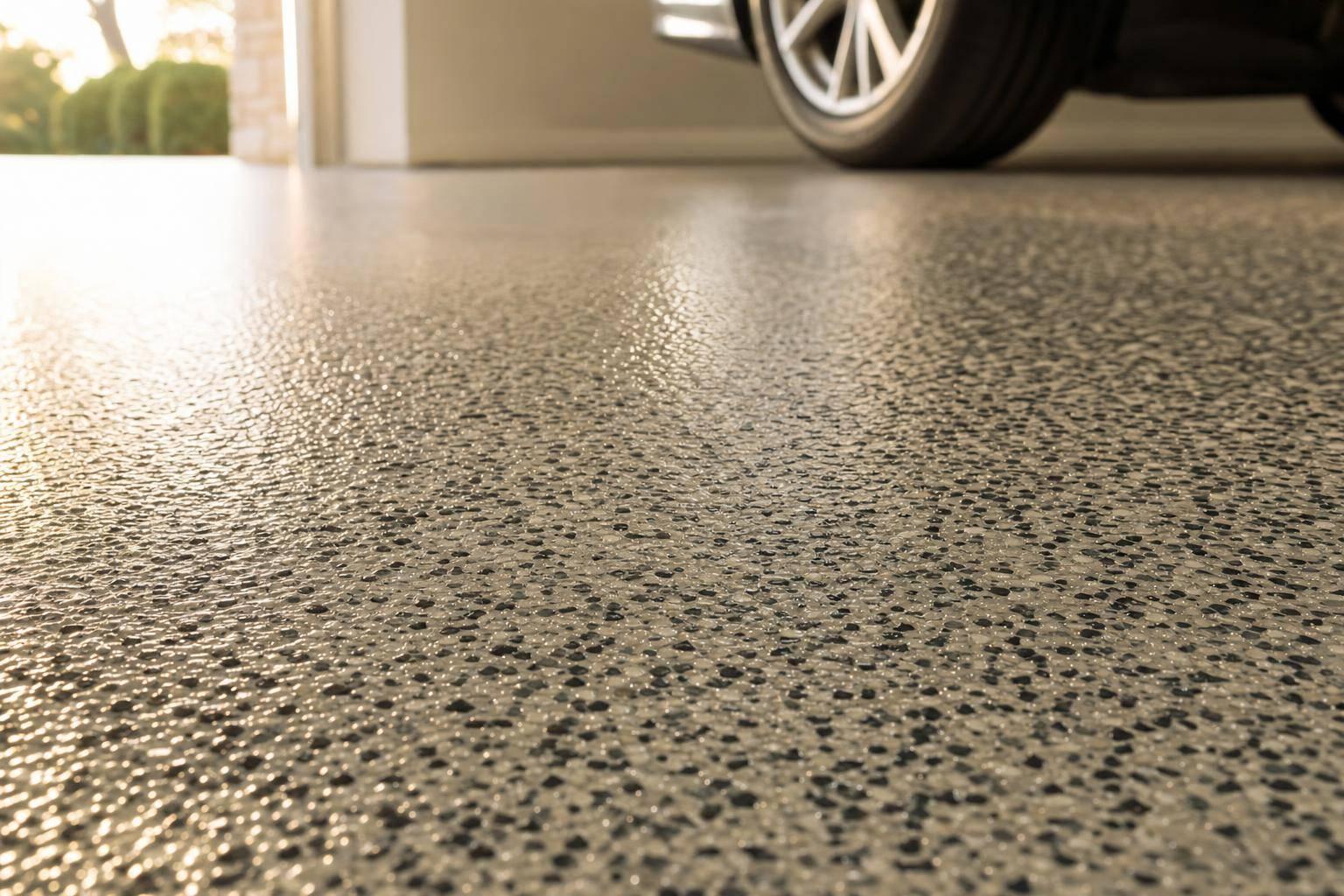
For homeowners and business owners in North Idaho and Eastern Washington, that idea matters. Whether you’re protecting a coated garage floor in Coeur d’Alene, maintaining a patio coating in Post Falls, or managing polished concrete in a Spokane warehouse, the same principle applies: the floor lasts longer when maintenance is matched to real-world use.
This article doesn’t repeat the webinar. Instead, it pulls out the most practical lessons, adds context, and translates commercial floor-care thinking into decisions property owners can actually use.
sbb-itb-a0e5ae3
Key Takeaways
- Traffic pattern matters more than floor type alone. The busiest entries, restrooms, and work zones should drive your maintenance plan.
- Communication is part of maintenance. In occupied spaces, cleaning schedules work best when they fit how people actually use the building.
- Use the mildest effective cleaner. Neutral pH cleaners were repeatedly emphasized for routine care on many hard floors.
- More chemical is not better. Overdilution or underdilution can damage appearance, leave residue, and create unnecessary cost.
- Match equipment to the space. A large scrubber is efficient in open areas, but smaller tools are often better in tight or heavily occupied zones.
- Restore before floors look "too far gone." Once shine, clarity, or protective performance starts fading, delaying service usually makes recovery harder.
- Section off active work areas. In busy environments, cleaning and restoration often succeed by breaking the floor into manageable zones.
- Textured and slip-resistant coatings need extra attention. They improve safety, but they can also reveal soil and biofilm faster.
- Training matters as much as products. The most common failures came from skipped steps, corner-cutting, and improper chemical use.
- Documentation helps when occupants interfere. If people walk on wet floors and then complain about results, clear process records protect your team.
The Real Secret to Floor Care: Stop Thinking in Terms of "Cleaning" Alone
One of the strongest themes from the discussion was that floor care is not a single activity. It is really four separate jobs:
- Daily soil removal
- Spot and spill response
- Periodic deep maintenance
- Restoration or recoating
A lot of floor problems happen when owners treat all four as if they were the same task.
For example, mopping a floor every day may keep it sanitary and presentable, but it will not replace periodic scrubbing, burnishing, recoating, or stain management. On the other hand, over-restoring a floor without improving daily care just resets the clock on the same recurring problem.
That distinction matters for coated concrete and decorative surfaces in particular. If a floor looks dull, stained, scratched, or uneven, the issue may not be "dirty floor" at all. It may be:
- worn protective film
- embedded soil in texture
- residue from the wrong cleaner
- abrasion from grit at entry points
- traffic patterns outpacing the maintenance schedule
In other words, appearance failure often starts as a systems failure.
Start With Traffic, Not Products
Many owners begin by asking, "What cleaner should I use?" The better first question is: Where does the abuse happen?
The panelists consistently pointed to the same high-stress zones:
- entry points
- restrooms
- break rooms
- cafeterias
- food service areas
- security or queue lines
- large corridors
- work areas with grease, sand, or moisture
That insight translates directly to residential and small commercial properties across the Inland Northwest.
What this means for a local homeowner or business owner
If you have a coated garage, basement, patio, or showroom floor, ask:
- Where does dirt first enter?
- Where do people pause, turn, or pivot?
- Where do tires sit?
- Where does water pool in winter?
- Where do pets, tools, or lawn equipment create repeated wear?
For many North Idaho and Eastern Washington properties, seasonal grit is the hidden enemy. Sand, de-icing residue, mud, and small gravel act like sandpaper under shoes and tires. That makes entries and transition zones more important than the middle of the floor.
The webinar panel didn’t focus on residential garages specifically, but the logic is identical: if you control what comes onto the floor, you reduce what has to be removed from the floor.
Scheduling Is Not a Minor Detail. It Is the Strategy.
A surprising amount of successful floor care comes down to timing.
In the webinar, one speaker described airport cleaning around passenger flow and gate schedules. Another discussed coordinating around active government buildings. Another explained working in manufacturing settings with narrow windows between usage periods. Different facilities, same lesson: you maintain floors best when you understand the building’s rhythm.
That’s useful because many floor failures aren’t caused by poor technique; they’re caused by trying to clean the right way at the wrong time.
Practical scheduling lessons
1. Learn the flow of the building
One panelist stressed that teams should observe how people move through a facility. That means identifying:
- peak entry times
- crowded zones
- temporary bottlenecks
- areas where furniture, carts, or equipment alter traffic
For a small business, that may mean cleaning your front entry before opening, not during customer rushes. For a home, it may mean rinsing or drying a garage floor after vehicle movement stops for the day.
2. Prioritize highly visible areas first
If you only have limited time, focus first on:
- main entrances
- public-facing spaces
- transition points
- spots where moisture creates slip risk
This is as much about perception as sanitation. A floor can technically be clean but still appear neglected if wear, streaks, or tracked-in soil dominate the first thing people see.
3. Build your maintenance around use windows
The panel repeatedly emphasized working during periods when disruption is lowest. For property owners, that might mean:
- cleaning a retail floor after close
- servicing a garage coating after weekend use
- doing restorative work during slower business cycles
- planning bigger jobs on holidays or low-occupancy days
The key is not just finding "free time." It’s finding enough uninterrupted time to do the job correctly.
Safety First, Then Containment, Then Cleanup
One of the clearest operational frameworks in the discussion was for handling spills and emergency messes:
- secure the area
- contain the problem
- resolve it thoroughly
That sounds basic, but it’s worth emphasizing because many people reverse the order. They rush straight to wiping up the mess before controlling foot traffic. That’s how slips happen, and it’s also how contamination spreads.
A better spill-response mindset
In a home or small business, this could mean:
- putting out temporary signage
- blocking access with a cart or cone
- using absorbent material before liquid spreads
- redirecting people until the surface is dry
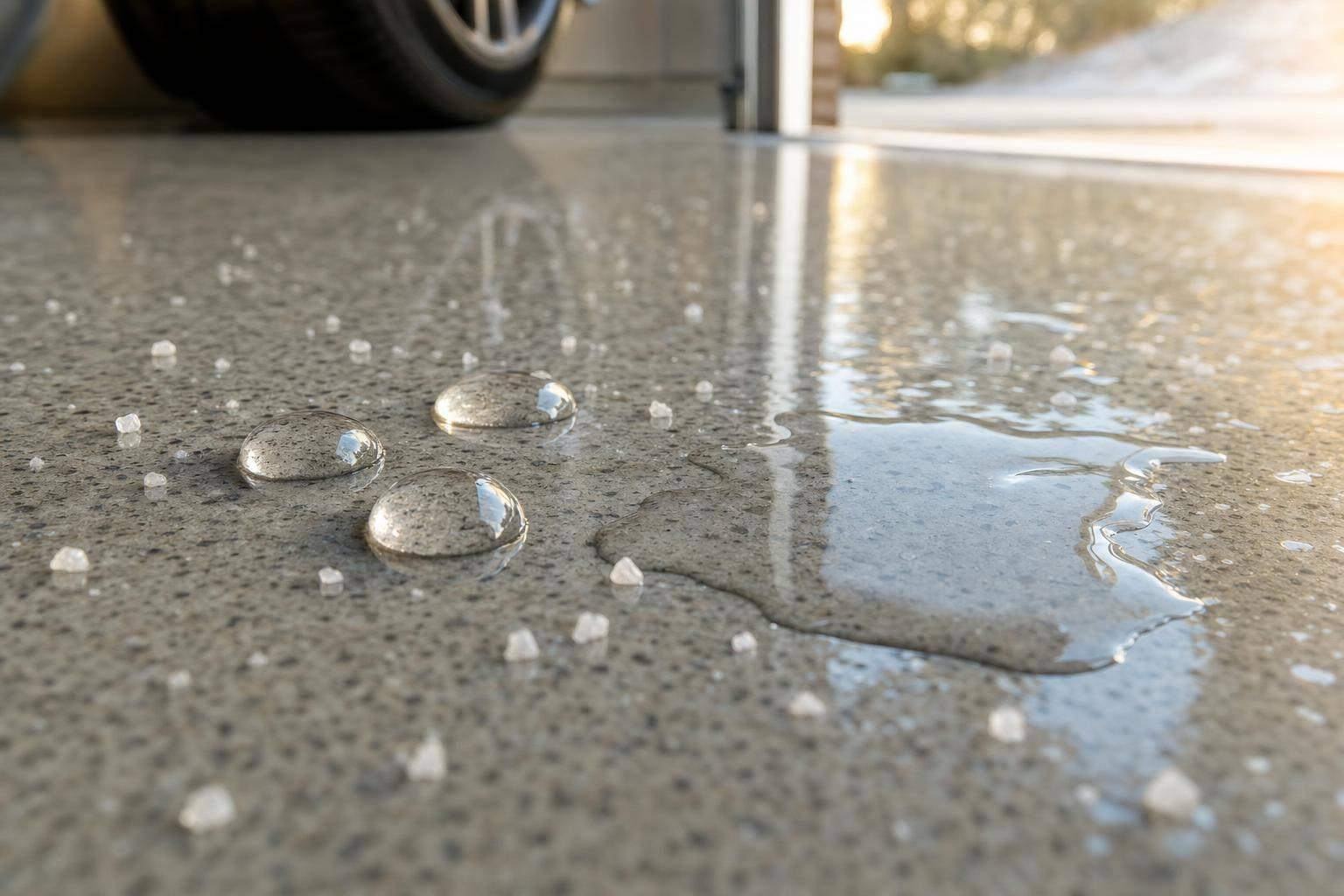
For coated concrete floors, fast response matters even more if the spill could stain or etch the finish. The webinar noted that naturally polished concrete can stain if leaks sit too long. The same caution applies broadly to coated and decorative surfaces: the longer the spill sits, the more likely it becomes a restoration issue instead of a cleaning issue.
The Best Cleaner Is Usually the Least Dramatic One
If the webinar had one quiet consensus, it was this: routine hard-floor care often works best with neutral pH products.
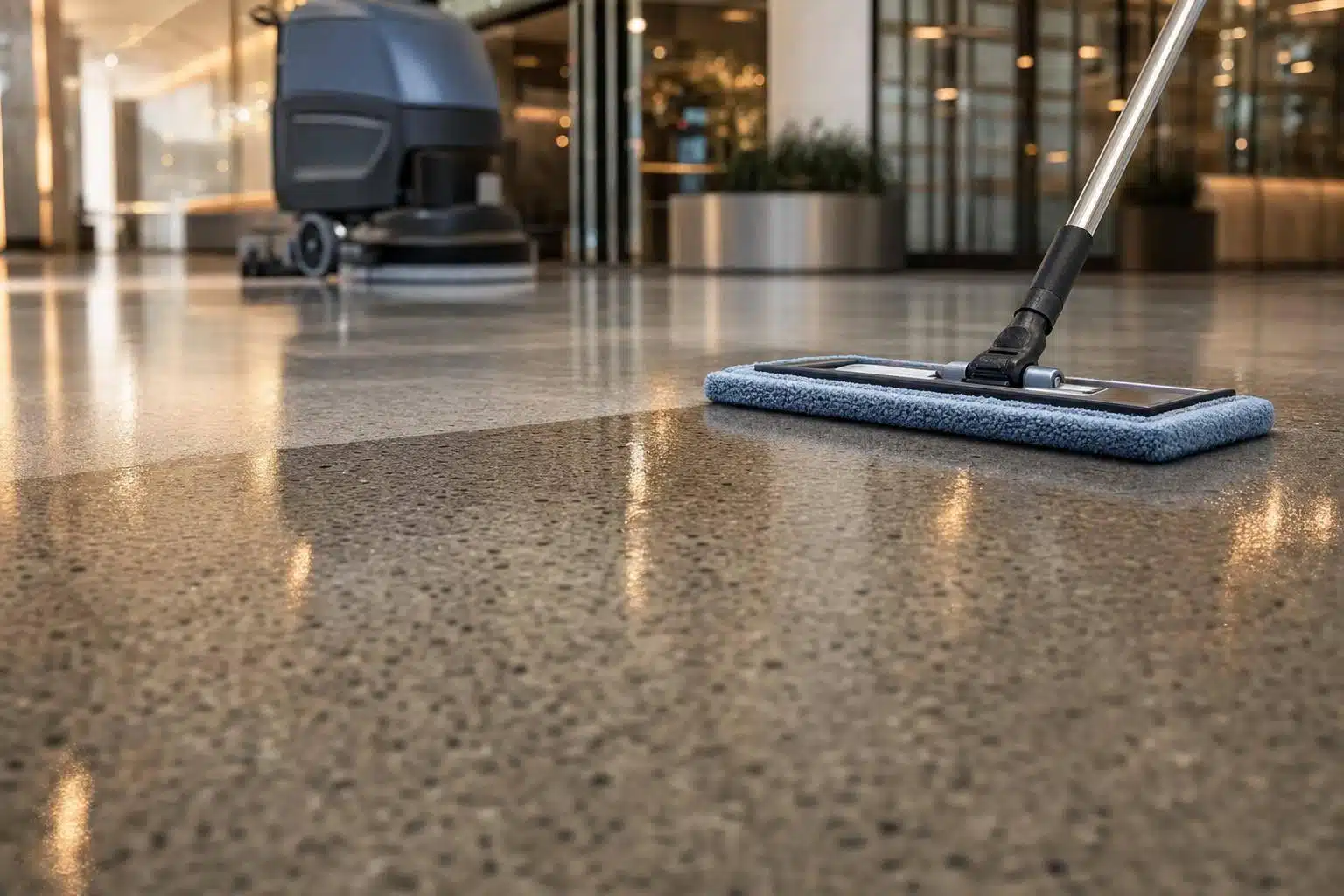
Panelists mentioned neutral cleaners repeatedly for regular mopping and scrubbing, especially on VCT and other common hard surfaces. They also discussed using specialized products only where the conditions justified them:
- disinfectant in some restroom settings
- degreaser in plant or shop areas
- tile and grout cleaner where buildup requires it
- absorbent and disinfecting procedures for hazardous spills
Why this matters for coated concrete
A lot of floor damage comes from overaggressive chemistry. Owners see buildup or dullness and assume they need something "stronger." Often, that creates residue, haze, coating wear, or uneven appearance.
For coated floors, polished concrete, and decorative systems, the safer rule is:
Use specialized chemistry only when the soil type requires it.
That means:
- grease needs a degreasing approach
- biofilm needs a targeted cleaning method
- routine dust and tracked soil usually do not need harsh chemistry
The panelists also made an important point: more chemical does not equal better cleaning. In fact, overdosing can make floors look worse, not better.
Equipment Choice Should Follow Layout, Not Trends
There was no "best machine" endorsed in the webinar, and that was one of its strengths. The experts consistently returned to fit-for-purpose thinking.
They mentioned a range of tools:
- brooms and dust mops
- flat mops and string mops
- microfiber systems
- backpack vacuums
- upright and walk-behind vacuums
- walk-behind scrubbers
- ride-on scrubbers
- cylindrical or pad-driven machines
- robotic equipment in some large, open environments
The common thread: the right equipment depends on size, obstacles, timing, and floor type.
What that means in practical terms
Large open floors
Use larger scrubbers or machines where you can maximize productivity and cover consistent surface area quickly.
Tight, occupied spaces
Stick with smaller tools when:
- access is limited
- corners matter
- people are present
- the floor must be cleaned in short intervals
Textured floors
Mechanical action matters more here. Some surfaces may need pads or tools that can reach low spots, texture, or grout lines.
For many business owners, this matters more than brand selection. Buying a larger machine than your space can support often leads to underuse. Choosing too small a tool for a large floor leads to labor inefficiency and inconsistent results.
Why Some Floor Types Look Great in Theory but Struggle in Real Life
The panel discussed several flooring categories commonly found in public and commercial settings:
- VCT
- terrazzo
- polished or sealed concrete
- LVP
- tile and grout
- hardwood specialty floors
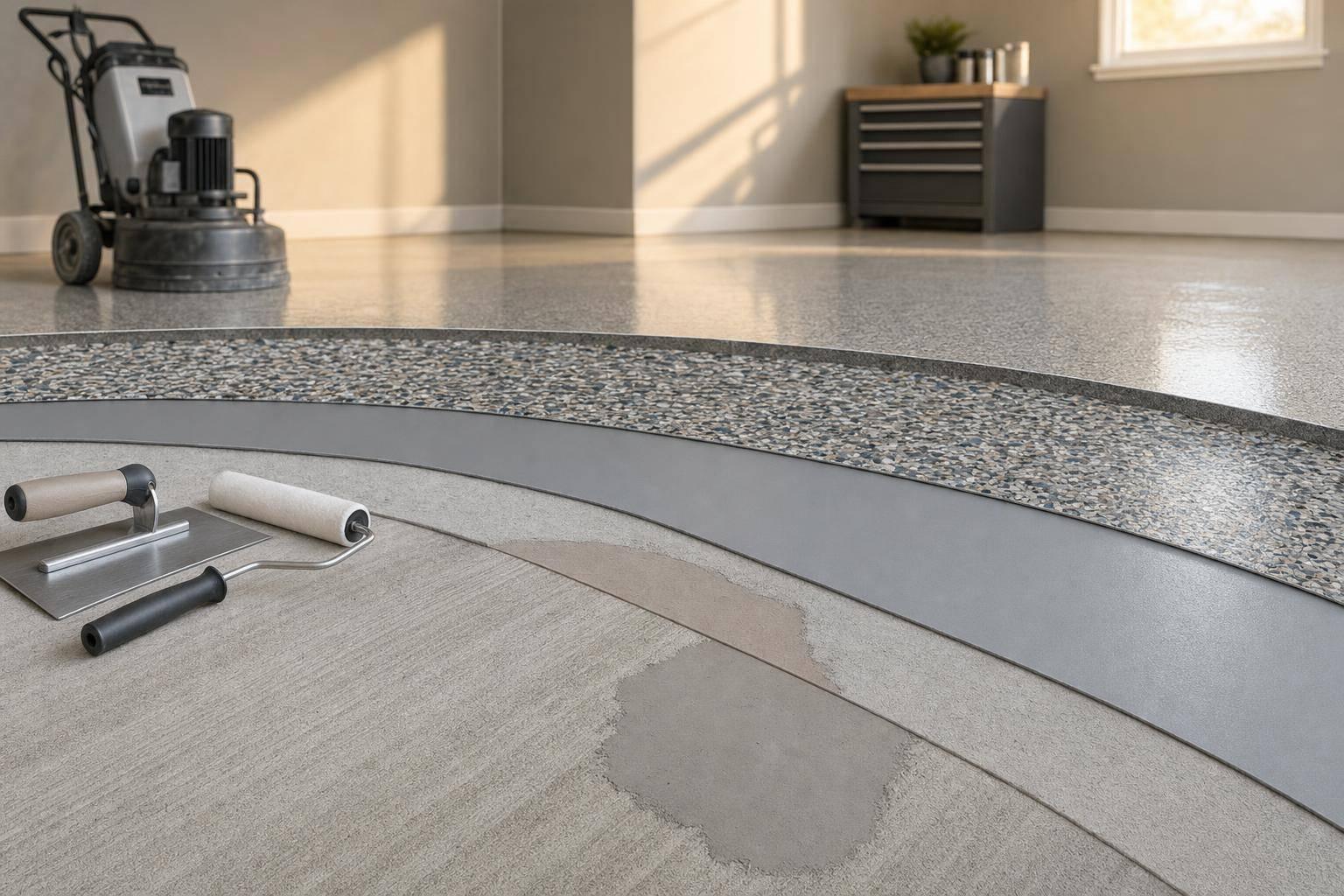
- two-part epoxy systems
Instead of naming a universal winner, the speakers kept returning to the same truth: every floor comes with tradeoffs.
VCT
Pros:
- can look excellent when maintained
- familiar in many facilities
Cons:
- scratches and scuffs show quickly
- depends heavily on regular maintenance
- appearance drops fast when recoating is delayed
One panelist suggested that VCT often benefits from a regular scrub-and-recoat cycle, with full stripping on a broader interval. That advice is specific to VCT, but the larger idea applies everywhere: a floor with a protective finish needs a maintenance plan before it needs rescue.
Terrazzo
Pros:
- attractive, high-end appearance
- strong long-term potential when properly maintained
Cons:
- maintenance choices matter greatly
- heavy traffic can dull appearance
- coating selection is critical
Notably, one expert discouraged default waxing on terrazzo and recommended exploring alternatives depending on the installation and client requirements.
Concrete and polished concrete
Pros:
- durable
- well-suited to many high-traffic or industrial environments
- can be visually appealing with the right finish
Cons:
- staining can become permanent if neglected
- some areas may need periodic mechanical refinement
- daily care must avoid residue and chemical misuse
For many garages and commercial utility spaces in the Inland Northwest, coated or polished concrete offers strong performance, but only if owners understand that durability does not mean "maintenance-free."
LVP
Pros:
- modern appearance
- less institutional look than some older materials
Cons:
- the webinar did not specify detailed maintenance drawbacks beyond routine care considerations
Two-part epoxy flooring
Pros:
- useful in harsh, messy environments
- can be easier to clean thoroughly
- especially helpful where sanitation and washdown matter
Cons:
- textured versions may show biofilm more quickly
- slip resistance can come with higher maintenance demands
That last point is especially relevant for garage coatings, patios, and utility spaces. Homeowners often want texture for traction, which is a smart safety decision. But texture can also trap soil more visibly than a smoother surface. That’s not a flaw; it just means the cleaning method must match the finish.
Restoration Should Happen Earlier Than Most People Think
One of the best parts of the discussion was the emphasis on intervening before floors look completely spent.
Too many owners wait until:
- shine is gone
- scratches are obvious
- staining is set
- customers or visitors are noticing
- cleaning no longer "brings it back"
By then, simple maintenance may no longer be enough.
Signs it may be time for restorative work
Based on the webinar, look for:
- fading sheen
- visible traffic lanes
- scratches and drag marks
- yellowing or worn protective coating
- dullness that remains after cleaning
- loss of reflectivity or clarity
- persistent staining in specific sections
One speaker noted that some facilities use formal inspection methods like gloss readings or image-distinction evaluation. Most homeowners and small businesses will not use those tools, but the concept is still valuable: don’t judge solely by dirt – judge by protective performance and visual consistency.
Restoration in busy spaces: work in sections
Another useful idea from the webinar was sectional restoration. If a full area cannot be closed, divide the work so that traffic can still move through a safe path.
That approach is often the difference between a project happening and being postponed indefinitely.
For a small business, that might mean:
- restoring one bay or aisle at a time
- splitting front-of-house and back-of-house work
- rotating entry access points
- handling half the square footage one night and the rest later
The message was clear: phased restoration is slower, but often far more realistic in active spaces.
The Most Common Floor-Care Mistakes Are Boring – and Expensive
The panelists agreed on two recurring failures:
1. Chemical misuse
This includes:
- using the wrong product
- using too much product
- failing to follow label directions
- assuming stronger is better
This is one of the fastest ways to create haze, residue, uneven gloss, or premature wear.
2. Skipping steps
One speaker pointed directly to people trying to "save time" by cutting corners. In floor care, skipped steps usually don’t save time; they shift the time cost forward into rework, damage, complaints, or early restoration.
That applies whether you’re maintaining terrazzo in a public building or a coated concrete floor in a garage. If the process calls for dust removal first, proper dilution, dwell time, agitation, rinse control, or drying control, skipping one part tends to show up later in the result.
Streaks, Footprints, and Occupied Spaces: The Frustration No One Escapes
The audience Q&A revealed a universal problem: people walk on freshly cleaned floors, then complain about marks.
The webinar’s answer was practical, not magical.
What helps:
- communicate expected timing
- document when interference occurs
- section off smaller areas
- use airflow to speed drying
- follow wet cleaning with a dry flat mop when appropriate
- redirect traffic whenever possible
One panelist recommended blowers or fan systems to reduce drying time. Another emphasized documenting when occupants fail to cooperate, especially in client-facing environments.
The larger lesson is useful for any property owner: some floor complaints are not cleaning failures; they are access-control failures.
If a floor must remain attractive immediately after cleaning, the work plan has to include traffic management, not just product selection.
Concrete Floors: Strong, Attractive, and Still Vulnerable
Because your audience includes many people interested in coated concrete and durable surface upgrades, it’s worth pulling out the concrete-specific lessons from the discussion.
The webinar indicated that naturally polished concrete was commonly maintained with:
- dust removal
- neutral cleaner
- prompt spot treatment for leaks or stains
- occasional light pad work in some situations
What the panel did not provide was a universal stain-removal formula. In fact, they cautioned against guessing with random chemicals and recommended evaluating the stain type first.
That’s a useful limitation to respect. On coated or polished concrete, mystery chemistry is often the fastest route to permanent visual damage.
A smart approach to concrete maintenance
For daily or routine care:
- remove abrasive dust and grit first
- clean with an appropriate neutral product
- address spills quickly
- avoid product buildup
- evaluate recurring stains at the source, not just at the surface
For garages and industrial-style spaces, this matters because many "floor problems" are really workflow problems:
- leaking bags
- parked wet vehicles
- oil drips
- winter runoff
- poor matting at transitions
Treating the cause often does more than scrubbing the symptom.
What Homeowners and Small Business Owners Can Borrow From Commercial Floor Programs
Even though the webinar focused on large facilities, its best lessons scale down well.
Use a maintenance ladder
Think in levels:
- daily or frequent dry soil removal
- regular damp cleaning
- monthly or periodic detail attention
- annual or scheduled restoration review
Build around your busiest zones
Don’t give every area equal attention if every area doesn’t receive equal use.
Choose finish and texture with maintenance in mind
A slip-resistant coating may be the right choice, but understand it may need more mechanical cleaning than a smooth decorative finish.
Don’t wait for "damage"
If the floor is losing clarity, uniformity, or protection, that is already your warning sign.
Train anyone who touches the floor
In a business, that means staff. At home, that may mean family members, contractors, or anyone using unapproved cleaners and tools.
Conclusion
The webinar’s experts came from very different environments, but they all circled the same truth: successful hard-floor care is not about chasing perfection every day. It’s about building repeatable systems that protect appearance, safety, and longevity over time.
For homeowners and business owners in places like Coeur d’Alene, Hayden, Post Falls, Spokane, and the Tri-Cities, that mindset is especially valuable. Floors here often face real wear – from weather, grit, moisture, heavy use, and changing traffic patterns. Whether you’re maintaining a concrete coating in a garage, a patio surface, or a busy commercial floor, the best results come from matching the maintenance plan to the way the space actually lives.
If there’s one takeaway worth remembering, it’s this: floors usually fail gradually, but maintenance works best proactively. Clean them with the right chemistry, on the right schedule, with the right tools, before visible decline becomes expensive repair.
Source: "Around-the-Clock Floor Care: Maintaining Hard Floors in High-Traffic Facilities" – ISSA Media, YouTube, Jun 23, 2025 – https://www.youtube.com/watch?v=O0Jm8wAGnoU