Concrete moisture testing is critical to prevent costly coating failures like peeling, bubbling, or discoloration. Even if concrete feels dry, hidden moisture can damage coatings. Testing ensures that moisture levels are within acceptable limits before applying coatings, saving time and money on repairs.
Key Takeaways:
- Why It Matters: Excess moisture leads to issues like delamination, blistering, and efflorescence.
- Moisture Limits: Safe levels are under 3–5 lbs/1,000 sq. ft. per 24 hours or 75–85% relative humidity.
- Testing Methods:
- Plastic Sheet Test (ASTM D4263): Simple pass/fail method.
- Calcium Chloride Test (ASTM F1869): Measures moisture vapor emission rate.
- Relative Humidity Probe Test (ASTM F2170): Most accurate for internal moisture.
- Moisture Meter Testing (ASTM F2659): Quick surface readings.
- Common coating mistakes: Metal interference, efflorescence, and uncalibrated meters can skew results.
In regions like North Idaho and Eastern Washington, where moisture-related issues are common, proper testing is non-negotiable. Companies like Croc Coatings integrate moisture testing into their process to ensure durable results and warranty-backed performance.
Testing For Moisture Vapor In Your Concrete (Calcium Chloride Test)
sbb-itb-a0e5ae3
Why Moisture Testing Matters for Coating Performance
Moisture testing plays a key role in ensuring the success and longevity of concrete coatings. Skipping this step can result in costly failures that demand extensive repairs.
How Excess Moisture Damages Coatings
When moisture levels in concrete exceed acceptable limits, several issues can arise:
- Delamination: Moisture weakens the bond between the coating and the concrete slab, causing the coating to peel or separate.
- Osmotic blistering: Vapor pressure builds beneath the coating, leading to the formation of large, unsightly bubbles.
- Efflorescence: Moisture reacts with minerals in the concrete, leaving behind white deposits or permanent discoloration.
Additionally, trapped moisture can create an ideal environment for mold, mildew, and bacteria, which can produce unpleasant odors.
"Some people refer to concrete as a rigid sponge. It absorbs liquids, including solvents. Sometimes a small amount of solvents entrapped in concrete can result in massive coating failures." – Mike O’Brien, Author
Another challenge occurs when coatings are applied to exterior concrete in direct sunlight during rising temperatures. The warming concrete releases gases, which can cause surface defects like cratering and pinholing.
How Testing Prevents Coating Failures
Moisture testing helps determine if the concrete is ready for coating or if it requires a moisture mitigation system beforehand. For instance, if moisture vapor emission rates exceed 3–5 lbs per 1,000 square feet over 24 hours or if internal relative humidity levels surpass 75–85%, specialized primers such as epoxy or urethane should be applied to block vapor before adding the topcoat.
High-performance systems, like the Penntek Evolution coating offered by Croc Coatings, are designed to perform well under specific moisture conditions – but only if those conditions are properly tested and documented. Recording moisture test results not only ensures quality but also provides a baseline for warranty coverage, safeguarding both the contractor’s work and your investment.
Understanding these testing procedures is essential for meeting acceptable moisture limits, which will be explored further in the next section.
4 Methods for Testing Concrete Moisture
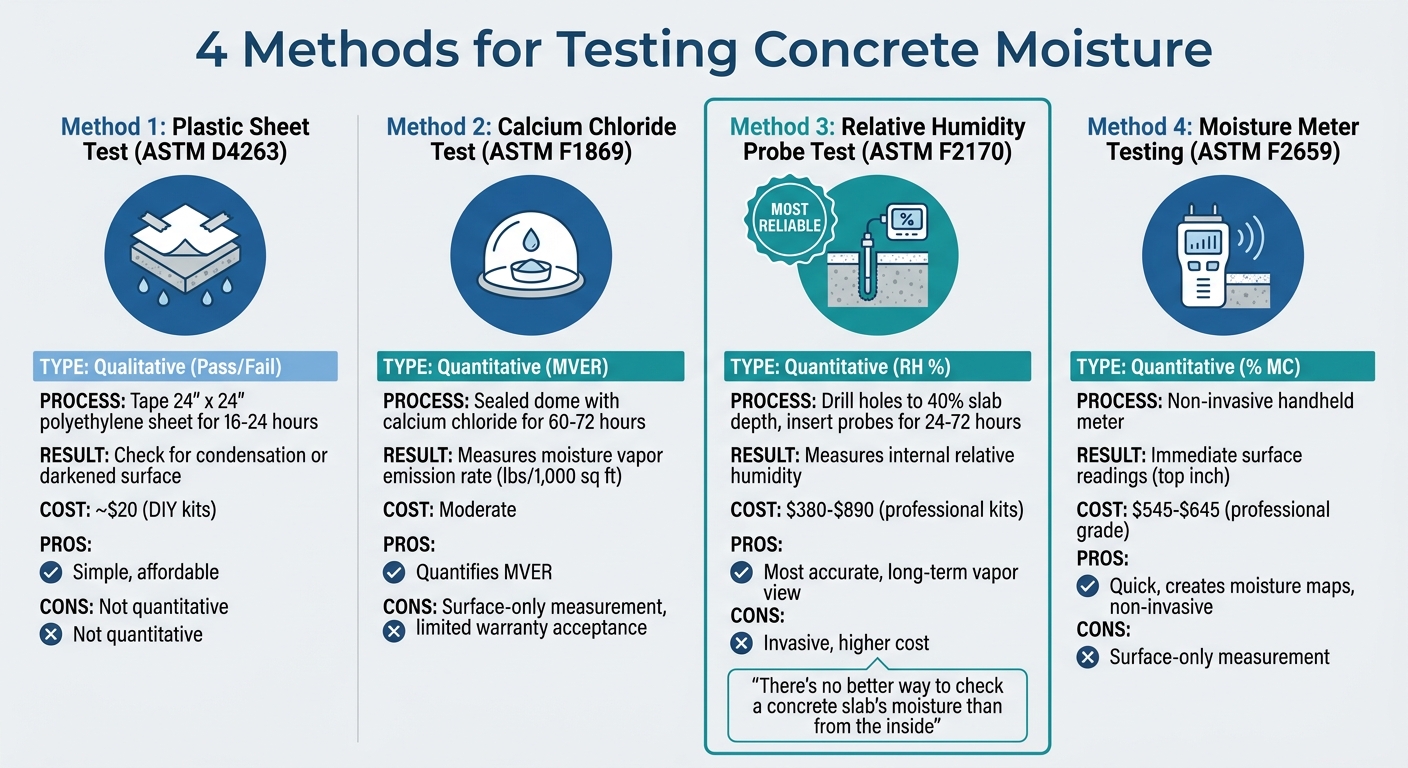
4 Concrete Moisture Testing Methods Comparison Chart
Choosing the right method to test concrete moisture is crucial to avoid moisture-related coating failures. Here are four key testing approaches, each offering distinct ways to measure moisture content and ensure concrete is ready for coating.
Method 1 – Plastic Sheet Test (ASTM D4263)
This simple test involves taping a 24″ x 24″ polyethylene sheet to a clean concrete area for 16–24 hours. If you notice condensation or a darkened surface under the sheet, it indicates the presence of moisture. While this method is qualitative, it’s an affordable option, with DIY kits priced at around $20.
Method 2 – Calcium Chloride Test (ASTM F1869)
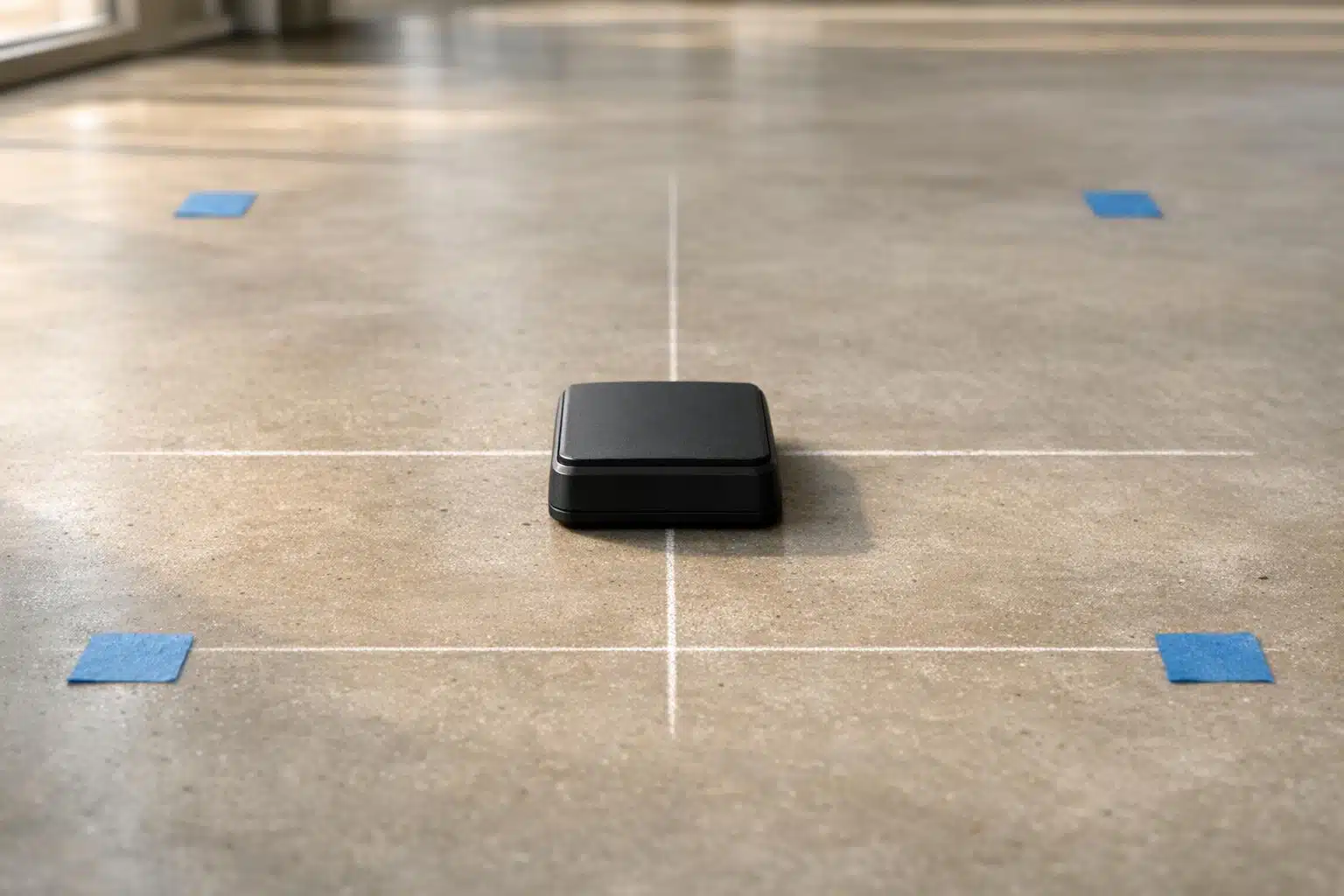
This method quantifies the Moisture Vapor Emission Rate (MVER). A dish of anhydrous calcium chloride is placed under a sealed dome on the concrete surface for 60–72 hours. The calcium chloride absorbs moisture, and its weight gain is used to calculate MVER in pounds per 1,000 square feet. However, this test only measures moisture from the slab’s upper layers, and many flooring manufacturers no longer accept its results for warranty purposes.
Method 3 – Relative Humidity Probe Test (ASTM F2170)
Considered the most reliable option, this method involves drilling holes to 40% of the slab’s depth and inserting electronic probes. After 24–72 hours, the probes measure internal relative humidity, offering a long-term view of vapor movement. Professional RH kits range in price from $380 to $890.
"There’s no better way to check a concrete slab’s moisture than from the inside" – Chris Ranwell, Protimeter
Method 4 – Moisture Meter Testing (ASTM F2659)
This non-invasive technique uses a handheld moisture meter to provide immediate surface readings of moisture content (%MC) from the top inch of concrete. These meters are particularly useful for creating moisture maps of the substrate before conducting invasive tests. Professional-grade meters typically cost between $545 and $645.
Each of these methods offers valuable insights into concrete moisture levels, helping ensure coatings adhere properly and last over time. Understanding them is a critical step in achieving durable results.
Moisture Limits for Concrete Coatings
Understanding concrete moisture limits is key to ensuring a durable and long-lasting coating. Excess moisture in the substrate can lead to issues like blistering, bubbling, or even complete coating failure.
Industry standards provide clear thresholds for safe application, depending on the testing method used. For the Relative Humidity probe test (ASTM F2170), the concrete’s RH should be below 85%. The Calcium Chloride test (ASTM F1869) requires the moisture vapor emission rate to stay under 5 lb/1,000 sq. ft. per 24 hours. When using a Radio Frequency Moisture Meter, the reading should not exceed 5% moisture content. According to Tramex, new concrete slabs are generally ready for coatings when their moisture content falls between 3.5% and 4.5%, with drier conditions favoring the lower end of this range.
| Test Method | ASTM Standard | Industry-Standard Criteria |
|---|---|---|
| Plastic Sheet Method | ASTM D4263 | Pass/Fail (No visible moisture) |
| Relative Humidity (RH) | ASTM F2170 | < 85% |
| Calcium Chloride | ASTM F1869 | < 5 lb/1,000 sq. ft. per 24 hr |
| Radio Frequency Meter | N/A | < 5% moisture |
Environmental factors also play a major role. Both air and substrate temperatures should remain at least 5°F above the dew point to avoid condensation. If the temperature difference drops to 6°F or less, stop the application to prevent moisture contamination.
Adhering to these moisture limits is critical to avoiding common concrete coating failures like delamination, blistering, or efflorescence. Always check the manufacturer’s technical data sheets for any stricter guidelines. For instance, Croc Coatings ensures proper bonding and supports its lifetime warranty by following these thresholds when applying the Penntek Evolution system. If the concrete is sound (3,500 psi or higher) but has slightly higher moisture levels, moisture-tolerant primers can be an effective solution.
Common Testing Errors and How to Avoid Them
Even with the right equipment, testing mistakes can lead to inaccurate readings and expensive coating failures. One of the most frequent issues to watch out for is metal interference.
Hidden metal, such as rebar, screws, or wire mesh, can cause false spikes in moisture meter readings. Chris Ranwell from Protimeter highlights this challenge:
"In moisture surveys, metal is a moisture meter’s worst enemy. Conductive and all throughout a building or space… contact with metal makes for moisture meter false readings"
If you notice a sudden spike in your readings that drops off sharply just a few inches away, it’s probably caused by hidden metal rather than actual moisture. Always check the area around the spike to confirm the cause.
Another common issue is salt and efflorescence. The white, chalky residue often found on concrete surfaces can trap water and increase conductivity. This can make pin-type meters record higher moisture levels than what’s actually present. Be sure to inspect for efflorescence beforehand to avoid skewed results.
Temperature extremes can also throw off your readings. If your equipment has been sitting in a cold vehicle or exposed to intense heat, it may not provide accurate measurements right away. As Ranwell advises:
"A meter that’s left outside in a vehicle and exposed to temperature extremes should be given time to reach room temperature before use"
Let your equipment acclimate to room temperature before taking any measurements.
Lastly, don’t overlook surface condensation and calibration issues. Condensation on the surface or using an uncalibrated meter can lead to unreliable results. Establish baseline readings for the specific concrete substrate you’re testing under controlled conditions, and regularly calibrate your meter according to the manufacturer’s instructions. These steps are essential for dependable moisture assessments.
How Croc Coatings Uses Moisture Testing with Penntek Evolution

Croc Coatings takes moisture testing seriously, making it a key part of their installation process in North Idaho and Eastern Washington. Every project includes thorough moisture assessments before applying Penntek Evolution – a coating that’s known to be four times stronger than epoxy. These tests ensure the concrete substrate is ready, which is essential for maintaining their lifetime warranty.
Why is this so important? Even the toughest coating can fail if the surface underneath isn’t properly prepared. As Maribeth Taylor explains, "A critical component for successful adhesion of a coating system to a concrete substrate is having a dry substrate". To ensure this, Croc Coatings doesn’t just rely on moisture tests – they also monitor environmental conditions throughout the installation.
How Testing Ensures Long-Lasting Results
To prevent adhesion issues, Croc Coatings follows strict moisture guidelines. They make sure the air and substrate temperatures are at least 5°F above the dew point, which helps avoid surface condensation that could weaken the bond. This careful attention to detail not only ensures a strong, lasting finish but also keeps the installation process running smoothly.
One-Day Installation with Moisture Testing
Most residential installations by Croc Coatings are completed in just one day, thanks to their efficient integration of moisture testing into the prep work. If high moisture levels are found, they address the issue right away, using tools like dehumidifiers or applying moisture-tolerant primers on concrete with a minimum strength of 3,500 psi. Once they confirm the substrate is ready, the Penntek Evolution system is applied, curing properly to provide a surface that’s antibacterial, UV-stable, and slip-resistant – all backed by a lifetime warranty.
Conclusion
Proper moisture testing is the backbone of any coating system designed to stand the test of time. Skipping this crucial step can lead to issues like blistering, bubbling, or even complete debonding, regardless of how durable the coating might seem. This often comes down to the difference between chemical and mechanical bonds.
For property owners in areas like North Idaho and Eastern Washington, where concrete coatings for harsh climates are essential because snow, high water tables, and humidity can wreak havoc on concrete, following strict testing protocols is non-negotiable. It’s worth noting that human error is a leading cause of liquid-applied waterproofing failures. The testing methods discussed earlier play a key role in establishing reliable practices, which are essential for achieving durable results. This level of precision is central to the solutions provided by Croc Coatings.
Croc Coatings combines meticulous moisture testing with the Penntek Evolution system, known for being four times stronger than epoxy. Their process ensures a one-day installation, delivering long-lasting, warranty-backed performance. This method not only protects your investment from costly repairs but also keeps your garage floor, patio, or commercial space looking great and functioning well for years to come.
Choosing high-quality concrete coatings means securing expertise that prevents issues before they arise, ensuring your floors can handle everyday use and unexpected challenges alike.
FAQs
How many moisture tests should be performed on a concrete slab?
The article doesn’t mention a specific number of moisture tests needed for a concrete slab. However, it’s crucial to adhere to industry standards and conduct comprehensive testing to avoid potential coating failures.
How long should I wait after pouring concrete before coating it?
When you pour concrete, it’s important to wait at least 24 to 48 hours before applying any coating. However, this timeframe can shift based on conditions like temperature and humidity. To ensure the surface is ready, perform a proper moisture test. This step is crucial for achieving a durable, long-lasting finish.
What should I do if my concrete fails the moisture test?
If your concrete doesn’t pass the moisture test, it’s crucial to deal with the extra moisture before moving forward with coatings or flooring. Let the concrete dry completely, then test it again to ensure it meets the necessary moisture levels. To help the drying process, you can boost ventilation, use dehumidifiers, or apply heat. Always perform another test after these measures to confirm the concrete is ready. This step helps avoid coating issues and ensures durable, lasting results.