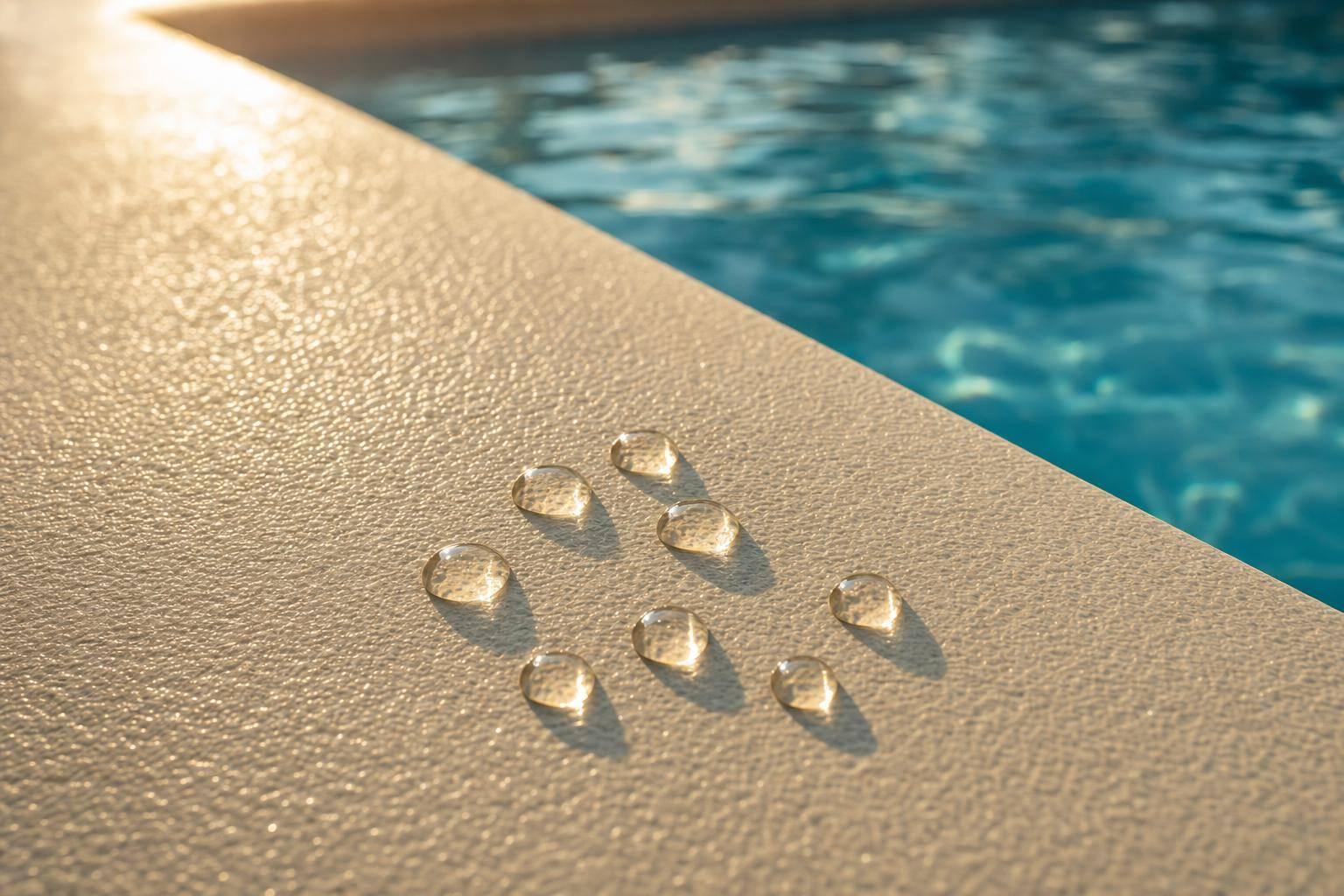
If your pool deck faces full sun, splash water, chlorine, and winter freeze-thaw, polyurea is often a better fit than bare concrete or stiff coatings.
I’d sum it up like this: polyurea helps because it blocks more water, handles slab movement better, and holds color better with a UV-stable topcoat. That matters in places like Spokane, Coeur d’Alene, and the Tri-Cities, where concrete can go through 73–87 freeze-thaw cycles in one winter and where snow, splash water, and summer heat all hit the same slab.
Before I trust any pool deck coating, I’d look at these points first:
- Prep matters most: diamond grinding, crack repair, and moisture checks
- Water control matters: trapped moisture leads to scaling, spalling, and loss of bond
- Texture matters: wet areas need grip, but bare feet still need comfort
- Color matters: darker finishes can run 10–20°F hotter in full sun
- System matters: base coat, texture or flake, and a UV-stable topcoat each do a separate job
Bottom line: a pool deck coating lasts longer when the slab is dry, the surface is ground to the right profile, and the finish is picked for sun, water, traction, and heat.
Concrete Coatings Installation on Pool Deck
sbb-itb-a0e5ae3
Quick Comparison
| Option | Handles Sun | Handles Water | Wet Grip | Barefoot Feel | Best Fit |
|---|---|---|---|---|---|
| Flake finish | Good with UV-stable topcoat | Good | Medium to high | Good | Most home pool decks |
| Aggregate texture | Good with UV-stable topcoat | Good | High | Rougher | Steps, slopes, splash zones |
| Rubberized coating | Good, color still matters | Good | Medium to high | Softest | Kids’ areas, therapy, long barefoot use |
If I were choosing for a home pool deck in this climate, I’d focus less on sales claims and more on prep quality, moisture testing, slip resistance, and lighter color choices.
Why Polyurea Performs Better on Pool Decks
A pool deck takes a beating. It deals with water, hot sun, pool chemicals, and freeze-thaw cycles all at once. That’s a rough mix for any coating, and weak systems tend to fail fast. Of course, even the best material can fall short if it isn’t installed the right way.
How Polyurea Handles UV, Water, and Freeze-Thaw Movement
Concrete moves. As temperatures go up and down, the slab expands and contracts. If a coating is too rigid, it can’t move with the surface below it. That usually leads to stress, especially around joints and repaired cracks.
Polyurea has more give, so it can flex with minor slab movement instead of fighting against it. That helps cut stress in the spots where coatings often start to break down.
Water is the other big problem. Once moisture gets into concrete and cold weather rolls in, trouble starts. A dense polyurea film helps limit water intrusion before freezing temperatures hit. Sherwin-Williams notes that when water fills about 90% of concrete’s pore structure, freeze-thaw cycles can break down the slab, causing scaling, spalling, and delamination. Keeping more water out from the start gives the slab a better shot at holding up through winter.
Stain and Chemical Resistance Around Pools
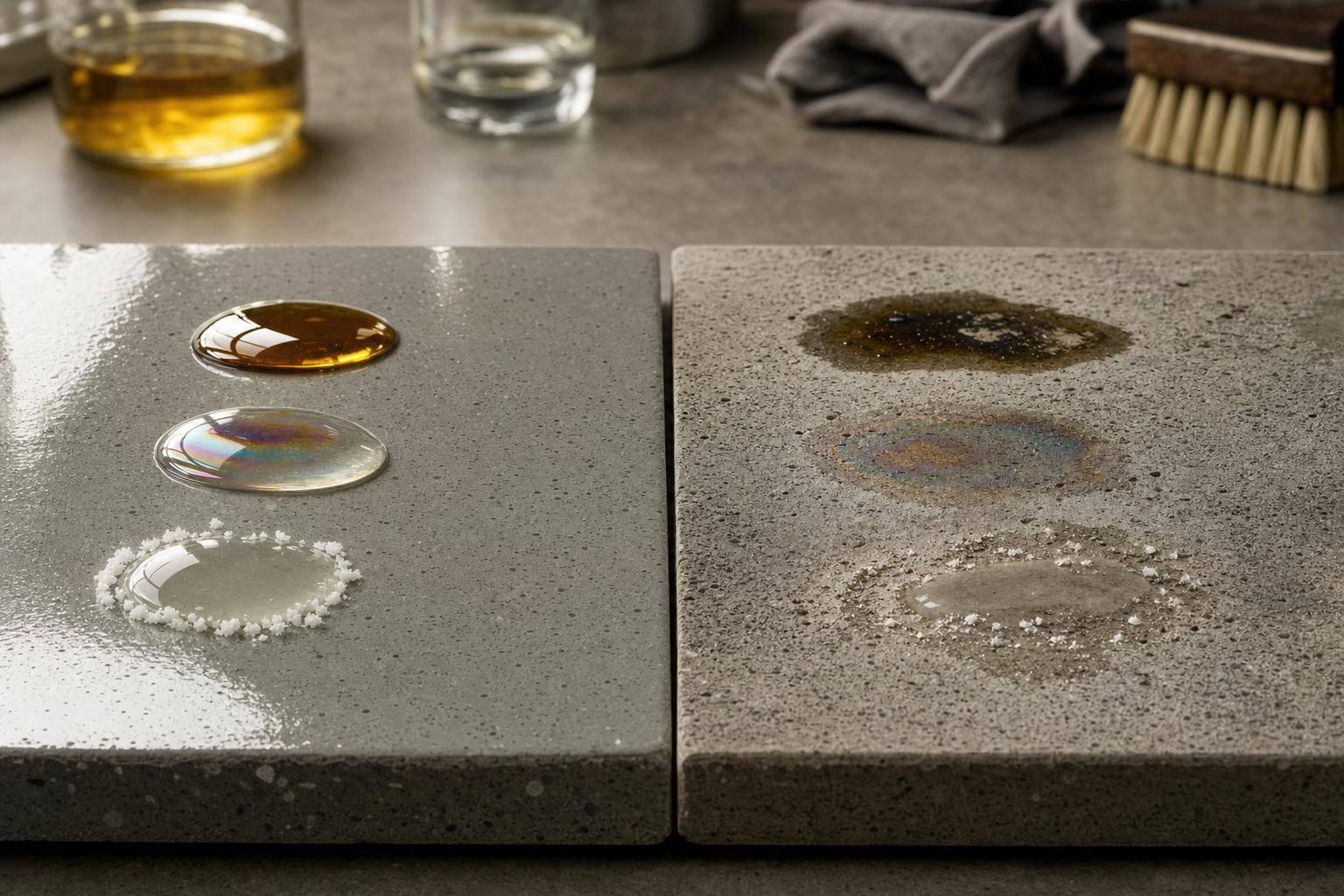
Pool decks collect more than splash water. They also deal with chlorine, sunscreen, body oils, dirt, and organic stains. Bare concrete soaks those materials in fast, which is why stains can become hard – or flat-out impossible – to remove.
A low-porosity polyurea surface gives you more time. Instead of sinking in right away, most spills stay on top long enough to rinse off or scrub lightly before they set. That usually means less cleanup work and fewer deep stains.
That said, quick cleanup still matters. Concentrated chemicals can discolor any finish if they sit too long. And even a strong coating won’t last if the prep work is poor or the surface texture is wrong.
For outdoor pool decks, the big wins are flexibility, low permeability, and easier cleanup. But the small install details are what decide whether those upsides last over time.
Installation Basics That Determine How Long a Pool Deck Coating Lasts
Polyurea only lasts when the concrete is prepped the right way. That’s the part a lot of people never see, but it’s the part that decides whether a pool deck coating holds up for years or starts peeling far too soon.
If you’re planning a pool deck project, it helps to know what solid installation looks like. That makes it a lot easier to spot the difference between a contractor doing the job right and one rushing through it. When a deck has to deal with sun, splashing water, and freeze-thaw cycles, the small stuff matters. Surface prep, moisture control, and texture do most of the heavy lifting.
Surface Prep: Grinding, Repairs, and Moisture Checks
The most important work happens before the coating is even mixed.
Installers start by checking the slab for cracks, spalling, old sealers, and contamination such as sunscreen oils, algae, or de-icer residue. Those are common issues on outdoor pool decks in North Idaho and Eastern Washington. If they stay on the surface, they can block the coating from bonding to the concrete.
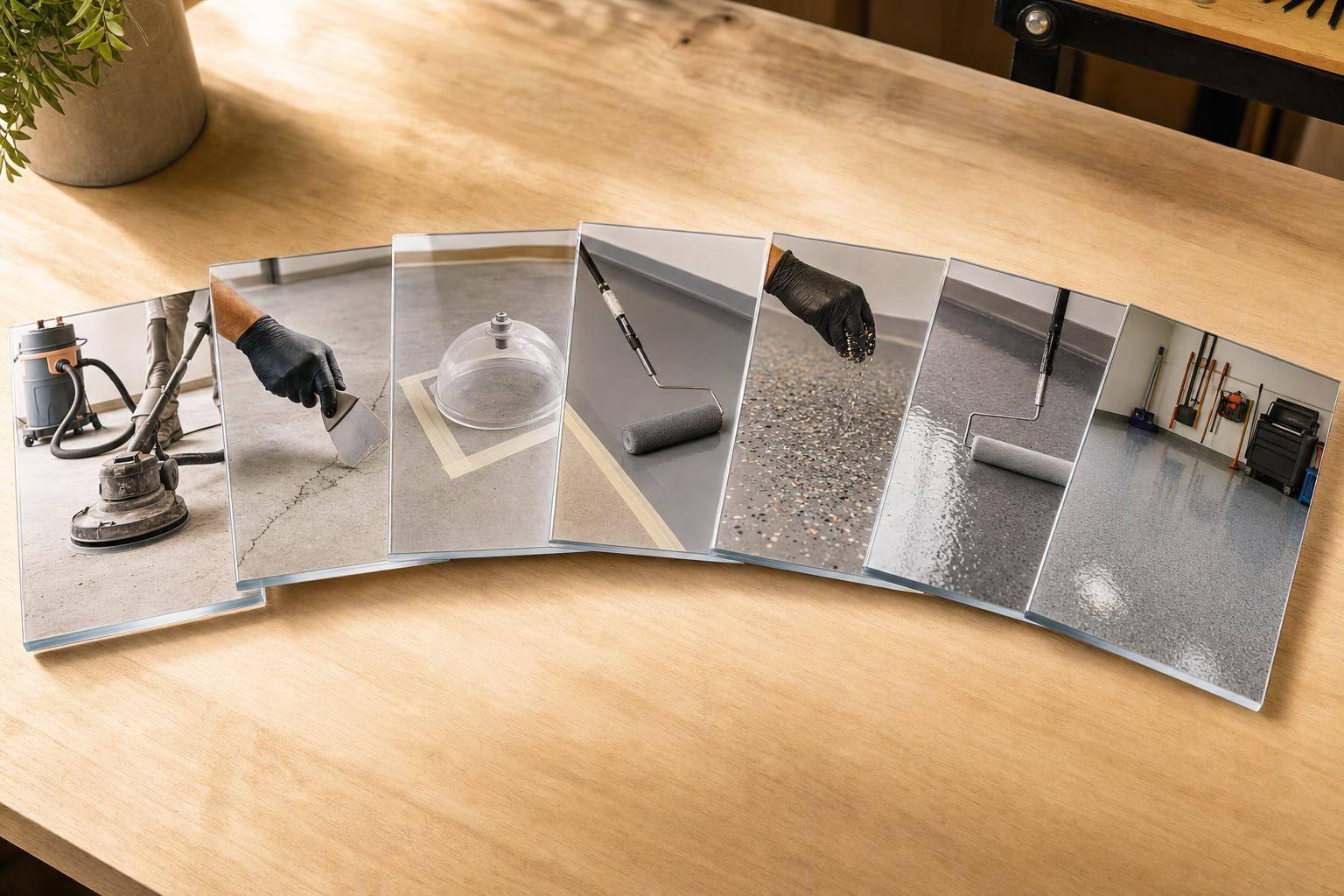
After that, installers use diamond grinding to open up the concrete, remove weak surface material, and create a controlled texture. In most cases, that means a CSP 2–3 profile. That profile gives the coating something to grip onto. Pressure washing by itself doesn’t do that job. In many early coating failures, the cause comes back to poor grinding, weak cleaning, or applying product over damp concrete.
Moisture is the other big factor. If a slab stays wet because of poor drainage, irrigation overspray, or snow melt, the coating can start losing adhesion from underneath. To check for that, installers use a plastic sheet test or ASTM F1869/F2170 testing. They should move ahead only when the readings fall within the maker’s limits. Dry concrete gives the coating a much better shot at making it through freeze-thaw cycles.
Once the slab is ready, the next step is building traction into the system.
How Texture Improves Wet-Foot Slip Resistance
Texture isn’t an afterthought. It’s built into the coating system from the beginning.
Installers add traction with flake, aggregate, or rubberized texture. Slip-resistant aggregates like silica or aluminum oxide create a more aggressive surface, which works well on steps and sloped areas. At the same time, installers can give steps and entry points more grip while keeping the main deck more comfortable for bare feet.
What a Complete Pool Deck Coating System Includes
A well-built pool deck coating is a system, not just one layer rolled onto concrete. And the order matters: prepared concrete → primer/base coat → texture or flake broadcast → UV-stable clear topcoat.
Each layer has a job. The base coat bonds to the concrete and adds flexibility. The topcoat seals in the finish and helps protect the surface from UV exposure and pool chemicals. This is why UV stability matters for any outdoor surface exposed to direct sunlight.
In systems like Penntek Evolution, installed by Croc Coatings, those layers work together to stand up to sun, chlorinated water, and freeze-thaw movement. For spaces where people spend a lot of time barefoot, Croc Coatings also offers a rubberized pool deck coating option. That system uses rubber granules set into a resin binder, which creates a softer, more cushioned feel underfoot.
Even though the finishes feel different, both options depend on the same core process: sound prep and a multi-layer build made to handle North Idaho and Eastern Washington winters.
Finish choice comes next, because it affects comfort, traction, and heat.
Choosing the Right Finish for Safety, Appearance, and Maintenance
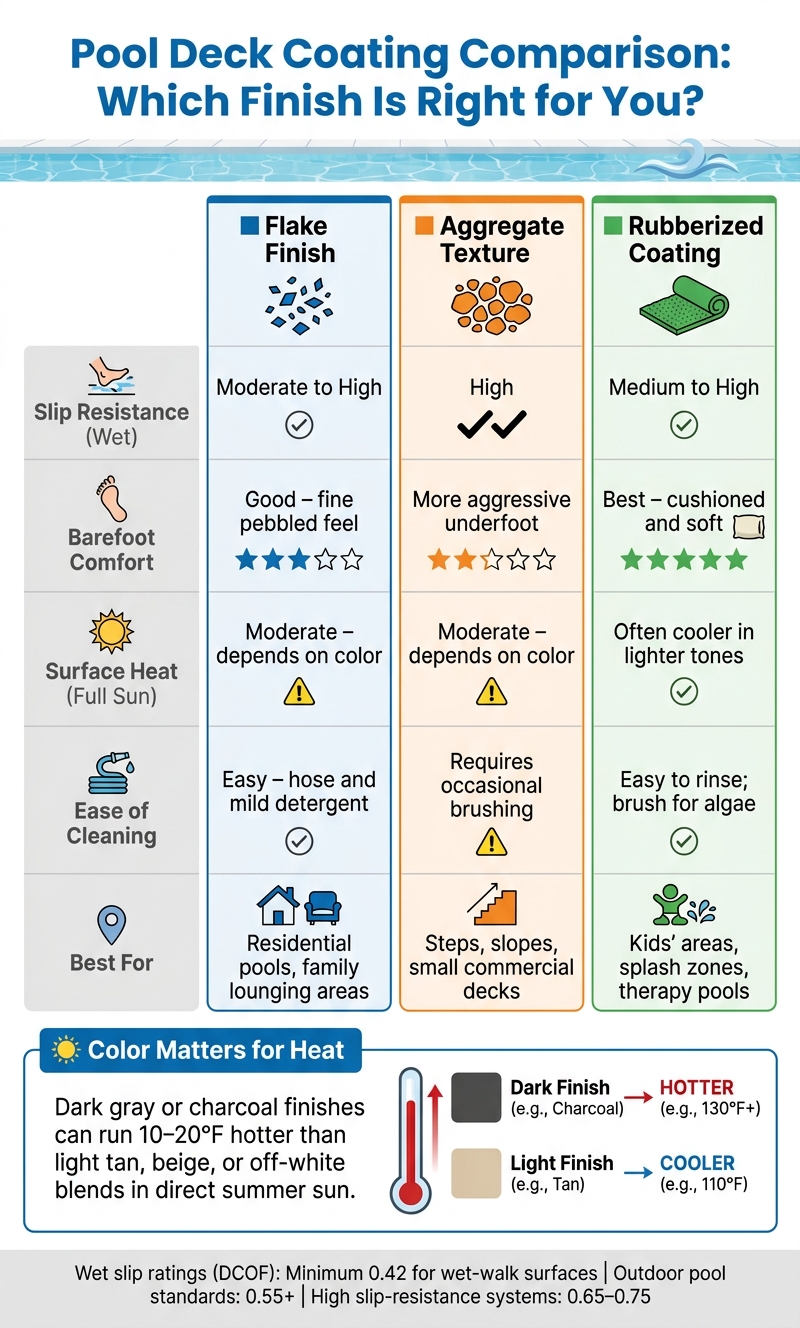
Pool Deck Coating Options: Flake, Aggregate & Rubberized Compared
Finish affects three things people notice right away: comfort, traction, and heat. At this stage, the big choices come down to grip and how warm the deck gets in full sun.
Texture Options for Barefoot Comfort and Slip Resistance
It helps to match the texture to the way each part of the deck is used. Flat lounging areas usually feel better with a lighter texture, while steps, slopes, and splash zones often need more bite.
A common setup looks like this:
- Use a lighter broadcast vinyl flake in open, flat areas where people move slowly and spend time barefoot.
- Use aggregate texture, such as quartz or silica sand, on steps, slopes, and high-splash areas where slip risk is higher.
For wet-walk surfaces, wet slip ratings (DCOF) often point to a minimum of 0.42. Some outdoor pool standards call for 0.55 or higher. Pool deck coating systems aimed at high slip resistance are often set up to hit a COF between 0.65 and 0.75.
If the space is used by kids, older adults, or people who stay barefoot for long stretches, a rubberized coating can feel easier on the feet. It adds cushion, helps cut foot fatigue, and softens impact, while still keeping slip resistance when the surface is wet.
Color, Flake Blends, and Heat in Full Sun
Color does more than change the look of the deck. It also changes how hot that surface feels by midafternoon.
Light colors reflect solar energy. Dark colors soak it up. In direct summer sun, dark gray or charcoal finishes can run 10–20°F hotter than light tan, beige, or off-white blends. On a hot afternoon in Spokane or the Tri-Cities, that gap is hard to miss under bare feet.
For decks with southern exposure or full-day sun, lighter flake blends are usually the safer pick. Mid-tone blends fit partly shaded areas well. They also have a practical upside: speckled mid-light patterns tend to hide day-to-day dirt, water spots, and light debris better between cleanings.
Very light or near-white finishes stay cooler, but they can show rust marks and leaf staining faster, which may mean more frequent rinsing.
Comparison Table: Flake Finish, Aggregate Texture, and Rubberized Pool Deck Coating
The tradeoff is pretty simple: more grip usually means more texture.
| Feature | Flake Finish | Aggregate Texture | Rubberized Coating |
|---|---|---|---|
| Slip resistance (wet) | Moderate to high | High | Medium to high |
| Barefoot comfort | Good – fine pebbled feel | More aggressive underfoot | Best – cushioned and soft |
| Surface heat (full sun) | Moderate – depends on color | Moderate – depends on color | Often cooler in lighter tones |
| Ease of cleaning | Easy – hose and mild detergent | Requires occasional brushing | Easy to rinse; brush for algae |
| Best for | Residential pools, family lounging areas | Steps, slopes, small commercial decks | Kids’ areas, splash zones, therapy pools |
For most residential pools in North Idaho and Eastern Washington, a flake finish with a lighter color blend checks the most boxes. It gives good comfort, stays fairly easy to clean, and remains cool enough for summer use.
Those are the last finish details to sort through before picking a system.
Croc Coatings can help homeowners compare color samples and texture options, including rubberized pool deck coatings for added comfort.
Conclusion: What to Look for in a Long-Lasting Pool Deck Coating
Pool decks in North Idaho and Eastern Washington take a beating. They sit in full sun, get soaked with chlorinated water, and go through freeze-thaw swings year after year. That means they need a UV-stable, low-permeability coating that can move with the slab instead of fighting against it.
Just as important, good results don’t come from thickness alone. They come from the right material and the right install working together.
Key Takeaways for Homeowners and Small Business Owners
The coating matters, but surface prep matters even more. If you’re comparing pool deck coatings, focus on these points:
- Surface prep: Mechanical grinding, crack repair, and moisture testing often decide whether a coating holds up or fails early.
- UV-stable topcoat: For outdoor decks, a UV-stable topcoat helps prevent yellowing and chalking.
- Traction level: Go with a medium-profile, non-slip texture that gives you a good balance between barefoot comfort and grip on wet feet. Residential pools often lean toward flake or fine quartz. Areas with more foot traffic may need a bit more texture.
- Stain and chemical resistance: A dense, cross-linked topcoat helps stand up to chlorinated water, sunscreen, de-icing products, and other day-to-day messes. In many cases, cleanup is mostly water and a neutral pH cleaner, not harsh scrubbing.
- Multi-coat system: A full system will usually do more for long-term wear than a single coat.
It also helps to ask direct questions. Is the topcoat polyurea or polyaspartic? Does the warranty cover UV damage and delamination? Croc Coatings installs the Penntek Evolution system with these outdoor conditions in mind.
The right coating can make the deck safer underfoot, keep its look longer, and cut down on upkeep costs in this climate.
FAQs
How long does a polyurea pool deck coating last?
A polyurea pool deck coating usually lasts 20+ years when it’s installed the right way and looked after over time. Some Croc Coatings materials also put the lifespan at 15–20+ years, depending on site conditions and the type of system used.
Installation matters a lot here. Outdoor pool decks deal with constant sun, moisture or chlorine, and freeze-thaw cycles, so even a strong coating needs a solid install to hold up for the long haul.
Can polyurea be installed over cracked or damaged concrete?
Yes – surface prep makes or breaks the job.
Before you apply the coating, the concrete needs to be cleaned and any cracks or surface flaws need to be fixed. For small cracks up to 1/8 inch, polyurea’s elastomeric properties can bridge the gap and still keep a seamless seal in place.
You’ll also need to remove any loose material and profile the surface so the coating bonds the way it should.
What is the best pool deck finish for hot, sunny areas?
Aliphatic polyurea is one of the top finish options for hot, sunny pool decks. It’s made to handle UV exposure, so it resists yellowing, chalking, and brittleness while holding its color and strength in direct sun.
It also stays flexible as concrete expands and contracts, which helps cut down on cracking and peeling. On top of that, it creates a seamless, waterproof, slip-resistant surface that stands up to chlorine, saltwater, and sunscreen.