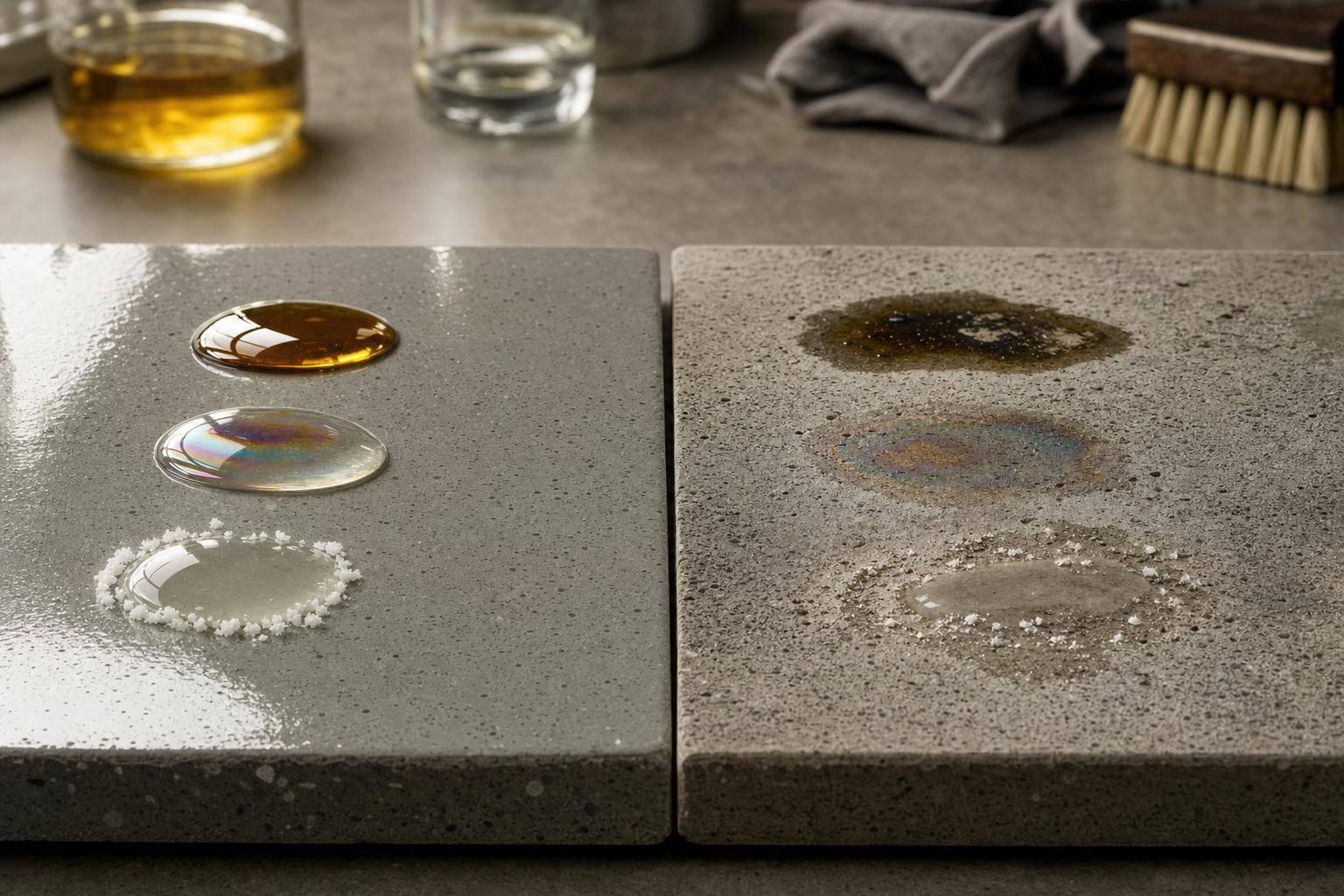
A garage floor can fail from a few common spills alone. Oil, gasoline, brake fluid, battery acid, road salt, and de-icers can stain bare concrete, weaken some coatings, and lead to peeling or bond loss over time.
If I were choosing a garage floor coating, I’d look at three things first:
- Which chemicals it was tested against
- How long the chemical stayed on the surface during testing
- What happened after exposure – staining, softening, blistering, or loss of adhesion
That matters because a coating can look fine at first and still fail later. In cold areas like North Idaho and Eastern Washington, freeze-thaw stress and chloride-based de-icers add more wear. Some chloride products can damage concrete even before major surface damage shows up.
Here’s the short version:
- Bare concrete absorbs spills fast
- Not all long-lasting garage floor coating options handle fuel, brake fluid, or salt the same way
- ASTM D1308 is often used for spot testing
- ASTM D543 is often used for wet exposure testing
- A pass should mean no softening, no blistering, no peeling, and no major staining
- Good test data can also support clearer warranty coverage
A few signs matter more than the sales pitch. If a coating gets tacky, swells, dulls, or starts to separate after contact with chemicals, that’s a bad sign. If it wipes clean and keeps its bond, color, and surface feel, that’s what you want.
| What to check | What I’d want to see |
|---|---|
| Automotive fluid resistance | No stain, no softening, no bond loss |
| Salt and de-icer exposure | No surface damage or adhesion problems |
| Exposure time | Test length that matches how spills sit in your garage |
| Heat performance | No hot-tire pickup |
| Warranty | Coverage that matches home garage use |
In short: chemical resistance testing helps you pick a floor that can handle daily garage messes, clean up with less work, and last longer under normal use.
Common Garage Chemicals and the Damage They Can Cause
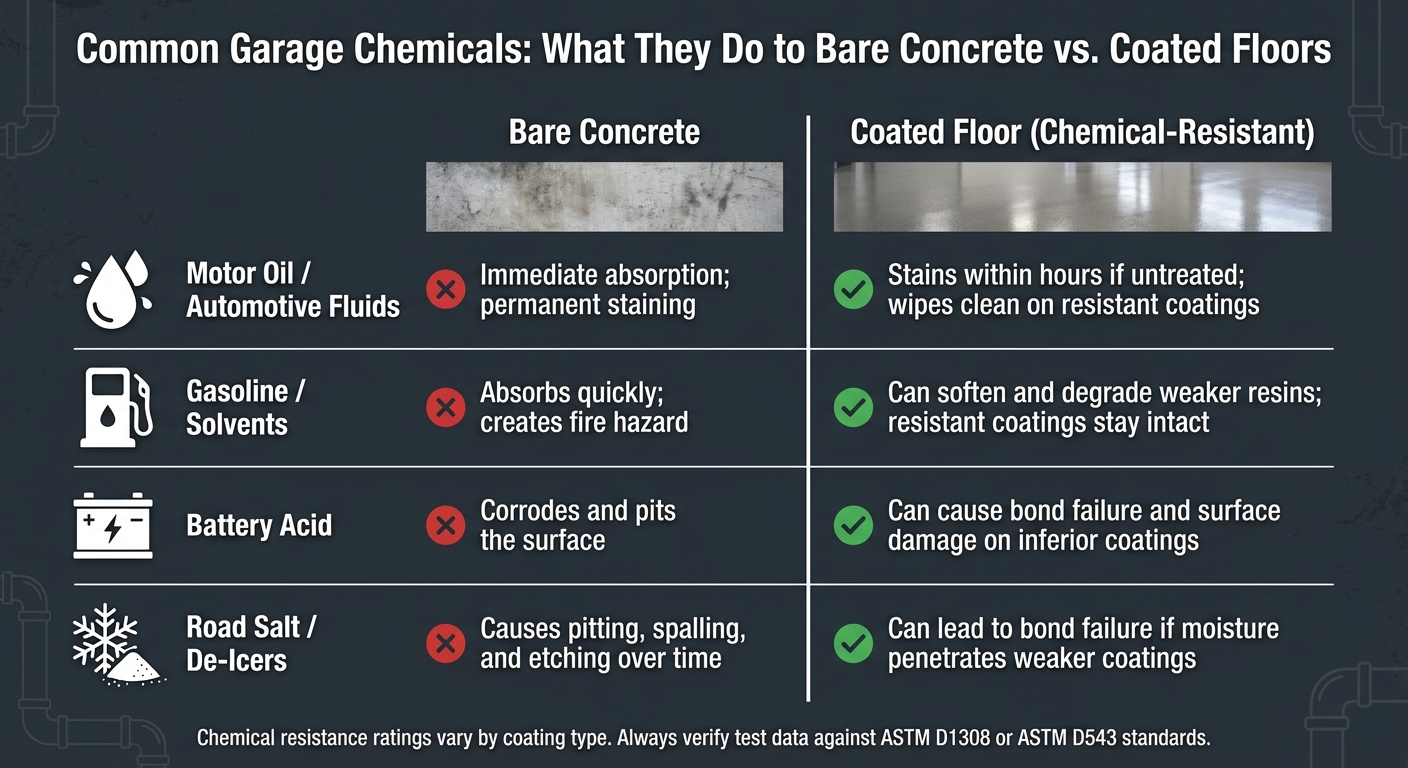
Common Garage Chemicals: What They Do to Bare Concrete vs. Coated Floors
Chemical resistance is a coating’s ability to handle common spills without staining, softening, blistering, losing gloss, or losing adhesion. That’s exactly what chemical resistance testing is meant to check.
Bare concrete doesn’t have much defense here. It’s porous, so liquids soak in fast and often leave behind stains or surface damage.
Automotive Fluids Found in Everyday Garages
Everyday garages deal with more than just dirt and dust. Motor oil, transmission fluid, brake fluid, gasoline, antifreeze, and battery acid are all common risks.
Some of these cause damage fast. Oil and brake fluid can stain within a short time. Gasoline and other solvents may soften certain coatings. Battery acid is one of the harshest of the bunch because it can damage both the coating and the concrete underneath if it isn’t cleaned up quickly.
Household Cleaners, De-Icers, and Seasonal Contaminants
Harsh degreasers can wear down a floor’s finish over time and may also reduce slip resistance. That’s one reason these products often show up in lab testing. They help measure stain resistance and surface stability under the kind of abuse a garage floor may face.
In North Idaho and Eastern Washington, road salt and de-icer add another layer of risk. These materials can break down concrete over time, which leads to pitting, spalling, and surface wear.
| Contaminant | Effect on Bare Concrete | Effect on a Rigid Coating |
|---|---|---|
| Motor oil / fluids | Immediate absorption; permanent staining | Stains within hours; difficult to clean |
| Gasoline / solvents | Absorbs and creates a fire hazard | Softens and degrades the resin |
| Battery acid | Corrodes and pits the surface | Can cause bond failure and surface damage |
| Road salt / de-icers | Causes pitting, spalling, and etching | Can lead to bond failure if moisture penetrates |
Next, the test methods show whether a coating can actually hold up to these exposures.
sbb-itb-a0e5ae3
How Chemical Resistance Testing Supports Garage Floor Selection
Chemical resistance data matters because looks and price don’t tell you how a floor will hold up. What matters is fit: does the coating match the chemicals your garage will actually see?
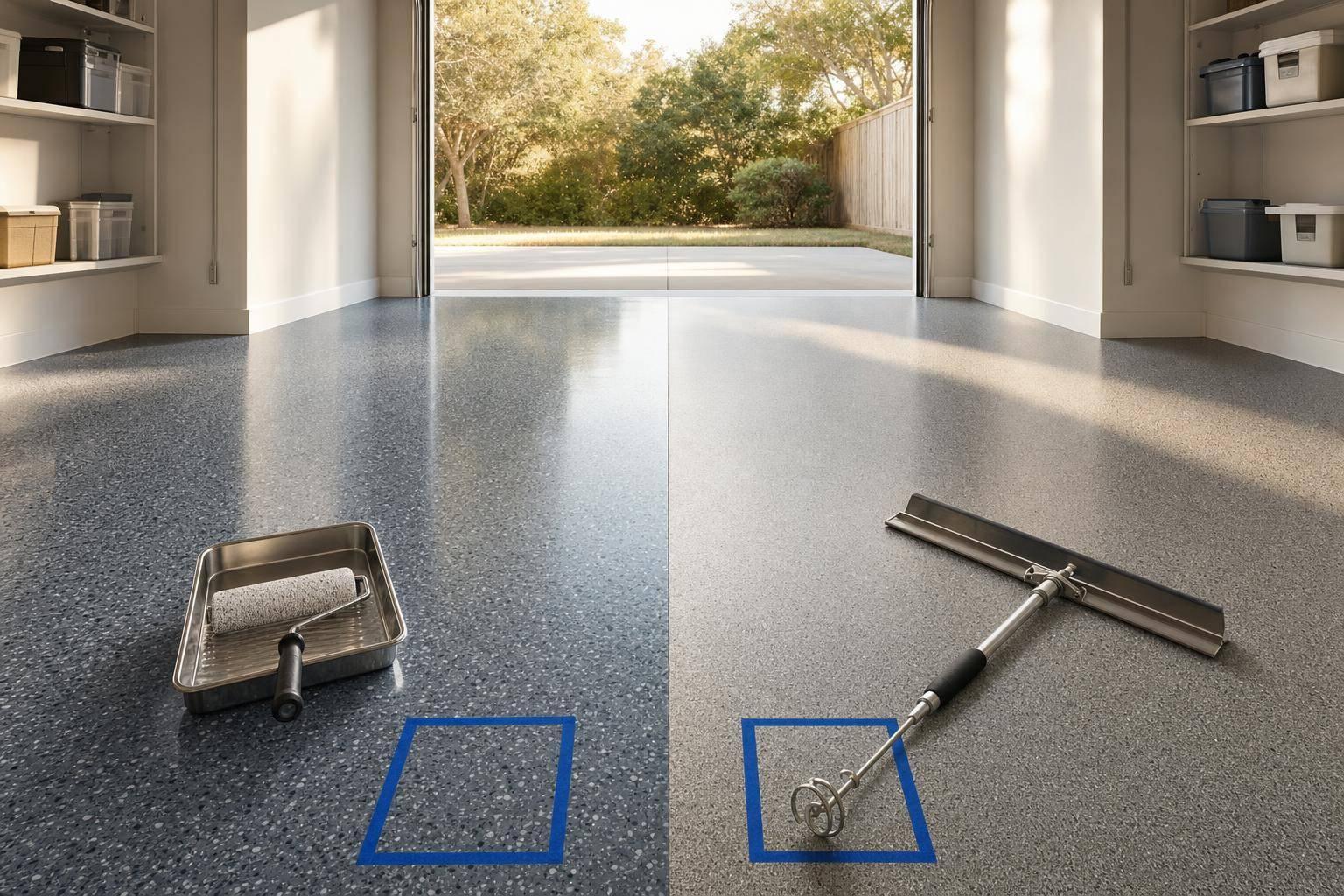
That’s why chemical resistance should line up with real exposure, not best-case marketing claims. A light-use home garage in Coeur d’Alene or Spokane may only deal with occasional oil drips and road salt tracked in during winter. In that case, a coating should be rated to resist automotive fluids and chloride solutions. But a busy home workshop or small commercial space is a different story. If the floor may face brake fluid, battery acid, or strong degreasers, you need a system tested against harsher chemicals for longer exposure times.
The details matter here. Use the test panel and exposure time to match the coating to the garage’s chemical load. That makes the test method just as important as the product name.
Why Testing Leads to Lower Upkeep and Longer Floor Life
A coating with solid chemical resistance is simply easier to live with. It sheds spills better, cleans up faster, and cuts down on harsh scrubbing or small spot repairs.
That usually means:
- Fewer stains
- Easier cleaning
- Longer floor life
How Testing Affects Warranty Confidence
Documented chemical resistance can support stronger warranty terms because the coating has already been shown to handle the fluids it’s expected to face. When a product has been tested against common garage fluids over realistic exposure times, the manufacturer has a stronger basis for the coverage it offers.
That same documentation helps the buyer too. It cuts down on guesswork. What’s covered is clearer, and the chance of a disputed claim tied to normal garage exposure is lower.
The next step is knowing which ASTM standards for chemical resistance prove that resistance and what pass or fail looks like.
Chemical Resistance Test Methods and How to Read Pass or Fail Signs
Once you’ve matched a floor to the chemicals it’s likely to face, the next step is to look at the test method behind the rating.
Common Test Methods Used to Evaluate Coatings
Most garage floor product charts lean on two lab methods that try to mirror common garage spills. ASTM D1308 puts a chemical on the cured coating for a set period, then checks for discoloration, gloss loss, softening, blistering, swelling, or adhesion loss. Makers often show these results in a chemical resistance chart. ASTM D543 uses wet exposure to check swelling, blistering, and adhesion loss under harsher contact conditions.
A lot of product charts use letter grades, such as A = Resistant and C = Not Resistant, but the grading scale changes by maker. Some charts also stretch exposure windows to 7 days or longer. That detail matters. You need to read the chemical and the exposure time together, not one without the other. A coating might do fine in a short spot test and still struggle during long wet contact.
So when you see a high rating, don’t stop there. It only means something if it matches the spills, contact time, and cleanup habits in the actual garage.
Those test names aren’t much help on their own unless you know what a pass or fail looks like on the floor itself.
What Pass and Fail Signs Look Like on a Coated Floor
A pass is pretty simple: after you wipe the spill away, the surface still looks and feels the same. No softening. No blistering. No swelling. No loss of adhesion.
It is easier to spot defects in concrete coatings when you know what to watch for. If the coating feels soft or tacky after exposure, the chemical is damaging the material. Blistering, swelling, peeling, and delamination are all serious red flags. Gloss loss by itself may only be cosmetic, but if it shows up with tackiness or a chalky surface, count that as a fail.
Comparison Table: Common Spills and What Test Results Should Show
| Chemical | Relevant Test Method | Pass Indicators | Fail Signs |
|---|---|---|---|
| Gasoline | ASTM D543 (wet exposure) | No softening or blistering | Softening, swelling, delamination |
| Motor oil | ASTM D1308 (spot) | Removable residue, no staining | Permanent discoloration |
| Brake fluid | ASTM D543 (wet exposure) | No adhesion loss, surface intact | Blistering, peeling, bond failure |
| Antifreeze/coolant | ASTM D1308 (spot) | No effect or removable film | Staining, gloss loss with softening |
| Household cleaners | ASTM D1308 (spot) | No gloss change | Dulling, etching, or tackiness |
| Road salt solution | ASTM D1308 (spot) | Removable film, no surface damage | Pitting, gloss loss, etching |
Read the chart by chemical, exposure time, and failure criteria. A claim like “passes chemical resistance” by itself doesn’t tell you much.
That’s why the coating system matters just as much as the chart.
Why Stronger Coating Systems Deliver Better Long-Term Results
Test data is a good starting point. But day-to-day performance comes down to something simpler: how well the coating bonds, flexes, and handles heat once it’s on the floor.
That’s where a lot of coatings start to separate. A product might look good on paper, but if it doesn’t bond tightly to the slab, move with the concrete, and stand up to heat, those test numbers won’t mean much over time.
How Croc Coatings Handles Chemical Exposure in Real Garages
This matters even more in garages that deal with repeated spills, hot tires, and big temperature swings. The coating system should line up with the spill, heat, and wear conditions shown in the test data.
Croc Coatings serves homeowners and businesses across North Idaho and Eastern Washington with the Penntek Evolution industrial coating system, which is used for garage floors and other high-traffic concrete surfaces. In this region, garages also deal with road salt, de-icers, and seasonal temperature changes. The Penntek Evolution system is built for that kind of use. It has high flexibility, which helps it move with the concrete slab instead of cracking or delaminating. It is also heat-stable enough to resist hot-tire pickup.
Comparison Table: General Coating Expectations vs. Penntek Evolution System Benefits
| Feature | Typical Performance | Penntek Evolution System |
|---|---|---|
| Chemical Resistance | Varies; weaker coatings can stain or soften under prolonged contact | Resists spills without softening or staining |
| Spill Resistance | Automotive fluids can penetrate or degrade weaker coatings | Resists automotive fluids, road salt, and de-icers |
| Cleaning Effort | Staining may require scrubbing or recoating | Usually cleans with a quick wipe |
| Heat Resistance | Hot tires can cause softening and peeling | Heat-stable enough to resist hot-tire pickup |
| Warranty Support | Varies by product | Lifetime residential warranty |
What to Check Before Choosing a Garage Floor Coating
Before you choose a coating, get specific about what your floor actually faces. That usually includes:
- Motor oil
- Gasoline
- Brake fluid
- Road salt
- Household cleaners
Then check the product’s chemical resistance data for those exact exposures. If your garage gets sunlight through windows or open doors, look for an aliphatic, UV-stable coating so it doesn’t yellow or chalk.
After that, review the details that tend to matter most in daily use: bond type, heat-deflection point, flexibility, and UV stability. Those are the areas worth checking before choosing a garage floor coating. A strong option should show proven chemical resistance, solid slab bonding, heat stability, and a warranty that fits how the space will be used.
FAQs
Which chemicals should my garage floor be tested against?
Test your garage floor against the chemicals it’s most likely to face at home, with extra attention to automotive fluids. That usually means motor oil, gasoline, transmission fluid, hydraulic fluid, brake fluid, and antifreeze. You should also check how the floor handles road salts, de-icing products, and household cleaners.
Be specific when you make your list. Include each chemical, its type, and its concentration. That matters because a diluted cleaner and a full-strength solvent can behave very differently on the same floor.
And even if you have a high-performance coating, don’t let harsh chemicals sit there. Clean up spills like battery acid or paint strippers right away.
How long should spills remain on a coating during testing?
Even with high-quality coatings like polyaspartic systems, clean up spills right away.
For harsh substances like industrial solvents, paint strippers, brake fluid, or battery acid, try to remove them within an hour. Leave them sitting longer, and the odds go up for staining, dull spots, softening, or surface wear, even on tough, non-porous coatings.
What test results show a coating will last?
The best way to judge chemical resistance is with standardized ASTM-style tests. These tests expose cured coatings to chemicals and then track how the coating changes over time.
That usually includes:
- short-term spill simulations, usually around 5 days
- longer immersion tests, sometimes lasting up to 180 days
What should you look for in the results? Ideally, little to no:
- discoloration
- swelling
- cracking
- softening
- blistering
- gloss loss
- hardness loss
- adhesion loss
If a coating holds its appearance, strength, and adhesion during these tests, it has the best chance of lasting in the field.