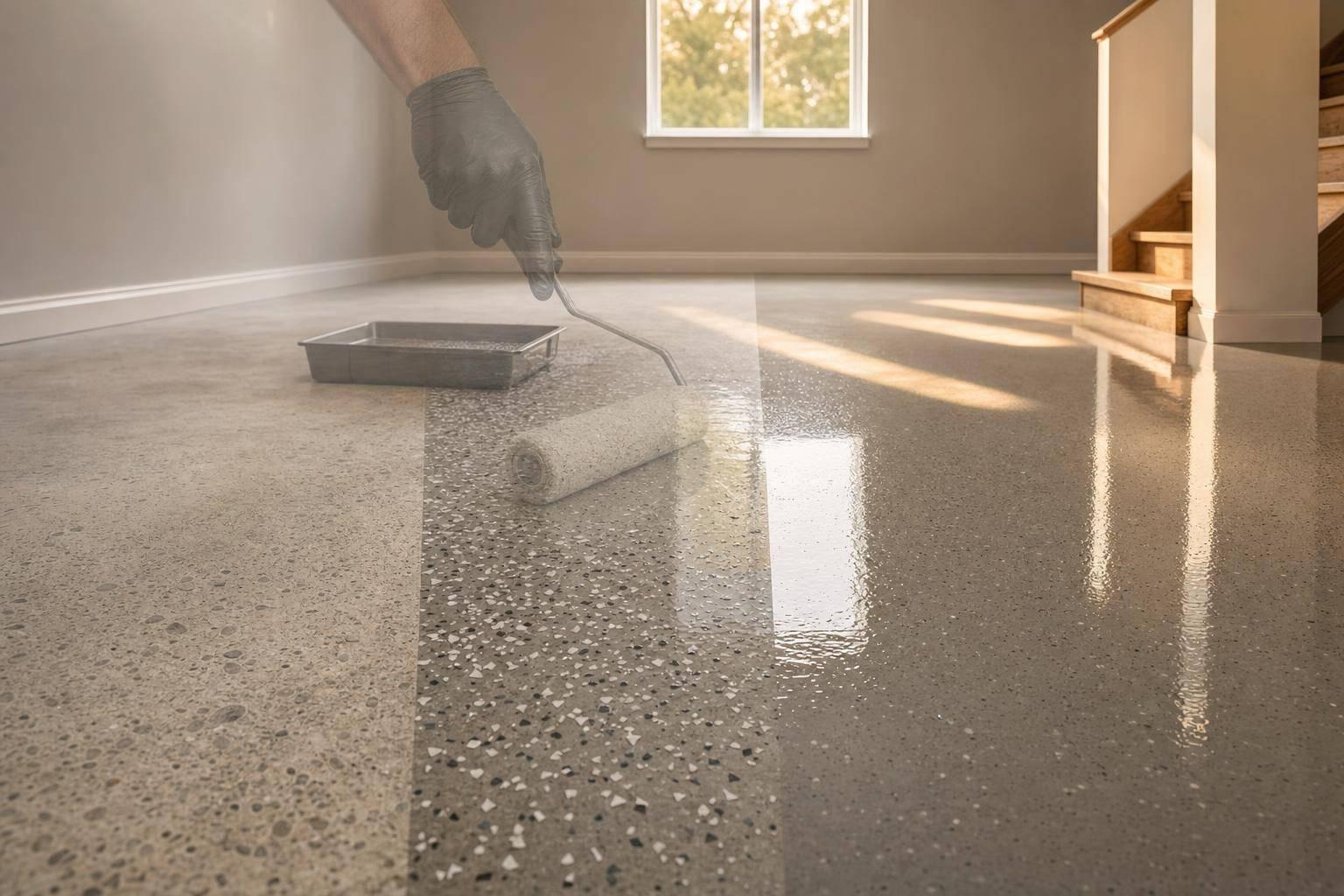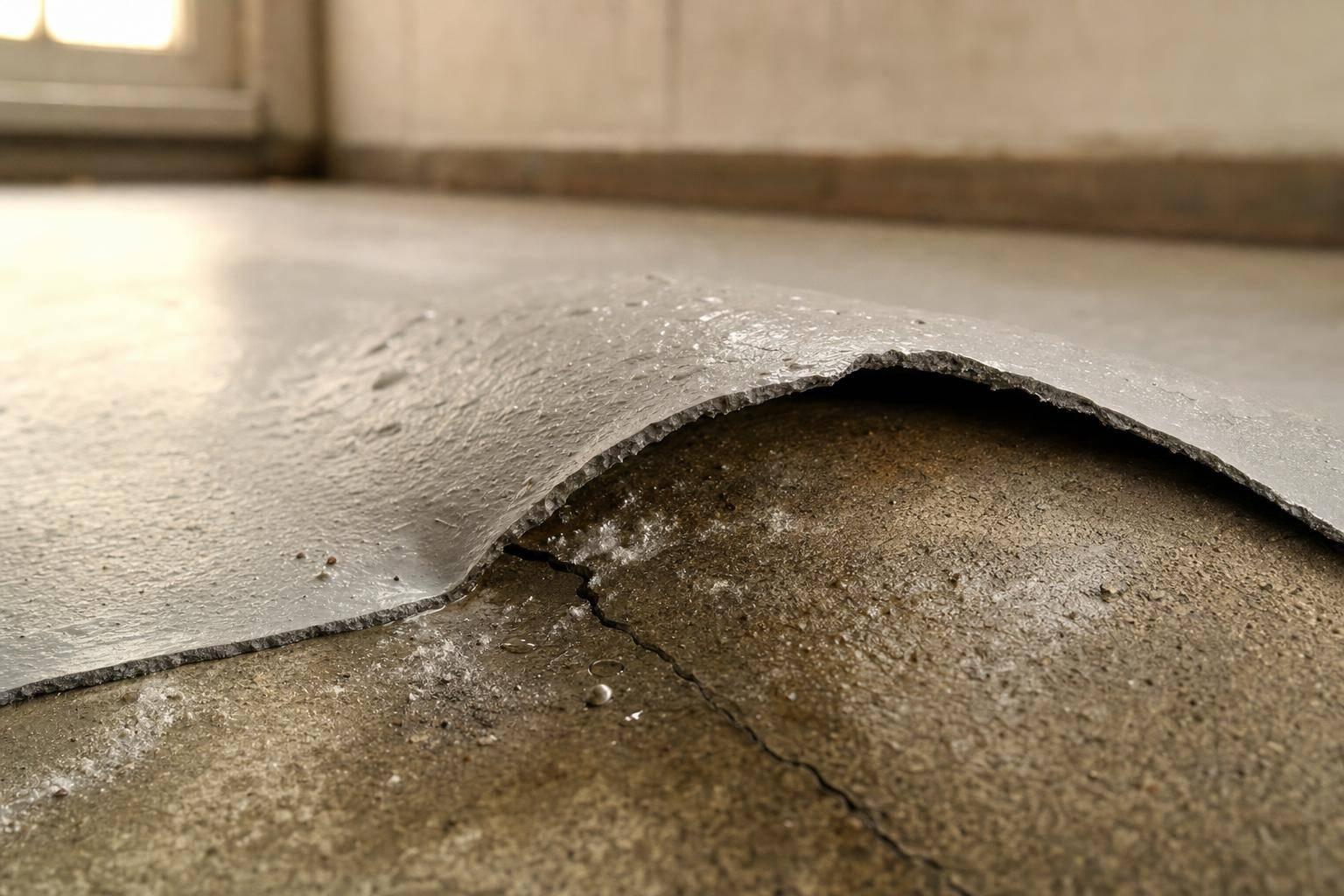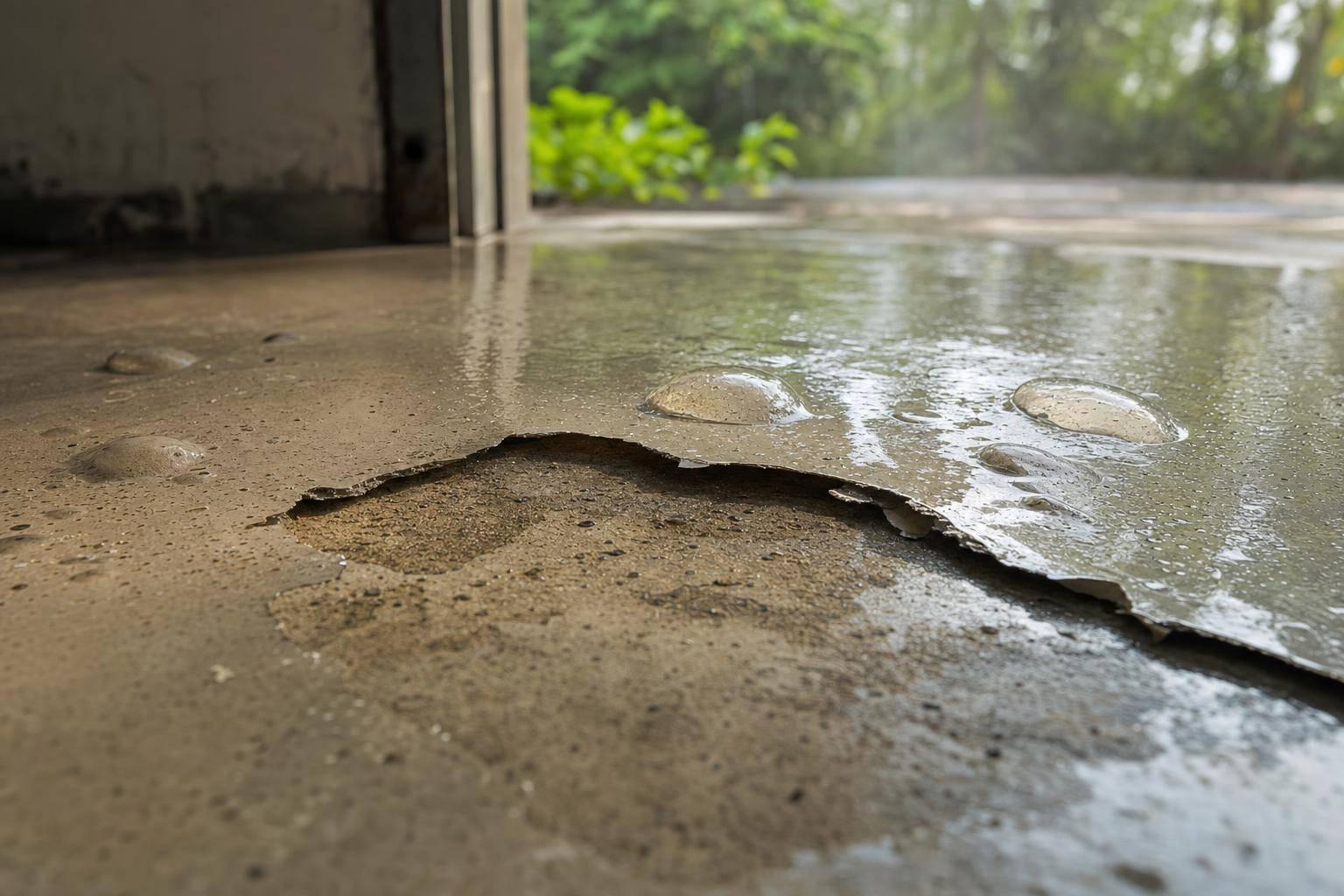
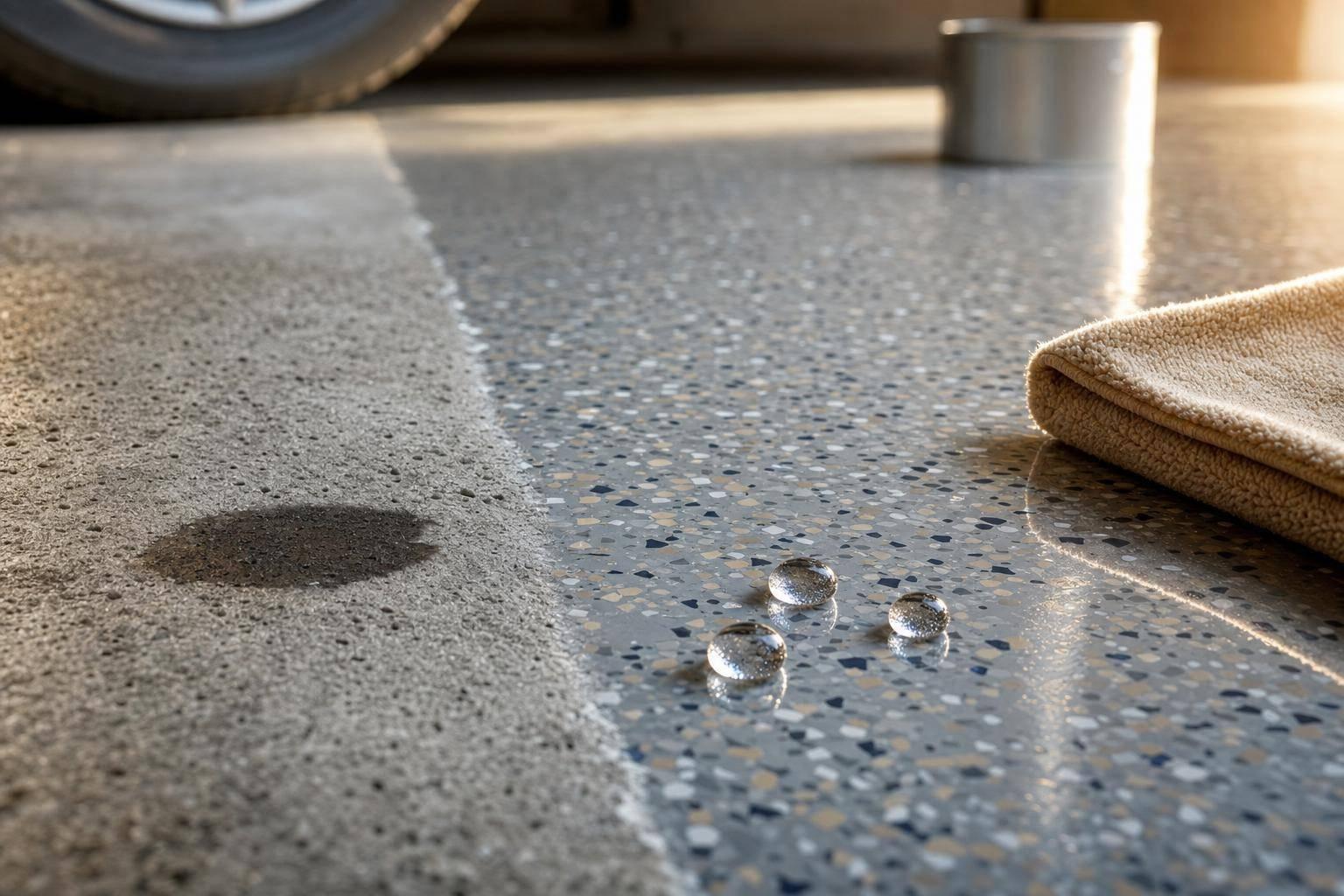
If your garage floor sees gas, oil, brake fluid, or paint thinner, Penntek Evolution is the best fit in this comparison. It resists common garage spills better than epoxy and acrylic, reaches full chemical resistance after about 72 hours, and is expected to last around 20–25 years. Standard epoxy costs less up front, but it tends to chip, stain, and wear out faster, often in 3–5 years in active garages.
Here’s the short answer in plain English:
- Penntek Evolution: Best for frequent spills, sun, hot tires, and long life
- Metallic epoxy: Best for looks, not heavy solvent exposure
- Standard epoxy: Lower upfront cost, but less forgiving if spills sit
- Polyurethane/urethane: Good balance of flex, heat resistance, and cleanup
- Acrylic sealer: Lowest-duty option, usually best outside the garage
If you want a floor that is easier to clean and less likely to stain or soften, the big thing to watch is how long spills can sit without causing damage. In this group, Penntek Evolution comes out ahead for that use case.
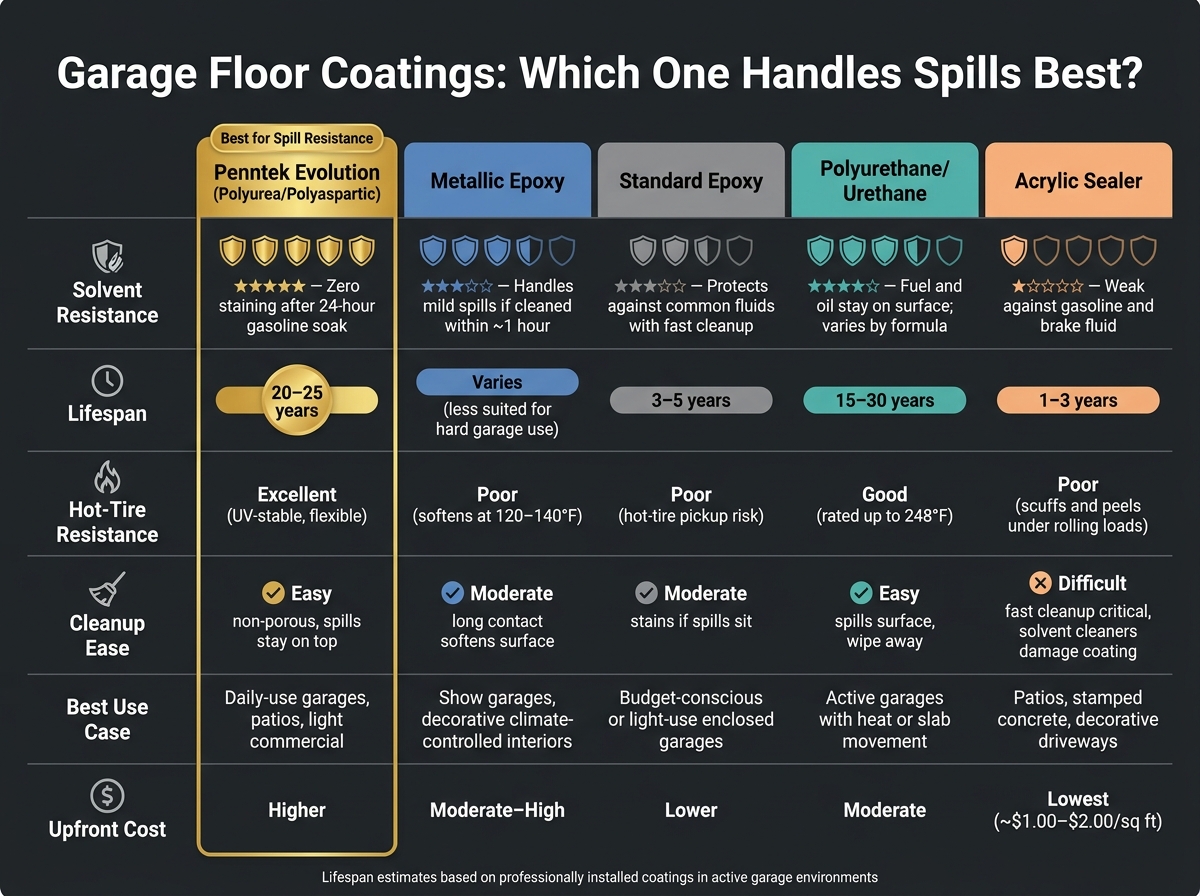
Garage Floor Coatings Compared: Solvent Resistance, Lifespan & Best Use
The hammer test: Penntek floor vs. Epoxy
sbb-itb-a0e5ae3
Quick Comparison
| Coating | Spill Resistance | Lifespan | Main Tradeoff |
|---|---|---|---|
| Penntek Evolution | Strong against gasoline, oil, and many garage fluids | 20–25 years | Higher upfront cost |
| Metallic Epoxy | Fine for light spills if cleaned fast | Varies, but less suited for hard garage use | More prone to chips and solvent damage |
| Standard Epoxy | Fair with fast cleanup | 3–5 years | Brittle, hot-tire issues, staining risk |
| Polyurethane/Urethane | Good, but varies by product | 15–30 years | Need to check the product sheet |
| Acrylic Sealer | Weak against fuel and brake fluid | 1–3 years | Short life and light-duty use |
I’d read this article one way: if your floor is in a working garage, looks matter, but spill resistance, cleanup, and long life matter more.
1. Croc Coatings Penntek Evolution System
The Penntek Evolution system uses a polyurea/polyaspartic coating with a dense, non-porous surface that helps block solvent penetration.
Solvent Resistance
That surface helps the floor stand up to gasoline, motor oil, and most common household solvents. In a 24-hour gasoline soak test, Penntek polyaspartic samples showed zero staining, softening, or discoloration. For a garage, that’s a big deal. Spills happen, and this type of surface is built to keep them from turning into lasting marks. Of course, chemical resistance isn’t the whole story. Impact resistance and UV stability also shape how the floor holds up over time.
Durability
Unlike rigid epoxy, the polyurea/polyaspartic formula has some flex and bonds tightly to concrete. That helps it resist chips and cracks when tools get dropped. It is also UV-stable, so it resists yellowing and chalking from sunlight. The lifetime residential warranty can help with long-term planning, but there are a couple of catches: it requires registration within 30 days, and it does not replace proper spill cleanup. A professionally installed Penntek Evolution floor is estimated to last 20 to 25 years.
Cleanup and Stain Control
Because the surface is non-porous, spills stay on top instead of soaking in. So in most cases, a dust mop and occasional damp mopping are enough for routine care. Oil and grease wipe away cleanly, but it’s still smart to clean spills sooner rather than later.
That benchmark sets up a useful comparison when the article moves to Penntek’s metallic epoxy system next.
2. Penntek Metallic Epoxy System
Compared with the Evolution system, metallic epoxy gives up some flex in exchange for a more decorative look. Penntek Metallic Epoxy uses a 100% solids epoxy base with metallic pigments, then adds a urethane or polyaspartic topcoat. The result is a marbled finish that looks more like a design feature than a basic garage floor, with more chemical protection than bare epoxy.
Solvent Resistance
Penntek’s E-1000 data lists gasoline and hydraulic fluid as recommended/conditional, acetone and benzene as conditional, and MEK as not recommended. In plain terms, harsh spills shouldn’t sit for long. Clean them up within about an hour if you can.
A urethane or polyaspartic topcoat can help with abrasion and can extend that surface protection. But it doesn’t turn epoxy into a floor that can shrug off every solvent. If strong chemicals sit too long, the coating can still soften.
Durability
This system is hard and rigid, which helps with wear but also makes chipping more likely. It scores Shore D 80–90, so it doesn’t move much with the concrete slab. That means dropped tools or slab movement can lead to chips.
Hot tires are another weak spot. Tire temperatures around 120–140°F can soften epoxy and cause hot-tire pick-up. So while the floor may look polished and high-end, it has a shorter fuse under heat and impact than more flexible systems.
Cleanup and Stain Control
Day-to-day cleaning is simple:
- Sweep up debris
- Mop with water or a mild cleaner
- Dry the floor
The bigger issue is long solvent contact. Once the surface starts to soften, cleanup gets trickier, and trying to scrub it can make the damage worse. Drip pans or absorbent mats under vehicles and workbenches help limit solvent exposure.
Use the metallic system where appearance matters most and spills happen only once in a while. The next section covers standard epoxy, which is simpler but less forgiving under solvent exposure. For a broader look at these materials, see our guide to epoxy and polyaspartic garage floors.
3. Standard Epoxy Garage Floor Coating
Standard epoxy is the budget pick for garage floors. It handles day-to-day messes fairly well and costs less up front. But next to Penntek Evolution, it gives up some chemical resistance and long-term wear. For normal garage use, that tradeoff may be fine. Still, if spills tend to sit, standard epoxy is less forgiving.
Solvent Resistance
Standard epoxy forms a chemical-resistant layer over concrete. It can protect against many common garage fluids, including motor oil, gasoline, diesel, antifreeze, and most household cleaners, as long as you clean spills up fast.
That said, some solvents are harder on it. Acetone, methylene chloride, brake cleaner, and lacquer thinner can dull the surface or soften the coating if they remain on the floor. A 24-hour gasoline soak can leave visible stains and soften the surface. In plain terms: the longer a spill sits, the more likely it is to leave a mark.
Durability
Standard epoxy is hard, but it’s also brittle. That means dropped tools can chip it, and slab movement can lead to cracks. Hot tires are another weak spot. In some cases, heat from tires can soften the coating enough to cause hot-tire pick-up.
In an active garage, professionally installed epoxy usually lasts 3–5 years before wear starts to show.
Cleanup and Stain Control
Routine cleaning is simple. Sweep the floor, mop with a mild detergent, and that usually does the job. The trouble starts when oil or solvents sit for hours. At that point, permanent staining becomes more likely.
Chips and cracks can also turn into dirt traps. Those small gaps can hold chemicals and grime, which makes the floor tougher to clean as time goes on. For routine care, stick with pH-neutral or mildly alkaline cleaners. Skip abrasive scrubbers and methylene chloride cleaners, which can harm the coating.
Standard epoxy is a good fit for light-use garages where spills are occasional and cleaned up right away. If your floor sees frequent solvent contact, epoxy vs polyaspartic coatings may be a better match because it handles that kind of exposure differently.
4. Polyurethane/Urethane Floor Coating System
In flooring, urethane and polyurethane usually mean the same coating family. These coatings add flexibility, UV stability, and chemical resistance, and they’re often used as a topcoat over epoxy. That’s why urethane is often a better fit when solvent exposure and slab movement are part of day-to-day use.
Solvent Resistance
Resistance depends on the formula. Some urethanes handle gasoline and acids well, while others don’t stand up to MEK. So it’s smart to check the chemical-resistance chart for the exact product. On top of that, chemical resistance impacts slip performance and overall safety. Flexibility and impact resistance also shape how the floor holds up over time.
Durability
Polyurethane is less brittle than standard epoxy, which helps it take impact and handle minor slab movement without cracking. It also does a better job with hot-tire pickup – some polyurethane systems are rated to withstand tire contact up to 248°F without staining. With proper maintenance, a well-installed polyurethane floor can last 15–30 years.
Cleanup and Stain Control
Fuel, oil, and other spills stay on the surface, which makes cleanup easier. Polyurethane also performs better than standard epoxy when it comes to hot-tire staining. Tire marks are less likely to set for good and usually wipe away with standard garage cleaners. For routine maintenance, use pH-neutral or mildly alkaline cleaners, and avoid repeated ketone cleaners.
Next is acrylic sealer, which trades chemical protection for lighter-duty use.
5. Acrylic Concrete Sealer
Acrylic sealers are the lightest-duty choice in this comparison. They’re thin, film-forming coatings, usually about 3–10 mils thick, and they go over bare or decorative concrete. You’ll often see them on patios, stamped concrete, pool decks, and light-duty driveways. Compared with Penntek Evolution, acrylic works more like a surface finish than a barrier against solvents.
Solvent Resistance
This is where acrylic tends to struggle. Technical data sheets for standard acrylic sealers show that gasoline and brake fluid can damage the film, while milder liquids like used motor oil or water may cause little to no damage. Stronger solvents, including ketones, esters, chlorinated solvents, and aggressive fuels, can soften or break down the film over time.
That matters in a garage or shop. If automotive fluids sit on the surface again and again, the coating can lose gloss, soften, or wear out sooner than expected.
Durability
Acrylic sealers usually last about 1–3 years, and garages tend to land at the short end of that range. Hot-tire pickup is another weak spot. Under rolling loads, acrylic can scuff and peel more easily than thicker coatings.
Cleanup and Stain Control
With acrylic, fast cleanup makes a big difference. Gasoline, brake fluid, and transmission fluid can discolor or soften the surface if they sit too long. One technical data sheet reported excellent resistance to household stains like mustard, chocolate, and Kool-Aid, but only limited performance against coal tar.
For day-to-day care, skip solvent-based cleaners. They can damage the same coating you’re trying to maintain.
Acrylic sealers make sense when cost is the main factor and the surface doesn’t face much chemical exposure. Installed pricing usually falls around $1.00–$2.00 per square foot. But on floors that deal with fuel or solvents on a regular basis, acrylic needs recoating sooner than the other options in this comparison. Over time, that shorter recoat cycle can chip away at the upfront savings.
Pros and Cons by Use Case
Here’s the short version after the full solvent comparison. This table shows where each coating tends to work best based on solvent exposure, traffic, and sun.
| Coating | Best For | Solvent Strength | Key Limitation |
|---|---|---|---|
| Penntek Evolution (Polyurea/Polyaspartic) | Daily-use garages, patios, pool decks, light-commercial spaces | Resists gasoline and motor oil with zero staining after 24-hour soak | Higher upfront cost; requires professional installation |
| Metallic Epoxy | Show garages, decorative basements, climate-controlled interiors | Handles mild spills when cleaned quickly | Brittle; can delaminate with slab moisture; 3–5 day cure |
| Standard Epoxy | Enclosed basements, budget-conscious garages | Protects against common garage fluids if spills are cleaned fast | Hot-tire pickup risk; brittle; no UV stability |
| Polyurethane/Urethane | Active garages with slab movement or heat exposure | Fuel and oil stay on the surface; hot-tire staining less likely to set | Resistance varies by formula; check product data sheet |
| Acrylic Concrete Sealer | Patios, stamped concrete, decorative driveways | Handles mild household stains | Weak against gasoline and brake fluid; lifespan of 1–3 years |
Metallic epoxy makes the most sense in climate-controlled show spaces. It looks great, but a working garage is a different story. Sun, hot tires, and solvent spills tend to expose where it falls short.
If the floor will see regular contact with gasoline, oil, or similar fluids, Penntek Evolution is the stronger long-term pick. It also comes with a lifetime residential warranty, which makes planning a lot simpler, and that’s the warranty Croc Coatings backs with the Penntek Evolution system.
Conclusion
The big difference between these coatings comes down to one thing: how long they can stand up to spills without staining, softening, or turning cleanup into a chore.
When solvent exposure is part of the picture, Penntek Evolution stands out as the strongest all-around pick in this comparison. It offers better solvent resistance and easier cleanup than standard epoxy or acrylic sealers. And that matters a lot when you want the floor to hold up for years, not just look good at the start.
That said, even a premium coating can fail if the concrete prep is sloppy or spills sit too long. Metallic epoxy makes sense for spaces where looks come first. But it’s not the best fit for garages that deal with frequent fuel, oil, or cleaner exposure. In that kind of setting, long-term protection matters more than decoration alone.
The lifetime residential warranty also plays a big role. It helps cut long-term repair risk and makes total cost of ownership easier to plan for. For homeowners who expect to stay in their home for the long haul, a polyurea/polyaspartic system usually delivers the best long-term value.
FAQs
How soon can I drive on the floor after installation?
You can usually walk on your newly coated floor within 4 to 6 hours after installation. If you’re planning to park or drive on it, it’s generally safe within 24 hours.
With the advanced Penntek Evolution system used by Croc Coatings, the full installation and curing process is finished in just one day. That means less downtime and a lot less hassle for your daily routine.
What spills can still damage a coated garage floor?
Penntek Evolution coatings stand up well to automotive fluids, road salts, and cleaning products. But they can’t shrug off every spill.
Battery acid, brake fluid, paint strippers, and industrial solvents can still harm the surface if they sit too long.
To help protect the coating – and your lifetime residential warranty – clean up spills right away with a pH-neutral cleaner.
Does a lifetime residential warranty cover stain damage?
No. Croc Coatings’ lifetime residential warranty covers manufacturing defects and installation-related performance issues, such as peeling, delamination, or adhesion problems. It does not cover stain damage.
In most cases, stains are left out when they result from improper maintenance, normal wear and tear, impact, scratches, burns, substrate issues, extreme weather, or contact with harsh chemicals, including industrial solvents.
For the exact terms, review the warranty documents or contact Croc Coatings directly.