Chemical resistance and slip performance are closely linked when it comes to flooring safety. Without proper chemical resistance, corrosive substances can damage floors, weakening their structure and reducing slip resistance. This can lead to workplace hazards, increased accidents, and costly repairs.
Key Points:
- Chemical Resistance: Protects flooring from acids, solvents, and other harsh substances, preventing surface damage like pitting and delamination.
- Slip Performance: Relies on surface texture and anti-slip additives, which can degrade if the coating is chemically damaged.
- OSHA Standards: Walking surfaces must remain clean, dry, and slip-resistant to prevent injuries.
- Material Selection: Coatings like Novolac epoxy or cementitious urethane offer durability against extreme pH levels and temperatures.
- Maintenance: Regular cleaning and inspections are essential to preserve both chemical and slip resistance.
Takeaway: Choosing the right coating system and maintaining it properly ensures long-term safety and durability for industrial, commercial, or residential spaces exposed to chemicals.
What Chemical Resistance Means for Concrete Coatings
Chemical Resistance Defined
Chemical resistance refers to a coating’s ability to maintain its adhesion, hardness, and surface integrity even after extended exposure to harsh chemicals. Essentially, it acts as a protective barrier, preventing substances like acids, alkalis, solvents, and cleaners from breaking down the underlying concrete.
Epoxy systems, known for their high crosslink density, are particularly effective at stopping solvents from swelling the polymer. This feature safeguards concrete against corrosion, delamination, and dangerous leaks in demanding industrial environments. For example, battery plants dealing with sulfuric acid or food processing facilities exposed to lactic acid and high-temperature steam cleaning – ranging from 20°F (–7°C) to 250°F (121°C) – rely heavily on chemical-resistant floor coatings. Even residential garages see the benefits, as these coatings can protect against motor oil, gasoline, and common household cleaners. Without this protection, common concrete coating failures like delamination can occur, leading to safety hazards and expensive repairs.
Temperature plays a key role in determining coating performance. Standard bisphenol-A epoxies, for instance, are effective within a pH range of 5–10 and temperatures up to 140°F, while Novolac epoxies can withstand a broader pH range of 1–12 and temperatures as high as 300°F. Knowing these limitations requires accurate testing to ensure the coating meets specific environmental demands.
Testing Standards for Chemical Resistance
To measure chemical resistance, standardized tests are used to evaluate how coatings hold up under chemical exposure. ASTM D543 is the go-to test for assessing how plastics and polymers react to chemical reagents. It examines physical changes such as swelling, cracking, discoloration, and the ability to retain mechanical properties.
Before testing, coatings must be fully cured. This is confirmed through methods like ASTM D5402‘s solvent rub test and hardness checks. Another critical test, ASTM D4541, measures the pull-off adhesion strength between the coating and the concrete surface. For industrial use, coatings often need to meet a minimum adhesion strength of 200 psi (1.38 MPa), with high-traffic areas sometimes requiring 400 psi or more. These rigorous standards ensure that coatings can handle the demands of their specific environments.
sbb-itb-a0e5ae3
How do you determine which chemical-resistant epoxy flooring system is best for your facility?
You can also use our industrial floor coating planner to estimate materials and costs based on your facility’s specific durability needs.
How Chemicals Affect Slip Performance
Chemical degradation weakens a floor’s micro-texture, which is essential for maintaining slip resistance and ensuring safety.
How Surface Damage Reduces Slip Resistance
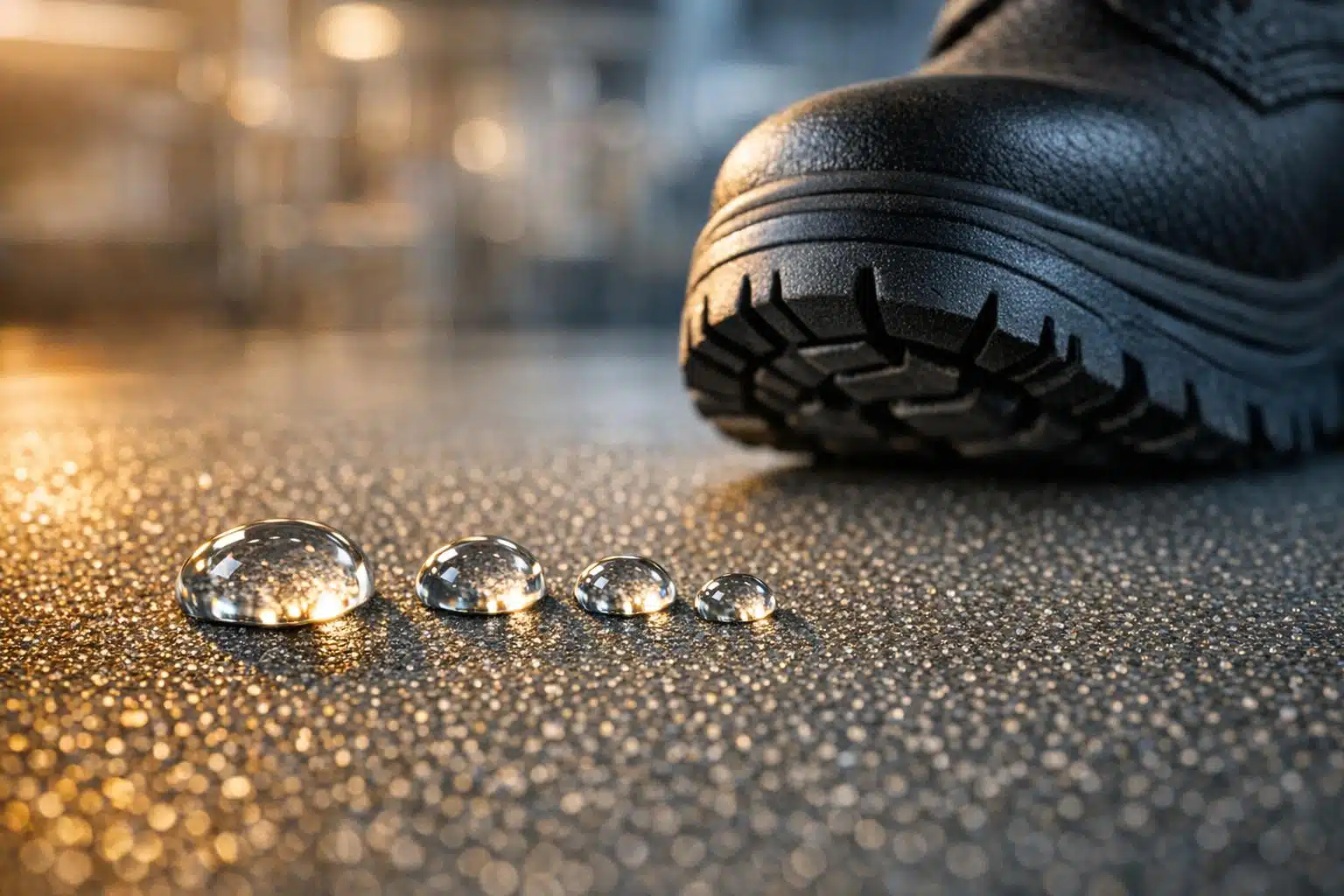
When surfaces with non-resistant coatings are exposed to chemicals, they can experience pitting, staining, and a breakdown of the polymer structure. This damage reduces the coefficient of friction (COF), turning what was once a safe surface into a dangerously slippery one.
Certain solvents, like methyl ethyl ketone, can swell and soften the polymer, reducing surface hardness. Strong acids can cause hydrolysis, breaking down urethane linkages in materials like polyurea and polyurethane. Additionally, these chemicals can penetrate down to the calcium compounds in concrete, degrading the structure and leading to delamination. This not only decreases friction but also leaves the surface more vulnerable to further chemical damage.
High temperatures make matters worse by speeding up the degradation process. Heat increases polymer chain movement and enhances solvent diffusion. This can leave the floor looking fine on the surface but stripped of the micro-texture needed to maintain traction. For context, the ANSI A137.1 standard requires a minimum wet dynamic coefficient of friction (DCOF) of 0.42 for level interior spaces, while OSHA advises a static COF of 0.5 or higher for general walking areas. Once chemical damage occurs, achieving these safety benchmarks becomes impossible.
What Helps Maintain Slip Performance
To combat the damaging effects of chemicals, coatings with strong molecular structures are essential. High crosslink density is especially important because it blocks chemicals from penetrating the polymer network and softening the coating. This also helps ensure that anti-slip aggregates remain securely embedded in the surface.
Novolac epoxies are a great example of this principle. They can withstand a pH range of 1–12 and temperatures as high as 300°F (149°C). Their dense crosslinking resists acid-induced degradation, preserving surface hardness even in challenging settings like battery plants or food processing facilities where lactic acid and high-temperature steam cleaning are common.
Hydrophobic properties also play a key role in maintaining slip resistance. Coatings like epoxy and polyurethane create a seamless, liquid-resistant barrier that protects the porous concrete beneath. This barrier ensures spills stay on the surface, where they can be cleaned up before they damage the coating or create slip hazards.
As Tom Dassie from CustomCrete explains, "Harsh chemicals can strip the protective layer from epoxy or urethane coatings".
Ultimately, choosing a coating that matches the specific chemical exposure is critical for preserving long-term slip resistance.
Selecting Coatings for Chemical and Slip Resistance
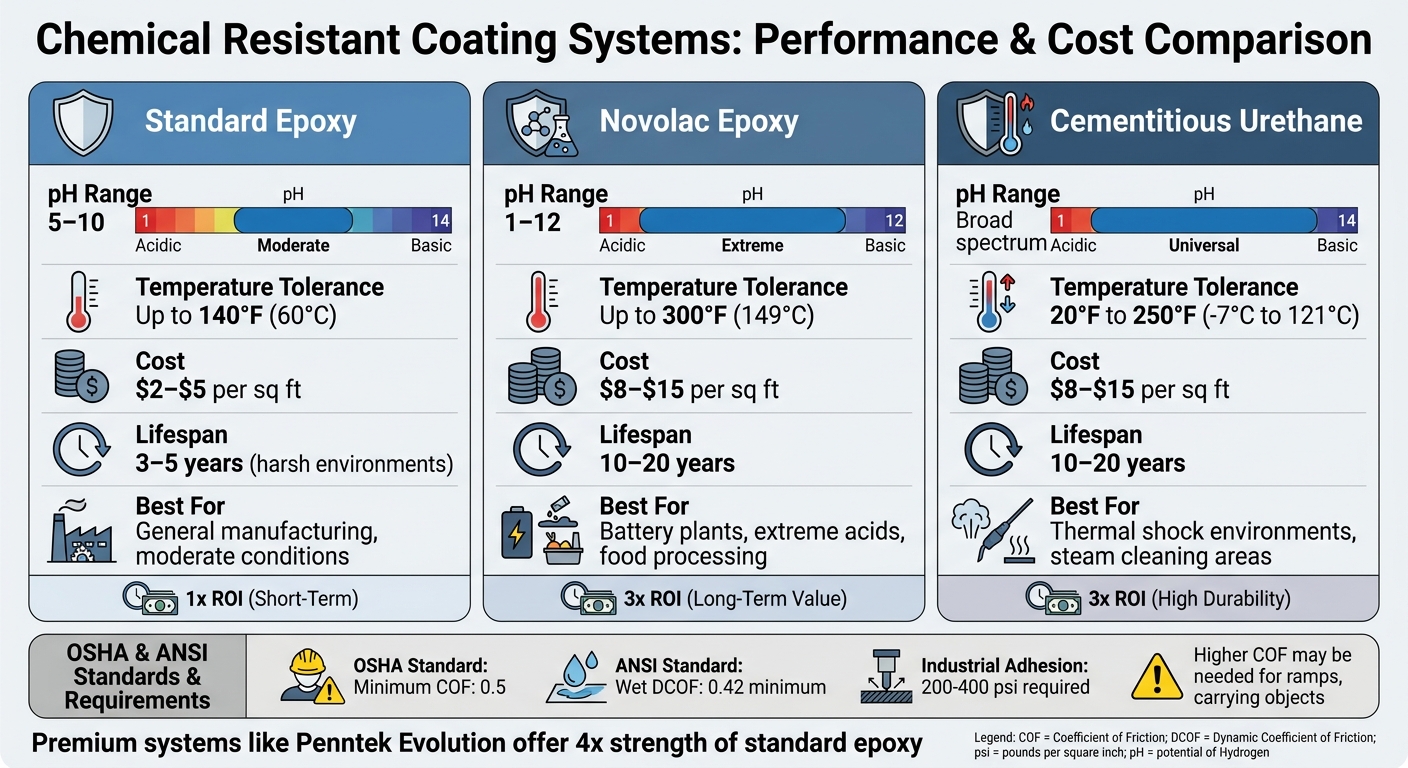
Chemical Resistant Coating Types Comparison Chart
Choosing the right coating system is critical when dealing with environments where chemical exposure impacts slip resistance. Start by listing all the chemicals your floor will encounter, including their type, concentration, and temperature. This is crucial because a coating suitable for general manufacturing might fail in more demanding settings, like battery plants that handle concentrated acids.
How to Evaluate Coating Systems
To find the best coating for your needs, match the chemical and thermal demands of your space with the coating’s capabilities. For example:
- Standard epoxy: Works well for moderate pH levels (5–10) and temperatures up to 140°F.
- Novolac epoxy: Can handle more extreme conditions, withstanding pH levels from 1–12 and temperatures as high as 300°F.
If your facility experiences thermal shock – common in food processing areas using steam cleaning – cementitious urethane is a solid choice, often outperforming polyurea vs. epoxy for commercial kitchens in high-heat environments. This material can endure temperature swings from 20°F to 250°F without disbonding.
Advanced systems like Croc Coatings‘ Penntek Evolution combine chemical resistance with slip performance. This coating, which is four times stronger than standard epoxy, uses high crosslink density to block chemical penetration while securely embedding slip-resistant aggregates. Before exposing the floor to chemicals, confirm that the coating is fully cured by performing hardness or solvent rub tests (ASTM D5402).
Key Features to Look For
Once you’ve evaluated performance, focus on specific features that ensure safety and durability over time.
- Slip Resistance: Your coating should meet or exceed the ANSI A326.3-2021 standard, which requires a minimum wet Dynamic Coefficient of Friction (DCOF) of 0.42 for level interior spaces. For areas exposed to oils or greases, aim for a DCOF of 0.55 or higher.
According to OSHA, "A COF of 0.5 is not intended to be an absolute standard value. A higher COF may be necessary for certain work tasks, such as carrying objects, pushing or pulling objects, or walking up or down ramps".
- Adhesion Strength: Ensure the coating meets industrial pull-off adhesion standards, typically ranging from 200 to 400 psi.
- Chemical Durability: Consider the resin type. Polyurea, for example, offers excellent impact resistance with elongation up to 600%, but it may not resist concentrated solvents as effectively as epoxy.
- Cost and Lifespan: Balance your budget with the coating’s longevity. Cementitious urethane systems generally cost $8–$15 per square foot and last 10–20 years, while thin-film epoxy costs $2–$5 per square foot but only lasts 3–5 years in harsh environments.
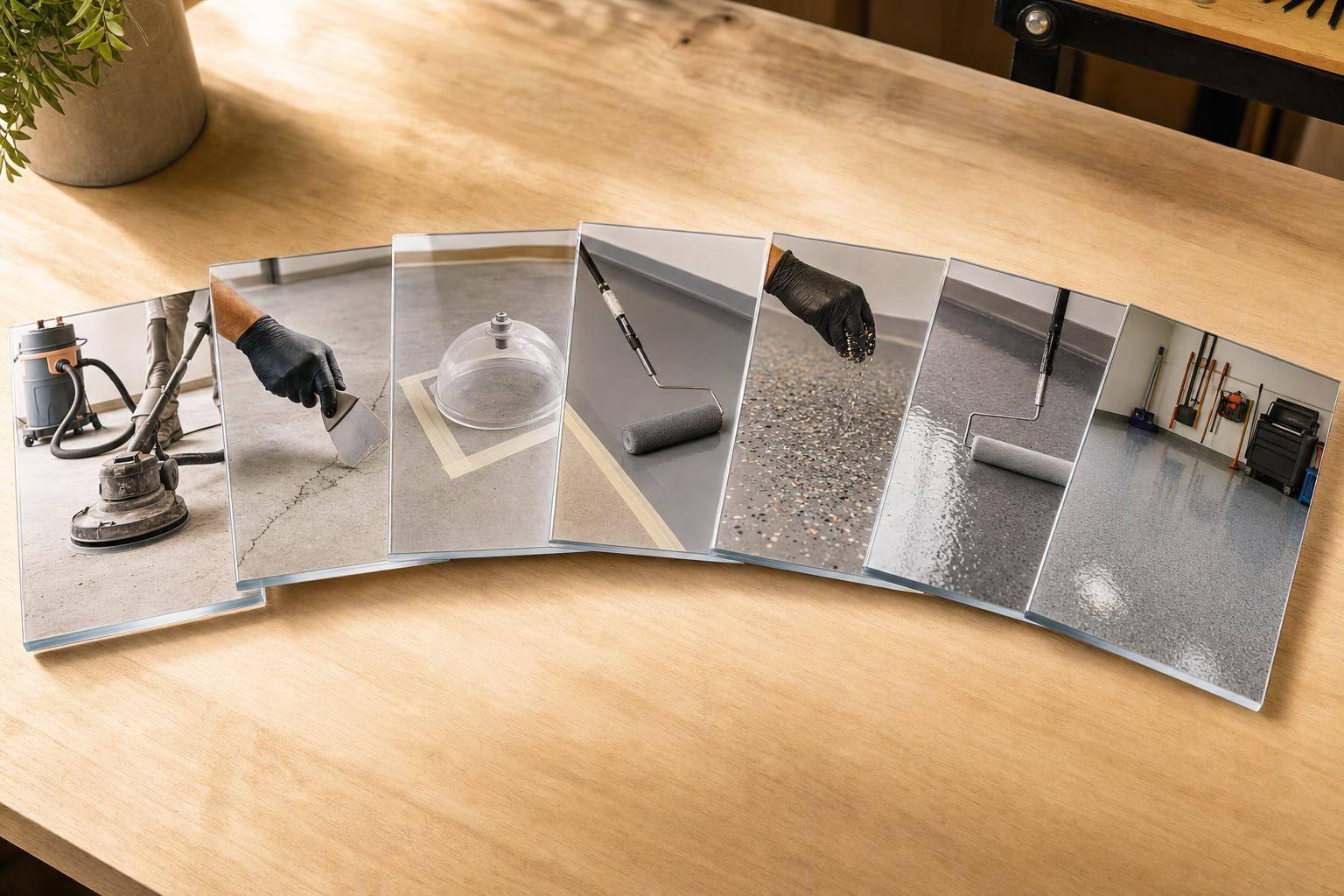
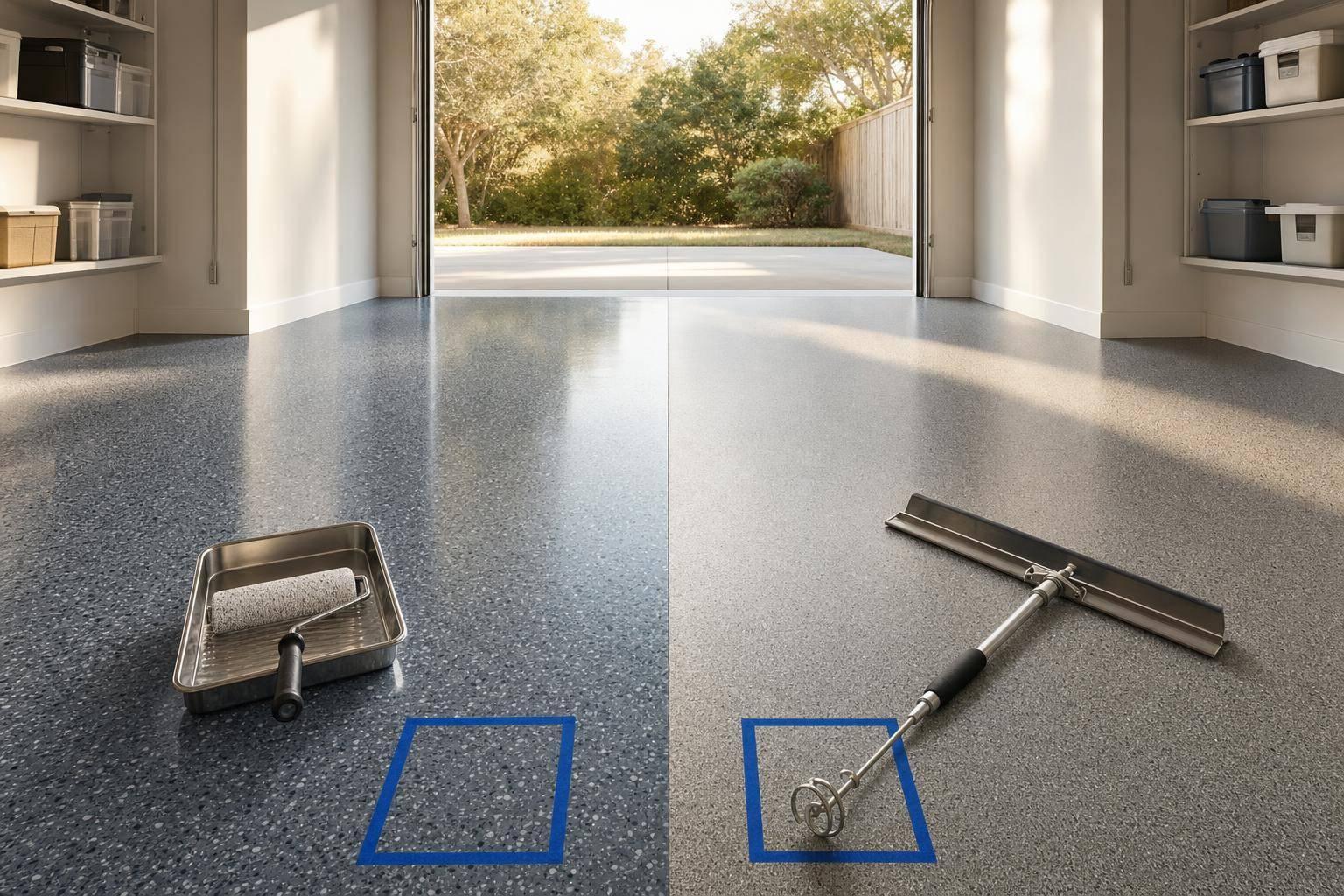
Warranty coverage is another important factor. Croc Coatings provides a lifetime warranty for residential installations and a 5-year warranty for commercial applications. This reflects their confidence in the system’s ability to maintain both chemical resistance and slip performance. Before committing to a full installation, request test patches to ensure the aggregate texture offers enough traction without making cleaning difficult.
Maintaining Slip Resistance in Chemical Environments
Even the toughest coating systems need proper upkeep to retain their slip resistance. Chemical exposure, combined with everyday wear, can gradually break down the textured surface that keeps floors safe. A solid maintenance plan not only protects your flooring investment but also ensures worker safety. At Croc Coatings, we recommend these practices to help your industrial floor coatings perform at their best.
Regular Maintenance for Coated Floors
A consistent cleaning routine is essential for preserving the floor’s protective and slip-resistant features.
Daily cleaning plays a key role. Quickly clean up any chemical spills and neutralize the area to avoid premature coating degradation. Standing liquids, especially chemicals, can weaken the protective layer and smooth out the slip-resistant texture over time.
Stick to pH-neutral or manufacturer-approved cleaners. Avoid harsh chemicals like chlorine, ammonia, or vinegar, as they can strip the protective topcoat, leaving the floor vulnerable to damage and increasing the risk of slips. After cleaning, rinse thoroughly to remove any residue that could make the surface slippery.
For textured floors, standard mopping often isn’t enough. Dirt and grease can settle into the surface profile, reducing traction. Instead, use automatic floor scrubbers with soft brushes or microfiber pads featuring agitator strips. These tools effectively remove debris without wearing down the coating. Let cleaning solutions sit for about 20 minutes before scrubbing to loosen built-up grime.
If steam cleaning is part of your routine, ensure the wand temperature stays below 160°F and the substrate remains under 100°F. This prevents thermal shock, which could cause the coating to delaminate.
Monitoring for Damage
In addition to regular cleaning, frequent inspections help identify early signs of chemical damage.
Check your floors routinely, especially after any significant chemical spills. Look for signs like softening, tackiness, swelling, or blistering, which indicate chemical attack. High-traffic areas require extra attention – inspect these zones for signs of texture loss, as worn-down aggregate can make the floor more slippery.
"To prevent further damage to the system and/or the substrate, remedial repairs must be executed immediately." – Sherwin-Williams
Pay special attention to joints and seams, as these are common entry points for chemicals. Ingress at these areas can lead to delamination and osmotic blistering, which could jeopardize the entire flooring system. Keep a detailed log of your inspections, recording any changes in appearance or performance. This documentation helps identify patterns and ensures timely repairs before minor problems turn into major safety risks.
For step-by-step demonstrations of these maintenance techniques, visit the Croc Coatings YouTube channel.
Conclusion
Chemical resistance and slip performance aren’t just separate features of flooring – they’re interconnected elements that ensure safety and durability. When chemicals damage a coating’s surface, the textured finish that prevents slips can deteriorate, creating hazardous conditions. Consider this: slips, trips, and falls accounted for 450,540 workplace injuries and 865 fatalities, highlighting how essential this connection is to workplace safety.
Selecting the right coating system means striking a balance between shielding your concrete substrate from chemical wear and maintaining reliable traction in wet or contaminated environments. OSHA advises a minimum coefficient of friction of 0.5 for walking surfaces, but top-tier coating systems can uphold this standard even when exposed to harsh chemicals. The secret lies in choosing a coating chemistry tailored to your specific needs – whether you’re dealing with oils in a garage, acids in an industrial plant, or cleaning agents in a commercial setting. This reinforces the importance of a system that addresses both chemical resistance and slip prevention.
High-performance options like the Penntek Evolution system from Croc Coatings are designed to deliver both. These coatings offer exceptional chemical resistance and retain their slip-resistant texture, even in challenging conditions. With strength four times that of standard epoxy, they provide long-lasting protection. While premium systems typically cost $8–$15 per square foot, compared to $2–$5 for thin-film alternatives, their 10–20 year lifespan makes them a cost-effective, long-term solution.
Investing in durable coatings that withstand chemical exposure while ensuring slip safety is a proactive way to protect both your facility and its occupants. Paired with proper maintenance practices, you can create a flooring system that remains safe and functional for years to come. For those in North Idaho, Eastern Washington, Spokane, and the Tri-Cities area, Croc Coatings offers professional installation services, starting with a comprehensive project consultation, complete with a lifetime warranty for residential projects and a 5-year warranty for commercial applications.
FAQs
What chemicals can damage my floor coating the fastest?
Acids, alkalis, and solvents are some of the toughest challenges for floor coatings. Without the right resistance, these substances can lead to chemical breakdown, surface damage, or even peeling of the coating. This becomes a critical concern in places like laboratories and industrial facilities, where contact with these chemicals happens frequently.
How do I know if my floor’s slip resistance has dropped?
To determine if your floor’s slip resistance has diminished, you can test its friction under both dry and wet conditions. This process involves measuring either the Static Coefficient of Friction (SCOF) or the more current Dynamic Coefficient of Friction (DCOF). For wet conditions, a DCOF of 0.42 or higher is typically regarded as safe for slip resistance.
Which coating type should I pick for acids, solvents, and hot washdowns?
For spaces exposed to acids, solvents, or frequent hot washdowns, it’s crucial to select a coating with strong chemical resistance. Options like methyl methacrylate (MMA) or polyurea are built to withstand tough chemical environments and high temperatures, offering long-lasting durability and reliable performance.