Key Takeaways
- Professionally installed polyaspartic floor coatings cost $4 to $12 per square foot on average, with most residential garage projects landing between $7 and $9 per square foot.
- A standard two-car garage (400–500 sq ft) typically runs $2,800 to $5,800; a three-car garage (600–750 sq ft) ranges from $4,200 to $8,600.
- Polyaspartic costs more upfront than epoxy ($7–$12 vs $5–$7 per sq ft), but its 15–20 year lifespan makes it less expensive per year once you account for epoxy’s recoating cycles.
- Five factors drive your final price: square footage, concrete condition and prep work, decorative add-ons, geographic location, and contractor experience.
- One-day installation eliminates the hidden cost of displaced vehicles and multi-day disruption that most homeowners overlook when comparing bids.
- Croc Coatings offers a free in-home consultation with a custom, no-pressure quote — because every floor is different, and an accurate price starts with seeing it in person.
Average Polyaspartic Floor Coating Cost Per Square Foot
If you are researching garage floor coatings, the first number you want is the per-square-foot price. Here it is: professionally installed polyaspartic floor coatings run $4 to $12 per square foot nationally, with most residential projects clustering between $7 and $9 per square foot.
That range is wider than you might expect, and it exists for a reason. A bare, smooth garage slab in good condition with a standard flake finish sits at the low end. A pitted basement floor that needs grinding, crack repair, and a metallic topcoat lands at the high end. The floor itself — its size, its condition, and what you want it to look like — determines where your project falls.
For a concrete real-world anchor: Croc Coatings, the exclusive Penntek certified installer serving North Idaho and Eastern Washington, prices polyurea and polyaspartic floor coatings at $7 to $9 per square foot as a base range. That is not a national average pulled from a database — it is the actual pricing for real projects in Coeur d’Alene, Spokane, Sandpoint, and the Tri-Cities. Decorative upgrades like custom color blends or heavier flake coverage can add 15 to 40 percent on top of the base.
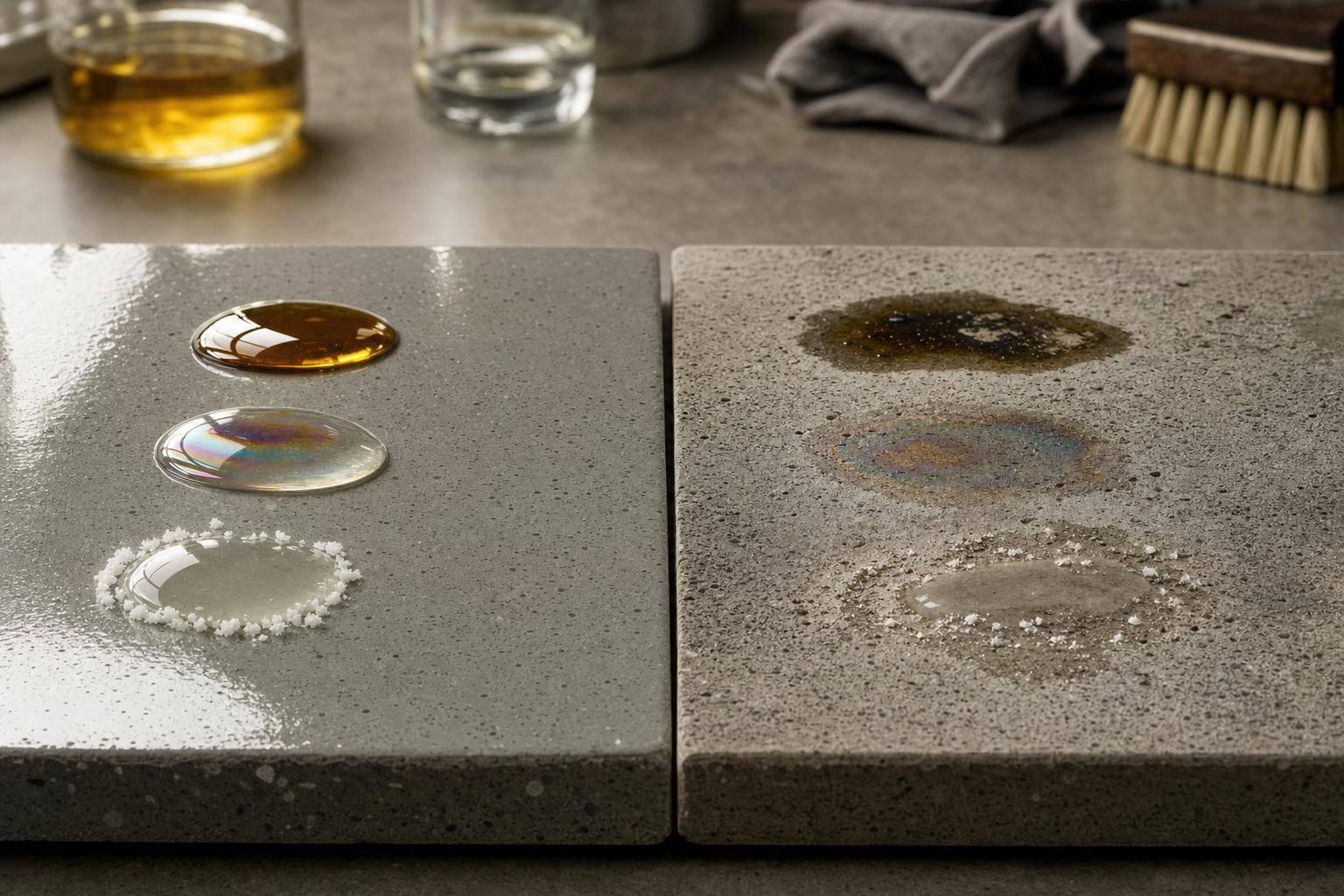
Why does polyaspartic cost more than epoxy? Polyaspartic coatings cure faster, bond more aggressively to concrete, and resist UV yellowing and chemical spills better than traditional epoxy. They also last three to four times longer — 15 to 20 years versus 3 to 5 for a typical epoxy floor — which changes the math considerably when you look at cost over time rather than cost on day one.
Polyaspartic Floor Coating Cost by Project Size
Most homeowners do not think in square feet — they think in rooms. Here is what polyaspartic flooring costs by the project types people actually call about.
| Space | Typical Square Footage | Estimated Total Cost |
|---|---|---|
| 1-Car Garage | 220–280 sq ft | $1,500–$2,800 |
| 2-Car Garage | 400–500 sq ft | $2,800–$5,800 |
| 3-Car Garage | 600–750 sq ft | $4,200–$8,600 |
| Basement | 500–1,500 sq ft | $3,500–$13,500 |
| Patio or Pool Deck | 200–600 sq ft | $1,400–$5,400 |
| Driveway | 400–1,200 sq ft | $2,800–$10,800 |
| Commercial / Retail | 1,000–5,000+ sq ft | $7,000–$45,000+ |
1-Car Garage. The smallest standard residential project. At 220 to 280 square feet, a one-car garage is compact enough that the labor minimum often drives the per-square-foot cost toward the higher end of the range. Expect $1,500 to $2,800 with a standard flake finish.
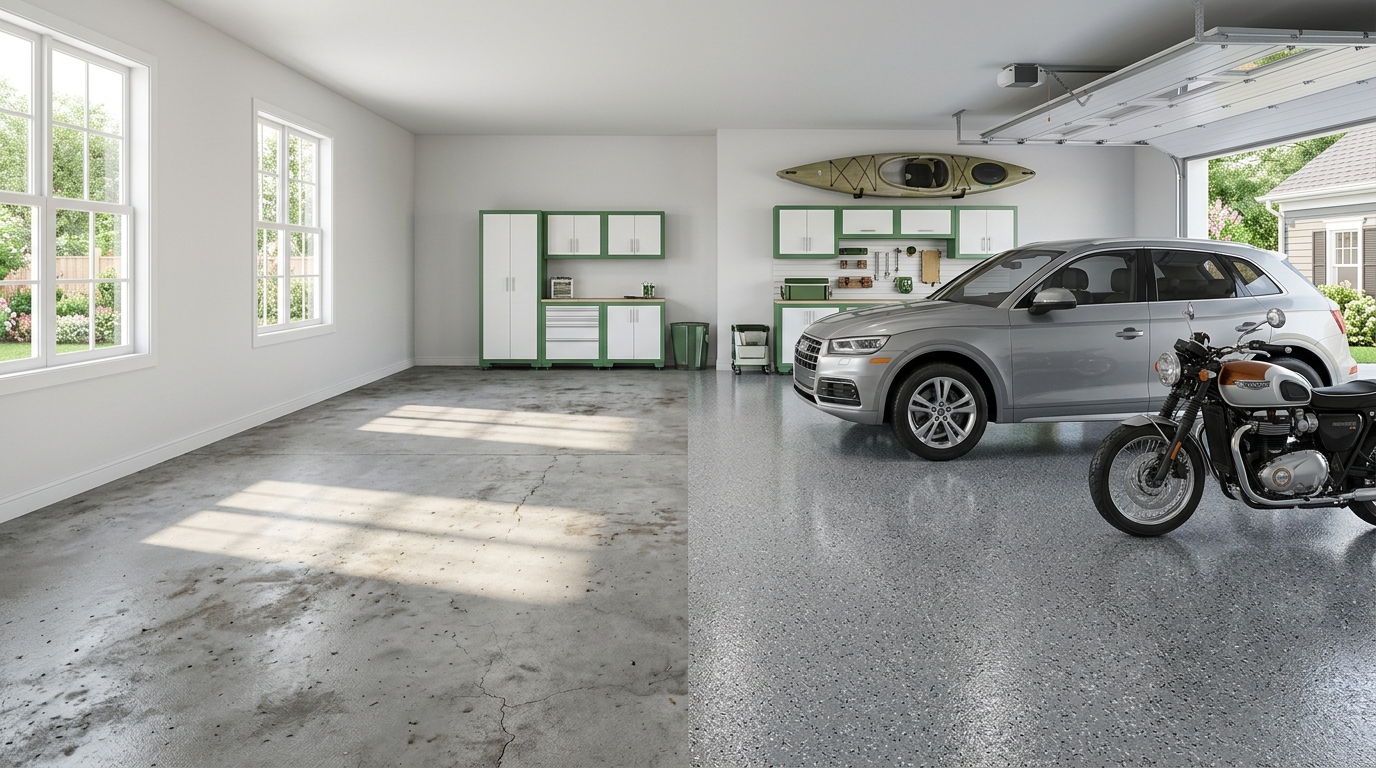
2-Car Garage. This is the most common polyaspartic project in residential flooring. A 400-to-500-square-foot two-car garage runs $2,800 to $5,800. At Croc Coatings’ pricing of $7 to $9 per square foot, a typical two-car garage with a standard finish lands between $3,200 and $4,200. This is the sweet spot where square footage is high enough to amortize setup costs but the project still finishes in a single day.
3-Car Garage. At 600 to 750 square feet, a three-car garage is a substantial project. Total cost runs $4,200 to $8,600, with Croc Coatings’ range around $4,800 to $6,300 for a standard finish. Larger garages benefit from slightly lower per-square-foot pricing because the fixed costs of mobilization and equipment spread across more floor.
Basement. Basement floors vary wildly — anywhere from 500 square feet in a small finished basement to 1,500 or more in a full lower level. Basements also tend to have more moisture and more concrete imperfections than garages, which can push prep costs higher. Budget $3,500 to $13,500 depending on size and condition.
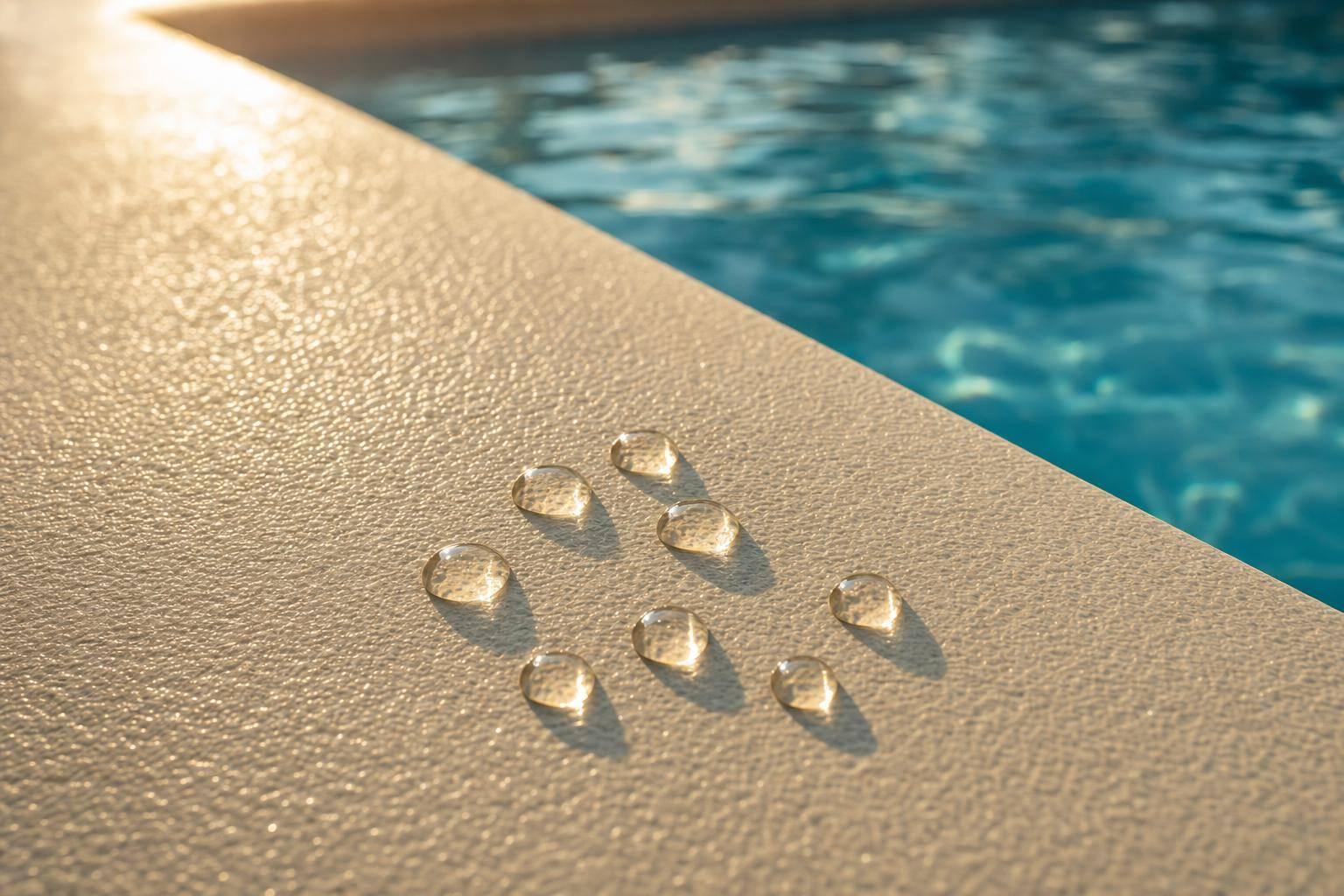
Patio or Pool Deck. Outdoor polyaspartic applications need UV-stable topcoats that will not yellow in sunlight — one of polyaspartic’s genuine advantages over epoxy. A patio or pool deck of 200 to 600 square feet runs $1,400 to $5,400. The slip-resistant texture options common on pool decks may add a small per-square-foot premium.
Driveway. Driveways are the largest residential projects most homeowners will consider. At 400 to 1,200 square feet or more, expect $2,800 to $10,800. Driveway coatings face the harshest conditions — vehicle traffic, road salt, oil drips, and full sun exposure — so polyaspartic’s durability and UV resistance make it especially well-suited here.
Commercial and Retail. Commercial polyaspartic flooring starts around $7,000 for a small retail space and scales well past $45,000 for larger warehouses or showrooms. Commercial projects often specify heavier mil thickness and higher broadcast flake coverage for durability, which increases material costs per square foot.
Every range above assumes professional installation on concrete in reasonable condition. Severely damaged slabs, extensive crack repair, moisture mitigation, or removal of an existing failed coating will add cost regardless of project size.
What Affects Polyaspartic Floor Coating Costs?
Five factors account for nearly all the variation in polyaspartic flooring quotes. Here is the high-level view — for a deeper breakdown with specific cost ranges for each factor, see our detailed cost factors guide.
1. Square Footage. The single largest cost driver. Larger spaces use more material and more labor hours, though the per-square-foot rate typically drops slightly as square footage rises because fixed costs — equipment transport, surface prep setup, crew mobilization — spread across a larger area.
2. Concrete Condition and Prep Work. The state of your existing concrete is the wildcard in any flooring quote. A clean, smooth slab with no cracks, spalling, or moisture issues needs minimal prep — a diamond grind and a thorough cleaning, and it is ready to coat. A floor with deep cracks, oil stains, uneven sections, or high moisture readings needs grinding, patching, and possibly a moisture vapor barrier before the first coat goes down. Prep work can add $1 to $3 per square foot on its own, and skipping it is not an option — the coating will delaminate if the surface underneath is not sound.
3. Decorative Add-Ons. A standard full-flake broadcast finish is included in most base pricing. Upgrades — custom color blends, heavier flake coverage, metallic epoxy undercoats, quartz aggregate for extra texture, or custom saw-cut patterns that mimic tile — typically add 15 to 40 percent to the base price. The more customized the look, the more labor and material go into the floor.
4. Geographic Location. Labor rates, material shipping costs, and local market competition all vary by region. A polyaspartic garage floor in a major coastal metro will generally cost more than the same project in a mid-sized inland city. The national range of $4 to $12 per square foot largely reflects geographic spread.
5. Contractor Experience and Credentials. An experienced contractor with manufacturer certifications — like Penntek certification — charges more than a general handyman who picked up a coating kit. That premium buys you a floor installed to spec with a manufacturer-backed warranty, by a crew that has done it hundreds of times. Polyaspartic coatings cure in 20 to 30 minutes at room temperature, which means the installer has a narrow working window and no room for error. Experience matters.
Polyaspartic vs Epoxy Cost: Upfront Price vs Long-Term Value
The question every homeowner asks: is polyaspartic worth paying more for than epoxy? The short answer is yes — and the annualized math makes the case better than any sales pitch.
Upfront costs. Epoxy floor coatings run $5 to $7 per square foot professionally installed. Polyaspartic runs $7 to $12. On a 450-square-foot two-car garage, that is roughly $2,500 for epoxy versus $4,000 for polyaspartic. The epoxy bid is $1,500 cheaper on day one.
The lifespan difference. Epoxy garage floors typically last 3 to 5 years before they start to peel, yellow, or wear through in high-traffic areas. At that point, the floor needs a full grind-and-recoat — another $2,500. Polyaspartic floors last 15 to 20 years with basic maintenance.
What the 20-year math actually looks like. Run the numbers over two decades, and the "cheaper" option gets expensive:
- Epoxy: $2,500 initial install, plus recoats at year 5, year 10, and year 15. Total over 20 years: $10,000. That is $500 per year.
- Polyaspartic: $4,000 initial install, no recoats needed. Total over 20 years: $4,000. That is $200 per year.
Over 20 years, polyaspartic costs less than half what epoxy costs — $200 per year versus $500 per year — while giving you a better-looking, more durable floor the entire time. This mirrors the annualized math that Galaxy Concrete Coatings published in their own cost analysis: even with conservative assumptions, polyaspartic saves roughly $175 per year over epoxy when you account for recoating cycles.
Beyond the price tag. Annualized cost is the cleanest financial argument, but it is not the only one. Polyaspartic coatings also give you:
- One-day installation. Most polyaspartic garage floors are installed and cure to a walkable finish in a single day. Epoxy needs 24 to 72 hours between coats and up to a week before you can park on it. If you have ever shuffled cars between the driveway and the street for a week, the value of a one-day job is tangible.
- UV stability. Epoxy yellows and chalks in sunlight. Polyaspartic topcoats are UV-stable, so they stay clear and keep their color — critical for patios, pool decks, and any garage with windows.
- Chemical and impact resistance. On the Shore D hardness scale, 100-percent-solids epoxy tests at 80 to 90 while polyaspartics register at 70 to 75. That does not mean epoxy is harder — it means epoxy is more brittle. Polyaspartic’s slight flexibility lets it absorb impacts that would chip or crack a rigid epoxy surface. It also resists hot-tire pickup, road salt, oil, and gasoline better than epoxy over the long haul.
For a full side-by-side breakdown with detailed cost scenarios, read our polyaspartic vs epoxy cost comparison.
Is Polyaspartic Floor Coating Worth the Cost?
For most homeowners, yes — but let us look at the trade-offs honestly, because polyaspartic is not the right floor for every situation.
Where polyaspartic earns its premium.
The biggest financial argument is lifespan. A polyaspartic floor that lasts 15 to 20 years avoids two or three recoats that an epoxy floor would need in the same period. Each recoating cycle costs roughly the same as the original install, so the "cheaper" epoxy floor is really a recurring expense. The short-term vs long-term costs of garage floor coatings page breaks this down in detail.
The one-day installation saves more than time. For a family with two or more cars, a week-long epoxy cure means shuffling vehicles, losing driveway space, and working around the project. Polyaspartic eliminates that disruption.
The lifetime warranty is a real asset. As a Penntek certified installer, Croc Coatings backs every polyaspartic floor with the manufacturer’s limited lifetime warranty. That warranty follows the floor — it is not prorated, and it is not dependent on the original homeowner staying in the house. Most epoxy installers offer one to three years at best.
Home value and curb appeal are harder to quantify but they are real. A finished garage floor makes the space feel like part of the home rather than a utility shed. For buyers, a coated garage floor signals that the home was maintained — not a line item on an appraisal, but a factor in how the house shows. For the homeowner who stays, the floor looks good and cleans easily for two decades.
Where polyaspartic may not be the right fit.
Polyaspartic costs more upfront. If the budget is tight and the floor is a low-traffic storage space, an epoxy or even a high-quality concrete sealer may be the practical choice.
Polyaspartic is not a DIY product. The fast cure time — 20 to 30 minutes in typical conditions — means the installer has to work quickly and precisely. Unlike epoxy kits sold at home improvement stores, polyaspartic requires professional equipment and training. If you are determined to do the floor yourself, epoxy is the more forgiving option (though we cover the hidden costs of that route in the next section).
Color selection, while solid, is narrower than what epoxy offers. Polyaspartic base coats and flake systems come in a curated set of colors and blends. Epoxy, with its slower cure, allows more on-site tinting and custom effects. For most homeowners the polyaspartic palette is more than adequate, but if you want a highly specific custom color match, discuss it during your consultation.
For a full treatment of the advantages and trade-offs, see our polyaspartic coating pros and cons guide. If you are still weighing the decision, our breakdown of whether polyaspartic is worth the investment covers the ROI in greater depth.
DIY vs Professional Polyaspartic Installation: The Real Cost Difference
At first glance, doing it yourself looks like the way to save money. A polyaspartic DIY kit runs $1.50 to $3 per square foot in materials — a fraction of the $7 to $12 professional install. But the DIY route carries costs that the kit price tag does not show.
Equipment you have to buy or rent. A professional polyaspartic install starts with diamond grinding the concrete — not acid etching, which does not create the mechanical profile polyaspartic needs to bond. A walk-behind diamond grinder with the right tooling and a vacuum shroud rents for $150 to $300 per day. Add a high-quality squeegee, spike roller, spiked shoes for walking on wet coating, and proper respirator and protective gear, and the equipment budget alone can reach $400 to $600 before the first bag of material is opened.
The cure-time problem. Polyaspartic’s fast cure is a professional advantage and a DIY hazard. Once mixed, the coating has a pot life of 20 to 30 minutes at 70 degrees — and less in warmer temperatures. A first-time applicator working a 400-square-foot garage has a narrow window to spread, back-roll, and broadcast flake before the material sets. Hesitation or uneven coverage means a patchy floor that needs to be ground off and redone. Professional crews run two or three people on a garage floor specifically to beat the cure clock.
Prep mistakes are permanent. If the concrete is not ground properly, or a crack is not filled, or moisture is not tested, the coating will fail — usually within the first year. Delamination, blistering, and peeling are the common failure modes, and fixing a failed DIY polyaspartic floor costs more than hiring a professional from the start, because the failed coating has to be removed before the floor can be recoated.
The warranty gap. No manufacturer warranties a DIY application. A professional Penntek-certified installation comes with a lifetime warranty. If the floor fails, the contractor fixes it. If a DIY floor fails, the homeowner pays to remove it and pays again to have it redone.
Bottom line. A DIY epoxy kit for a garage can work — it is slower, more forgiving, and the stakes are lower on a $500 project. Polyaspartic is a different class of coating. The material cost savings evaporate quickly when equipment rental, lost time, and rework risk are factored in. For most homeowners, paying $7 to $9 per square foot for a warranted, one-day professional installation is the better financial decision — and a far less stressful one.
For more perspective on how professional coatings pay off over time, read our analysis of concrete coating costs and long-term savings.
How to Get an Accurate Polyaspartic Floor Coating Quote
No online pricing tool can give you an accurate polyaspartic flooring quote — and if a contractor offers one without seeing your floor, treat the number as a rough estimate at best. Every concrete slab is different, and the variables that drive cost — crack depth, moisture vapor transmission, existing coatings, surface profile — cannot be assessed from a photo or a square-footage estimate.
Here is what a thorough quote process looks like and what you should expect.
1. An on-site evaluation. A professional contractor comes to your home, measures the space, and inspects the concrete. They check for cracks, spalling, oil contamination, and moisture — including a moisture vapor emission test if the slab is on-grade. They look at the surrounding conditions: drainage, sun exposure, whether the space is climate-controlled. This visit typically takes 30 to 60 minutes.
2. A conversation about how you use the space. Is the garage a workshop, a gym, or just parking? Do you want slip resistance for a pool deck or a smooth finish for a showroom? Will you add cabinets later? These questions determine the coating system, topcoat, and texture. A good contractor asks them.
3. A written, itemized quote. After the evaluation, you should receive a quote that breaks down the scope: surface preparation, base coat, broadcast or finish, topcoat, and any line items for crack repair, moisture mitigation, or decorative upgrades. The quote should be fixed — not an estimate — and it should include the warranty terms and projected timeline.
4. No pressure, no gimmicks. Legitimate flooring contractors do not use high-pressure sales tactics or "today-only" discounts. The work is too specialized and the reputation too valuable. If the quote feels like a timeshare pitch, get a second opinion.
At Croc Coatings, this is exactly how it works. We offer a free in-home consultation throughout North Idaho and Eastern Washington — including Coeur d’Alene, Spokane, Sandpoint, and the Tri-Cities. A member of our team comes to your home, evaluates your floor, discusses your goals, and provides a detailed written quote with no obligation. We do not use an online quote calculator because we have seen too many homeowners surprised by a condition — a hidden crack, a moisture issue, a previous sealer — that a formula would have missed. You deserve a price based on your actual floor, not a national average.
Our polyaspartic floors run $7 to $9 per square foot as a base range, backed by the Penntek lifetime warranty and installed in one day by a crew that has completed over 1,700 projects. Financing is available at 0 percent interest for 12 months. To schedule your free consultation, give us a call or reach out through our contact page.
Frequently Asked Questions
How much does polyaspartic floor coating cost per square foot?
Polyaspartic floor coating costs $4 to $12 per square foot professionally installed, with most residential projects falling between $7 and $9 per square foot. The range depends on concrete condition, decorative finishes, your location, and the contractor’s experience and certifications.
Is polyaspartic more expensive than epoxy?
Yes. Polyaspartic costs $7 to $12 per square foot installed versus $5 to $7 for epoxy. However, polyaspartic lasts 15 to 20 years compared to 3 to 5 years for epoxy, so the annualized cost is actually lower — roughly $200 per year for polyaspartic versus $500 per year for epoxy once recoating cycles are included.
What does a polyaspartic garage floor cost for a 2-car garage?
A standard two-car garage (400 to 500 square feet) costs $2,800 to $5,800 for professional polyaspartic installation. At Croc Coatings’ pricing of $7 to $9 per square foot, a typical two-car garage with a standard finish runs $3,200 to $4,200.
What is the average lifespan of a polyaspartic floor coating?
A professionally installed polyaspartic floor coating lasts 15 to 20 years with basic cleaning and maintenance. That is three to four times the lifespan of a typical epoxy garage floor, which usually needs recoating every 3 to 5 years.
Can I install polyaspartic floor coating myself?
Polyaspartic is not recommended for DIY installation. The material cures in 20 to 30 minutes, leaving a very narrow working window that requires experience and a multi-person crew. Professional equipment — diamond grinder, moisture testing tools, proper PPE — is essential. DIY polyaspartic failures are expensive to fix because the failed coating must be ground off before the floor can be redone. Epoxy kits are more DIY-friendly due to their slower cure time.
What are the disadvantages of polyaspartic floor coating?
The main downsides are higher upfront cost compared to epoxy, the requirement for professional installation (not DIY-friendly), and a somewhat narrower color range than what custom epoxy tinting can achieve. Fast cure time is an advantage for turnaround but means the installer must work quickly and correctly — there is no margin for hesitation. For a balanced look at all the trade-offs, see our polyaspartic pros and cons guide.
Does polyaspartic floor coating come with a warranty?
It depends on the contractor. Croc Coatings, as a Penntek certified installer, backs every polyaspartic floor with Penntek’s limited lifetime manufacturer warranty. Most epoxy installers offer one to three years of coverage. Always ask about warranty terms — and whether the warranty follows the floor if you sell the home — before signing a contract.
How long does polyaspartic installation take?
Most residential polyaspartic floors — garages, basements, patios — are installed in a single day and are walkable within hours. You can typically park vehicles on the floor after 24 hours. Compare that to epoxy, which often requires multiple days between coats and up to a week of cure time before the floor can handle vehicle traffic.