Key Takeaways:
- Polyaspartic coatings cost $7–$9 per square foot professionally installed in Croc Coatings’ service area, while epoxy ranges from $5–$7 per square foot — but the upfront number tells only part of the story.
- Over a 20-year period, polyaspartic can cost 40–60% less per year than epoxy once you factor in replacement cycles, repairs, and maintenance.
- Polyaspartic installs in one day and cures for vehicle traffic within 24 hours; epoxy can take up to 7 days before you can park on it.
- Labor drives 50–60% of the total project cost — and polyaspartic’s faster application means fewer labor hours despite higher material costs.
- DIY epoxy saves on labor but carries a failure rate of up to 30% within two years, often leading to a full professional replacement that costs more than doing it right the first time.
Quick Reference: Which Coating Wins by Cost Factor?
| Cost Factor | Polyaspartic | Epoxy | Winner |
|---|---|---|---|
| Material Cost | $2–$6/sq ft | $1–$5/sq ft | Epoxy |
| Installation Cost | $3–$6/sq ft labor, 1-day | $2–$4/sq ft labor, multi-day | Epoxy (DIY); Polyaspartic (pro) |
| Durability / Lifespan | 15–25 years | 5–7 years (typical) | Polyaspartic |
| Maintenance Costs | Minimal — basic cleaning | Recoat every 2–5 years | Polyaspartic |
| Application Speed | 1 day total | 3–7 days | Polyaspartic |
| Warranty Value | Lifetime (Croc/Penntek) | 1–5 years typical | Polyaspartic |
Cost Factor #1: Material Costs
The raw materials behind polyaspartic and epoxy coatings set the floor for everything else. Before labor, before prep work, before a contractor ever steps on site — the chemistry itself carries a price tag.
Polyaspartic Material Costs: $2–$6 per Square Foot
Polyaspartic coatings are a multi-layer system. A typical professional installation includes a polyurea base coat for adhesion, a polyaspartic body coat for durability, decorative flakes or quartz broadcast for texture, and a UV-stable polyaspartic topcoat for the finish. Each layer serves a purpose, and each adds to the material total.
At the high end of the range, systems like Penntek Evolution — the exclusive polyaspartic system Croc Coatings installs across North Idaho and Eastern Washington — use industrial-grade polyaspartic resins engineered for 4× the impact resistance of epoxy. That formulation costs more per gallon than a basic epoxy kit, but it also eliminates the need for a separate primer coat and UV topcoat that many competitors add separately.
Epoxy Material Costs: $1–$5 per Square Foot
Epoxy spans a wide quality spectrum, and the material price reflects it. Water-based epoxy kits from home improvement stores sit at the bottom — $1–$2 per square foot for a thin, single-layer coat. Solvent-based epoxy steps up to $2–$4 per square foot. At the top, 100% solids epoxy — the kind professional installers use — reaches $4–$5 per square foot in materials alone.
The catch: 100% solids epoxy still lacks UV stability. Applied in a garage with any natural light, it yellows within 12–18 months. Polyaspartic does not. That material-cost advantage shrinks fast when you consider that epoxy often needs a separate UV-stable topcoat — an additional $1–$2 per square foot — to match polyaspartic’s built-in UV resistance.
| Material Tier | Polyaspartic | Epoxy |
|---|---|---|
| Budget / DIY-grade | N/A (professional-only) | $1–$2/sq ft (water-based) |
| Mid-range | $2–$4/sq ft | $2–$4/sq ft (solvent-based) |
| Professional-grade | $4–$6/sq ft | $4–$5/sq ft (100% solids) |
| UV-resistant out of the box? | Yes | No — needs separate topcoat |
Cost Factor #2: Installation and Labor Costs
Materials are only part of the equation. Labor represents 50–60% of the total floor coating cost, and the two coatings demand very different amounts of it.
Professional Installation: The Real Labor Breakdown
Polyaspartic’s one-day installation is not just convenient — it directly reduces labor costs. A crew arrives, grinds the concrete, fills cracks, applies the base coat, broadcasts the decorative layer, and seals with the topcoat — all in a single shift. Because each layer cures in 4–6 hours, there is no return trip, no overnight drying period, and no second mobilization charge.
Epoxy’s multi-day process works differently. Each coat needs 12–24 hours to cure before the next can be applied. A 100% solids epoxy floor typically requires three site visits over 3–5 days. More trips mean more labor hours, more fuel, and more equipment rental days — even if the hourly labor rate is identical.
Here is how the numbers play out for a standard 400 sq ft two-car garage:
| Installation Component | Polyaspartic (Pro) | Epoxy (Pro) |
|---|---|---|
| Surface preparation | $400–$1,200 | $400–$1,200 |
| Labor (application) | $800–$1,600 (1 day) | $800–$2,000 (3–5 days) |
| Mobilization / equipment | $200–$400 | $300–$600 |
| Total Installation | $1,400–$3,200 | $1,500–$3,800 |
| Per sq ft equivalent | $3.50–$8.00 | $3.75–$9.50 |
In Croc Coatings’ service area — Coeur d’Alene, Spokane, Sandpoint, and the Tri-Cities — professional polyaspartic installation runs $7–$9 per square foot all-in for a standard garage, while professional epoxy runs $5–$7 per square foot. The gap narrows because polyaspartic’s speed offsets its higher material cost.
DIY Epoxy: The Hidden Risks
DIY epoxy kits promise to cut costs by 40–60% by eliminating labor. A two-car garage kit costs $200–$600 — tempting against a $2,800+ professional job.
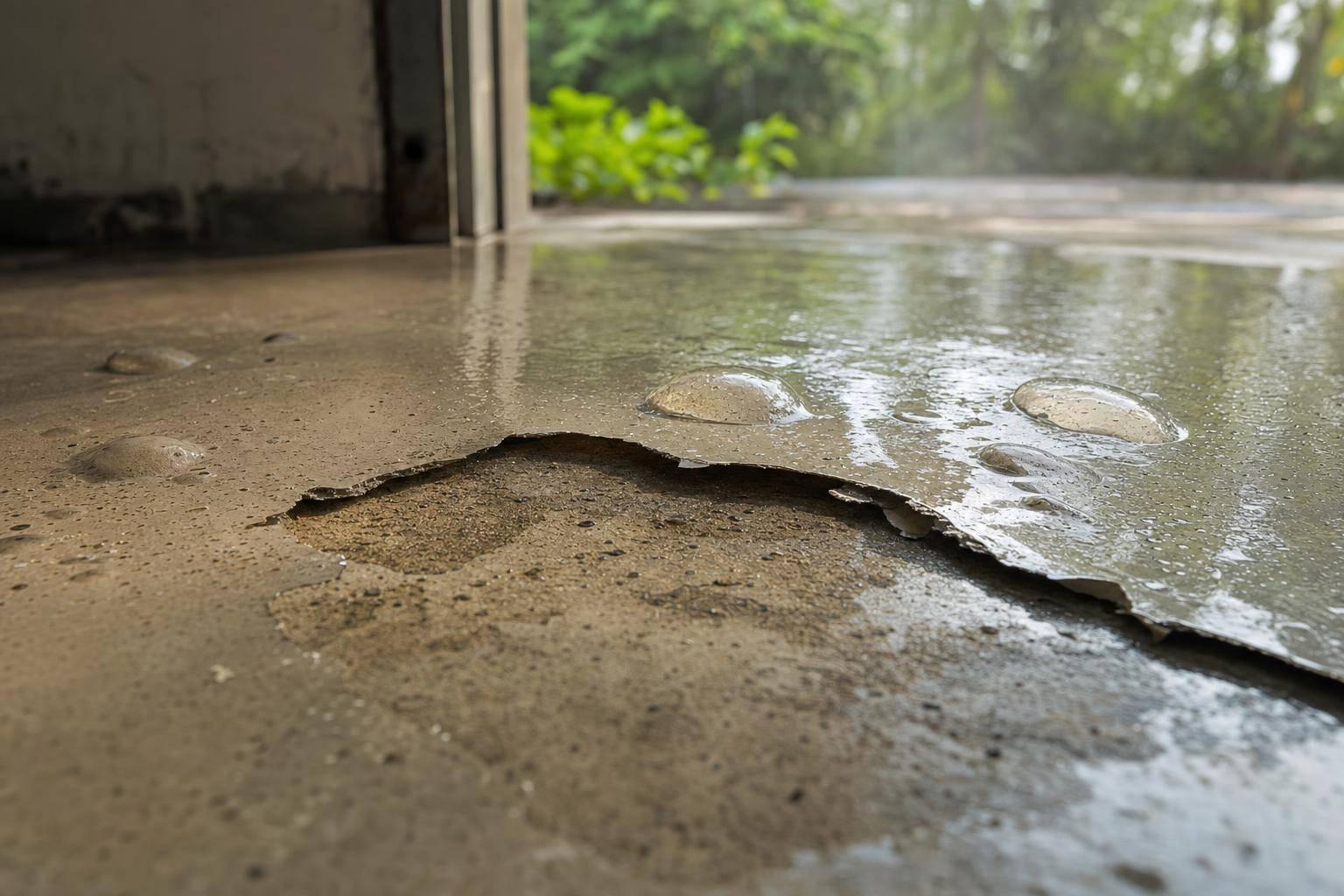
The problem: up to 80% of epoxy floor failures stem from improper surface preparation, and DIY kits have a failure rate of up to 30% within two years. A failed DIY epoxy floor costs more to fix than a professional install would have cost in the first place — the old coating must be stripped, the concrete re-ground, and a new system applied. That $600 kit can become a $4,000–$6,000 correction.
Polyaspartic is effectively unavailable as a DIY option. Its 10–60 minute pot life and moisture sensitivity during application make it impractical for anyone without professional training and equipment. That limitation is also a quality control — polyaspartic floors are nearly always installed correctly because they are nearly always installed by professionals.
For a detailed line-by-line comparison, see our polyaspartic vs epoxy cost breakdown.
Cost Factor #3: Durability and Lifespan
Upfront cost matters. But a coating’s true price is spread across every year you own it.
Polyaspartic Lifespan: 15–25 Years
A professionally installed polyaspartic coating can last 15 to 25 years with proper maintenance. The reasons are chemical: polyaspartic resins form a tighter cross-linked polymer matrix than epoxy, giving them higher tensile strength, better flexibility through temperature swings, and resistance to the hot-tire pickup that pulls epoxy off garage floors.
Croc Coatings’ Penntek Evolution system is rated at 4× the impact resistance of epoxy and carries a lifetime manufacturer warranty — a signal of how confident the manufacturer is in that 15–25 year range. In North Idaho and Eastern Washington’s freeze-thaw cycles, that flexibility matters: polyaspartic expands and contracts with the concrete slab rather than cracking away from it.
Epoxy Lifespan: 5–7 Years (Typical)
Epoxy lifespan varies dramatically by type:
| Epoxy Type | Typical Lifespan | Best-Case Scenario |
|---|---|---|
| Water-based (DIY) | 3–5 years | 7 years (climate-controlled, low-traffic) |
| Solvent-based | 5–7 years | 10 years |
| 100% solids (pro) | 7–10 years | 15–20 years (ideal conditions only) |
The “ideal conditions” asterisk on 100% solids epoxy is significant. It assumes no UV exposure, stable temperatures, no chemical spills, and regular resealing. In a real garage — sun through the door, road salt in winter, oil drips, hot tires — even a professional epoxy floor rarely hits the top of its range.
The Cost-Per-Year Calculation
Divide the total installed cost by the expected lifespan:
| Coating | Installed Cost (400 sq ft) | Lifespan | Cost Per Year |
|---|---|---|---|
| Polyaspartic | $2,800–$3,600 | 15–25 years | $112–$240/year |
| Professional Epoxy | $2,000–$2,800 | 7–10 years | $200–$400/year |
| DIY Epoxy | $600–$1,200 | 3–5 years | $120–$400/year |
Polyaspartic costs more on day one but often costs less per year than professional epoxy — and roughly the same per year as DIY epoxy when you account for the DIY failure risk. For a deeper dive into whether the premium pays off, read our guide on whether polyaspartic is worth the cost.
Cost Factor #4: Maintenance and Repair Costs
A floor that looks great on install day but demands constant upkeep is not a bargain. Maintenance costs over the coating’s life can quietly erase any upfront savings.
Polyaspartic Maintenance: Nearly Zero
Polyaspartic coatings need little beyond routine cleaning — sweep or vacuum debris, mop with a mild pH-neutral cleaner when needed. The UV-stable topcoat does not yellow, so there is no resealing schedule to keep. Touch-ups are rare; when needed, they are typically spot repairs rather than full recoats.
The biggest maintenance “cost” for a polyaspartic floor is an annual inspection, which most homeowners do themselves in 10 minutes. No professional service call, no annual resealing cost, no downtime.
Epoxy Maintenance: Recurring and Unavoidable
Epoxy demands more:
- Resealing every 2–3 years for solvent-based and water-based epoxies, at $0.50–$1.50 per square foot per application. For a 400 sq ft garage, that is $200–$600 every reseal cycle.
- UV yellowing in any epoxy exposed to sunlight — the coating itself does not degrade structurally, but the discoloration often prompts an early replacement for cosmetic reasons.
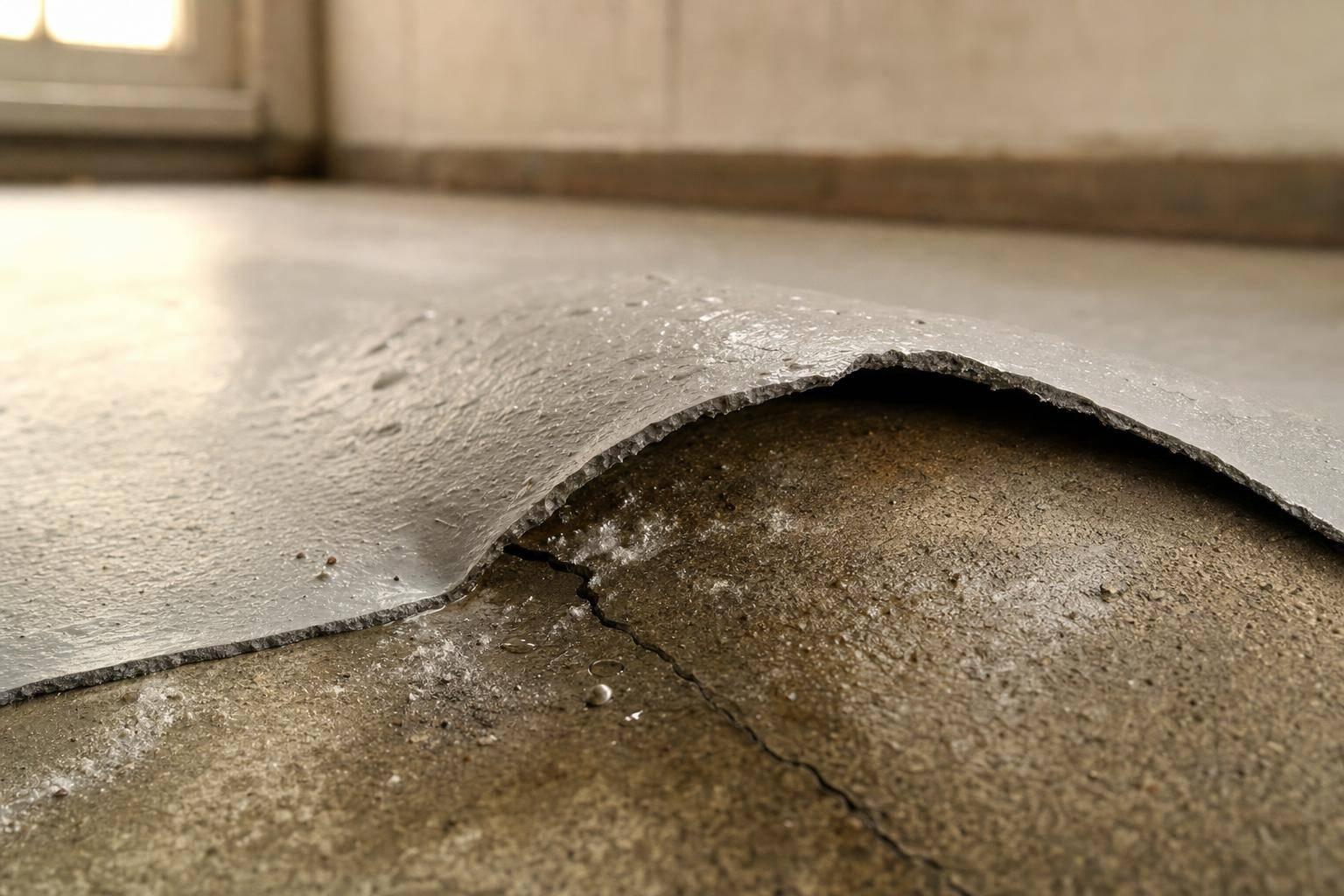
- Hot-tire pickup — the phenomenon where warm tires bond to and peel epoxy off the floor — is a common repair trigger, especially in garage applications. Fixing a 2 ft × 2 ft peeled section costs $100–$300 per incident.
- Chip and crack repairs — epoxy’s brittleness makes it prone to impact damage from dropped tools or equipment. Individual repairs are small ($50–$150 each) but add up.
10-Year Maintenance Cost Comparison
| Maintenance Item | Polyaspartic (10 Yrs) | Epoxy (10 Yrs) |
|---|---|---|
| Routine cleaning supplies | $100–$200 | $100–$200 |
| Resealing / recoating | $0 | $600–$1,800 |
| Spot repairs (chips, peels) | $0–$200 | $300–$900 |
| UV-related cosmetic replacement | $0 | $0–$3,000 (if replaced early) |
| Total 10-Year Maintenance | $100–$400 | $1,000–$5,900 |
The epoxy maintenance column can swing wildly — a climate-controlled basement with no sun exposure and light foot traffic costs little to maintain. A sunny garage with daily vehicle traffic pushes toward the high end.
Cost Factor #5: Application Time and Complexity
Time is money — and the clock starts the moment your garage or patio is out of commission.
Polyaspartic: Done in a Day
See how a one-day polyaspartic installation works — from bare concrete to finished garage floor.
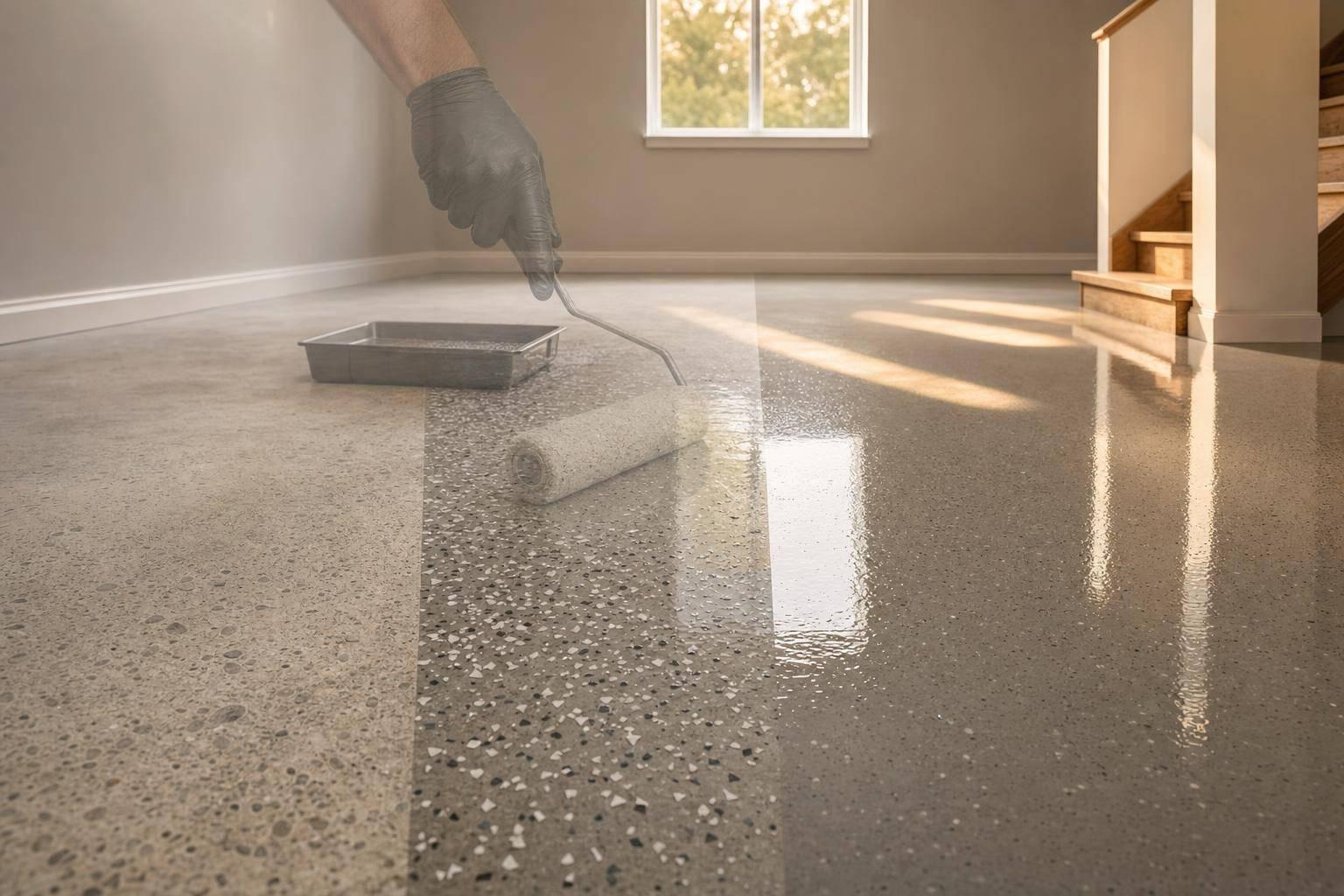
Polyaspartic coatings cure in 4–6 hours for foot traffic and are ready for vehicles within 24 hours. A typical Croc Coatings installation starts in the morning and finishes by evening — one day, no overnight displacement, no weekend lost.
That speed translates directly to cost. A one-day install means one mobilization, one equipment rental day, and one crew shift. There is no second trip for a topcoat, no curing buffer that pushes the project into a second week. For a homeowner, it also means not paying to empty the garage for 5–7 days or finding alternate parking.
Epoxy: The Multi-Day Timeline
Epoxy cures in stages. Each coat needs 12–24 hours to harden enough for the next coat. A three-coat professional epoxy system typically requires:
- Day 1: Surface prep and primer coat → 12–24 hour cure
- Day 2: Body coat → 12–24 hour cure
- Day 3: Topcoat → 12–24 hour cure
- Days 4–7: Full cure before vehicle traffic
That is 4–7 days of unusable floor space. For a commercial space, that downtime carries a quantifiable cost in lost revenue. For a homeowner, it is the inconvenience of a garage full of displaced contents — and possibly a vehicle parked outside in an Idaho winter.
DIY epoxy stretches the timeline further: improper mixing, humidity misjudgments, and uneven application often mean redoing sections, adding days or weeks to the project. Before using any calculator estimate, make sure you understand the hidden costs of garage floor coatings that catch homeowners off guard.
Cost Factor #6: Warranty Value
Most cost comparisons stop at five factors. But the warranty behind a coating is a real financial variable — it defines who pays when something goes wrong.
The Warranty Landscape
| Warranty Type | Polyaspartic (Penntek/Croc) | Epoxy (Typical) |
|---|---|---|
| Manufacturer warranty | Lifetime | 1–5 years |
| Installation warranty | Lifetime (Croc Coatings) | 1–3 years (varies by contractor) |
| What it covers | Delamination, peeling, UV degradation | Manufacturing defects only (typically) |
| Transferable | Yes | Rarely |
Croc Coatings backs its Penntek Evolution polyaspartic floors with a lifetime manufacturer warranty and a matching lifetime installation warranty. That means if the floor delaminates, peels, or degrades — 5 years in or 20 years in — it is covered. The warranty is transferable to a new homeowner, which adds measurable resale value.
Epoxy warranties are shorter and narrower. A typical professional epoxy installation carries a 1–3 year workmanship warranty and a 1–5 year manufacturer warranty that covers material defects only — not wear, not UV yellowing, not hot-tire damage. If an epoxy floor fails in year 6, the homeowner pays for the full replacement.
Quantified: a lifetime warranty is worth roughly $2,000–$6,000 in avoided replacement costs over 20 years, depending on garage size and coating type. That is not a marketing claim — it is the cost of a single epoxy reinstallation avoided. For a full list of what polyaspartic brings to the table beyond cost, see our polyaspartic coating pros and cons.
What Else Affects Your Final Quote
The six cost factors above cover the major line items. But your specific project brings variables that can shift the final number by 15–40%.
Floor Preparation
Every coating needs a clean, profiled concrete surface to bond properly. If your floor has cracks, spalling, oil stains, or existing coatings that need removal, preparation costs rise. Expect to add $1–$3 per square foot for significant prep work — crack filling, grinding away old epoxy, or moisture mitigation. Up to 80% of coating failures trace back to inadequate prep, so this is not the line item to skimp on.
Garage Size and Layout
Larger projects benefit from economies of scale. A 200 sq ft single-car garage might cost $10–$12 per square foot, while an 800 sq ft three-car garage drops to $6–$8 per square foot — roughly a 15–20% per-square-foot discount at higher square footage. Cut-outs, steps, and odd angles increase labor time and can push per-square-foot pricing back up.
Decorative Add-Ons
Full-flake broadcast, custom color blends, metallic finishes, and quartz aggregate all add to the material cost — typically $1–$3 per square foot. These are optional, but they also increase durability: a full-flake broadcast system adds texture and impact resistance beyond a solid-color base coat alone.
Regional Labor Rates
Croc Coatings serves North Idaho and Eastern Washington, where labor rates differ from national averages. The $7–$9 per square foot pricing for a standard polyaspartic garage floor reflects local costs — other regions may be higher or lower, but the relative gap between polyaspartic and epoxy holds.
For a personalized estimate tailored to your garage dimensions and finish preferences, use our garage floor coating cost calculator. For a full breakdown of every line item across project sizes, see our complete polyaspartic floor coating cost guide.
Total Cost of Ownership: The 20-Year Math
Bringing all six cost factors together for a standard 400 sq ft two-car garage:
| Cost Category | Polyaspartic | Professional Epoxy | DIY Epoxy |
|---|---|---|---|
| Initial Installation | $2,800–$3,600 | $2,000–$2,800 | $600–$1,200 |
| Replacements (20 yrs) | $0 (25-yr lifespan) | $2,000–$5,600 (1–2 replacements) | $1,200–$4,800 (3–5 replacements) |
| Maintenance (20 yrs) | $200–$800 | $2,000–$11,800 | $800–$3,000 |
| Repairs (20 yrs) | $0–$400 | $600–$1,800 | $600–$2,400 |
| 20-Year Total | $3,000–$4,800 | $4,600–$20,200 | $3,200–$11,400 |
| Cost Per Year | $150–$240 | $230–$1,010 | $160–$570 |
Polyaspartic’s 20-year cost is not only lower — it is predictable. The range is tight because there are no replacement cycles, no resealing schedule, and no UV-replacement gamble. Epoxy’s range is wide because a floor that needs replacing in year 6 looks very different from one that lasts to year 15.
The bottom line: polyaspartic costs more on day one and less in every year that follows. Epoxy costs less on day one and more — sometimes far more — in every year after.
FAQs
Is polyaspartic more expensive than epoxy?
Yes — upfront. Polyaspartic professional installation runs $7–$9 per square foot in Croc Coatings’ service area, while professional epoxy runs $5–$7 per square foot. However, polyaspartic’s 15–25 year lifespan versus epoxy’s 5–7 years (typical) means the cost-per-year is often lower for polyaspartic — $150–$240 per year versus $230–$1,010 per year for epoxy over a 20-year window.
Can I install polyaspartic myself to save money?
No. Polyaspartic coatings are not sold as DIY kits. They have a pot life of 10–60 minutes, require diamond-grinding equipment for proper surface preparation, and demand precise mixing ratios and application timing. The material is professional-grade and professional-only — which is part of why polyaspartic floors have a much lower failure rate than DIY epoxy.
How long does each coating actually last in a garage?
A professionally installed polyaspartic garage floor lasts 15–25 years with basic cleaning. A 100% solids professional epoxy garage floor lasts 7–10 years under the same conditions — less if it gets regular sun exposure. DIY water-based epoxy in a garage typically lasts 3–5 years before showing significant wear, peeling, or yellowing.
Does polyaspartic yellow like epoxy?
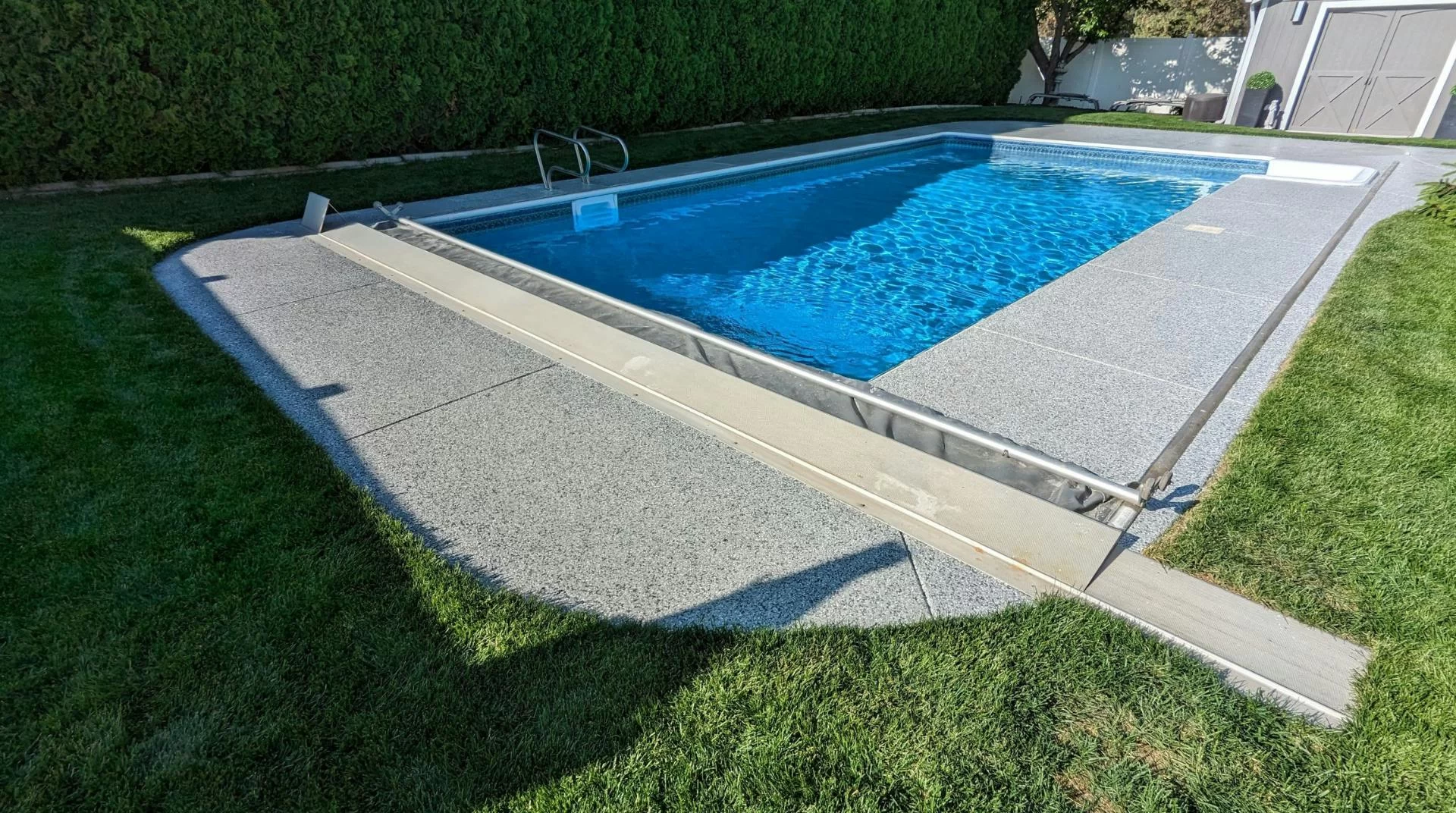
No. Polyaspartic coatings are inherently UV-stable — the chemistry resists the oxidation that causes epoxy to yellow and chalk. That is why polyaspartic is used on patios, pool decks, and driveways where epoxy cannot be, and why it never needs a separate UV topcoat.
What is the single biggest cost factor most homeowners miss?
Replacement cost. Most homeowners compare the install-day price and stop there. But over 20 years, epoxy may need replacement 2–3 times — each replacement costing as much as the original install. Polyaspartic’s longer lifespan means zero replacement costs over the same period, which is worth $2,000–$8,400 depending on the epoxy type and garage size.
Which Coating Is Right for Your Project?
Every garage, basement, and patio is different — and the right coating depends on what you value most.
Choose polyaspartic if: you plan to stay in your home 5+ years, your floor gets sunlight, you park vehicles on it daily, you want the floor done in one day, and you prefer paying once for a surface that outlasts your mortgage.
Choose professional epoxy if: your budget is tight, the space is fully enclosed with no UV exposure, and you are comfortable with resealing every few years and a possible replacement in 7–10 years.
Choose DIY epoxy if: the space is low-traffic — a storage room, not a garage — and you have experience with concrete coatings and understand the 30% failure-rate risk.
For most homeowners in North Idaho and Eastern Washington — where freeze-thaw cycles, road salt, and garage sun exposure are daily realities — polyaspartic’s durability and UV stability make it the stronger long-term choice. The numbers bear it out.