- Polyaspartic costs $7–$9/sq ft installed vs $5–$7/sq ft for epoxy — the upfront price gap is real and worth weighing carefully
- It’s not a DIY product — the rapid cure time demands professional equipment and trained installers; home kits won’t cut it
- Spot repairs are more noticeable than with epoxy because matching the exact finish is genuinely difficult
- The fast cure that enables one-day install also limits detailed decorative work
- Best for long-term homeowners in harsh climates or high-use spaces; less ideal for house flippers, rental properties, or tight budgets
What Is Polyaspartic Floor Coating?
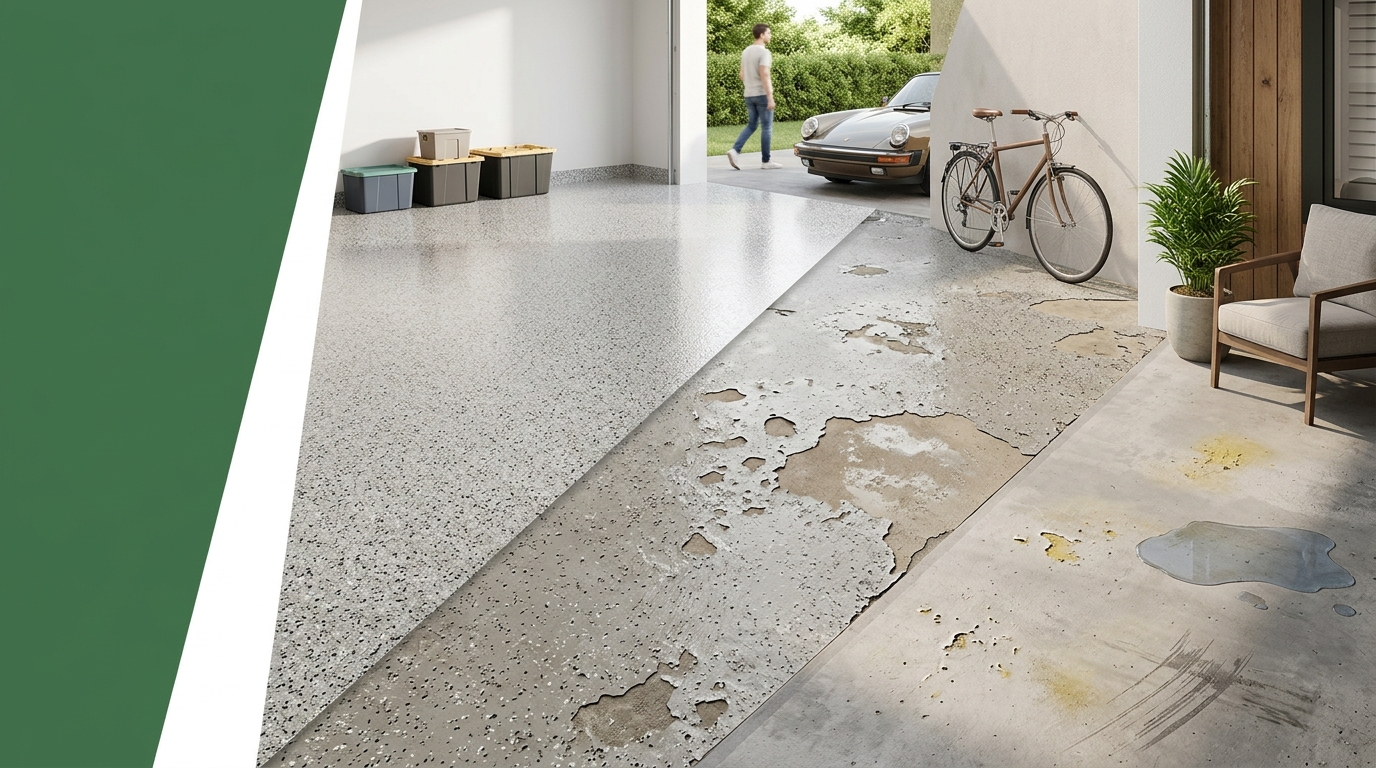
Polyaspartic is a type of polyurea — a fast-curing protective coating that bonds to concrete surfaces to create a durable, high-gloss finish. It was originally developed for industrial applications like bridge coatings and containment liners, but over the last decade it has become one of the most popular choices for residential garage floors, basements, patios, driveways, and pool decks.
What sets polyaspartic apart from traditional epoxy is its cure time: where epoxy can take days to fully harden, polyaspartic cures in hours. That’s the engine behind the one-day garage floor transformation that companies like Croc Coatings offer. But that same speed introduces trade-offs that every homeowner should understand before signing a contract. This page walks through both sides — the pros first, then a deep, honest look at the disadvantages — so you can make a decision with your eyes open.
The Pros of Polyaspartic Floor Coatings
Before we dig into the downsides, it’s only fair to cover what makes polyaspartic worth considering in the first place. These are the reasons it has grown from a niche industrial product into a leading residential flooring option.
Strength and durability. Polyaspartic coatings are marketed as up to 4x stronger than epoxy — a comparison that holds up against the DIY water-based epoxy kits sold at home improvement stores. They resist impact, abrasion, and heavy foot traffic, and they hold up under vehicle weight without cracking or peeling. A professionally installed polyaspartic floor typically lasts 15 to 20 years or more.
One-day installation. Because polyaspartic cures so quickly, most residential jobs — including surface prep, base coat, decorative flakes, and top coat — are finished in a single day. You can walk on the floor the same evening and park a vehicle on it after 24 hours. Compare that to epoxy, which often requires multiple days of curing between coats.
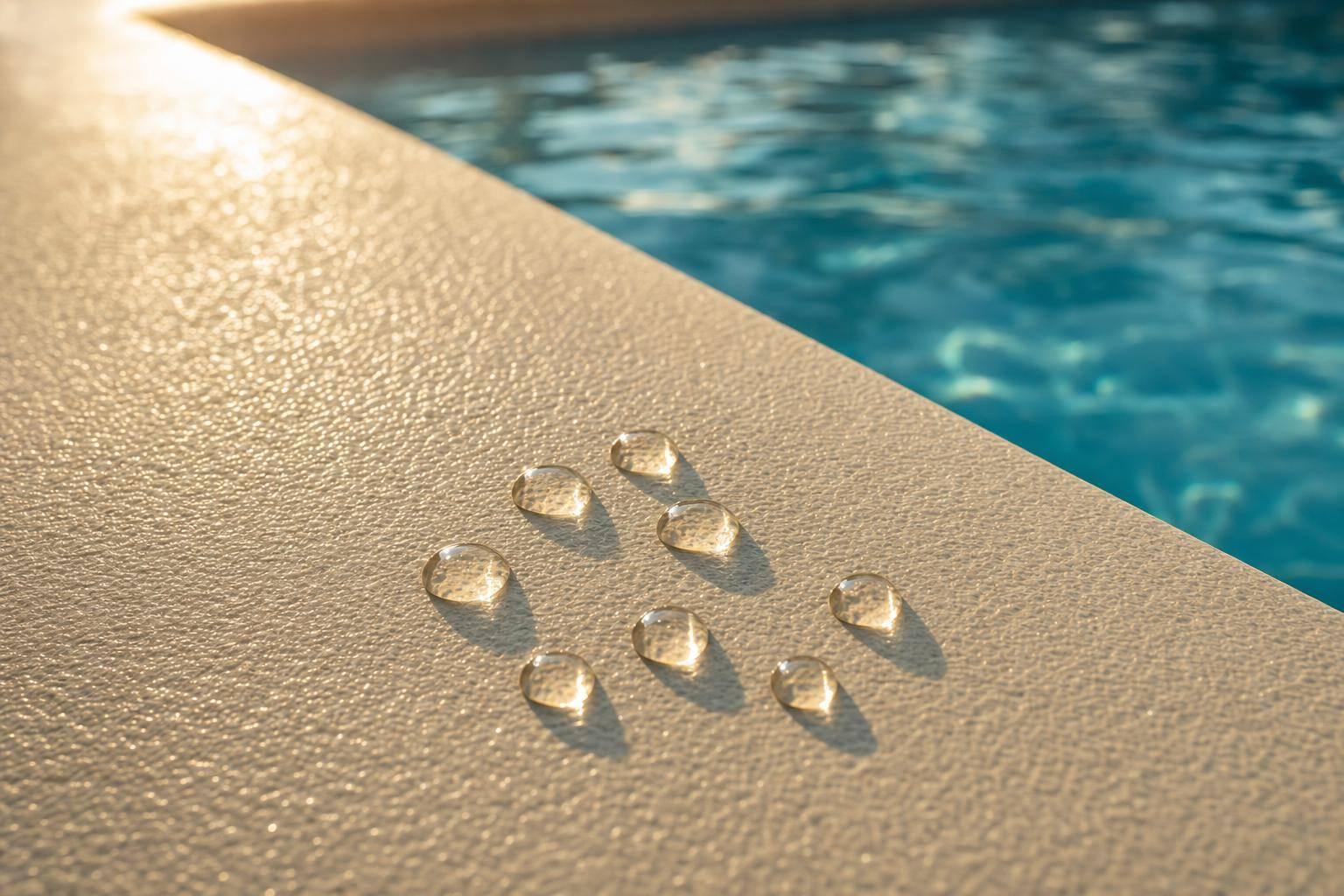
UV stability. Unlike epoxy, which yellows and chalks when exposed to sunlight, polyaspartic is UV-stable. That makes it a strong choice for patios, pool decks, and any surface that gets direct sun — the finish stays clear and the color doesn’t fade.
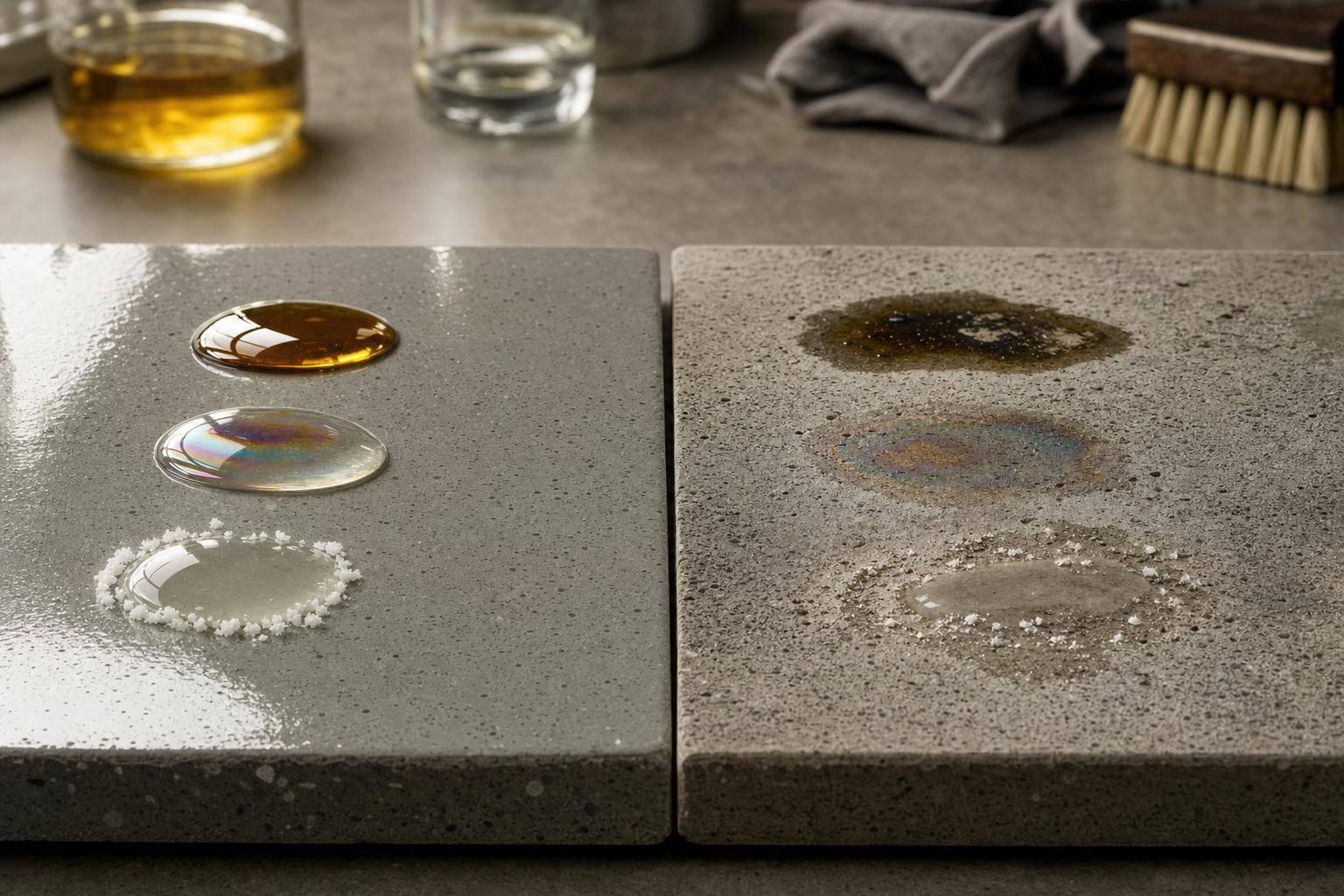
Chemical and hot-tire resistance. Polyaspartic shrugs off gasoline, oil, brake fluid, road salt, and most household chemicals. It also won’t lift or discolor under hot tires — a common failure point for epoxy garage floors.
Low VOCs and low odor. Modern polyaspartic formulations are low in volatile organic compounds, which means less odor during installation and a safer environment for your family once cured.
Lifetime warranty availability. When installed by a certified provider — like a Penntek-certified installer — polyaspartic floors typically come with a lifetime manufacturer warranty that covers peeling, delamination, and excessive wear. That level of backing is rare in the flooring world and speaks to the product’s track record.
Polyaspartic Coating Disadvantages: The Cons You Need to Know
Here is where the rubber meets the road. Every one of these disadvantages is real, and none of them should be brushed aside. A coating that’s right for one homeowner can be a bad fit for another — and the only way to get that call right is to understand the trade-offs honestly.
1. Higher Upfront Cost Than Epoxy
This is the number-one objection most homeowners raise, and it’s a fair one. Polyaspartic floor coatings run $7 to $9 per square foot professionally installed. Epoxy, by comparison, typically lands between $5 and $7 per square foot.
On a standard two-car garage — roughly 400 to 500 square feet — that’s a difference of $800 to $1,000 or more. For a three-car garage or a large basement, the gap widens further. A full polyaspartic installation on a two-car garage at Croc Coatings generally falls between $2,000 and $5,800 depending on square footage, concrete condition, and decorative add-ons like custom color flakes.
Is the premium worth it? That depends on your timeline. Polyaspartic’s longer lifespan and lower maintenance can close the gap over 10 to 15 years — a point we cover in detail in our polyaspartic vs epoxy cost breakdown. But if your budget is tight right now, the upfront difference is real and there is no way around it. This is not a product for someone trying to do a garage floor on the cheap.
2. Professional Installation Required — It’s Not a DIY Project
Polyaspartic is unforgiving for the do-it-yourselfer. The same rapid cure time that makes one-day professional installation possible also makes DIY application nearly impossible. Most polyaspartic formulations give installers a working window of 15 to 45 minutes before the material begins to set — and once it starts curing, there is no stopping it.
Professional installers use specialized equipment: diamond grinders for surface prep, plural-component spray rigs that mix resin and hardener at the gun tip, and spike shoes to walk on wet material. A homeowner with a roller and a bucket from the hardware store cannot replicate this. DIY polyaspartic kits do exist, but they typically use a modified, slower-curing formulation that sacrifices the very properties — strength, UV stability, one-day cure — that make polyaspartic worth the premium in the first place.
If you try to apply true polyaspartic yourself, you will almost certainly end up with an uneven finish, roller marks, or material that hardens in the bucket before it ever hits the floor. The result is a floor that looks worse than what you started with — and costs more to fix than hiring a pro from the beginning.
3. Surface Preparation Is Critical and Unforgiving
Polyaspartic bonds to concrete at a molecular level, which is why it is so durable. But that bond is only as good as the surface it adheres to — and concrete is rarely ready for coating straight out of the pour.
Proper preparation involves diamond-grinding the concrete to open its pores and create a mechanical profile the coating can grip. After grinding, the floor must be vacuumed, cleaned, and moisture-tested. Excess moisture vapor in the slab — common in basements and older homes without a vapor barrier — can cause polyaspartic to delaminate or blister within months. A moisture test using a calcium chloride kit or an in-situ relative humidity probe is not optional; it is the difference between a floor that lasts 20 years and one that fails in two.
Cracks, spalls, and oil stains also need to be addressed before coating. Oil-soaked concrete will not bond properly unless the contamination is ground out or chemically treated. These steps take time and add cost — and if an installer skips them to save a few hours, the homeowner pays the price later. We have seen enough of these failures to write an entire guide on the 7 mistakes in polyaspartic coating applications — prep shortcuts are mistake number one.
4. Rapid Cure Time Limits Decorative Work
The speed that makes polyaspartic convenient is a double-edged sword. Because the material sets in under an hour, installers have a narrow window to broadcast decorative flakes, create patterns, or work metallic pigments into the surface. Once the coating begins to gel, any attempt to manipulate it leaves visible marks.
This matters most for homeowners who want intricate decorative effects — metallic epoxy-style swirls, multi-color flake blends with precise distribution, or custom stenciled patterns. Polyaspartic can handle a full-flake broadcast (where flakes are applied to rejection and the excess is scraped off) without issue, and that look is popular for good reason. But if you have your heart set on the kind of marbled, one-of-a-kind metallic finish that epoxy is known for, polyaspartic is the wrong product for that vision.
The trade-off is practical: you give up some decorative flexibility in exchange for a floor you can use the next day. For most homeowners, that’s a worthwhile trade. But it is worth knowing going in.
5. Spot Repairs Are Difficult and Noticeable
Here is an honest truth most flooring companies won’t volunteer: if a polyaspartic floor gets damaged, fixing it cleanly is harder than with epoxy.
With epoxy, a damaged section can be sanded, cleaned, and recoated — and the repair often blends well because epoxy can be feathered into the surrounding area. Polyaspartic, by contrast, cures so hard and so fast that spot repairs tend to leave a visible seam. The high-gloss finish that makes a new polyaspartic floor look great also makes any patch stand out — differences in sheen, texture, or flake density become obvious under light.
This does not mean polyaspartic floors are fragile. They are extremely tough and resist the kind of everyday abuse that would chip or scratch epoxy. But if something genuinely heavy or sharp does manage to gouge the surface — a dropped engine block, a dragged steel workbench — the repair will likely be functional rather than invisible. For a showroom floor or a high-visibility retail space, that matters. For a working garage, it may not.
6. Not All Polyaspartic Installers Are Equal
Polyaspartic is still a smaller segment of the floor coatings market than epoxy — epoxy holds roughly 40% of the overall floor coatings market, while polyaspartic is a growing but narrower slice. That means there are fewer contractors with deep experience in polyaspartic application, and the skill floor is higher. An installer who does perfectly fine epoxy work may not have the training or equipment to handle polyaspartic’s rapid cure times and strict prep requirements.
Red flags to watch for when evaluating installers:
- No moisture testing protocol. If the contractor does not mention moisture testing during the estimate, ask why. A reputable installer tests every slab.
- "We can do it cheaper" pricing without explanation. Low bids on polyaspartic almost always mean skipped prep steps or a lower-grade material that is really a modified epoxy.
- No manufacturer certification. The best polyaspartic systems — Penntek, for example — require certified training. An uncertified installer cannot offer the manufacturer’s lifetime warranty.
- No portfolio of past polyaspartic work. Ask to see photos of polyaspartic jobs they have completed, not just epoxy. If they cannot produce them, they may not have much polyaspartic experience.
- Rushing the estimate. A proper polyaspartic quote requires an in-person assessment of your concrete — its condition, age, moisture level, and square footage. A quote given sight-unseen over the phone is a guess, not an estimate.
Given that polyaspartic repairs are difficult, choosing an inexperienced installer carries higher stakes than it does with epoxy. The consequences of a bad polyaspartic install are harder to undo.
7. Can Be Slippery When Wet
Polyaspartic’s smooth, high-gloss finish creates a surface that can be slick under wet conditions — a genuine safety consideration for pool decks, patios, entryways, and garage floors in snowy climates. If you live somewhere that sees winter weather (Croc Coatings serves North Idaho and Eastern Washington, where snow and ice are facts of life for months at a time), a slick garage floor is not just an annoyance — it is a hazard when you step out of your vehicle onto a wet surface.
The fix is straightforward: aluminum oxide or polymer grit additives can be mixed into the top coat to create a slip-resistant texture without dulling the finish. Most professional installers offer this as a standard option, but it is worth confirming rather than assuming. If slip resistance is a priority — especially around a pool or in a household with young children or elderly family members — specify it during the estimate and make sure it is written into the contract.
Who Should (and Shouldn’t) Choose Polyaspartic Floor Coatings
After weighing the pros and cons, the right choice depends less on polyaspartic itself and more on your situation. Here is a straightforward framework.
Polyaspartic is a strong fit if you:
- Plan to stay in your home for 10+ years and want a floor you will not have to redo
- Live in a climate with harsh winters, hot summers, or heavy UV exposure
- Use your garage as a workshop, gym, or hangout space — not just parking
- Value speed and want the job done in one day with minimal disruption
- Can afford the upfront premium and prioritize long-term durability over initial cost
Polyaspartic is probably not the right choice if you:
- Are flipping a house and need a floor that looks good on a tight budget — epoxy or even a high-quality floor paint will serve that purpose for less
- Own a rental property where tenants are unlikely to treat the floor with care — the repair difficulty makes polyaspartic a poor match for high-turnover spaces
- Want a highly decorative, artistic finish like a marbled metallic epoxy
- Are working with a strict low-end budget and the price difference between epoxy and polyaspartic is a dealbreaker
- Need a floor you can install yourself this weekend — polyaspartic simply is not a DIY product
If you are on the fence, our guide on whether polyaspartic is worth the cost goes deeper into the long-term value equation.
How to Mitigate the Downsides of Polyaspartic Coatings
Every disadvantage listed above has a mitigation strategy. The key is knowing what to ask for before you sign a contract.
Choose a certified installer. Manufacturer certifications — like Penntek certification — require installers to complete hands-on training and adhere to specific application standards. A certified installer can offer the manufacturer’s lifetime warranty, which covers peeling, delamination, and excessive wear. Without that certification, you are relying on the installer’s word — and as we covered above, not all installers are equal.
Insist on a moisture test. If the contractor does not perform a calcium chloride test or an in-situ relative humidity test before coating, walk away. Moisture-related failures are among the most common — and most avoidable — problems in concrete coatings. A moisture test adds a small amount of time to the process and zero risk; skipping it adds enormous risk.
Ask about their prep process in detail. A good installer will be happy to explain exactly how they prepare concrete: diamond grinding (not acid etching), crack repair, oil stain remediation, and vacuuming. If they are vague or say "we clean it," dig deeper. The polyaspartic floor coating cost guide breaks down what proper prep looks like and why it matters for the final price.
Specify anti-slip additive if needed. If your floor will be exposed to water — pool decks, patios, garage floors in snow country — ask for an aluminum oxide or polymer grit additive in the top coat. This adds minimal cost and makes a meaningful difference in safety. Get it in writing.
Get the warranty in writing. A lifetime manufacturer warranty is only as good as the paperwork behind it. Confirm the warranty terms — what is covered, what is excluded, and for how long — before the job starts. A reputable installer will provide this without being asked.
Budget for the full job, not just the base price. The $7–$9 per square foot range covers standard installation. Decorative flakes, custom colors, anti-slip additives, and extensive concrete repair can push the total higher. Our breakdown of the 5 cost factors for polyaspartic vs epoxy coatings walks through exactly what drives the final number so there are no surprises.
Is Polyaspartic Worth It? Our Honest Take
We install polyaspartic floors every day — over 1,700 projects and counting across North Idaho and Eastern Washington — and we believe in the product. But believing in a product does not mean pretending it is perfect for everyone.
Polyaspartic is not the cheapest option, not the most decorative option, and not a product you can install yourself. It costs more than epoxy up front. It requires a professional trained in a demanding application process. And if something does go wrong — whether from impact damage or a bad install — fixing it is harder than with slower-curing alternatives.
What polyaspartic delivers in return is a floor that lasts 15 to 20 years or more, resists everything from road salt to UV exposure, installs in a single day, and comes backed by a lifetime manufacturer warranty when applied by a certified contractor. For a long-term homeowner who uses their garage hard, lives in a tough climate, or simply wants to coat the floor once and be done with it, that is a trade-off worth making.
If that sounds like you — great. If it does not, epoxy is a perfectly good product at a lower price point, and a detailed comparison of the two will help you sort out which fits. Either way, the right floor is the one that matches your budget, your timeline, and how you actually use your space — not the one someone is trying to sell you.