Polyaspartic Floor Coatings Explained: When They’re Worth It, Where They Shine, and What Most Buyers Miss
If you’re comparing garage floor coatings, patio finishes, or commercial concrete protection in North Idaho or Eastern Washington, you’ve probably run into the same confusing question: Is polyaspartic actually better than epoxy?
The short answer is not always. The better answer is more useful: polyaspartic is a high-performance coating system designed for specific advantages – especially fast return to service, strong UV stability, and long-term durability in demanding spaces.
That distinction matters for homeowners in Coeur d’Alene, Hayden, Post Falls, Spokane, and the Tri-Cities, where floors often face seasonal swings, vehicle traffic, moisture concerns, and direct sun exposure. Choosing the wrong system can lead to premature yellowing, peeling, gloss loss, or unnecessary cost. Choosing the right one can turn a garage, patio, shop, or commercial floor into a cleaner, tougher, easier-to-maintain surface for years.
This article draws from the video’s professional training framework and expands it into practical guidance for property owners and decision-makers. Rather than retelling the lesson, it translates the core ideas into what they mean in the real world.
sbb-itb-a0e5ae3
Key Takeaways
- [Polyaspartic is not "just epoxy"] (https://www.croccoatings.com/polyaspartic-vs-epoxy-best-choice-high-traffic-floors/). It’s a different coating technology with different strengths, especially speed and UV resistance.
- Best coating choice depends on the space. The right question is not "Which is strongest?" but "Which system fits this floor’s conditions?"
- Polyaspartic stands out for garages, outdoor areas, and businesses that need minimal downtime.
- Preparation matters more than product hype. Even premium coatings can fail if the concrete isn’t properly inspected, ground, cleaned, and tested.
- Fast cure is both a benefit and a risk. It shortens project timelines but leaves less room for installer error.
- UV exposure is a major decision factor. Standard epoxy can yellow in sunlight; polyaspartic performs far better in sun-exposed areas.
- Moisture remains a critical issue. Better moisture tolerance does not mean moisture can be ignored.
- Ask about the full system, not just the topcoat. Primer, base coat, decorative layer, and topcoat all influence durability.
- Maintenance is simple but not optional. Regular dust removal, gentle cleaning, and early repair of scratches help preserve appearance.
- For property owners, the smartest move is to evaluate use case, sunlight, traffic, and downtime needs before choosing a coating.
What Polyaspartic Actually Is
The video frames polyaspartic as a high-performance protective floor coating related to polyurea and polyaspartic chemistry. In practical terms, that means it was developed to solve some of the headaches people experience with older coating systems – especially slow cure times and poor outdoor performance.
For a homeowner or business owner, the chemistry matters less than the results:
- Faster cure
- Strong wear resistance
- Better color stability in sunlight
- Good chemical resistance
- Attractive finish options
- Quicker return to use
What matters most is the mindset behind the product. One of the strongest ideas in the video is that professionals don’t ask which coating is universally best. They ask which system best matches the project.
That’s a useful filter for anyone making a renovation decision. A warehouse, luxury garage, restaurant entry, and backyard patio may all be concrete surfaces, but they do not need the same performance profile.
Why Polyaspartic Has Become So Popular
The video identifies two main drivers behind polyaspartic’s rise: speed and UV resistance. Both are highly relevant in the Inland Northwest.
Fast turnaround
Traditional epoxy vs. polyaspartic systems differ in cure times, with epoxy often taking multiple days to install and fully cure. That may be acceptable in some residential settings, but it becomes a problem when:
- a business can’t afford extended closure,
- a homeowner needs the garage back quickly,
- weather windows are limited,
- or multiple trades are scheduled around the floor.
Polyaspartic systems can often reduce downtime dramatically. The exact schedule depends on the product and conditions, but the core benefit is clear: less waiting.
For a retail space in Spokane or a working garage in Post Falls, that’s not a small perk. It can be the deciding factor.
Better sunlight performance
The second major advantage is UV stability. Standard epoxy is known for yellowing or ambering over time when exposed to sunlight. That makes it a weaker fit for spaces like:
- sunlit garages,
- exterior walkways,
- patios,
- balconies,
- entry zones,
- and partially exposed shop floors.
In sunny, seasonal markets like the Tri-Cities, that matters even more. A coating that looks great on installation day but discolors after repeated sun exposure may not deliver the long-term value buyers expect.
Epoxy vs. Polyurethane vs. Polyaspartic
One of the most useful parts of the source material is the side-by-side comparison of the three systems most often discussed together. Here’s the practical version.
Epoxy: strong bond, slower timeline
Epoxy remains popular for good reasons:
- excellent adhesion to properly prepared concrete,
- attractive glossy appearance,
- good chemical resistance,
- often more affordable than premium systems.
It’s especially common in indoor decorative floors, garages, warehouses, and certain industrial settings.
But epoxy also has tradeoffs:
- slower curing,
- more vulnerability to UV yellowing,
- sensitivity during installation,
- and less suitability as a stand-alone outdoor finish.
For indoor projects with low sunlight exposure and flexible schedules, epoxy can still be a smart option.
Polyurethane: more flexible, often used as protection
Polyurethane, or PU, is generally more flexible than epoxy. That makes it useful where movement, temperature change, or scratch resistance matter.
Its strengths often include:
- better UV performance than standard epoxy,
- more flexibility,
- useful topcoat characteristics,
- good wear resistance.
In many systems, polyurethane functions as a protective layer over another base rather than the whole story by itself.
Polyaspartic: premium performance with less forgiveness
Polyaspartic combines several desirable traits in one system:
- very fast cure,
- strong abrasion resistance,
- excellent UV stability,
- attractive finish,
- solid chemical resistance.
That combination explains why it has become a premium choice for many garages, showrooms, workshops, and commercial floors.
But the video is careful not to oversell it. Polyaspartic is powerful, yes – but also less forgiving during installation. Fast cure means the crew has to be ready before mixing starts. There is less room for hesitation, rework, or sloppy technique.
For buyers, that means this: the installer matters as much as the material.
Where Polyaspartic Makes the Most Sense
The video lists a wide range of applications, from garages to hospitals. For the target audience here, a few stand out.
Residential garages
This is arguably the flagship use case. A garage floor has to deal with:
- vehicle traffic,
- hot tires,
- dirt and gravel,
- oil drips,
- abrasion,
- and changing temperatures.
A well-installed polyaspartic system addresses both performance and appearance. It can also shorten the time your garage is out of service, which is a meaningful advantage for households that use the space daily.
Patios, walkways, and outdoor living areas
This is where UV stability becomes especially important. A coating used outdoors has to resist more than wear – it has to hold up visually in direct sun.
For homeowners upgrading an outdoor entertainment area or front entry, polyaspartic is appealing because it combines decorative potential with stronger weathering performance than standard epoxy alone.
The video does note, however, that outdoor work requires extra attention to temperature, sun, and timing. That is a reminder that "outdoor-rated" does not mean "easy to install."
Shops, warehouses, and small commercial spaces
Commercial users often care most about three things:
- durability,
- cleanability,
- and downtime.
Polyaspartic addresses all three well when installed correctly. That’s why it’s often favored in:
- retail environments,
- automotive shops,
- showrooms,
- light industrial spaces,
- and service areas.
For a business owner, a floor is not just a finish – it’s an operating surface. If the floor can be installed faster and returned to service sooner, the value equation changes.
The Real Secret: Surface Prep Is More Important Than the Coating Label
One of the clearest lessons in the video is also the most important for consumers: most coating failures start below the coating.
That means the most expensive material on the market can still fail if it’s installed over dirty, weak, wet, or poorly prepared concrete.
What proper prep usually includes
According to the video, professional prep may involve:
- concrete inspection,
- crack identification and repair,
- moisture testing,
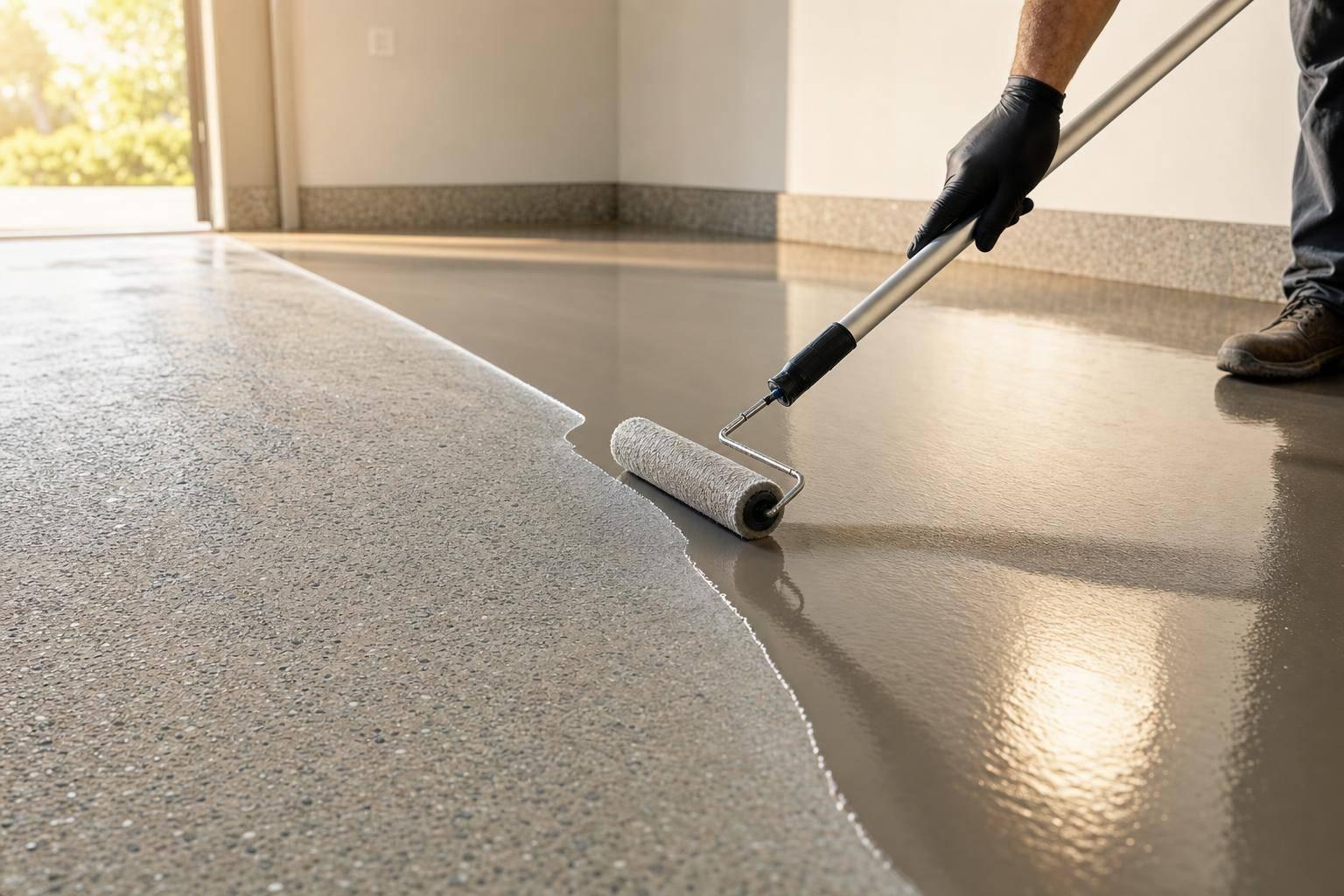
- mechanical grinding,
- dust removal,
- profiling the surface,
- and use of a primer.
This is where homeowners often get misled. Marketing tends to focus on glossy after photos and promises about topcoat performance. But the substrate – the actual condition of the concrete – is what determines whether the system bonds and lasts.
Why moisture testing matters
This point deserves special attention in our region. Concrete can appear dry on the surface while still holding moisture internally. If that moisture pushes upward later, it can lead to:
- bubbling,
- blistering,
- pinholes,
- or delamination.
The video makes an important distinction: some polyaspartic systems may tolerate moisture better than some epoxy systems, but that does not mean moisture can be ignored.
For buyers, that translates into a key vetting question: How will the slab be tested and evaluated for moisture before coating begins?
Why Installation Skill Matters More with Polyaspartic
The video repeatedly returns to one theme: polyaspartic rewards preparation and punishes shortcuts.
That’s not just installer advice. It should influence how buyers evaluate bids.
Fast cure means fast decisions
Once mixed, polyaspartic begins reacting quickly. The source emphasizes concepts like pot life, batch sizing, temperature sensitivity, and workflow planning.
Why should an owner care?
Because a coating that cures fast on the floor also cures fast in the bucket. If the crew is not organized, problems can show up quickly:
- roller marks,
- lap lines,
- uneven gloss,
- texture issues,
- poor leveling.
That doesn’t make polyaspartic risky by nature. It means the system depends on disciplined execution.
Temperature changes everything
The video notes that heat speeds curing and cold slows flow and cure behavior. That matters a lot in places with hot summer slabs, cold mornings, or strong sun exposure.
In practical terms:
- a driveway-adjacent garage in July may behave differently from a shaded indoor shop,
- an outdoor patio in the Tri-Cities may react differently than a controlled interior space in Hayden,
- and seasonality can affect not just comfort, but chemistry.
If a contractor talks about coatings without talking about jobsite conditions, that’s a red flag.
Decorative Flake Systems: More Than a Cosmetic Upgrade
Many people associate polyaspartic floors with flake garage systems, and for good reason. The video describes decorative flakes as both aesthetic and functional.
What flakes add
Flake broadcast systems can help with:
- visual depth,
- pattern and color blending,
- slip resistance,
- hiding dust and minor imperfections,
- and reducing the stark look of plain concrete.
That makes them especially popular in garages, workshops, and utility spaces where appearance matters, but practical durability matters more.
Full vs. partial broadcast
The source outlines two basic approaches:
- Full broadcast: dense coverage, more texture, less base coat visible
- Partial broadcast: lighter decorative effect, more visible background color
For owners, the decision isn’t just stylistic. It can also affect maintenance feel, texture underfoot, and the overall "finished" look of the floor.
Common Failure Points Buyers Should Know
The video’s chapter on common mistakes is especially useful because it highlights what can go wrong even with premium products.
Frequent causes of trouble
Problems often trace back to:
- poor surface preparation,
- incorrect mixing ratios,
- hot conditions,
- over-rolling,
- applying too thick,
- skipping moisture testing,
- or missing the recoat window.
The important takeaway is not technical trivia. It’s this: most failures are preventable.
That means when a floor goes bad, the product itself may not be the whole story. Process errors often play a larger role than the label on the bucket.
What failure can look like
The video lists visible warning signs such as:
- bubbles,
- peeling or delamination,
- roller marks,
- yellowing in UV-vulnerable systems,
- uneven gloss.
For a property owner reviewing a finished floor, these are worth noticing early. Minor visual issues can signal bigger installation problems beneath the surface.
Maintenance: Durable Doesn’t Mean Maintenance-Free
A common misconception is that premium floor coatings require no care. The video pushes back on that idea, and rightly so.
Polyaspartic floors are easier to maintain than many alternatives because they are typically seamless and non-porous. But "easy to clean" is not the same as "ignore it forever."
Cleaning polyaspartic floors involves simple maintenance practices
The video recommends a practical approach:
- remove dry debris before wet mopping,
- use soft brooms or microfiber tools,
- clean with warm water and neutral-pH products,
- avoid aggressive abrasives and harsh chemical misuse,
- inspect high-traffic areas periodically.
This is especially relevant in areas with tracked-in grit, seasonal dirt, and snow-related mess. Tiny abrasive particles can slowly dull gloss if they remain on the surface under foot or tire traffic.
Repair and recoat options
Another strong point from the video is that quality coating systems can often be renewed rather than fully replaced.
Depending on the damage, professional maintenance may include:
- light sanding,
- spot repair,
- feathered edge blending,
- or a fresh topcoat.
That’s good news for owners thinking long term. A premium coating isn’t valuable only because it resists wear – it’s valuable because it can often be serviced intelligently before full failure occurs.
Cost: Why Premium Pricing Can Still Be the Better Value
The source covers pricing from the installer’s perspective, but there’s a useful lesson for buyers too.
Polyaspartic usually carries a higher price than standard epoxy systems. That premium reflects several factors:
- more advanced chemistry,
- faster installation potential,
- stronger UV performance,
- and premium positioning in the market.
But the bigger issue is not upfront cost alone. It’s lifecycle value.
A cheaper system that yellows, peels, or needs replacement sooner may cost more in the long run – especially when you factor in disruption, rework, and lost use of the space.
That doesn’t mean the most expensive proposal is automatically best. It means bids should be compared by scope, prep method, system design, and service life – not by price per square foot in isolation.
Questions Property Owners Should Ask Before Choosing a Floor Coating
The video is installer-focused, but it implies a set of smart consumer questions. If you’re comparing coating options for a home or business, ask:
About the floor itself
- Has the concrete been inspected for cracks, contamination, or weakness?
- Will moisture testing be performed?
- What preparation method will be used?
About the system
- Is this epoxy, polyurethane, polyaspartic, or a hybrid system?
- What role does each layer play?
- Is the topcoat UV stable?
About installation
- How will temperature and weather affect timing?
- How long before light foot traffic or vehicle use?
- What finish and texture should I expect?
About long-term care
- What maintenance is recommended?
- Can the system be recoated later?
- What kinds of wear are considered normal?
These questions help move the conversation away from sales claims and toward real performance.
A Better Way to Think About "Best"
The strongest idea in the video is also the most transferable: there is no perfect coating for every situation.
That may sound less exciting than bold marketing claims, but it’s far more useful. The right coating depends on:
- whether the space is indoors or outdoors,
- how much sunlight it gets, (which requires a UV-resistant floor coating),
- what traffic it will handle,
- how quickly it must return to service,
- what appearance you want,
- and how well the concrete can be prepared.
For many residential garages, patios, and light commercial floors, polyaspartic is compelling because it solves real problems that matter to owners: downtime, durability, and sun exposure. But it works best when selected for the right reason and installed with discipline.
Final Thoughts
Polyaspartic coatings have earned their reputation because they offer a rare mix of speed, appearance, and performance. For homeowners and business owners across North Idaho and Eastern Washington, that can make them an excellent fit for garages, outdoor surfaces, and commercial concrete that needs to look sharp while standing up to real use.
But the video’s deeper lesson is even more important than the product itself. Great floor outcomes come from system thinking: matching the coating to the environment, respecting preparation, understanding moisture and temperature, and planning for maintenance from day one.
If you’re evaluating a floor upgrade, don’t focus only on the brand name or the shine of the finish. Focus on the entire system beneath it. That’s where long-term value is really built.
Source: "Polyaspartic Flooring full course!! fast strong durable" – Hanon Epoxy, YouTube, Jun 2, 2026 – https://www.youtube.com/watch?v=Wo6ueHDajoE