If I want a polyaspartic floor color that still looks good in 10–20 years, I’d usually pick a mid-tone flake blend first. It tends to hide dust, salt, mud, and tire marks better than very light or very dark floors, and it works well in garages, patios, pool areas, and many commercial spaces.
Here’s the short version:
- Match the room first: I look at walls, cabinets, doors, and lighting before I look at sample chips.
- Pick for use, not just looks: A garage needs a different color than a pool deck or showroom.
- Think about dirt: Light floors show mud and marks fast. Dark floors show dust and salt fast. Mid-tones are often the safest middle ground.
- Flake beats solid for hiding mess: A speckled flake floor does a better job masking day-to-day wear than one flat color.
- Check sun and shade: Color can look different with garage LEDs, midday sun, or a covered patio.
- Make sure the system holds color: UV stability, scratch resistance, and warranty matter if the floor will face sun, traffic, or hot tires.
A few facts stand out:
- Polyaspartic floors can last 10 to 20+ years with proper install and outdoor floor maintenance.
- Full-broadcast flake systems usually hide wear better than partial flake or solid-color floors.
- Lighter patio and pool colors can stay cooler in direct sun, which matters for bare feet in summer.
If I had to narrow it down fast, I’d use this rule:
| Space | Best color direction | Why |
|---|---|---|
| Garage / workshop | Mid-tone gray or taupe flake | Hides dust, grit, and tire marks |
| Patio / pool deck | Light gray, sand, or beige flake | Stays cooler and fits many exteriors |
| Commercial space | Neutral gray/taupe, with striping if needed | Keeps traffic areas looking cleaner |
The main goal is simple: pick a color that fits the space on its worst day, not just on install day.
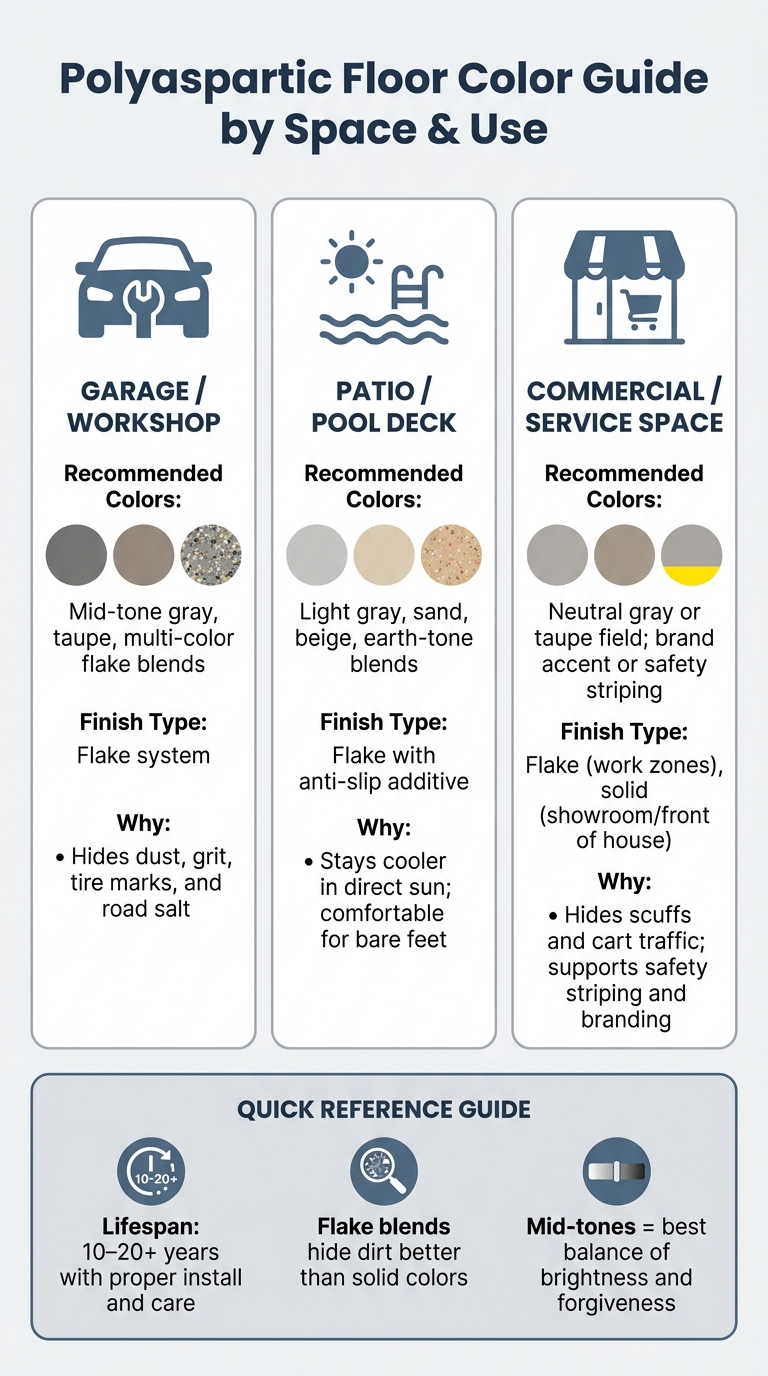
Polyaspartic Floor Color Guide by Space & Use
Step 1: Match the Floor Color to Walls, Cabinets, and Lighting
Start with the finishes that aren’t changing. Walls, trim, cabinets, and garage doors already shape how the space looks, so the floor color should work with them. Use those fixed surfaces to narrow your options with a garage floor coating color selector before you put samples on the floor.
Use wall color and trim to pick a warm, cool, or neutral floor
Wall color is one of the easiest places to start. Bright white or cool off-white walls tend to work well with soft gray or greige floors if you want the space to feel clean and sharp. Medium gray walls can look dull next to another cool gray floor, so a warmer flake blend with tan, cream, or brown chips can even things out. Tan or beige walls usually look best with floors that have the same warm undertones, like taupe, greige, or earthy neutrals, so the room feels pulled together.
If you want a softer look, pick a floor color within one or two shades of the wall color. If you want more separation, like in a showroom garage or a marked commercial area, go 3 to 4 shades apart so the contrast stands out.
Coordinate with garage cabinets, doors, and fixed finishes
Cabinets are often the main visual feature in a garage. Pick a floor that supports that main finish instead of fighting for attention. Powder-coated black or charcoal cabinets pair well with flake blends that mix medium gray, black, and small amounts of white or tan. Wood-look cabinet fronts usually fit better with warmer flake blends that include tan, brown, and cream chips.
Garage doors count too. Medium gray or greige blends tend to work with white doors, while tan- or beige-based blends fit almond or sand-colored doors. One thing to avoid: pairing a very cool blue-gray floor with a warm cream door. The undertones can clash, and both surfaces can end up looking a little off.
For a coordinated garage upgrade, Croc Coatings can match floor blends with custom garage cabinets to improve home value.
View samples in daylight and under shop or patio lighting
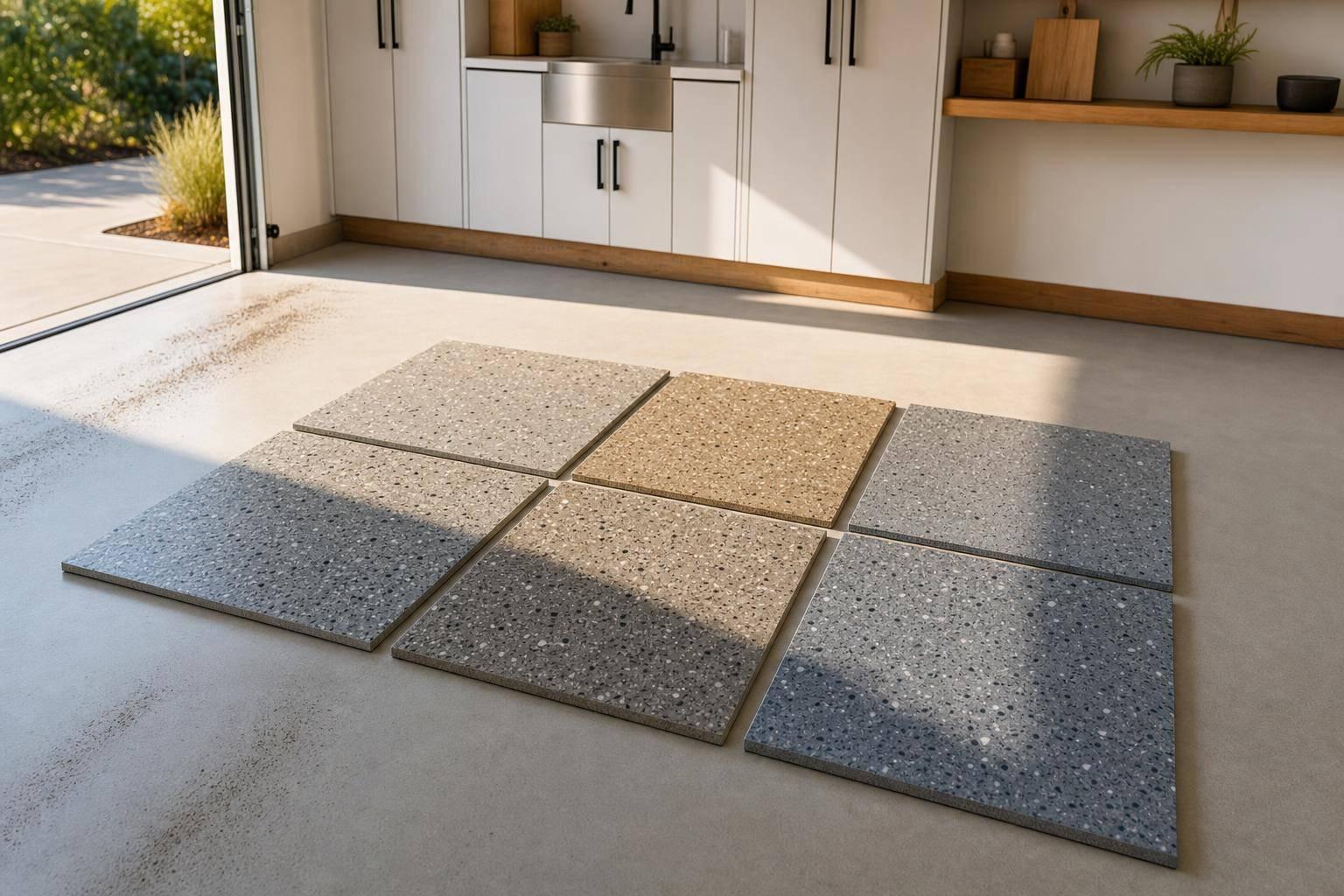
To get the best read, put physical flake sample boards right on the concrete. Check them once with the garage doors closed under overhead LEDs, then again with the doors open in midday sun. For patios, look at samples in both full sun and shade. Full sun makes light chips look much brighter, while a covered area makes the whole color read darker. In bright spaces, medium and darker blends often do a better job hiding wear.
Once the color looks right in the room, the next step is judging it based on how the space is used. This is especially important when deciding between epoxy and polyaspartic coatings for your specific environment.
Step 2: Pick a Color Based on How the Space Is Used
After you’ve matched the floor to your fixed finishes, narrow your color choice based on how the space will be used. A garage with daily parking and weekend projects needs something different from a pool deck or a customer-facing service area. Garages are usually the easiest place to start because dirt, lighting, and wear show up fast.
Garages and workshops: colors that handle dust, tires, and tool use
Mid-tone gray and taupe flake blends are usually the safest pick for garages and workshops. Super light floors tend to show every tire mark and bit of road grit. Super dark solid floors do the opposite problem: dust, salt residue, and mop swirls stand out right away.
That’s why a 3- to 4-color speckled blend works so well. It breaks up the surface visually, so small stains, dust, and wear patterns don’t jump out between cleanings.
Lighting matters too. In a low-light garage, a lighter-medium gray or taupe flake can bounce more light around the room while still hiding tire marks, grit, and tool wear. If the workshop has strong lighting with several LED strips, you can go with a deeper mid-tone without making the space feel gloomy.
Patios and pool areas: lighter tones that stay cooler and fit the exterior
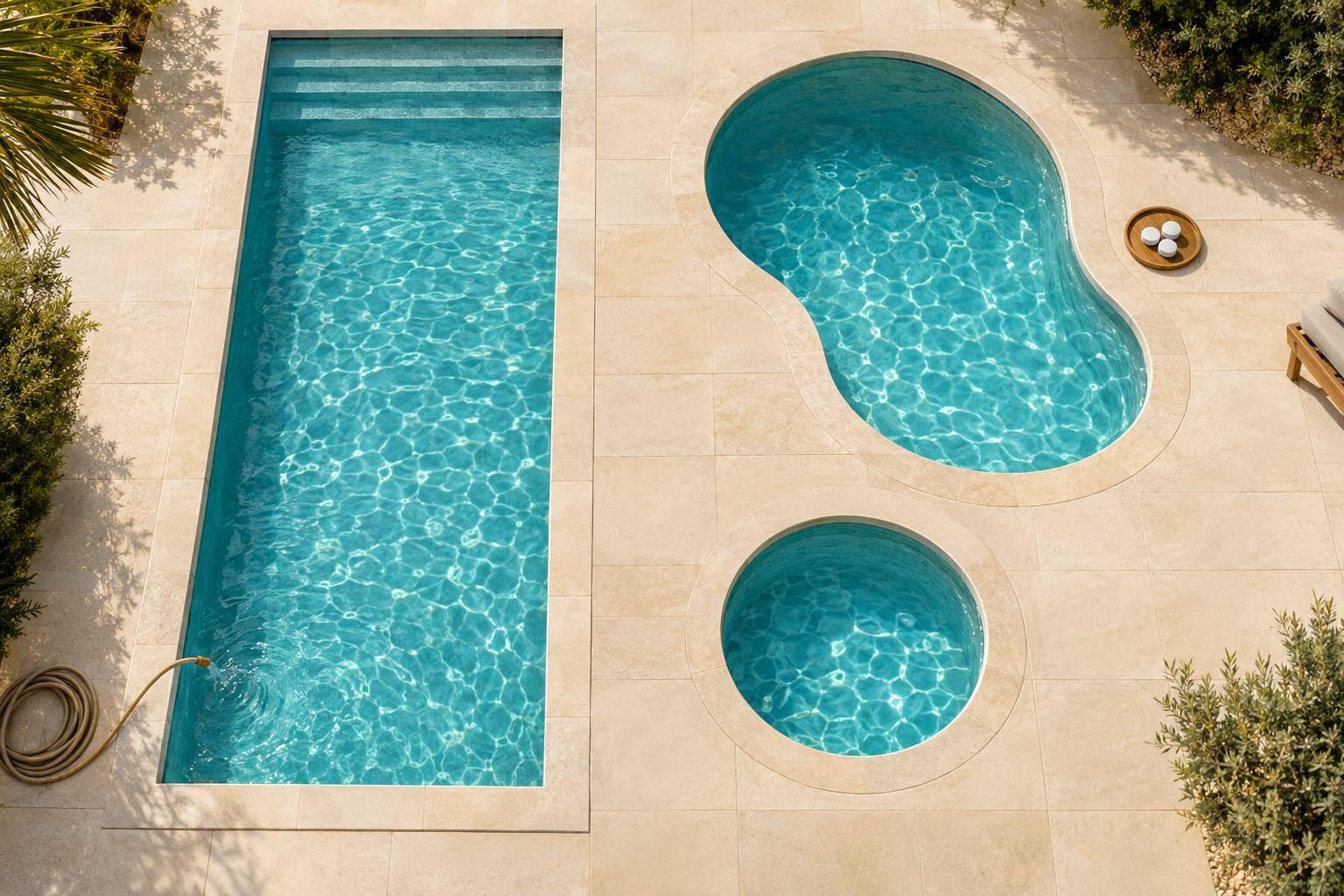
For patios and pool decks that get a lot of sun, light grays, sand tones, and earth-tone blends are the standard pick. The reason is simple: lighter colors stay cooler in direct sun. If people will be walking barefoot near the pool, that makes a big difference. Dark surfaces can get uncomfortably hot.
Color should also work with the outside of the home. Sand and tan blends pair nicely with beige siding, stucco, and natural stone like travertine or limestone. Light gray tends to fit better with modern vinyl siding and darker trim.
Add anti-slip texture around steps and wet zones. There’s a practical upside to lighter colors here too: standing water and algae are easier to spot.
Commercial spaces: color plans for traffic, branding, and safety
In commercial spaces, function comes first. Think traffic flow, safety, and then branding. In showrooms, service bays, and light industrial areas, the floor color should help the space work better day to day.
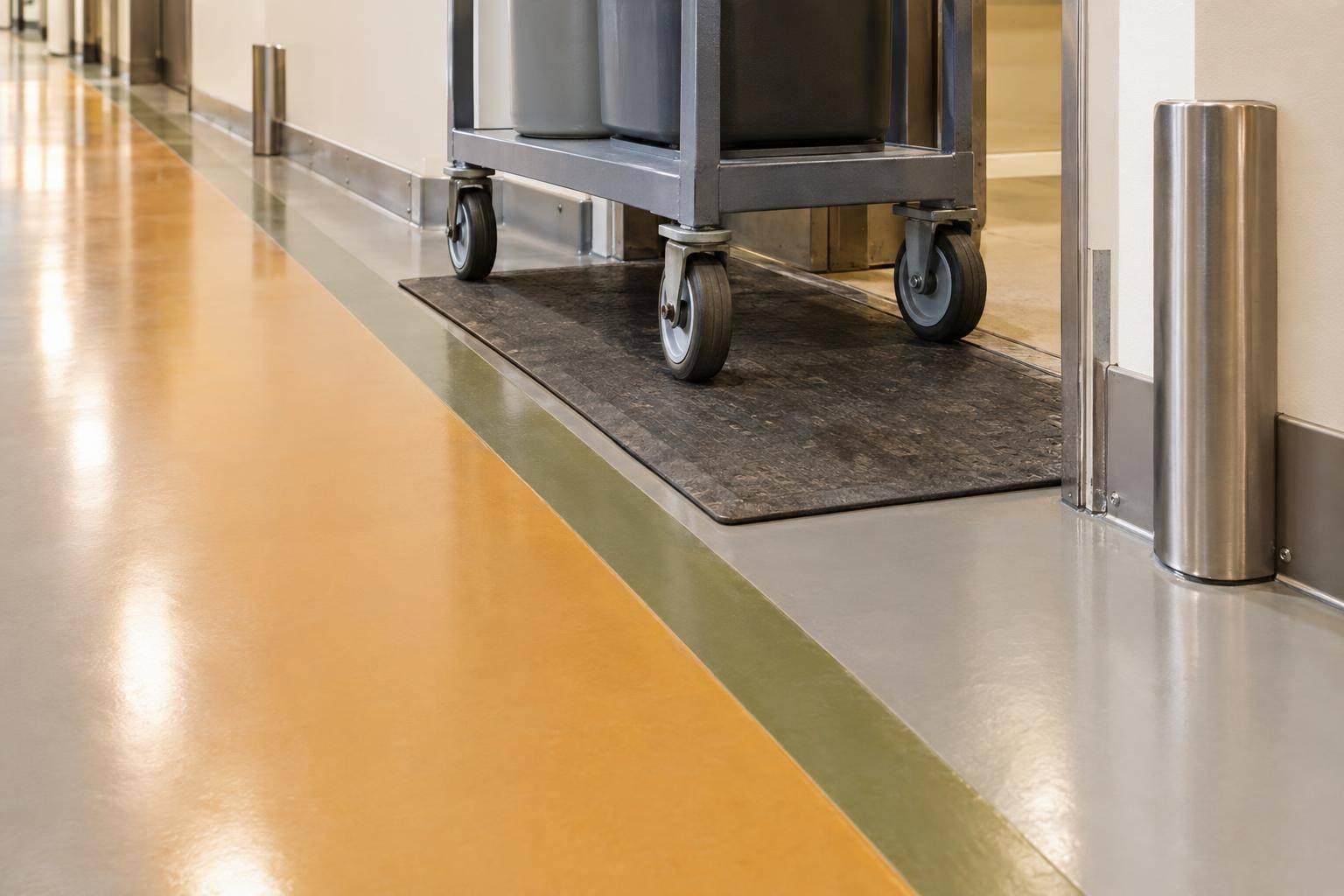
Neutral gray, taupe, or gray-beige flake does a good job hiding scuffs and cart traffic. Solid colors fit customer-facing areas where a clean, even look matters more.
Safety striping adds another job for color. Yellow marks pedestrian aisles and machine zones. Red flags hazardous or restricted areas. Green identifies first-aid stations using standard safety colors. In branded spaces, like auto showrooms or equipment dealers, accent striping or logo zones in company colors can go beneath the clear topcoat for a polished, permanent look.
| Space Type | Recommended Color Families | Finish Type |
|---|---|---|
| Garage / Workshop | Mid-tone gray, taupe, multi-color flake blends | Flake |
| Patio / Pool Deck | Light gray, sand, beige, earth-tone blends | Flake with anti-slip additive |
| Commercial / Service | Neutral gray or taupe field; brand accent or safety striping | Flake (work zones), solid (showroom/front of house) |
sbb-itb-a0e5ae3
Step 3: Weigh Dirt Visibility, Daily Cleaning, and Long-Term Wear
Once you’ve matched the floor color to the room, the next step is simple: see how it lives day to day. A garage floor has to deal with months of mud, road salt, pine needles, dust, and oil drips. A color that looks great on day one can be a headache later if it shows every mark.
Light vs. medium vs. dark floors in everyday use
Each color range comes with a trade-off. Light floors can make a dim garage feel brighter and more open. They also make spills and trip hazards easier to spot fast. The downside? Muddy boot prints, dust, and tire marks tend to show up sooner.
Dark floors do the opposite in some ways. They can hide heavier tire scuffing and some stains better, but fine dust, salt residue, and light debris stand out more on a smooth, dark surface.
That’s why medium and mid-tone floors are often the safest bet for homeowners and small businesses. They give you a good mix of brightness and day-to-day forgiveness, which helps keep the floor looking cleaner between sweeps and wash-downs.
| Color Range | Brightness | Dirt visibility | Best uses |
|---|---|---|---|
| Light (whites, very light gray, light beige) | High – reflects light and makes the space feel open | Shows dust, mud, road salt, and oil quickly | Inspection bays, safety-focused garages, light-critical spaces where spotting spills fast matters |
| Medium / Mid-tone (medium grays, tans, mixed neutrals) | Balanced – reflects light while staying visually comfortable | Best balance: hides tire marks, dust, and mild staining | General-purpose garages, home shops, and small businesses wanting lower visual maintenance |
| Dark (charcoal, dark gray, deep tan) | Lower – more subdued environment | Masks heavier tire marks but shows fine dust and scratches more easily | Display garages and low-dust spaces |
Why flake blends hide dirt better than solid colors
A solid-color floor works like a blank sheet of paper. When the surface is one flat tone, smudges, dust trails, and small scratches have nowhere to hide.
A flake or chip system changes that. The speckled mix of tones breaks up the surface visually, so small stains, light scratches, and everyday debris blend in more instead of standing out right away.
For a garage in the Inland Northwest, where snowmelt, road salt, pine needles, and dry summer dust are part of the deal, a mid-tone flake blend is often the most practical pick. It keeps the room bright enough to feel open, but it also softens the look of seasonal grime between cleanings.
Even then, color only goes so far. Regular sweeping and periodic wash-downs still matter. Dust and debris can dull the surface over time, so staying on top of basic cleaning helps the finish keep its look.
Once the color works for daily use, the next thing to check is whether the coating system can keep that finish stable.
Step 4: Choose a Color That Works With a Durable, Warrantied System
Color only does its job if the coating system can hold up over time. That’s the last filter: durability.
Why UV Stability, Wear Resistance, and Color Stability Matter
Once you’ve matched the color to the room and how the space will be used, look at whether the coating can keep that finish in good shape. Sun exposure can dull color on patios, pool decks, and bright entryways. In garages and commercial spaces, tires, carts, foot traffic, and dropped tools can wear the surface and change the way the color looks.
Common signs that a coating isn’t holding up include:
- Fading
- Yellowing
- Surface scratches
- Loss of gloss in high-traffic areas
That’s why it makes sense to choose the shade and the system at the same time. The coating’s performance is what helps the color stay right year after year.
How Croc Coatings Supports Long-Term Color Performance

Croc Coatings installs the Penntek Evolution industrial coating system, which is 4x stronger than epoxy and designed for UV stability, resists hot-tire pickup, and protection against oil, gasoline, and rust. That makes it a solid fit for sun-exposed patios and pool decks where color needs to hold up over time.
Installation is completed in one day. Residential projects are backed by a lifetime warranty, and commercial projects carry a 5-year warranty. When you’re picking a color, that kind of warranty says a lot. It shows the system is built to keep its appearance over the long haul, not just look good on day one.
Conclusion: Pick the Color That Fits the Space, Not Just the Sample Chip
The best floor color is the one that still looks right after years of use, not just the one that stood out on a sample chip. Pick the shade that fits the space, then pair it with a finish made to keep that color steady.
FAQs
What flake color hides dirt best?
Darker flake colors, like charcoal or deep gray, do the best job of hiding dirt, dust, and small bits of debris. They’re a smart fit for high-traffic areas too, since they help cover stains and scuffs that show up over time.
Flakes add another layer of cover by creating a multi-colored pattern. That mix of color helps disguise small blemishes, surface flaws, and day-to-day wear better than a solid-color floor.
Should I match the floor to my walls or cabinets first?
Think about your cabinets and wall colors so the whole space feels pulled together. Many floor shades are made to match or blend with the finishes you already have.
That said, function comes first. In spaces like garages or workshops, pick a color that helps hide dirt, stains, and day-to-day wear.
Will the color look different in sunlight and LED lighting?
Yes. Lighting can change how a color looks in a big way.
In dim spaces, lighter shades like beige or soft gray can help the area feel brighter. In brighter spaces, you can usually use bolder or darker colors without making the floor hard to see.
Because light changes color, test a small patch in the actual space before installation. The polyaspartic topcoat may also slightly deepen the base color while keeping it vibrant and color-stable in sunlight and artificial light.