Polyurea coatings are a durable, long-lasting solution for protecting concrete surfaces in garages, patios, pool decks, and commercial spaces. With a lifespan of 15–25+ years, they outperform polyurea vs. epoxy comparisons, which last only 5–10 years. Costs typically range from $9.50 to $10.50 per square foot for professional installations, depending on factors like material quality, surface preparation, and project complexity.
Key Factors Affecting Cost:
- Material Quality: Premium polyurea systems offer better durability and UV resistance but cost more.
- Surface Preparation: Repairing cracks, grinding, or removing old coatings adds $1–$8 per square foot.
- Labor Costs: Professional installation ranges from $3–$6 per square foot.
- Project Size: Larger areas often have lower per-square-foot costs.
- Custom Features: Add-ons like slip resistance or decorative flakes increase costs.
For a typical 500 sq. ft. garage, expect total costs between $4,750 and $5,250. While upfront costs are higher than alternatives, polyurea’s durability and low maintenance make it a smart long-term investment.
Main Factors That Affect Polyurea Coating Costs
Material Quality and Type
The quality and type of polyurea you choose will have a big impact on the price. Higher-grade polyurea coatings come with a higher price tag because they offer better durability, impact resistance, and chemical protection compared to standard or DIY alternatives. On average, professional installations cost $9.50 to $10.50 per square foot, reflecting the use of premium materials.
Pure Polyurea is the top choice for heavy-duty industrial needs, thanks to its excellent durability and chemical resistance. Meanwhile, Polyaspartic Polyurea is a faster-curing option, making it ideal for residential spaces like garages and patios, while also providing UV stability. Some premium systems, such as Croc Coatings’ Penntek Evolution, feature a multi-layer process that includes a base coat, decorative flakes, and a topcoat. While this increases upfront costs, it can save money on maintenance in the long run.
Customizations, like unique color blends or logos, will also raise material costs. Additionally, if your concrete requires moisture barriers or hardeners due to specific conditions, expect these to add to the overall expense.
Once you’ve chosen your materials, the next critical factor is preparing the surface properly.
Floor Preparation and Repairs
The condition of your existing concrete plays a huge role in determining the final cost. Professionals often use industrial planetary grinders to remove old coatings, dirt, and imperfections while opening up the concrete pores for better adhesion. This step is vital because polyurea forms a chemical bond with the concrete.
"Poor concrete condition increases repair and preparation costs." – Southwest Exteriors
If your floor has cracks, spalling, or pits, these must be repaired before the coating can be applied, which will increase both labor and material expenses. Surface preparation costs can range from $240 to $1,200 in total, or about $1 to $5 per square foot. If you need to remove an old, failed coating, that adds another $3 to $8 per square foot due to the labor-intensive process. Additionally, moisture testing, which may be necessary to check concrete moisture levels, can cost between $200 and $500.
Installation Labor and Process
The final major cost factor is the labor involved in the installation process. Professional labor typically costs $3–$6 per square foot, reflecting the expertise required for a quick and effective application. Combined with material and preparation costs, labor completes the overall pricing structure. For instance, Croc Coatings’ polyurea system cures in just one hour, allowing for a seamless one-day installation.
"A successful installation relies on proper surface prep – it’s about 75% of the whole job." – Duration Concrete Coatings
Project complexity also affects labor costs. If workers need to navigate around fixtures or architectural details, expect an additional $300 to $800. On the other hand, larger projects often benefit from lower per-square-foot costs because fixed setup expenses are spread across a bigger area. While professional installation may cost more upfront than DIY methods, it ensures better results and a lifespan of 15–20 years.
sbb-itb-a0e5ae3
Project-Specific Factors That Impact Pricing
Size of the Area
The size of your project plays a major role in determining costs. Larger areas often come with lower per-square-foot rates because fixed expenses are spread across a bigger space. For instance, coating a 1-car garage (250–350 sq. ft.) typically costs between $1,500 and $3,500, while a 3-car garage (600–850 sq. ft.) may range from $3,600 to $8,500. Essentially, the more space you’re covering, the more economical it becomes on a per-square-foot basis.
"Larger garages tend to have a lower cost per square foot." – Duration Concrete Coatings
However, space layout can complicate things. Irregular shapes, built-in features, or multi-level designs increase labor needs and, in turn, costs. For example, adding steps or working with multi-level garages might bump up costs by $300 to $800 due to the added complexity. These adjustments, combined with local market factors, can cause notable price variations.
Regional Pricing Differences
Where you live also significantly affects pricing. In areas like North Idaho and Eastern Washington, base rates generally fall between $7 and $9 per square foot. On the other hand, cities like Cleveland or Phoenix tend to have a broader range, from $6 to $10 per square foot. These differences are influenced by local labor costs, material availability, and the overall cost of living.
Environmental conditions in your region can add further expenses. For example, areas with high moisture levels may require a moisture-barrier primer, which can tack on $2 to $10 per square foot. Similarly, outdoor spaces in sunny regions might need UV-stable topcoats to avoid fading, which increases the base price.
Custom Features and Coating Options
Adding custom features can elevate both functionality and costs. For example, slip-resistance additives, commonly used for pool decks or home gyms, add about $0.25 to $0.50 per square foot. Filling gaps between slabs with joint fillers costs approximately $16.50 per linear foot.
Decorative upgrades can also have a big impact on pricing. Custom color blends typically come with a flat fee of around $300, while decorative Neo Chips add roughly $450. More intricate designs, like custom logos or specific chip patterns, can cost anywhere from $500 to $2,000, often requiring an additional day of labor. Additionally, coating vertical "stem walls" in a garage increases both surface area and labor demands, further raising the overall price.
The True Cost of Garage Floor Coatings and Why Polyurea Is Worth It
Cost Comparison: Basic vs. Premium Polyurea Coatings
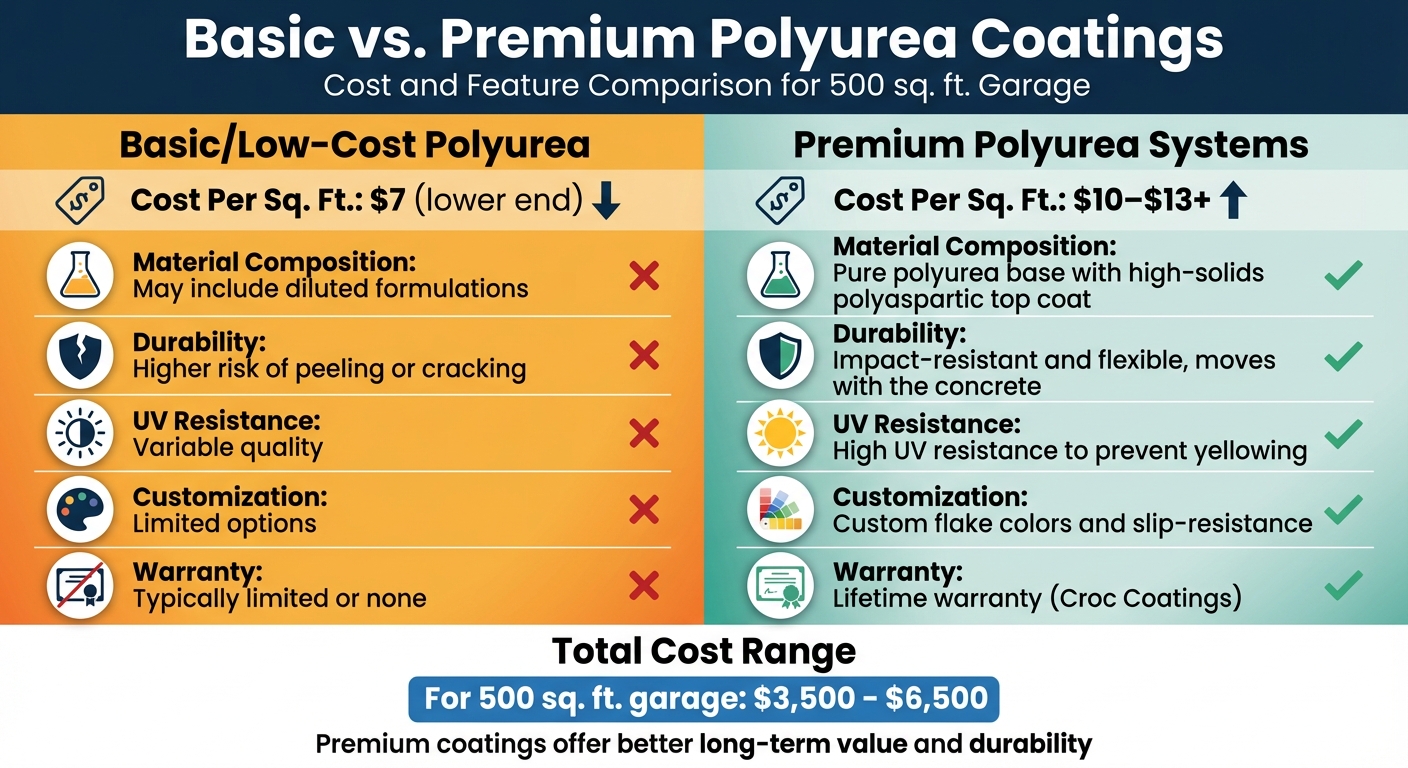
Basic vs Premium Polyurea Coating Comparison Chart
Comparison Table: Features and Costs
To better understand your options, let’s break down the key differences between basic and premium polyurea systems. For a typical 500-square-foot garage floor, the total cost ranges between $3,500 and $6,500. You can also use a garage floor coating cost calculator for a more personalized estimate.
Here’s a quick side-by-side look:
| Feature | Basic/Low-Cost Polyurea | Premium Polyurea Systems |
|---|---|---|
| Cost Per Sq. Ft. | $7 (lower end) | $10–$13+ |
| Material Composition | May include diluted formulations | Pure polyurea base with high-solids polyaspartic top coat |
| Durability | Higher risk of peeling or cracking | Impact-resistant and flexible, moves with the concrete |
| UV Resistance | Variable quality | High UV resistance to prevent yellowing |
| Customization | Limited options | Custom flake colors and slip-resistance |
| Warranty | Typically limited or none | Lifetime warranty (Croc Coatings) |
While basic options may seem appealing due to their lower upfront cost, premium coatings provide better long-term cost benefits. They’re built to last, offering superior resistance to cracking, UV damage, and wear from temperature changes. Plus, they maintain their look for decades without frequent repairs.
Take Croc Coatings’ Penntek Evolution system, for example. It’s 4x stronger than epoxy and includes a lifetime warranty. For homeowners in North Idaho and Eastern Washington, this one-time investment ensures durability and peace of mind for years to come.
Conclusion: Choosing the Right Polyurea Coating Investment
Key Takeaways
Knowing what influences costs can help you make smarter decisions. The quality of materials plays a huge role in how long the coating lasts, and even the best products need proper surface preparation to perform well.
Be cautious with suspiciously low quotes. Prices that seem too good to be true often mean corners are being cut – whether it’s diluted materials or inexperienced labor. This can lead to issues like signs of poor polyurea application like peeling, cracking, or expensive repairs down the line. Assessing the condition of your concrete before application is also critical.
"The power of polyurea is that you can do things once and do them right. It offers long term value because it does not crack easily and is much more flexible than epoxy." – Level 10 Coatings
While basic polyurea systems may seem like a deal at $7 per square foot, premium options ranging from $10 to $13 per square foot deliver better protection and durability.
These points can guide you toward finding a provider that balances quality with value.
Why Choose Croc Coatings?
Croc Coatings offers professional-grade polyurea solutions for North Idaho and Eastern Washington, serving areas like Spokane and the Tri-Cities. Their Penntek Evolution system is 4x stronger than epoxy and comes with a lifetime warranty, ensuring your investment is well-protected. With a one-day installation process, they minimize disruption while creating a chemical bond with your concrete. This bond adjusts to temperature changes, preventing the cracking often seen with more rigid coatings.
FAQs
What makes premium polyurea coatings a better choice than basic options?
Premium polyurea coatings are known for their toughness and extended lifespan. They can handle UV exposure, chemicals, and heavy impacts, making them perfect for high-traffic areas or places exposed to tough environments. Plus, they cure quickly, which means less downtime and faster project turnarounds.
While basic coatings might appear cheaper at first, premium polyurea often saves money in the long run. It requires less upkeep and delivers a sleek, professional look. If you’re after a combination of durability and style for your concrete surfaces, this is a solid choice.
How does surface preparation affect the cost of polyurea coating?
Proper surface preparation is a big factor when it comes to the cost of polyurea coating. This process typically includes cleaning the concrete, fixing cracks or other damage, creating the right surface texture, and sometimes applying a primer. These steps are essential for ensuring the coating sticks well and lasts longer, but they can also drive up labor and material costs.
The condition of your surface plays a huge role too. If the area is damaged or heavily stained, it might need more intensive preparation, which adds to the expense. However, spending the time and money on thorough prep work upfront can pay off with a durable, long-lasting finish.
Do regional factors influence the cost of polyurea coatings?
Where you live can play a big role in determining the cost of polyurea coatings. For starters, labor rates vary across the United States. In areas where wages are higher, you might notice an increase in overall pricing. Another factor is material availability. If you’re in a remote location, transportation costs for supplies can drive up expenses. On top of that, local regulations and building codes can influence costs. Meeting compliance standards may require specific materials or installation methods, adding to the final price.
If you’re in North Idaho or Eastern Washington, Croc Coatings offers concrete coating solutions designed to combine durability and style. Whether it’s for your garage, patio, or basement, their products are tailored to meet your needs.