If your basement floor gets damp, epoxy is usually the riskiest pick. From what I see in this article, the safer bets in 2026 are Penntek Evolution, polyaspartic, polyurea, and flake systems with anti-slip grit because they handle moisture, traction, and wear better in below-grade spaces.
Here’s the short version:
- Best all-around: Penntek Evolution
- Best for damp slabs: Polyurea (ideal for humid conditions)
- Best textured grip: Decorative flake systems with anti-slip additives
- Best low-cost option: Epoxy
- Best mix of fast cure and long life: Polyaspartic
What matters most in a basement floor coating:
- Slip resistance: smooth floors get slick when wet
- Moisture tolerance: basement slabs often push vapor upward
- Durability: laundry rooms, storage, and gyms wear floors down
- Install time: some floors are ready in 12 to 24 hours, while epoxy may take 3 to 7 days for full cure
- Cost: installed prices in the article range from about $3 to $12 per sq. ft.
How To Choose The Best Basement Floor Coating For You
Choosing the right system is especially important if you need to solve basement moisture problems while upgrading your floor’s appearance. You should also consider the factors that affect coating durability to ensure a long-lasting finish. Following a floor coating maintenance guide will help preserve that durability over time.
sbb-itb-a0e5ae3
Quick Comparison
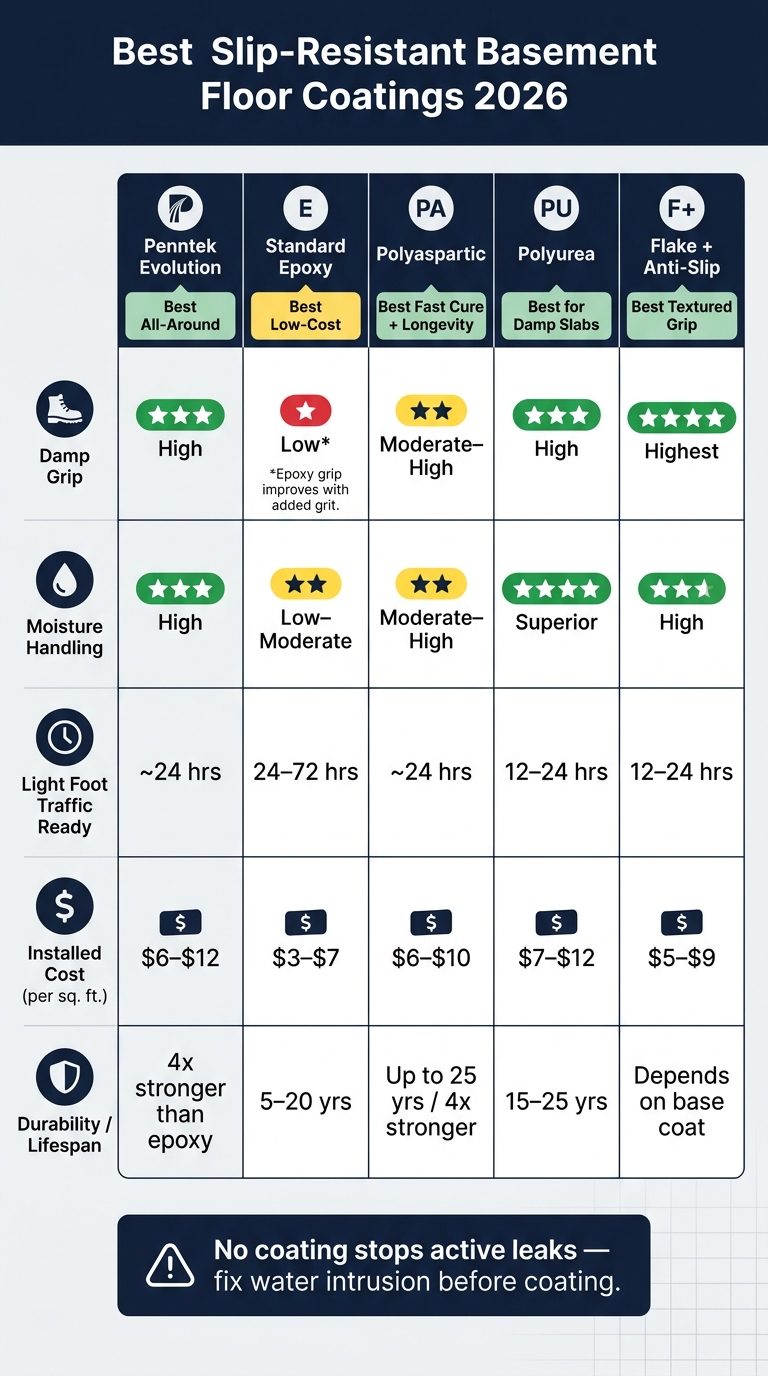
Best Slip-Resistant Basement Floor Coatings 2026: Side-by-Side Comparison
| Coating | Damp Grip | Moisture Handling | Light Foot Traffic | Installed Cost |
|---|---|---|---|---|
| Penntek Evolution | High | High | ~24 hours | $6–$12/sq. ft. |
| Epoxy | Low unless grit is added | Low to moderate | 24–72 hours | $3–$7/sq. ft. |
| Polyaspartic | Moderate to high | Moderate to high | ~24 hours | $6–$10/sq. ft. |
| Polyurea | High | Highest | 12–24 hours | $7–$12/sq. ft. |
| Flake + anti-slip | Highest | Depends on base coat, but often high | 12–24 hours | $5–$9/sq. ft. |
A few numbers stand out:
- Polyaspartic and Penntek-style systems are listed as 4x stronger than epoxy
- Polyurea and polyaspartic can last about 15 to 25 years
- DIY water-based epoxy may last only 5 to 7 years
- A slip target many installers use is DCOF 0.42+ for level interior floors
Bottom line: if I were choosing for a basement with any moisture risk, I’d start with polyurea or a polyurea-polyaspartic flake system, not plain epoxy. And if water is actively getting in, I’d fix that first because no coating will solve leaks, hydrostatic pressure, or standing water.
That’s the full article in one view, with each option judged by the things basement owners care about most.
1. Croc Coatings Penntek Evolution System
Croc Coatings’ Penntek Evolution system uses a polyurea-polyaspartic build for basement concrete. It’s made for the moisture and slick spots that show up in below-grade spaces, so it’s a strong pick when traction, moisture control, and long-term wear all matter.
Slip Resistance
The system uses a multi-layer vinyl flake finish that creates a lightly textured surface, which helps with grip on damp basement floors. If you want more traction, anti-slip agents like quartz or glass beads can be added to the polyaspartic topcoat.
Moisture Tolerance
The polyurea base coat bonds to slabs with higher moisture vapor transmission. That makes it a good match for below-grade concrete floors, where moisture tends to be a constant issue.
Durability
Penntek Evolution is 4x stronger than epoxy. It also stands up to impact, household chemicals, salt, and oils. On top of that, it offers antimicrobial properties.
One-Day Installation
Croc Coatings installs the system in one day and backs residential work with a lifetime warranty.
Next, compare epoxy vs. polyurea for basement floor repairs to see how they perform under the same conditions.
2. Epoxy Floor Coatings
Epoxy is a common pick for basements because it’s affordable, tough, and sold in a wide range of finishes. But in a below-grade space, the results depend a lot on which epoxy system you use and how dry and sound the concrete slab is.
Slip Resistance
Standard epoxy leaves behind a smooth, glossy surface. That can look great, but it also gets slippery when wet. In basements where moisture may show up from time to time, installers can improve traction by broadcasting slip-resistant additives like aluminum oxide or polymer grit into the wet topcoat.
Moisture Tolerance
Epoxy is a film-forming coating. That means it doesn’t stop active leaks or hydrostatic pressure coming up from below. If moisture pushes through the slab, the coating can blister, peel, delaminate, or turn hazy.
Professional-grade 100% solids epoxy can handle some moisture vapor, but it still won’t deal with active seepage. That’s why slab testing matters so much before installation. A calcium chloride or plastic sheet test can show whether moisture is present. If it is, a moisture-mitigation primer or vapor-control layer should go down first.
In plain terms, slab moisture is the main thing that limits epoxy in a basement.
Durability
When installed by a pro, a 100% solids epoxy system can last 15 to 20+ years in a residential basement. Water-based DIY kits don’t tend to hold up as long, with a lifespan closer to 5 to 7 years.
If the slab stays dry, epoxy can hold up for years.
Installation Fit
Prep work does most of the heavy lifting here. Surface preparation accounts for about 70% to 80% of a coating’s success. Diamond grinding tends to work better than acid etching because it profiles the slab and removes weak concrete.
Epoxy also has a short pot life, usually around 20 to 35 minutes, so the crew needs to move fast once mixing starts. Light foot traffic is often okay after 24 hours, but heavy loads and furniture usually need to wait for full cure, which can take 72 hours to 7 days.
Next, compare how polyaspartic handles basement moisture, traction, and wear.
3. Polyaspartic Coatings
Polyaspartic coatings work well in basements because they bring together moisture resistance, a bit of flex, and strong wear performance. That slight flex helps the coating move with seasonal slab shifts better than more rigid options. Add in grip, moisture control, and a fast cure time, and you get one of the best basement flooring picks for 2026.
Slip Resistance
Polyaspartic systems are often installed with a decorative vinyl flake broadcast, which adds built-in texture and helps improve traction in damp basement areas. If you need more grip, installers can add anti-slip material to the topcoat without giving up the seamless look.
Moisture Tolerance
Polyaspartic is highly water-resistant and creates a seamless, non-porous barrier that can help stop rising dampness and musty odors in below-grade spaces. Professionally installed systems can usually handle 5 to 8 lbs of moisture vapor per 1,000 square feet.
Durability
Polyaspartic coatings are rated as 4x stronger than traditional epoxy. A professionally installed system can last up to 25 years. It’s also 100% UV-stable, so it won’t yellow or fade over time.
Installation Fit
One of the biggest day-to-day advantages of polyaspartic is speed. Most systems allow foot traffic within 24 hours of application, which makes them a smart pick when timing is tight. They can also be applied to concrete at temperatures as low as 30°F. That helps in colder parts of the U.S. and during short install windows.
Before installation, test moisture vapor levels. If they’re too high, use a vapor-blocking primer.
Next, compare polyurea and polyaspartic performance in the same below-grade conditions.
4. Polyurea Coatings
Polyurea is a flexible basement coating that moves with the slab, which helps it resist cracking during temperature swings and minor foundation movement. That matters in basements, where moisture and slab movement are just part of the deal. When you need traction and moisture control at the same time, this type of coating stands out.
Slip Resistance
For basement floors, installers usually broadcast quartz or aluminum oxide into the coating to create a textured surface. That added texture helps improve traction when the floor gets damp.
Moisture Tolerance
Polyurea’s biggest strength is moisture tolerance. Below-grade slabs keep pushing moisture vapor upward, and coatings that can’t deal with that pressure tend to blister, peel, or lose their bond over time. Polyurea can go directly over damp concrete, and it allows moisture vapor to pass through the material without losing its bond to the concrete. In a humid basement, that helps protect the floor from water damage by cutting down on bubbling and peeling.
Durability
It holds up well against impact, daily foot traffic, and the wear that comes with storage use. Professionally installed systems usually last 15 to 25 years. It also resists mold, mildew, and household chemicals.
Installation Fit
Most polyurea basement projects are finished in a single day, and the floor can usually handle foot traffic within 12 to 24 hours. That short downtime is a big plus in finished basements, laundry rooms, and home gyms. Polyurea also performs across a broad temperature range, from -40°F to over 300°F. Because it cures within minutes, professional installation is usually required.
Next, compare that performance with decorative flake systems that build traction through surface texture and anti-slip additives.
5. Decorative Flake Systems with Anti-Slip Additives
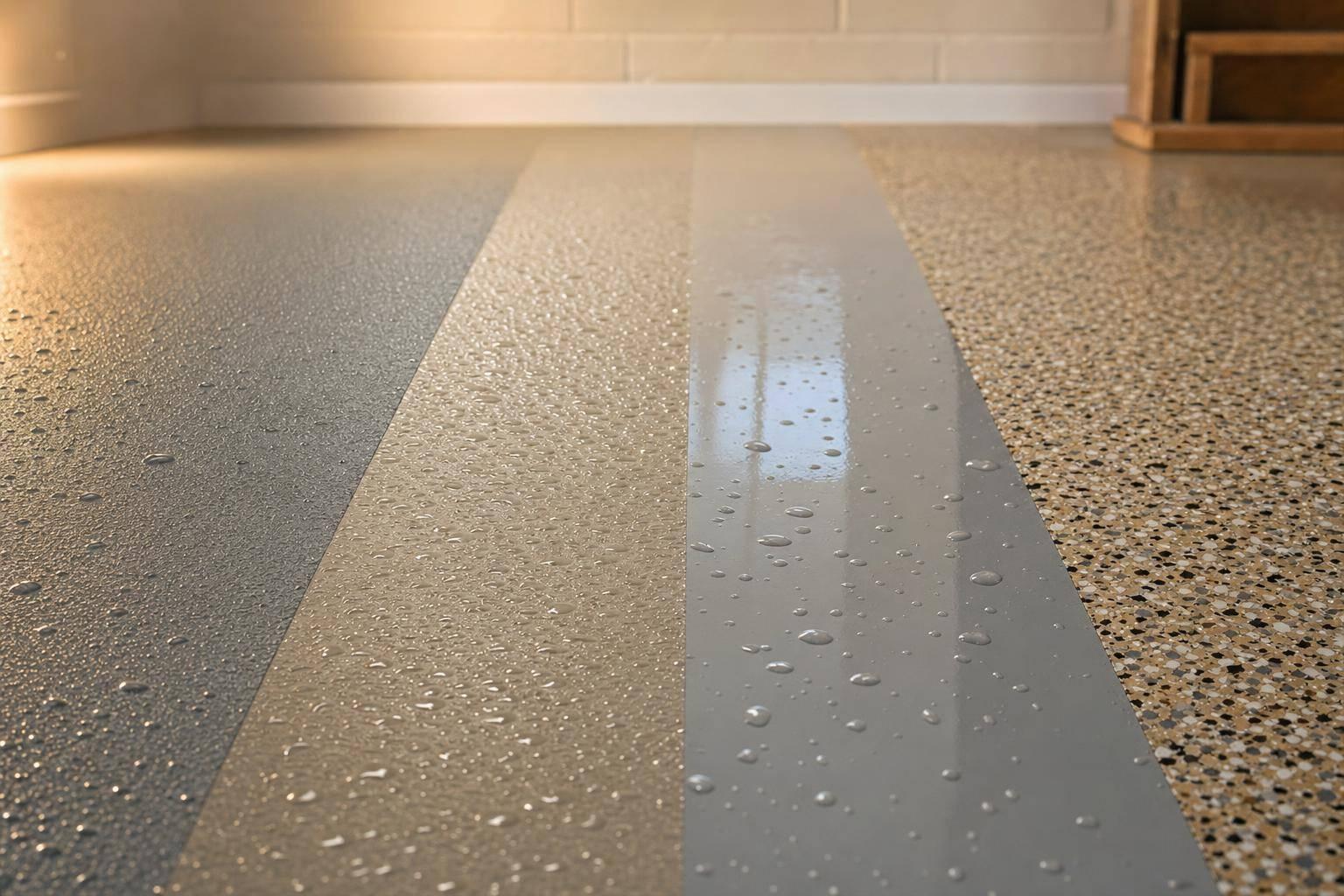
Decorative flake systems add vinyl flakes to a resin base coat, then seal the floor with a clear topcoat. The result is a textured finish that gives you more grip than a slick, glossy film. In a basement, that matters. These spaces deal with moisture and steady foot traffic, so the bigger issue isn’t just how the floor feels on day one, but how it handles wear and damp conditions over time.
Slip Resistance
Vinyl flakes and an anti-slip additive work together in the clear topcoat to help the floor keep traction when it’s damp. In most cases, that additive is aluminum oxide or silica grit. Installers can fine-tune the feel by changing flake coverage and grit size.
A 60–100 mesh aluminum oxide blend tends to land in a good spot. It gives enough grip for wet areas near a utility sink or exterior door, but it usually doesn’t feel harsh under bare feet. Many installers aim for a DCOF of 0.42 or higher for level interior floors.
Moisture Tolerance
Basement slabs often push moisture vapor upward, and that can make or break a flake system. The flake layer itself isn’t the main issue. What matters more is the base coat chemistry and how well the slab is prepped before anything goes down.
A pro should test the slab first with a calcium chloride test or in-situ relative humidity (RH) probe. That shows whether vapor emission is within an acceptable range. If moisture vapor is high, a moisture-vapor-control epoxy primer should go on first to help stop bubbling or delamination.
Durability
One of the big selling points here is visual forgiveness. The multi-color flake pattern hides minor scuffs, chips, and fine scratches much better than a solid-color floor. That’s a big deal in a basement where storage bins, laundry carts, or tools may scrape across the surface now and then.
For tougher use, installers often pair the flake broadcast with an industrial-grade polyurea or polyaspartic topcoat. That top layer helps the floor stand up to impact and abrasion. It also gives the coating more flexibility as the concrete shifts with seasonal temperature swings.
Installation Fit
Most flake systems can be installed in a single day, and the floor is often ready for light foot traffic in 12 to 24 hours. That’s a nice fit if you don’t want your basement out of commission for long.
That said, basements can be awkward workspaces. Tight stairwells, low ceilings, and limited room for prep equipment can slow the job down. It’s smart to mention those details when you ask for an estimate.
The next thing to look at is how this texture-heavy system handles moisture, traffic, and seasonal slab movement.
How These Coatings Hold Up in Real Basement Conditions
After looking at each coating by itself, it helps to put them side by side and see how they act in an actual basement. That’s where the tradeoffs get much clearer.
Slip resistance is one of the biggest points of separation. Decorative flake systems with anti-slip additives give you the best wet traction because the added texture creates more grip underfoot. Penntek Evolution and polyurea also do a good job here. Standard epoxy, by contrast, tends to be the slickest option unless you mix in grit.
Moisture tolerance can make or break a basement floor. Polyurea-based systems, including Penntek Evolution, bond tightly to prepared concrete and deal with vapor better than rigid epoxy. That bit of flex matters. When a slab shifts, these coatings are less likely to crack. Polyaspartic vs epoxy performance differs here; epoxy depends much more on a dry slab, so if vapor pressure builds below the surface, failure becomes more likely.
Durability and installation time also separate these products fast. Polyaspartic coatings are rated approximately 4x stronger than traditional epoxy. Polyurea systems can be ready for light foot traffic in as little as 12 to 24 hours. Traditional epoxy usually needs 3 to 5 days to fully cure, which means your basement stays off-limits a lot longer.
Quick comparison:
| Coating Type | Slip Resistance (Damp) | Moisture Tolerance | Light Foot Traffic Time | Installed Cost (per sq. ft.) |
|---|---|---|---|---|
| Penntek Evolution (Croc Coatings) | High | Excellent | 24 hours | $6–$12 |
| Standard Epoxy | Low | Poor | 24–72 hours | $3–$7 |
| Polyaspartic | Moderate–High | Moderate–High | 24 hours | $6–$10 |
| Polyurea | High | Superior | 12–24 hours | $7–$12 |
| Decorative Flake System | Highest (Textured) | High | 24 hours | $5–$9 |
One thing none of these coatings can do: stop an active leak, hydrostatic pressure, or standing water. If water is getting into the basement, that issue has to be fixed and the pre-installation checklist completed before any coating goes down. The pros and cons below turn those tradeoffs into a simpler choice. If you’re still unsure which system fits your space, it helps to know what to expect during a consultation with a professional.
Pros and Cons of Each Basement Coating Type
After looking at how each coating holds up in a basement, it helps to narrow the decision by cost, traction, and overall fit.
Use the table below to line up the coating with the basement’s moisture level, foot traffic, and how you plan to use the space.
| Coating Type | Key Pros | Key Cons | Best-Fit Basement Scenario |
|---|---|---|---|
| Croc Coatings (Penntek Evolution) | One-day installation; 4x stronger than epoxy; UV-stable; slip-resistant; lifetime warranty | Higher upfront cost; requires professional installation | Finished basements, walk-outs, and long-term residential use |
| Standard Epoxy pros and cons | Lowest upfront cost; strong bond strength | Long cure time; brittle; can fail in damp basements | Dry, low-traffic storage basements |
| Polyaspartic | 24-hour return to service; high durability; UV-stable; 4x stronger than epoxy | Hard to DIY; higher cost than epoxy | High-traffic spaces, home gyms, and humidity-prone basements |
| Polyurea | Flexible; impact resistant; one-day installation | Professional install only; higher material cost | Basements with slab movement or heavy impact |
| Decorative Flake Systems | Excellent slip resistance; hides floor imperfections; visually customizable | Harder to deep-clean | Family rooms, playrooms, laundry rooms, and home gyms |
That same table can also help you sort out finish goals. Some coatings are built more for plain storage spaces. Others make more sense when the basement doubles as a family room, workout area, or laundry zone.
The big trade-off comes down to price versus performance. Epoxy usually costs less at the start, but it’s less forgiving in basements with moisture or slab movement. Proper moisture protection is critical for long-term adhesion. Polyaspartic and polyurea cost more, but they offer faster cure times and better durability for basement conditions.
Conclusion
There’s no one-size-fits-all coating for every basement. The best choice depends on four things: how damp the slab is, how much foot traffic the space gets, how fast you need the job finished, and how long you want the floor to hold up.
If you want a simple way to decide, start by preventing moisture-related coating failures first. Then look at traffic, then cure time. That gets you to the best match for your basement without overcomplicating it.
| Need | Best Option | Why |
|---|---|---|
| Damp basement | Polyurea or polyaspartic | Flexible and highly water-resistant when the slab is properly moisture-tested before installation. This involves a thorough concrete inspection to identify cracks or pH issues. |
| Quick turnaround | Penntek Evolution system | Foot traffic ready in 12–24 hours. |
| Heavy-duty durability | Polyurea/polyaspartic flake system | Built for impact and slab movement. |
| Best full-service install | Croc Coatings Penntek Evolution System | Six-step prep, UV-resistant topcoat, lifetime warranty. |
One point matters no matter which coating you choose: surface prep is what decides if the coating bonds well or peels early. If you want a one-day, slip-resistant basement floor, Croc Coatings’ Penntek Evolution stands out as the strongest all-around fit.
FAQs
How do I know if my basement slab has a moisture problem?
First, separate normal vapor transmission from active water intrusion. They’re not the same thing. A slab can look dry on the surface and still contain enough moisture to make coatings blister or peel.
For a basic check, tape a 2-foot by 2-foot sheet of 6-mil plastic to the floor for 48 to 72 hours. If condensation forms underneath or the concrete darkens, moisture is present. Contractors can confirm this with calcium chloride tests or relative humidity probes.
Can I make a basement floor coating less slippery?
Yes. A polyurea coating can make a basement floor safer by adding slip resistance during installation.
Installers can change the surface texture or mix anti-slip materials like aluminum oxide or silica sand into the topcoat. That added texture gives you better grip, even if the floor gets wet.
The Penntek Evolution industrial coating system also provides a durable, slip-resistant finish backed by a lifetime warranty.
Which coating is best for a finished basement?
The Penntek Evolution industrial coating system is a strong fit for a finished basement. It uses a polyurea-based coating that’s 4x stronger than epoxy, so it holds up well under daily wear.
It also stays flexible as the concrete shifts over time, which helps cut down on cracking, peeling, and chipping. That matters in a basement, where moisture and slab movement can turn a floor into a headache fast.
Another plus: it creates a non-porous, moisture-resistant barrier. You also get a slip-resistant texture for added safety. And because it can be installed in one day and comes with a lifetime warranty, it checks a lot of boxes for homeowners who want a floor that looks good and lasts.