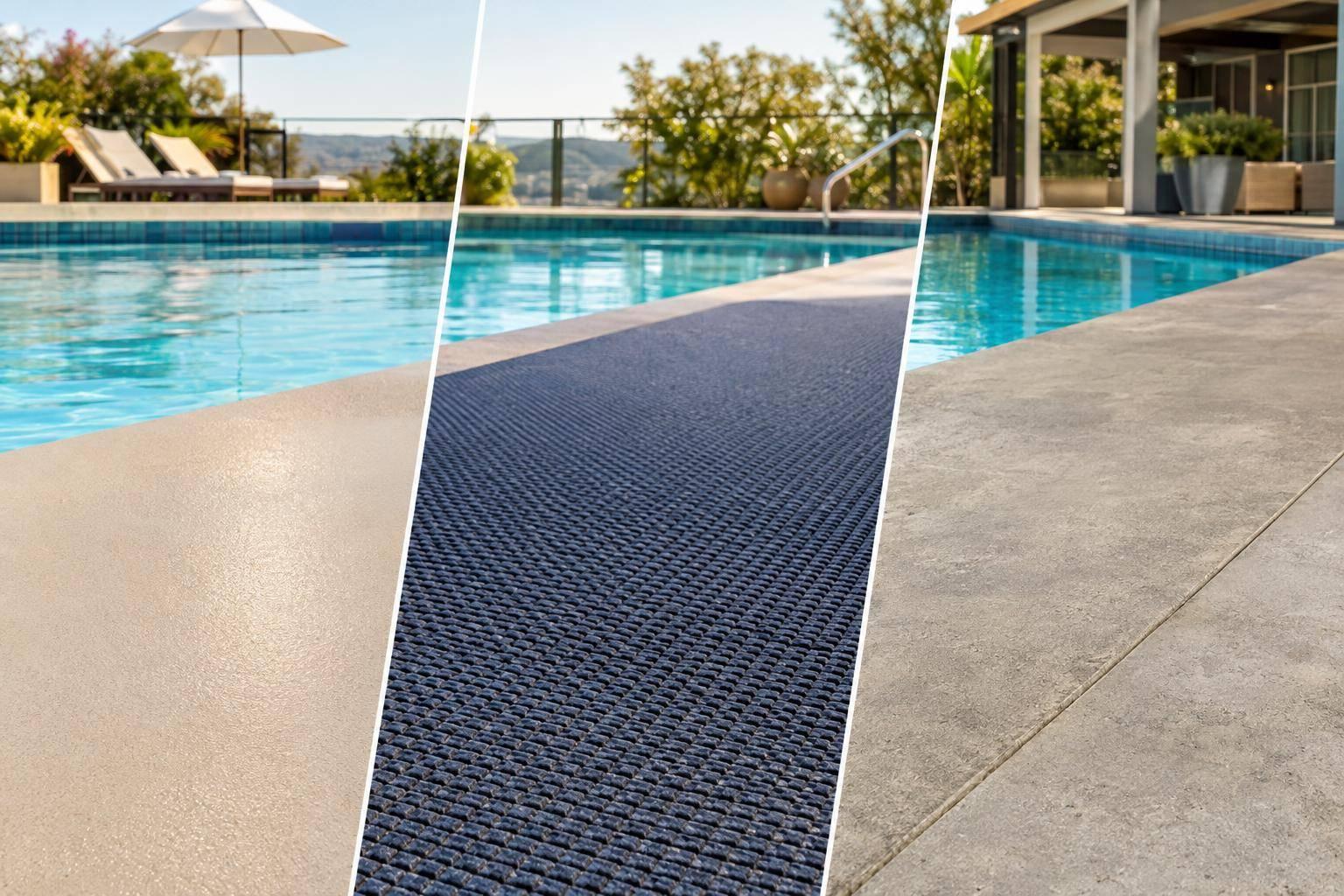
No pool deck surface is slip-proof. Before choosing one of the best concrete coatings for pool decks, mats, or bare concrete, check for puddles, cracks, and uneven areas. Fix drainage and slab problems first – none of these options solves them.
The choice comes down to wet grip, drainage, cleaning, damage, and appearance:
Quick Comparison
| Factor | Textured coatings | Outdoor mats | Bare concrete |
|---|---|---|---|
| Wet grip | Depends on added texture and cleanliness | Depends on material and staying flat | Depends on finish and wear |
| Drainage | Needs proper slab slope | Perforated mats let water pass; solid backs can trap it | Depends on existing slope |
| Upkeep | Clean texture; check for peeling | Clean underneath; check edges and movement | Remove residue; check cracks and spalling |
| Appearance | Choice of colors and textures | Visible sections and seams | Shows wear, stains, and repairs |
For pool decks in Spokane, Coeur d’Alene, Post Falls, and the Tri-Cities, check freeze-thaw, UV, and pool-chemical ratings. Compare wet, barefoot test data for the exact product and finish – not a dry sample – and choose a surface that fits the household’s cleaning routine.
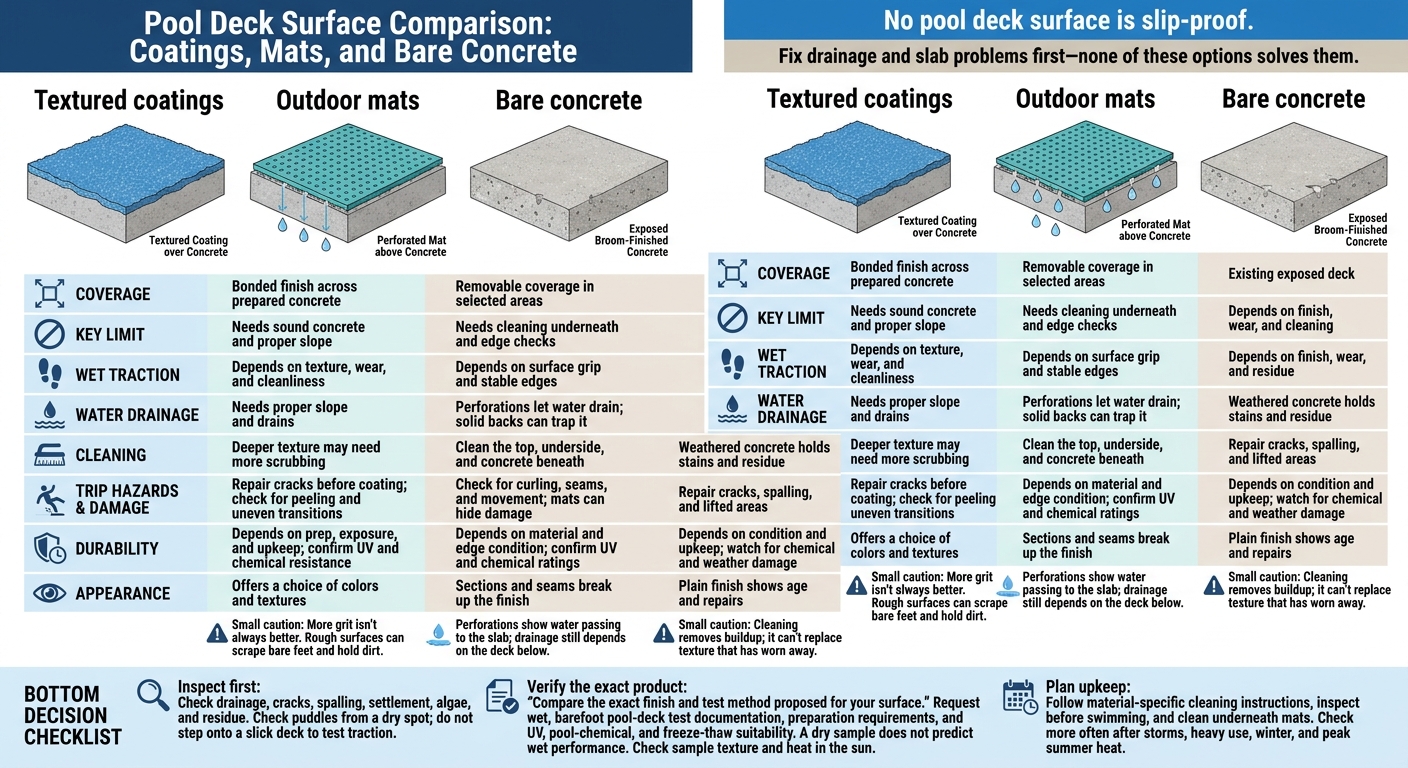
Pool Deck Traction: Coatings vs. Mats vs. Bare Concrete
How each pool deck surface works
Here’s how each surface handles traction, drainage, upkeep, and appearance.
| Surface | Coverage | Key limit |
|---|---|---|
| Textured coating | Bonded finish across prepared concrete | Needs sound concrete and proper slope |
| Outdoor mat | Removable coverage in selected areas | Needs cleaning underneath and edge checks |
| Bare concrete | Existing exposed deck | Depends on finish, wear, and cleaning |
Textured coatings: bonded finishes with added grip
Coatings offer the most continuous coverage, but they need a sound, properly prepared slab. Aggregate, grit, or microtexture adds traction; a smooth finish does not. More grit isn’t always better. A rough surface can scrape bare feet and hold dirt. The coating also follows the deck underneath – it won’t fix settlement or poor slope.
Before installation, the installer should check for moisture, sealers, cracks, and loose concrete. Proper surface preparation must meet the coating manufacturer’s requirements. Review the cleaning instructions and ask for wet-traction, chlorine, UV, and abrasion data. Color and decorative finishes can update the deck’s appearance, but transitions at drains and adjoining paved areas still need attention.
Outdoor mats: removable coverage with edges to check
Mats add traction in selected spots and can be removed. Check their wet slip resistance, seams, and UV, chlorine, and temperature ratings. Perforated rubber or PVC mats let water pass through; solid-backed mats can trap moisture.
Cleaning underneath is part of the upkeep. Lift mats, scrub beneath them, check for algae, and let both surfaces dry. Low-profile or beveled edges help reduce trip risk. Replace mats that curl, crack, turn brittle, or no longer lie flat. Unlike coatings, mats cover separate areas rather than forming a continuous finish.
Bare concrete: grip depends on texture and condition
Broom-finished concrete generally provides more wet grip than smooth or worn concrete. But algae, standing water, and slick sealers can mask that texture. Cleaning removes buildup; it can’t replace texture that has worn away.
Chemical exposure and freeze-thaw damage can make deterioration worse. Spalling, loose edges, settlement, and major cracks need repair – not more scrubbing. Stains, efflorescence, and visible repairs also affect how the deck looks.
sbb-itb-a0e5ae3
Coatings, mats, and bare concrete compared
Compare each surface against your deck’s drainage, cleaning, and safety needs.
| Decision factor | slip-resistant coatings | Outdoor mats | Bare concrete |
|---|---|---|---|
| Wet traction | Depends on texture, wear, and cleanliness | Depends on surface grip and stable edges | Depends on finish, wear, and residue |
| Water drainage | Needs proper slope and drains | Perforations let water drain; solid backs can trap it | Existing slope and settlement control drainage |
| Cleaning | Deeper texture may need more scrubbing | Clean the top, underside, and concrete beneath | Weathered concrete holds stains and residue |
| Trip hazards and damage | Repair cracks before coating; check for peeling and uneven transitions | Check for curling, seams, and movement; mats can hide damage | Repair cracks, spalling, and lifted areas |
| Durability | Depends on prep, exposure, and upkeep; confirm UV and chemical resistance | Depends on material and edge condition; confirm UV and chemical ratings | Depends on condition and upkeep; watch for chemical and weather damage |
| Appearance | Offers a choice of colors and textures | Sections and seams break up the finish | Plain finish shows age and repairs |
Before deciding, review the test data, installation requirements, and your deck’s condition. Compare the exact finish and test method proposed for your surface. A rating for another texture – or a dry sample – doesn’t predict wet performance.
Request a sample to check its texture and how hot it gets in the sun before choosing a full installation.
If you expect drainage work or remodeling later, removable coverage makes access easier. A bonded finish doesn’t offer that flexibility.
What to check before choosing a surface
Before choosing coatings, mats, or bare concrete, check whether the surface suits your slab, climate, and cleaning routine.
Inspect drainage, cracks, and uneven areas
Document worn-smooth spots, cracks, spalling, settlement, algae, and residue. After rain or swimming, check for puddles from a dry spot. Don’t step onto a slick deck to test traction.
Check mats for movement, curled corners, separating seams, and trapped moisture. Have widening cracks, uneven slabs, or persistent drainage problems assessed before covering them – especially where water collects against the house.
Keep paths to steps, ladders, doors, seating, and pool lifts clear of loose edges and abrupt height changes. Make sure the person cleaning the deck can safely lift wet mats and clean underneath.
Review product ratings and installation requirements
Once you know the deck’s condition, get product specs and installation limits in writing. Request documentation covering wet, barefoot pool-deck use, UV exposure, pool chemicals, approved cleaners, and repair procedures.
In the Inland Northwest, ask about freeze-thaw exposure, slab moisture, and summer surface heat. Confirm preparation requirements and installation temperature and moisture limits. Also check when the surface can handle foot traffic, furniture, pool chemicals, standing water, and full swimming use.
Set a cleaning and inspection schedule
Every surface needs regular checks and cleaning after installation. Assign one person to check for debris, residue, blocked drains, loose edges, and damage before swimming.
Follow polyurea and epoxy cleaning instructions, including removing mats to clean and inspect underneath. Check more often after storms, heavy use, winter, and peak summer heat. If cleaning doesn’t restore traction – or cracks, blisters, or puddles keep returning – get a professional evaluation.
Conclusion: choose for traction, drainage, and upkeep
Choose based on traction, drainage, slab condition, and upkeep – not looks alone. Coatings bond to the concrete. Mats provide removable coverage, but their edges need attention. A structurally sound slab with enough texture may work without a coating. None of these options eliminates slipping or fixes poor drainage.
FAQs
How do long-term costs compare for coatings, mats, and bare concrete?
Textured coatings, such as the Penntek system offered by Croc Coatings, offer a low-maintenance surface without frequent resealing. Bare concrete needs sealing every 2–4 years and may also need repairs, resurfacing, or replacement.
A durable, nonporous coating helps protect the concrete and reduces maintenance needs. Project cost depends on garage size, concrete condition and preparation. Start with the free online quote; an on-site visit is required before quoting.
Can I use pool mats over a textured coating?
Some homeowners place pool mats over textured coatings, but mats aren’t needed when the coating is properly textured. Systems like those provided by Croc Coatings add slip-resistant texture during installation to help with traction in wet areas where people walk barefoot.
Mats can also trap moisture, which may interfere with drainage and make a continuous, impermeable surface harder to maintain.
Should I remove pool deck mats during winter?
Yes, remove pool deck mats during winter. Mats can trap moisture against the concrete. When that moisture freezes and thaws, it increases the risk of scaling, spalling, and other surface damage.
Removing mats lets the concrete dry and reduces moisture buildup that can cause long-term slab deterioration, especially during winters in North Idaho and Eastern Washington.