If your outdoor concrete has moisture trouble, slab movement, or heavy damage, a polyaspartic coating is not the right first step. I’d use it on sound, dry, well-prepped concrete where you want UV resistance, easier cleanup, and better wear than paint.
Here’s the short version:
- Best use: patios, walkways, entries, and some pool decks with light to moderate foot traffic
- Main upsides: resists sun fade, handles daily wear, and can be finished with added texture for grip
- Main limits: won’t fix moving cracks, ponding water, spalling, or vapor pressure under the slab
- Prep matters most: proper surface preparation, including grinding and crack repair, and moisture testing often decide whether it lasts
- Slip trade-off: more texture helps when wet, but it can feel rougher and hold more dirt
- Thickness limit: most systems are only about 20–40 mils, so they protect the surface but do not rebuild bad concrete
One detail many people miss: when water freezes, it expands by about 9%. In places with freeze-thaw weather, that alone can turn a small slab problem into coating failure if the concrete is not fixed first.
I’d think of polyaspartic as a surface protection system, not a repair product. If the slab is stable and drains well, it can work well. If not, repairs should come before coating.
| Area or Issue | Polyaspartic Fit | What I’d check first |
|---|---|---|
| Patio or seating area | Good fit | Sound slab, no active moisture |
| Walkway or entry | Good fit | Texture for grip, drainage |
| Pool deck | Case by case | Wet traction, splash-out, vapor |
| Moving cracks | Poor fit | Repair movement first |
| Heavy spalling | Poor fit | Resurface slab first |
| Ponding water | Poor fit | Fix slope or low spots first |
If you’re deciding whether to coat outdoor concrete, I’d keep the question simple: is the slab stable, dry enough, and in good shape? If yes, polyaspartic may be a solid option. If no, the coating will not solve the root problem.
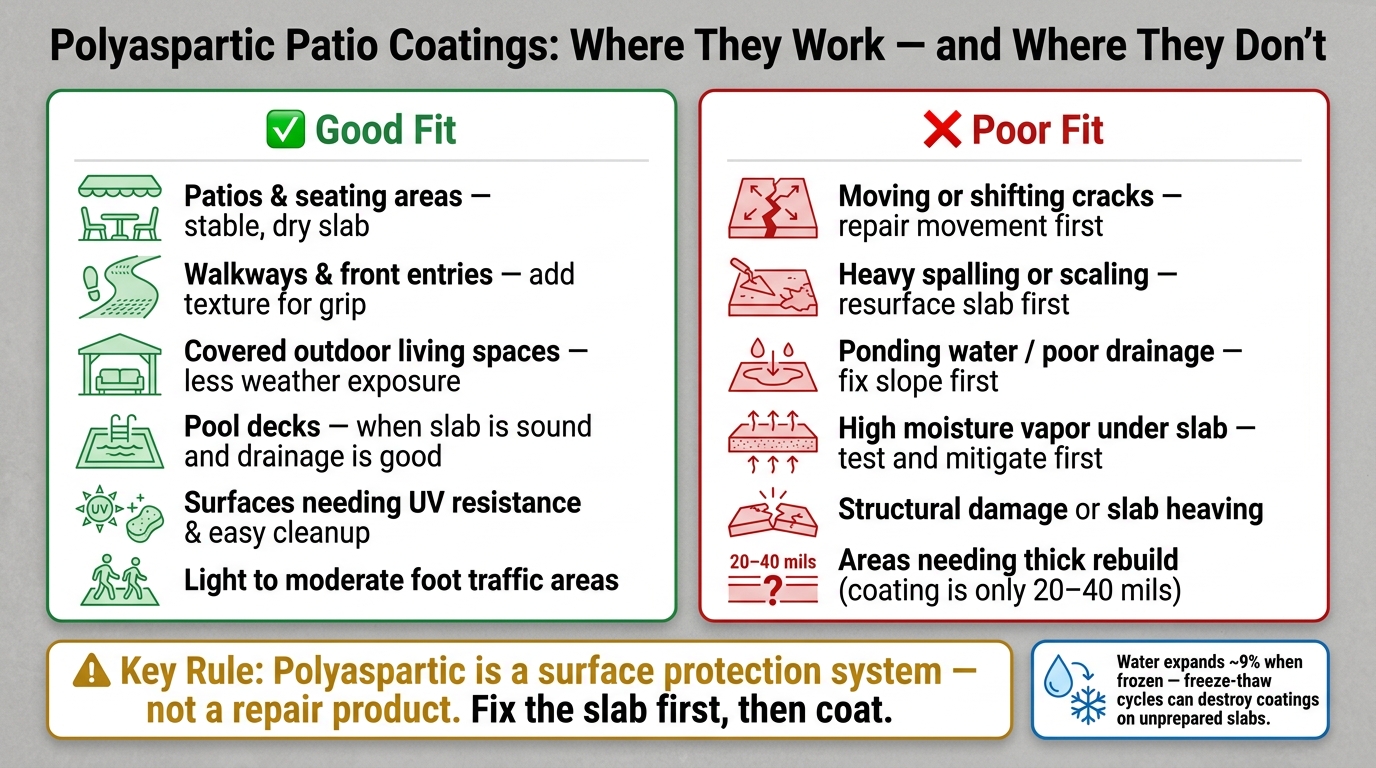
Polyaspartic Patio Coatings: Best Fits vs. Poor Fits at a Glance
Where Polyaspartic Patio Coatings Work Best
Patios and Outdoor Living Areas with Light to Moderate Traffic
On sound concrete, choosing polyaspartic over epoxy works best in everyday outdoor spaces that need UV resistance and simple cleanup. It’s a strong fit for seating areas, grilling zones, and covered outdoor living spaces where the slab gets steady foot traffic but not heavy vehicle loads.
These areas need a finish that can handle chairs scraping, spills, and day-to-day use without becoming a headache to maintain. That’s where polyaspartic tends to shine. It gives you a clean surface that’s easier to wipe down and tough enough for normal residential wear.
Polyaspartic also works best when the concrete is sound and prepared the right way. UV-stable topcoats help the color and gloss last longer in direct sun, which cuts down on yellowing and fading over time. For exposed outdoor areas, that matters. A flake finish can also help hide dust better, so the surface looks cleaner between washings.
Walkways, Entries, and Pool Decks That Need Traction and Weather Resistance
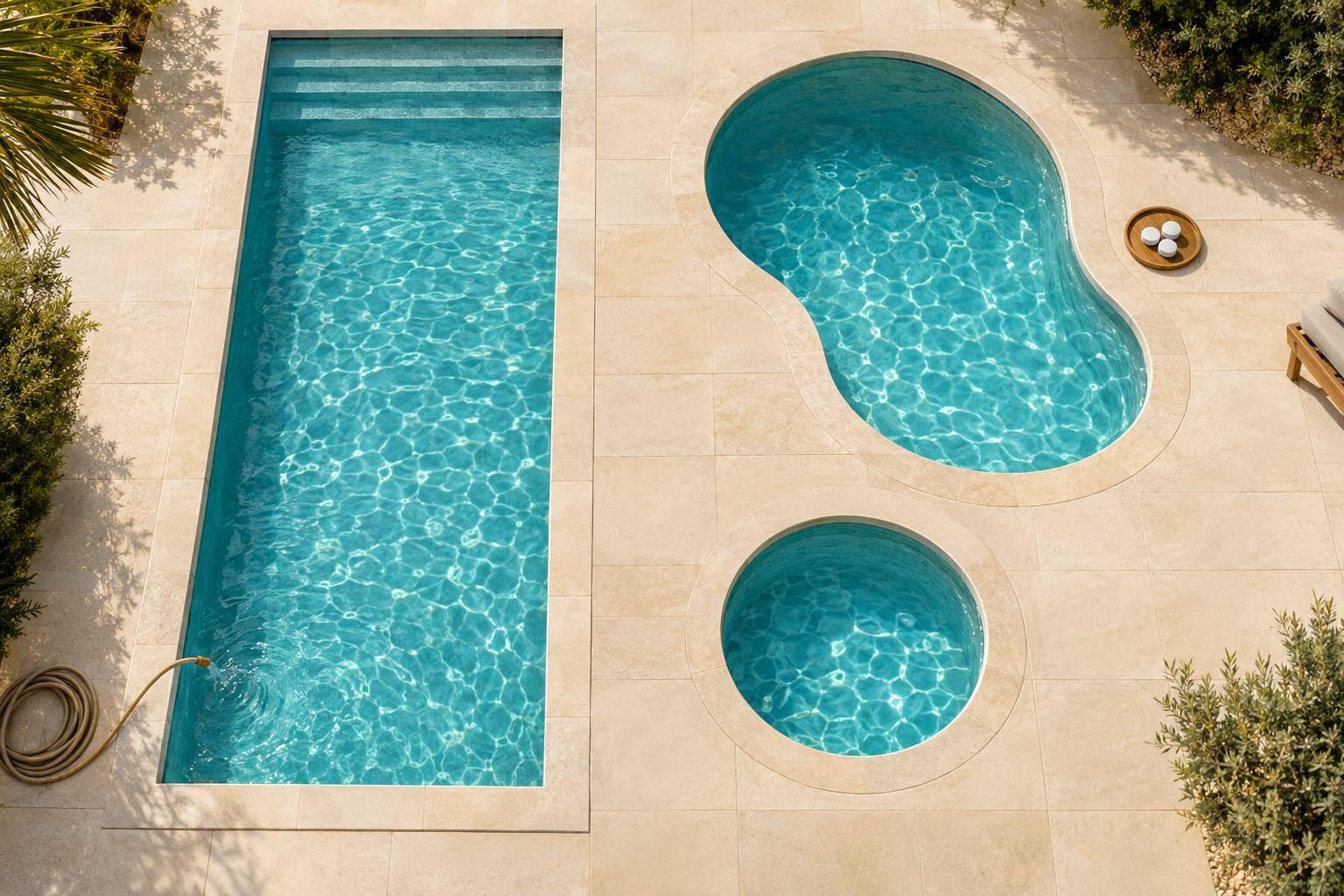
Walkways, entries, and pool decks deal with more moisture and foot traffic than most patios. They also pick up dirt fast. So the finish can’t just look polished. It needs to perform well when conditions get wet.
Polyaspartic systems are a good match here when the slab is stable and prepared the right way, especially on surfaces exposed to sun, seasonal rain, normal temperature swings, and everyday outdoor grime. The big factor is traction. That comes down to the finish texture and the slip-resistant additive used.
A smoother decorative finish may be fine for a covered entry. But around a pool, or on a shaded walkway that stays damp, a textured finish with a slip-resistant additive is the better call. For wet areas, choose a textured finish with a slip-resistant additive. Aluminum oxide or quartz broadcast into the topcoat can improve traction without making the surface too rough under bare feet.
Like most coating systems, the end result depends on the slab underneath. The concrete needs to be dry, stable, and prepared the right way.
Comparison Table: Outdoor Problems Polyaspartic Coatings Address
| Outdoor Problem | How Polyaspartic Helps | Conditions Required for Good Results |
|---|---|---|
| UV fading and yellowing | UV-stable topcoat helps maintain color and gloss longer in direct sun | Stable, properly prepared concrete with no active moisture issues |
| Surface wear from foot traffic and furniture | Durable finish holds up to routine residential use and everyday cleaning | Light to moderate traffic; not heavy vehicle loads |
| Wet-slip risk on pool decks and walkways | Textured finishes with slip-resistant additives improve traction | Aggregate, texture, and broadcast system matched to the space |
| Staining from pool chemicals or de-icing salts | Chemical resistance helps with chlorinated water, cleaning solutions, and salts | Coating fully cured and sealed before exposure |
| Seasonal grime and surface discoloration | Sealed surface is easier to rinse and sweep than bare concrete | Routine washing and prompt spill cleanup; avoid harsh abrasive cleaners |
sbb-itb-a0e5ae3
Everything You Need to Know About Coating Outdoor Concrete
Prep and Repairs That Must Happen Before Coating
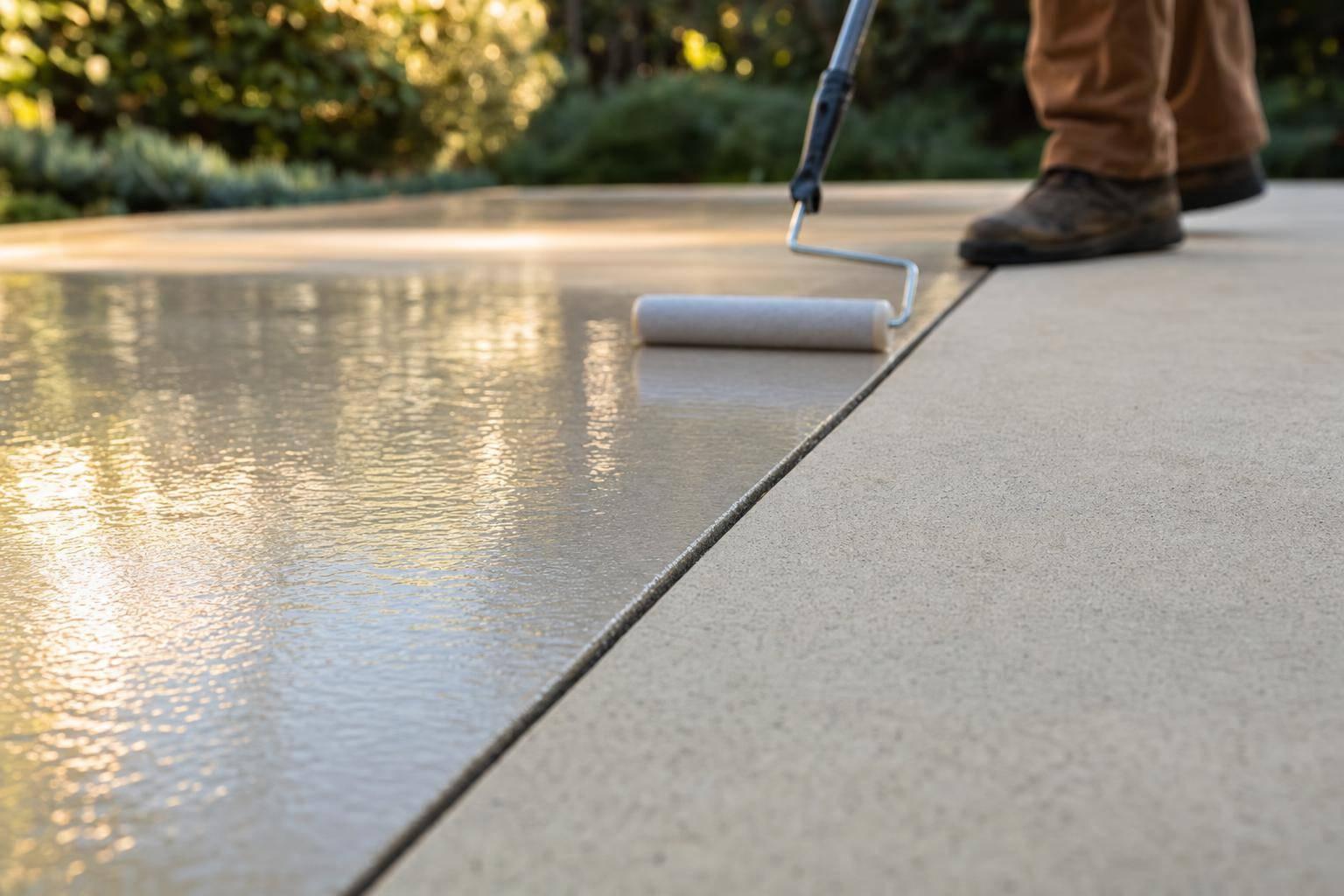
If you’re coating a patio, walkway, or pool deck with polyaspartic, the slab has to be ready first. Prep is what decides how long the coating stays put. Polyaspartic performs well only on sound concrete, so the slab needs inspection, repair, and mechanical prep before any coating goes on.
When Cracks, Spalling, and Uneven Concrete Need Repair First
Hairline or static cracks should be filled with a compatible repair compound. But moving cracks, vertical displacement, and structural movement are a different story. Those issues need repair first because a decorative coating won’t hide them.
Heavy spalling or scaling – like flaking, pitting, or exposed aggregate – also has to be fixed before coating. In most cases, that means removing damaged material and resurfacing the area with a polymer-modified repair compound or a concrete overlay. The goal is simple: create a new wear surface before the polyaspartic system goes down.
If the slab is still shifting or breaking apart, coating comes later. Repair has to happen first.
Why Mechanical Surface Prep and Moisture Checks Matter
Grinding is the standard prep method. It removes weak surface material and creates a CSP-2 to CSP-3 profile using diamond tooling. Acid etching does get used sometimes, but it’s less dependable on outdoor concrete and can damage the surface without leaving a consistent profile.
Moisture control is the other big problem. Polyaspartic coatings are nearly impermeable, so trapped vapor can cause blistering or debonding. That’s a real risk on patios and pool decks, where rain, splash-out, and seasonal temperature swings are part of the deal. Damp slabs – and any slab with past coating failures – should be tested with MVER testing.
Low spots and drainage issues need attention too. If water sits on the surface, coating life drops.
Comparison Table: Slab Conditions and the Prep Steps They Require
Use the table below to match slab condition to the prep it needs.
| Slab Condition | Prep or Repair Needed | Polyaspartic After Repair? |
|---|---|---|
| Hairline cracks | Fill with a compatible repair compound; mechanically prep the surface | Yes, in most cases |
| Moving cracks | Structural repair, joint rebuilding, or concrete joint repair with flexible sealant | Only after underlying movement is addressed |
| Heavy spalling | Remove deteriorated material; resurface with a repair compound or overlay | Yes, once a stable wear surface is established |
| High moisture vapor | Moisture testing; vapor barriers for concrete floors if needed | Only if moisture levels meet manufacturer requirements |
| Ponding water | Grind high areas or patch low spots; correct drainage slope | Yes, once water no longer ponds on the surface |
| Old coating/contamination | Remove old material; clean; mechanically profile the surface | Yes, once the slab is clean and properly profiled |
Limits of Polyaspartic Patio Coatings
Polyaspartic is tough, but it has a clear boundary: it protects the surface. It does not fix slab movement, trapped moisture, or weak concrete underneath. Most problems start when the slab shifts, holds water, or needs more grip than a smooth coating can give.
Structural Movement, Moisture Problems, and Heavy Abuse
If the slab is moving, the coating can’t stop it.
A polyaspartic coating won’t keep a slab from heaving during freeze-thaw cycles, settling near a foundation, or cracking from soil shift. If the concrete moves, the coating will crack too. Even repaired cracks can open again when that movement continues, and over time the finish will start to show it.
Moisture is another hard stop. Once cured, polyaspartic is impermeable. That sounds good at first, but there’s a catch: vapor trying to escape through the slab can get trapped below the coating. If the concrete has too much internal moisture, that vapor can affect coating performance by forcing the coating off the surface and leading to common coating failures like blistering or delamination, even when the top looks dry. Poor drainage makes this worse, especially around edges and seams.
Heavy use has limits too. These coatings are usually only 20–40 mils thick, so think of them as a protective film, not a thick overlay. Sharp furniture legs, dragged carts, or dropped tools can gouge or chip the finish. Once that happens, the concrete below is more exposed to moisture and UV damage. Pool chemicals and acidic cleaners left sitting on the surface can also wear the coating down over time.
Texture, Appearance, and Maintenance Trade-Offs
Some trade-offs have less to do with structure and more to do with daily use.
Texture is the big one. Around pools, entry points, and wet walkways, grip often matters more than looks. Higher-traction finishes help with wet footing, but they feel rougher under bare feet and tend to hold dirt, sunscreen, and debris more easily. Smoother decorative finishes are easier to clean, but they can get slick when wet. That’s a real issue near standing water, rain, or snowmelt.
Polyaspartic can improve the look of a patio, but it won’t hide every flaw. Trowel marks, old patch lines, and uneven spots can still show unless the slab is ground or repaired first. Chip and flake systems do a better job of masking wear, but they won’t make damaged concrete look brand new. And while UV-stable formulas hold up well outdoors, areas in full sun and areas in shade can age a bit differently, which may lead to slight changes in gloss and color.
Regular care still matters. Sweeping, mild cleaners, and fast repairs when chips show up can help the coating last longer.
Comparison Table: Strengths vs. Trade-Offs of Polyaspartic Patio Systems
Looking at the pros and limits side by side makes the trade-offs easier to spot.
| Strength | What It Delivers on Patios | Limit or Trade-Off |
|---|---|---|
| UV stability | Long-lasting color and gloss under direct sun | Requires UV-rated products; won’t hide slab defects |
| Abrasion and chemical resistance | Handles foot traffic, furniture, and normal household chemicals well | Vulnerable to sharp edges, heavy loads, and pool chemicals or acidic cleaners |
| Decorative texture and color options | Attractive finishes that complement outdoor spaces | Smoother finishes are slippery when wet; textured finishes are harder to clean |
| Low maintenance | Less frequent re-sealing and simpler routine care | Still needs regular cleaning, drainage management, and prompt damage repair |
| Moisture impermeability | Forms a sealed surface that helps protect the slab | Traps vapor if slab holds too much internal moisture; cannot stop water pressure pushing up through the slab |
Matching the Coating System to the Space
Best-Fit Scenarios for Patios, Walkways, and Covered Outdoor Areas
Polyaspartic performs best when the slab and site conditions are a good match. It’s usually a solid choice for stable, well-drained concrete with light to moderate residential traffic, including backyard patios, grilling areas, front entries, and covered outdoor spaces. The concrete also needs to be stable, dry enough to meet moisture limits, and free of active cracking or major spalling.
Covered outdoor areas tend to be one of the best matches. They deal with less direct weather exposure, which makes moisture control easier. Walkways and front entries can also be a good fit, especially if speed matters. Many systems allow light foot traffic within hours.
When Repairs or a Different System Step Should Come First
Pool decks are a different story because wet traction matters just as much as how long the coating lasts. If the slab has movement, poor drainage, or moisture trouble, those issues should be fixed first.
For pool decks, a textured, slip-resistant build may make more sense than a smooth finish. In some cases, a hybrid system works better: a moisture-mitigating primer underneath and a UV-stable polyaspartic topcoat on top. That setup can be a better match where wet-surface safety is a big concern.
When the slab is sound, drainage is in place, and the space is used the right way, polyaspartic can be a strong option. If those pieces aren’t there yet, repairs should come before coating.
FAQs
How do I know if my patio is dry enough for polyaspartic?
A dry patio is key if you want the coating to stick well. When moisture gets trapped in the concrete, it can lead to bonding issues and other coating failures.
One common way to check is simple: tape a 3-foot-square sheet of polyethylene plastic to the concrete and leave it in place for 24 hours. If you spot condensation underneath, the concrete has too much moisture and isn’t ready yet.
Some pros also use specialized moisture testing during surface prep for a more exact read.
Can polyaspartic go over cracked or spalling concrete?
It depends on how bad the damage is. Small cracks and surface flaws can often be filled, patched, and ground smooth before the coating goes on.
But polyaspartic won’t solve structural problems. If the concrete has large cracks, spalling, or deeper stability issues, you may need repairs or other floor system work first. Proper surface prep is what helps the coating bond well and last.
What texture is best for a wet pool deck?
A pebbled texture is often the best pick for a wet pool deck. It gives you strong slip resistance and a natural look, which matters in spaces that stay wet a lot of the time.
Smooth coatings, on the other hand, can get slick fast. So it’s smart to put textured coatings first, or mix in non-slip additives to help meet safety standards.