Exterior-grade aliphatic polyaspartic coatings resist sun-related yellowing – but they don’t stop all fading. My advice: check the entire coating system, not just the topcoat’s UV claim.
For patios, pool decks, and sunlit garage entrances in North Idaho and Eastern Washington, I’d check these details before installation:
- Color protection: Exterior-rated layers, lightfast flakes and pigments, and a clear coat with documented UV performance.
- Installation limits: Proper concrete preparation, moisture testing, drainage, and product-specific curing rules. Many specifications require the slab to stay at least 5°F above the dew point.
- Proof and coverage: Weathering test results and written warranty terms for yellowing, fading, and peeling.
- Care: Approved cleaners and prompt spill removal. Sun, traffic, pool chemicals, and standing water can still affect the finish.
<u>UV-resistant does not mean UV-proof.</u> For a Croc Coatings Penntek Evolution project, I’d ask which exact components are proposed – and whether each is approved for your outdoor space.
How Polyaspartic Chemistry Resists Yellowing
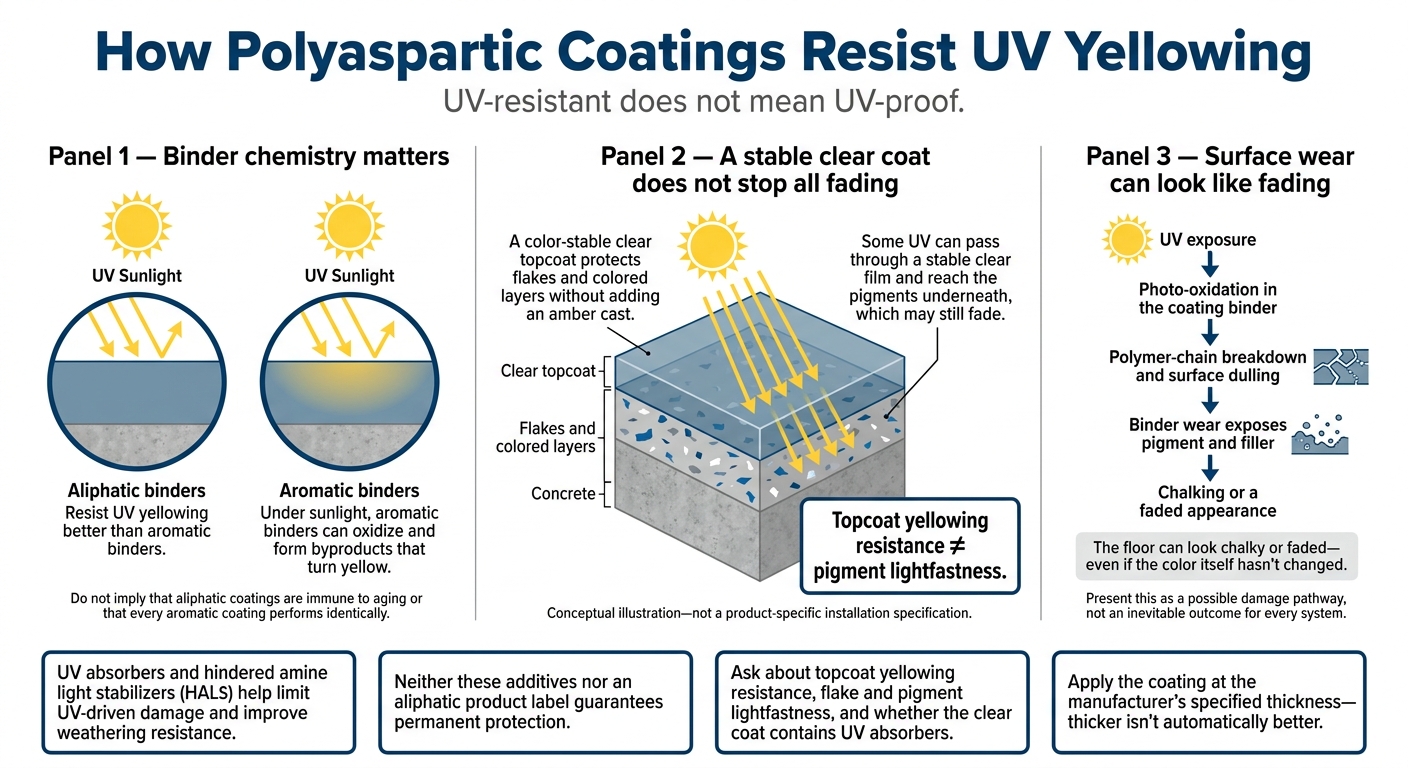
How Polyaspartic Coatings Resist UV Yellowing
On sun-exposed floors, UV can trigger photo-oxidation in the coating binder. This process breaks polymer chains and dulls the surface. As the binder wears away, it exposes pigment and filler. The floor can then look chalky or faded – even if the color itself hasn’t changed. Binder chemistry matters because it helps determine how sun protection for concrete floors is maintained.
Why Aliphatic Coatings Resist UV Yellowing
Aliphatic binders resist UV yellowing better than aromatic binders. Under sunlight, aromatic binders can oxidize and form byproducts that turn yellow.
But the formula matters, too. UV absorbers and hindered amine light stabilizers (HALS) help limit UV-driven damage and improve weathering resistance. Neither these additives nor an aliphatic product label, though, guarantees permanent protection.
How Clear Topcoats Help Preserve Color
A color-stable clear topcoat protects flakes and colored layers without adding an amber cast. That protection depends on the formula, and UV-resistant doesn’t mean UV-proof. Some UV can pass through a stable clear film and reach the pigments underneath, which may still fade.
For a Croc Coatings project, ask about the topcoat’s yellowing resistance, the flakes’ or pigments’ lightfastness, and whether the clear coat contains UV absorbers. Apply the coating at the manufacturer’s specified thickness – thicker isn’t automatically better. These details affect how much UV protection the system can deliver.
sbb-itb-a0e5ae3
Polyaspartic Coatings in Direct Sunlight
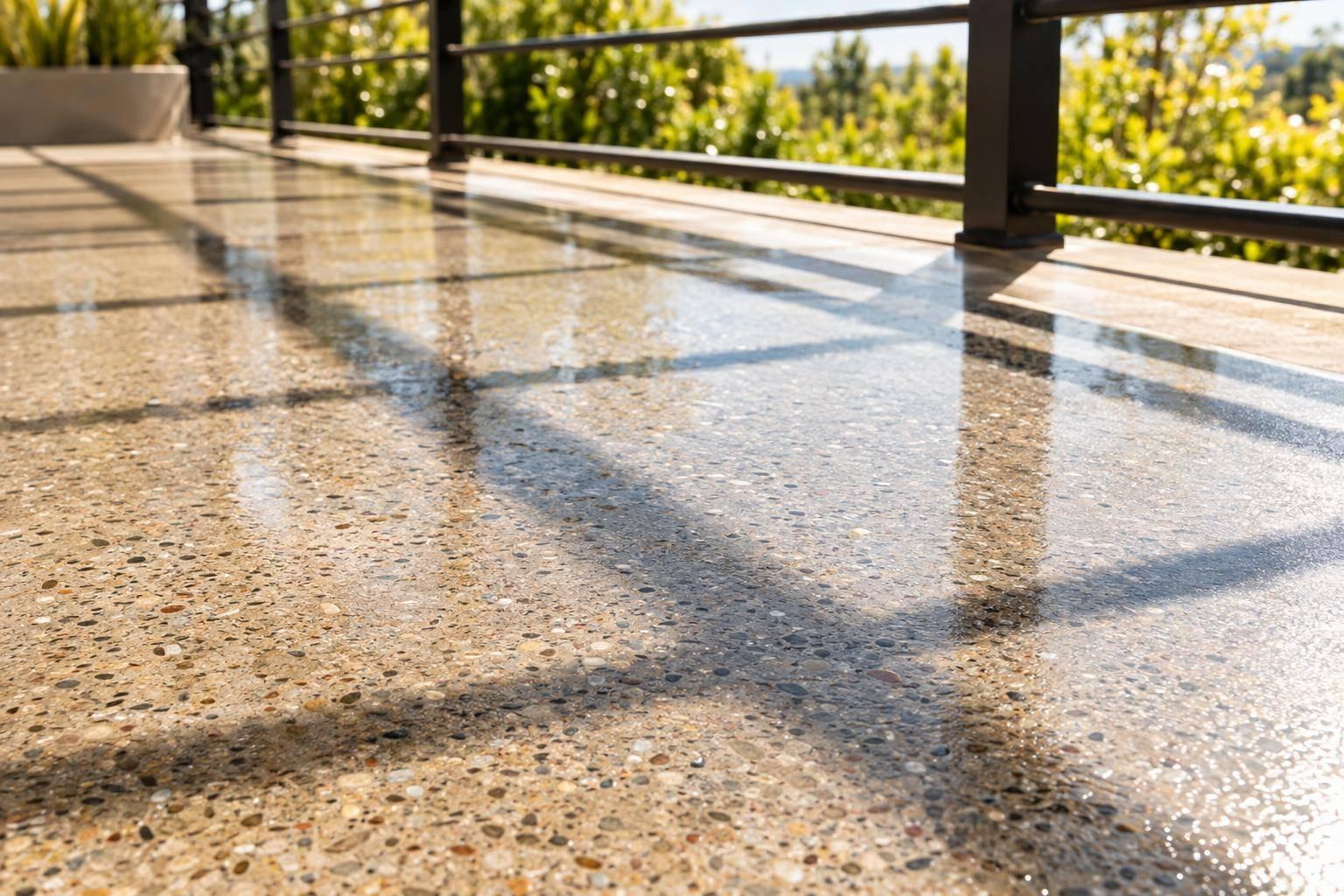
Even UV-stable polyaspartic systems need proper installation and suitable outdoor conditions. Across North Idaho and Eastern Washington, schedule work around site conditions – not just the forecast. Account for shade, drainage, traffic, and freeze-thaw exposure.
The main outdoor risks are heat, moisture, and curing conditions.
Outdoor Installation Requirements
Start with concrete that’s sound, clean, dry, and mechanically profiled. Repair cracks, test for moisture, and fix drainage issues before coating. UV stability won’t prevent moisture-related adhesion failure.
Measure the slab temperature, not just the air temperature. Follow the product’s temperature and humidity limits. Many specifications require the slab to stay at least 5°F above the dew point.
Outdoor approval doesn’t always mean you can apply the coating in direct sunlight. Check the product’s application restrictions.
Apply each layer at its specified film thickness and follow its curing window. Ask when the surface can handle foot traffic, furniture, and water. Protect it from rain and condensation during early curing – fast curing doesn’t mean it’s ready for full use right away.
Before scheduling, verify the exact system and its outdoor limits.
System Details to Confirm With Croc Coatings
For a Croc Coatings Penntek Evolution installation:
- Confirm approval for your specific exterior application.
- Request current technical documents that identify the primer, base coat, decorative layer, and topcoat. Verify the decorative layer’s lightfastness, too.
- For wet areas, confirm the approved texture and how it affects barefoot use and cleaning.
- Review warranty coverage for fading, yellowing, delamination, and moisture failure.
Product Differences and Limits of UV Protection
Polyaspartic is a coating family, not a single UV-performance standard. How well it holds up outdoors depends on the specific system, pigments, topcoat, solids content, and intended use.
Check the technical documents to see which UV claims have test data behind them.
Specifications to Review
Read the technical data sheet, safety data sheet, installation instructions, weathering test report, and warranty terms together. A safety data sheet covers hazards and handling – not proof of UV durability.
| Product characteristic | Why it matters outdoors | Where to verify it |
|---|---|---|
| UV-stability claims | UV-resistance claims need supporting test data. | Technical data sheet; test report |
| Color and gloss retention testing | Measured color change, or ΔE, and gloss results help you judge the claims. | Weathering test report; ASTM test documentation |
| Flake and pigment lightfastness | Flakes and pigments can fade independently of the clear coat. | Decorative-media documentation |
| Specified film thickness | Uneven or insufficient coverage can leave underlying layers exposed to damage. | System specification; application records |
| Warranty exclusions | Coverage may exclude appearance changes and exposure-related damage. | Written warranty terms |
Ask for the test method, exposure hours, cycle conditions, specimen preparation, and measured changes in color and gloss. ASTM D4587 uses fluorescent UV and condensation; ASTM D6695 uses xenon-arc exposure with water spray.
Also check whether the test covered the complete system or just a laboratory film. Accelerated test hours do not equal years outdoors. The documents should show how the system was tested, rather than simply repeat product claims.
Other Causes of Discoloration and Damage
Sunlight isn’t the only cause of color changes. Dirt, tire marks, oil, fertilizer, pool chemicals, abrasion, standing water, and harsh cleaners can dull a floor without UV damage. Cracks, clouding, bubbling, and peeling usually point to common concrete coating defects like moisture, movement, or installation errors – not sunlight.
Care That Helps Maintain Color and Gloss
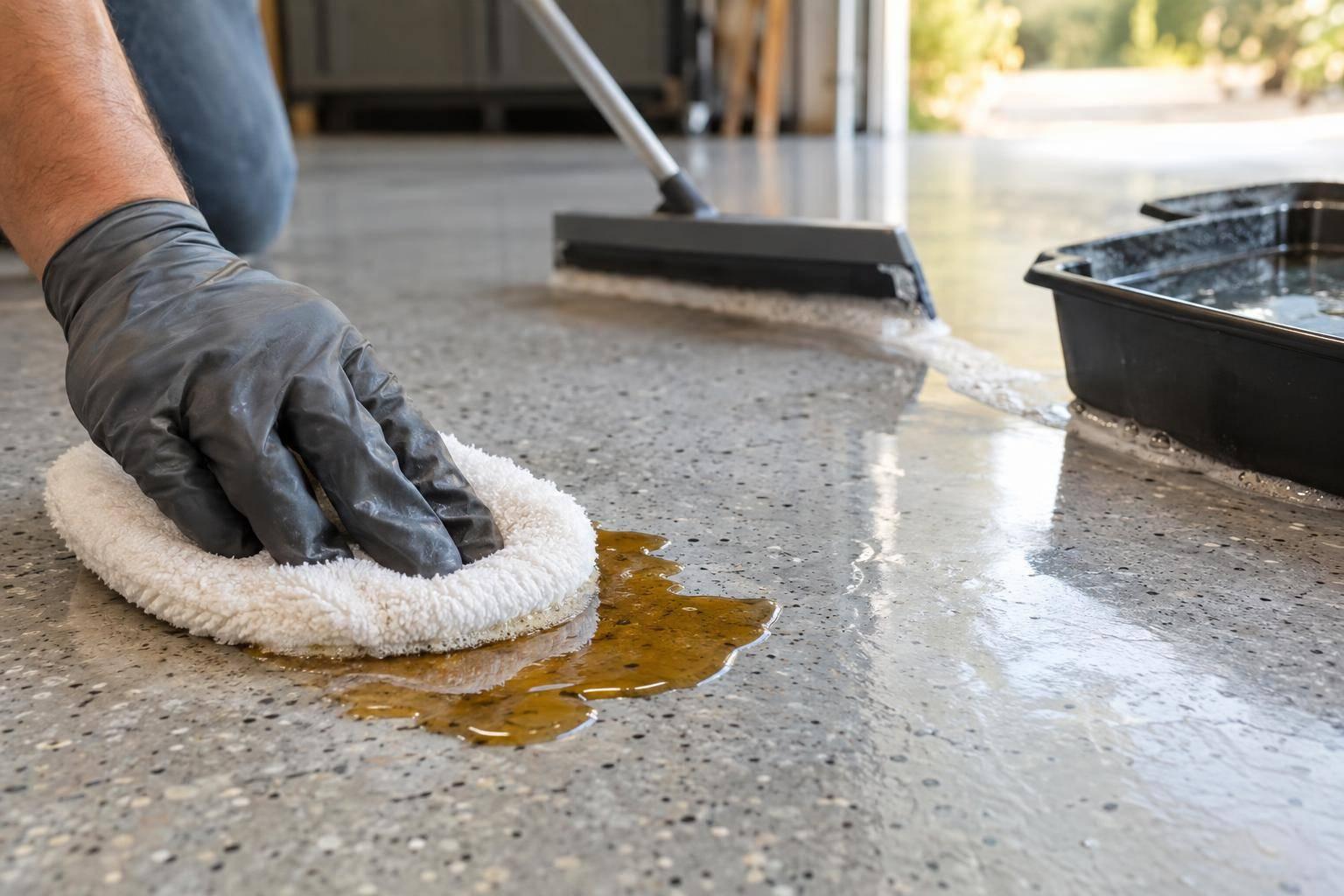
Use approved cleaning products, remove spills quickly, and check high-wear areas regularly. Long exposure may still cause gloss loss or color variation. UV stability does not guarantee waterproofing or slip resistance; check those properties separately.
Conclusion: Choosing and Caring for a UV-Resistant Floor
Choose a documented, exterior-rated aliphatic polyaspartic system with lightfast pigments and flakes. Make sure installation stays within the product’s outdoor limits, then use the approved cleaner and follow the maintenance schedule for outdoor floors. The full system – not the label – determines outdoor performance. UV resistance lowers the risk of yellowing, but it doesn’t prevent all color changes or aging.
For a Croc Coatings project, ask which exact Penntek Evolution components are proposed for your property. Before installation, verify their exterior UV specifications and limits against your site’s sun and weather exposure. Get written UV warranty terms covering yellowing, fading, and weathering.
FAQs
How long will my coating retain its color in direct sunlight?
Polyaspartic coatings are designed to retain their color and gloss for 20 to 30 years, even in direct sunlight. High-quality systems provide strong UV stability to help resist yellowing, fading, and breakdown throughout their lifespan.
Croc Coatings offers the professional-grade Penntek Evolution industrial coating, which provides a durable finish that resists wear from the elements and chemical reactions caused by UV exposure.
How can I compare UV protection across coating systems?
Check whether the coating has built-in UV stability or needs an additional topcoat. Review the product data sheets and independent QUV test results (ASTM D4587). Also check curing time, chemical resistance, and the manufacturer’s color-retention claims.
Verify the specific formulation. Polyaspartic coatings generally have built-in UV resistance, but a “UV-resistant” label doesn’t mean every product provides the same level of long-term protection.
Can a faded coating be restored without replacing it?
If your floor coating has lost its shine, you may not need a full replacement. A manufacturer-recommended polish or sealant can often restore the finish.
Keep it looking good with pH-neutral cleaners, and avoid harsh chemicals or abrasive tools. Schedule a professional inspection once a year to catch potential problems early.