Most commercial kitchens should aim for a mid-tone floor, satin finish, light-to-medium flake, and zone-based slip texture. That mix usually hides scuffs, streaks, and soil better than bright white or dark glossy floors, while still keeping spills visible enough for safety.
If I were choosing a kitchen floor, I’d focus on five things first:
- Slip resistance, with wet areas often targeting a DCOF of 0.42+ and greasy zones often aiming for 0.50 to 0.60+
- Heat and thermal shock near cook lines and hot wash areas
- Chemical resistance for degreasers, detergents, and sanitizers
- Cleanability and hygiene, including smooth surfaces and coved edges
- Drainage, with slopes often around 1/8" to 1/4" per foot
Wear is not the same across the kitchen. Cook lines, dish pits, coolers, thresholds, and waste areas all stress floors in different ways. And in North Idaho and Eastern Washington, freeze-thaw cycles, tracked-in moisture, and slab moisture can make wear show up faster.
Here’s the short version:
- Cook lines need grip, heat resistance, and chemical resistance
- Dish pits need water handling, traction, and tolerance for hot/cold cycling
- Prep areas need easy cleaning and moderate texture
- Coolers need traction under condensation and temperature swings
- Satin and matte finishes tend to show less streaking than gloss
- Full flake or denser flake coverage can help hide scuffs and patch marks
- Fast-install systems can cut downtime, but slab prep still sets the schedule
A good commercial kitchen floor is not just about how it looks on day one. It’s about how it looks after grease, carts, washdowns, cold storage, and daily traffic start doing damage.
Best Flooring For a Commercial Kitchen
sbb-itb-a0e5ae3
Commercial Kitchen Flooring Requirements by Work Area
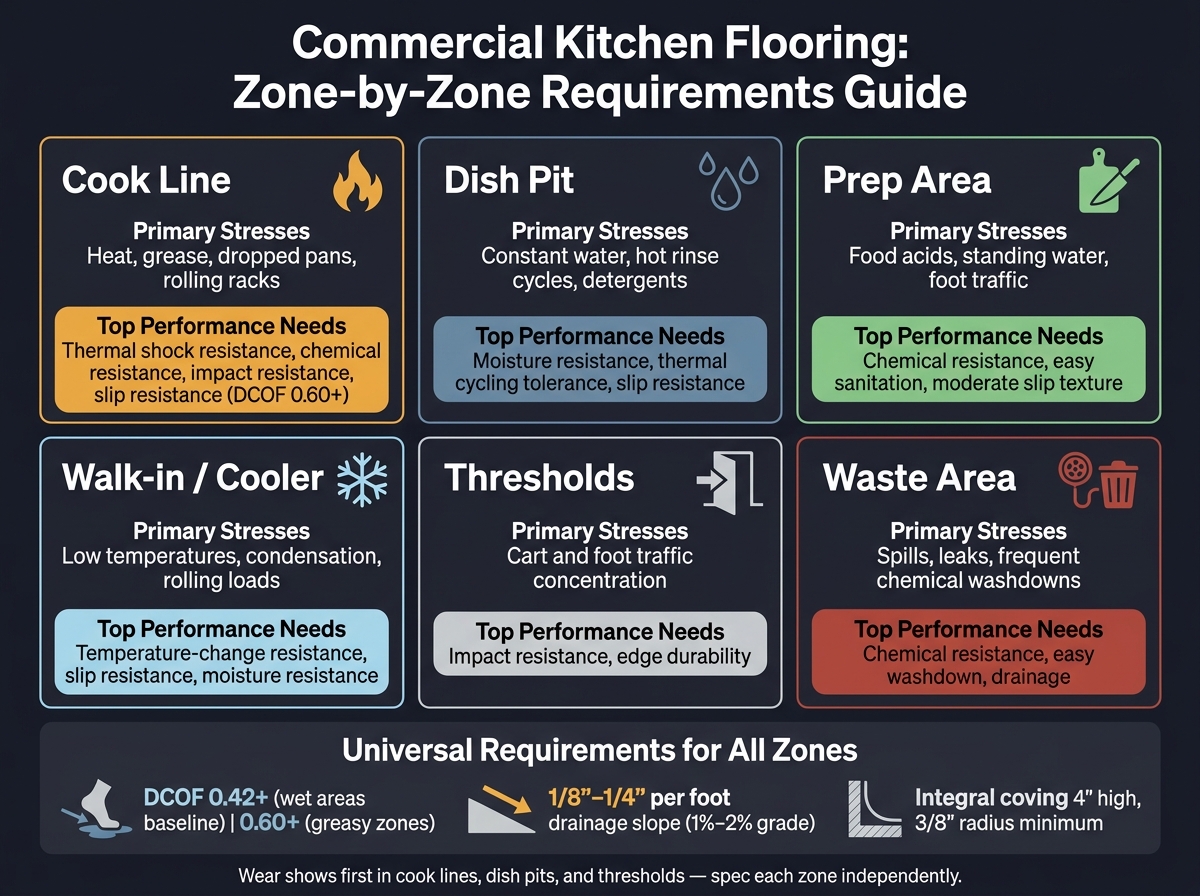
Commercial Kitchen Flooring: Zone-by-Zone Requirements Guide
Not every part of a commercial kitchen beats up the floor in the same way. The cook line gets hit with heat, grease, and dropped pans. The dish pit deals with nonstop water. The walk-in cooler goes through cold, condensation, and repeat temp swings. Each area wears differently, so a floor that holds up in one spot can break down fast in another.
Key Performance Traits: Hygiene, Durability, and Drainage
These needs change by zone. Wet areas need drainage. Cook lines need heat and grease resistance. Coolers need traction. Same core ideas, different pressure points depending on where the floor sits.
Most U.S. food codes require floors to be smooth, durable, nonabsorbent, and easy to clean. In plain English, that rules out open grout lines, porous concrete, and gaps where grease or food scraps can build up.
Health codes also commonly require integral coving: a curved floor-to-wall transition at least 4 in. high with a 3/8 in. radius. That detail helps remove hard-to-clean corners.
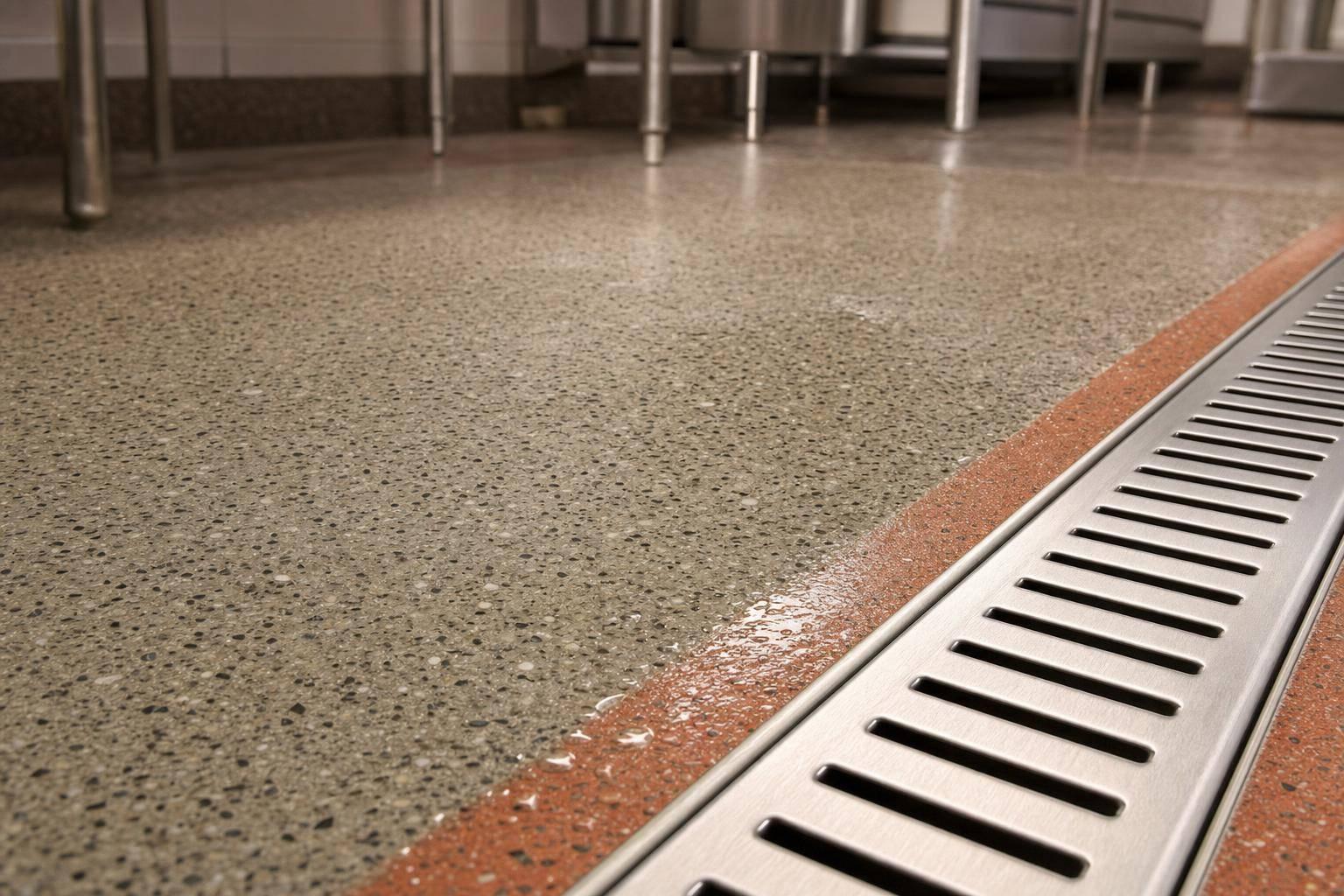
Drainage matters just as much. Floors in wet kitchen zones are usually sloped 1/8–1/4 in. per foot, or about a 1%–2% grade, toward floor or trench drains. If water sits on the surface, problems pile up fast. It creates slip risk, slows cleanup, and pushes grime into seams.
Slip resistance is another must-have. A Dynamic Coefficient of Friction (DCOF) of 0.42 or higher is a common baseline for wet commercial kitchen floors, and many specs aim for 0.60 or more in greasy cook lines and dish pits. More texture can help with grip, but there’s a tradeoff. Push it too far, and the floor starts holding grease and debris, which makes cleaning take longer.
How Wear Differs Across Cook Lines, Dish Pits, Prep Areas, and Coolers
The first signs of wear usually show up in the hardest-working spots: cook lines, dish pits, and thresholds. That’s where surface damage tends to show first and where the gap between looks and performance becomes obvious.
| Kitchen Zone | Primary Stresses | Top Performance Needs |
|---|---|---|
| Cook line | Heat, grease, dropped pans, rolling racks | Thermal shock resistance, chemical resistance, impact resistance, strong slip resistance |
| Dish pit | Constant water, hot rinse cycles, detergents | Moisture resistance, thermal cycling tolerance, slip resistance |
| Prep area | Food acids, standing water, foot traffic | Chemical resistance, easy sanitation, moderate slip texture |
| Walk-in / cooler | Low temperatures, condensation, rolling loads | Temperature-change resistance, slip resistance, moisture resistance |
| Thresholds | Cart and foot traffic concentration | Impact resistance, edge durability |
| Waste area | Spills, leaks, frequent chemical washdowns | Chemical resistance, easy washdown, drainage |
Cook lines and dish pits usually wear out first. You’ll often see gloss loss, dulling, and staining before anything else. Walk-ins create a different kind of strain. The issue there isn’t heat. It’s repeat temperature swings and condensation, which can stress the floor and cut traction.
Those wear patterns shape the floor system and finish choices that come next. Slope, texture, and coating strength should match the demands of each zone.
Flooring Systems and Long-Term Wear
In busy kitchens, worn epoxy often has to come out completely before a seamless resin system can go in. That matters most in cook lines, dish pits, and other spots that take a daily beating from heat, water, and chemicals.
Why Thermal Shock and Chemical Resistance Matter
Hot water, steam, cold rinse cycles, degreasers, and sanitizers can crack, dull, or soften a weak floor. Over time, that kind of stress adds up fast.
A better-fit system stands up to repeated thermal cycling and chemical exposure that would wear down a standard coating. The payoff is simple: the floor stays easier to clean, more hygienic, and in better visible shape for longer.
Where High-Strength Coated Concrete Systems Fit
Croc Coatings offers the Penntek Evolution industrial coating system for commercial kitchens. It provides a seamless, easy-to-clean surface along with chemical and impact resistance, slip resistance, and one-day installation to limit downtime.
Once the base system is in place, color, flake, sheen, and texture play a big role in how much wear the floor shows.
Style Choices: Color, Flakes, Finish, and Slip Texture
The floor is already seamless and durable. From here, the job is simpler: pick a look that helps hide wear without making cleanup more of a chore.
Choosing Colors That Look Clean Longer
Color does a lot of quiet work on a kitchen floor. Light floors show crumbs and spills almost right away, but they also make mop marks and scuffs stand out. Dark floors can hide wear better, yet they tend to show dust, salt, and streaks much more easily.
For most back-of-house spaces, mid-tone neutrals – medium grays and blended greiges – hit the sweet spot. They help mask minor mop marks and day-to-day residue while still letting fresh grease or standing water show up enough for a fast safety check.
Cool neutrals like blue-gray and concrete gray pair well with stainless equipment. They also make yellow and brown contaminants easier to spot. Warm neutrals like tan-gray and greige feel softer and hide dried mop water and mineral deposits better, which makes them a smart fit for prep and bakery zones.
Color sets the base look of the floor. Flake and sheen decide how well that look holds up between cleanings.
Using Flakes and Finish Sheen to Hide Wear Without Hurting Cleanability
Flake blends help break up scuffs, stain edges, and traffic paths, so the floor looks more even between washings. Smaller flakes (1/8") create a tighter, speckled pattern that does a good job hiding fine scratches from carts and pan racks. Larger flakes (1/4"–3/8") make for a busier pattern that masks heavier traffic paths better. Full broadcast density – where flakes cover almost the entire base coat – is often preferred in commercial kitchens because it gives the most cover for wear and minor slab repairs.
Finish sheen has a bigger effect than many owners expect. Gloss finishes show streaks and scratches because light reflects sharply, and any uneven spot breaks that reflection. Satin finishes spread light more softly across the surface, which cuts down on visible streaking, glare, and patchy wear. That’s why satin is the most common pick for back-of-house areas. Matte finishes push that even further in the hardest-working zones – under heavy equipment and in constant-moisture areas – where glare control and hiding wear matter most.
Matching Slip Texture to Oil, Water, and Cleaning Needs
Texture should match the zone’s grease, water, and wash-down load. The goal is simple: use the lightest texture that still gives safe traction.
| Texture Level | Typical Contaminants | Traction When Wet/Greasy | Cleaning Effort | Best-Fit Zones |
|---|---|---|---|---|
| Fine | Dust, incidental drips, dry debris | Adequate for low-risk areas | Standard mop or autoscrubber | Prep areas, dry storage, light-traffic corridors |
| Medium | Water, mild grease, cleaning chemicals | Handles wet conditions well | Deck brush and mop | Cook lines, dish areas, service corridors |
| Aggressive | Heavy oil, frequent spills, wash-downs | Strong traction when contaminated | Stiff-bristle brush, thorough rinsing | Fryer zones, tilt skillets, wash-down rooms |
Fine texture gives you more even light reflection and cleaner visual lines. Medium and aggressive textures scatter light more, which softens glare and helps hide fine wear, but they also give the floor a more workmanlike look.
In coated concrete systems, texture can be tuned by changing the type and broadcast density of aggregate in the topcoat, including anti-slip aggregates like aluminum oxide or grit. That makes it possible to dial in the right traction level for each zone without compromising overall floor appearance.
In North Idaho and Eastern Washington, that balance also needs to deal with tracked-in moisture and winter grit.
Climate, Installation Timeline, and Warranty Context in North Idaho and Eastern Washington
Those finish choices also need to hold up through Inland Northwest freeze-thaw cycles and the daily reality of kitchen washdowns. In this part of the country, weather plays a big role in cure windows and how a floor wears over time.
How Regional Weather Affects Concrete and Coatings
The Inland Northwest is tough on concrete. Spokane Valley can see more than 100 freeze-thaw cycles per year. Places like Coeur d’Alene, Hayden, Post Falls, and the LC-Valley deal with much the same pressure. When temperatures move above and below 32°F again and again, water inside the concrete pores freezes, expands by about 9%, and gradually opens up microcracks.
In commercial kitchens, that problem can snowball fast. Washdowns, dish stations, and floor drains keep moisture levels high, so the slab surface can stay saturated or at least very sensitive to moisture. ACI guidance says that even a saturated top ⅜ inch of concrete is enough to leave a slab open to freeze-thaw damage. And in the same damp conditions, a coating can lose its clean look sooner than it would in a drier space. That may mean dulling, pitting, and more effort to keep the floor looking clean.
The Tri-Cities bring a different kind of stress. Hot summers can build heat under equipment and in sunlit areas, pushing coatings beyond what some systems can handle. Polyaspartic-based systems are a strong fit here because they have a service temperature range of about -40°F to 250°F. That gives you coverage for walk-in coolers and hot-line zones on the same floor.
Before installation, the slab still needs proper prep:
- Test for moisture vapor
- Grind the slab
- Repair cracks
- Remove grease
Once climate and slab conditions are accounted for, the next issue is timing. Most operators want the floor back in service as fast as possible.
Planning Around Downtime, One-Day Installation, and Commercial Warranty Terms
For kitchens with tight reopening windows, the coating system can make a big difference in shutdown time. Some systems take the better part of a week. Others can be turned around much faster if the slab is ready.
| System Type | Typical Installation Timeline | Cure Sensitivity | Shutdown Impact |
|---|---|---|---|
| Standard epoxy (multi-layer) | 3–7 days | Moderate to high; cold slows cure a lot | High; extended closure for most operations |
| Urethane cement / mortar | 2–3 days | Lower temperature sensitivity; handles moisture better | Moderate; better fit for wet zones but still multi-day |
| Polyaspartic / polyurea | ~1 day | High; application timing and temperature must be controlled | Low; fastest return to service when prep is complete |
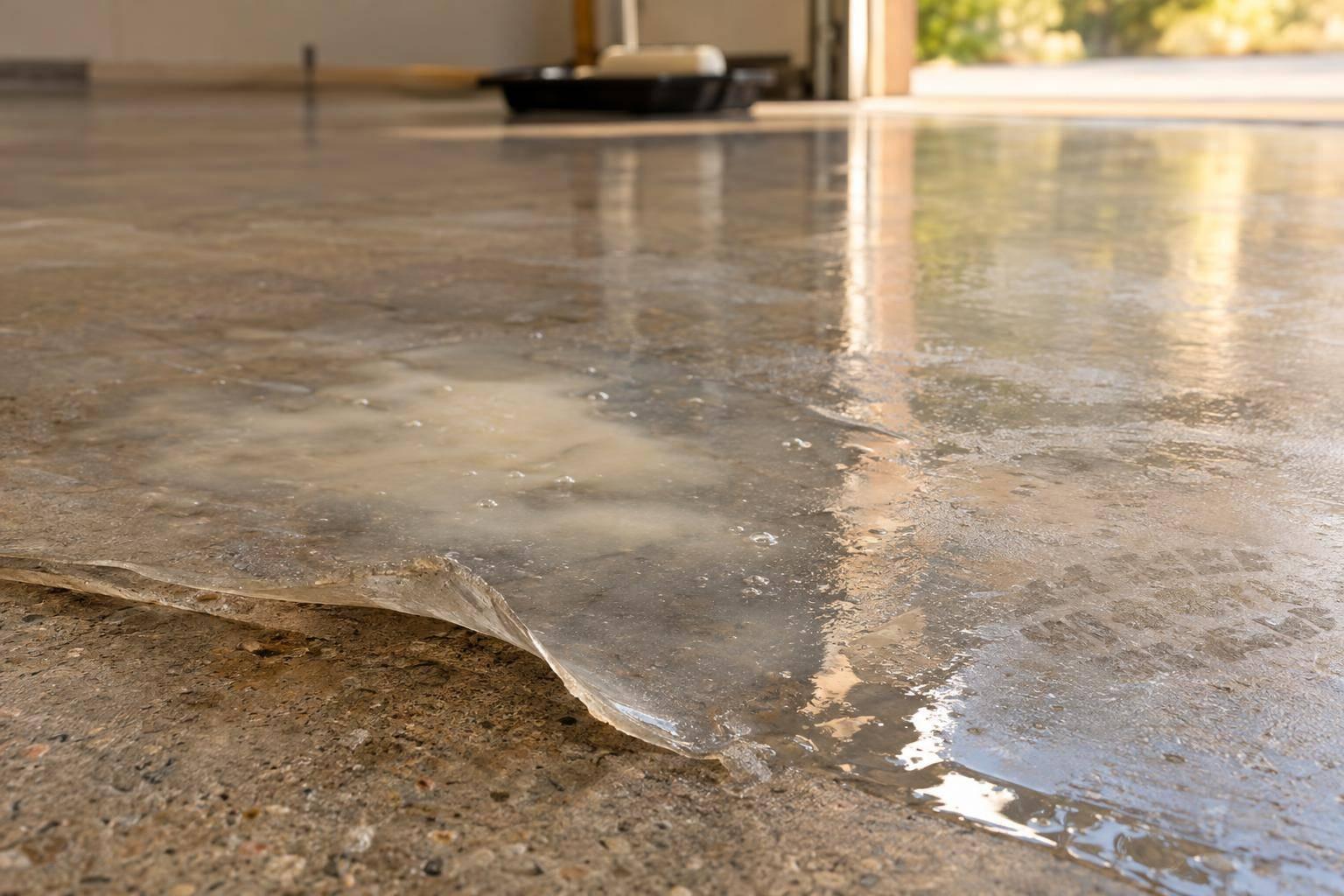
A one-day polyaspartic install sounds great, and it can happen, but only if the slab is already in good condition. If the substrate needs crack repair, moisture mitigation, or grease remediation, that prep work adds time before the coating can go down.
Warranty terms matter too, especially in a commercial kitchen where wear is constant. Get the full terms in writing, including what is covered, what is excluded, and which cleaners are approved. Croc Coatings offers a lifetime residential warranty on its Penntek Evolution coating system and a 5-year warranty on commercial coating work. Checking those details up front helps you judge whether the floor will not only look right, but also stand up to commercial use.
Conclusion: Choosing a Floor That Looks Right and Wears Well
With climate, install timing, and warranty terms already set, the last step is simple: pick a floor that fits how the kitchen works day to day.
Key Takeaways for Owners and Facility Managers
Start with zone-specific exposure. A cook line deals with heat and oil. A dish pit gets hit with water and chemicals. Coolers deal with moisture. Corridors take constant foot traffic. Those conditions should drive the coating choice first.
Then match the system to the job. Hot, wet areas need protection against thermal shock and chemicals. Coolers need moisture resistance. After that, focus on appearance and upkeep. A floor should hide wear without making cleaning harder. In most kitchens, that means:
- Mid-tone colors
- Variegated flake
- A satin finish
- Zone-specific texture
In high-risk areas, aim for a wet DCOF of 0.50 to 0.60 or higher.
In North Idaho and Eastern Washington, local weather and slab conditions matter. Freeze-thaw cycles, slab moisture, and summer heat should shape the spec from the start. Croc Coatings serves this region and offers one-day installation on qualifying projects. That makes local slab moisture control part of the plan, not something to deal with later.
Inspect the concrete to Get the prep scope, cure time, cleaner rules, and warranty terms in writing. Then choose a floor that keeps looking clean, stays safe, and holds up under daily abuse.
FAQs
How do I choose the right slip texture for each kitchen zone?
Identify the spots most likely to get wet, greasy, or messy – like dishwashing stations and food prep areas. Those are the places where traction matters most.
Anti-slip additives like quartz, silica sand, or decorative polymer flakes can help improve grip. The goal is to get the right mix of slip resistance and easy cleanup. Croc Coatings can tailor the Penntek Evolution system to deliver a seamless, non-porous finish that holds up under heavy foot traffic and industrial cleaners.
What floor color and finish hide wear best in a commercial kitchen?
A mid-tone multi-chip flake system does the best job of hiding wear, dirt, and debris. Gray, taupe, and tan earth tones help cut down contrast from tracked-in grit, salt, and small spills. And a full-broadcast flake finish helps cover imperfections across the whole floor, not just in a few spots.
For the top finish, matte usually works better than high-gloss. Gloss can make scuffs and wear stand out more. A textured coating also makes sense if you want better slip resistance without giving up a seamless surface that’s still easy to clean.
Can a one-day installation work if my kitchen slab has moisture or grease issues?
Yes. A one-day installation can still work if the slab has moisture or grease issues, but the surface has to be prepped the right way.
Installers usually grind and clean the concrete, check moisture levels, and add a moisture barrier when needed. That prep helps the coating stick to the slab and cuts down the risk of delamination, bubbling, and other damage tied to moisture.