For many homeowners, the biggest renovation challenge is not lack of ideas. It’s the gap between what a space needs and what a contractor quote says it will cost.
That tension is especially familiar in markets where moving is expensive and staying put makes more financial sense. Instead of upsizing, many households are rethinking the rooms they already have, looking for upgrades that improve function, appearance, and everyday comfort without turning into five-figure projects.
The video behind this article comes from that exact mindset: make practical improvements, spend carefully, and focus on upgrades that change how a home looks or works. Rather than simply repeating the video, this article pulls out the larger lessons behind those projects and translates them into a more useful framework for homeowners in North Idaho and Eastern Washington.
If you’re weighing whether to repaint, rework a room, refresh a kitchen, or stretch the life of materials you already own, these ideas offer a smart starting point.
Key Takeaways
- Paint remains the highest-impact low-cost upgrade for walls, doors, and trim.
- You may not need to replace materials like baseboards, stools, or doors if they can be cleaned, repaired, and refinished.
- Simple framing and drywall work can create usable space when moving walls is not required.
- Peel-and-stick products can work well in lower-risk areas when paired with proper prep.
- Hardware changes matter more than many people expect, especially in kitchens.
- Store cutting services can reduce tool costs if you do not own large saws.
- Budget DIY succeeds when scope stays realistic: cosmetic and light carpentry projects are often approachable; structural, electrical, and specialty work may still require a pro.
- The best budget upgrades improve function, not just appearance – privacy, storage, and workspaces often deliver the most value.
sbb-itb-a0e5ae3
Why Budget DIY Matters More Than Ever
One of the clearest themes in the video is this: when housing costs rise, improving your current home can be a smarter move than relocating. That’s not just emotionally satisfying; it’s often financially rational.
For homeowners in places like Coeur d’Alene, Hayden, Post Falls, Spokane, and the Tri-Cities, the math can favor selective upgrades over a move, especially when you want to:
- carve out a home office
- create a child’s room
- modernize an older interior
- make a kitchen feel finished
- refresh high-use spaces without a full remodel
What makes the featured projects compelling is that they focus on high-visibility surfaces and functional pain points. In other words, the projects aren’t random. They target the things people notice and use every day.
1. Create a Room Before You Buy a Bigger House
The strongest example in the video is converting a dining area into a small bedroom using a partition wall and door system. The creator notes that a contractor quote came in just under $6,000 for a limited scope. By handling the wall as a DIY project, the cost for that part dropped dramatically, with the full room project landing far below the quote.
Why this matters
This is more than a cost-saving anecdote. It shows how space planning can be more valuable than square footage.
If your home has:
- a formal dining room you rarely use
- an oversized loft
- a wide hallway landing
- a den without a door
- an underused sitting area
you may be able to create a functional room without a major addition.
What made this upgrade affordable
According to the video, the wall itself required basic materials:
- 2×4 framing
- drywall
- mud/finishing materials
- primer and paint
- optional insulation for sound control
That material list matters because it points to a broader principle: simple walls are often labor-heavy, not material-heavy. If the design is straightforward and you already have some help or experience, the savings can be significant.
A practical caution
The video does not specify local permitting or code requirements. For homeowners, that’s an important missing piece. If you are creating a bedroom or enclosed room, check local code for:
- egress requirements
- smoke detector placement
- HVAC considerations
- electrical needs
- permit requirements
A budget project still needs to be a safe and legal one.
2. Texture Can Make New Work Look Original
Fresh drywall often stands out for the wrong reason. If the rest of the house has texture, a smooth patch or new wall can immediately reveal itself as an afterthought.
The video highlights a low-cost fix: aerosol wall texture, followed by knockdown finishing, primer, and paint.
Why this is more important than it sounds
Texture is not just decoration. It’s about visual continuity.
When one wall looks brand new and the surrounding surfaces have age, dimension, or a sprayed finish, the room can feel unfinished even if the construction is solid. Matching texture helps the update blend into the rest of the home.
Best use case
This works well when:
- patching drywall after remodeling
- adding a closet or partition
- repairing large wall sections
- updating builder-grade flat surfaces
For resale-minded homeowners, this kind of detail can also keep a project from looking obviously DIY.
3. Don’t Replace Baseboards Until You Try Saving Them
One of the most practical ideas in the video is also one of the easiest to overlook: remove and reuse existing baseboards instead of buying new ones.
The process described is simple:
- remove the boards carefully
- clean off old caulk
- cut as needed
- reinstall with nails
- recaulk and paint
Why this works
Trim replacement gets expensive faster than most people expect. The material itself adds up, but the bigger issue is often the hidden effort:
- measuring every run
- matching profile styles
- cutting corners accurately
- filling gaps
- repainting all trim for consistency
If your existing baseboards are in decent shape, refinishing them is often the better value.
Bigger lesson
This is a classic example of restoration over replacement. In many homes, older materials are perfectly serviceable. The problem is usually grime, chipped paint, or old caulk – not structural failure.
That same logic can apply to:
- door casings
- crown molding
- window trim
- interior doors
- cabinet boxes
4. Doors Don’t Have to Be Expensive to Be Effective
The video discusses using budget-friendly door options, including bifold and barn-style doors, for a newly divided room.
What’s useful here
The key insight is not that one specific door style is best. It’s that door choice affects both cost and usable space.
For example:
- Pocket doors save swing space but can be labor-intensive to install.
- Bifold doors are often cheaper and easier to fit.
- Barn doors can be visually appealing and useful where wall layout allows.
What homeowners should consider
Before choosing a door, evaluate:
- clearance area
- privacy needs
- sound control expectations
- hardware quality
- whether the opening needs a true seal
Barn doors, for instance, often offer less acoustic privacy than a conventional hinged door. For a child’s room or office, that tradeoff matters.
The video’s value here is in showing that there are often multiple acceptable solutions, and the least expensive one may still solve the real problem.
5. Paint Is Still the Best ROI in DIY
If there is one upgrade the video returns to repeatedly, it’s paint. Walls, doors, trim, shelving, and more all benefit from it.
That’s not surprising. Paint remains one of the few home improvements that is:
- low cost
- highly visible
- beginner-friendly
- reversible
- fast compared with remodeling
Where paint pays off most
The video shows paint used to:
- refresh tired walls
- brighten dark interiors
- revive an old front door
- update trim
- pull multiple room elements into a more unified palette
Why paint matters in older homes
Many homes still carry warm yellow-beige tones from previous decades. Updating to a cleaner neutral can make a room feel larger, brighter, and more current without changing anything structural.
That said, the video does not provide specific paint brands or full prep protocols. In practice, the result often depends less on color than on prep:
- patching holes
- sanding rough spots
- cleaning surfaces
- priming when needed
- using the right sheen for the room
A rushed paint job can look cheap. A well-prepped one often looks like a true renovation.
6. Peel-and-Stick Flooring Can Work – With Limits
One standout budget update in the video is the use of peel-and-stick vinyl planks over tile, with primer underneath for adhesion. The creator reports strong durability overall, with some fading in a high-sun area but no lifting despite weather exposure.
The real takeaway
Peel-and-stick flooring is often dismissed too quickly. In the right application, it can offer solid value.
Where it may make sense
- enclosed patios
- laundry rooms
- low-risk bathrooms
- utility areas
- temporary refreshes before a larger remodel
What determines success
From the video, prep seems to be the deciding factor. The creator used a tile primer specifically to improve bond strength. That aligns with a broader DIY truth: surface prep often matters more than the finish material itself.
Important limitation
Sun exposure caused some fading, according to the video. That’s a useful reminder that inexpensive flooring can perform differently under:
- direct UV exposure
- moisture swings
- heat buildup
- seasonal movement
For North Idaho and Eastern Washington property owners, climate and exposure matter. If a surface sees strong sun, freeze-thaw conditions, or wet footwear, make sure the product is rated accordingly. The video does not specify brand performance standards, so readers should verify manufacturer guidance before using similar materials outdoors or in semi-exterior spaces.
7. A Front Door Makeover Can Change Curb Appeal for Almost Nothing
Replacing a front door can be expensive. The video instead shows a basic refresh: wash the surface, use leftover paint, and create contrast with a two-tone finish.
Why this is such a smart budget move
Your front door occupies a small area, but it carries outsized visual weight. It affects:
- curb appeal
- perceived maintenance level
- entry brightness
- first impressions for guests or buyers
Why it works
A door makeover is effective because it combines:
- cleaning
- color contrast
- edge definition
- minimal material cost
This kind of project is especially useful when the door itself is structurally sound but cosmetically tired.
For business owners, the same concept applies to:
- office entry doors
- side service doors
- employee entrances
- small storefront access points
A clean, freshly painted entry communicates care before anyone steps inside.
8. Built-In Workspaces Solve Real-Life Problems Cheaply
The video includes a DIY wall-mounted workspace created during the pandemic to give children a place to focus for schoolwork. The total cost was described as about $150, including boards, shelving, hardware, and paint.
Why this idea still matters
Even though the circumstances that inspired it were specific, the underlying need is still common: homes now have to do more.
A house may need to support:
- remote work
- homework
- household administration
- crafting
- side businesses
Why wall-mounted desks are efficient
They use vertical space rather than floor space, which makes them ideal for:
- dining room edges
- hallway alcoves
- spare bedroom walls
- corners of living spaces
This is a good reminder that some of the best renovations are not dramatic. They simply remove friction from daily life.
9. Kitchens Benefit From Small Finishing Moves
The kitchen section of the video is especially useful because it focuses on the "last 20%" details that make a kitchen feel complete:
- backsplash
- cabinet pulls
- shelving
- decorative end panels on a peninsula or island
- paint coordination
The creator notes that these finishing updates made a major difference for a relatively modest spend.
Why this matters
Many kitchens improve dramatically before you ever replace the footprint, plumbing layout, or major appliances. What often makes a kitchen feel dated is not the basic structure – it’s the visible finish layer.
High-value kitchen updates from the video
Backsplash
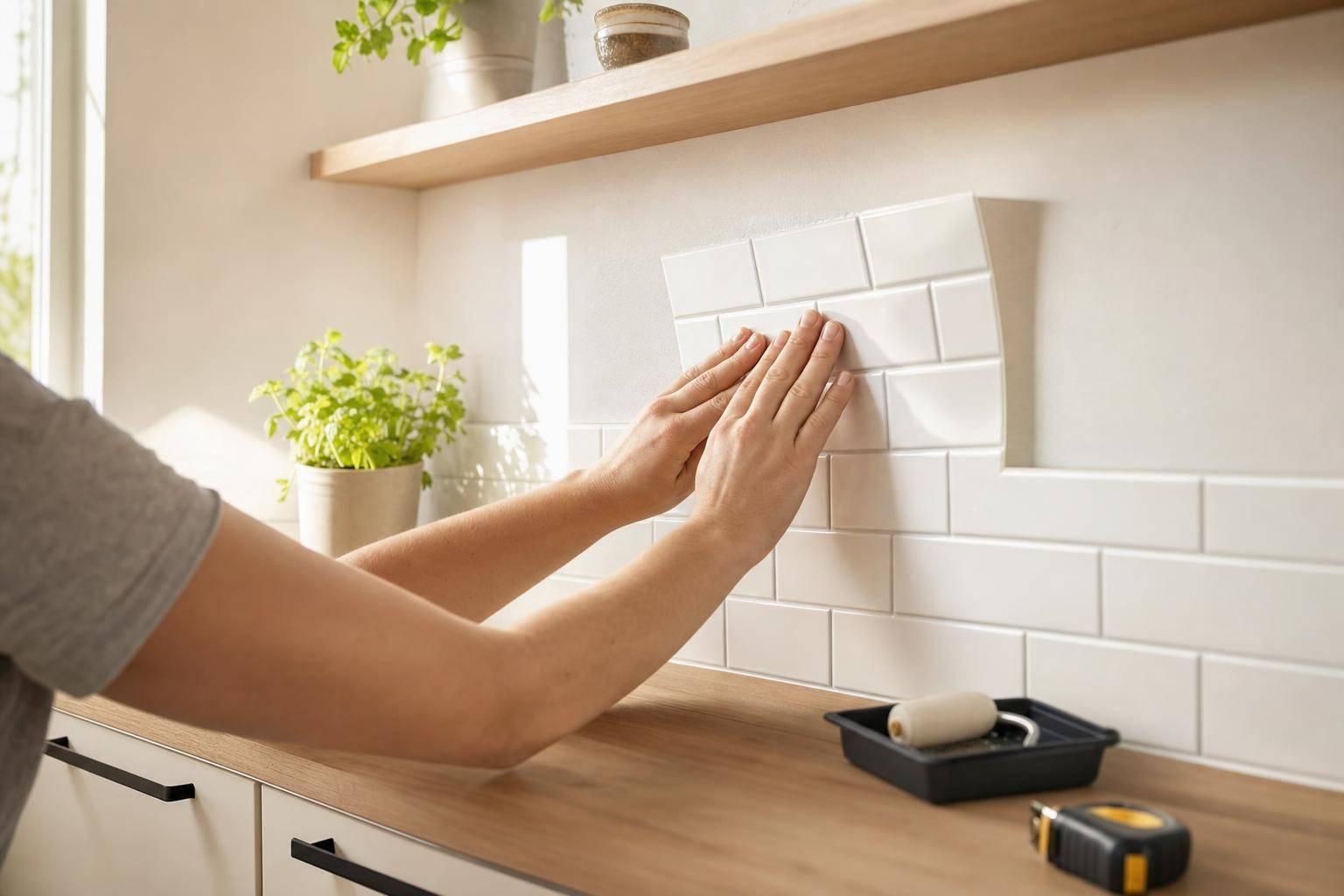
A backsplash adds contrast, texture, and a more finished appearance. The video favors an easier, less messy installation approach than traditional tile setting.
Cabinet hardware
Pulls and knobs are small, but they affect both style and touch experience. This is one of the easiest ways to shift a kitchen from builder-basic to more intentional.
Open shelving
Shelves can add storage or display without the cost of additional cabinetry.
Decorative panels
Dressing up a peninsula or island base with trim or panels creates a custom look at a fraction of full millwork pricing.
A useful strategic point
If a full kitchen remodel is out of reach, these partial upgrades can still elevate the room significantly. For many homeowners, that’s the right move: improve what you see and touch most often first.
10. Reupholstery Can Beat Replacement
The video closes one of its most practical loops by showing worn stools updated with leftover fabric instead of being replaced.
Why this deserves attention
Furniture refresh projects are often ignored in renovation conversations, but they matter because they shape how finished a room feels. A freshly updated kitchen can still look tired if the seating is stained, ripped, or dated.
When reupholstery makes sense
- the frame is still solid
- the cushion shape is simple
- fabric cost is low
- you already have staple tools or basic supplies
- replacement furniture would be disproportionately expensive
This is another case where labor can substitute for spending, especially when the material cost is minimal.
The Bigger Pattern Behind All 10 Ideas
The video is framed as a list of budget upgrades, but the deeper lesson is about decision-making. The creator consistently saves money in a few repeatable ways:
1. Reuse first
Instead of replacing baseboards, doors, or stools, the first question is whether they can be refinished.
2. Improve function and looks together
The strongest projects solve a practical issue, such as privacy, workspace needs, or storage, while also improving appearance.
3. Put effort where people notice it
Walls, doors, trim, kitchen finishes, and seating have high visual impact.
4. Accept time as part of the tradeoff
The video openly acknowledges that DIY saves money but usually costs time.
5. Learn in layers
There’s an important confidence-building theme running through the transcript: many jobs feel intimidating until you actually start them. That doesn’t mean every project is easy, but it does suggest that cosmetic work is often more approachable than homeowners assume.
What This Means for Homeowners in North Idaho and Eastern Washington
For this region, budget-conscious improvement is not just about spending less. It’s about making upgrades that hold up to real use and add value to the way a property functions.
Homeowners may prioritize:
- cleaner, brighter interiors during long winters
- durable surfaces in mudrooms, garages, or entry areas
- more flexible room layouts for growing families
- low-maintenance finishes
- updates that support resale without overspending
Small business owners may think similarly about office suites, service spaces, or light commercial interiors: finish quality matters, but downtime and cost control matter too.
The key is to know which projects are truly DIY-friendly and which ones deserve professional help. The video is strongest when it stays in the lane of:
- paint
- trim reuse
- shelving
- light carpentry
- cosmetic flooring
- door refreshes
- hardware and finish updates
That’s a useful line to keep in mind.
Final Thoughts
The most valuable idea in this video is not any single project. It’s the mindset behind them: you do not always need a full remodel, a brand-new product, or a premium quote to make a space feel substantially better.
Sometimes the smartest upgrade is:
- adding a wall instead of adding square footage
- repainting instead of replacing
- reusing trim instead of buying more
- adding backsplash instead of gutting a kitchen
- recovering furniture instead of shopping for new pieces
For budget-minded property owners, those choices can stretch dollars much further while still producing meaningful visual and functional gains.
In that sense, the video offers more than DIY inspiration. It offers a practical renovation filter: start with the highest-impact surfaces, rescue what still has life left, and invest where daily use and visual payoff intersect.
Source: "DIY Home Upgrades that You WON’T REGRET! ✨ BIG Impact on a SMALL Budget" – Araceli Chan DIY, YouTube, Aug 19, 2025 – https://www.youtube.com/watch?v=8IuOLZPNeFU