Estimate Your Epoxy Flooring Budget with More Confidence
An Epoxy Floor Cost Calculator helps you turn a rough idea into a practical budget. Whether you’re planning a garage upgrade, finishing a basement, or pricing out a commercial floor, the biggest variables are usually square footage, coating system, surface prep, and labor. A basic coating on clean concrete will cost far less than a decorative finish installed over a slab that needs repairs or grinding.
What Affects the Final Price?
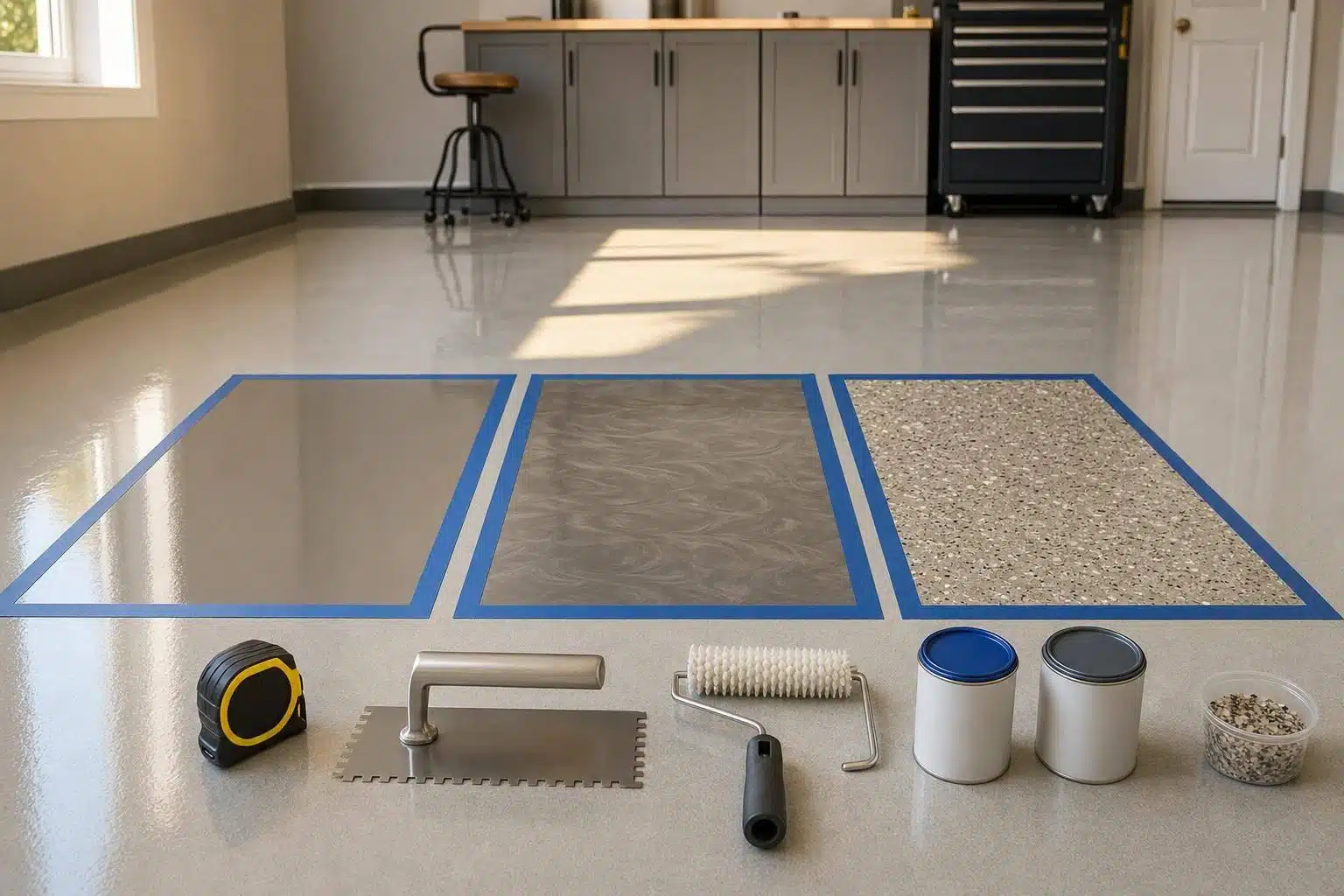
Floor condition often has the biggest impact. Minor stains may only need light prep, while cracks, moisture concerns, or heavy contamination can add noticeable cost. The coating itself also changes the price. Water-based systems are generally more budget-friendly, while metallic, quartz, and decorative flake finishes usually cost more because they involve added materials and installation steps.
Why This Estimator Helps
This epoxy flooring estimate tool keeps the process simple. You can account for waste, optional topcoats, crack repair, and tax, then compare a market-rate range or use custom labor pricing for a more tailored result. If you’re trying to estimate epoxy floor cost before requesting bids, this gives you a useful starting point and a clearer sense of what’s driving the total.
FAQs
How accurate is an epoxy floor cost calculator?
It’s a solid budgeting tool, especially in the early planning stage. The estimate gets you close by using the floor size, coating system, prep level, labor pricing, and upgrades you select. Final pricing can still shift after an on-site inspection because hidden moisture, deep cracks, uneven concrete, edge work, and local labor rates can change the scope.
What usually increases the cost of an epoxy flooring project?
Surface preparation is one of the biggest cost drivers. A clean slab in good condition is much cheaper to coat than concrete with stains, cracks, moisture issues, or old coatings that need grinding. The epoxy system also matters a lot—basic water-based coatings cost less than metallic, quartz, or 100% solids systems. Add-ons like UV topcoats, anti-slip finishes, and decorative flakes will raise the total too.
Should I use typical market rates or custom labor pricing?
Use typical market rates if you want a fast planning estimate and a realistic low-to-high range. It’s the better choice when you’re comparing options or don’t know local labor costs yet. Use custom labor pricing if you already have a labor rate from your crew or contractor and want a more tailored single-number estimate based on your actual pricing.