Key Takeaways
- Most pool decks become slippery from water, algae, and worn concrete — not from the coating itself failing.
- Slip resistance is measured by coefficient of friction (COF); OSHA, ADA, and ANSI standards give you objective benchmarks to evaluate any product.
- Polyurea with broadcast flakes builds texture into the coating, so it lasts the life of the floor — unlike topical grit additives that wear away.
- A multi-axis comparison shows polyurea leads on slip resistance, barefoot comfort, UV stability, chemical resistance, and lifespan.
Why Pool Decks Get Slippery
Pool decks face conditions almost no other concrete surface deals with: standing water, constant foot traffic from wet bare feet, chlorine and chemical exposure, and direct sunlight. Over time, any one of these can turn a safe surface into a hazard.
Water is the primary culprit. Even lightly textured concrete becomes slick when a thin film of water sits between the surface and a bare foot. The water acts as a lubricant, reducing friction just enough to cause a slip. That’s why a deck that feels perfectly grippy dry can be treacherous after a cannonball contest.
Algae, mildew, and biofilm. Pool decks stay damp in shaded areas and around edges where water collects. Over weeks and months, a microscopic layer of algae or biofilm forms — and it’s slipperier than plain water. Homeowners often mistake this for the coating failing, but it’s a surface buildup any deck material will accumulate without regular cleaning.
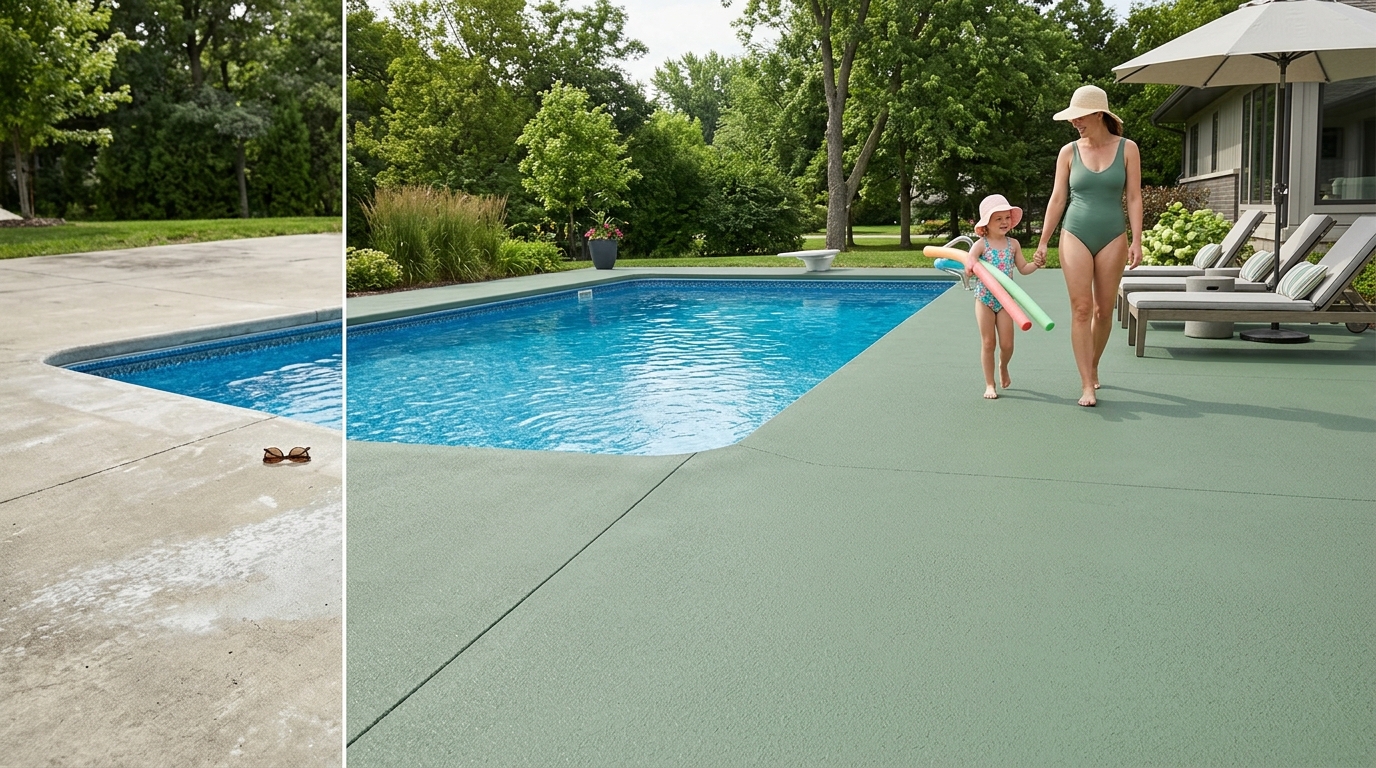
Worn or sealed concrete. Bare concrete pool decks typically receive a smooth trowel finish or a glossy sealer that offers almost zero grip when wet. Years of foot traffic can polish uncoated concrete even smoother. If the deck was built before modern slip-resistance standards were adopted, it likely falls well short of what’s considered safe today.
None of this is cause for alarm — it’s just the physics of a wet outdoor surface. The right coating addresses every one of these problems at the root.
How Slip Resistance Is Measured
Before comparing coatings, it helps to understand what "slip-resistant" actually means in objective terms. Manufacturers use the phrase freely, but the difference between a surface that meets a safety standard and one that just looks textured is measurable.
Static vs. Dynamic Friction
Slip resistance is quantified as the coefficient of friction (COF) — a number representing how much force is needed to slide an object across a surface. The scale runs from 0 (zero friction, like ice) to 1.0 (extremely grippy).
- Static coefficient of friction (SCOF): Measures the force needed to start movement from a standstill. This is the classic standard for walking surfaces — it simulates a planted foot beginning to slide.
- Dynamic coefficient of friction (DCOF): Measures friction while movement is already happening. This is the newer metric and the one modern standards are adopting, because a slip doesn’t always start from a complete stop.
For pool decks, wet testing is what matters. A surface that scores well dry can drop dramatically when water is introduced. That’s why every standard below specifies a wet measurement.
Key Safety Standards: OSHA, ADA, and ANSI
You don’t need to memorize these numbers, but knowing they exist gives you a way to evaluate manufacturer claims instead of taking them at face value.
| Standard | Surface Type | Minimum Requirement |
|---|---|---|
| OSHA (general) | Walking/working surfaces | SCOF ≥ 0.50 |
| ADA (accessible routes) | Level surfaces | SCOF ≥ 0.60 |
| ADA (ramps) | Inclined surfaces | SCOF ≥ 0.80 |
| ANSI A326.3 / A137.1 | Interior surfaces, wet | DCOF ≥ 0.42 |
| TCNA (2021 update) | Indoor pool decks, wet | DCOF ≥ 0.50 |
| TCNA (2021 update) | Outdoor pool decks, wet | DCOF ≥ 0.55 |
OSHA recommends a static coefficient of friction of 0.5 for walking and working surfaces — the bare minimum for any walking surface. The ADA raises the bar to 0.6 for level accessible routes, which is a better benchmark for a residential pool deck where children, older adults, and guests of all mobility levels walk in wet conditions. The TCNA’s newer DCOF standards are written specifically for pool decks and reflect the real-world conditions of wet, barefoot traffic.
Here’s the insight most homeowners miss: a surface can look textured and still fail these tests. According to Aqua Tile’s analysis, textured concrete around pool areas typically achieves a wet COF of just 0.35 to 0.45 — below OSHA’s 0.5 minimum. The pattern creates visual roughness, but the surface itself is sealed smooth. Texture needs to be at the surface level where the foot makes contact, not just underneath a glossy sealer.
Non-Slip Pool Deck Coating Options Compared
Every coating category below achieves slip resistance differently — some build it into the chemistry, others add it on top. The distinction matters because it directly affects how long the slip resistance lasts.
Polyurea with Broadcast Flakes
Polyurea is a fast-curing, UV-stable polymer coating that bonds permanently to concrete. When installed with a medium broadcast of decorative flakes, the flakes create a uniform, lightly textured surface that’s grippy under bare feet — not sharp or abrasive.
How it achieves slip resistance: The texture is part of the coating, not something sprinkled on afterward. During installation, colored vinyl flakes are broadcast into the wet base coat, then a clear topcoat locks everything in place. The result is consistent micro-texture across the entire surface — no smooth spots where water pools, and no rough edges that hurt bare feet.
Barefoot comfort: The flakes create a fine, even texture that feet register as secure without any sharpness. It’s comparable to a light orange-peel surface — present enough to grip, smooth enough to walk on comfortably all day.
Durability: Polyurea is UV-stable, so it won’t yellow, chalk, or fade under direct sunlight. It resists chlorine, salt, and pool chemicals without degrading. Most importantly, the slip-resistant texture is permanent — it doesn’t wear off because it’s embedded throughout the coating, not sitting on top. A professional polyurea installation typically lasts 10–15 years.
Tradeoffs: Polyurea costs more upfront than acrylic or epoxy — typically $7–$9 per square foot. It requires professional installation; the fast cure time (hours, not days) means it’s not a DIY-friendly material. But the one-day cure means the pool area is usable the next day. For more on why this material works so well around water, see our guide on why polyurea is ideal for pool decks.
Rubberized Coatings (Revaflex-Type)
Rubberized pool deck coatings combine flexible polymer chemistry with a cushioned finish. The surface has a slight give — similar to a rubber mat — that provides natural grip even when wet.
How it achieves slip resistance: The material itself is inherently high-friction. Unlike hard coatings that rely on added texture, rubberized coatings are grippy by nature. The slightly soft surface conforms microscopically to the foot, increasing contact area and friction.
Barefoot comfort: This is the standout feature. The cushioned surface is the most comfortable option for bare feet — warm to the touch, forgiving on joints, and completely non-abrasive. For families with young children or anyone spending hours poolside, the comfort difference is noticeable.
Durability: Rubberized coatings resist UV degradation better than epoxy, but they can be vulnerable to improper installation. If moisture is trapped between the coating and the concrete substrate during application, it can cause delamination over time. Pool chemicals are generally well-tolerated, though prolonged saturation can accelerate wear in heavily used commercial settings.
Tradeoffs: The softer surface means heavy furniture can leave indentations if left in one place for extended periods. It’s less scratch-resistant than polyurea broadcast systems. And while slip resistance is excellent out of the box, any coating that relies on material softness for grip can lose some of that quality as the surface hardens over years of UV exposure. For a detailed comparison, see our Revaflex rubberized vs. traditional coatings breakdown.
Acrylic with Grit Additives
Acrylic pool deck coatings are water-based paints formulated for concrete. To make them slip-resistant, installers mix in a grit additive — typically aluminum oxide, silica sand, or polymer beads — before rolling the coating on.
How it achieves slip resistance: The grit particles sit at or near the surface of the dried coating, creating a sandpaper-like texture. How well this works depends entirely on the size, type, and concentration of the grit — and how evenly it was mixed and applied.
Barefoot comfort: This varies dramatically. A fine-grit acrylic with the right concentration of aluminum oxide can feel reasonably comfortable. But coarser grit — especially silica sand — can be noticeably rough on bare feet. The problem: to get enough slip resistance for a wet pool deck, installers often need a grit size that compromises comfort.
Durability: This is the critical weakness. The grit particles are a topical additive — they sit in or on the coating, not chemically bonded through it. Foot traffic, pool chemicals, and pressure washing gradually erode the acrylic binder, and the particles loosen and wash away. Most acrylic coatings with grit additives need reapplication every 2–4 years in high-traffic pool settings. The coating itself can also peel from poorly prepped concrete.
Tradeoffs: Acrylic is the most affordable option — often $2–$4 per square foot — and it’s DIY-friendly. But the slip resistance has a shelf life measured in years, not decades. If you’re comfortable with periodic recoating as maintenance, it’s a viable entry-level choice. If you want to coat once and be done, it’s not.
Textured Epoxy
Epoxy pool deck coatings are two-part systems that cure into a hard, glossy surface. To add slip resistance, installers broadcast sand, aluminum oxide, or polymer grit into the wet epoxy before it sets — or use a pre-textured formula.
How it achieves slip resistance: Similar to acrylic — grit particles embedded in the surface create texture. The difference is that epoxy is a harder, more durable binder, so the grit stays put longer than it does in acrylic.
Barefoot comfort: Epoxy with a fine broadcast feels similar to polyurea broadcast — lightly textured and walkable. But because epoxy cures harder than polyurea, the same grit size can feel slightly sharper underfoot. A poorly executed broadcast leaves uneven grit distribution — some areas gritty, some nearly smooth.
Durability: Epoxy has two well-documented weaknesses around pools. First, it yellows and chalks under UV exposure — a pool deck in direct sunlight shows visible discoloration within 1–2 years. Second, epoxy is more brittle than polyurea, so it can crack or delaminate when the concrete substrate expands and contracts with temperature swings. The slip-resistant texture typically lasts 3–5 years before noticeable wear, though the coating may need replacement sooner due to UV damage.
Tradeoffs: Epoxy costs less than polyurea ($5–$7 per square foot) and provides a harder surface. But around a pool — where UV, water, and chemicals are constants — the material’s limitations surface faster than they would indoors. For the full picture, see our comparison of the best concrete coatings for pool decks.
Stamped Overlays
Stamped concrete overlays replicate the look of stone, brick, or tile by pressing molds into a thin layer of cement-based material applied over existing concrete. They’re primarily a decorative choice, but many homeowners assume the textured pattern provides slip resistance.
How it achieves slip resistance: The stamping process creates a three-dimensional pattern of ridges, grooves, and indentations. In theory, these provide mechanical grip. In practice, the surface is sealed with a glossy or matte topcoat that fills in the micro-texture and creates a smooth surface on top of the pattern. Without a grit additive mixed into the sealer, stamped overlays can be surprisingly slick when wet.
Barefoot comfort: Raised pattern edges can be uncomfortable on bare feet over extended periods, particularly with deeper stamp profiles like slate or flagstone. Shallower patterns are more walkable.
Durability: The overlay material itself is durable, but slip resistance depends on a sealer with grit additive — and that sealer wears off and needs reapplication every 1–3 years. Without the grit sealer, a stamped overlay is one of the slipperier options for a pool deck. The overlay can also develop hairline cracks in freeze-thaw climates.
Tradeoffs: Stamped overlays win on aesthetics — no other option replicates natural stone as convincingly. But for slip resistance specifically, they’re dependent on a sacrificial sealer layer requiring ongoing maintenance. If you love the look and are diligent about resealing, they can work. If you want slip resistance to be self-sustaining, other options are stronger.
Coating Comparison at a Glance
| Coating Type | Slip Resistance Mechanism | Barefoot Comfort | UV Stability | Chemical Resistance | Typical Lifespan | Maintenance |
|---|---|---|---|---|---|---|
| Polyurea + Broadcast Flakes | Embedded flake texture (built-in) | ★★★★★ | ★★★★★ | ★★★★★ | 10–15 years | Low |
| Rubberized (Revaflex) | Inherent material friction | ★★★★★ | ★★★★☆ | ★★★★☆ | 8–12 years | Low–Medium |
| Acrylic + Grit | Topical grit additive | ★★★☆☆ | ★★★☆☆ | ★★★☆☆ | 2–4 years | High (recoat) |
| Textured Epoxy | Broadcast grit in binder | ★★★★☆ | ★★☆☆☆ | ★★★☆☆ | 3–5 years (UV-limited) | Medium |
| Stamped Overlay | Pattern + grit sealer (topical) | ★★★☆☆ | ★★★☆☆ | ★★★☆☆ | 1–3 years (sealer) | High (reseal) |
Built-In Texture vs. Topical Grit: Why It Matters
The comparison table reveals a pattern: the coatings ranking highest for longevity and lowest for maintenance share one characteristic — their slip resistance is built into the coating, not added on top.
Topical grit — the approach used by acrylic coatings and stamped overlay sealers — works by sprinkling or mixing abrasive particles into the surface layer. The particles sit at or near the surface and take the full force of foot traffic, chemicals, and weather. Over time, the binder holding them in place erodes, the particles loosen, and slip resistance degrades. The deck looks fine, but friction has quietly dropped below safe levels long before the coating appears worn.
Built-in texture — the approach used by polyurea broadcast systems — embeds the texture throughout the full depth of the coating. The decorative flakes aren’t sitting on top; they’re locked into the base coat and sealed under a clear protective layer. Foot traffic wears against the clear coat, not the texture itself. Even as the topcoat gradually abrades over years, the flake texture underneath remains intact.
This is the difference between a coating where slip resistance is a permanent property and one where it’s a temporary feature. As our decorative coatings slip resistance guide explains, the safest surface is one you don’t have to remember to maintain.
The "textured doesn’t always mean slip-resistant" insight applies here too. A stamped overlay looks highly textured, but the smooth sealer on top nullifies the pattern’s grip. A brushed concrete finish has visible lines but can measure below 0.5 wet COF — below OSHA’s minimum. Visual texture and functional slip resistance are not the same thing, and the only way to know the difference is to look at the COF numbers — which is why understanding the standards covered earlier matters.
Maintenance Tips for Long-Term Slip Resistance
Even the best coating benefits from basic upkeep. Here’s how to keep any coated pool deck safe underfoot for the long haul:
Sweep or leaf-blow regularly. Leaves, pollen, and dirt collect on the deck surface. When wet, organic debris decomposes into a slick film — the same biofilm that makes natural rocks slippery in a stream. A quick sweep or leaf-blow once a week during pool season prevents buildup before it starts.
Pressure wash — but gently. An annual pressure washing clears embedded dirt and algae from the coating’s micro-texture. Keep the pressure below 1,500 PSI and use a fan tip, not a pinpoint nozzle. High pressure or a concentrated jet can erode topical grit coatings and, over time, even wear down built-in texture.
Avoid wax-based or film-forming cleaners. Some concrete cleaners and "wet-look" sealers leave a glossy film that fills in the very texture providing slip resistance. Use pH-neutral cleaners formulated for coated concrete, and avoid anything that promises a shiny finish unless you’ve confirmed it won’t compromise your surface’s COF.
Inspect topical grit or sealers annually. If your deck has an acrylic coating with grit additive or a stamped overlay with a grit sealer, check it at the start of each pool season. Run your hand over the surface — does it still feel consistently textured, or are there smooth patches? A simple water-splash test can reveal areas where water sheets instead of beading slightly on the texture. Smooth areas mean the grit is wearing thin and a recoat is due.
Address standing water. Any spot where water pools after rain or splashing stays wet longer and grows algae faster. Good drainage — whether from the original concrete slope or a coating that self-levels correctly — reduces the time the surface stays damp, which reduces biofilm growth and slip risk.
Which Coating Is the Safest Choice?
The safest pool deck coating is the one where slip resistance isn’t an afterthought — it’s part of the material itself.
Polyurea with a medium broadcast of decorative flakes checks every box that matters for long-term safety:
- Permanent texture: The slip resistance is built into the coating, not added on top, so it lasts 10–15 years without wearing away.
- Barefoot comfort: The even flake distribution creates grip without sharpness — safe for kids, comfortable for adults.
- UV and chemical stability: No yellowing, chalking, or degradation from sunlight, chlorine, or pool chemicals — the surface stays consistent year after year.
- Fast cure time: Most installations are complete in one day, minimizing downtime during pool season.
- Exceeds standards: A properly installed polyurea broadcast system delivers wet COF values above the TCNA’s 0.55 outdoor pool deck standard.
Rubberized coatings are a close second for families who prioritize cushioned comfort above all else. But for the combination of permanent slip resistance, all-day barefoot comfort, and near-zero maintenance, polyurea with broadcast flakes is the strongest all-around choice for a residential pool deck.
If you’re evaluating options for your own pool deck, start by measuring what matters: ask any coating contractor for the wet COF or DCOF rating of the finished surface they’re proposing. A number above 0.55 DCOF for an outdoor deck means you’re above the TCNA standard. A contractor who can give you a number isn’t necessarily better — but one who can is giving you a measurable promise instead of a sales pitch.
Ready to see your options in action? Try our pool deck coating color selector to explore how different textures and colors affect both slip resistance and the look of your deck. Then use the pool deck design tool to visualize your non-slip deck design before you commit.
Frequently Asked Questions
Does anti-slip deck paint actually work?
Yes — but only as long as the grit additive stays in place. Anti-slip deck paints (acrylic-based coatings with added grit) provide real friction when first applied. The problem is longevity: foot traffic and weather erode the acrylic binder, the grit particles loosen, and slip resistance fades — typically within 2–4 years. It works, but it’s a recurring maintenance item, not a one-time fix.
What’s the difference between non-slip and slip-resistant?
The terms are used interchangeably in marketing, but "slip-resistant" means a surface meets a recognized friction standard (like OSHA’s 0.5 SCOF or ANSI’s 0.42 DCOF). "Non-slip" is a looser term with no legal definition — it’s a claim, not a measurement. When comparing products, ask for the COF number, not the label.
Can I make my existing pool deck less slippery without recoating the whole thing?
Yes. The fastest solution is a grit-additive sealer applied over the existing surface. It’s a topical fix — it will wear and need reapplication — but it can bridge the gap between now and a full recoat. For uncoated concrete, a high-quality penetrating sealer with a fine grit broadcast can raise the wet COF noticeably. Just know that any topical solution is temporary.
How much does a non-slip pool deck coating cost?
Costs vary by material and region. Acrylic with grit runs $2–$4 per square foot. Epoxy with texture averages $5–$7 per square foot. Polyurea with broadcast flakes is typically $7–$9 per square foot. Rubberized coatings fall in a similar range. Stamped overlays are $8–$12 per square foot plus ongoing sealer costs. For a detailed breakdown by material and project size, see our pool deck coating cost guide.