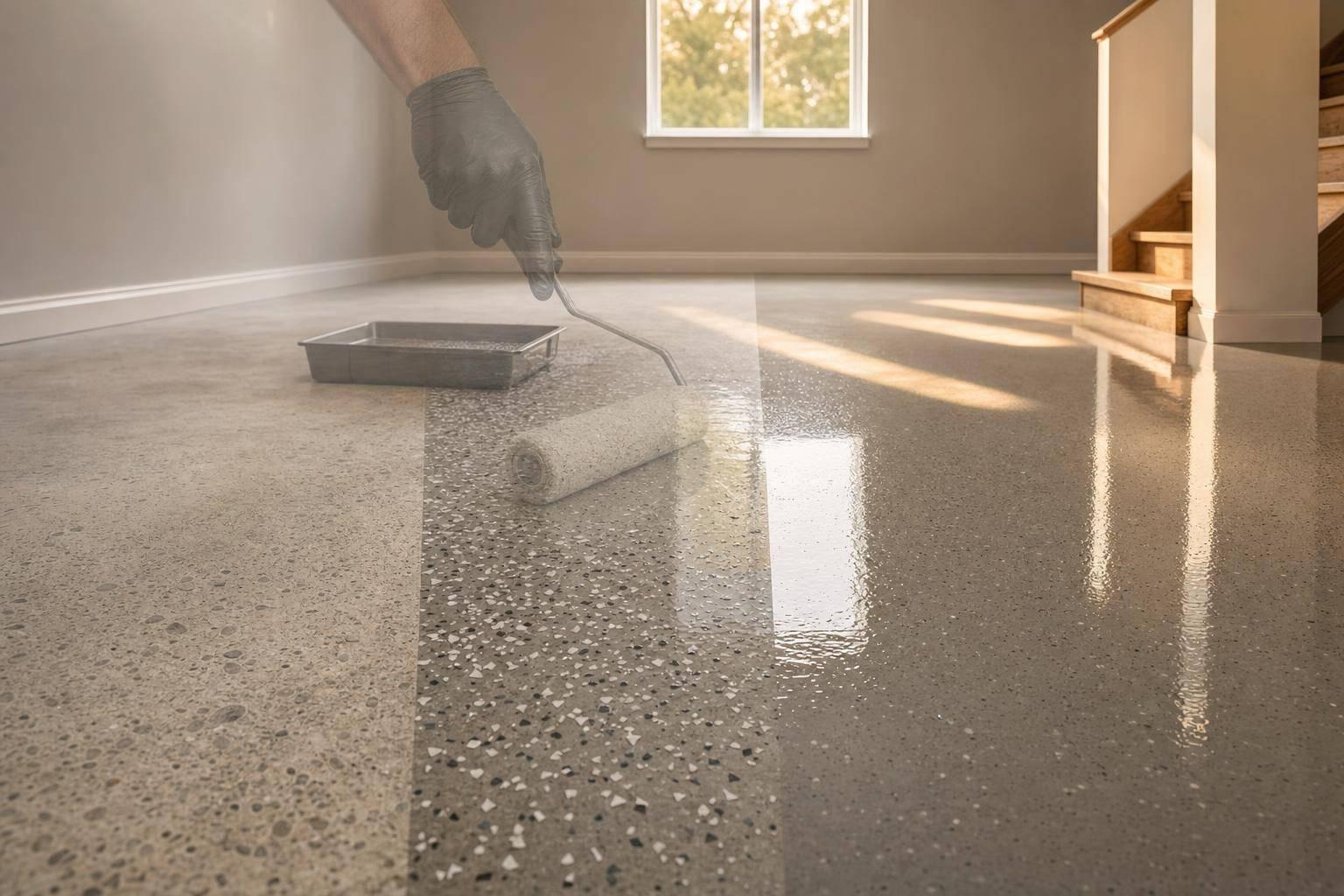
The cheapest floor on day one is often not the cheapest floor over 20 years. If I look at install cost, cleaning, repairs, and recoats together, polyurea/polyaspartic systems like Penntek usually cost less to own long term than epoxy, even though the upfront price is higher.
Here’s the short version:
- Penntek-style coatings: about $2,800–$5,800 over 20 years for a 400 sq. ft. garage, with little upkeep and no full recoat in many cases.
- Basic epoxy: often lands much higher over time because recoats, removal, and prep add up fast.
- Paint and sealer: low starting price, but repeat recoats every 1–3 years can eat through those early savings.
- Bare concrete: no coating cost up front, but sealing, stain cleanup, crack repair, and surface wear still cost money.
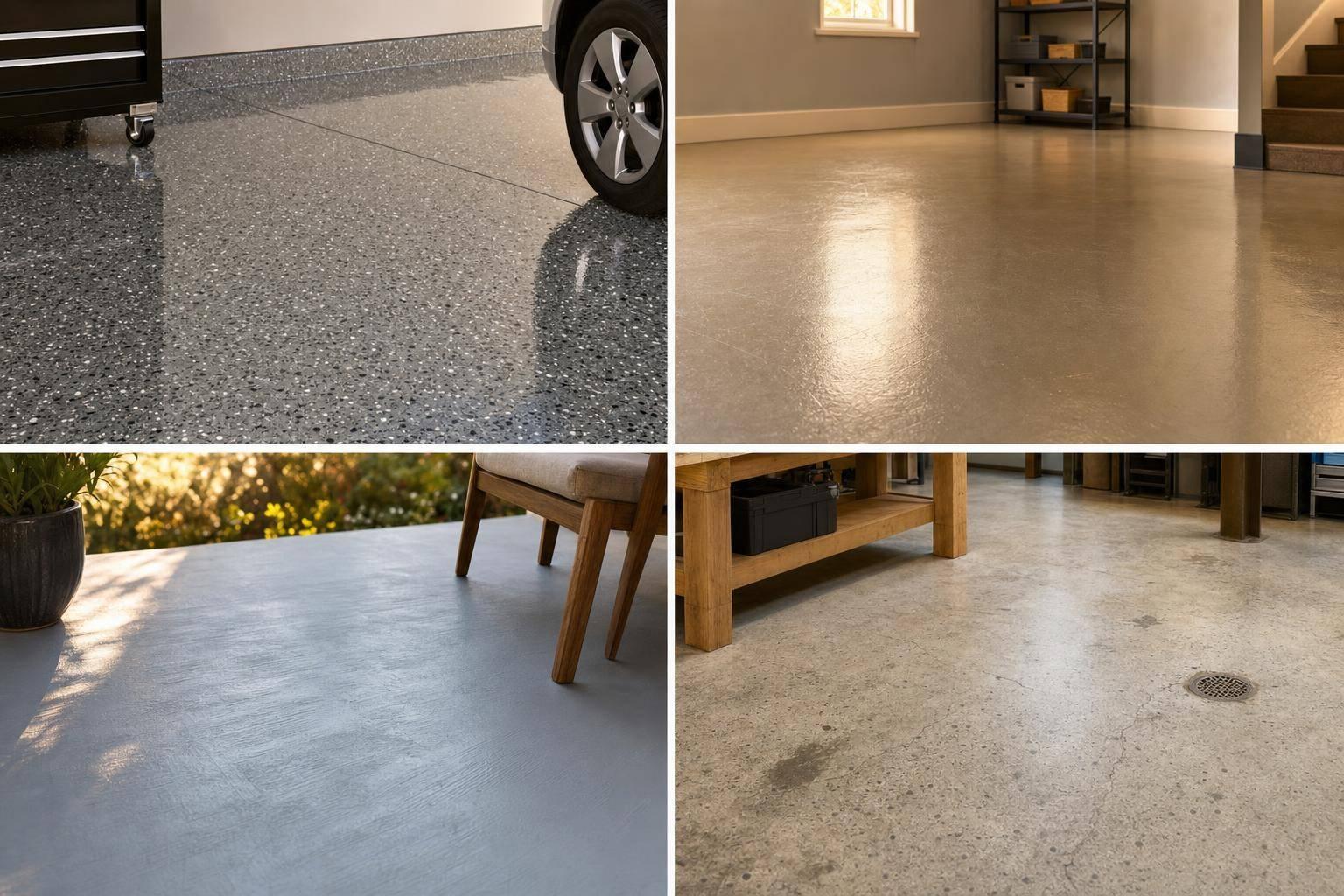
This comparison looks at four common spaces:
- Garage
- Basement
- Patio
- Shop or hobby room
It also looks at the problems that change long-term cost in places like North Idaho and Eastern Washington:
- Freeze-thaw cycles
- Road salt
- Basement moisture
- UV exposure
- Hot-tire traffic
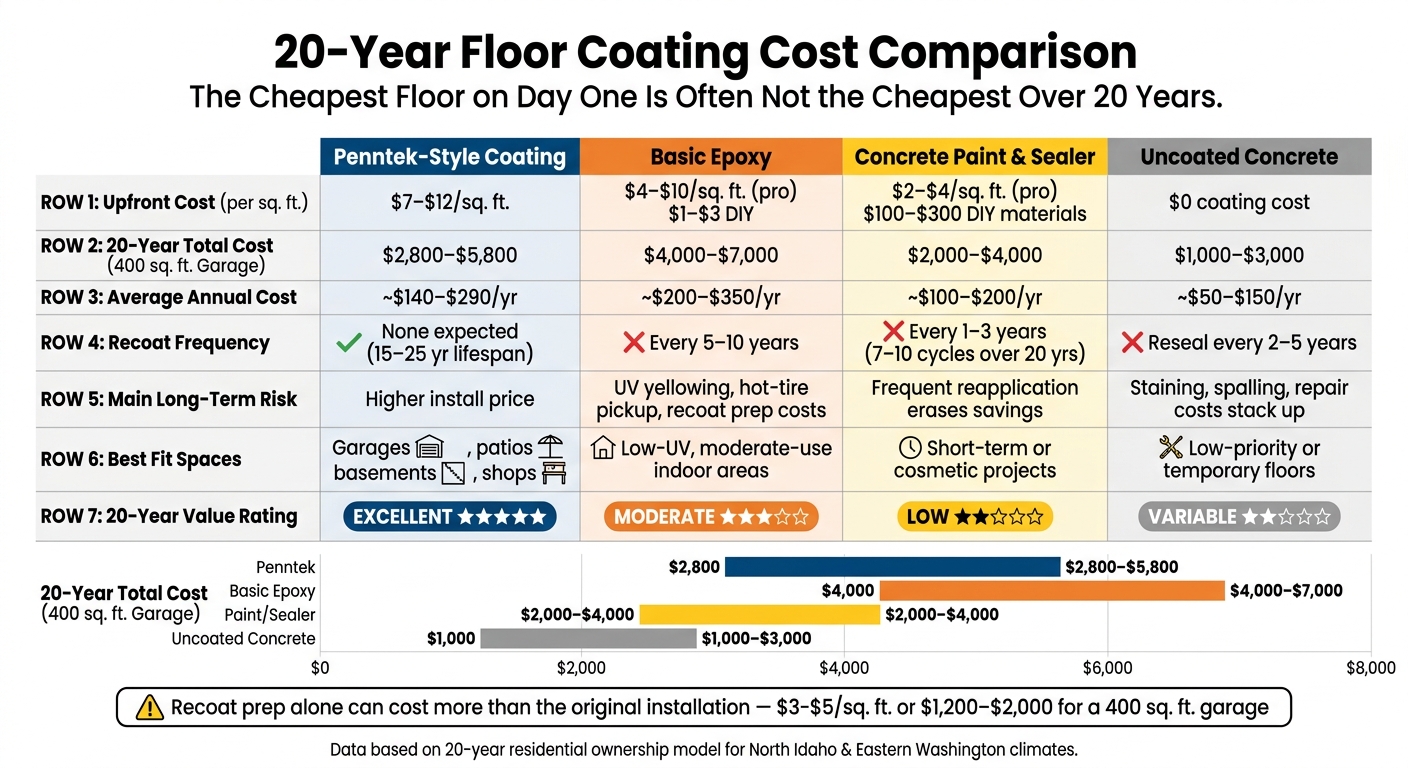
20-Year Floor Coating Cost Comparison: Penntek vs Epoxy vs Paint vs Bare Concrete
Cost Vs. Value Of A Garage Floor Coating
sbb-itb-a0e5ae3
Quick Comparison
| Floor system | Upfront cost | 20-year upkeep | Main long-term issue | Best fit |
|---|---|---|---|---|
| Penntek-style coating | High | Low | Higher install price | Garages, patios, basements, shops |
| Basic epoxy | Mid | High | Recoats, peeling, UV yellowing | Lower-stress indoor areas |
| Paint / sealer | Low | High | Frequent reapplication | Short-term cosmetic use |
| Bare concrete | $0 coating cost | Mid to high | Sealing, stains, repairs | Low-priority spaces |
Bottom line: if I plan to stay in the home for years, the floor with the higher install price can still be the lower-cost choice once repeat labor and recoat prep are counted.
1. Croc Coatings Penntek Evolution Residential Floor Coatings
Penntek Evolution cuts long-term ownership cost by lowering repairs, cleaning time, and recoating needs over a 20-year span. The biggest savings usually come from less upkeep and fewer repair cycles.
20-Year Total Cost
Installation costs $7–$9 per square foot for a standard two-car garage at 400–500 sq ft, which puts the 20-year total at about $2,800–$5,800. Since a full recoat is not usually expected during that time, the installed price makes up most of the ownership cost.
Maintenance and Cleaning
Day-to-day care is simple: sweep when needed and mop once in a while. Because the surface is non-porous, oil, road salt, and chemicals don’t soak in. Spills wipe up fast, which means less work and fewer cleaning products over time.
Repair and Recoat Cycle
The system usually lasts 15 to 25 years without recoating. That’s where the main money-saving edge comes from. The warranty also helps limit surprise repair bills tied to covered failures.
Durability by Space
Where you use it changes the cost picture, so it helps to look at each space on its own.
- Garages – Resists hot-tire stress, road salt, and oil drips, which helps cut surface damage that can lead to early recoating.
- Basements – Its moisture-tolerant formula helps solve basement moisture problems and lower the chance of delamination and other repair costs.
- Patios – It is 100% UV-stable, so it won’t yellow or chalk in a way that calls for refinishing.
- Shops – Resists chipping from dropped tools because it flexes, helping keep repair costs down in high-impact areas.
Those differences matter most when you compare long-term ownership cost from one space to another.
2. Basic Epoxy Floor Coatings
Professional epoxy installation usually costs $4–$10 per sq. ft., while DIY kits tend to run about $1–$3 per sq. ft. in materials. The final price depends on the slab’s condition, moisture, traffic, climate, and how the coating is installed. That long-term cost gap shows up fast in garages, basements, patios, and shops, where floors wear in very different ways.
20-Year Total Cost
Basic epoxy looks cheap at first. The catch is what happens later.
Over time, epoxy usually needs more recoating, more surface prep, and more spot repairs than floor systems that last longer. In garages, many basic epoxy floors start showing visible wear in about 3–5 years, and even better installs often need full recoats within 5–10 years. Every recoat brings added prep and removal costs. Removal alone can cost about $3–$5 per sq. ft., or roughly $1,200–$2,000 for a 400 sq. ft. garage.
For a standard 450 sq. ft. garage, a 20-year total of around $10,000 is a fair planning number. That breaks down to about $500 per year. So the big expense usually isn’t the first install. It’s the repeat cycle of prep, removal, and recoating.
Maintenance and Cleaning
Basic epoxy is easier to clean than bare concrete, but it’s not a set-it-and-forget-it floor. It still needs regular sweeping and occasional wet cleaning with a mild, pH-neutral cleaner. Harsh acids, abrasive pads, and solvent-heavy cleaners can shorten the coating’s life.
As the floor ages, cleaning can get more annoying. Oil and gasoline stains may hang on longer, hot-tire marks can build up, and scratches can trap dirt in ways a fresh floor doesn’t.
Repair and Recoat Cycle
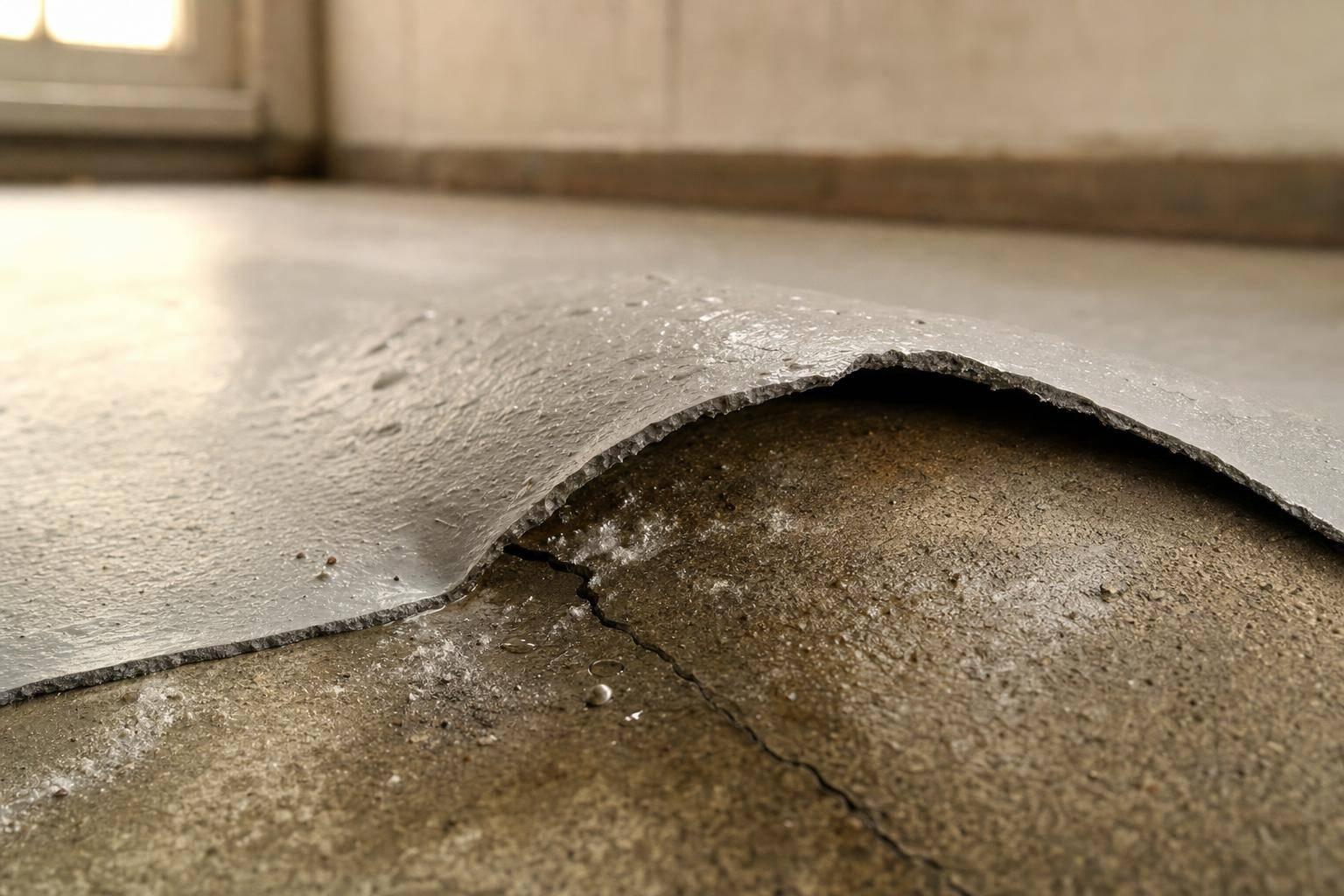
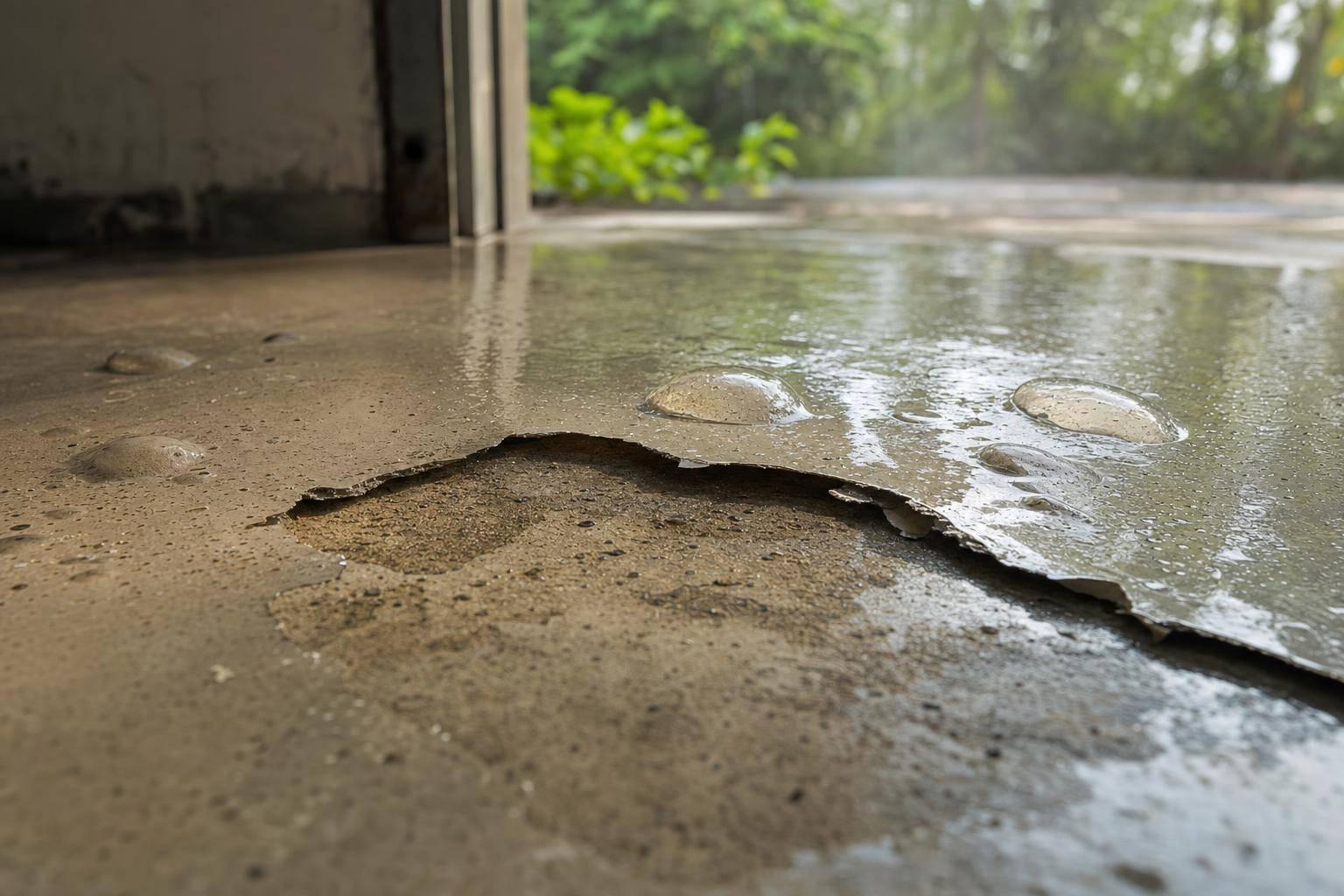
Epoxy usually fails in a few familiar ways. In garages, hot-tire pickup is a big one. Near windows or outside, UV exposure can cause yellowing. In basements, moisture vapor can lead to blistering.
More than 90% of epoxy floor failures are tied to poor surface prep or moisture issues. That stat tells you a lot: even when epoxy goes wrong for predictable reasons, the repair bill still lands on the homeowner.
Durability by Space
The recoat timeline changes depending on where the floor is used.
| Space | Primary Failure Mode | Estimated Recoat Window |
|---|---|---|
| Garage | Hot-tire pickup and UV yellowing | 3–5 years |
| Basement | Moisture blistering and delamination | 3–5 years |
| Patio | UV chalking and surface wear | 1–2 years |
| Shop | Chipping from impact and cracking | 2–4 years |
Patios are usually the weakest match because basic epoxy is not UV-stable. Shops also put more stress on the surface, especially from dropped tools and heavier impact. Basements and garages can work better, but only if moisture is under control and the slab is prepared the right way.
3. Concrete Paint and Sealer Systems
Concrete paint and basic acrylic sealers usually come with the lowest sticker price. Professional painting often lands around $2–$4 per sq. ft., and a DIY paint job for a standard two-car garage can cost as little as $100–$300 in materials.
That sounds cheap at first. But floors like these tend to be a repeat-cost product. You save money on day one, then pay again and again in prep work, touch-ups, and full recoats over time.
20-Year Total Cost
The big issue is lifespan. Concrete floor paint usually lasts 1–3 years in high-traffic areas before it starts peeling, fading, or lifting. Over a 20-year ownership window, that can mean 7–10 full recoat cycles. And each round isn’t just a quick refresh. The old surface still needs prep before the next coat goes on.
Over 20 years, materials alone can add up to $1,200–$4,000 for a standard garage, even before labor costs or your own time enter the picture.
Acrylic sealers follow much the same pattern. They often need recoating every 1–3 years on outdoor or high-traffic surfaces. On outdoor decorative concrete, each recoat can tack on another $1–$2 per sq. ft. in labor and materials.
Maintenance and Cleaning
Between recoats, painted and sealed floors need regular sweeping and washing with a mild cleaner.
As the surface starts to wear down, cleanup usually gets harder. In garages and shops, oil stains and tire marks can hang on more stubbornly once the coating begins to break down. So while the floor may still look usable, routine upkeep often takes more effort as it gets older.
Repair and Recoat Cycle
Spot repairs are common, and full recoats are part of the deal every 1–3 years.
That cycle matters because the work doesn’t just repeat – it stacks. Surface prep, patching, drying time, and moving everything out of the space can turn a low-cost floor into a recurring chore.
Durability by Space
The weak point depends on where the floor is used, which is why recoat timing matters most in spaces that take the most abuse.
| Space | Primary Failure Mode | Typical Recoat Window |
|---|---|---|
| Garage | Hot-tire pickup, road salt, oil staining, tire-track wear | 1–3 years |
| Basement | Moisture vapor, blistering, and delamination | 3–5 years |
| Patio | UV chalking, freeze-thaw cycles, peeling | 1–3 years |
| Shop | Chipping and cracking from dropped tools or heavy rolling loads | 1–3 years |
Patios tend to fail the fastest because UV, temperature swings, and moisture wear down both the film and the bond. Often, these issues are exacerbated by poor drainage around the slab, which traps moisture and accelerates peeling.
Bare concrete skips the recoat cycle, but it comes with its own cleanup and wear tradeoffs.
4. Uncoated Concrete Floors
Leaving concrete bare costs $0 upfront. That sounds great at first. But that number can fool you if you don’t look at what the floor asks for over time.
Bare concrete is porous, takes on moisture, and is often prepared unevenly. So the main issue isn’t whether it’s cheap on day one. It’s how fast the upkeep starts eating into those early savings.
20-Year Total Cost
Uncoated concrete is not a floor you can ignore for years at a time. To keep it usable, the slab often needs sealing, crack repair, and at times resurfacing.
One industry case study says a typical residential garage with uncoated concrete can reach $12,000–$18,000 over 20 years once repairs, sealing, and replacement are factored in. For a smaller 400 sq. ft. slab with lighter use, the 20-year total drops to $2,000–$4,000, or about $100–$200 per year. But even that lower range assumes the floor is sealed on schedule and avoids many major repairs.
Maintenance and Cleaning
This is where bare concrete starts to lose its low-cost appeal.
Because the surface stays porous, spills don’t just sit there. They soak in. Oil, road salt, and dirt get worked into the slab, which makes cleaning concrete floors harder and more time-consuming. Professional concrete floor cleaning costs $0.95–$1.95 per sq. ft., with a $450 minimum charge no matter how small the area is.
Sealing helps cut down on stains, but it doesn’t remove the upkeep. Bare concrete still needs resealing every 2–5 years, or every 1–2 years in spaces with heavy traffic or lots of salt exposure.
Repair and Recoat Cycle
There’s no recoat cycle here, but that doesn’t mean the floor gets a free pass.
Instead of recoating, owners deal with repair work like crack filling, joint repair, and patching spalled or pitted spots. A 20-year model for a 1,000 sq. ft. floor projects 1–2 major repair events, which adds $600–$1,600 on top of sealing costs. If the damage gets bad, the slab may need grinding, patching, or full resurfacing.
Durability by Space
Where the slab sits makes a big difference. A bare concrete floor in a quiet basement faces one set of problems. A garage or shop takes a much harder beating.
| Space | Primary Risk | Typical Outcome Without Coating |
|---|---|---|
| Garage | Road salt, oil, freeze-thaw cycles, vehicle loads | Surface dusting, spalling, staining; possible slab replacement within 15–25 years |
| Basement | Moisture vapor, efflorescence, mildew | Moisture limits usability; sealers or overlays are often added later |
| Patio | UV exposure, rain, freeze-thaw scaling | Surface erosion and scaling; resealing needed every 2–5 years |
| Shop | Dropped tools, rolling loads, chemical spills | Surface dusting, chipping, slip hazards; many owners grind and seal within the first decade |
Without a wear layer on top, the slab takes the hit directly. That usually means more dust, more stains, and more repair work. In garages and shops, those repeat costs tend to stack up the fastest. Those cost patterns set up the tradeoffs in the comparison below.
Lifetime Cost Breakdown by Ownership Factor
The real comparison isn’t the install price by itself. It’s what each floor costs to own over 20 years.
Across that time frame, cleaning, repairs, and recoats tend to shape the total bill more than the day-one price. Penntek Evolution usually stays on the lower end because it needs less of each.
20-Year Total Cost by Floor Area
The table below shows sample 20-year spending across common residential spaces.
| Area | System Type | Est. 20-Year Spend | Avg. Annual Cost |
|---|---|---|---|
| Garage (400 sq. ft.) | Penntek Evolution | $2,800–$5,800 | ~$140–$290 |
| Garage (400 sq. ft.) | Basic Epoxy | $4,000–$7,000 | ~$200–$350 |
| Garage (400 sq. ft.) | Concrete Paint/Sealer | $2,000–$4,000 | ~$100–$200 |
| Garage (400 sq. ft.) | Uncoated Concrete | $1,000–$3,000 | ~$50–$150 |
| Patio (400 sq. ft.) | Penntek Evolution | $3,150–$5,400 | ~$157–$270 |
| Patio (400 sq. ft.) | Concrete Paint/Sealer | $4,000–$6,000 | ~$200–$300 |
| Shop (400 sq. ft.) | Penntek Evolution | $3,500–$5,500 | ~$175–$275 |
Basements usually see less wear than garages, but moisture vapor can add a different kind of long-term cost if the coating depends on a weak mechanical bond. In many basements, ownership cost is shaped more by moisture resistance than by foot or vehicle traffic.
Maintenance and Cleaning Workload
Cleaning is usually the first repeat cost homeowners notice. Penntek’s nonporous surface makes cleanup lighter. Concrete paint and uncoated concrete often need more scrubbing, harsher cleaners, and more touch-up work as the years stack up.
Repair and Recoat Cycles
Repairs and recoats are often where the gap gets bigger. That’s the part many people miss at first.
Recoats drive long-term cost. Penntek usually avoids full recoats, while epoxy, paint, and sealer systems often don’t.
Durability by Space: Garage, Basement, Patio, and Shop
These costs shift from room to room because each space puts its own kind of stress on the floor.
| Space | Biggest Threat | Penntek Performance | Where Lower-Cost Systems Struggle |
|---|---|---|---|
| Garage | Hot-tire pickup, road salt, freeze-thaw | Excellent – chemical bond resists hot-tire pickup, road salt, and freeze-thaw damage | Epoxy peels; paint recoats every few years |
| Patio | UV exposure, freeze-thaw scaling | UV-stable; no yellowing or chalking | Epoxy yellows and chalks in sunlight; sealers need frequent reapplication |
| Basement | Moisture vapor transmission | Chemical bond handles vapor better than epoxy’s mechanical grip | Epoxy and paint can blister and peel from moisture |
| Shop | Dropped tools, chemical spills, rolling loads | More flexible and less likely to chip under impact | Epoxy chips under impact; uncoated concrete dusts and stains |
Pros and Cons of Each Floor System
The cost tables above show the raw dollars. This section gets into what those numbers mean once you start living with the floor.
Over 20 years, the biggest difference usually isn’t the day-one price. It’s how often the floor pulls you back into cleaning, patching, and recoating. That’s where the gap starts to show.
| System | Main Advantages | Main Drawbacks | Best Use Case | 20-Year Value |
|---|---|---|---|---|
| Penntek Evolution | 4x stronger than epoxy; UV stable; lifetime residential warranty | Highest upfront cost ($7–$12/sq. ft.); professional installation required | High-use or harsh-condition spaces | Excellent: Lowest long-term ownership cost |
| Basic Epoxy | Lower upfront cost; decent chemical resistance | UV yellowing; hot-tire pickup; brittle; usually needs recoating every 5–10 years | Low-UV, moderate-use spaces | Moderate: Low starting cost, higher long-term spend |
| Concrete Paint and Sealer | Lowest cost; DIY-friendly | Wears quickly in tire paths; often needs reapplication every 2–3 years in active spaces | Short-term or cosmetic projects | Low: Reapplication costs erase the savings |
| Uncoated Concrete | No coating cost; no coating maintenance | Porous; stains easily; dusts; can spall over time | Low-priority or temporary floors | Variable: Cheap to start, costly to maintain |
When Penntek-Style Coatings Justify the Higher Upfront Cost
A Penntek-style system tends to make the most sense when you’re playing the long game. If you expect to stay in the home for 10+ years, the math starts to tilt in its favor. The same goes for garages and work areas that deal with road salt, direct sun, moisture, or heavy daily traffic.
Why? Because the upfront hit is higher, but you usually spend less time and money coming back to fix the floor later. Fewer recoats. Fewer repairs. Less hassle. That’s what pulls down the 20-year total.
When Lower-Cost Systems Still Make Sense
Lower-cost options still have a place. If the floor only needs to look decent for a short stretch, or the space doesn’t take much abuse, paying less upfront can be the right call.
That often fits projects like sale prep, short-term updates, or low-traffic areas where wear isn’t a big concern. The tradeoff is simple: you spend less now, but you should expect more upkeep and more frequent recoats later.
Conclusion
The 20-year numbers lead to a clear takeaway: across all four spaces, the lowest upfront price usually does not lead to the lowest cost over 20 years.
A Penntek-style polyurea/polyaspartic system can cut lifetime spending by reducing repairs, cleanup time, and recoating. That difference starts to show once upkeep begins to pile up. At about $200 per year over a 20-year span, versus roughly $500 per year for basic epoxy when recoats are included, the higher upfront cost is often balanced out by fewer repairs and no repeat recoating cycle. The lifetime residential warranty also helps lower the chance of surprise out-of-pocket costs.
The biggest hidden cost is surface preparation for a recoat. In many cases, it can cost more than the original installation.
For homeowners in North Idaho and Eastern Washington, Croc Coatings can look at slab condition, traffic, and moisture exposure to help estimate the full lifetime cost. That gives homeowners a clearer picture before they commit.
FAQs
When does a higher upfront floor cost pay off?
A higher upfront spend on premium flooring, such as the Penntek Evolution polyurea system, can save money over time by helping you avoid the repeat repair and replacement bills that often come with cheaper options.
Over a 20-year span, lower-cost floors may need to be replaced every 3 to 5 years and can add up to $25,000 to $64,000. By comparison, a premium system can last 15 to 20 years and comes backed by a lifetime warranty.
Which floor system holds up best in a garage, basement, patio, or shop?
For garages, basements, patios, and shop floors, polyurea-based systems like the Penntek Evolution system from Croc Coatings deliver the best all-around performance.
They can be up to four times stronger than epoxy, with more flexibility and UV stability. That means they’re made to resist cracking, hot-tire pickup, and yellowing. They also tend to last 15–25 years, and a lifetime residential warranty can help cut long-term upkeep costs.
What hidden maintenance costs should I expect over 20 years?
Over a 20-year span, maintenance for the Penntek Evolution system is usually $0 or close to it. The lifetime residential warranty also helps cut out major repair or replacement costs.
Standard options like epoxy can get expensive over time. Replacements, crack and spall repairs, and resealing can bring the total to $25,000 to $64,000. Day-to-day cleaning, though, stays low at under $20 per year.