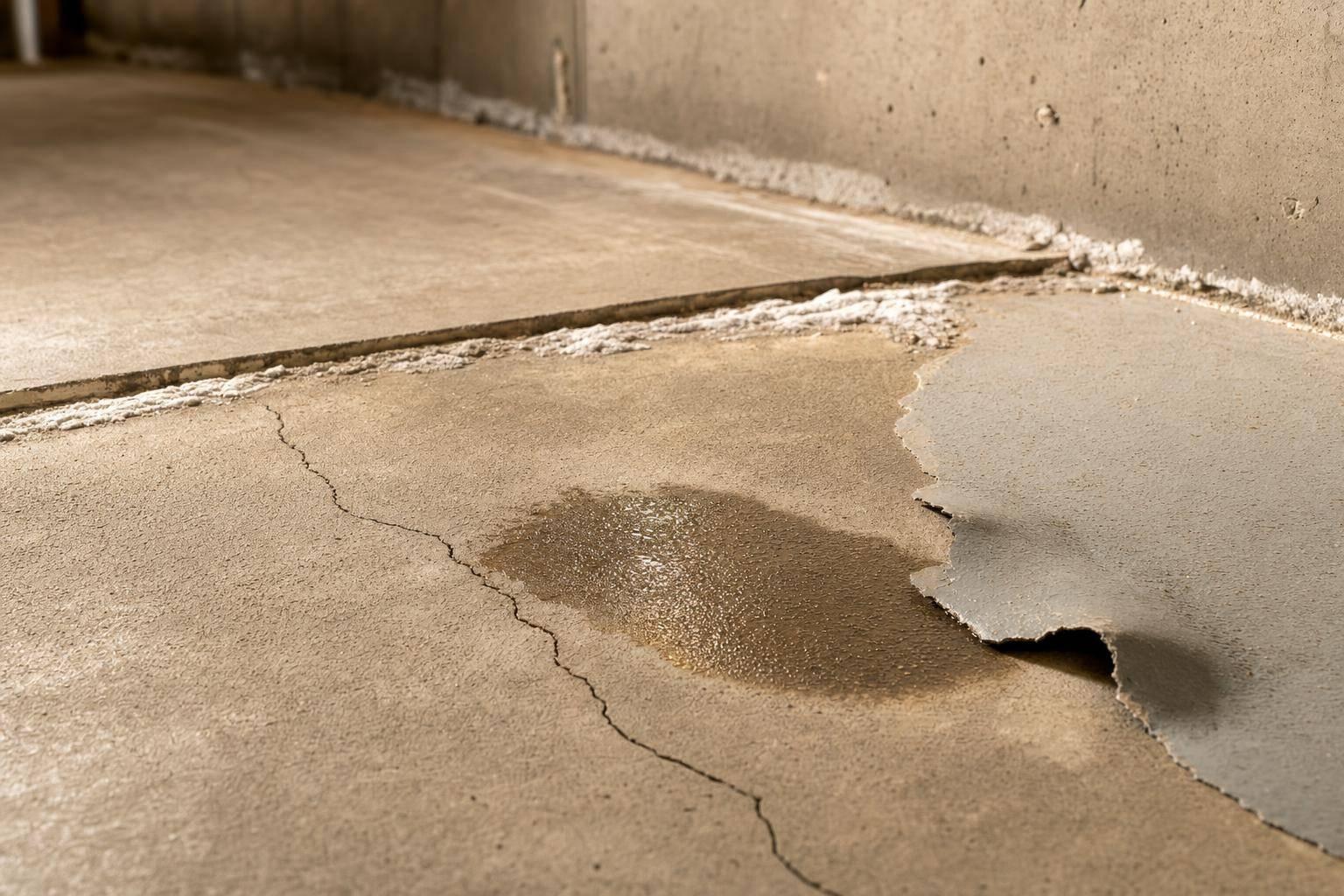
If I see cracks, damp spots, peeling coating, white residue, or an uneven basement floor, I treat them as early warning signs – not just cosmetic wear. Small issues can turn into mold in 24–48 hours, trip hazards, or slab movement if I let them sit.
Here’s the short version:
- Cracks matter most when they grow, leak, or have one side higher than the other.
- Dark or damp spots often point to water coming through the slab, poor drainage, condensation, or a plumbing leak.
- Peeling, bubbling, or flaking coating usually means moisture is pushing up from below or the floor was not prepped well before coating.
- White chalky residue is efflorescence. It means water is moving through the concrete and leaving salts behind.
- Uneven, sinking, or heaving areas can mean soil shift, slab settlement, frost pressure, or a void under the floor.
A few numbers help me sort out what needs attention:
- Hairline cracks under about 1/16 inch are often surface-level.
- Cracks around 1/16–1/8 inch should be sealed and watched.
- Cracks around 1/8–1/4 inch need a closer look.
- Cracks over 1/4 inch, or any crack with vertical offset, should be checked by a pro.
- If mold or staining covers more than 10 square feet, I would not try to handle it alone.
- A floor slope of more than 1 inch over 8 feet is a strong warning sign.
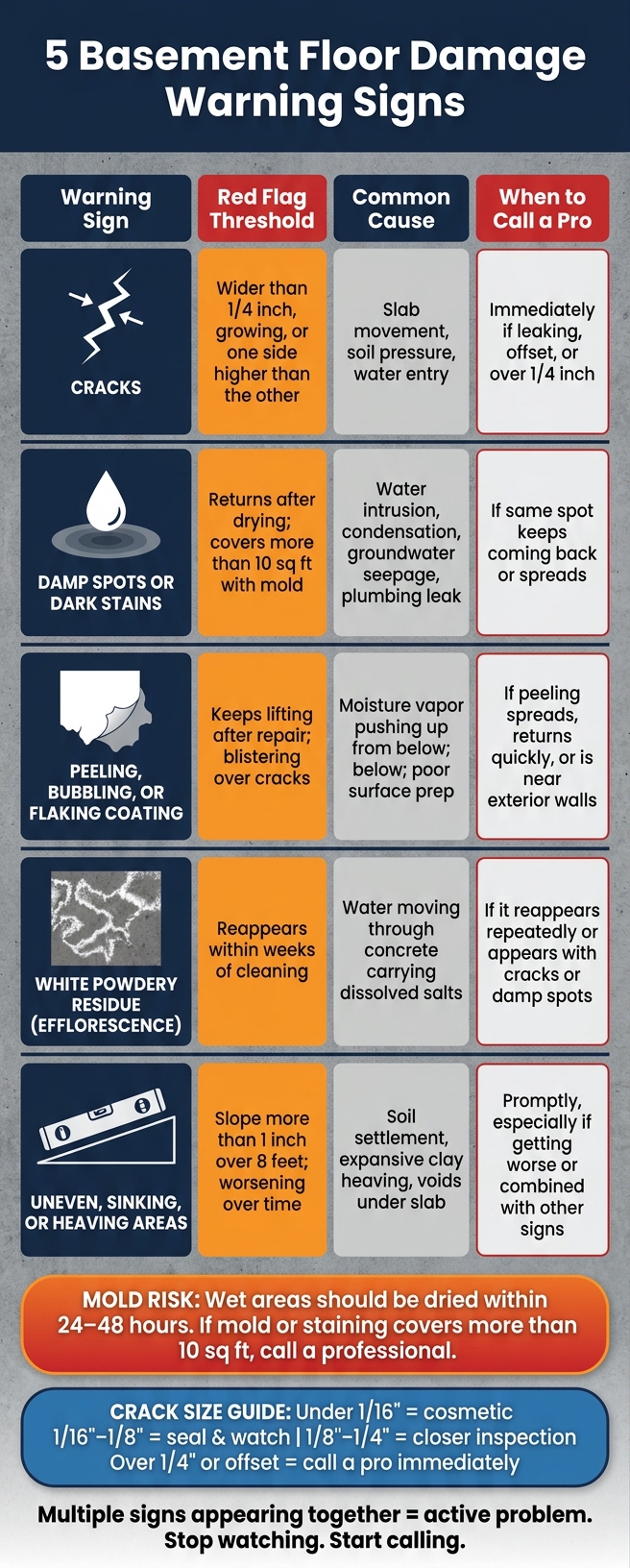
5 Basement Floor Warning Signs: Thresholds, Causes & When to Call a Pro
Basement Inspection Reveals Hidden Dangers! 🏠💦
sbb-itb-a0e5ae3
Quick Comparison
| Warning sign | What I look for | What it may mean | When I’d call a pro |
|---|---|---|---|
| Cracks | Growth, leaks, raised edge, long straight runs | Slab movement, soil pressure, water entry | If over 1/4 inch, leaking, or offset |
| Damp spots or dark stains | Same area gets wet again, rings, musty smell | Drainage issue, seepage, condensation, plumbing leak | If it keeps coming back or spreads |
| Peeling or bubbling coating | Blisters, flakes, coating lifting in patches | Moisture vapor, bond failure | If it returns after repair or spreads |
| White residue | Chalky film or crust that comes back after cleaning | Moisture moving through concrete | If it keeps returning and requires moisture vapor emission testing |
| Uneven or heaving floor | Dips, humps, rocking furniture, sticking doors | Settlement, frost, soil swell, voids | Promptly, especially if getting worse |
What I’d focus on most is change over time. One sign alone may not mean major damage. But if two or more show up together – or one keeps getting worse – the basement floor likely needs more than a surface fix.
What Basement Floor Problems Actually Mean
Most basement floor problems land in one of three buckets: moisture, coating failure, or structural movement.
Moisture often shows up first in small, easy-to-miss ways: damp spots, dark stains, a musty smell, or white residue on the slab. Those are signs that water or vapor is moving through the concrete. In many homes, that comes from groundwater pressure, poor drainage outside, a high water table, or plumbing leaks.
Coating failure looks different, but it usually points back to the same root problem. If the floor coating is peeling, bubbling, or flaking, moisture is often pushing up from below. Poor surface prep before the coating was applied can make things worse, but the moisture issue is still the main story.
Structural movement is the category that needs the most caution. It can show up as widening cracks, vertical displacement where one side of a crack sits higher than the other, or floor areas that feel uneven when you walk across them.
A fast way to size up a crack is to look at its width:
- Hairline cracks under about 1/16 inch are usually cosmetic.
- Cracks in the 1/16–1/8 inch range should be sealed and watched.
- Once a crack reaches 1/8–1/4 inch, it deserves a closer look, especially if you see other warning signs nearby.
- Cracks wider than 1/4 inch, or any crack with visible vertical displacement, are a structural warning sign and call for a professional inspection.
One sign by itself doesn’t always mean major damage. The concern goes up when the same signs keep showing up, or when several appear at once. Widening cracks, damp spots, white residue, peeling coatings, and an uneven floor can all point to a deeper problem. With that baseline in mind, the next step is to check the slab for cracks.
1. Cracks in the Basement Floor
Typical Appearance
Basement floor cracks can show up in a few ways: thin hairline lines, wider gaps, or long straight cracks that run parallel to the walls. The biggest red flag is vertical displacement – when one side of the crack sits higher than the other. That usually means you’re not just looking at a surface blemish.
What matters most is simple: is the crack stable, or is it still moving?
What It May Indicate
The main things to watch are width, growth, and vertical displacement. A thin, dry crack that looks the same year after year is often cosmetic.
But a crack that’s getting wider, leaking after heavy rain, or showing vertical displacement can point to soil movement, poor drainage, or hydrostatic pressure pushing up on the slab from below.
When to Schedule an Inspection
If a crack is wider than 1/4 in., is getting wider, or leaks water, schedule a professional inspection without delay. The same goes for cracks with vertical displacement or cracks that line up with a nearby wall crack.
A good first step is to measure the crack and write down the date. If it widens, starts leaking, or develops vertical displacement, it’s time to get it checked.
If you also see damp edges or staining around the crack, moisture may be part of the problem. In these cases, specialized basement floor coatings can help manage moisture issues.
2. Damp Spots or Dark Stains
Typical Appearance
Dark spots matter because they often show up before an obvious leak or clear damage. In many basements, they look like darker patches on the concrete – spots that seem wet or feel cooler than the floor around them. You may also see yellow, brown, or ring-shaped stains where moisture has shown up, dried out, and then come back again.
These marks often turn up in corners, along foundation walls, near floor drains, or around plumbing lines and appliances such as water heaters and washing machines. When the same spot keeps coming back, that’s the clue to pay attention to. The next step is figuring out where that moisture is coming from.
Likely Underlying Cause
Dark stains that keep returning usually mean moisture is getting into the slab from outside, from a plumbing leak, or from condensation forming on cool concrete. If the stain appears or gets larger after rain or snowmelt, the source often points to drainage problems outside or groundwater pressure. If it shows up near pipes or appliances, plumbing is the more likely cause.
What It May Indicate
When dark staining sticks around – especially with a musty smell, mold, or peeling coatings – it usually points to long-term dampness. Even when you don’t see standing water, vapor moving through concrete can leave discoloration and salts on the surface before a leak becomes plain to see. Wet areas should be dried within 24–48 hours to help limit mold growth on concrete floors.
That kind of pattern is a warning sign. It means the issue may be building below the surface, even if the floor doesn’t look badly damaged yet.
When to Schedule an Inspection
It’s time to call a professional inspector if the staining keeps coming back in the same places, starts spreading, or appears with efflorescence, cracking, or uneven spots nearby. When staining shows up along with mold, cracks, or uneven flooring, the issue usually goes beyond a simple surface stain.
You should also bring in a professional if mold or staining covers more than 10 square feet instead of trying to clean it up on your own.
If the staining is followed by peeling or bubbling, the moisture has likely reached the coating.
3. Peeling, Bubbling, or Flaking Coatings
Typical Appearance
When moisture gets into the coating, the floor often starts showing damage there before the concrete itself looks much worse. This kind of failure is usually easy to spot. You may notice chips or flakes scattered across the floor, soft or hollow blisters, or sections where the coating has curled at the edges and snags shoes or a mop. In those worn-off spots, dull, bare concrete can show through where the glossy finish used to be.
Normal wear tends to thin out slowly in high-traffic areas. Moisture- or adhesion-related failure looks different. It usually shows up in patches, spreads faster, and often comes with damp spots or a musty smell.
Likely Underlying Cause
In many cases, peeling starts when moisture vapor moves up through the slab and pushes the coating loose. This happens a lot in older basements, homes with high water tables, or properties with drainage problems around the foundation.
The other big cause is poor surface prep. If the slab wasn’t mechanically profiled and cleaned well before the coating went down, the product may never bond the way it should. Over time, it can lift off in sheets.
What It May Indicate
Peeling coatings can point to chronic moisture vapor emission from the slab. That can also increase basement humidity and mold risk. If the damage is grouped near exterior walls, floor-wall joints, or corners, water intrusion or pressure against the foundation may be driving it.
If the peeling shows up along with new cracks or uneven spots, that can also suggest settling or shifting in the slab and calls for a closer look.
The next step is to check how far the failure has spread and whether moisture is still active.
When to Schedule an Inspection
It’s time to call for an inspection when the failure keeps spreading, comes back after a repair, or shows up in more than one area. You should also schedule a professional inspection if the peeling or bubbling is worst near exterior walls or the sump pit.
When this starts soon after installation, moisture or surface-prep issues are often behind it. A professional will use moisture testing to pinpoint the source before suggesting repairs.
4. White Powdery Residue (Efflorescence)
Typical Appearance
When moisture reaches the surface, it doesn’t always show up as visible water. Sometimes it leaves behind a white, chalky residue on the concrete instead.
This is called efflorescence. It often shows up along cracks, joints, or low spots where moisture tends to travel through the slab. Early on, it can look like a light dusting. Give it time, and that light film can turn into larger, crusty patches. If you clean it off and it keeps coming back, that’s a strong sign the moisture source is still active below the slab.
Likely Underlying Cause
Here’s what’s happening: water moves through the concrete, picks up dissolved salts, and carries them to the surface. Once the water evaporates, those salts stay behind as a visible white film.
Common causes include poor drainage, groundwater pressure under the slab, high humidity, or seepage after heavy rain or snowmelt.
What It May Indicate
Efflorescence usually points to an active moisture problem, especially when it shows up with damp spots, peeling coatings, or cracks. In plain terms, it means moisture is moving through the slab.
On coated floors, that moisture vapor can push upward from below and cause common coating failures like bubbling, hazing, or peeling. If the moisture keeps moving through the slab over time, it can wear down coatings and, in severe cases, lead to spalling or cracking.
When to Schedule an Inspection
One isolated patch that doesn’t return after cleaning is usually less urgent.
Schedule a professional inspection if the residue keeps coming back, spreads to new areas, or appears along with damp spots, musty odors, peeling coatings, or cracks. That kind of pattern points to a moisture issue that needs a closer look. A professional will check for moisture moving through the slab, drainage problems, and any repairs the area may need.
5. Uneven, Sinking, or Heaving Areas
Unlike stains or surface residue, uneven spots usually mean the slab itself is moving.
Typical Appearance
You may notice furniture that rocks, a door that suddenly sticks, or small gaps along the baseboard. A low viewing angle can make dips and humps easier to see. You can also lay down a long level or straight board to check for changes in height. When the floor shifts like that, it often points to settlement or heaving below the slab.
Likely Underlying Cause
Uneven floors usually come from settlement or heaving.
Sinking (settlement) happens when the soil under the slab shrinks, erodes, or was not compacted well during construction. As that support weakens, parts of the slab drop. That can leave dips, sunken corners, or a floor that slopes. A plumbing leak below the slab can also wash away fine soil particles over time and make the problem worse.
Heaving pushes the slab upward when wet clay swells or frozen ground expands. Expansive clay can exert thousands of pounds of pressure per square foot on a basement slab when saturated. Heaving often shows up most in the center of the slab.
This kind of movement often ties back to water, freeze-thaw cycles, or weak support below the slab.
What It May Indicate
Floor movement can widen cracks, put stress on plumbing, and make later repairs or finishing work harder.
When to Schedule an Inspection
Contact a structural engineer or foundation specialist if the slope is getting worse, cracks spread out from the area, or doors or windows above the basement start sticking. If uneven spots show up with other warning signs – damp stains, persistent efflorescence, or peeling coatings – that mix points to a problem that needs a professional inspection.
When several signs show up at the same time, the problem is often bigger than the floor surface alone.
How to Read Each Warning Sign
Use change over time to judge how serious a problem is.
Here’s a quick way to tell the difference between surface wear and damage that may still be active:
| Warning Sign | Red Flag Threshold | Common Cause | Action |
|---|---|---|---|
| Cracks | Wider than about 1/8 in., growing, or with one side higher than the other | Settlement, slab movement, or soil pressure | Inspect if the crack widens, reaches about 1/4 in., or shows vertical displacement. |
| Damp spots or dark stains | Returns after drying | Water intrusion, condensation, or groundwater seepage | Inspect if the same spot keeps coming back. |
| Peeling, bubbling, or flaking coatings | Keeps lifting after repair; blistering over cracks or patched areas | Moisture or bond failure | Inspect if peeling spreads or returns quickly. |
| White powdery residue | Reappears within weeks of cleaning | Water moving through the slab, carrying dissolved salts | Inspect if it reappears repeatedly. |
| Uneven, sinking, or heaving areas | Sections that feel raised or sunken; worsening slope | Soil settlement, heaving, or voids under the slab | Call a foundation specialist promptly. |
If a sign keeps changing, stop just watching it and get it inspected.
For cracks, use a ruler and take dated photos. That gives you a simple record of whether the crack is getting bigger. If it’s widening, has a raised edge on one side, or sits near a load-bearing wall or support column, get a professional inspection.
For coatings, there’s an concrete moisture testing method to check for moisture under the surface. Tape a sheet of plastic over the floor for 24 to 48 hours. If moisture collects underneath, or the concrete turns darker, that points to a moisture problem that should be fixed before recoating.
Clean the area, then check again after the next rain. If the moisture or white residue comes back, the water source is still active. In such cases, you may need to follow specific steps to remove efflorescence and seal the surface to prevent it from returning.
What It Means When Multiple Signs Appear Together
Once you’ve checked each warning sign by itself, the next step is to look at which ones show up together. When two or more signs appear at the same time, that usually points to an active moisture or movement issue, not just surface wear.
Here’s how a few common combinations tend to read:
- Cracks + damp spots: Water may be getting in through the slab or along the floor-wall joint.
- Efflorescence + peeling or bubbling coatings: Moisture is moving through the concrete from below, which can explain both the mineral deposits and the coating failure.
- Uneven or heaving areas + cracks: This can point to soil settlement, expansive soil pressure, or voids under the slab. In plain terms, the support under the floor may be changing, and that can involve the foundation.
Moisture that isn’t dealt with can weaken support under the slab and lead to settling or shifting.
Recurring signs are a major red flag. If efflorescence keeps coming back after cleaning, or damp spots return after every rain, the water source still hasn’t been fixed. That pattern usually means the problem is still active.
Don’t compare industrial floor coatings or repaint a floor that shows two or more of these signs until the moisture source is fixed. If you’re seeing more than one sign at once, it’s time for a closer inspection.
When to Call for a Professional Inspection
Some basement floor issues shouldn’t sit on a to-do list for long. Cracks, stains, peeling, efflorescence, and uneven spots may start as warning signs. But when they get bigger, keep coming back, or show up at the same time, it’s time to stop watching and start calling.
Call immediately if you notice standing water that comes back after rain, a crack where one side is visibly higher than the other, or uneven flooring that creates a trip hazard. Those signs can point to active water intrusion or slab movement.
Schedule an inspection soon if:
- Cracks are wider than about 1/8 to 1/4 inch
- Efflorescence keeps coming back after cleaning
- Coating failure is spreading
- A musty odor sticks around after 2 to 4 weeks of dehumidifying and improving drainage
At that stage, the goal is to confirm the source and implement basement floor moisture protection, not just treat the symptom. Pros often use moisture meters, plastic-sheet tests, and humidity readings to test for hydrostatic pressure to track down where the moisture is coming from.
If the floor is uneven, they may check the slope with a level or laser-level tool. A tilt of more than 1 inch over 8 feet is a serious concern. That finding helps determine the right fix and whether coating or resurfacing can move forward.
Once the cause is clear, picking the right repair gets a lot simpler.
Repair and Coating Options After an Inspection
Following a pre-installation checklist, deal with moisture or slab movement first. Coating comes last. Cracks, damp spots, peeling, efflorescence, and uneven areas don’t all mean the same thing, so the repair path depends on what the inspection found: moisture, movement, or both.
Start by fixing drainage problems, leaks, or groundwater entry. If the slab still tests too damp after that, a moisture-control primer may be the next step before coating. Many coating manufacturers set moisture limits at about 3 to 5 lb per 1,000 sq ft per 24 hours under ASTM F1869 and in-slab relative humidity of roughly 75% to 85% under ASTM F2170 before a standard coating can go down.
Next comes surface prep. Pros usually grind or shot-blast the floor to remove weak concrete, old paint, and other surface contaminants so the coating can bond the way it should. They also repair cracks and spalled areas with compatible materials, then feather those repairs smooth. Without proper surface prep, adhesion can fail or other defects can occur.
Once the slab is dry, stable, and prepped, coating becomes the final step. Croc Coatings installs basement coating systems for homes in North Idaho and Eastern Washington after moisture control and surface prep are complete.
If the inspection shows major structural or drainage problems, coating may need to wait. In that case, handle the drainage and structural repairs first, watch the basement through seasonal changes, and move ahead with coating only after conditions are stable. If the slab is still active or unstable, hold off on coating.
Conclusion
Once you know how to spot the warning signs, the next step is simple: watch what changes over time. These signs are early alerts, not automatic emergencies.
What matters most is whether things keep shifting. That’s why basic recordkeeping helps. Check the floor on a regular basis, mark cracks, and take photos of stains from the same angle each time so you can see if the problem is getting worse.
If the pattern keeps heading in the wrong direction, stop waiting and call a pro. Set up a professional inspection when moisture comes back, cracks get larger, or the floor starts to feel uneven.
Catching trouble early often leads to simpler, less expensive repairs. Leave small issues alone, and they can turn into mold, slab movement, or costly foundation damage.
FAQs
Can basement floor cracks be normal?
Yes. Hairline cracks can be a normal part of how concrete cures and dries. In many cases, they can show up any time during the first year after installation.
That said, cracks wider than 1/8 inch or cracks that show movement shouldn’t be brushed off. They can be a sign of foundation settlement or hydrostatic pressure.
Even small cracks are worth sealing. That helps keep out moisture, radon, and odors.
How can I tell if moisture is coming through the slab?
Look for dark or damp spots on the concrete, especially along the joint where the floor meets the walls. Other common signs include efflorescence (a white, chalky residue), a musty smell, rust on nearby metal, or mold.
You can also try the plastic sheet test. Tape a 2-foot square of plastic to the floor and leave it in place for 24 to 48 hours. If condensation shows up underneath, moisture is likely coming through the slab.
When should I call a basement floor professional?
Call a professional if you notice cracks wider than 1/8 inch, delamination, standing water, drainage problems, or uneven surfaces.
It also makes sense to get a professional assessment if you’re dealing with persistent efflorescence, musty odors, or moisture test results that don’t line up. An expert can pinpoint harder-to-spot causes like hydrostatic pressure, chemical contamination, or foundation issues, then recommend a fix that’s built to last.