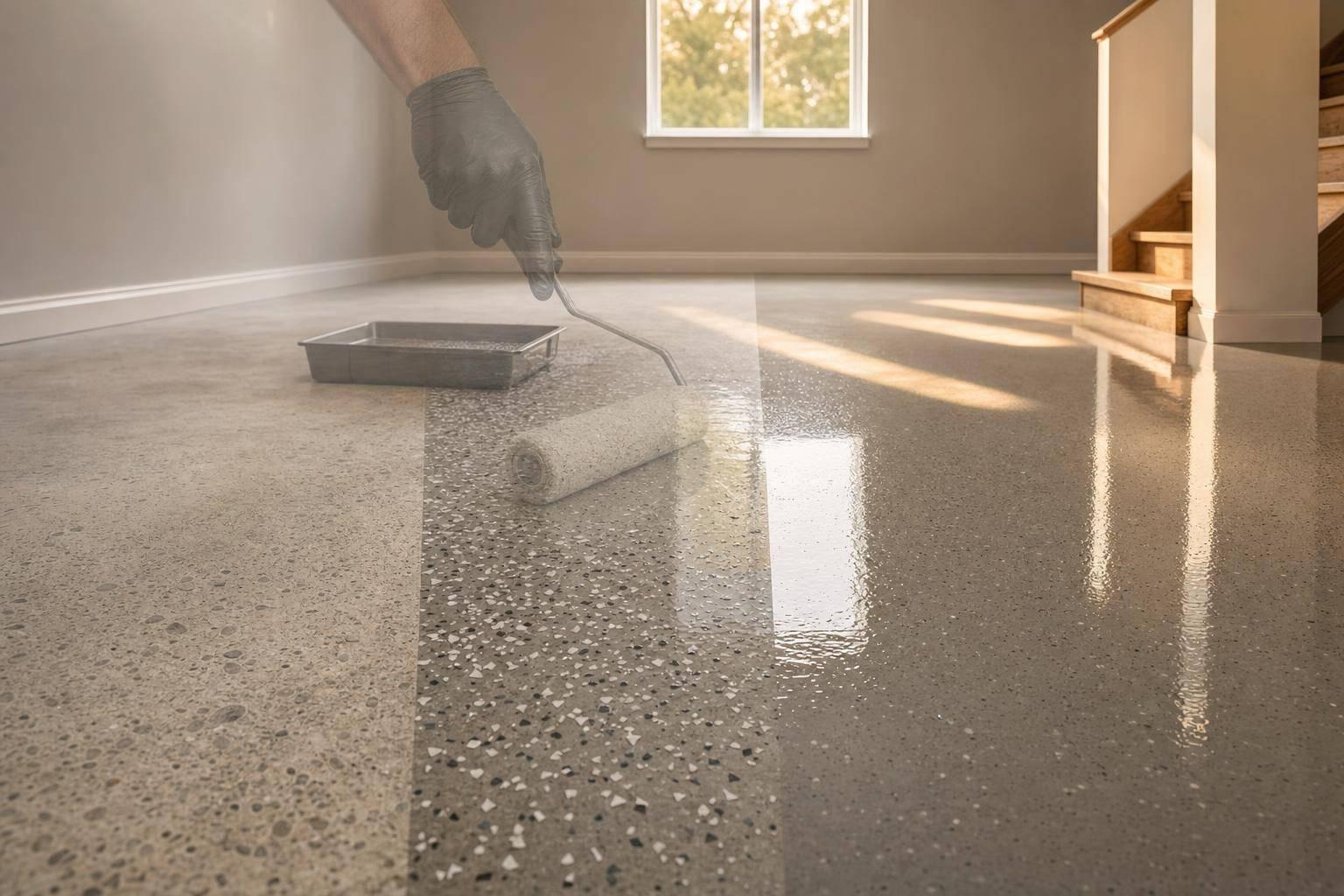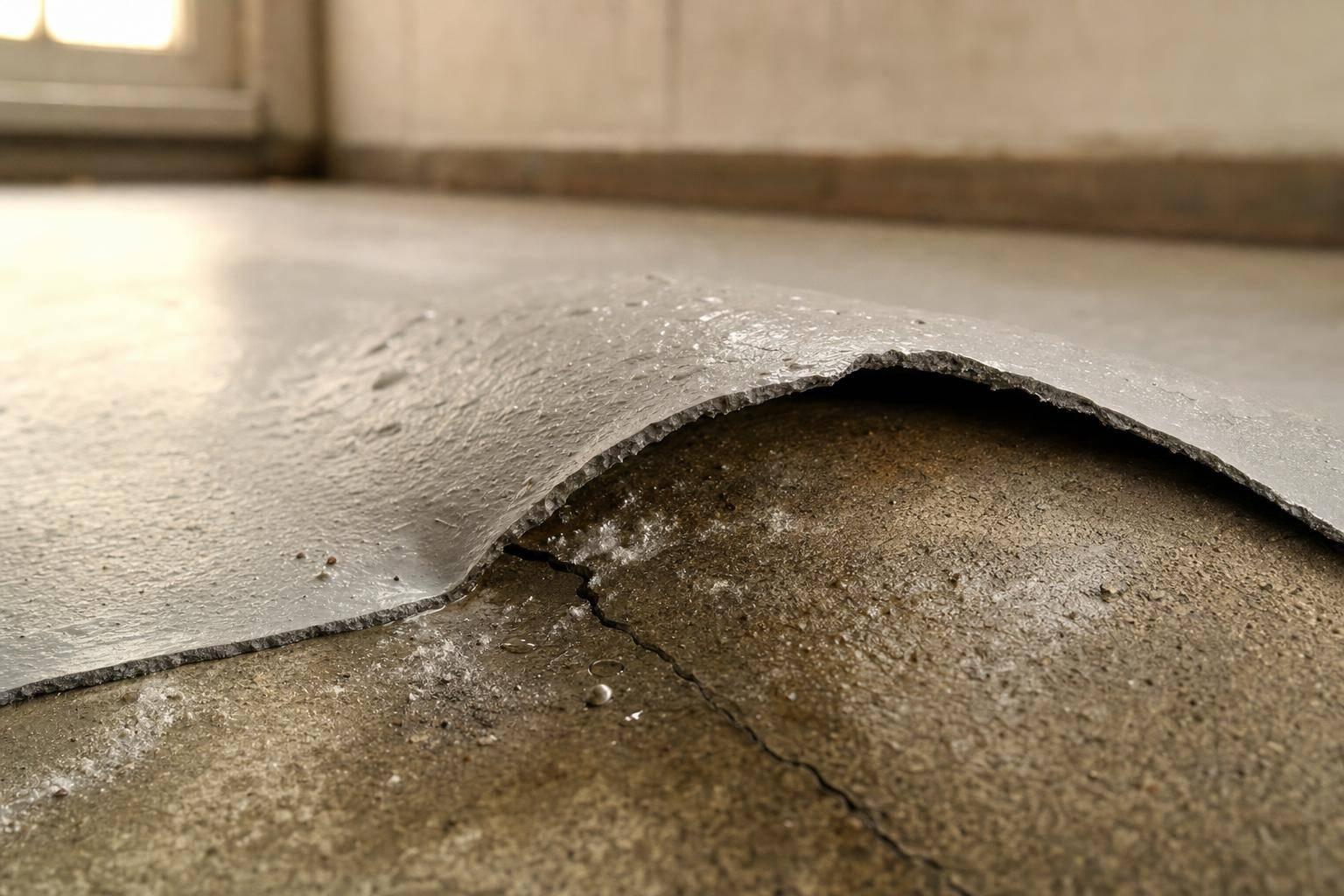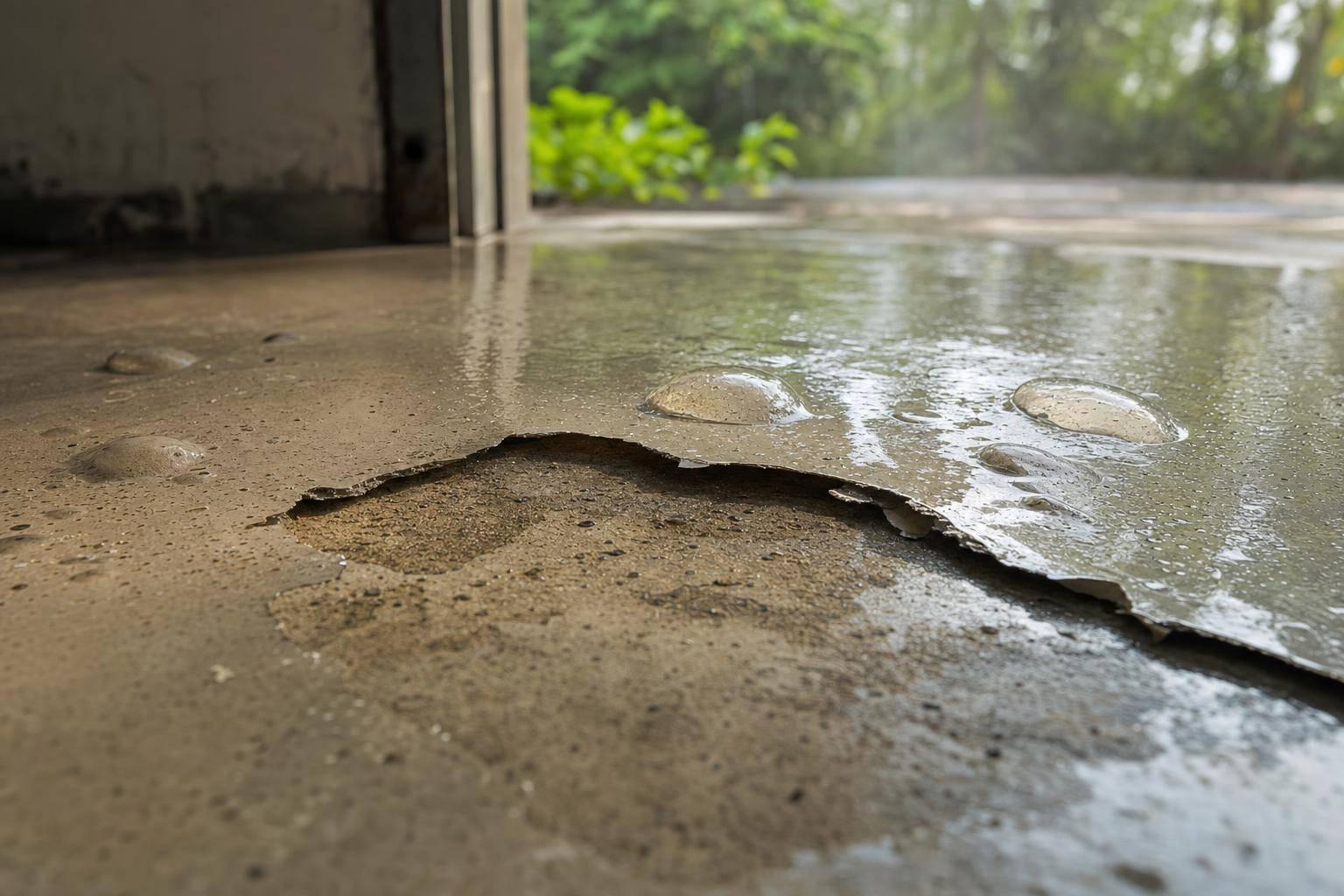
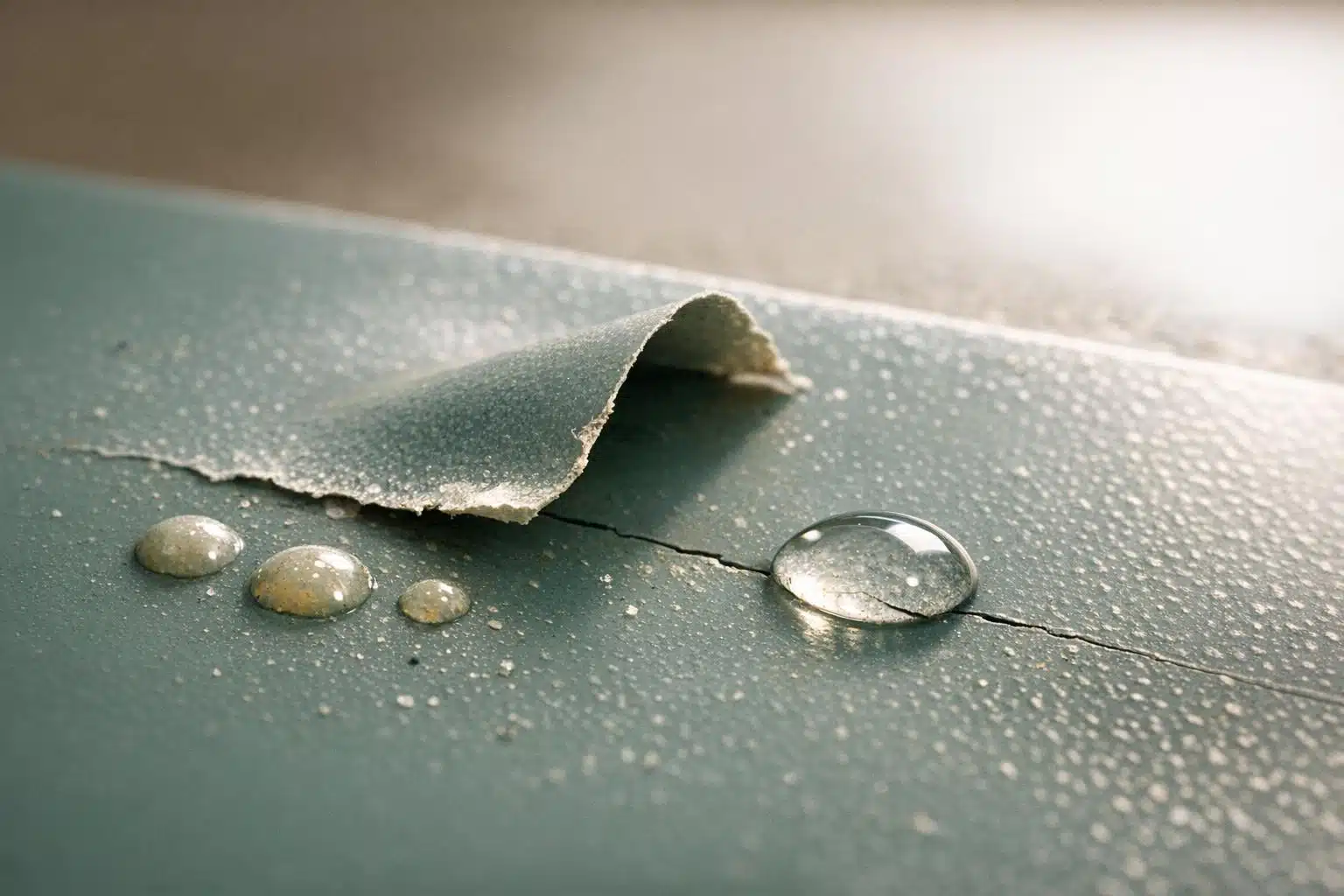
When coatings fail, the issue often lies in hidden surface defects – like moisture, contamination, or cracks – rather than the coating itself. These flaws weaken adhesion and cause problems such as peeling, blistering, or cracking over time. Proper surface preparation and inspection are critical to prevent these failures and ensure long-lasting results.
Here’s what you need to know:
- Contamination: Oils, grease, or weak layers like laitance prevent coatings from bonding properly.
- Moisture: Trapped water or vapor pressure can lead to blistering and delamination. This is frequently caused by poor drainage around the slab. This is often driven by hydrostatic pressure forcing moisture through the slab.
- Cracks and Surface Texture: Structural flaws and improper surface profiles create stress points or adhesion issues.
To avoid these top causes of concrete coating failures, thorough inspections should check for contaminants, moisture levels, adhesion testing methods, using concrete moisture testing, and surface texture. Addressing these early ensures the coating performs as intended and avoids costly repairs later.
How to Prevent Concrete Floor Coatings from Failing!
sbb-itb-a0e5ae3
Surface Defects That Trigger Coating Failures
Sometimes, flaws in the surface go unnoticed during initial inspections but come back to haunt the coating later. Once applied, these imperfections can quietly compromise the entire system. Let’s take a closer look at how contamination, moisture, and structural issues can disrupt coating adhesion.
Contamination and Weak Surface Layers
Substances like oil, grease, silicone residue, and chemical curing agents are common culprits behind coating failures. These contaminants prevent the coating from properly bonding to the surface, leading to issues like fish eyes (small holes or separations in the wet film) or crater-like openings that disrupt the finish.
Another hidden problem is laitance – a powdery layer of cement and fine particles that forms as concrete cures. While it may seem solid, laitance is weak and unreliable. If a coating bonds to this layer instead of the underlying concrete, it can result in widespread peeling and delamination. The challenge? Laitance often looks just like sound concrete to the naked eye.
"Preparation-related issues are not always immediately apparent as distinct visual flaws. Instead, insufficient cleaning, poor surface profile or residual contamination create the conditions in which defects… are far more likely to occur." – Dangle Academy
Moisture and Vapor Pressure Problems
Concrete can hold moisture long after the surface appears dry. This is especially problematic in areas with heavy snowmelt, high water tables, or poor drainage – situations common in regions like North Idaho and Eastern Washington. Moisture trapped deep within the slab can migrate upward, creating vapor pressure beneath the coating. If this pressure surpasses the adhesive strength of the coating, it can cause blistering and delamination.
An even trickier issue is osmotic blistering. This happens when water-soluble salts left on the surface attract moisture through the coating film after it’s applied. Even if the slab seemed dry during installation, this process can lead to significant problems.
Structural inconsistencies only add to these challenges, further threatening the coating’s durability.
Cracks, Spalls, and Surface Profile Issues
Cracks and spalls in the concrete aren’t just structural concerns – they also create stress points that can transfer directly through the coating. These flaws often "telegraph" through, mimicking the underlying damage. While static cracks can be filled, dynamic cracks (those that move) need flexible treatments. Without this flexibility, the coating above will crack in the same pattern.
The surface profile is another critical factor. If the surface is too smooth, the coating won’t have enough texture to grip properly. On the other hand, a profile that’s too rough can trap air in deep pores. As the coating dries, this air escapes, forming pinholes that expose the substrate. Both extremes can lead to premature failure, making proper surface preparation essential.
How Each Defect Type Causes Coating Failure
Understanding why defects lead to coating failures – not just that they do – reveals why cutting corners during surface preparation is always a bad idea.
Adhesion Loss and Peeling
Concrete’s porous nature allows oils to seep in, creating a hydrophobic barrier that prevents proper coating adhesion. When a liquid coating is applied over this barrier, it struggles to spread evenly. Instead, it pulls back into droplets or avoids contaminated areas altogether. This phenomenon, known as "crawling", leaves parts of the surface exposed and unprotected.
A lack of surface texture can also prevent the coating from gripping effectively. In high-use areas like garages or patios, this weak bond often leads to large sections of the coating peeling away cleanly from the concrete.
"If these [oils] have ever been spilled on your floor, they may have soaked into the concrete… the oils could be reacting with the coating, causing it to crack, blister, and peel." – Jamie Gillespie, CPC Floor Coatings
Proper surface preparation and pre-inspection are key to identifying these risks. Adhesion issues like these often pave the way for additional problems, particularly when moisture becomes trapped under the coating.
Blistering and Bubbling from Moisture
Applying a coating to a moisture-filled slab traps vapor beneath the surface. As temperatures rise, the vapor expands, forming blisters that range in size from tiny bubbles to several centimeters across.
Osmotic blistering is another moisture-related issue. It happens when soluble salts in the concrete draw water through the coating film, creating pressurized liquid pockets. These pockets force the coating to separate from the surface. Excess moisture can also raise the concrete’s pH, which weakens the adhesive bond of many coatings.
A thorough concrete inspection can help spot potential moisture problems before they escalate.
Telegraphing and Surface Cracking
Structural movement presents another challenge, as it amplifies coating failures by reflecting substrate flaws. For instance, coating over an existing crack doesn’t solve the problem – movement in the substrate will eventually cause the crack to reappear in the coating. While static cracks can be filled, dynamic ones require flexible solutions. Without this flexibility, the coating will simply mimic the substrate’s movement.
Another issue arises when a coating is applied too thickly in an attempt to level out an uneven surface. As the coating cures, it builds up internal stress, leading to deep, irregular cracks resembling dried mud. This mud cracking indicates the coating was pushed beyond its limits, often due to an unaddressed surface profile issue.
"Cracking occurs when the coating film fractures due to stress, movement or excessive thickness." – Dangle Academy
Identifying these risks through effective pre-inspection can save time, money, and effort in the long run.
How Proper Inspections Prevent Coating Failures
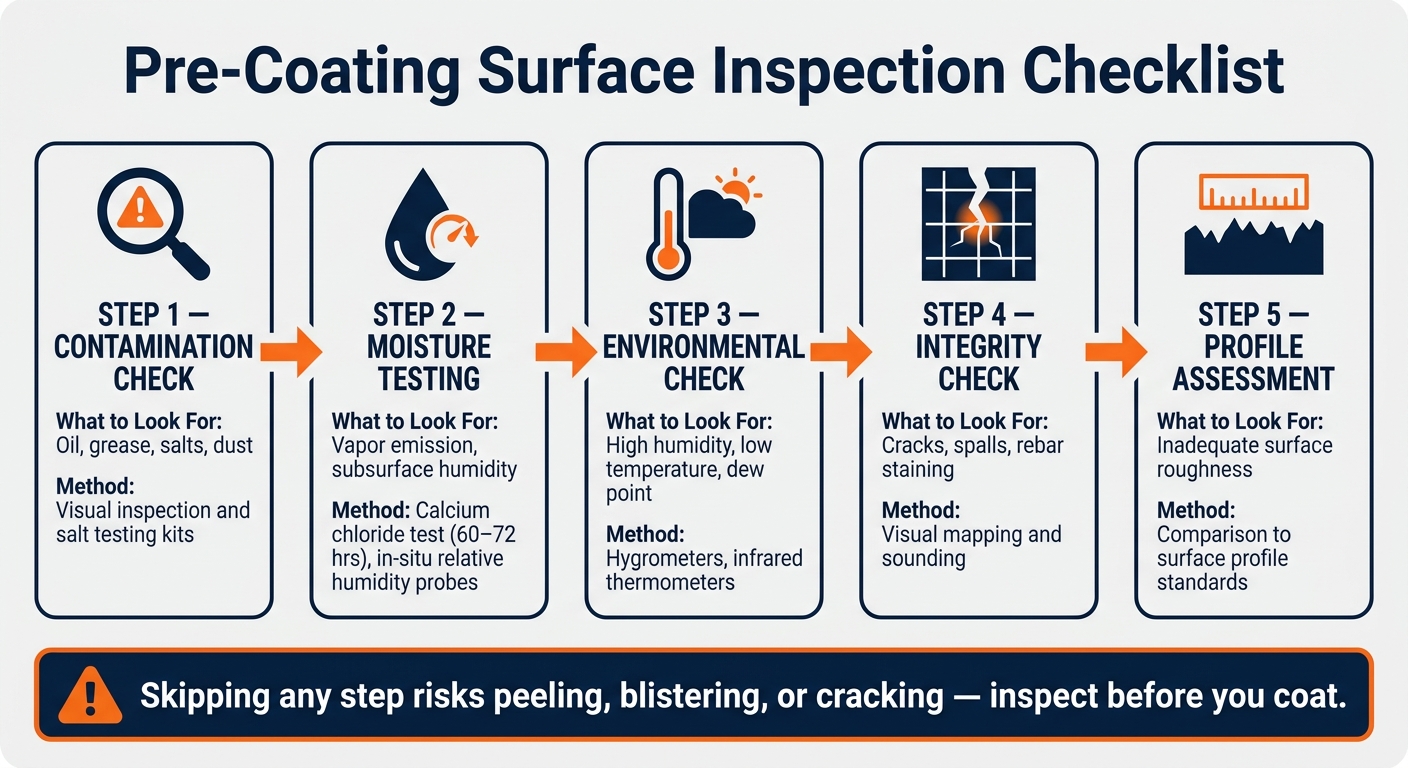
Coating Failure Prevention: Surface Inspection Checklist
Once you understand how defects can lead to coating failures, the next logical step is focusing on inspections. A thorough inspection process before applying any coating is the best way to catch and address issues early, when solutions are still straightforward. Sherwin-Williams highlights the importance of this approach:
"The foundation of any successful coating system is surface preparation. Full-time inspection of the work by a qualified inspector is the best way to assure the job is completed correctly."
Checking for Surface Contamination and Visible Defects
Start with a visual sweep of the surface. Look out for oil or grease stains, dust, and any cracking or spalling. Salt contamination is another sneaky culprit – though it’s invisible, chlorides can cause osmotic blistering. Testing kits can help detect these hidden dangers before they escalate.
Once you’ve dealt with contaminants, confirm that moisture levels are within the acceptable range.
### Testing Concrete Slabs for Moisture
MVER testing is especially important for concrete slabs that are on-grade or below-grade, where vapor drive may pose a risk. Two common methods are:
- Calcium chloride test: Measures moisture emission over 60–72 hours.
- In-situ relative humidity probes: Assess moisture levels deeper within the slab.
Beyond the slab itself, keep an eye on the ambient environment. Factors like humidity, temperature, and dew point can lead to condensation, which undermines adhesion.
Once moisture concerns are addressed, the next step is evaluating the surface profile.
Assessing Surface Profile and Mapping Defects
The surface profile – or the tiny roughness of the concrete – plays a big role in ensuring a strong mechanical bond between the coating and the substrate.
"A smooth substrate lacks the necessary texture to allow the coating to grip effectively. If the profile is too shallow, the coating may peel or delaminate over time." – Sherwin-Williams
After determining the surface profile, take note of visible defects like cracks, spalls, or rebar staining. Document these issues and make necessary repairs before moving forward. If repairs affect the surface texture, re-profile the area to ensure the coating will adhere properly. These inspections and adjustments lay the groundwork for a durable, long-lasting coating system, illustrating why surface prep matters for every project.
| Inspection Step | What to Look For | Method |
|---|---|---|
| Contamination Check | Oil, grease, salts, dust | Visual inspection and salt testing |
| Moisture Testing | Vapor emission, subsurface humidity | Calcium chloride test, in-situ relative humidity probes |
| Environmental Check | High humidity, low temperature, dew point | Hygrometers, infrared thermometers |
| Integrity Check | Cracks, spalls, rebar staining | Visual mapping, sounding |
| Profile Assessment | Inadequate roughness | Comparison to surface profile standards |
Conclusion: Getting Coating Installations Right the First Time
Surface flaws can be sneaky. Issues like contamination, moisture, or improper surface preparation often stay hidden until the coating begins to fail – whether it’s peeling, blistering, or cracking. And these problems don’t always show up right away; sometimes, they appear months after the work is done. Fixing these kinds of failures can be incredibly expensive compared to taking preventative measures upfront.
"Remediating coating failures is almost always more expensive than preventing them." – Sherwin-Williams
To sidestep these costly mistakes, thorough inspection is non-negotiable. Knowing what to expect during a consultation can help you prepare for this critical step. This means checking for contamination, preventing moisture-related coating failures through testing, and ensuring the surface profile is up to standard. These steps lay the foundation for a coating that holds up over time. From preparation to application and post-cure evaluations, every stage plays a role in the final result.
Professional expertise is key. Following a well-established system ensures consistent, long-lasting outcomes. For example, Croc Coatings applies a rigorous, inspection-driven process for every project in North Idaho and Eastern Washington. Their Penntek Evolution system stands out – it’s designed to be four times stronger than epoxy and built to resist UV damage, temperature swings, and mechanical wear. But the real magic lies in the preparation. Their certified team addresses every surface condition before applying the coating, and they back their residential installations with a lifetime warranty.
FAQs
How can I tell if my concrete has hidden moisture?
Detecting hidden moisture in concrete requires the use of professional moisture detection tools. These tools are designed to pinpoint water trapped beneath surfaces or in hard-to-see areas, often before any visible signs become apparent. Conducting thorough testing helps catch problems early, reducing the risk of damage or issues like coating failures.
What’s the fastest way to check for oil or silicone contamination?
The fastest way to check for oil or silicone contamination is to do a surface wipe test using a solvent such as isopropyl alcohol. This approach lets you spot contamination by visually examining any residue that remains after wiping.
Do cracks always need a flexible repair before coating?
Cracks don’t always require a flexible repair before applying a coating. However, if the cracks are active or likely to shift, using a flexible repair material is a smart choice to avoid potential coating failure. Taking the time to prepare properly helps ensure the coating stays durable and performs well in the long run.