Moisture vapor emission testing ensures concrete subfloors are ready for coatings by testing concrete moisture levels. High moisture can cause coating failures like bubbling, delamination, or structural damage. Two primary tests – ASTM F1869 (surface moisture) and ASTM F2170 (internal relative humidity) – are used to assess moisture conditions. Croc Coatings emphasizes these tests to ensure proper adhesion of their durable Penntek Evolution system.
Key Points:
- ASTM F1869: Measures surface moisture vapor (MVER) using calcium chloride. Results in lbs/1,000 sq. ft./24 hours.
- ASTM F2170: Measures internal RH using probes inserted into the slab. Results in % RH.
- Thresholds: MVER ≤ 3 lbs (ASTM F1869) or RH ≤ 75–80% (ASTM F2170) are acceptable for most coatings.
- Preparation: Testing is done on clean, bare concrete in controlled environments with stable temperature and humidity.
Best Practice: Use both tests for a complete moisture profile. If levels exceed limits, delay installation or apply moisture-tolerant solutions to prevent failures.
Industry Standards for Moisture Vapor Emission Testing
ASTM F1869: Calcium Chloride Test
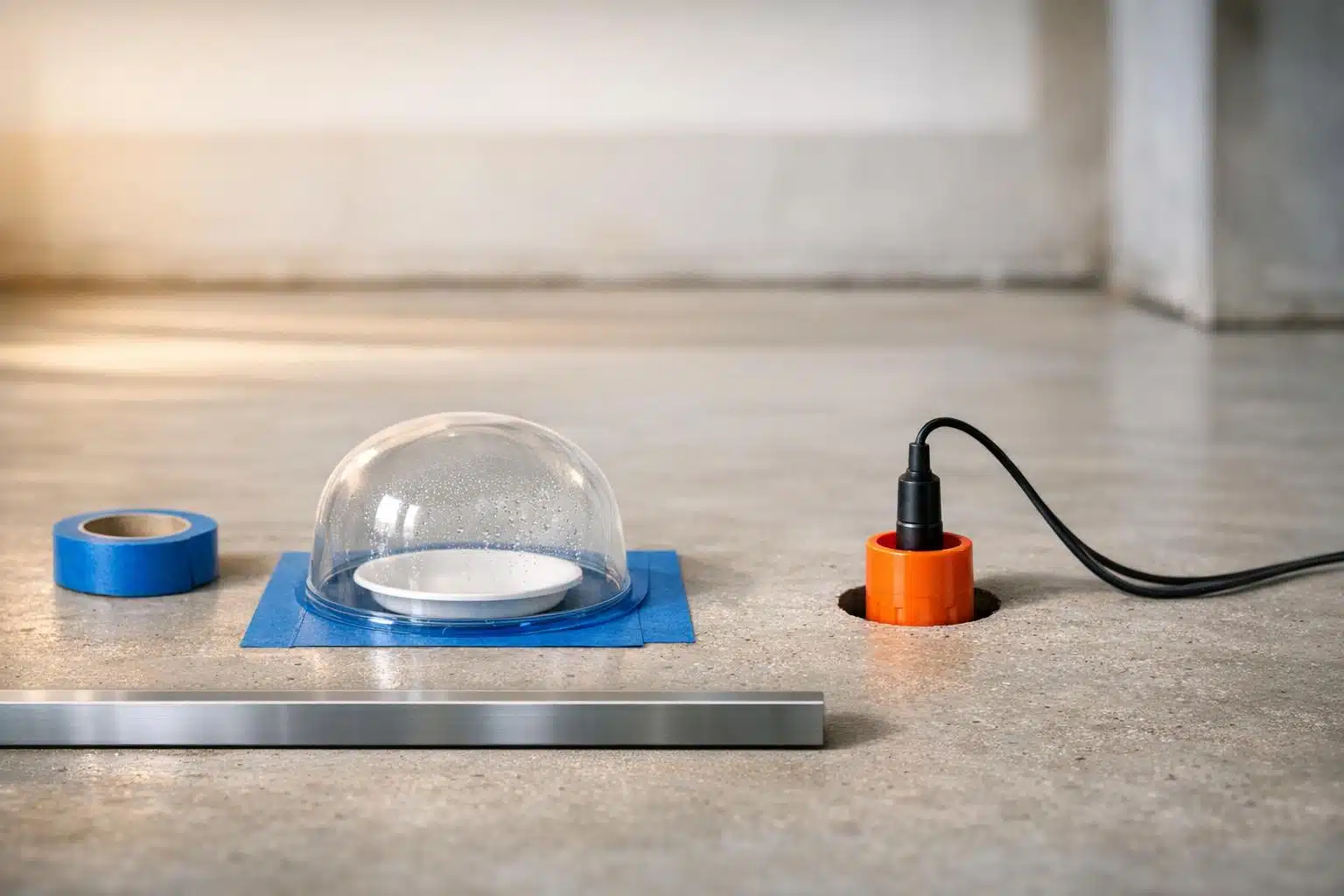
ASTM F1869 outlines the method for determining the Moisture Vapor Emission Rate (MVER) of concrete subfloors using anhydrous calcium chloride. This test involves placing a container of calcium chloride under a sealed dome designed to trap moisture emitted from the concrete surface. Over a 24-hour period, the calcium chloride absorbs water vapor, and the weight gain is measured using a scale with 0.1-gram precision. The results are reported in pounds of moisture per 1,000 square feet.
This method is suitable for bare concrete floors, whether they are below-grade, on-grade, or above-grade. It is widely recognized in the flooring industry as a key measure of moisture acceptability before following a pre-installation checklist. While ASTM F1869 focuses on surface moisture, ASTM F2170 complements it by assessing internal moisture levels for a more thorough evaluation.
ASTM F2170: Relative Humidity Test
ASTM F2170 uses an in situ probe method to measure the internal relative humidity (RH) of the concrete slab, offering a deeper understanding of its moisture condition. This test involves drilling holes into the slab and inserting probes that measure RH levels once the concrete has reached equilibrium. Unlike surface tests, this method identifies trapped internal moisture that surface drying might conceal. Tools like BluePeg Sleeves ensure accurate probe placement and reliable readings.
Additional Standards and Guidelines
Several other standards contribute to a comprehensive approach to moisture testing. For example:
- ASTM E1907 provides additional procedures for moisture testing.
- ASTM E96 focuses on permeability testing, which examines how moisture moves through materials.
- The International Concrete Repair Institute (ICRI) offers guidelines on surface preparation for concrete coatings, highlighting the importance of moisture testing before applying coatings.
These standards collectively establish a robust framework for assessing moisture levels and ensuring proper substrate preparation.
sbb-itb-a0e5ae3
Best Practices for Accurate Moisture Testing
Test Frequency and Placement
To get a clear picture of moisture levels in your concrete slab, it’s crucial to test in multiple locations. Focus on areas that look darker or show signs of efflorescence, as these spots often indicate higher moisture. Spread the testing across the slab to account for variability. For dependable results, make sure the testing environment remains stable throughout the process.
Controlling Environmental Conditions
Before testing, the building should be fully enclosed and weather-tight. The permanent HVAC system needs to be operational to maintain consistent temperature and humidity levels. Conduct tests on clean, bare concrete that’s properly prepared – this means removing any curing agents, residues, or bond-breakers beforehand.
Using ASTM F1869 and F2170 Together
When conditions are controlled, combining ASTM F1869 and F2170 tests provides a well-rounded view of the slab’s moisture levels. Both test results must align with the manufacturer’s specifications before proceeding with installation. If moisture levels exceed these limits, consider extending the drying period or using a vapor barrier or moisture remediation system. Keep in mind, moisture tests reflect the slab’s condition at the moment of testing – they don’t predict future changes.
What is ASTM F2170 – Relative Humidity (RH) Testing
ASTM F1869 vs. ASTM F2170: A Comparison
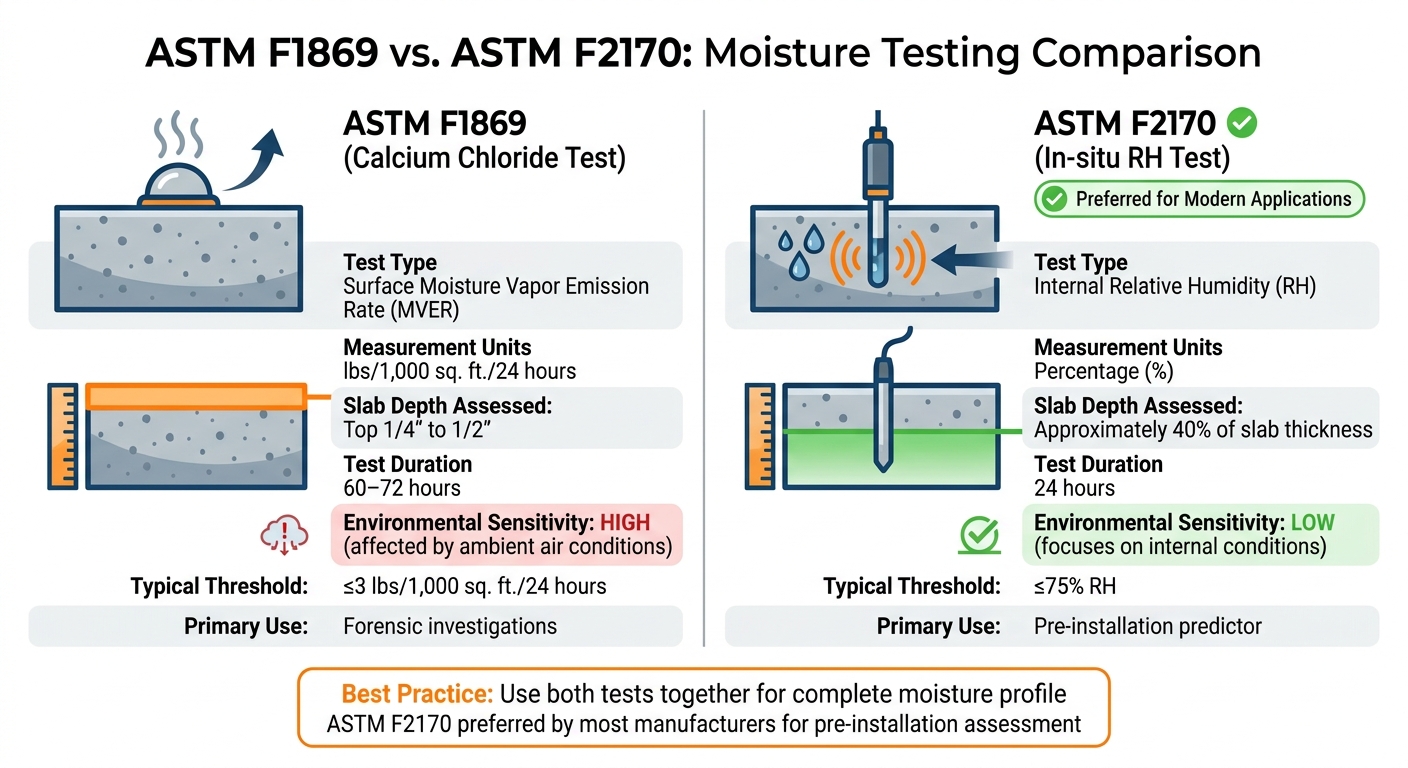
ASTM F1869 vs F2170 Moisture Testing Methods Comparison
When it comes to evaluating moisture in concrete slabs, understanding the differences between ASTM F1869 and ASTM F2170 helps determine which method aligns best with your project.
Comparison Table: ASTM F1869 vs. ASTM F2170
Here’s a side-by-side look at these two testing methods:
| Feature | ASTM F1869 (Calcium Chloride) | ASTM F2170 (In-situ RH) |
|---|---|---|
| Test Type | Surface Moisture Vapor Emission Rate (MVER) | Internal Relative Humidity (RH) |
| Measurement Units | lbs/1,000 sq. ft./24 hours | Percentage (%) |
| Slab Depth Assessed | Top 1/4" to 1/2" | Approximately 40% of slab thickness |
| Test Duration | 60–72 hours | 24 hours |
| Environmental Sensitivity | High (affected by ambient air conditions) | Low (focuses on internal conditions) |
| Typical Threshold | ≤3 lbs/1,000 sq. ft./24 hours | ≤75% RH |
The calcium chloride test (ASTM F1869) measures surface moisture, while the in-situ relative humidity test (ASTM F2170) evaluates moisture deeper within the slab. However, surface conditions can skew ASTM F1869 results. For instance, curing compounds or over-troweled concrete can block moisture flow, leading to readings that may underestimate actual moisture levels.
"Since excessive moisture in concrete is always going to be the highest further down from the surface, anything that blocks the flow of water to the surface… will give a lower MVER result than is actually present."
– Howard Brickman, Wood Floor Business
These differences are critical for choosing the right testing method based on your project’s needs.
Choosing the Right Test for Your Project
Today, many manufacturers of floor coverings and coatings favor ASTM F2170 as their go-to testing method. Its accuracy in predicting common concrete coating failures makes it a reliable choice for pre-installation assessments. On the other hand, ASTM F1869 is now primarily used in forensic investigations of moisture-related failures.
"When a single test is specified, it is our opinion that the calcium chloride test is best used as a forensic tool in failure investigations and in-situ relative humidity tests are the better pre-installation predictor."
– George Donnelly, George Donnelly Testing and Inspections
For products like Penntek Evolution industrial coatings by Croc Coatings, precise moisture evaluation is essential. The RH test’s ability to measure moisture at approximately 40% of the slab’s depth offers a more accurate picture of internal moisture conditions. Additionally, ASTM F2170’s shorter 24-hour test duration helps keep projects on schedule without sacrificing precision. This method is particularly crucial for lightweight aggregate concrete, where ASTM F1869 is not applicable.
Conclusion
Summary of Testing Standards
Moisture vapor emission testing plays a crucial role in ensuring the success of concrete coatings. Together, these tests provide the necessary data to reduce the risk of moisture-related failures. ASTM F1869 measures the moisture vapor emission rate from concrete subfloors, giving a clear picture of surface moisture levels. On the other hand, ASTM F2170 evaluates internal relative humidity, offering insight into the substrate’s deeper, long-term moisture conditions. These standards empower contractors to identify potential moisture problems early, preventing costly coating failures.
Croc Coatings‘ Approach to Quality

At Croc Coatings, every project starts with thorough moisture testing as part of the preparation process. Before applying the 4×-strong Penntek Evolution system, the team ensures the slab moisture aligns with the manufacturer’s specifications. This careful attention to detail supports their lifetime warranty for residential installations and 5-year warranty for commercial projects. From a garage floor in Spokane to an industrial space in the Tri-Cities, each installation benefits from a one-day process that prioritizes precision and quality. These high standards are the backbone of every project Croc Coatings undertakes.
Recommendations for Substrate Preparation
Adhering to proper substrate preparation practices is essential. Skipping moisture testing to cut corners often leads to coating failures, which can end up being far more expensive than the tests themselves. Combining results from ASTM F1869 and ASTM F2170 provides a comprehensive evaluation, addressing both surface and deeper moisture concerns. This dual approach ensures the coating’s durability and long-term performance, making it a critical step for any successful project.
FAQs
How many moisture tests do I need for my slab?
It’s a good idea to perform at least two moisture tests on a slab: the calcium chloride test (ASTM F1869) and the in-slab relative humidity probe test (ASTM F2170). Together, these tests give a thorough understanding of moisture levels, helping ensure the substrate is ready for flooring installation.
When should I choose ASTM F2170 over ASTM F1869?
When you need to measure relative humidity (RH) inside a concrete slab, go with ASTM F2170. This method uses in-situ probes to assess internal RH levels, making it perfect for projects where RH testing is required or when ensuring proper adhesion and long-term durability is critical.
On the other hand, ASTM F1869 focuses on surface vapor emission. It’s ideal for quick, surface-level evaluations but may miss moisture issues deeper within the slab.
What can I do if my concrete fails a moisture test?
If your concrete doesn’t pass a moisture test, it’s crucial to tackle the excess moisture before applying any coating system. Some common solutions include:
- Installing vapor barriers to block moisture from seeping through.
- Using moisture-mitigating coatings designed to manage and reduce moisture levels.
- Allowing the slab additional drying time to naturally reach acceptable moisture thresholds.
Make sure the moisture levels align with the requirements of your chosen coating system to prevent future problems. For tailored advice, consider consulting a flooring or coating professional who can recommend the best approach for your specific situation.