If you’re weighing the epoxy basement floor pros and cons, you’re asking the right question — this isn’t a decision to make on looks alone. Epoxy can transform a dusty concrete slab into a finished, waterproof surface. It can also delaminate, yellow, and turn slippery when wet if the conditions aren’t right. This guide walks through both sides honestly, then covers a polyurea alternative that solves epoxy’s biggest weaknesses.
Key takeaways:
- Durability: Epoxy creates a tough, waterproof surface that resists stains, mold, and wear — but it typically shows significant wear within 3–5 years.
- Installation: Professional installation takes 3–5 days with multiple curing stages; DIY kits are cheaper but risk adhesion failure without proper surface prep.
- Cost: Professionally installed epoxy runs $5–$15 per square foot, placing a typical basement between $5,000 and $15,000.
- Safety: Standard epoxy becomes slippery when wet — a real concern in basements prone to humidity or water intrusion.
- The upgrade path: Polyurea systems like Penntek Evolution solve epoxy’s biggest weaknesses (UV yellowing, slipperiness, short lifespan) at a higher upfront cost.
Epoxy Basement Floor Pros and Cons: What You’re Weighing
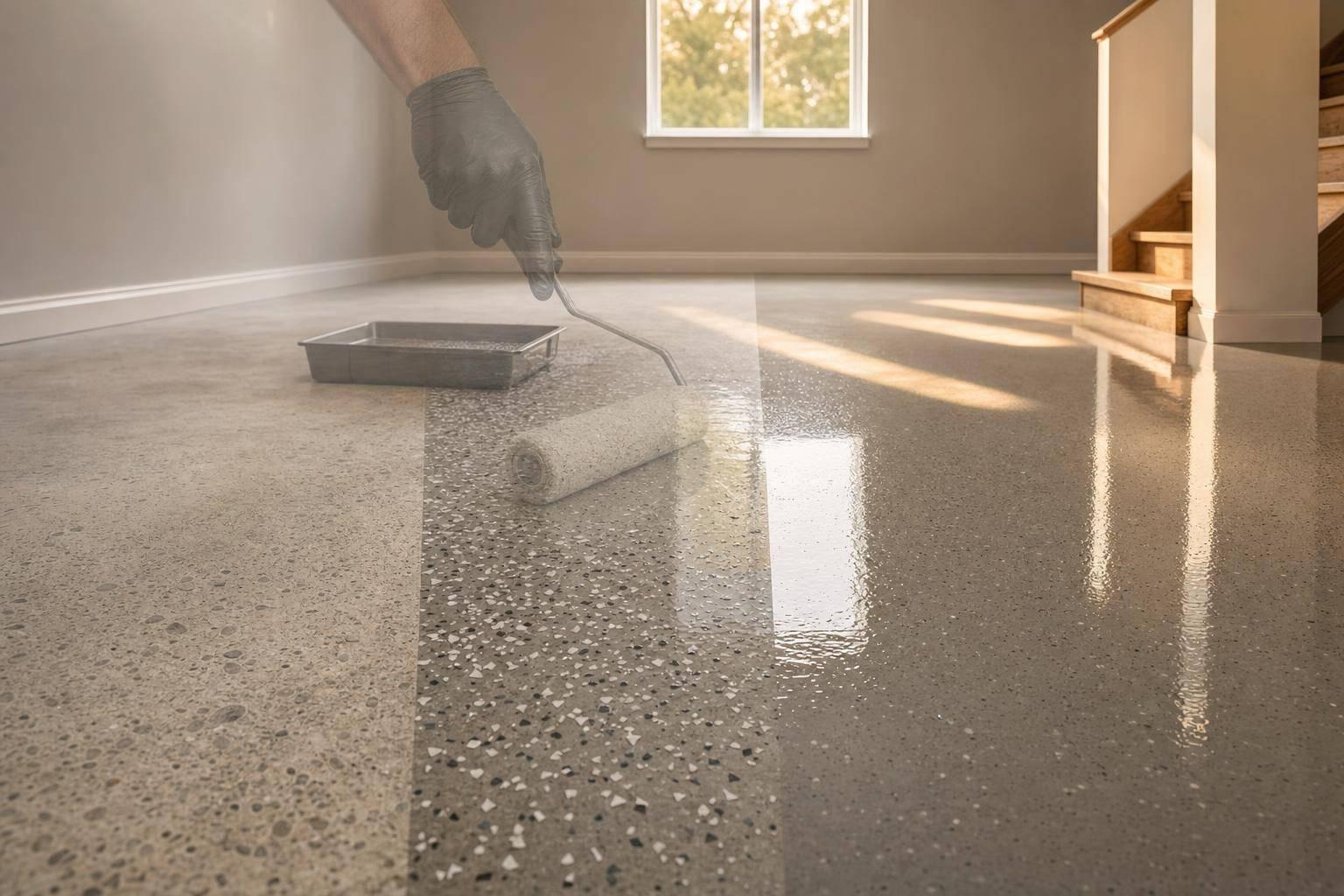
Epoxy is a two-part thermosetting coating — a resin and a hardener mixed together — that bonds chemically to a prepared concrete slab. Once cured, it forms a seamless, high-gloss surface far tougher than bare concrete. Homeowners use it to turn a dusty, porous basement floor into a finished surface that handles foot traffic, workshop use, and occasional moisture without staining or degrading.
It’s not paint. Paint sits on top of concrete and peels. Epoxy penetrates and bonds at a molecular level, which is why proper surface preparation matters so much — skip it, and the coating will fail.
The Pros of Epoxy Basement Floors
PRO: Excellent Durability
A properly installed epoxy floor handles what basements throw at it. It resists chips from dropped tools, scuffs from foot traffic, and stains from oil, chemicals, or cleaning products. The chemical resistance alone makes it a strong choice for basements used as workshops, laundry rooms, or storage for vehicles and equipment.
That said, durability has limits. According to Floortek Coatings’ installer guide, a professionally installed epoxy floor typically lasts 3 to 5 years before peeling, fading, or staining become noticeable. Recoating with a fresh topcoat can extend the lifespan to 10–20 years in ideal conditions, but basements — with their moisture and temperature swings — rarely offer ideal conditions.
PRO: Moisture Resistance
Epoxy creates a waterproof barrier over the concrete slab, which is why it’s often recommended for basements. It seals the porous concrete surface and helps prevent ground moisture from wicking up through the slab into your living space. This also inhibits mold and mildew growth — a real concern in below-grade rooms.
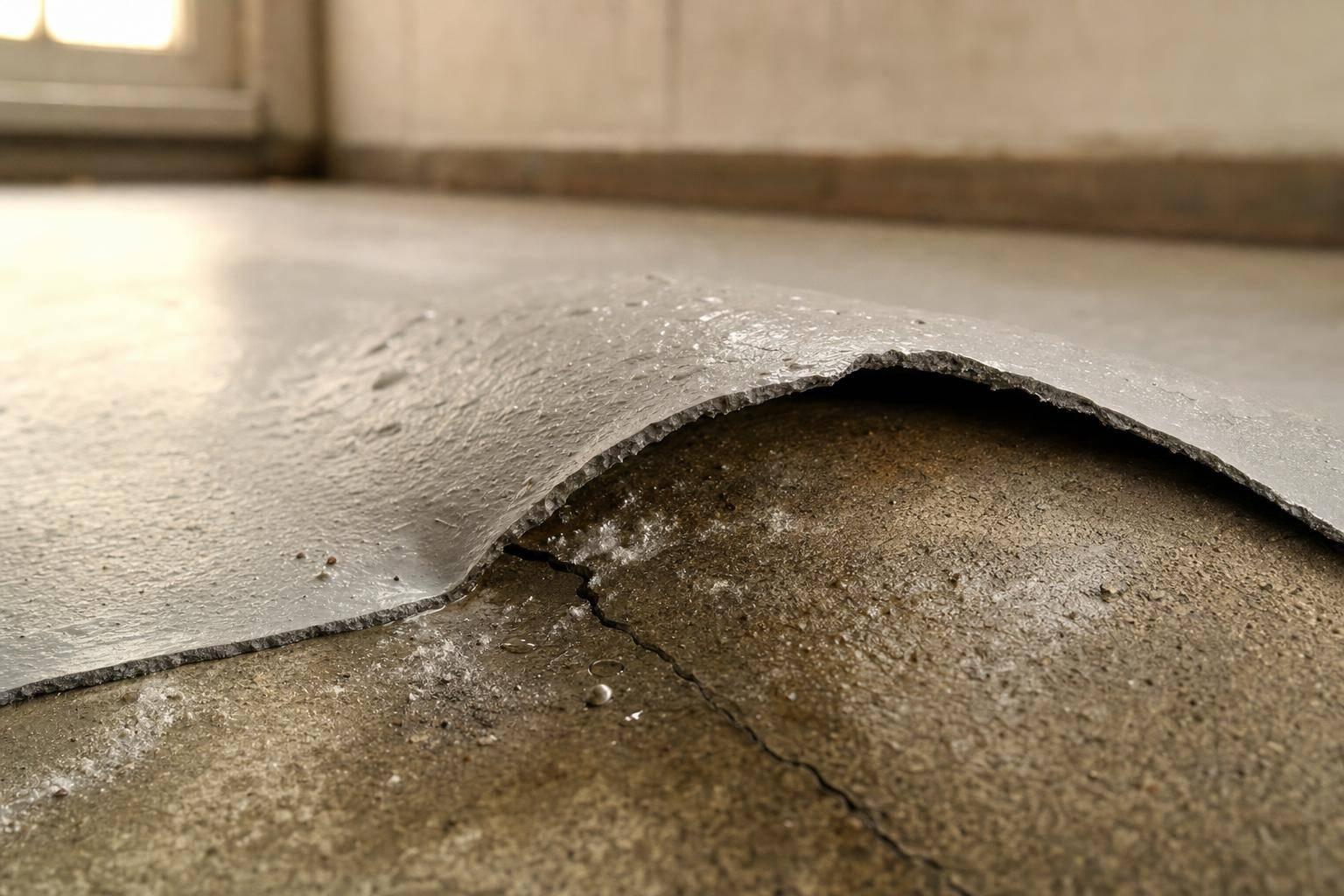
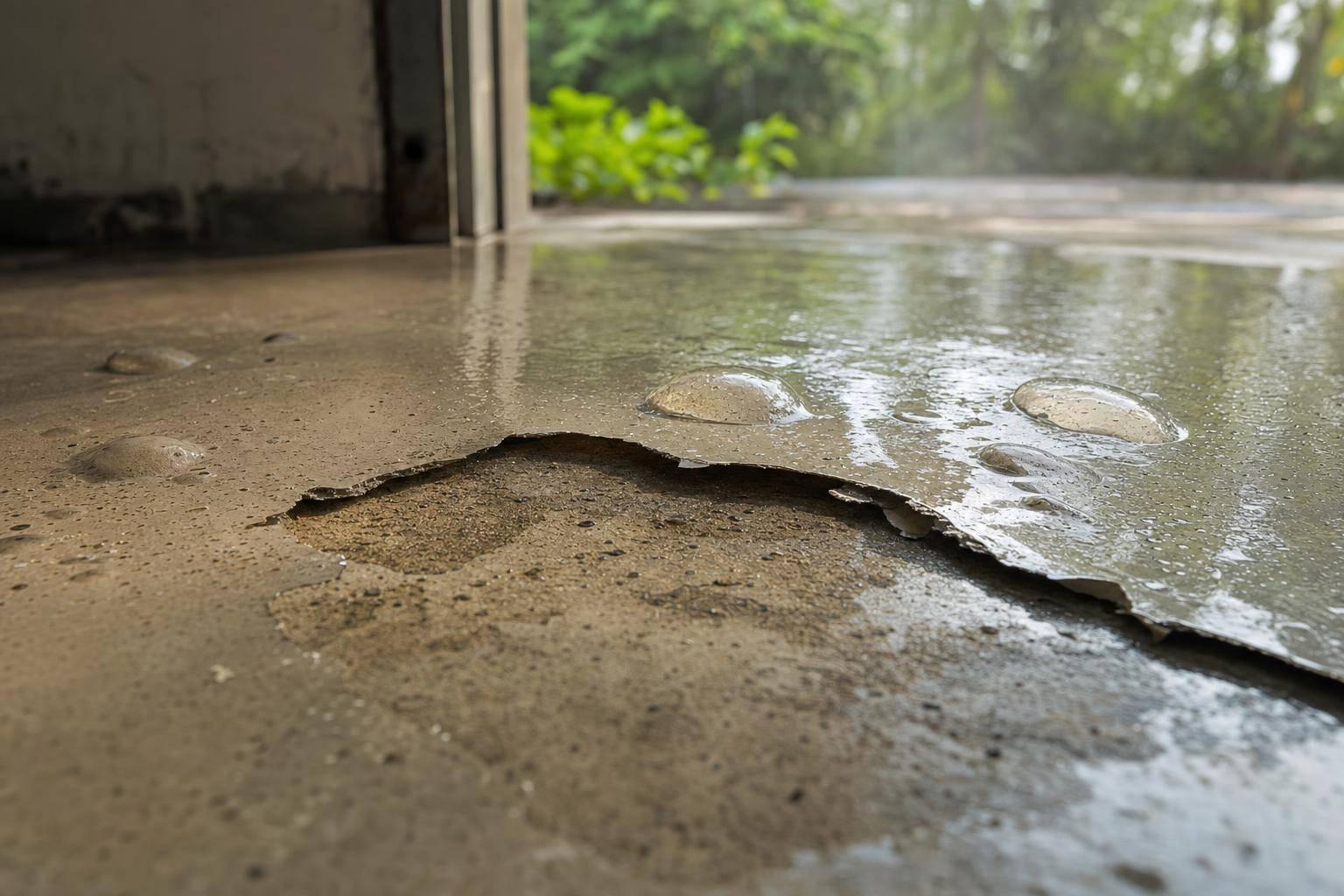
The caveat: epoxy resists moisture from above, not from below. If your basement has active moisture problems — water seeping through cracks or high vapor transmission through the slab — the coating can’t fix that. The moisture will eventually push the epoxy off the concrete from underneath, causing delamination.
PRO: Affordable Compared to Alternatives
At $5–$15 per square foot professionally installed, epoxy undercuts most finished flooring options. Here’s how it stacks up per square foot:
- Epoxy coating: $5–$15
- Porcelain tile: $12–$25
- Luxury vinyl plank: $8–$18
- Engineered hardwood: $10–$20
- Polished concrete: $8–$15
For a 1,000 sq ft basement, that puts epoxy between $5,000 and $15,000 — competitive, especially when you factor in that it requires no underlayment, no subfloor, and installs directly on the existing slab. The DIY route cuts the material cost to $2–$3 per square foot, but the risk of adhesion failure from poor prep makes it a gamble many homeowners regret.
PRO: Design Flexibility
Epoxy isn’t just gray and glossy anymore. You can choose:
- Solid colors: Clean, uniform look in virtually any shade
- Decorative flake systems: Colorful vinyl chips broadcast into the wet epoxy that add texture, hide imperfections, and improve grip
- Metallic finishes: Mica pigments create a marbled, reflective surface that mimics natural stone and brightens dark basement spaces
- Quartz systems: Quartz granules mixed with epoxy for maximum slip resistance and a polished, professional appearance
This flexibility means epoxy can match anything from a home gym to a media room to a kids’ play area — versatility few other basement flooring options can match.
PRO: Low Day-to-Day Maintenance
Epoxy’s seamless surface means no grout lines, no seams, and nowhere for dirt to hide. Regular sweeping or vacuuming handles debris; an occasional mop with a mild, pH-neutral cleaner restores the shine. Spills wipe up without staining — oil, paint, wine, or pet accidents won’t leave a mark the way they would on carpet or unsealed concrete.
The Cons of Epoxy Basement Floors
CON: Demanding Installation and Long Cure Time
Professional installation is a multi-day process. The concrete must be ground or etched to open its pores, any existing coatings or sealers stripped, and cracks repaired. Then comes the application: a primer coat, the main epoxy body coat, and a protective topcoat — each requiring 24–48 hours of cure time before the next layer goes down. Total timeline: 3 to 5 days before you can walk on it, and up to a week before it reaches full chemical resistance.
DIY kits skip much of this, and that’s exactly why they fail. Without diamond grinding to the right concrete surface profile (CSP 3–4 for most epoxy systems), the coating has nothing to grip. Temperature and humidity also matter: most epoxies need 50°F–85°F with low humidity during application. Basements — cool, damp, and poorly ventilated — are among the hardest environments to hit those conditions. This is the number-one reason basement floor coating moisture problems derail installations.
CON: Slippery When Wet
Standard epoxy cures to a smooth, non-porous surface. That’s great for cleaning — and bad for traction. When water, condensation, or oil is present, epoxy can become dangerously slick. In a basement where humidity is common and pipes or appliances can leak, this isn’t a theoretical risk.
The fix — adding anti-slip additives like aluminum oxide grit or using a broadcast flake system — helps, but it also changes the floor’s appearance and makes cleaning slightly harder. It’s a tradeoff worth planning for before the coating goes down, not after someone slips.
CON: UV Yellowing and Discoloration
Most standard epoxies use amine-based curing agents that are vulnerable to ultraviolet light. The National Institute of Standards and Technology (NIST) has documented that amine-cured epoxy undergoes rapid photodegradation when exposed to UV. In a basement with window wells, walkout doors, or direct sunlight, the coating will yellow, chalk, and lose gloss — sometimes within the first year.
Clear topcoats with UV inhibitors slow the process but don’t stop it. If your basement gets natural light, UV stability needs to be part of the coating decision from day one — and standard epoxy often fails that test.
CON: Difficult and Costly Repairs
When epoxy fails, it doesn’t peel in a neat corner you can touch up. The coating bonds so aggressively that removal means diamond grinding the entire surface back to bare concrete — loud, dusty, expensive work. A patch repair on a damaged section rarely blends seamlessly with the surrounding floor, so a single gouge or delaminated patch often means living with a visible scar or redoing the whole floor.
This is where epoxy’s strength works against it: the same chemical bond that makes it durable also makes it unforgiving to fix. For basements that see heavy use or potential impacts, that’s a meaningful long-term consideration.
CON: Basement-Specific Moisture Risks
Garage floors and basement floors aren’t the same challenge. Basements sit below grade, where hydrostatic pressure pushes groundwater against the slab from underneath. Even a slab that looks dry can emit enough water vapor to cause epoxy delamination. The industry standard MVER (Moisture Vapor Emission Rate) threshold for epoxy is 3–5 lbs per 1,000 sq ft per 24 hours — and many basements, especially older ones without a vapor barrier under the slab, far exceed that threshold.
Preventing moisture-related coating failures starts with testing before you coat. A simple calcium chloride test tells you whether your slab is dry enough for epoxy. If it isn’t, you either fix the moisture source first or choose a coating system that can handle it — and standard epoxy generally can’t. This is the single biggest reason basement epoxy floors fail more often than garage floors, and it’s a risk most competitors’ articles gloss over.
What Homeowners Are Saying: Real Experiences
Search “epoxy basement floor” on Reddit or home improvement forums and the opinions split sharply. One camp loves the finished look and easy cleanup — basements that stayed dry, were professionally installed, and were protected from UV tend to get glowing reviews years later. The other camp regrets it, usually for reasons that trace back to the cons above:
- Peeling within two years — almost always a prep or moisture issue that wasn’t caught before coating
- Yellowing near windows — standard epoxy with no UV protection, or a clear coat that degraded faster than expected
- Slipperiness — homeowners who skipped anti-slip additives because they didn’t know they needed them
- Cost surprises — DIYers who budgeted $500 and ended up spending $2,000 after the first attempt failed
The pattern is clear: epoxy delivers when the slab is dry, the prep is thorough, the environment is controlled, and the expectations are realistic. It fails when those conditions aren’t met — and basements make meeting them harder than almost any other room in the house.
A Better Alternative: Penntek Evolution by Croc Coatings
2. Penntek Evolution Coating System by Croc Coatings
If the cons above gave you pause, you’re not alone. Many of epoxy’s weaknesses are inherent to the chemistry — which is why polyurea-based systems like the Penntek Evolution coating exist.
Penntek Evolution is an industrial-grade polyurea-polyaspartic hybrid that’s four times stronger than standard epoxy. It addresses epoxy’s biggest basement-specific problems:
- UV stability: Unlike amine-cured epoxy, Penntek won’t yellow or chalk when exposed to sunlight — backed by a lifetime warranty.
- Slip resistance: The surface is engineered with grip built in, so no separate anti-slip additive is needed. Learn more about how polyurea prevents slippery basement floors.
- One-day installation: The entire system — prep, base coat, broadcast, and topcoat — cures in a single day. No multi-day wait times or scheduling around cure windows.
- Moisture tolerance: Polyurea bonds with residual moisture rather than fighting it, reducing the delamination risk that haunts epoxy in basements. For homes in extreme temperature climates like North Idaho and Eastern Washington, this flexibility matters.
- Antimicrobial protection: The coating is antibacterial and antimicrobial, actively inhibiting mold and bacteria growth — a real advantage in below-grade spaces.
The tradeoff is cost. Penntek Evolution runs higher than standard epoxy — but when you factor in the lifetime warranty, the elimination of recoating cycles, and the reduced risk of moisture-related failure, the total cost of ownership often favors polyurea over a 15–20 year window. For a deeper comparison, see epoxy vs. polyurea.
sbb-itb-a0e5ae3
Epoxy vs. Penntek Evolution: Side-by-Side
| Feature | Standard Epoxy | Penntek Evolution |
|---|---|---|
| Strength | Reliable with proper care | 4x stronger than epoxy |
| Typical Lifespan | 3–5 years before visible wear; 10–20 with recoating | 15–20+ years; lifetime warranty |
| Installation Time | 3–5 days | 1 day |
| UV Resistance | Yellows and chalks over time (NIST-documented) | UV stable — won’t yellow |
| Slip Resistance | Slick when wet; needs additives | Engineered slip-resistant surface |
| Moisture Tolerance | Fails above 3–5 lbs MVER | Bonds with residual moisture |
| Antimicrobial | No | Yes — inhibits mold and bacteria |
| Repairability | Difficult; full grind-off required | Spot-repairable in most cases |
| Upfront Cost | $5–$15/sq ft installed | Higher initial investment |
| Long-Term Cost | Recoating every 3–5 years | Minimal — lifetime warranty |
Making the Right Choice for Your Basement
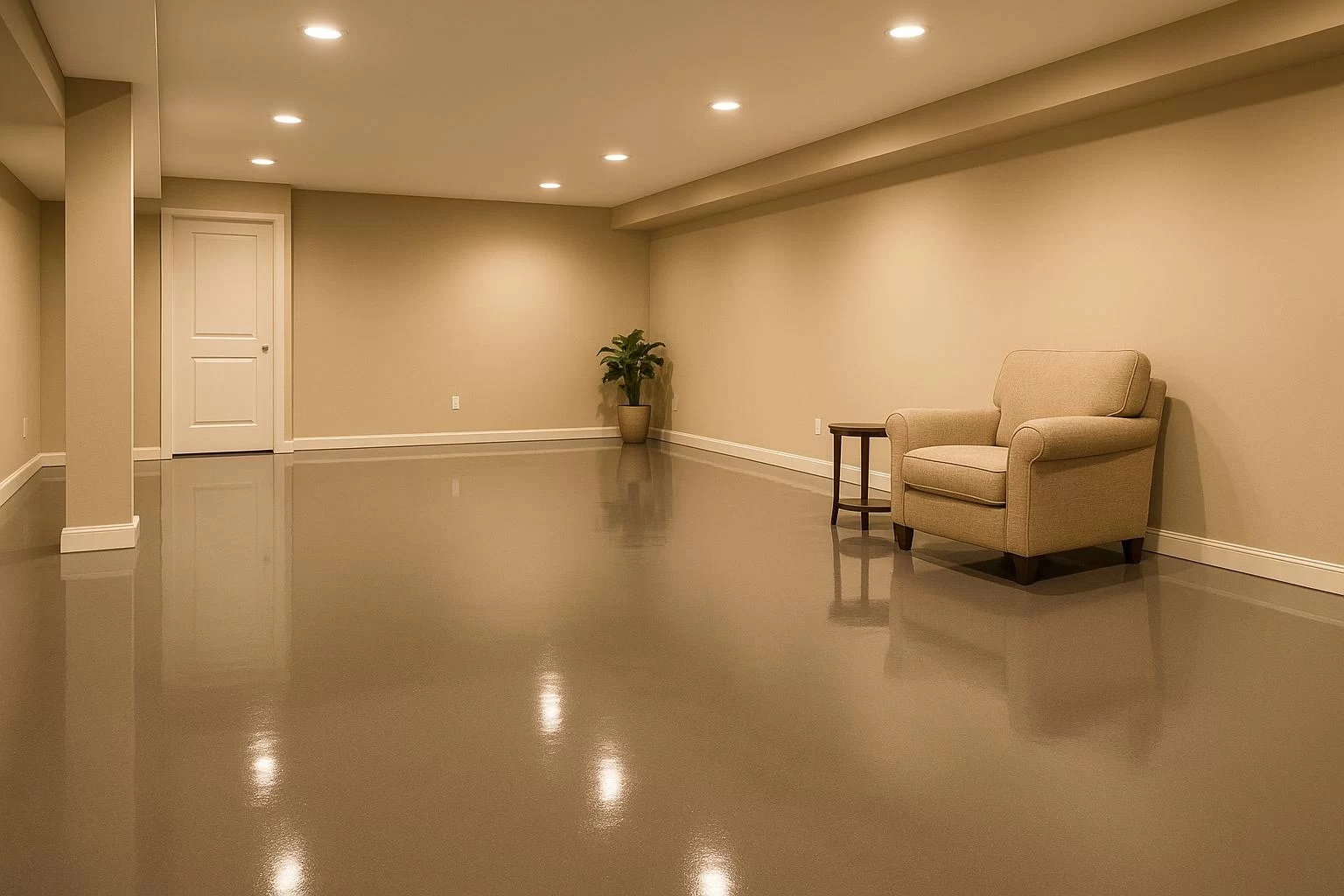
Epoxy basement floors offer a real upgrade over bare concrete: they’re waterproof, easy to clean, affordable relative to tile or vinyl, and endlessly customizable. For a basement that’s dry, well-prepped, and protected from direct sunlight, a professional epoxy installation can look great and perform well for years — especially with a fresh topcoat every few years.
But the cons are real, and they’re amplified in basements. Moisture vapor, long cure times, slipperiness, UV yellowing, and expensive repairs aren’t edge cases — they’re common failure points that show up in homeowner forums and contractor callbacks alike. If your basement has any history of dampness, gets natural light, or needs to be usable the same week, standard epoxy may not be the right tool for the job.
I went with Polyurea after a lot of research, found that Epoxy typically wears faster and has a higher chance of pop outs… Epoxy traps moisture below the cement slab, and eventually that moisture finds its way out in the form of bits of concrete popping out/through the epoxy. Polyurea actually bonds with moisture, so virtually no pops, bonds super hard and shows less wear. I’m super happy with my floor. I live in MN, so we experience a wide range of temps. I’ve had it down for three years and it cleans up really well despite the salt/snow/freezing/thawing.
Polyurea systems like Penntek Evolution solve epoxy’s documented weaknesses — UV stability, moisture tolerance, slip resistance, and cure time — at a higher upfront cost that often pays for itself in avoided repairs and recoating. For North Idaho and Eastern Washington homeowners dealing with temperature extremes and basement moisture, that difference is especially meaningful.
FAQs
Is epoxy flooring a good choice for basements?
Epoxy can be a good choice for basements that are dry, properly prepared, and protected from direct UV exposure. It creates a waterproof, easy-to-clean surface at a competitive price. However, basements with moisture issues, window exposure, or tight timelines may be better served by a polyurea system that tolerates vapor transmission and installs in one day.
How long does epoxy last on a basement floor?
A professionally installed epoxy floor typically shows visible wear — peeling, fading, or staining — within 3 to 5 years, according to industry installer data. With periodic recoating of the protective topcoat, total lifespan can reach 10–20 years in ideal conditions. Basement environments are rarely ideal, so expect the shorter end of that range unless moisture and UV exposure are fully controlled.
How much does it cost to epoxy a basement floor?
Professionally installed epoxy costs $5–$15 per square foot. For a typical 1,000 sq ft basement, expect $5,000–$15,000. DIY kits bring the material cost down to $2–$3 per square foot but carry a high failure risk if surface preparation is inadequate. Polyurea systems like Penntek Evolution run higher upfront but eliminate the recurring cost of recoating every few years. For a full breakdown, see our epoxy flooring cost comparison.
What’s the biggest downside of epoxy in a basement?
Moisture vapor transmission through the concrete slab. Unlike garages built on grade with a vapor barrier, many basements — especially older ones — lack that barrier. When the slab’s MVER exceeds 3–5 lbs/1,000 sq ft/24 hrs, the vapor pressure can push the epoxy off the concrete from underneath, causing delamination. A moisture protection assessment before coating is essential.
Can epoxy basement floors be repaired if they get damaged?
Yes, but not easily. Spot repairs are possible but rarely blend invisibly with the surrounding floor. Major damage usually requires diamond grinding the entire surface back to bare concrete before recoating — an expensive, dusty process. This is one reason polyurea’s longer lifespan and spot-repairability matter in basements that see heavy use.
How does Penntek Evolution compare to standard epoxy?
Penntek Evolution is a polyurea-polyaspartic hybrid that’s 4x stronger than standard epoxy with built-in UV stability, slip resistance, and antimicrobial protection. It installs in one day versus epoxy’s 3–5 days and carries a lifetime warranty. The upfront cost is higher, but the elimination of recoating cycles and reduced failure risk often make it the more cost-effective choice over 15–20 years. See our full epoxy vs. polyurea comparison for details.
Related Blog Posts
- Garage Floor Coating FAQ: Expert Answers
- Polyurea Curing vs Epoxy: Key Differences
- Polyurea vs. Epoxy: Eco-Friendly Garage Floor Options
- Polyurea vs. Epoxy: Best for Humid Areas
Ready to upgrade your basement floor? Croc Coatings offers free in-home consultations across North Idaho and Eastern Washington. Get your free quote today — most installations are done in a single day, backed by a lifetime warranty.