UV-stable concrete coatings protect surfaces from UV damage, discoloration, and wear, making them ideal for areas like patios, walkways, and garage floor coating options. However, seasonal care is essential to maintain their durability and appearance. Here’s a breakdown of what you need to know:
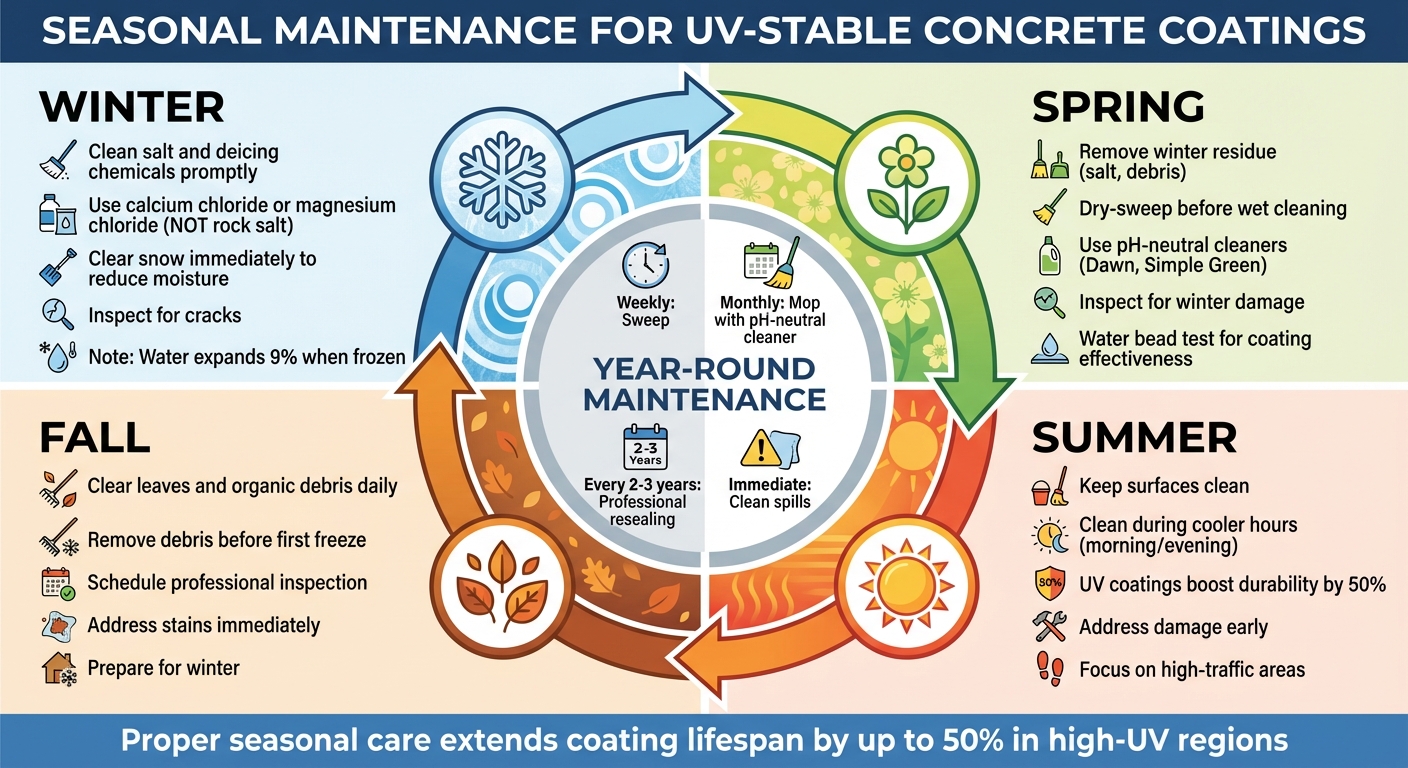
- Winter: Clean salt and deicing chemicals promptly to prevent surface damage. Use calcium chloride or magnesium chloride instead of rock salt, and inspect for cracks to avoid freeze-thaw issues.
- Spring: Remove winter residue like salt and debris. Use pH-neutral cleaners to preserve the coating’s finish and inspect for any winter-related wear.
- Summer: Protect against intense UV rays by keeping surfaces clean and addressing any damage early. UV-stable coatings are designed to resist fading and brittleness , a performance metric verified through UV testing for concrete coatings during hot weather.
- Fall: Clear leaves and organic debris to prevent staining. Schedule inspections to address minor issues before winter.
Regular maintenance, such as sweeping, mopping with pH-neutral cleaners, and addressing seasonal challenges, extends the life of your coatings. For areas like North Idaho and Eastern Washington, professional inspections and resealing every 2–3 years ensure year-round protection.
Seasonal Maintenance Guide for UV-Stable Concrete Coatings
Winter: Protecting Coatings from Snow and Ice
Managing Salt and Deicing Chemicals
Rock salt, while commonly used for deicing, has drawbacks – it’s corrosive and leaves behind chalky stains on coated concrete. Plus, it lowers water’s freezing point, which can lead to more frequent freeze-thaw cycles that stress concrete surfaces. For a safer alternative, opt for calcium chloride or magnesium chloride, which are less harsh on concrete coatings. If you prefer to avoid chemicals altogether, sand can provide traction without causing damage.
To minimize the impact of salt and grit, sweep or vacuum daily after snowfall to remove any abrasive particles. Placing a high-quality containment mat with raised edges near entry points can catch salt and moisture before they spread across your floor. Additionally, clearing snow promptly reduces the amount of moisture that can contribute to freeze-thaw damage.
Preventing Freeze-Thaw Damage
When water freezes, it expands by about 9%, which puts stress on concrete surfaces. UV-stable polyurea coatings and polyaspartic systems create a non-porous barrier, preventing water from seeping into the concrete. As TSR Concrete Coatings notes:
As your concrete slab expands and contracts with temperature changes, the [polyurea] coating moves with it rather than snapping or delaminating.
To protect your coated surfaces, clear away snow as soon as possible to minimize moisture exposure. Use a floor squeegee to direct melted snow toward drains or garage exits, and inspect for cracks that might allow water to seep in. Sealing these cracks before winter sets in can prevent further damage. Also, check that gutters and downspouts are functioning properly to ensure meltwater is directed away from your coated surfaces.
Post-Winter Cleaning
Once the freezing weather subsides, follow proper maintenance for concrete coatings by cleaning with warm water and a pH-neutral cleaner, such as Dawn dish soap or Simple Green, to remove salt residue and grime. Avoid harsh degreasers, as they can strip the protective topcoat. Rinse thoroughly to prevent a chalky film from forming on the surface.
Inspect the surface for signs of winter damage, such as thinning or lifting of the coating. Sean Hakes from Keas Concrete Coatings advises:
Even small cracks can become significant issues if water seeps in and freezes, expanding the crack.
Address any damage promptly to ensure your coatings remain in good condition for the next winter season. Understanding how long polyaspartic floors last can help you set realistic expectations for long-term durability.
sbb-itb-a0e5ae3
Spring: Cleaning and Preparing for UV Exposure
Removing Winter Residue
Start by dry-sweeping surfaces before moving on to wet cleaning. Tools like brooms, leaf blowers, or vacuums are perfect for removing grit, sand, and salt crystals that accumulate during winter. This step is crucial to avoid scratching the surface during the cleaning process. Pay special attention to high-traffic areas, such as parking spots and entryways, where salt tends to build up the most.
Once the loose debris is cleared, mop the surface using warm water and a pH-neutral cleaner. This helps eliminate the chalky salt residue left behind. Lisa Cardona from Alexander Concrete Coatings emphasizes:
For persistent dirt or spills, a mop with warm water and a pH-neutral cleaner will do the job without affecting the coating’s protective finish.
Mild cleaners like Dawn dish soap or Simple Green are excellent choices – they’re strong enough to dissolve residue but gentle enough to preserve your coating. After cleaning, rinse thoroughly with a garden hose or power washer. Keep the pressure moderate to prevent damaging the surface. Finally, use a floor squeegee to push any standing water toward drains, avoiding streaks or water spots. With the surface clean, you’re ready to check for any winter-related damage.
Inspecting for Winter Damage
Take a close look at high-traffic areas for signs of wear, such as scratches, stains, or thinning of the coating. While modern UV-stable polyurea and polyaspartic coatings are highly durable and non-porous, older coatings may show wear from repeated freeze-thaw cycles. A quick water test can help – if water beads on the surface, the topcoat is still effective. If not, it might be time to schedule a professional reapplication. Many homeowners opt for rapid cure coatings to minimize downtime during this process. This step ensures your surface is prepared to handle the challenges of summer’s UV exposure.
Preparing for Summer UV Exposure
After cleaning and inspecting, check for any peeling, cracking, or discoloration caused by winter weather. If you spot damage, address it promptly with touch-ups. For grease or oil stains, a citrus-based cleaner works wonders, while mildew or algae can be tackled with trisodium phosphate (TSP). Keeping the surface clean and free of residue is key to maintaining its UV protection as summer approaches. By handling these spring maintenance tasks, you ensure your coatings remain in top shape, bridging the gap between the demands of winter and the intensity of summer.
Summer: Protecting Against Heat and UV Rays
UV-Resistant Coating Benefits
Summer’s intense UV rays and soaring temperatures can take a serious toll on unprotected concrete surfaces. As mentioned earlier, taking the right precautions during extreme weather is essential. UV-stable coatings – such as the Penntek Evolution systems installed by Croc Coatings – are specifically designed to block harmful rays, preserving both the appearance and structural integrity of surfaces during the hottest months.
These UV-resistant coatings can boost the durability of floor finishes by up to 50% in regions with high sunlight exposure, offering dependable, long-term protection. Croc Coatings highlights this advantage:
"UV radiation from the sun can cause concrete surfaces to fade, discolor, and become brittle over time. Croc Floors have a UV-resistant coating that blocks UV rays and prevent them from damaging the concrete surface."
Unlike traditional concrete sealers that often require frequent reapplications, these advanced systems are made for low-maintenance care. This makes them an ideal choice for outdoor spaces, where upkeep can otherwise be time-consuming. Once applied, maintaining your coating is as simple as establishing a consistent cleaning routine.
Cleaning and Avoiding Heat-Related Damage
Beyond UV protection, high temperatures can lead to expansion, contraction, and eventual damage in coatings that aren’t up to the task. UV-resistant topcoats offer an extra layer of defense against these heat-related issues. Keeping the surface clean is equally important – sweeping or hosing down the area removes dirt and debris that could otherwise settle into the coating during hot weather. For deeper cleaning, a mop with warm water and a pH-neutral cleaner works wonders without the need for specialized tools.
Pay extra attention to high-traffic zones, as these areas tend to wear faster. Timing also matters: cleaning in the early morning or evening, when temperatures are cooler, helps protect both you and the coating. Thanks to the built-in UV stability of these coatings, there’s no need to apply additional protectants – they’re designed to maintain their protective qualities on their own.
Fall: Preparing for Winter Weather
Removing Leaves and Debris
Fall is the perfect time to get your UV-stable coatings ready for the harsh conditions of winter. Organic debris, like leaves or twigs, can cause permanent stains when trapped under snow and ice. The moisture they hold speeds up decomposition, leading to unsightly discoloration that’s tough to remove.
To avoid this, grab a leaf blower or a soft-bristled broom to sweep away all organic matter before the first freeze. After that, rinse the area with a garden hose to wash off any lingering dirt that could trap moisture. Stay away from metal shovels or sharp tools during cleanup – these can scratch or damage the coating’s finish. If you notice grease, rust, or food stains, tackle them now. Once winter sets in, frozen stains can become nearly impossible to clean. After clearing the surface, consider scheduling a professional inspection to catch any hidden issues before the cold weather hits.
Scheduling Professional Inspections
A fall inspection can save you from expensive repairs down the line. Kevin Toczek, SUNDEK’s director of training and support, highlights the importance of proactive maintenance:
A high-quality sealer is one of the most effective ways to protect concrete from winter damage.
A professional contractor can spot wear and tear that may not be obvious to you. They’ll check if your sealer is still doing its job by testing whether water beads up on the surface. They’ll also pay close attention to areas where snowmelt tends to collect – like below rooflines – since these spots face heavy freeze-thaw cycles. As Toczek points out:
I’ve seen more deterioration in spots like this than anywhere else.
Even small cracks or chips should be repaired before freezing temperatures arrive. Water can seep into these gaps, and when it freezes, it expands, which could cause the coating to delaminate.
If you live in North Idaho or Eastern Washington – areas like Spokane and the Tri-Cities – contact Croc Coatings for a thorough inspection. Their team is skilled at evaluating UV-stable concrete coatings and can handle any maintenance needed to keep your surfaces protected all winter long.
Winter Care Tips for Your Concrete!
Maintenance Schedule by Coating Type
Seasonal cleaning routines should be tailored to the type of coating on your floors. Here’s how to care for two popular options.
Polyaspartic and Polyurea Coatings
These coatings are known for their low-maintenance nature, thanks to their non-porous surface. Water, salt, and chemicals can’t seep in, which means you won’t need to deal with the frequent upkeep associated with older coating systems.
For everyday cleaning, a simple squeegee or soft mop paired with water is usually enough to remove debris. If you encounter stubborn dirt or grime, a specialized floor coating cleaner will do the trick without harming the surface.
One standout feature of polyurea coatings is their ability to handle seasonal temperature shifts. They expand and contract alongside your concrete during extreme summer heat or freezing winter conditions, which prevents peeling or delamination. This flexibility eliminates worries about thermal stress damage.
The seamless design of these coatings also stops dirt from settling into cracks, making seasonal cleanups quicker and easier. If your coating includes UV-protection technology, like FadeLock™, it will resist fading and retain its color even under direct sunlight – perfect for the sunny summers in North Idaho and Eastern Washington.
While these coatings are relatively easy to maintain, epoxy surfaces require a bit more attention, as explained below.
Epoxy Coatings: Additional Considerations
Epoxy coatings need more care, particularly in outdoor areas or spaces exposed to high levels of sunlight. Traditional epoxies aren’t built to withstand extended UV exposure, which can lead to yellowing, fading, and surface deterioration.
Unlike polyurea systems, epoxy coatings struggle with seasonal temperature changes. They tend to become brittle in cold weather and soften in extreme heat. Quick action is essential – spills should be cleaned up immediately to prevent etching. During winter, it’s crucial to check for cracks and chips more often. Water can seep into these gaps, freeze, expand, and cause the coating to lift.
For homeowners in regions like North Idaho and Eastern Washington, where seasonal extremes are common, Croc Coatings’ Penntek Evolution system offers a more resilient alternative. This system is four times stronger than traditional epoxy and includes UV stability, making it well-suited to the area’s harsh conditions – from Spokane’s freezing winters to the Tri-Cities’ scorching summers – all while reducing the maintenance effort required by standard epoxy coatings.
Seasonal Stain and Chemical Resistance
Keeping UV-stable coatings in top shape requires cleaning methods tailored to the challenges each season brings. With the right approach, your floors can stay spotless and protected all year long.
Winter: Handling Salt and Chemicals
Winter introduces some of the toughest challenges for concrete surfaces, particularly from road salt and deicing chemicals. While UV-resistant polyaspartic coatings and polyurea prevent these substances from penetrating the concrete, surface residue still needs to be dealt with.
Water alone won’t cut it – it simply moves salt around. Instead, mix 1 cup of white vinegar and some dish soap into 1 gallon of warm water. The vinegar dissolves salt crystals, while the soap lifts the residue. Start by pre-wetting the surface, then apply the solution, scrub with a stiff brush, and use a wet vac to extract the dirty water. This method prevents salt from drying and settling back into the concrete pores. It’s a more thorough process than a simple post-winter rinse.
If you’re using a power washer, keep the pressure under 500 PSI to avoid pushing salt into the coating or damaging the finish. For added protection, consider placing containment mats in your garage to catch salt and brine before it reaches the floor. Promptly shoveling snow also reduces the amount of salt-laden moisture sitting on the surface.
As winter gives way to fall, the focus shifts to managing a different kind of challenge: organic stains.
Fall: Preventing Leaf Stains
Fallen leaves might seem harmless, but the tannins they release can leave behind stubborn stains – even on non-porous surfaces. Thankfully, UV-stable coatings act as a barrier, preventing these tannins from seeping into the concrete.
The key to avoiding leaf stains is quick action and regular maintenance.
"Leaf stains are caused by organic tannins and natural dyes that leach out of leaves when they sit on damp, concrete surfaces." – Deco-Crete
During peak leaf-fall, daily removal of debris is essential. A leaf blower works well to prevent wet leaves from sitting overnight, as dew or rain can speed up staining. For any stuck-on debris, mop the surface with warm water and a pH-neutral cleaner following polyurea cleaning and maintenance tips, using a soft-bristle broom. Avoid harsh degreasers, which can damage the coating’s protective layer. Trimming tree branches near your concrete can also reduce the amount of debris falling onto the surface.
Conclusion: Year-Round Protection for Concrete Coatings
Taking care of your UV-stable concrete coatings throughout the year is the key to keeping them in top shape. Simple habits like weekly sweeping, monthly mopping with pH-neutral cleaners, and cleaning up spills immediately can make a big difference. Add in seasonal tasks tailored to winter, spring, summer, and fall, and you’re set to tackle the unique challenges each season brings.
The payoff for regular maintenance is hard to ignore. In regions with intense sunlight, routine care can extend the lifespan of your coatings by up to 50%, putting off the need for costly professional replacements. Resealing every 2–3 years keeps your surfaces looking great and prevents common concrete surface issues like cracks, delamination, and fading – saving you from a full replacement down the road.
In areas like North Idaho and Eastern Washington, where UV rays and freeze-thaw cycles are tough on surfaces, professional installation and annual inspections are essential. Croc Coatings offers the Penntek Evolution system, which is known for being 4x stronger than epoxy. With a one-day installation process and a lifetime warranty, their certified team provides expert care, identifying wear and tear early and ensuring proper resealing. From garages to patios and pool decks, they cater to homes across Spokane and the Tri-Cities area.
As Croc Coatings puts it:
"UV-resistant concrete coatings like our Croc Floors are an excellent solution to protect outdoor areas from damage and prolong their lifespan." – Croc Coatings
Whether you prefer to handle routine cleaning yourself or rely on professional inspections, the goal is the same: protecting your investment. By staying proactive and addressing seasonal needs, you can preserve the durability and beauty of your UV-stable coatings, ensuring they perform reliably year-round in North Idaho and Eastern Washington.
FAQs
How can I tell if my topcoat needs resealing?
If you spot cracking, flaking, a dull finish, increased slipperiness, or visible signs of wear, it might be time to reseal your topcoat. These issues usually show up every 3 to 7 years, depending on how much use and exposure the surface has endured.
What’s the safest way to remove winter salt without dulling the finish?
To clean off winter salt without damaging the finish, mix a solution of 1 cup of vinegar and a squirt of dish soap per gallon of warm water. Use a stiff brush or broom to scrub the surface thoroughly, then rinse it well. Steer clear of pressure washing – this can drive the salt deeper into the concrete, causing more harm.
When should I schedule a professional inspection in North Idaho or Eastern Washington?
Scheduling a professional inspection of UV-stable concrete coatings in the fall or early winter is a smart move. This timing allows you to catch and address any damage before snow and freeze-thaw cycles make things worse. Alternatively, late summer or early fall inspections can help confirm the coating’s durability after the intense UV exposure of summer. To keep your concrete surfaces protected from sunlight, snow, and temperature fluctuations, aim for annual inspections – it’s a simple step to ensure long-term performance.