I’d ask for moisture testing as a separate line item before approving a floor-coating schedule. The cost depends on the test method, number of locations, site access, reporting, and return visits – not just square footage. ASTM F2170 commonly calls for 3 test locations for the first 1,000 square feet, plus 1 for each additional 1,000 square feet.
Here’s what I’d check before signing:
- Method and timing: F2170 measures internal relative humidity and requires at least 24 hours of equilibration. F1869 measures surface vapor emissions over 60–72 hours. Site conditioning adds time.
- Results and next steps: Compare readings with the selected coating system’s written limits. High readings may require moisture control; leaks or water pressure may require repairs first.
- Total price and coverage: Request separate costs for testing, preparation, repairs, moisture mitigation, and coating. Confirm reporting, retesting, return visits, and warranty exclusions.
My rule: <u>test before committing to coating day</u>. A slab that looks dry may still need work – and that can change both your price and schedule.
Which Moisture Tests Are Used Before Coating?
Preliminary checks map wet areas. ASTM F2170 or F1869 provides the acceptance data required by the coating system. The method you choose affects labor, equipment, wait time, and total job cost. It also determines where testing fits into the installation schedule.
| Method | What it measures | Typical time | Best use | Main limits |
|---|---|---|---|---|
| ASTM F2170 | Internal slab relative humidity (% RH) | 24+ hours | Checking internal moisture against a product’s RH limit | Requires drilling, correct depth, calibrated equipment, and controlled conditions |
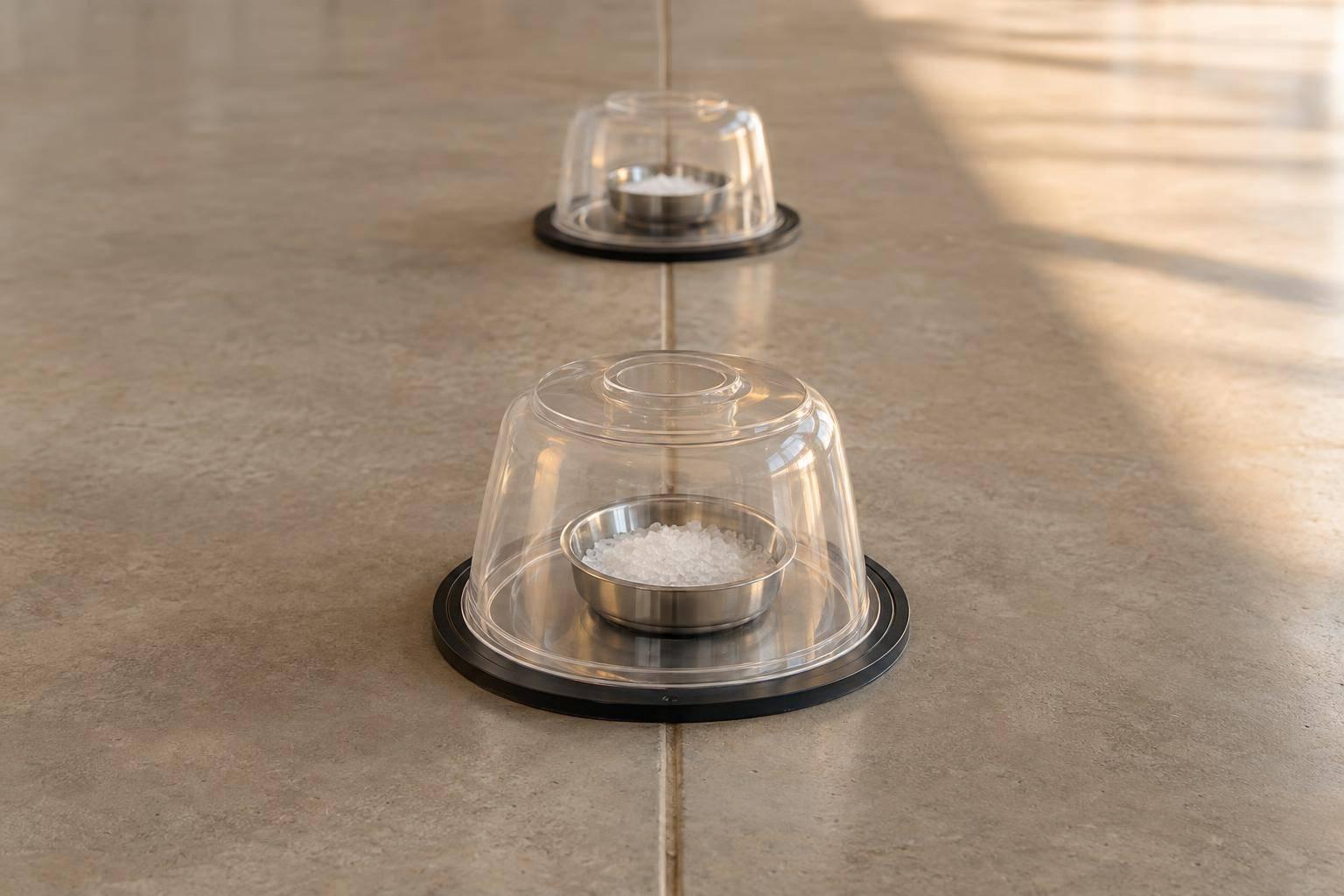
| ASTM F1869 | Surface moisture vapor emission rate (MVER), in lb/1,000 sq. ft./24 hours | 60–72 hours | Checking vapor emissions when the product specifies an MVER limit | Sensitive to site conditions and test setup |
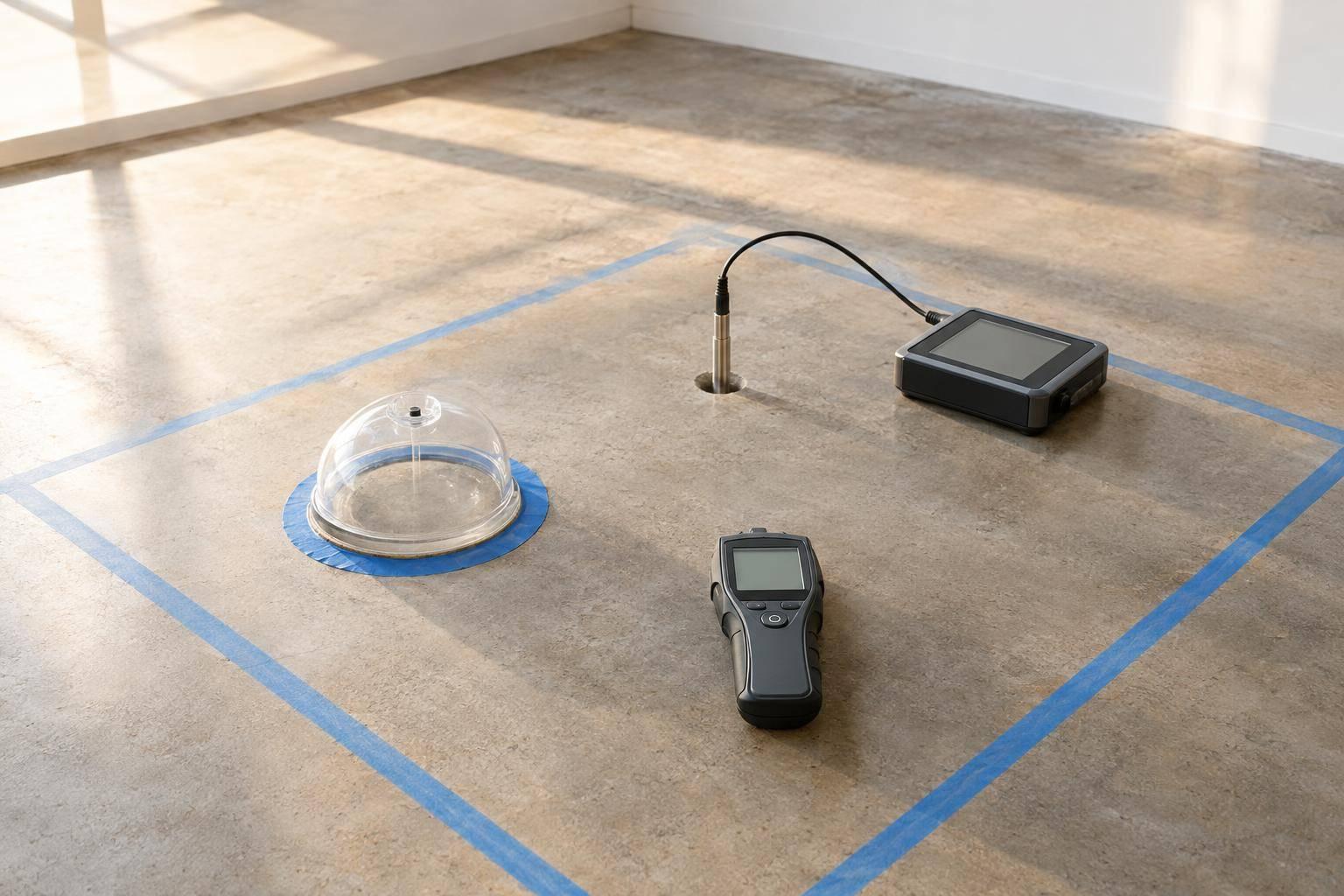
| ASTM F2659 | Comparative near-surface moisture readings from an electronic meter | Minutes | Mapping wetter areas and choosing quantitative test locations | Preliminary only; slab composition and instrument settings affect readings |
| ASTM D4263 | Condensation or darkening under sealed plastic | 16+ hours | Qualitative moisture screening | Provides no RH or MVER value; a dry result does not establish coating readiness |
These times do not include site conditioning. Follow the ASTM standard and the coating instructions.
What Do ASTM F2170 and ASTM F1869 Measure?
F2170 measures relative humidity inside the slab. Its probes sit in holes drilled to a prescribed depth – typically 40% of slab thickness for one-sided drying or 20% for two-sided drying. The probes must reach equilibrium before readings are taken. F1869 measures surface vapor emission using anhydrous calcium chloride under a sealed dome. Its weight gain during exposure determines the emission rate.
RH and MVER are not interchangeable. Ask which measurement the proposed coating and primer require. Common figures such as 75% RH or 3 lb/1,000 sq. ft./24 hours do not automatically mean the slab passes. The specific system’s current technical data sheet and warranty requirements set the limits.
What Can Preliminary Moisture Checks Tell You?
ASTM F2659 meter readings map relatively wet and dry areas. ASTM D4263 uses an approximately 18-by-18-inch plastic sheet sealed to the concrete. Condensation or darkening signals how moisture affects concrete coating performance and requires further investigation. Request the required RH or MVER results and the coating system’s written acceptance limits.
Once the test method is set, timing determines whether testing can start now or the slab must wait.
sbb-itb-a0e5ae3
When Should Concrete Be Tested for Moisture?
Once you’ve chosen a test method, timing helps determine whether the slab is ready for coating or needs more drying time. Test before approving the coating schedule, especially if the slab’s history or water exposure is unclear. A surface that looks dry may still be unsuitable for coating. Product data sheets and warranty terms may also require documented quantitative testing.
Which Floors Need Closer Moisture Checks?
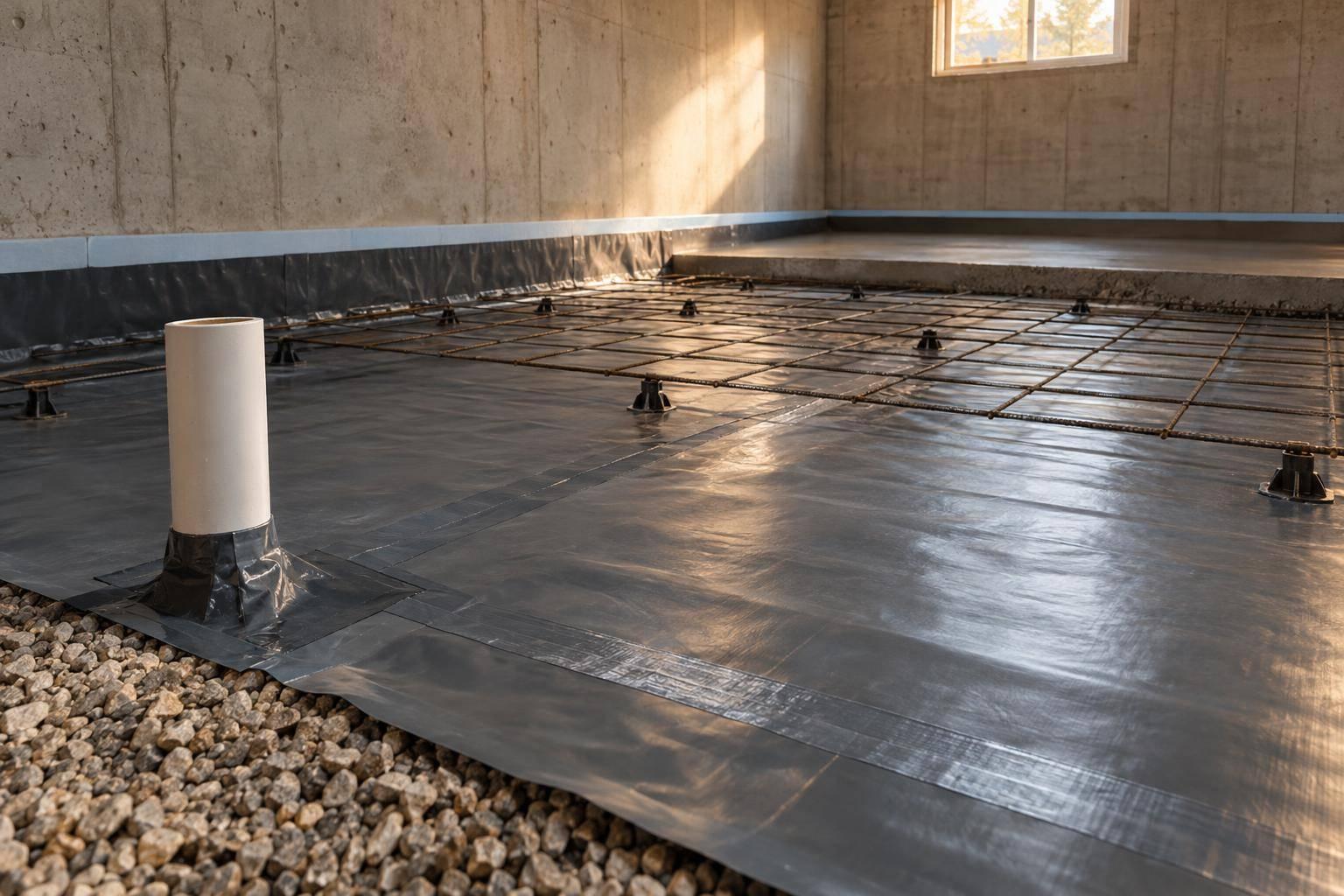
New or repaired concrete needs time to cure and dry before testing. Pay closer attention to on-grade slabs and below-grade basements, where moisture can enter from surrounding soil. Ask for vapor-retarder records. Missing paperwork leaves the retarder’s status unknown; it doesn’t prove there isn’t one.
Damp spots, efflorescence, blistering, peeling, musty odors, and past coating failures all call for testing. Map those areas and test them. In North Idaho and Eastern Washington, ask about snowmelt, irrigation, flooding, plumbing leaks, and poor drainage when those conditions apply.
How Does Testing Fit the Installation Schedule?
Before committing to coating day, allow time for site conditioning, testing, return visits, and any corrective work. Each extra visit or retest adds labor and reporting costs.
Clear stored items, keep traffic out of test areas, and disclose existing coatings and patches. F1869 does not measure emissions through coatings, reactive penetrants, patching, or leveling compounds.
Ask for a report that records test locations, dates, indoor temperature, relative humidity, slab temperature, ventilation, and recent water exposure. Results reflect conditions at the time of testing. Leaks, flooding, drainage changes, or major HVAC changes may require retesting.
How Do Moisture Results Affect Coating Costs?
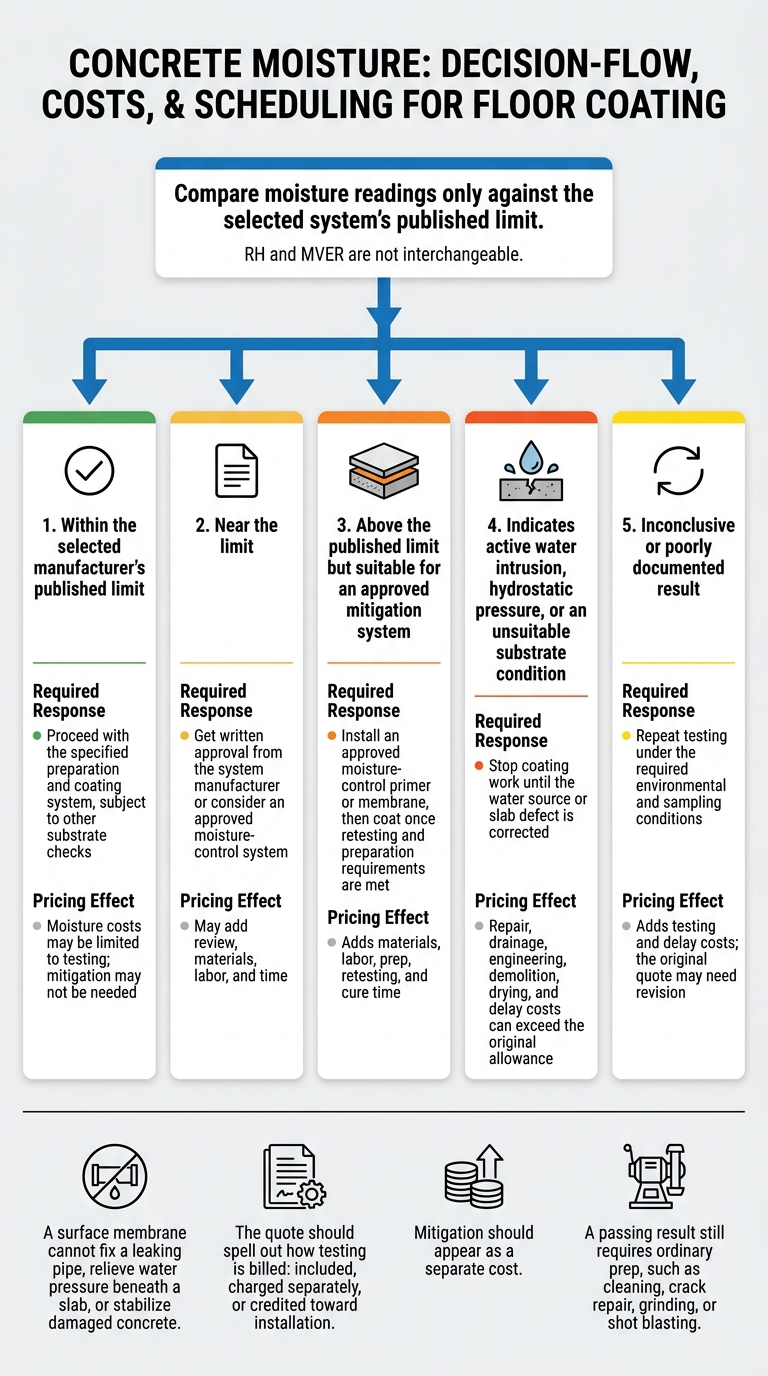
How Moisture Test Results Affect Floor-Coating Costs
Compare moisture readings only against the selected system’s published limit. Readings above that limit call for mitigation or repair – not a simple pass/fail shortcut.
The budget generally follows three paths: pass, mitigate, or repair.
| Result category | Likely system response | Effect on pricing |
|---|---|---|
| Within the selected manufacturer’s published limit | Proceed with the specified preparation and coating system, subject to other substrate checks | Moisture costs may be limited to testing; mitigation may not be needed |
| Near the limit | Get written approval from the system manufacturer or consider an approved moisture-control system | May add review, materials, labor, and time |
| Above the published limit but suitable for an approved mitigation system | Install an approved moisture-control primer or membrane, then coat once retesting and preparation requirements are met | Adds materials, labor, prep, retesting, and cure time |
| Indicates active water intrusion, hydrostatic pressure, or an unsuitable substrate condition | Stop coating work until the water source or slab defect is corrected | Repair, drainage, engineering, demolition, drying, and delay costs can exceed the original allowance |
| Inconclusive or poorly documented result | Repeat testing under the required environmental and sampling conditions | Adds testing and delay costs; the original quote may need revision |
How Do Acceptable and High Readings Change the Plan?
Moisture readings help determine whether the project stays with the original coating plan or needs mitigation. Passing readings may keep moisture-related costs to testing alone, avoiding mitigation materials and cure time. High readings can mean adding a moisture-control primer or membrane, more prep, retesting, and a longer installation schedule.
The quote should spell out how testing is billed: included, charged separately, or credited toward installation. Mitigation should appear as a separate cost. A passing result still requires ordinary prep, such as cleaning, crack repair, grinding, or shot blasting.
A surface-applied moisture-control layer sits on top of existing concrete. It is not an under-slab vapor retarder, which is installed beneath the slab during construction. Ask for the exact proposed product and its published limits – not a generic “moisture barrier” allowance.
Which Water Problems Need Repair Before Coating?
Active plumbing leaks, failed perimeter drainage, leaking walls or joints, poor grading, sump or downspout problems, hydrostatic pressure, and groundwater entering through cracks or construction joints may need correction before coating.
A surface membrane cannot fix a leaking pipe, relieve water pressure beneath a slab, or stabilize damaged concrete. Repairs may involve plumbing work, drainage correction, crack or joint repair, waterproofing, or engineering review. The contractor should document who handles each repair and whether drying or retesting is needed afterward.
The moisture-control layer must be approved for use with the concrete, primer, basecoat, aggregate, and topcoat. The contractor should check recoat windows, required surface profile, adhesion requirements, maximum moisture exposure, cure conditions, and warranty coverage for the complete assembly. Even if a product reduces vapor transmission, using it beneath a basecoat it isn’t approved for can lead to blistering, delamination, softening, or warranty exclusion.
What Should a Floor-Coating Quote Include?
Once you have the slab’s moisture results, the quote should spell out any repairs or moisture mitigation and how they affect the installed cost. Ask for four line items: moisture evaluation and reporting, concrete preparation, moisture mitigation, and coating.
Which Costs and Warranty Terms Should Be Listed?
The quote should list the test method, number of tests, test locations, report, site conditions, surface preparation, crack and joint repairs, moisture control, and each coating layer. Edge work, stairs, thresholds, drains, restricted access, disposal, and return visits should appear separately. For repairs that can’t be priced yet, ask for allowances or unit prices. This breakdown helps you see whether the slab needs proper surface preparation alone or moisture mitigation before coating.
Require a written report showing the test method, locations, dates, readings, and site conditions. The quote should also name the products, coverage rates, number of coats, finish, color or flake blend, thickness, and return-to-service time. Review the warranty term, moisture exclusions, maintenance requirements, and whether warranty repairs cover both labor and materials.
What Should You Confirm Before Approving the Quote?
Test before choosing the system, match moisture control to the documented results, and review the total installed price. Check that the quote accounts for testing, reporting, preparation, repairs, mitigation, coating layers, edge work, return visits, and taxes. It should also state any exclusions and allowances. Confirm the schedule and how soon the floor can return to service.
For projects in North Idaho and Eastern Washington, ask the installer for a written scope that separates testing, mitigation, repairs, and coating work.
FAQs
How much should I budget for moisture testing?
Moisture testing costs depend on the method you use:
- Plastic sheet tests: $2–$20
- Calcium chloride kits: $10–$35 per test
- Professional-grade electronic moisture meters: $545–$645
- Professional relative humidity (RH) probe kits: $380–$890
For a 2,000-square-foot garage, coating failures could cost $6,000–$20,000. Spending a few hundred dollars on accurate testing can help you avoid that expense.
Do I need both RH and vapor emission tests?
You can use either test on its own, but using both is best practice for a complete moisture profile. In-situ relative humidity (RH) testing (ASTM F2170) is the most reliable way to measure moisture deep inside the slab. Calcium chloride testing (ASTM F1869) measures vapor released from the surface.
Used together, these tests help confirm whether the slab is ready for Penntek Evolution and help prevent costly coating failures, including blistering and delamination.
How will moisture mitigation affect my total coating cost?
If concrete moisture exceeds the manufacturer’s limits, moisture mitigation is needed to protect your investment and keep the warranty in place. Moisture-mitigating primers or vapor barrier systems typically add $1 to $3 per square foot.
Extra preparation, longer drying times, or dehumidification equipment can add to the bill. These steps help prevent early blistering and peeling – problems that can cost thousands of dollars to repair.