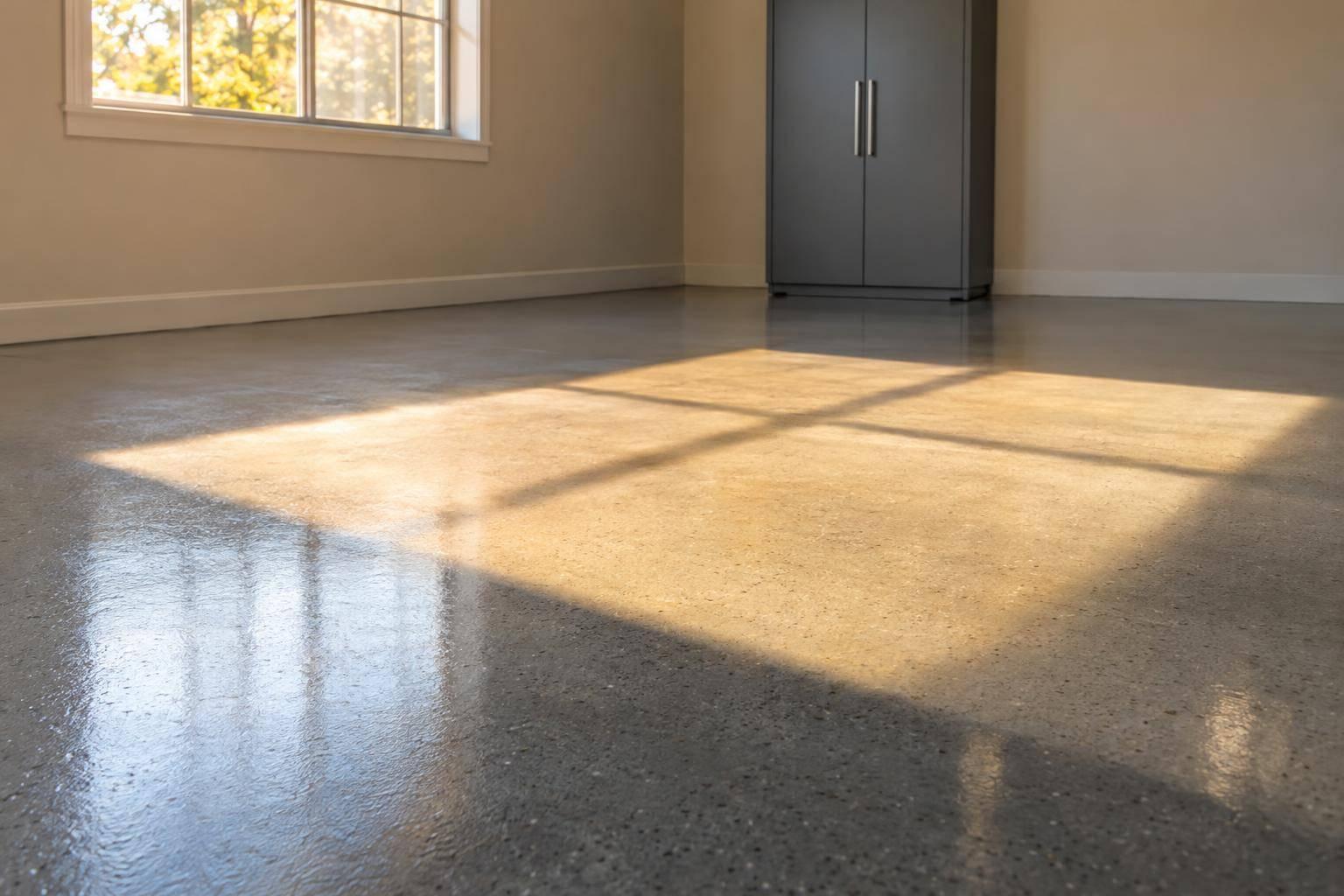
Yes – sunlight through windows or open doors can fade, yellow, or dull some garage-floor coatings. I’d start by limiting direct sun where safe and checking the coating’s UV-resistance records. Ordinary window glass blocks much of UVB, but some UVA still gets through.
Here’s what I’d check:
- Sun exposure: Repeated sunbeams can leave uneven color near doors and windows, while diffuse daylight may cause slower changes.
- The whole coating system: Base coats, pigments, chips, and topcoats all matter. UV-resistant doesn’t mean fade-proof.
- Other causes: I’d clean and dry affected and shaded spots, then compare them under the same lighting. Dirt, wear, and gloss loss can look like fading.
- Next steps: Shades or suitable UV-filtering film can reduce exposure, but <u>they won’t restore faded color</u>. I’d ask the installer about lasting discoloration, chalking, or peeling – and check what the warranty covers.
Why Epoxy Fades and Discolors in Your Garage
sbb-itb-a0e5ae3
Why Does Discoloration Start Near Doors and Windows?
Fading often starts near doors and windows because those areas get the most sunlight. UV slowly breaks down pigments and binders, causing exposed sections to fade, turn yellow, or develop a chalky appearance.
Open Doors and South- or West-Facing Openings
An open garage door lets sunlight hit the floor directly, without glass filtering it. That’s why the threshold may show color changes first.
South-facing openings often get plenty of midday sunlight. West-facing openings can let strong late-afternoon sun reach deeper into the garage. The season, roof overhangs, nearby buildings, and trees affect both how long sunlight hits the floor and how far it reaches.
Window Placement and Sun Angle
A window’s size, height, and angle determine where sunlight lands.
A narrow side window can cast a stripe, while several windows can create overlapping sunlit areas.
Low winter sunlight may reach farther into the garage than the higher summer sun.
Daily Exposure and Uneven Shade
There’s no set timeline for fading. Coating chemistry, pigment stability, UV intensity, surface temperature, film thickness, and cleaning history all affect how the floor changes.
Vehicles, shelving, and equipment shade parts of the floor. Moving them can reveal a sharp contrast between shaded and sun-exposed areas. To check whether sunlight matches the discoloration, photograph the light pattern in the morning, around noon, and late afternoon over several days.
Sunlight isn’t the only possible cause near an entrance. Water, road salt, oil, dirt, abrasion, and uneven coating thickness can also change the floor’s appearance. Compare the affected area’s color, gloss, and texture. Does the discoloration follow a sunbeam or a traffic path?
If the surface is chalky, peeling, soft, or visibly damaged, have the installer assess it rather than assuming it has simply faded. Coating selection needs to account for the floor’s exposure pattern.
Which Coating Properties Help Prevent Discoloration?
Once sunlight reaches the floor, the full coating system determines how much the color changes. That includes the base coat, pigments, chips, and clear topcoat. UV-stable pigments and a UV-resistant topcoat help limit yellowing, chalking, and gloss loss. Multi-color chips can hide minor fading, but they don’t prevent it.
Look for documented resistance to color change, yellowing, chalking, and gloss loss, rather than relying on a resin name alone. Assessing and preparing the floor through cleaning, grinding, crack repair, and moisture testing helps the coating adhere. They don’t make UV-sensitive materials color-stable.
Coating Properties for Different Sunlight Conditions
| Exposure condition | Potential appearance risk | Relevant coating properties |
|---|---|---|
| Direct sunlight | Faster color shifts, yellowing, chalking, or gloss loss in areas that get repeated sunlight | UV-stable pigments and resin; documented color and gloss retention |
| Frequently open doors | Concentrated sun patches and repeated daily exposure near the threshold | Full-system UV resistance; durable, low-yellowing clear finish |
| Sunlight through windows | Smaller or less intense sun patches that may still cause uneven color over time | UV-resistant topcoat; stable pigments and chips |
| Shaded areas | Contrast with sunlit sections makes fading more visible | Consistent color and gloss across the full floor |
These conditions can overlap, and the risk depends on the coating. UV-resistant doesn’t mean fade-proof. Ask whether testing covers the full system. Accelerated UV testing hours help compare coatings; they don’t predict an exact service life.
Even with the right coating, limiting direct sunlight remains the easiest way to slow visible fading.
Croc Coatings’ Garage-Floor System
Croc Coatings says its Penntek Evolution system is UV stable. Ask for current documentation covering every installed layer, color retention, and warranty coverage for fading, yellowing, chalking, and gloss loss. Those details can help you judge how much sunlight control your garage still needs.
How Can You Limit Sunlight and Check for Fading?
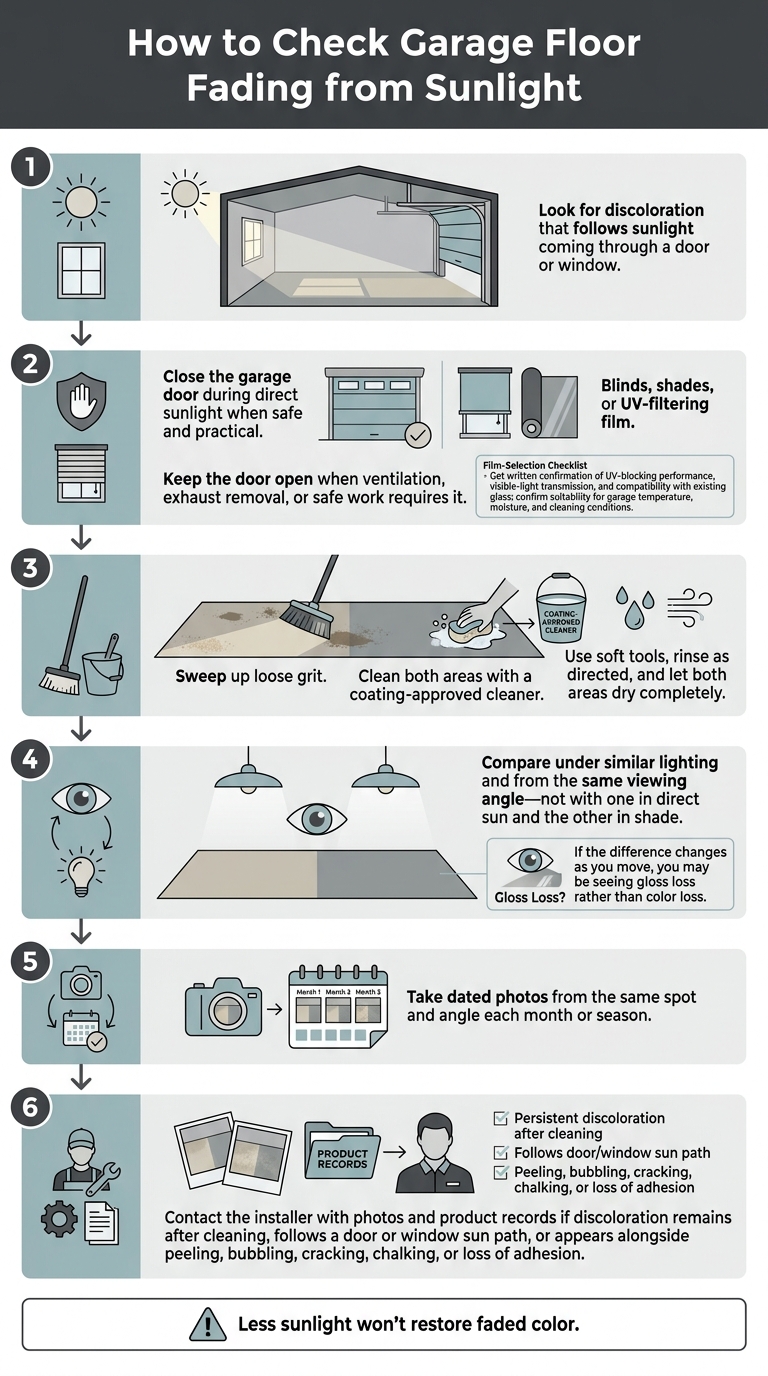
How to Check Garage Floor Fading from Sunlight
If the floor near the same door or window keeps changing color, reduce its sun exposure, then check whether the color has actually faded.
Reduce Sunlight Through Doors and Windows
Start with the openings where sunlight reaches the floor. Close the garage door during direct sunlight when safe and practical, especially if the sun hits the same spot for several hours. Keep the door open when ventilation, exhaust removal, or safe work requires it.
For windows, consider blinds, shades, or UV-filtering film, which can block most UVA and UVB radiation. Before choosing film, get written confirmation of its UV-blocking performance, visible-light transmission, and compatibility with your existing glass. Also confirm that it suits the garage’s temperature, moisture, and cleaning conditions.
Less sunlight won’t restore faded color. Once you’ve reduced exposure, check whether the color difference remains after the surface is clean and dry.
Compare Clean Areas Under Similar Lighting
Look for discoloration that follows sunlight coming through a door or window. Sweep up loose grit, then clean both the affected spot and a nearby shaded area with a coating-approved cleaner. Use soft tools, rinse as directed, and let both areas dry completely.
Compare the areas under similar lighting and from the same viewing angle – not with one in direct sun and the other in shade. If the difference changes as you move, you may be seeing gloss loss rather than color loss.
Take dated photos from the same spot and angle each month or season. Contact the installer with photos and product records if the discoloration remains after cleaning, follows a door or window sun path, or appears alongside peeling, bubbling, cracking, chalking, or loss of adhesion.
Conclusion: Sunlight and Coating Type Affect Floor Color
Sunlight through windows and open doors can discolor UV-sensitive coatings. The change usually appears first where direct sunlight hits the floor most often. Window placement, sun angle, daily exposure, and documented UV resistance matter more than age alone. This pattern is the clearest sign that sunlight – not just age – is driving the color change.
For a site-specific review, homeowners and small businesses in North Idaho and Eastern Washington can share their garage’s sun exposure pattern, the direction its opening faces, and typical door-open hours with Croc Coatings. Check UV-performance claims for the entire installed system, along with warranty limits and maintenance needs.
FAQs
Can faded garage floors be recoated without replacing the entire coating?
The right fix depends on the damage and the existing coating. Minor scratches or light wear may only need spot repairs, light buffing, or a new UV-protective topcoat.
But if the coating is peeling, bubbling, or separating from the concrete, another layer often won’t solve the problem. When the failure is extensive, the old coating must be removed completely so a new system, such as Penntek Evolution, can bond properly.
Can winter sunlight fade my garage floor?
Yes – winter sunlight can still fade a garage floor. Even when sunlight is weaker, UV rays can cause coatings, especially standard epoxy, to yellow and fade over time. The change is often most noticeable in spots that get direct sunlight through windows or open doors.
To help reduce fading, choose a UV-stable coating system, such as polyaspartic/polyurea, including the Penntek Evolution system.
What warranty terms should I check for sun damage?
Before installation, get the full warranty terms in writing. Check coverage for materials and workmanship, paying close attention to UV-related fading and long-term durability. Confirm that your installer is certified to apply the products.
Croc Coatings offers a lifetime residential warranty on its Penntek Evolution system. Read the written terms to verify which types of sun damage are covered.