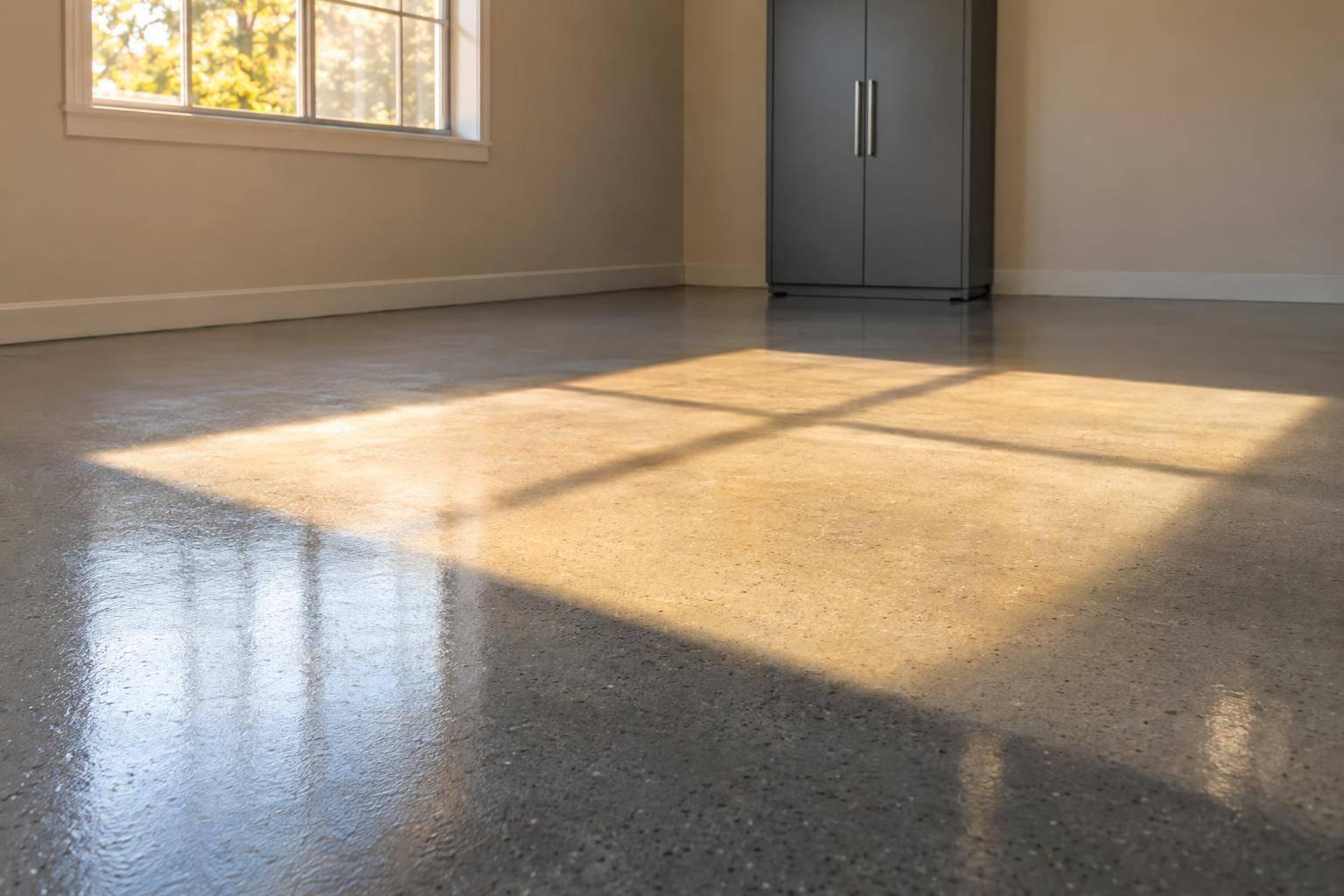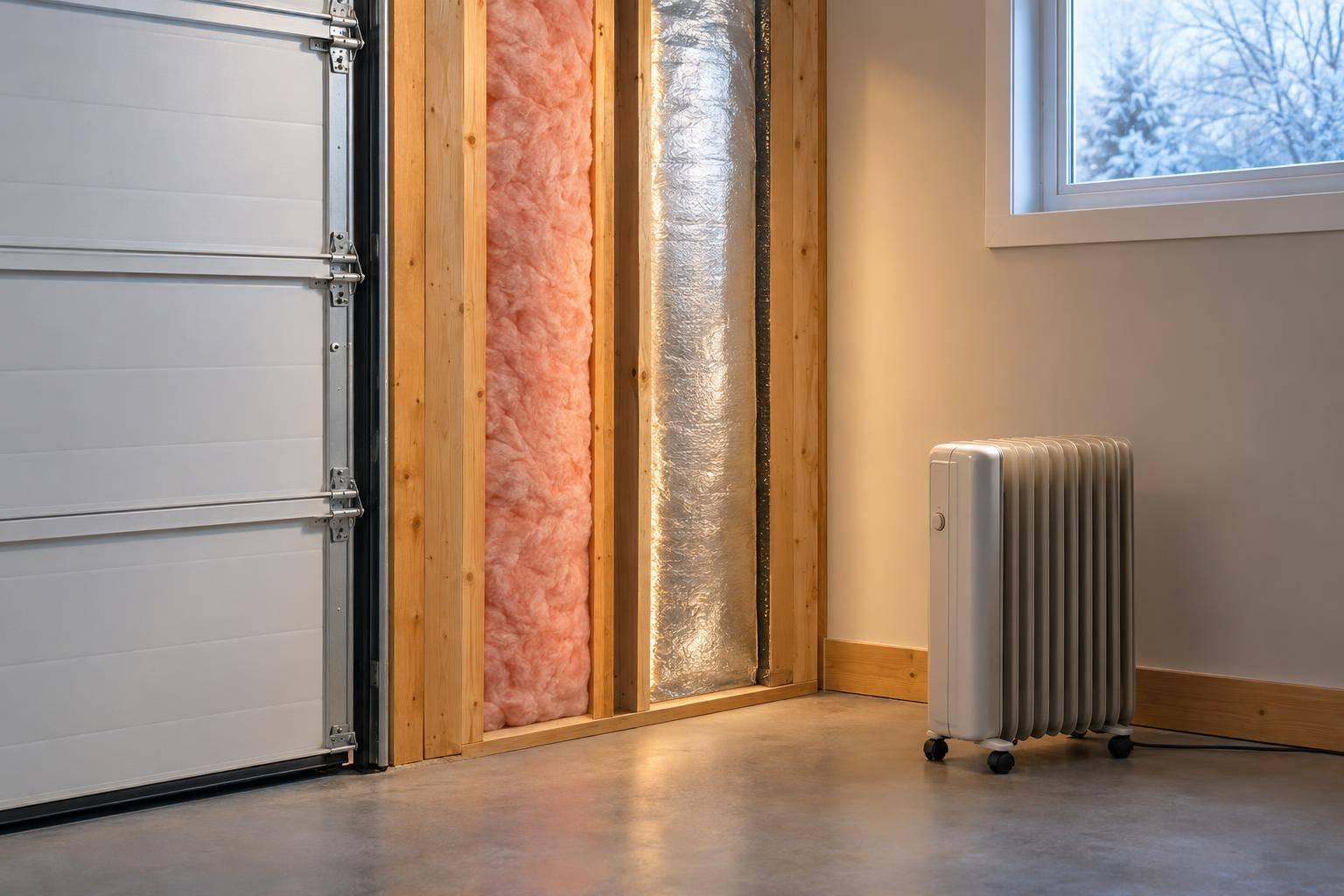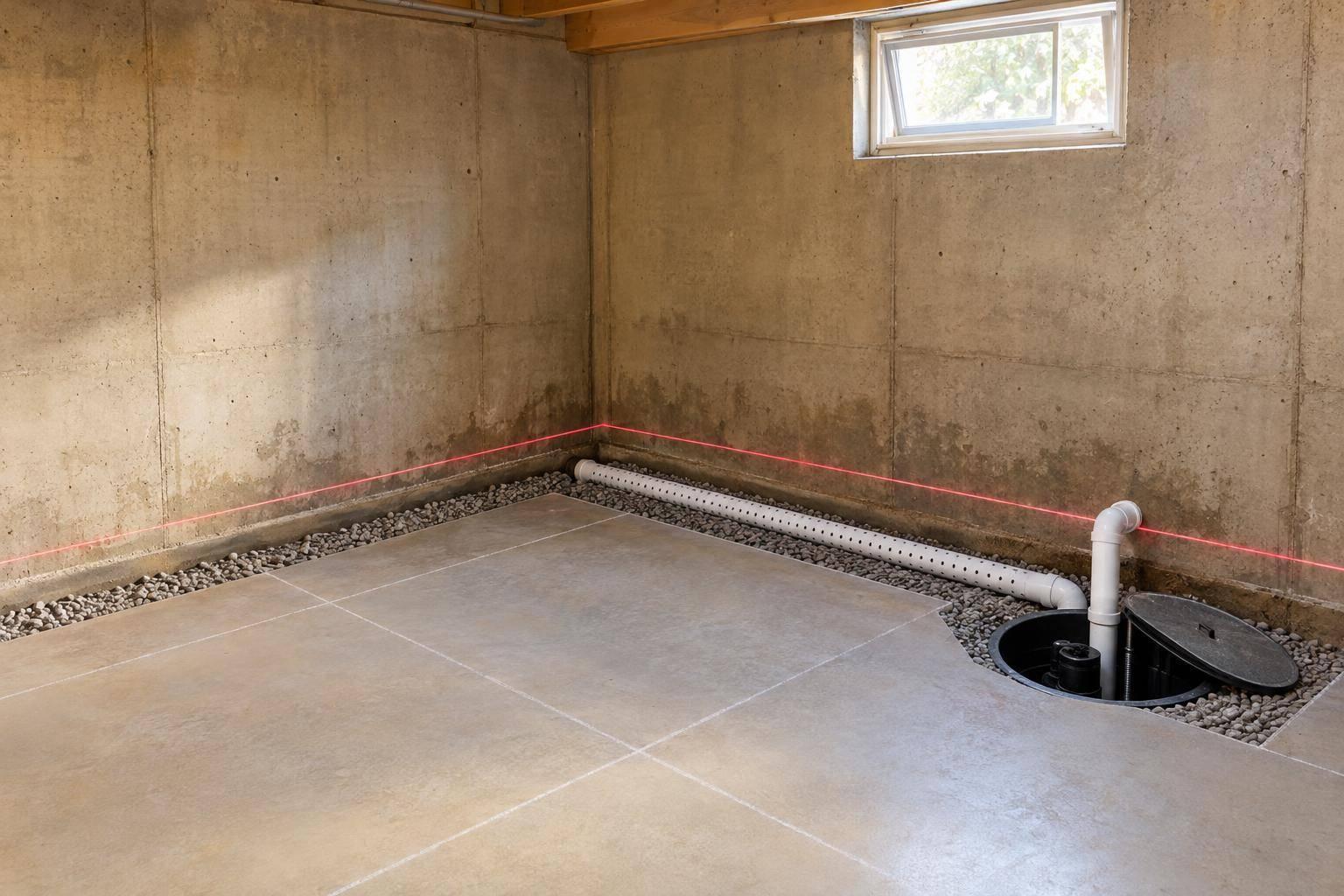
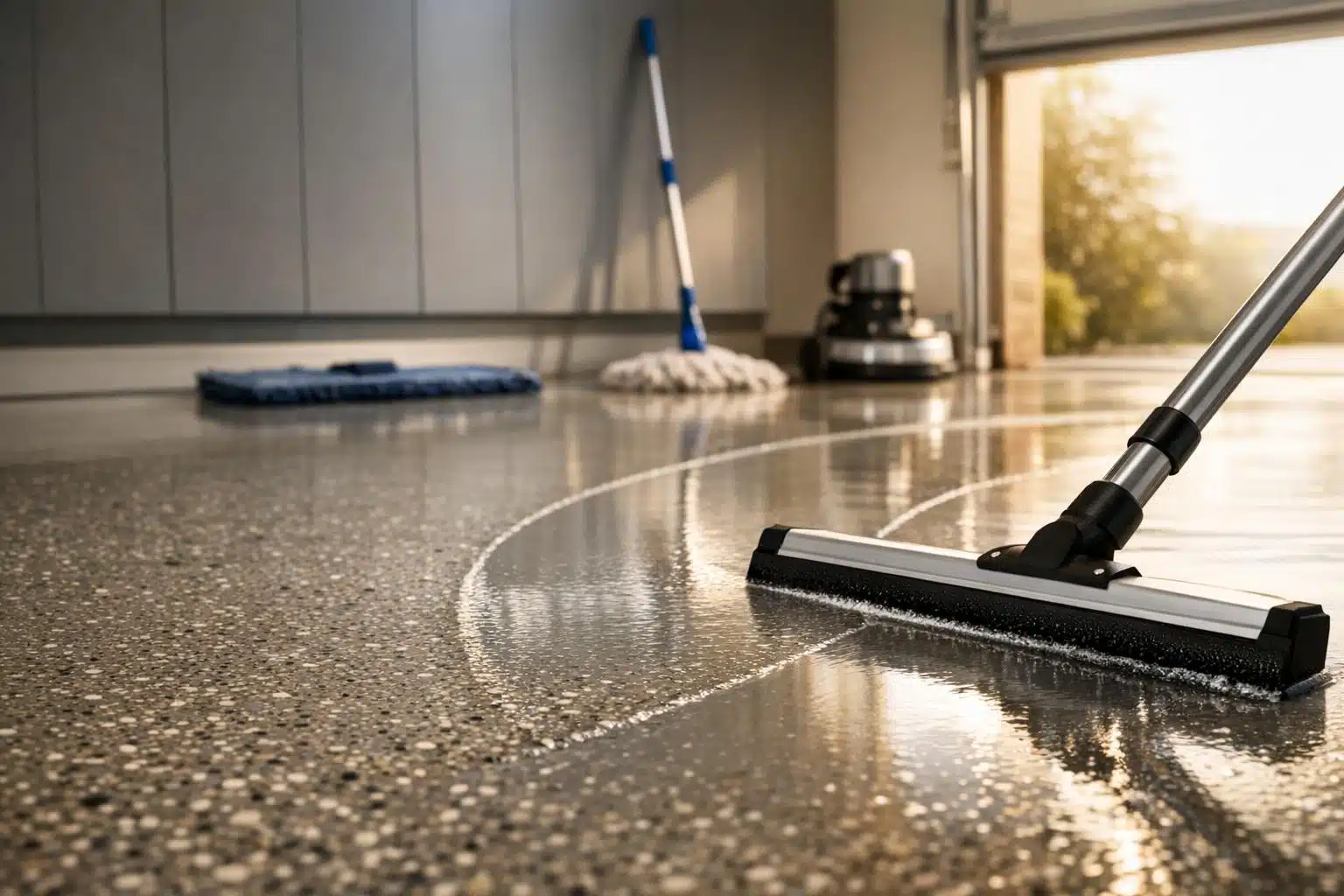
Polyurea floors are tough and long-lasting, but they need regular care to stay in good shape. Here’s a quick guide to maintaining them:
- Daily Tasks: Sweep or vacuum to remove debris and clean spills immediately. During winter, clear salt and ice melt residue to prevent scratches, as polyurea vs. epoxy weather resistance varies significantly in winter conditions.
- Weekly Tasks: Mop with a pH-neutral cleaner, rinse, and dry to avoid water spots. Handle tough spots with a non-abrasive sponge.
- Monthly Tasks: Use diluted ammonia for deep cleaning and inspect for signs of damage like peeling, cracks, or discoloration, which can affect the lifecycle of polyurea vs. epoxy coatings.
- Protective Measures: Use mats to prevent tire marks and felt pads under furniture to avoid scratches. Avoid harsh chemicals or abrasive tools. For exterior surfaces, follow specific outdoor floor maintenance steps to combat UV exposure.
- Winter Tips: Use sand instead of rock salt for traction and clean up residue promptly.
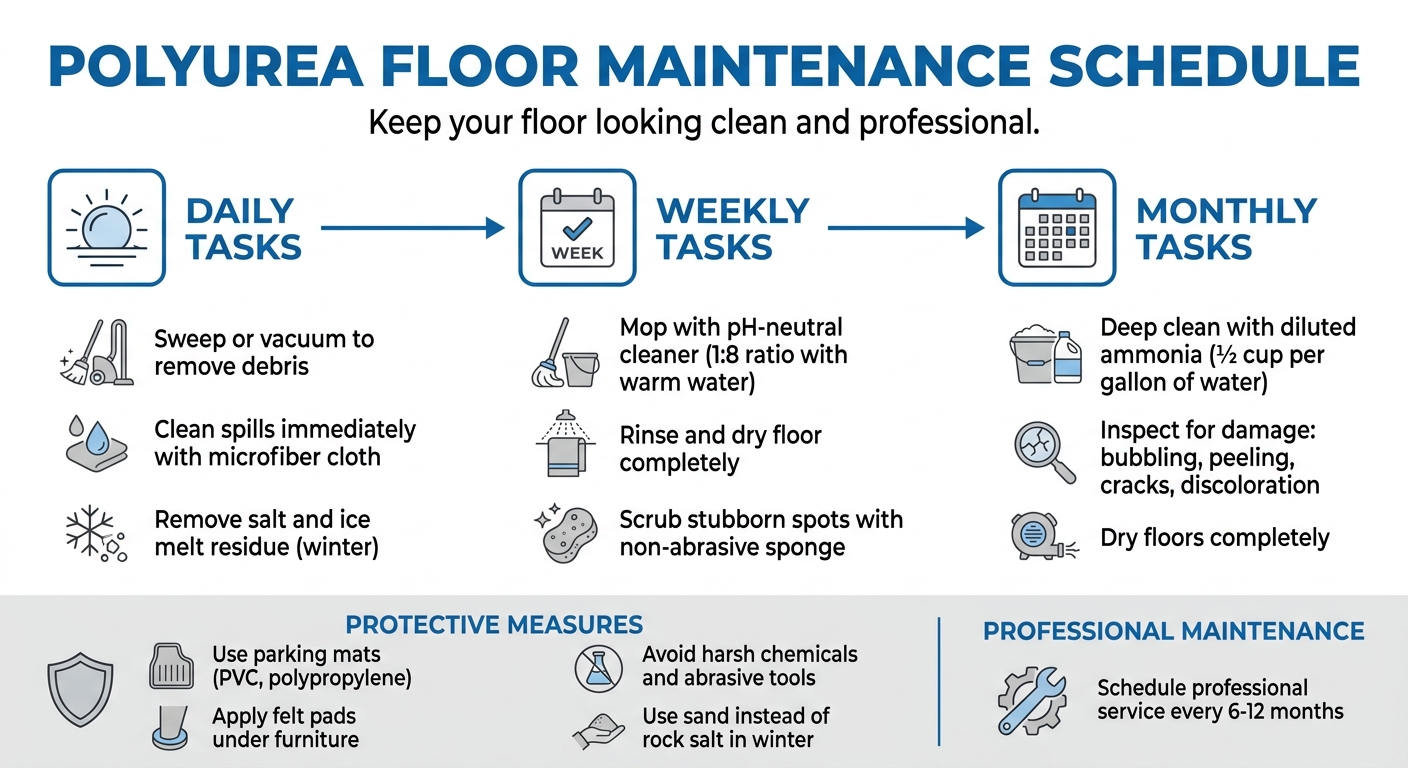
Polyurea Floor Maintenance Schedule: Daily, Weekly, and Monthly Tasks
Daily Maintenance Tasks
Sweep or Vacuum Daily
Dust and debris can wear down the polyurea finish over time. A quick sweep or vacuum each day helps protect your floor and keeps it looking sharp. Use a soft-bristled broom or a vacuum equipped with a hard floor attachment to clear away particles before they get ground into the surface by foot traffic or vehicles. This is especially important in areas like North Idaho and Eastern Washington, where extreme weather, where sand, gravel, and pollen can pile up fast. As Victor Pachade explains:
Sweep or vacuum daily (grit causes abrasion).
Once the debris is gone, make sure to tackle any spills as soon as they happen.
Clean Up Spills Right Away
Polyurea floors have a non-porous surface, so liquids won’t seep in and cause deep stains. Still, it’s best to clean spills immediately. Use a microfiber cloth to blot up liquids – don’t wipe, as that can spread the mess. For greasy spills, mix warm water with a mild pH-neutral dish soap, clean the area, rinse with fresh water, and dry thoroughly using a towel or squeegee. Quick action keeps your floor spotless and prevents any sticky residue.
When winter rolls around, focus on removing salt and ice melt residue.
Remove Salt and Ice Melt Residue
In harsh climates during colder months, road salt and ice melt can leave behind a cloudy, white film on your floor. Although Penntek polyurea coatings can handle chemicals, salt crystals can still scratch the finish. Sweep up loose salt daily to avoid micro-scratches. For more stubborn residue, rinse the area with warm water and use a pH-neutral cleaner or a 1:4 solution of white vinegar and water. Follow up with a fresh water rinse and dry the surface completely to prevent streaks or buildup.
sbb-itb-a0e5ae3
Weekly Cleaning Tasks
Mop with pH-Neutral Cleaner
To keep your polyurea floor looking its best, mop it weekly with a mild, pH-neutral cleaner like Dawn or Simple Green. These cleaners effectively lift dirt without causing chemical reactions that could wear down the polyurea coating. Avoid acidic or alkaline cleaners, as they can harm the surface over time.
Mix the cleaner with warm water in a 1:8 ratio. Use a microfiber mop or a soft sponge mop to spread the solution evenly across the floor. Stay away from abrasive scrubbers or harsh chemicals – they can damage the protective layer and leave your floor looking dull and worn.
Rinse and Dry the Floor
After mopping, rinse the floor to remove any leftover cleaner. Use a clean mop or a fresh bucket of water to go over the surface.
Leaving the floor to air dry can cause water spots, so take a few extra minutes to dry it immediately. Use a squeegee or soft towels to achieve a streak-free, polished finish. This small step makes a big difference, keeping your polyurea coating looking fresh and shiny. This routine is one of the key benefits of polyurea for homeowners.
Scrub Stubborn Spots
For tough spots that don’t come off during regular mopping, use a non-abrasive sponge. Apply a small amount of your diluted pH-neutral cleaner directly to the area and scrub gently in circular motions. Avoid tools like steel wool, stiff brushes, or scouring pads – they can scratch the surface. Once the spot is clean, rinse thoroughly with water and dry with a towel. Addressing these stubborn spots weekly prevents buildup and keeps your floor looking spotless.
How To Clean Your Croc Garage Floor by Penntek Industrial Concrete Coatings

Monthly Deep Cleaning Tasks
Taking on monthly cleaning tasks helps maintain your floor’s condition and prevent polyurea coating failures to ensure it stays durable over time.
Clean Tough Stains with Diluted Ammonia
Every month, tackle those stubborn stains and grime that regular mopping can’t handle. Mix ½ cup of ammonia with a gallon of warm water to create a powerful cleaning solution. This mixture is great for breaking down grime, automotive fluids, and tire residue without harming your floor’s coating.
Focus on high-traffic areas, spots where tires park, and entryways. Apply the solution with a non-abrasive sponge or microfiber mop, allowing the ammonia to work on tough stains like oil, brake fluid, and road salt. Once cleaned, rinse thoroughly to remove any residue. Afterward, take a moment to inspect the floor for any signs of damage.
Check for Common Surface Issues
Deep cleaning is the perfect opportunity to inspect your floor for wear and tear. Walk the surface carefully, paying extra attention to areas where vehicles park – these spots face more stress from heat and friction. For a detailed check, use a high-lumen flashlight at a low angle to spot bubbling or texture changes that might not be visible from above.
Use this checklist to guide your inspection:
| Inspection Category | What to Look For | Potential Cause |
|---|---|---|
| Surface Texture | Bubbling or blistering | Moisture vapor or improper outgassing during install |
| Coating Bond | Peeling or flaking at edges | Poor surface prep or edge impact |
| Color/Clarity | Cloudiness or white spots | Trapped moisture or reaction to harsh chemicals |
| Physical Damage | Deep gouges or scratches | Dragging heavy equipment or sharp objects |
Pay close attention to expansion joints. If the sealant has cracked or pulled away, water might seep underneath, leading to delamination. Also, check for chips, scratches, peeling, or discoloration, especially near doorways and edges where the bond is more vulnerable.
Dry Floors Completely
Once the cleaning is done, make sure to dry the floor right away. Use a squeegee or microfiber cloth to remove any remaining water. This step prevents streaks and water spots, keeping the floor’s finish intact and polished. Drying thoroughly also helps avoid any potential water damage.
Protection and Prevention Tips
Keeping your floors in top shape doesn’t have to be complicated. With a few smart precautions and regular cleaning, you can significantly extend their lifespan and maintain their appearance.
Use Protective Mats and Pads
Investing in quality mats and pads can make a big difference. Parking mats made from materials like PVC, polypropylene, or specialized vinyl are ideal for guarding against hot tire pickup and chemical stains. Place these mats in key areas, such as where vehicle tires pivot or at transition zones with heavy foot traffic. At entryways, use large walk-off mats to catch debris like sand, salt, and gravel before it scratches your floor. Make sure to pick mats with non-staining backings – some cheaper rubber-backed options contain plasticizers that may leave permanent yellow marks. Opt for breathable mats to prevent moisture from building up underneath.
For furniture and equipment, attach heavy-duty felt pads to the legs of items like workbenches, storage racks, and appliances to avoid scratches and dents. When using jack stands or moving heavy machinery, place ½-inch plywood or heavy-duty equipment pads under the weight-bearing points. This helps distribute the weight evenly and prevents gouging.
Avoid Damaging Materials
Even with protective measures in place, it’s important to avoid certain materials and cleaning tools. Skip metal scrapers, steel wool, or anything abrasive – they can ruin the finish. Harsh chemicals like bleach and vinegar are also a no-go, as their acidic or alkaline properties can dull and degrade the floor coating over time. Solvent-based cleaners are particularly harmful to polyurea coatings, causing chemical damage. Stick to pH-neutral cleaners for regular maintenance to keep your floors looking polished and intact.
Winter Protection Methods
Winter can be tough on floors, but you can minimize damage with the right approach. Avoid using rock salt or harsh ice melts, as these can erode the floor’s coating, especially since polyurea offers superior freeze-thaw resistance compared to other materials. Instead, use sand or kitty litter to add traction on icy surfaces without risking damage. Be sure to clean up any winter residue promptly to prevent buildup and keep your floor looking its best.
Inspection and Repair Tasks
Keeping up with regular inspections can save you from costly repairs down the road. Spotting issues early and addressing them promptly works hand-in-hand with your cleaning routines to help your polyurea floors last longer.
Perform Monthly Inspections
As part of your monthly deep cleaning routine, take time to inspect your polyurea floors, especially in high-traffic areas. Focus on spots like garage entryways, workshop floors, or areas where vehicles frequently park or turn. Be on the lookout for cracks, chips, discoloration, or sections where the coating seems to be lifting off the concrete. These problem signs tend to appear first in areas that experience the most wear and tear.
Fix Minor Damage Quickly
If you notice small scratches or chips during your inspections, don’t wait – repair them right away. These minor imperfections might seem harmless, but they can let moisture seep beneath the coating. Once water or automotive fluids penetrate the polyurea layer, the bond between the coating and the concrete can weaken, leading to concrete coating failures or more extensive damage. Acting quickly keeps small issues from turning into expensive problems.
Get Professional Maintenance
Sometimes, damage goes beyond what you can handle on your own. If you see the polyurea peeling away from the concrete or find deeper damage that exposes the substrate, it’s time to call in the experts at Croc Coatings. These signs often point to structural issues that require professional repair to restore the floor’s strength and durability. Even if everything looks fine during your monthly checks, it’s a good idea to schedule a professional maintenance service every 6 to 12 months. This service not only refreshes the surface but also helps uncover hidden wear that might not be obvious, ensuring your floors stay in top condition for years to come.
Conclusion
Taking care of polyurea floors is simple and effective when you stick to a consistent routine. Daily, weekly, and monthly cleaning helps remove grit and chemical residues, keeping the floor’s finish intact and extending its lifespan.
Regular inspections are just as important. By checking for minor wear or damage every month, you can catch problems early and fix them before they escalate into costly repairs. Quick action on spills, salt buildup, or moisture is essential to maintain the floor’s slip-resistant surface and glossy finish.
While DIY maintenance covers the basics, professional services can ensure your floor stays in top condition over the years. If you spot peeling, significant damage, or just want an expert opinion, Croc Coatings provides inspections and maintenance backed by a lifetime warranty benefits on the Penntek Evolution system. Their certified team can address hidden issues and help your floors stay durable and beautiful for decades. It is also helpful to understand warranty limitations to ensure your investment remains fully protected. Stick to these care tips, and your polyurea floors will stand up to the test of time and heavy use.
FAQs
What cleaner is safe for polyurea floors?
A pH-neutral cleaner is the best choice for maintaining polyurea floors. Steer clear of harsh chemicals like ammonia, vinegar, or citrus-based cleaners, as these can harm the coating. Gentle cleaning solutions are ideal for routine care, helping to preserve the quality and appearance of your floors.
How do I remove salt film in winter?
To keep your polyurea-coated floor looking its best during winter, start by sweeping or vacuuming to get rid of loose dirt and debris. Next, mix a pH-neutral cleaner with warm water – steer clear of harsh options like ammonia, vinegar, or citrus-based cleaners, as they can damage the coating. Use a damp mop to gently clean the surface, removing any salt residue. Once done, let the floor dry completely. Sticking to this routine will help preserve your floor’s durability and keep it looking great all season long.
When should I call a pro for repairs?
When regular maintenance no longer addresses issues like cracks, chips, delamination, or noticeable surface wear, it’s time to call in a professional. Pay special attention to high-traffic areas and entrances during inspections, as these spots are more prone to damage. Acting quickly with professional repairs helps preserve both the look and durability of your polyurea-coated floor, keeping it in top condition for years to come.