Most polyurea garage floors should be swept weekly, spills should be cleaned right away, and the floor should be mopped every 1–2 months. In winter, or if you track in mud, sand, or road salt, I’d move mopping up to every 1–2 weeks.
Here’s the short answer:
- Weekly: Sweep or dust mop to remove grit
- Right away: Clean oil, chemicals, mud, and wet messes
- Every 1–2 months: Mop with warm water and a pH-neutral cleaner
- Winter: Clean more often because salt and slush build up fast
- Spring and fall: Do a full floor wash, including corners and under vehicles
A polyurea or epoxy coated floor can last 15–25+ years in a home garage, but dirt and salt can wear down the top layer over time. That’s why frequency depends less on the calendar and more on traffic, weather, and what gets dragged in on your tires.
If I had to put it in one line, it would be this: clean light messes every week, deep clean on a set cycle, and step in faster during snowy or muddy months.
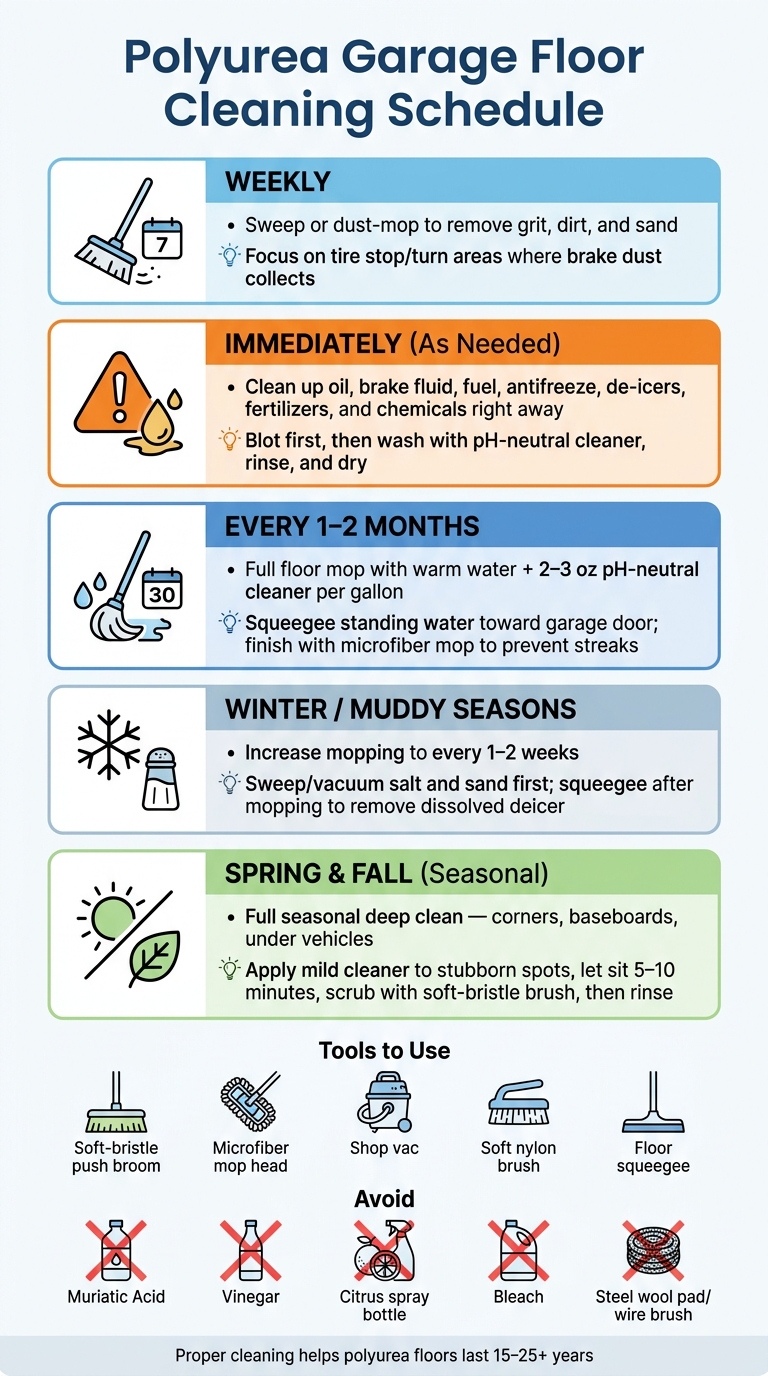
Polyurea Garage Floor Cleaning Schedule: How Often & What to Do
Weekly and As-Needed Cleaning for Everyday Garage Use
What to Do Every Week
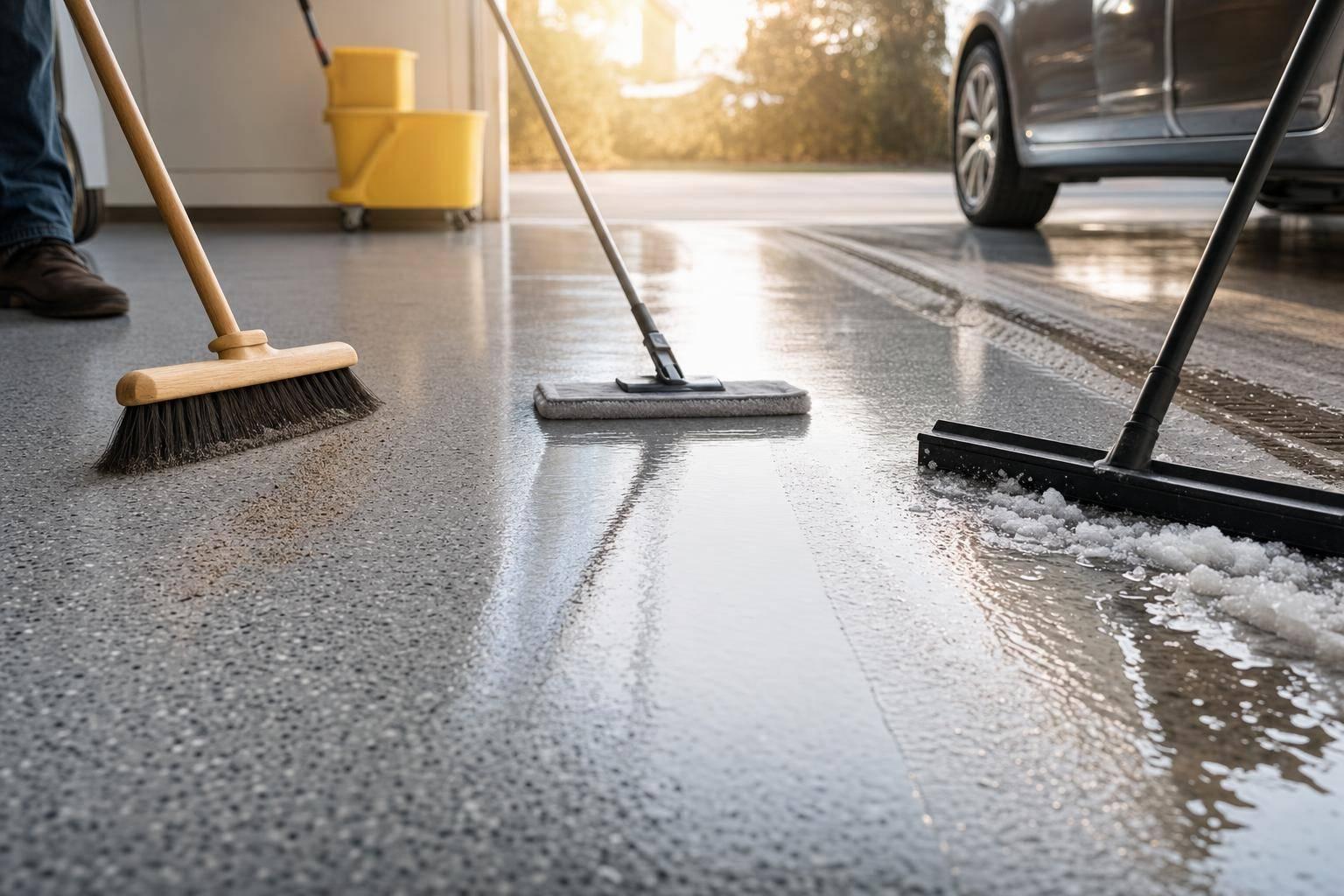
Weekly cleaning helps keep grit from wearing down a polyurea garage floor between deeper cleanings. This is one of the primary ways polyurea coatings reduce floor maintenance compared to bare concrete. Sweep once a week so loose dirt doesn’t get pressed into the coating under foot traffic or tires. A soft-bristle push broom, a microfiber dust mop, or a shop vacuum with a floor attachment all work well for picking up dirt, sand, and grit.
Give extra attention to the places where tires stop and turn. That’s usually where brake dust and grit show up first. If your garage sees more traffic, add a second sweep during the week in parking lanes and work areas.
Putting the sweep on the same day every week makes the habit easier to stick with.
If you notice fresh spills or mud tracked in from outside, clean it that day instead of waiting for your weekly pass.
When a Spill or Dirty Job Calls for Extra Cleaning
Don’t wait for the next scheduled cleaning if something spills. Clean up motor oil, brake fluid, fuel, antifreeze, de-icers, fertilizers, pesticides, and other chemicals right away. Fast cleanup helps protect the finish and makes stains less stubborn.
Blot the spill first. Then wash the area with a mild, pH-neutral cleaner, rinse it, and dry it. For leftover residue, use a soft cloth, sponge mop, or nylon brush.
Dry messes need attention too. If you’ve got sawdust, soil, potting mix, or sand on the floor, sweep or vacuum it up as soon as the job is done. Otherwise, it gets tracked through the garage or ground under tires.
Keep a few basic supplies near the garage entry:
- Absorbent pads
- Rags
- A mild cleaner
When grit, haze, or salt residue starts to build up, it’s time to move from weekly upkeep to a deeper monthly wash.
sbb-itb-a0e5ae3
Monthly and Seasonal Deep Cleaning Based on Traffic and Weather
Monthly Cleaning Schedule for Light-Use and Heavy-Use Garages
Weekly sweeping takes care of loose dirt. A deeper clean deals with salt, residue, and the grime that gets tracked in over time.
How often you need that deeper clean comes down to how much the garage gets used. Light-use garages usually need a deep clean every 1–2 months. Garages used every day should be cleaned monthly.
That monthly cleaning should cover the entire floor, including corners and the spots under parked vehicles. Start by sweeping or vacuuming. Then damp mop with warm water and a mild, pH-neutral cleaner. After that, use a squeegee to push standing water toward the garage door, and dry the surface with a microfiber mop to help prevent streaks and water spots.
Winter Snow and Road Salt Require More Frequent Cleaning
Winter changes the pace fast. Sand, salt, slush, and deicer can pile up in a hurry, especially in North Idaho and Eastern Washington.
During snowy weeks, move to cleaning every 1 to 2 weeks. First, sweep or use a shop vac to remove sand and salt from the floor. Then damp mop with warm water and a mild cleaner to lift the salt film. Finish with a squeegee so the water clears out instead of leaving dissolved deicer sitting on the coating or pooling near expansion joints.
Floor mats or drip trays under vehicles can help keep meltwater in one place and make cleanup easier.
Spring and Fall Are the Best Times for a Full Seasonal Cleaning
Plan for at least two thorough cleanings per year – one in spring, after winter residue has built up, and one in fall, before snow and road salt come back.
For these seasonal cleanings, go beyond the middle of the floor. Clear out the corners, scrub along baseboards, and wash the areas under parked vehicles. If you run into stubborn spots, apply a mild cleaner, let it sit for 5 to 10 minutes, then scrub with a soft-bristle brush before rinsing. After seasonal cleaning, the right tools make routine upkeep faster. This ease of maintenance is one of the benefits of polyurea that makes it ideal for busy garages.
Cleaners, Tools, and Habits That Work Best on Polyurea Floors
Safe Cleaning Products and Tools to Use
Once you have a cleaning routine in place, the next step is simple: use the right gear. That makes day-to-day care faster, easier, and less risky for the floor.
For routine mopping, use warm water with 2–3 oz of pH-neutral cleaner per gallon. Always follow the installer’s approved-cleaner guidance. If your floor was installed by Croc Coatings, stick with the installer’s or manufacturer’s approved-cleaner list, including products such as Penntek’s LGX-501, to help the floor keep performing as intended and to help protect warranty coverage.
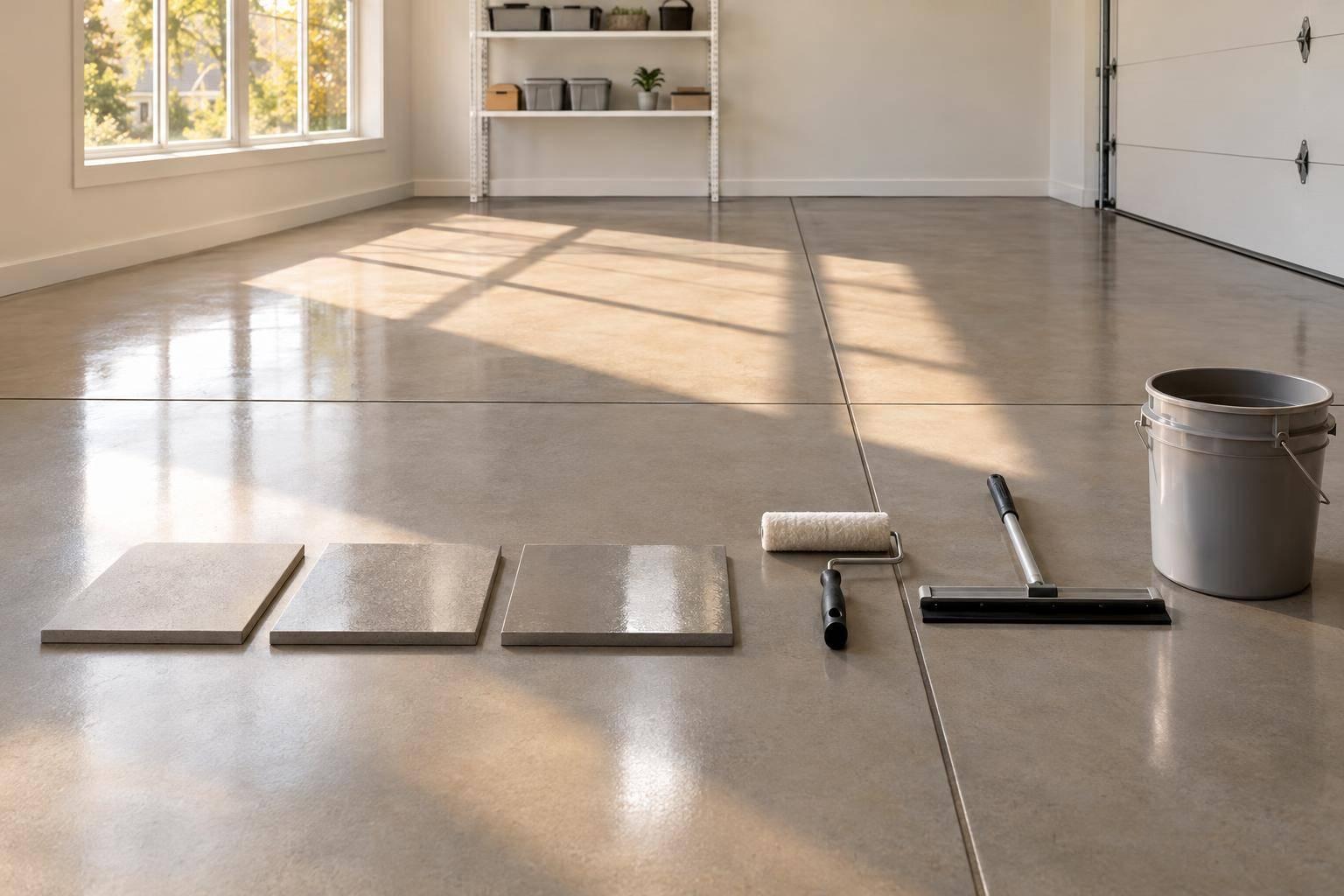
Your main tool kit should include:
- Soft-bristle push broom
- Microfiber mop
- Shop vac with hard-surface attachment
- Soft nylon brush
- Floor squeegee
These tools do the job without being rough on the surface. Think of it this way: the floor is tough, but it still does best with a light touch.
What to Avoid to Prevent Unnecessary Wear
Some cleaners and tools can do more harm than good. Skip acids, strong alkalis, and abrasive scrubbers.
Harsh acids such as muriatic acid, vinegar, and citrus-based cleaners can dull or etch the top coat, especially along edges and in high-traffic spots. Undiluted bleach and oven cleaners can also create issues. On the tool side, abrasive powders, steel wool, and stiff wire brushes can leave tiny scratches that trap dirt over time.
After mopping, rinse the floor to help prevent residue and haze.
Regular sweeping and gentle cleaning help preserve the finish and cut down on wear over time. When you treat polyurea this way, it stays easier to clean and does a better job of resisting buildup. These same principles apply when you maintain polyurea-coated outdoor floors to ensure they stay durable against the elements.
Long-Term Wear, Warranty Value, and Cleaning Schedule Summary
How Routine Cleaning Supports Long-Term Durability
Routine cleaning does more than keep your garage floor looking good. It helps the floor last.
Grit, road salt, and vehicle residue slowly wear down the topcoat, especially under tires and in high-traffic walking areas. Polyurea garage floors can last 15–25+ years in residential settings, but that kind of lifespan depends on clearing away debris before it gets pressed into the surface.
A clean floor also feels more consistent underfoot. When dirt and residue build up near the garage door or parking spots, traction can change from one area to another. Regular cleaning helps keep footing more even in those spots.
Then there’s the warranty side of things. Many polyurea warranty documents do not cover dulling tied to poor general cleaning, abrasive tools, or harsh chemicals. A lifetime residential warranty can add long-term value, but it doesn’t do the cleaning for you. Basic upkeep helps protect the look and day-to-day performance that warranty coverage is there to back up.
A Simple Cleaning Schedule to Follow
Use this schedule as a starting point, then adjust it based on weather, vehicle use, and how much traffic your garage gets.
| Frequency | Task |
|---|---|
| Weekly | Sweep or dust-mop to remove grit and debris |
| Immediately | Clean up spills, oil drips, and chemical splashes |
| Monthly (or every 1–2 months) | Mop with warm water and a pH-neutral cleaner |
| Winter or muddy seasons | Increase mopping to every 1–2 weeks as needed |
The basic rhythm is straightforward: sweep often, clean spills fast, and mop on a regular basis.
How To Clean Your Croc Garage Floor by Penntek Industrial Concrete Coatings
FAQs
How do I know if my garage floor needs more frequent cleaning?
If dirt and scuff marks pile up fast, your garage floor probably needs to be cleaned more often. Areas that take the most traffic – like entry points, turning spots, and where tires usually sit – tend to collect the most grit. Floors with a rougher texture can also trap more dirt.
It’s smart to clean more often when you start seeing mud, sand, road salt, stains that stick around, grime tucked into the surface, or a duller finish. If a weekly sweep and a monthly damp mop aren’t doing the job, a steadier routine can help cut down on abrasive wear.
What cleaner is safest for a polyurea garage floor?
A pH-neutral cleaner mixed with warm water is the safest pick for a polyurea garage floor. Croc Coatings also points to mild options like Dawn dish soap or Simple Green. Use them with a microfiber mop, then rinse if needed.
Skip harsh acidic, alkaline, citrus-based, or solvent-based cleaners. That includes bleach, vinegar, and ammonia.
Can road salt damage a polyurea garage floor over time?
Yes. If it sits on the floor, road salt can wear down a polyurea coating over time.
Good polyurea does a solid job of resisting stains and moisture. But salt crystals and road grit can still work like a light abrasive. Little by little, that friction can leave fine surface scratches.
As salt and de-icing residue build up, tires and foot traffic can grind it into the coating and cause micro-scratches. To help protect the finish during winter:
- Sweep up loose salt on a regular basis
- Rinse away residue with a pH-neutral cleaner or a mild vinegar-and-water solution