Yes – polyurea floors resist salt stains because salt stays on the surface instead of soaking into the concrete. That makes winter cleanup easier, but it does not mean you can ignore salt, brine, sand, and slush.
If I had to sum it up in a few lines, it would be this:
- Polyurea helps block salt from penetrating the slab
- White residue is often just road salt film
- If white buildup keeps coming back in cracks or joints, it may be efflorescence
- Routine cleaning still matters, especially every 2–4 weeks in winter
- Soft tools and pH-neutral cleaners are the safe choice
- Multi-tone flake floors can help hide winter mess between washes
In places with snowy winters, this matters a lot. Idaho transportation crews use close to 200,000 tons of deicer in a winter season, so salt residue on garage floors is common. A coated floor deals with that mess better than bare concrete, but surface protection is not the same as zero maintenance.
Here’s the quick takeaway:
| Topic | Short answer |
|---|---|
| Salt stain resistance | Yes, polyurea helps stop deep salt staining |
| Protection method | Seals the surface so salt stays on top |
| Cleaning need | Yes, wash winter residue on a routine basis |
| White film source | Usually tracked-in salt and brine |
| Repeat white buildup in same spots | May point to slab moisture, not just road salt |
| Best cleaning approach | Sweep first, then mop with warm water and a pH-neutral cleaner |
So if you want the plain answer: polyurea floors hold up well against salt stains, but you still need to clean them before residue, grit, and moisture dull the finish.
Polyurea Concrete Coatings In-Depth: Problems & Benefits
sbb-itb-a0e5ae3
How Polyurea Coatings Resist Salt Stains
Polyurea Floors vs. Bare Concrete: Salt Stain Resistance & Winter Performance
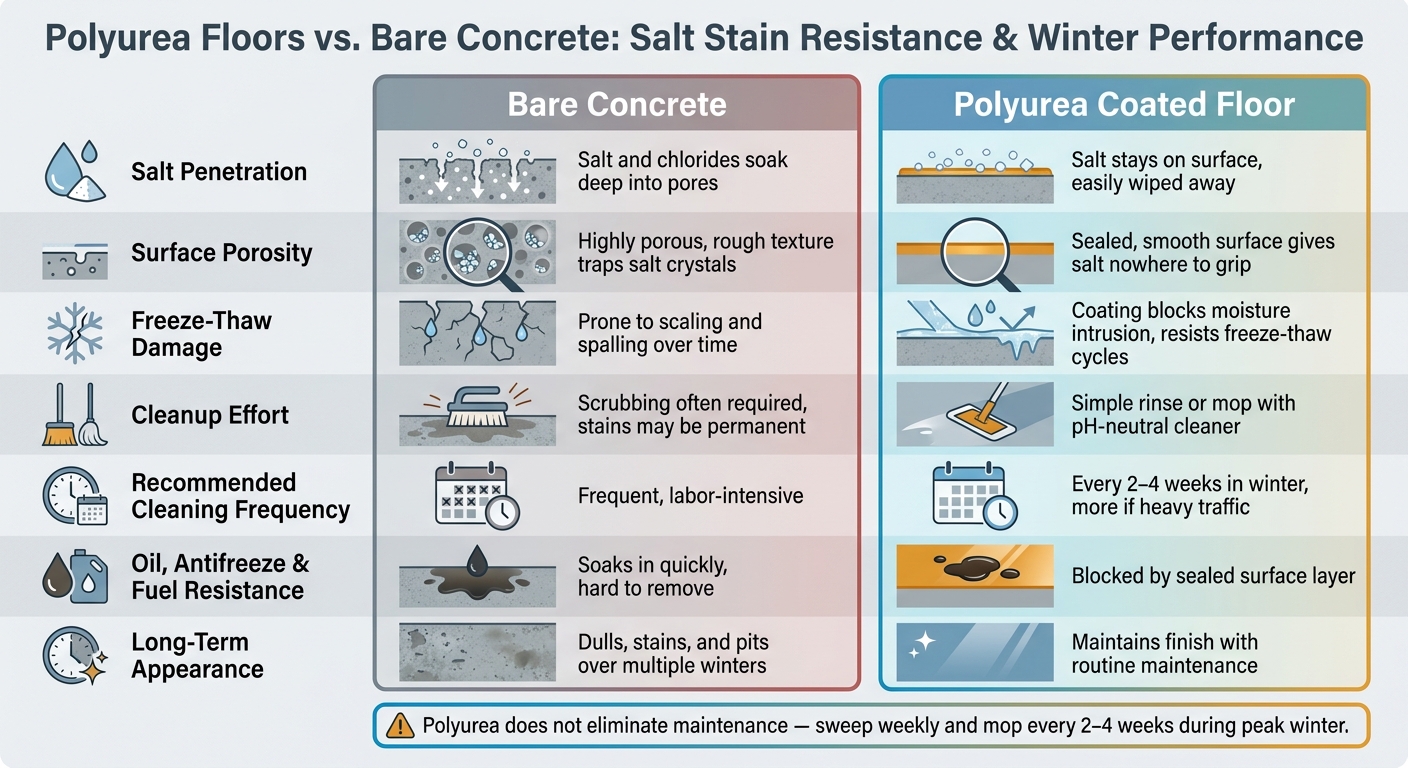
A polyurea coating creates a sealed top layer, so salt stays on the floor instead of soaking into the slab. That’s the big win. Salt sits on the surface, where you can clean it up, instead of working its way down into the concrete.
How the Coating Protects the Slab
This surface film does more than stop stains. It also shields the concrete underneath.
Bare concrete has tons of tiny pores. When salty meltwater sinks in, it carries chlorides deep into the slab. Over time, freeze-thaw cycles can lead to scaling, spalling, and surface damage. A polyurea coating shuts off that route.
Testing shows that polyurea-coated concrete takes in much less water and stands up better to salt and freeze-thaw exposure. It also helps stop oil, antifreeze, and fuel drips from soaking in.
That same barrier makes winter cleanup a lot easier.
Why Salt Cleans Off More Easily on Coated Floors
Salt doesn’t stick to a sealed floor the way it sticks to porous concrete. Uncoated concrete is rough, with tiny pits that grab salt crystals and hold onto residue. That’s why cleanup can turn into a chore, and why some marks seem to stay for good.
A smooth, sealed polyurea surface gives salt far fewer places to hang on. In most cases, a simple rinse or mop does the job, making polyurea vs. epoxy cleaning much simpler.
Good coating systems are made to deal with repeat exposure, too. With regular road salt contact, the surface resists etching and discoloration under normal use.
A Good Fit for Inland Northwest Winters
This matters most in places that get hit again and again with salt, slush, and freeze-thaw swings. In the Inland Northwest, that’s just winter life. And it’s exactly the kind of weather polyurea is built to handle.
What Polyurea Floors Still Need From You
Polyurea stands up well to salt, but winter mess still needs your attention. The coating helps a lot. It makes cleanup simpler and cuts down on damage. Still, it doesn’t make winter maintenance disappear.
If brine, sand, and grit sit on the floor, they can leave behind white rings after slush dries, gray haze in tire paths, and a topcoat that looks less glossy over time.
Why Prompt Washing Still Matters
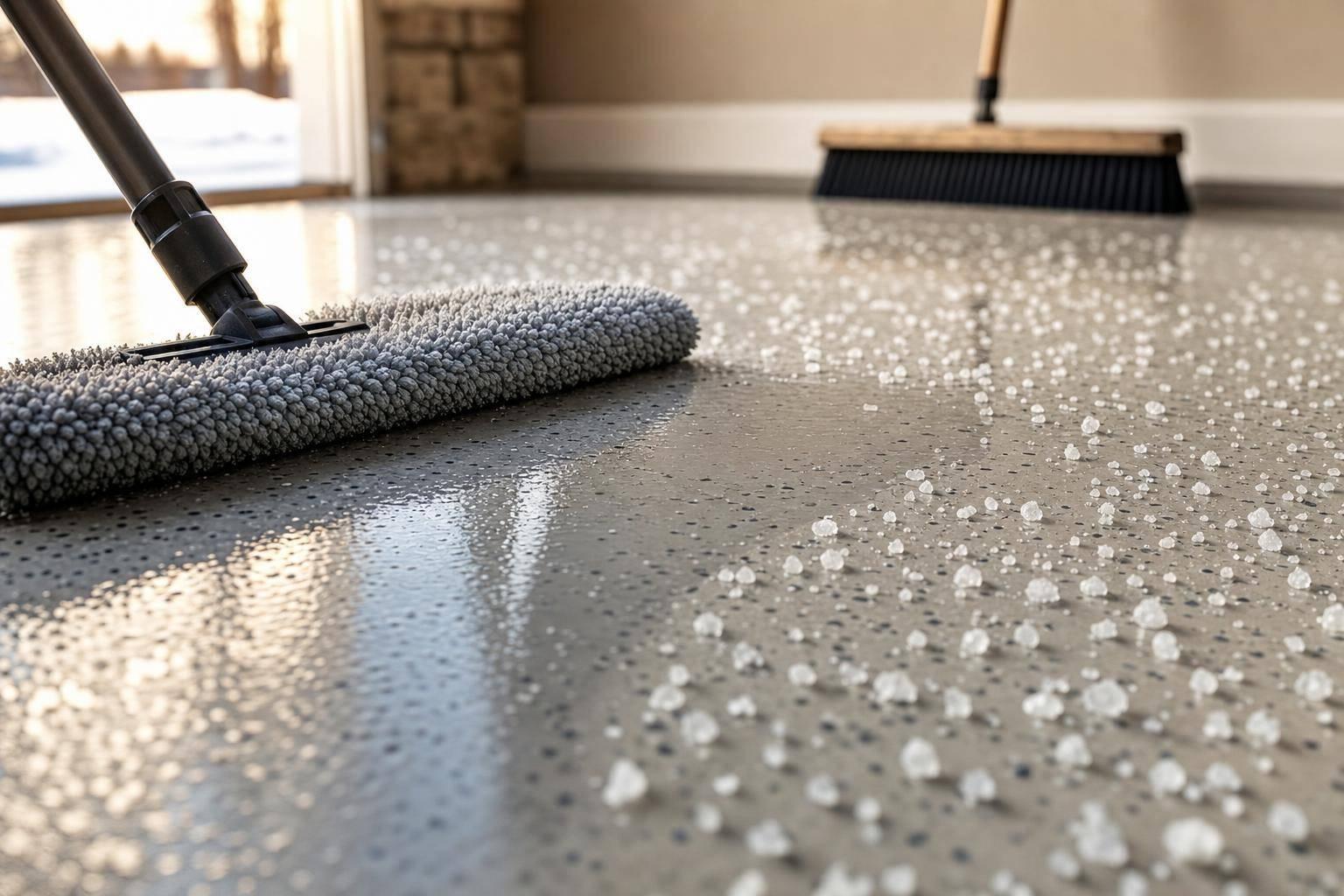
Each time a slushy car pulls into the garage, meltwater spreads across the floor. Then it dries. When that happens, salts can crystallize on the surface. Sand and grit trapped under tires can also scratch the clear coat as cars roll in and out through winter.
Those tiny scratches don’t look like much at first. But over a few winters, they add up. A floor that started with a high-gloss finish can begin to look more matte or satin in the busiest spots.
A good rule of thumb: rinse or mop the floor every 2–4 weeks during peak winter. If you’re dealing with heavy slush or daily traffic, clean it more often.
And if the same residue keeps showing up in the same places, road salt may not be the full story.
When White Residue Points to a Moisture Problem
A light surface film is normal. But deposits that keep coming back along joints or cracks can point to slab moisture issues.
Here’s the simple way to think about it:
- If white residue wipes away with little effort and stays gone, it’s probably normal winter salt film.
- If powdery or crusty buildup keeps returning in the same spots, mainly along control joints, cracks, or where the slab meets the foundation wall, there may be more going on.
That repeat pattern can signal efflorescence. In plain English, that means moisture is moving up through the concrete from below and bringing natural minerals to the surface as the water evaporates.
Road salt film usually comes and goes with winter mess. Efflorescence is often more stubborn and may appear no matter the season. If that residue keeps coming back and you also notice darkening, blistering, or edge lift, it’s smart to have the installer inspect the slab. A professional can inspect the concrete for underlying issues before they lead to coating failure.
How to Clean Salt Residue Without Damaging the Coating
A Simple Winter Cleaning Routine
Polyurea keeps salt on the surface, so cleanup is pretty straightforward. When you see salt residue, clean it before it starts to build up.
Start dry. Sweep or dust mop loose grit, sand, and road debris before you mop. If you go straight to wet cleaning, that grit can get dragged across the coating and leave tiny scratches.
After that, mop with warm water and a pH-neutral cleaner using a microfiber mop. Work in sections, and pay extra attention to wheel paths, entry points, and the spots where vehicles sit after winter storms. If the buildup is heavier, let the cleaner sit for 5–10 minutes, then rinse it off before it dries.
During peak winter, sweep once a week and spot-clean high-traffic areas when needed.
Tools and Cleaners to Avoid
The finish is tough, but the wrong tools can still dull it. Skip metal scrapers, steel wool, and stiff abrasive pads. Use a plastic-edged scraper or a soft squeegee instead to move water or loosen residue near the threshold.
For cleaners, stay away from harsh acids, bleach, strong alkalis, and abrasive powders. Vinegar and citrus cleaners are out too, since their acidity can dull the finish over time. Soapy cleaners can leave a haze, so it’s better to stick with a pH-neutral cleaner and soft tools.
Choosing the right garage floor coating color with flakes can also help hide salt film and tire marks between cleanings.
Why Color Flakes Help Hide Winter Dirt Between Cleanings
After cleanup, floor color plays a big part in how much winter mess you notice from day to day. Color flakes won’t stop salt, but they do make winter residue less obvious. That’s a big plus in garages and other vehicle-heavy spaces during snowy months.
How Flake Blends Reduce the Look of Salt Film and Tire Marks
A solid-color floor works like one flat backdrop. So when white salt film or a dark tire mark shows up, it stands out fast. A multi-tone flake floor works in a different way. Your eye notices the pattern first, not every little patch of grime. Salt streaks and tire scuffs tend to blend into that pattern, so they’re much less obvious at a glance. This doesn’t change how the floor deals with salt. It only changes how visible the residue looks.
Mid-tone blends with light gray, medium gray, charcoal, and a bit of tan tend to work well in garages that deal with winter road salt. They soften the look of lighter debris, like salt dust and sand, and darker marks, like tire tracks and oil smudges. Light floors tend to show mud. Dark floors tend to show salt dust. That matters in Inland Northwest garages, where winter slush and deicers are common. That’s why multi-tone flake blends are often picked for winter-prone garages. These systems provide essential year-round garage floor protection against the elements.
Flakes help hide winter grime, but they don’t take the place of washing. Polyurea protects the slab. Flakes only make winter dirt less obvious. Even with flakes, salt and grit still need to be removed fast. The visual benefit helps between cleanings, but routine washing still does the heavy lifting.
FAQs
How can I tell salt film from efflorescence?
Salt film is a surface residue. It usually shows up when road salt or ice melt gets tracked indoors during winter. Efflorescence, on the other hand, happens when moisture vapor or trapped moisture moves up through the concrete.
On a polyurea-coated floor, white, cloudy patches are almost always surface salt residue. Why? Because the non-porous coating blocks moisture, which keeps efflorescence from making its way to the surface.
Can road salt damage a polyurea floor over time?
Polyurea is built to stand up to road salt and brine, but it’s not invincible. Over time, salt can leave behind a cloudy white film. And if it sits there and gets ground into the surface, it may cause small scratches.
The fix is pretty simple: sweep up loose salt on a regular basis and rinse the floor with water now and then to stop buildup. Cleaning it up sooner rather than later helps protect the coating and keeps the floor looking new through winter.
Which floor colors hide winter salt best?
Floors with decorative flake patterns do the best job of hiding winter dirt and salt residue between cleanings. The multi-colored finish helps mask tracked-in slush, grime, and debris, so the floor keeps looking cleaner for longer.
Croc Coatings offers a range of decorative flake options, along with quartz sand and metallic pigment finishes, to help floors look sharp through winter while also hiding surface imperfections and tire marks.