Cold weather can ruin an epoxy floor before the problems show up. If the slab is under 50°F, if the surface is too close to the dew point, or if moisture is trapped in the concrete, the coating can cure slowly, stay soft, peel, blister, or lose bond after use.
If I wanted the short answer, it would be this:
- Cold concrete cures epoxy much slower. A drop of about 18°F can double cure time.
- Slab temperature matters more than room temperature. A garage slab can stay 10°F to 15°F colder than the air.
- Moisture is a major problem in winter. Condensation, snowmelt, and damp concrete can lead to peeling and bubbles.
- Garage floors are at higher risk than indoor slabs because they deal with freeze-thaw cycles, road salt, and tracked-in water.
- The fix is simple in theory: warm the slab, test moisture, stay at least 5°F above the dew point, and keep heat on through cure.
For homeowners and small business owners in Coeur d’Alene, Spokane, and the Tri-Cities, that means a floor that looks fine on day one can still fail later if winter conditions were ignored during install. Good prep, dry concrete, and the right coating for cold weather make the biggest difference.
| Key issue | What happens | What to do |
|---|---|---|
| Cold slab | Slow cure, thick material, weak bond | Warm slab and materials before coating |
| Condensation | Blisters, peeling, delamination | Keep slab 5°F+ above dew point |
| High slab moisture | Bubbles, bond loss, coating failure | Test concrete moisture before install |
| Freeze-thaw damage | Cracks, spalling, lifted coating | Repair slab before coating |
| Garage winter exposure | More salt, water, and temperature swings | Use a system made for these conditions |
I’d read this article as one main point: in cold weather, epoxy is less forgiving, and garage slabs in this region take the hardest hit.
Why Epoxy Fails in Cold Temperatures
sbb-itb-a0e5ae3
How Cold Temperatures Affect Epoxy During Installation
Epoxy cures through a chemical reaction. When the temperature drops, that reaction slows down fast. A good rule of thumb: every 18°F drop can roughly double cure time. So if a product is set to cure in 12 hours at 70°F, it may need 24 hours at 52°F and 48 hours at 34°F. In an unheated garage, that extra time isn’t just annoying. It can push the job into failure territory.
Slow Curing, Soft Spots, and Weak Adhesion
Most epoxy systems cure best above 60°F. Once temperatures fall below 60°F, curing slows hard, and below 40°F many standard epoxies may stop curing altogether. Instead of setting up in hours, the coating can stay tacky for days.
That creates a chain reaction of problems. Soft epoxy picks up dirt more easily, gets damaged more easily, and can peel more easily. It also bonds less firmly to the concrete below, which means the floor may seem fine at first, then start peeling or showing soft spots after it sees traffic and use.
Some areas are more at risk than others. Cold edges around the perimeter and spots over uninsulated ground often stay colder longer than the middle of the slab. Those sections tend to be the first places where cure issues show up.
Once curing slows down, moisture becomes the next problem.
Cold Materials Cause Thicker Coatings and Rougher Finishes
Cold epoxy gets thicker, plain and simple. That makes it harder to spread and less likely to level out well. On a cold garage slab, the result is often:
- Roller marks and squeegee lines that stay put instead of flowing out
- Uneven film thickness
- Air bubbles that get trapped before they can escape
The final surface can look rough, dull, and uneven. In decorative systems with color flakes or pigments, poor flow in cold conditions can also lead to mottling or patchy coverage. It’s a bit like trying to spread cold syrup straight from the fridge – it just doesn’t move the way it should.
Condensation and Humidity Can Ruin the Bond
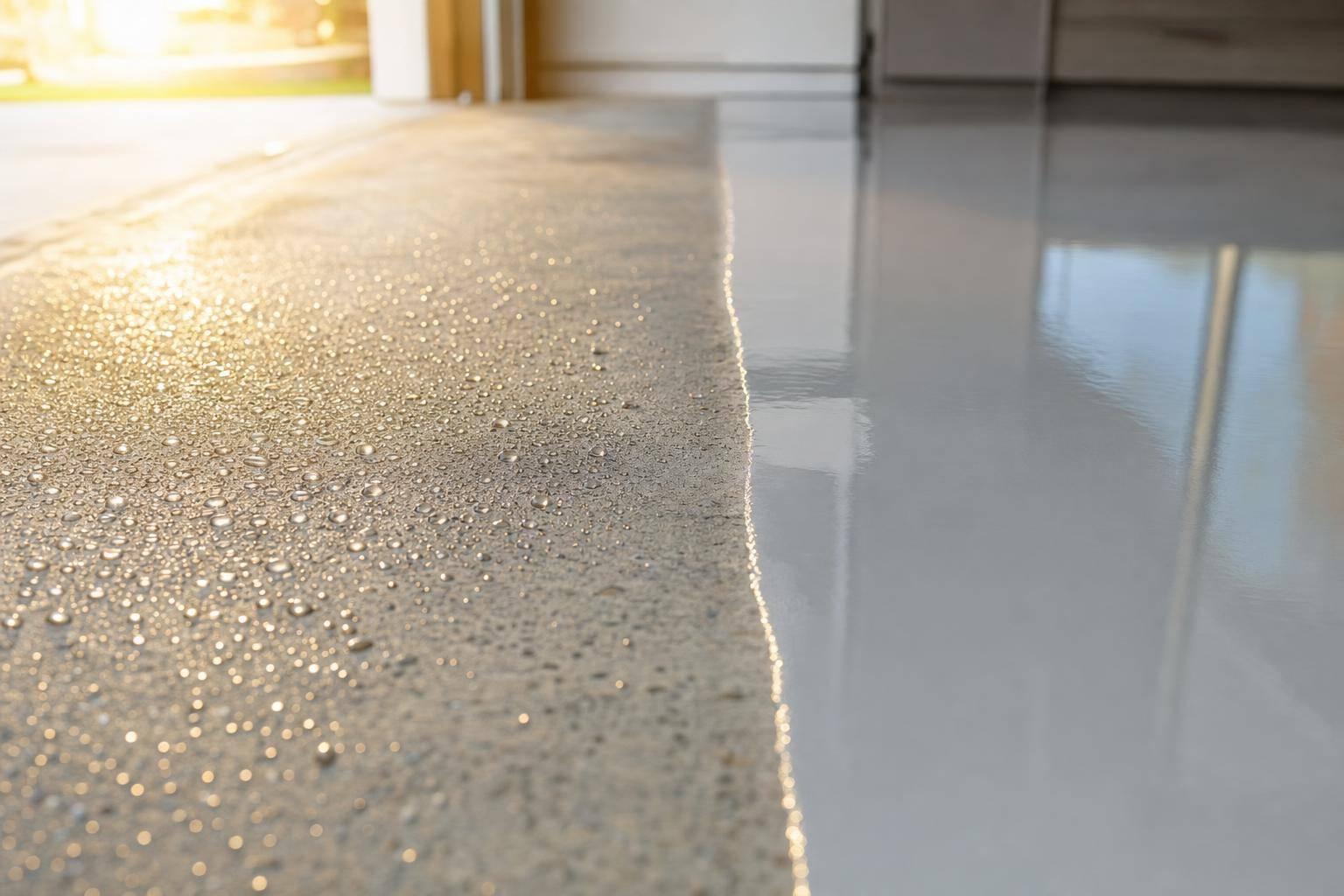
Cold concrete brings another risk: condensation. If the slab surface is at or below the dew point, moisture can form on the concrete even when the air feels dry. That thin layer of water gets in the way of adhesion and can lead to bubbling, blistering, or delamination after the floor goes into service.
Industry guidance says the slab should be at least 5°F above the dew point before epoxy is applied. That small temperature gap can make all the difference.
Cold, humid conditions can also cause some epoxies to develop amine blush. This leaves a waxy film on the surface that dulls the finish and blocks the next coat. If that happens, you can’t just coat over it. The surface has to be washed, scrubbed, and abraded before work can continue.
Garage slabs tend to get hit harder by these issues because they stay colder and wetter than indoor floors. That’s why indoor slabs are often more forgiving than garage floors in Coeur d’Alene, Spokane, and the Tri-Cities.
Indoor Floors vs. Garage Slabs in Coeur d’Alene, Spokane, and Tri-Cities
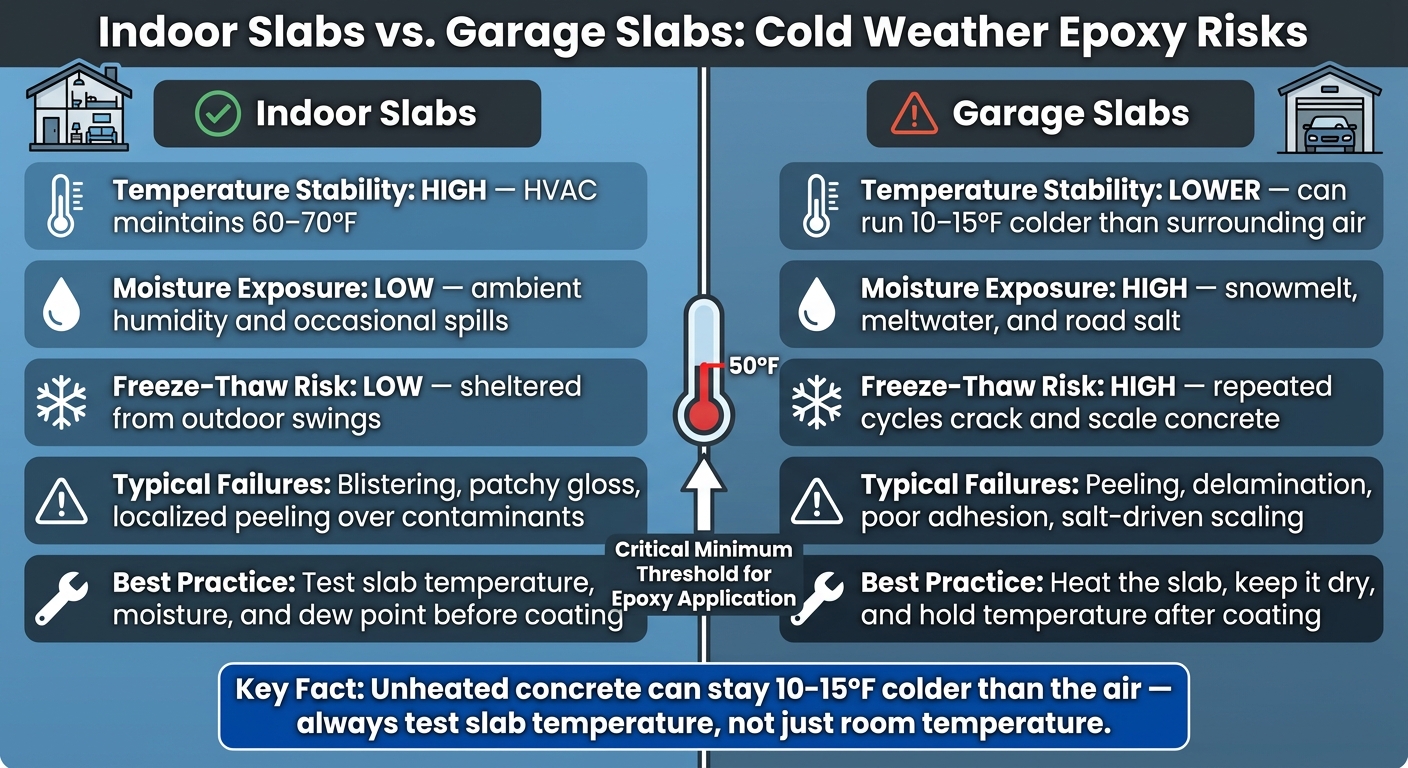
Indoor vs. Garage Slab Epoxy Coating: Cold Weather Risk Comparison
Indoor slabs and garage slabs tend to fail for different reasons once cold weather sets in. The big split is simple: a slab inside a heated building behaves very differently from one sitting in a cold garage.
Indoor Slabs Usually Stay More Stable
Indoor slabs usually hold a steadier temperature because HVAC keeps the space around 60°F to 70°F. That gives epoxy a better cure window and takes some of the guesswork out of the job.
When indoor coatings do fail, the problem is often tied to common coating failures caused by prep, not winter air by itself. Common causes include oil contamination, weak surface profiling, or condensation that wasn’t caught before coating.
Garage Slabs Stay Colder Longer and See More Moisture
Garage slabs are much more likely to run into winter coating problems. They create the exact setup that leads to soft cure, weak bond, and surface damage.
Here’s the part that trips people up: unheated concrete can stay 10°F to 15°F colder than the surrounding air. So a garage might feel fine to you, but the slab can still be too cold for a coating to cure the way it should.
In Coeur d’Alene, Spokane, and Tri-Cities, winter cold and snow keep garage slabs colder for longer. On top of that, cars bring in snow, meltwater, and road salt. That adds more moisture stress and more freeze-thaw wear over time.
Comparison Table: Indoor Slabs vs. Garage Slabs
Here’s the practical difference at a glance.
| Factor | Indoor Slabs | Garage Slabs |
|---|---|---|
| Temperature stability | High – maintained by HVAC, typically 60–70°F | Lower – can run 10–15°F colder than the surrounding air in winter |
| Moisture exposure | Low – mostly ambient humidity and occasional spills | High – snowmelt, meltwater, and road salt are common |
| Freeze-thaw risk | Low – sheltered from outdoor temperature swings | High – repeated cycles can crack and scale concrete |
| Typical failures | Blistering, patchy gloss, localized peeling over contaminants | Peeling, delamination, poor adhesion, salt-driven scaling |
| Best practice | Test slab temperature, moisture, and dew point before coating. | Heat the slab, keep it dry, and hold temperature after coating. |
Those differences shape which cold-weather failures show up first and which fixes matter most.
Cold Weather Problems and How to Prevent Them
For garage slabs, the main fix is pretty simple: control the slab before, during, and after application.
Matching Each Installation Problem to a Specific Fix
Most common problems with epoxy garage floors in cold weather come back to three things: temperature, moisture, and adhesion.
Slab temperature comes first. Standard epoxy systems need the concrete to be between 50°F and 90°F before application. Drop below that, and the chemical reaction slows way down. The result? Thicker material, harder spreading, and curing that drags on. The fix is to pre-warm the slab, bring materials to room temperature, and keep heat running until the coating fully cures.
Dew point control matters just as much. Industry guidance says the slab surface should stay at least 5°F above the dew point during prep, application, and cure. If that margin disappears, moisture can condense on the slab and weaken adhesion. That’s why installers use dehumidifiers, ventilation, and steady heat to hold that 5°F gap.
Elevated slab moisture is the third piece. In-slab RH probes under ASTM F2170 measure moisture below the surface. If internal humidity is above the coating maker’s limit – often around 75% to 85% RH – the install should be delayed, or a moisture mitigation primer should be used. This shows up a lot in older slabs, where groundwater and snowmelt can keep concrete damp long after the surface looks dry.
Once temperature and moisture are under control, there’s still one more risk: damage that winter has already baked into the concrete.
How Freeze-Thaw Cycles Damage Concrete Under the Coating
A coating can be applied the right way and still fail if the slab under it is already weak. Freeze-thaw damage starts inside the concrete. Water gets into pores and microcracks, freezes, expands, and builds pressure the slab may not be able to take. De-icing salts make things worse because they pull more water into the slab and also attack the cement paste.
In the Coeur d’Alene and Spokane area – where frost days are common and January lows often drop into the mid-20s°F – that cycle keeps repeating through winter. Salt residue usually builds up near garage doors and along tire paths, so those spots tend to show edge spalling first.
Before coating a slab with any freeze-thaw history, a professional installer should check for existing damage, repair cracks and spalls with compatible mortars, and decide whether resurfacing or densification is needed.
Problem-Solution Table for Cold Weather Failures
| Problem | Root Cause | Visible Symptoms | Corrective Action |
|---|---|---|---|
| Cold slab | Concrete below 50°F slows epoxy reaction and increases viscosity. | Thick application, roller marks, slow setup | Pre-warm slab to 50–90°F with heaters and bring materials to room temperature before mixing. |
| Slow cure / tacky finish | Low temperature and moisture interfere with curing. | Soft or sticky surface days after application | Maintain heat through full cure and extend recoat windows based on manufacturer specs. |
| Condensation and moisture failure | Slab at or below dew point, or elevated internal RH from groundwater or snowmelt, creates a moisture film that weakens adhesion. | Peeling, delamination, blistering, bubbles, weak adhesion | Keep the slab at least 5°F above dew point; use dehumidifiers and ventilation; test with ASTM F2170 RH probes and apply a moisture mitigation primer or delay the install if RH exceeds the limit. |
| Amine blush | Cold, humid cure causes amine components to react with moisture and CO₂. | Cloudy, waxy film on the surface | Wash and mechanically abrade before recoating, and maintain slab temperature and dew point spread. |
| Freeze-thaw concrete damage | Water in pores freezes, expands, and fractures concrete; de-icing salts make it worse. | Hollow spots where the coating has lifted, spider-web cracks, edge spalling | Inspect and repair the slab before coating; choose coatings with strong bond strength and chemical resistance to de-icing compounds. |
If a slab keeps taking winter abuse, the coating choice has to do more than just look good.
Why Climate Should Guide Your Coating Choice
Once you see what winter can do to epoxy, the next move is simple: pick a system that can take the hit. In places with cold snaps, snow, road salt, and freeze-thaw cycles, the climate should shape the coating choice – not the other way around.
What to Look for in a Floor Coating in Freeze-Thaw Climates
Spokane and Tri-Cities get big swings from season to season. That puts steady stress on floor coatings, especially in unheated garages where temperatures bounce up and down.
So what should you look for? Four things matter most: low-temperature application range, salt resistance, UV stability, and moisture control.
Many manufacturers say coatings should only be applied above about 50°F unless you’re using a cold-cure formula or added heat. That matters more than people think. A coating can look fine on install day and still run into cure or bonding trouble if the slab is too cold.
Dense, moisture-resistant coatings also help stop water and salts from getting down to the concrete slab. That’s a big deal in garages where slush, snowmelt, and de-icing residue get tracked in all winter long.
At the same time, you still need to prevent moisture-related coating failures by checking the basics before any coating goes down:
- Dew point
- Humidity
- Slab temperature
Those conditions can make or break the install.
UV-stable topcoats, such as those found in epoxy vs polyaspartic garage floors, help resist yellowing and chalking in sunlight. That’s not just a small detail. It’s a practical issue for garages in Coeur d’Alene and Spokane, where sunlight can wear on the floor over time.
How Croc Coatings Fits Local Climate Demands
For local garages and other concrete surfaces, this points to a system built for these conditions. Croc Coatings serves North Idaho and Eastern Washington with a UV-stable, chemical-resistant coating system that’s installed in one day and backed by a lifetime residential warranty.
Conclusion: Cold Weather Makes Preparation and Coating Choice More Important
Cold weather adds more risk to cure, bond, and long-term wear, which makes climate-fit even more important.
FAQs
Can epoxy be installed in winter?
Usually not in places like North Idaho and Eastern Washington. Epoxy needs steady temperatures around 50°F to 85°F to cure the way it should, and that process can stop once temperatures drop below 40°F. And here’s the catch: garage slabs are often colder than the air, even when the garage itself is heated.
That’s why cold-weather installs can go sideways. You can end up with bubbling, peeling, and weak adhesion.
For winter projects, flexible polyurea systems like Penntek Evolution tend to work better in lower temperatures and through freeze-thaw movement.
How do I know if my slab is too cold?
Don’t go by air temperature alone. The slab is often cooler than the surrounding space, and that difference matters. Use a handheld infrared thermometer to check the slab surface directly.
For standard formulas, the slab should be 35°F to 40°F and rising. The sweet spot for application is usually 50°F to 90°F. The slab also needs to be at least 5°F above the dew point so condensation doesn’t form and get in the way of bonding.
What coating works best for cold garages?
For cold garages, polyurea and polyaspartic coatings are a better fit than standard epoxy. Epoxy can turn brittle when temperatures drop below freezing. Polyurea, on the other hand, stays flexible enough to move with the concrete through freeze-thaw cycles.
Croc Coatings offers the Penntek Evolution system, a polyurea-based coating made for the harsh climate and temperature swings common in North Idaho and Eastern Washington.