If you want a garage floor that stays grippy longer, polyurea/polyaspartic usually beats epoxy. Both systems can use the same grit types, but the coating under that grit affects bond, wear, hot-tire pickup, and how soon you can park on it.
Here’s the short version:
- Best long-term grip: polyurea/polyaspartic
- Lower upfront cost: epoxy
- Best for wet tires, snow, and slush: broadcast grit with a clear top layer
- Smoother and easier to clean: additive mixed into the topcoat
- Common grit options: polymer grit, silica sand, quartz, aluminum oxide
- Mix rate: about 3–4 oz. per gallon
- Broadcast rate: about 1–2 lbs. per 100 sq. ft.
- Vehicle return time: about 24 hours for polyurea/polyaspartic vs. 3–7 days for epoxy
- Typical slip data: polyurea can stay above 0.6 coefficient of friction, while epoxy often falls around 0.4–0.5
What matters most is simple: grit helps traction, but it does not fix a weak coating bond or poor prep. If your garage sees road salt, oil drips, daily traffic, and hot tires, the coating system matters just as much as the non-slip additive.
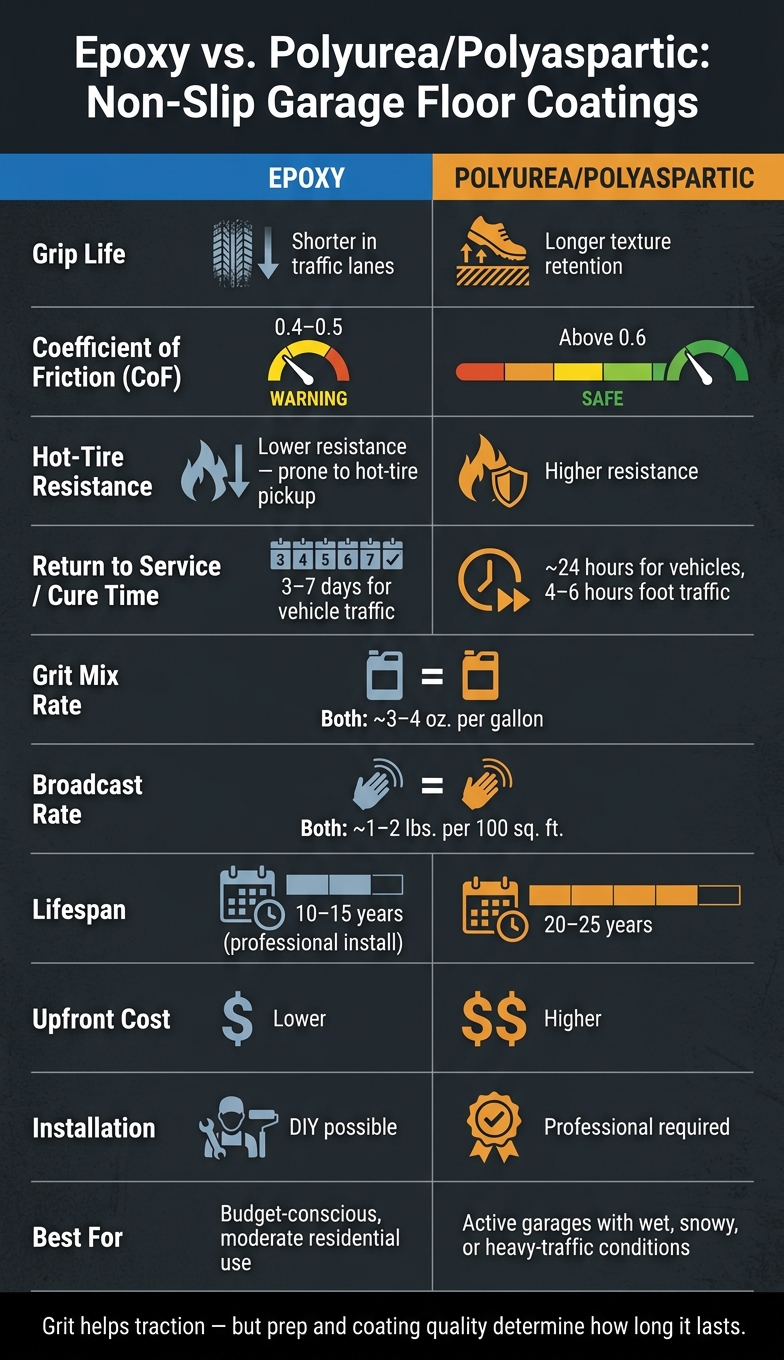
Epoxy vs Polyurea/Polyaspartic: Non-Slip Garage Floor Coating Comparison
Which Concrete Coating Should You Use? | FULL COMPARISON
sbb-itb-a0e5ae3
Quick Comparison
| System | Grip Life | Hot-Tire Resistance | Return to Service | Feel Underfoot | Best For |
|---|---|---|---|---|---|
| Epoxy | Shorter in traffic lanes | Lower | 3–7 days | Can polish smoother over time | Lower-budget garage projects |
| Polyurea / Polyaspartic | Longer | Higher | ~24 hours | Holds texture longer | Busy garages with wet or snowy use |
I’d sum it up this way: if you care most about price, epoxy can work. If you care most about traction that lasts, less downtime, and better hot-tire performance, polyurea/polyaspartic is usually the stronger pick.
1. Epoxy floor coatings with non-slip additives
Bond & texture hold
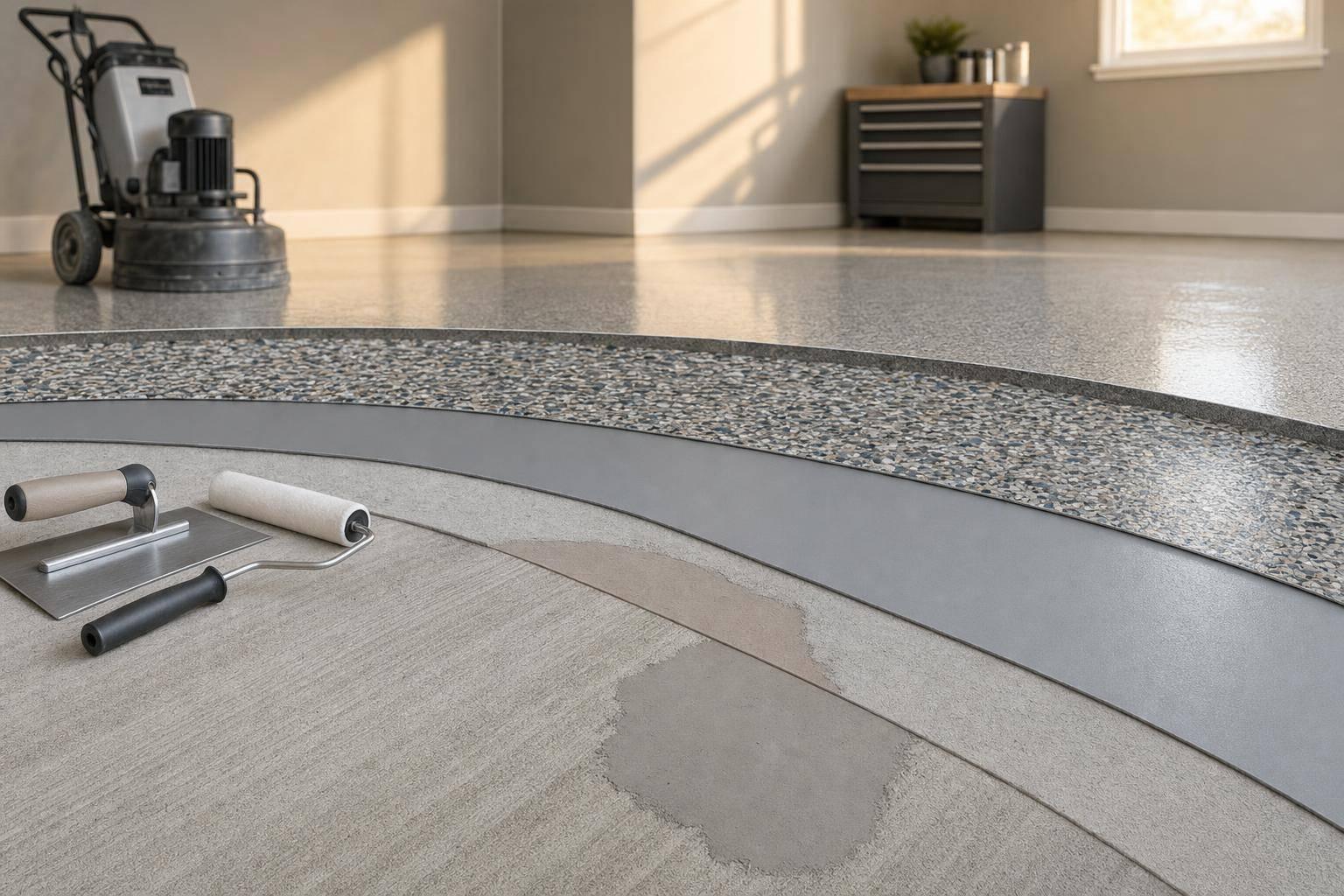
Epoxy bonds to a clean CSP 2–3 concrete profile, so surface prep matters more than the additive itself. If the floor is installed the right way, additives like aluminum oxide or silica sand stay locked into the coating.
That said, wear shows up over time. Tire paths and entry lanes tend to polish down first, which can leave smoother spots where the grit has worn away. In plain terms, the floor may still be coated, but the texture you felt on day one won’t always stay the same in high-traffic areas.
Wear & hot-tire resistance
Epoxy is hard, but it’s also rigid. That matters in a garage, where concrete moves as temperatures shift. Because epoxy doesn’t flex much, hot-tire pickup is still a real issue on garage floors.
A hot tire can soften the coating enough to pull at it, especially if the floor was put back into service too soon. The non-slip additive helps with traction. It does not solve bond problems or make the coating better at handling heat.
Cure time & downtime
Epoxy takes longer to cure than faster-cure garage floor systems. In many cases, vehicle traffic has to wait several days, and cold or humid weather can drag that out even more.
This is one of those details people often brush past, then regret later. If you rush the cure window, you can damage the finish early and cut down the floor’s service life. Polyurea/polyaspartic floors handle cure time and hot-tire stress in a different way.
Warranty-backed long-term value
A professionally installed 100%-solids epoxy floor can last 10–15 years, while DIY kits often fail much sooner. For a garage with moderate residential use, epoxy with a non-slip additive can make sense if the slab is prepped well and the cure window is followed.
For heavier-use garages, traction is only part of the picture. Long-term value also depends on the coating system itself, and a lifetime residential warranty can lower the risk of early failure. That gap stands out more in the next system comparison.
2. Polyurea/polyaspartic floor systems with non-slip additives
Where epoxy leans more on careful prep and strict curing, polyurea does a better job of keeping traction texture in place while getting the floor back in service fast.
Bond & texture hold
Polyurea/polyaspartic floors bond deeper than epoxy, which helps non-slip additives stay locked in longer. Polyurea grips the concrete tightly, so the coating has a stronger base to hold grit in place. It also has higher tensile strength, which helps the coating stand up to stress.
Wear & hot-tire resistance
Polyurea is more impact-resistant than epoxy, so it’s less likely to chip if you drop tools or put the floor through heavy use. That extra toughness helps protect the non-slip layer from early wear. It also resists hot-tire pickup from the heat garage tires generate.
That matters even more when you need the floor back in use without waiting around for days.
Cure time & downtime
Polyurea/polyaspartic floors cure fast: foot traffic in 4–6 hours and vehicles in about 24 hours. Epoxy, by contrast, often needs 3–7 days before it’s ready for vehicle traffic.
That fast cure has another upside. There’s less time for dust, dirt, or debris to settle into the finish. In plain English, the non-slip surface tends to stay cleaner and more even.
One important note: its short pot life requires professional installation.
Warranty-backed long-term value
Professionally installed polyaspartic floors can last 20–25 years. That long service life means the non-slip layer can keep doing its job for years without the hassle of early re-coating.
For homeowners in North Idaho and Eastern Washington, Croc Coatings backs its Penntek Evolution system with a lifetime residential warranty.
Pros and Cons
Each system makes a different trade-off between cost, downtime, and how long the surface keeps its grip. That’s the heart of the decision.
| System | Pros | Cons | Best-Fit Use Case |
|---|---|---|---|
| Epoxy | Lower upfront cost; strong adhesion to properly prepared concrete | Brittle; more prone to hot-tire pickup; non-slip texture wears down faster in high-traffic areas; slower cure time | Budget-conscious homeowners who can accept longer downtime and shorter texture retention |
| Polyurea / Polyaspartic | Fast return to service; flexible; better abrasion resistance; long-term texture retention; can be backed by a lifetime residential warranty | Higher upfront cost; requires professional installation | Homeowners who want faster turnaround and durable traction in an active garage |
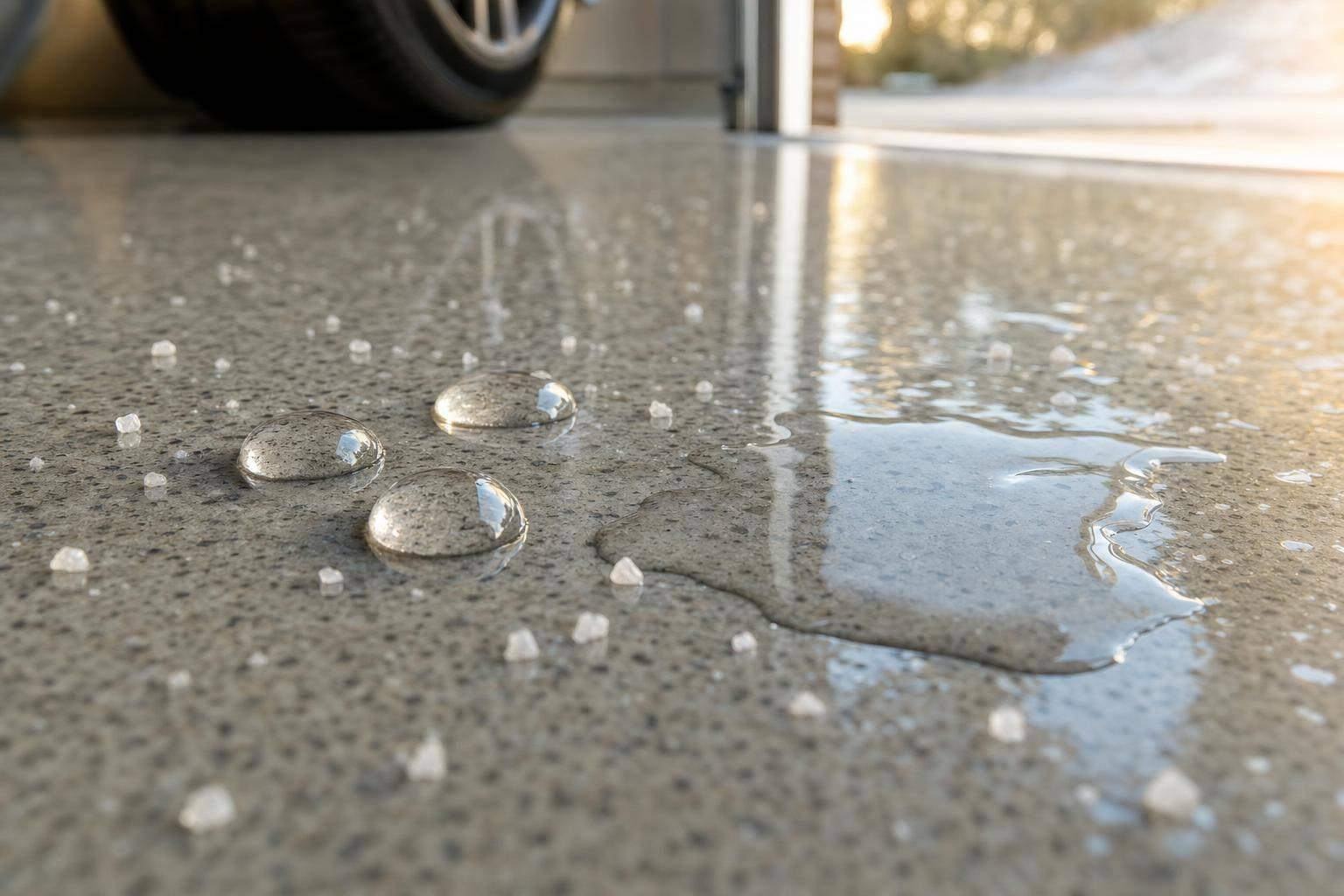
If your garage floor gets wet from rain, snow, or car wash runoff, traction matters a lot. On that front, polyurea has the edge: its coefficient of friction stays above 0.6, while epoxy usually lands around 0.4–0.5.
That said, a non-slip additive isn’t magic. It won’t fix concrete that’s dusty, damp, or poorly profiled. If the prep work is off, the coating can still fail no matter what system you choose.
Conclusion
After looking at bond, wear, cure time, and texture hold, the big point is simple: both coatings can be made slip-resistant. Where they part ways is how well that grip lasts when the floor deals with snowmelt, salt, and daily tire traffic.
Polyurea/polyaspartic floors tend to hold grit longer because they move with the slab and cure fast. Epoxy is more likely to polish smooth and lose texture in hot-tire paths. That longer wear also makes a long-term warranty mean more.
A lifetime residential warranty shows confidence in the bond, finish, and long-term performance. Over time, a longer-lasting system usually means fewer recoats and less upkeep. For homeowners in North Idaho and Eastern Washington, Croc Coatings’ Penntek Evolution system pairs slip resistance with long-term durability in cold-weather garages.
FAQs
Which non-slip additive is best for a garage floor?
For a garage floor, traction additives like Shark Bite or Gator Bite paired with a high-performance polyurea coating system are a strong pick. They add texture and improve safety without making the floor look rough or unfinished.
That matters in a garage, where water, oil, and cleaning chemicals can turn a smooth surface into a skating rink fast.
Unlike epoxy, which can get slick when wet and may need yearly grip treatments, polyurea tends to hold its slip resistance better after exposure to moisture or chemicals.
Will a non-slip additive make my floor harder to clean?
No. With the Penntek Evolution system, a non-slip additive doesn’t make the floor harder to clean.
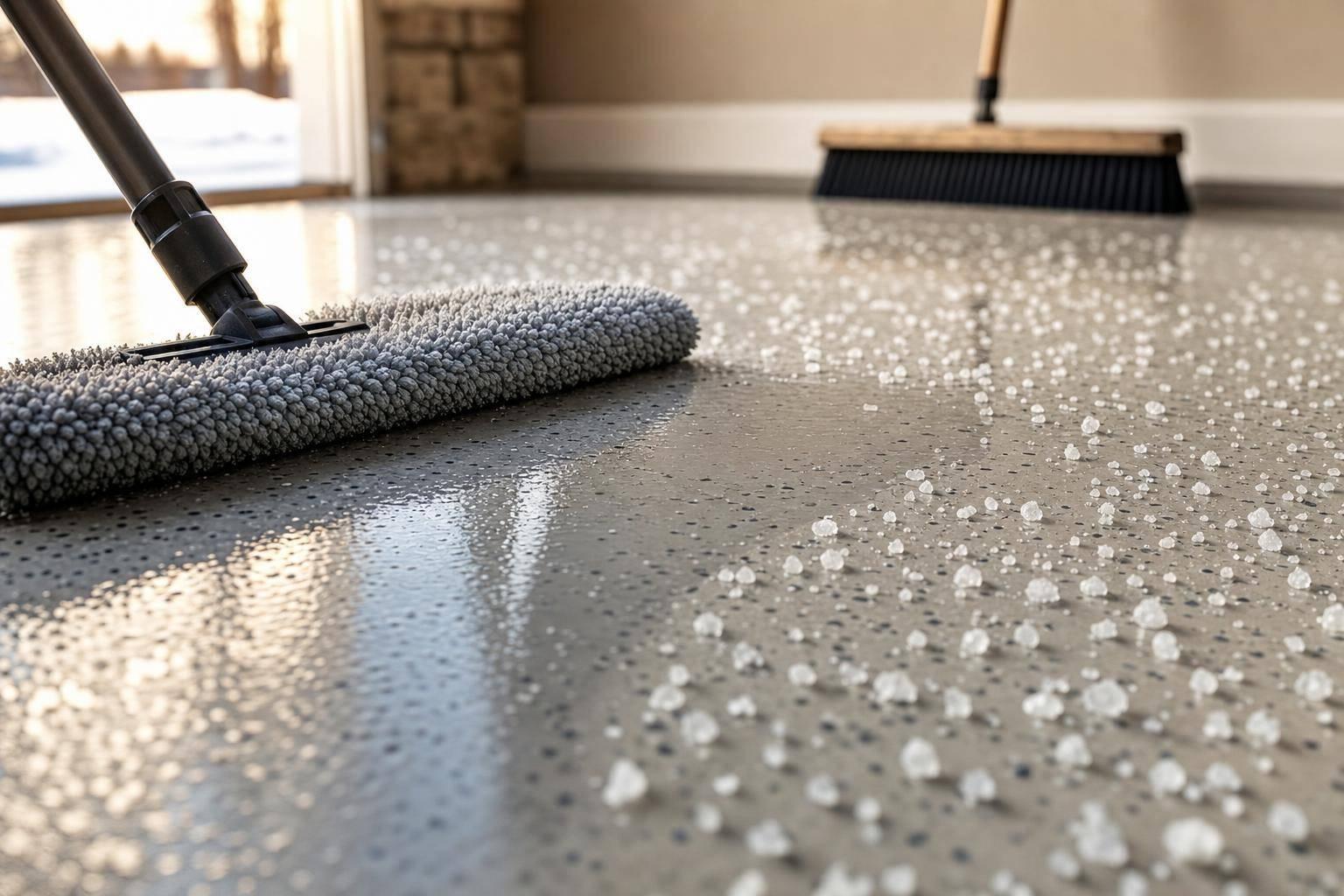
The surface is non-porous and antibacterial, so it resists oil stains and chemical spills. In most cases, routine sweeping, vacuuming, or cleaning with mild detergent and water is all you need.
How do I choose between mixed-in grit and broadcast grit?
It comes down to where the texture sits in the floor system.
With epoxy, non-slip additives like aluminum oxide grit are usually added at the surface. That creates roughness on top of the coating, which can wear down faster as the floor sees more use.
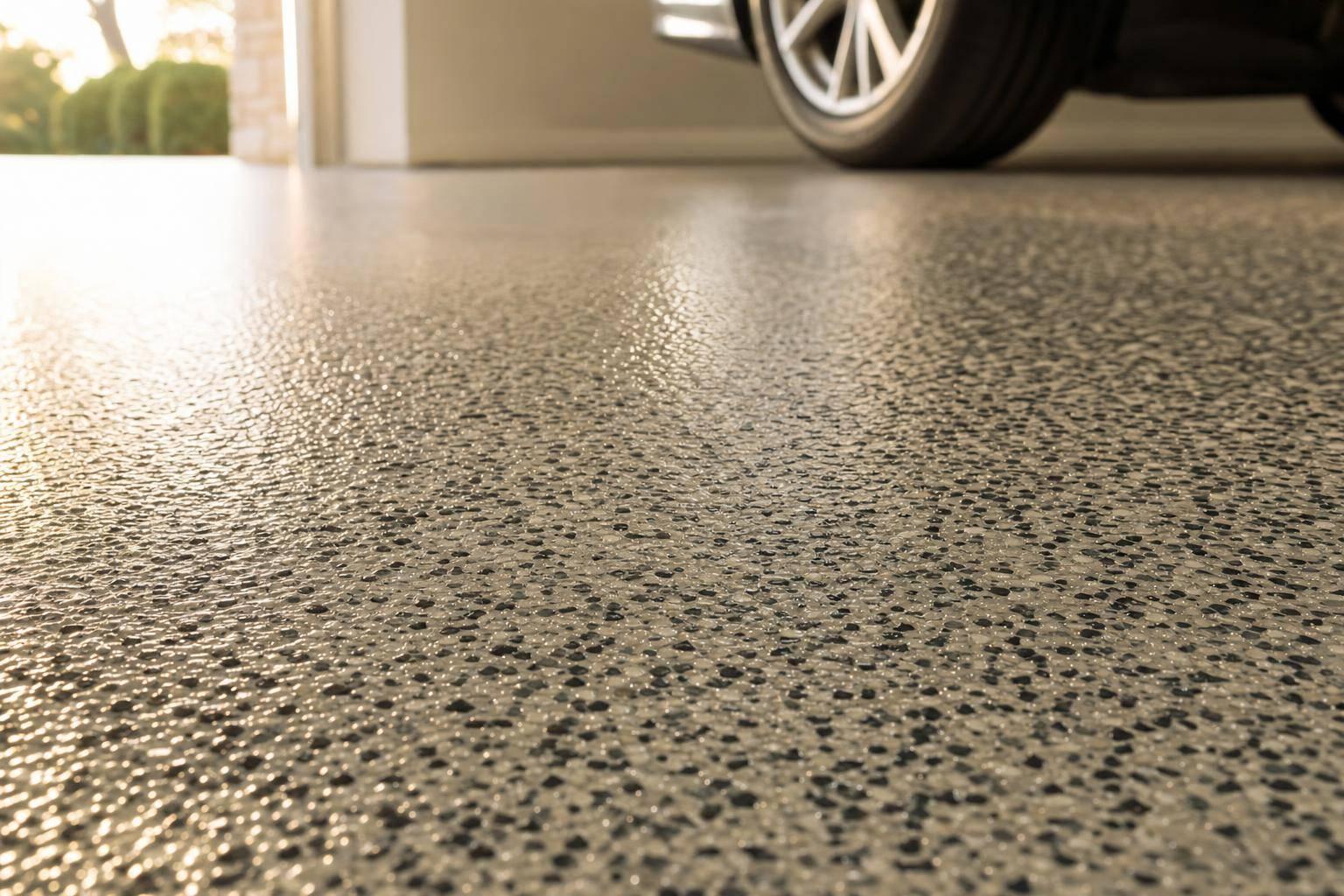
In pro polyurea systems like the Penntek Evolution system from Croc Coatings, traction additives go between the basecoat and topcoat. That setup creates a more even microscopic texture, which helps the floor keep its grip longer and stand up better over time.