How to Clean Concrete Floors Like a Pro: Why Vacuuming Technique Matters as Much as the Mop
Concrete floors are built for hard use, but that does not mean they stay looking clean on their own. In garages, shops, offices, utility rooms, and other high-traffic spaces, dust, grit, hair, and tracked-in debris settle quickly. And if those materials are not removed properly before mopping, the result is familiar: smeared grime, dirty corners, and a floor that still looks dull even after you have spent the time cleaning it.
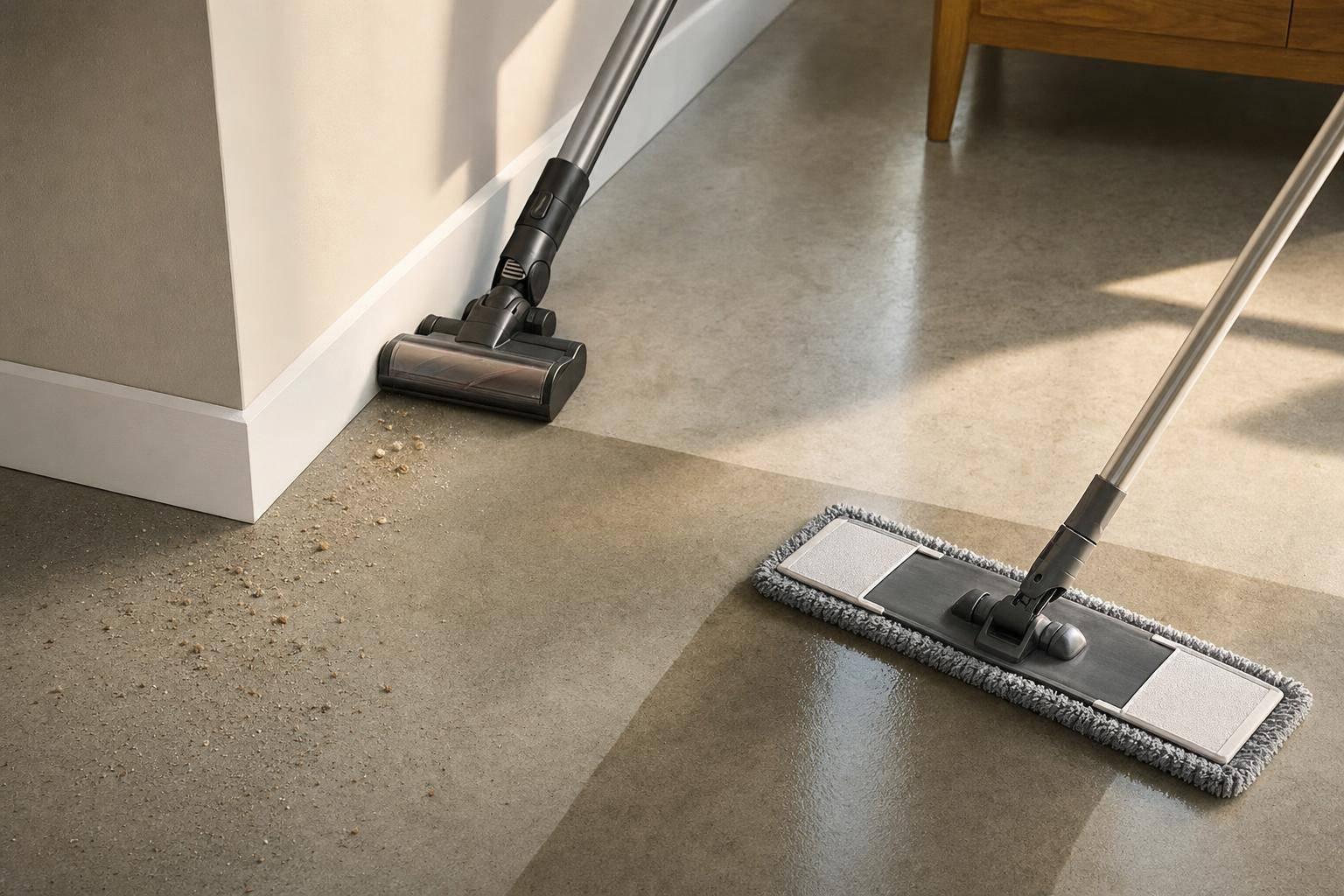
That is the core lesson from this video: professional-looking concrete floor cleaning starts with a disciplined vacuum-and-mop system, not just effort.
While the original demonstration focuses on janitorial technique, the advice translates well for homeowners and small business owners across North Idaho and Eastern Washington. Whether you are cleaning a workshop in Coeur d’Alene, a retail back room in Spokane, or a garage floor in Post Falls, the principles are the same: work in the right order, pay attention to edges, and use tools that remove dirt instead of spreading it around.
In this article, we’ll break down the process, explain why it works, and add context so you can apply the same standards more effectively in your own space. For a personalized care plan, consult our concrete floor maintenance guide.
sbb-itb-a0e5ae3
Key Takeaways
- Start where the vacuum cord is plugged in and work away from the cable to avoid tangles and wasted motion.
- Edges, corners, and under furniture matter most because that is where dust, crumbs, and hair collect.
- Fast center passes are fine, but detail work at walls and obstacles is what separates average cleaning from professional cleaning.
- A good dry pickup makes mopping easier and prevents hair and debris from sticking to the mop.
- Flat mops with microfiber towels can outperform bucket mops because they remove soil with clean surfaces instead of redistributing dirty water.
- Use damp towels, not soaking-wet ones, so the mop glides well without over-wetting the floor.
- Change or flip towels as soon as they dry out or look dirty to maintain cleaning performance.
- Cord care matters: poor wrapping can damage power cables and shorten equipment life.
- Time management is part of professional cleaning: focus effort where dirt is most visible and most likely to build up.
The Real Problem With Most Floor Cleaning
A lot of people think floor cleaning is simple: vacuum the obvious debris, then run a mop over the rest. The video argues that this shortcut creates more work later, and that assessment is fair.
Why? Because the dirtiest parts of a floor are often not in the middle of the room.
Dust settles along walls. Hair catches around chair bases. Grit gathers under desks, along cables, and in corners. If those areas are skipped, the mop ends up dragging debris around instead of lifting grime away. That means:
- corners still look dirty,
- dust bunnies reappear quickly,
- mop heads clog with hair and crumbs,
- and the finished floor never looks truly clean.
For concrete in particular, this matters because the surface can visually hold onto fine dust even when it seems smooth. On coated or sealed concrete, missed debris is especially noticeable along edges and where light hits at an angle.
Step 1: Vacuum With a Plan, Not Just a Pattern
The first phase in the video centers on using a commercial-style floor vacuum efficiently. The main takeaway is not just speed, but route discipline.
Start at the power source and move away from it
One of the strongest operational tips in the video is to begin where the vacuum is plugged in and work outward. That keeps the cord behind you instead of underfoot.
This matters more than it may seem. When you move toward the cable, you increase the odds of:
- stepping over the cord repeatedly,
- bunching it into your work zone,
- creating snags around furniture,
- and wasting time backing up to fix tangles.
In practical terms, this is a workflow issue. A cleaner path means less interruption and more consistent coverage.
Move quickly through open areas, slow down at the perimeter
The speaker repeatedly emphasizes the same point: the center of the room is not the priority. Open areas are usually the easiest part to clean and can be covered quickly. The edges require the attention.
That is good advice.
If you are cleaning a concrete garage, office, or commercial floor, focus your precision on:
- baseboards,
- corners,
- around posts or shelving,
- under tables and desks,
- chair legs and chair bases,
- and any area with cords or equipment nearby.
Those are the spots where visible neglect shows up first.
Why edge work changes the final result
The video calls corners "the biggest giveaway", and that observation holds up. People may not consciously inspect a whole floor, but they do notice grime lines, dust in corners, and buildup under obstacles. Those details signal whether a space is being maintained casually or carefully.
For homeowners, that can affect how polished a garage, mudroom, or basement feels. For businesses, it affects presentation. Customers and employees may not comment on it, but they notice.
Step 2: Treat Vacuuming as Prep for Better Mopping
One of the smartest ideas in the video is that vacuuming is not just its own task. It is preparation for successful mopping.
If debris remains on the floor, mopping becomes harder because the mop starts collecting:
- loose hair,
- crumbs,
- dry dust,
- and bits of grit.
Once that happens, every pass becomes less effective. Instead of loosening and absorbing soil, the mop begins to smear contaminants around the surface.
That is especially frustrating on concrete floors, where fine dust can quickly turn into a muddy film when mixed with moisture.
So the sequence matters:
- Remove all loose debris first.
- Pay extra attention to corners and edges.
- Only then start the wet-cleaning phase.
This is a simple concept, but it is probably the single biggest difference between a floor that looks freshly cleaned and one that looks "still kind of dirty."
Step 3: Use a Flat Mop System That Removes Soil Instead of Recycling It
The mopping section of the video strongly favors a flat mop with microfiber towels over a traditional bucket mop. That preference is based on efficiency, cleanliness, and ergonomics.
Why a flat mop often works better on concrete floors
The video’s reasoning is practical:
- The mop head is lightweight.
- The towels can be swapped quickly.
- You can see when a towel is dirty.
- You are applying a clean or freshly rinsed surface to the floor instead of repeatedly dipping into dirty water.
That last point is important. Traditional string or bucket mops often reintroduce soil back onto the floor unless the water is changed frequently. For smaller residential spaces, that may be manageable. But in larger garages, offices, or shop areas, dirty mop water becomes a weak link fast.
A microfiber flat mop system helps solve that by turning each towel into a limited-use cleaning surface. Once it is dirty, you flip it or replace it.
Damp is better than drenched
The video recommends wetting towels, adding a little soap, and wringing them out until they are damp enough to glide without leaving the floor overly wet.
That is sound advice for several reasons:
- Excess water can leave streaks or slow drying.
- Over-wetting may push grime into joints or low spots.
- Damp microfiber provides enough moisture to loosen stuck-on residue while still absorbing it.
This is especially useful on sealed or coated concrete, where too much water can create a slippery surface during cleaning and prolong dry time.
The exact cleaning solution is not specified in the video, beyond using a small amount of soap.
Step 4: Watch the Towel, Because It Tells You What the Floor Needs
One of the more useful concepts in the video is using the condition of the towel as feedback.
If the towel looks dark quickly, the floor is dirtier than expected. If the mop becomes harder to move, the towel may be drying out or loading up with grime. Either way, the solution is the same: flip it, re-wet it lightly, or switch to a fresh one.
That is a more professional standard than simply mopping until you are done with the room.
Signs it is time to change towels
Based on the video, change or flip the towel when:
- it is visibly dark with soil,
- it feels dry,
- the mop starts dragging,
- or you are no longer getting smooth contact with the floor.
This has a direct effect on productivity. A fresh towel moves more easily and cleans more effectively, which means less repeated scrubbing and fewer wasted passes.
In other words, changing towels early can actually save time.
Step 5: Mop With Direction and Pressure
The video suggests mopping in a consistent direction and notes that this improves grip on the grime. The speaker also mentions using pressure with the flat mop so the microfiber can loosen embedded soil and lift it away.
That is an important distinction.
Mopping is not just about moisture. It is a combination of:
- contact,
- friction,
- absorption,
- and coverage.
A well-fitted microfiber towel on a sturdy flat mop gives better surface contact than a loose, saturated string mop. On concrete floors that see foot traffic, tracked-in dust, or oily residue from daily use, that extra contact makes a noticeable difference.
Side-to-side or forward?
The speaker notes a preference for side-to-side motion when exiting an area, but generally demonstrates a forward motion pattern as the main technique. The deeper point is not the exact stroke shape. It is that your movement should be controlled, efficient, and matched to the layout so you do not walk back over what you just cleaned.
For most spaces, the best approach is:
- detail the edges first,
- cover the open field with overlapping passes,
- and work toward your exit path.
The Hidden Professional Standard: Cleaning Under and Around Obstacles
A recurring theme in the video is that true floor cleaning happens around the details others skip.
That includes:
- under desks,
- beneath chair bases,
- around cables,
- at the feet of furniture,
- and in tight corners.
This may sound minor, but in real-world spaces those are the dirt traps. If you own or manage a property, these are also the areas that tend to make a space feel either well-maintained or neglected.
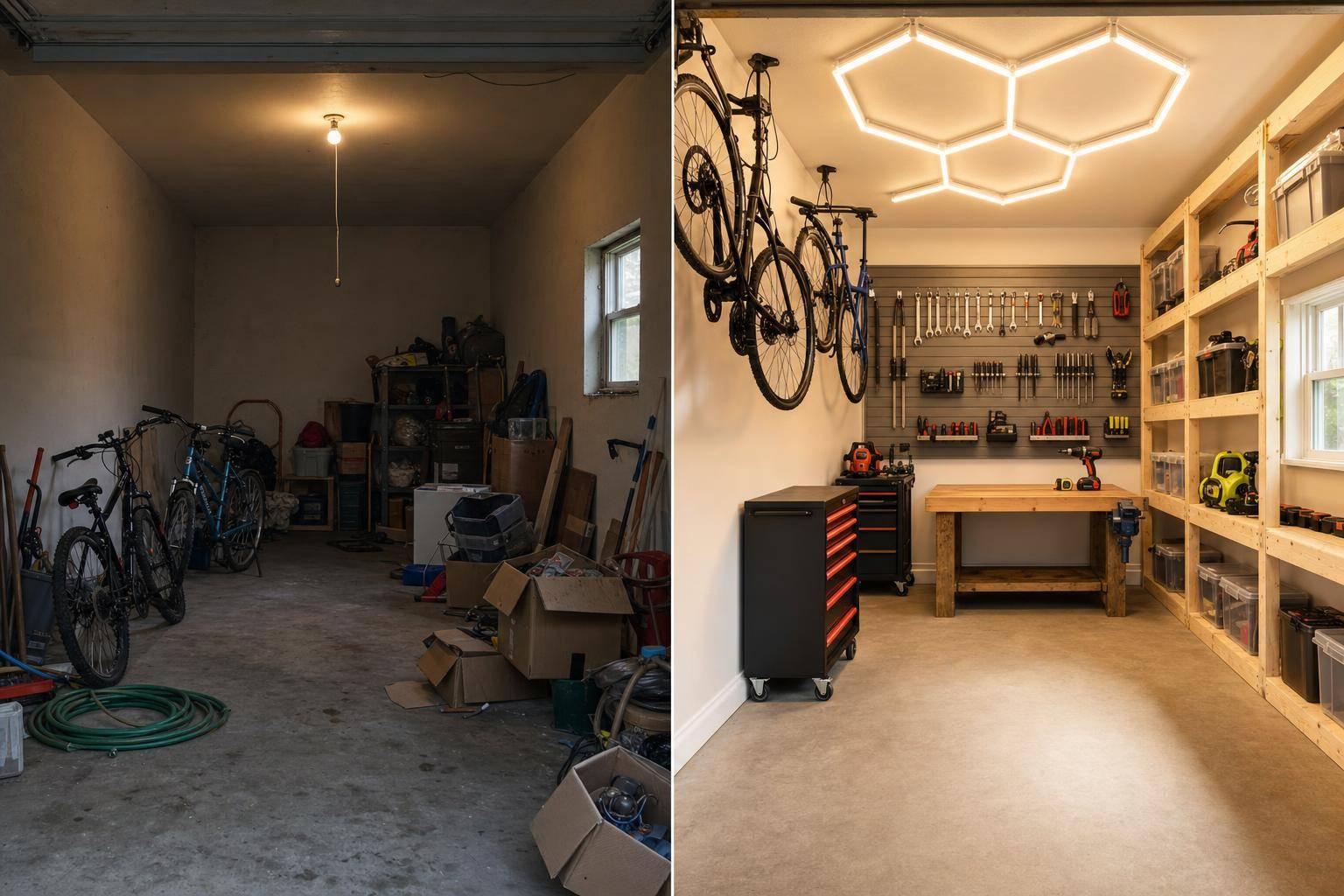
For a homeowner, that might mean the difference between a garage floor and storage solutions that feel sharp and intentional versus one that always looks dusty around the edges.
For a business owner, it can affect how clean the entire operation feels, even if customers only see part of the space.
Equipment Care Is Part of Cleaning Quality
The video also spends time on something many people overlook: properly wrapping the vacuum cord.
That might seem unrelated to floor appearance, but it reflects a bigger truth. Good cleaning systems depend on tools that are ready to use and safe to operate.
Poor cord handling can lead to:
- twists that become harder to untangle,
- wear on the insulation,
- premature replacement costs,
- and possible safety issues.
The specific warning in the video is that badly managed cords can eventually become a hazard. That is a worthwhile inclusion because maintenance discipline often separates professional routines from improvised ones.
A better cord-handling mindset
The video advises loosening and straightening the cord before wrapping it so it does not build tight twists over time. Even if your vacuum is for home use rather than commercial cleaning, that habit extends equipment life and reduces daily frustration.
Speed Matters, but Only After Priorities Are Clear
Another useful perspective from the video is the balance between quality and time.
The speaker notes that some areas deserve extra attention while others can be handled more lightly if time is limited. That is not an argument for cutting corners. It is an argument for prioritizing intelligently.
If you are cleaning a larger concrete floor and cannot spend equal time on every square foot, focus on:
- entries and transitions,
- perimeter edges,
- corners,
- under obstacles,
- and any area where buildup is visible.
Those zones have the greatest visual and practical impact.
This is good advice for homeowners doing weekend maintenance and for small business owners trying to keep spaces looking sharp without wasting labor.
Where This Method Works Best
Although the video appears geared toward office cleaning, the method applies well to many concrete-floor environments, including:
- garages,
- workshops,
- utility rooms,
- showrooms,
- retail back rooms,
- office spaces,
- and light industrial interiors.
For North Idaho and Eastern Washington properties, where outdoor dust, gravel, mud, and seasonal moisture often get tracked inside, the emphasis on dry debris removal is especially relevant. Fine grit and dirt can accumulate quickly along edges and entry zones, making the vacuum-first approach even more important.
Common Mistakes This Video Helps You Avoid
Here are the biggest errors the video implicitly warns against:
1. Vacuuming only the obvious open space
This leaves buildup where it is most noticeable later.
2. Moving toward the cord
That slows the job and creates tangling problems.
3. Mopping before debris is fully removed
This turns loose dirt into smear residue.
4. Using too much water
That reduces control and can leave the floor looking worse instead of better.
5. Keeping a dirty towel in service too long
Once a towel is saturated with grime, performance drops fast.
6. Ignoring tool setup and maintenance
A tangled cable or poorly attached towel makes the whole process less efficient.
A Practical Cleaning Sequence for Concrete Floors
If you want to apply the method from the video in a cleaner, more organized way, here is the process distilled into a usable sequence:
1. Prep the space
- Remove or work around movable obstacles as needed.
- Untangle and lay out the vacuum cord.
- Plug in where you want to begin.
2. Vacuum strategically
- Start at the plug location.
- Move away from the cable.
- Cover open floor areas quickly.
- Slow down at edges, corners, and under furniture.
3. Inspect before mopping
- Look for remaining crumbs, hair, or dust buildup.
- Re-vacuum trouble spots if needed.
4. Prepare microfiber towels
- Wet the towels.
- Add a small amount of soap if appropriate.
- Wring them so they are damp, not soaked.
5. Mop the detail areas first
- Get under desks, around chair bases, and into corners.
- Use the mop’s slim profile to reach tight areas.
6. Mop the main floor in controlled passes
- Work in a consistent direction.
- Use enough pressure for the microfiber to contact the floor well.
- Avoid walking back across freshly cleaned sections.
7. Monitor towel condition
- Flip when one side gets dirty.
- Re-wet lightly if needed.
- Replace with a fresh towel when performance drops.
8. Finish and reset equipment
- Bag used towels for laundering.
- Straighten and wrap the vacuum cord carefully.
- Store tools so they are ready for the next job.
Final Thoughts
The biggest value in this video is not any single tool. It is the mindset behind the routine: clean floors efficiently by focusing on the places dirt actually lives.
That means starting with a purposeful vacuum pattern, giving corners and edges the attention they deserve, and using a mopping method that removes grime instead of simply redistributing it. It also means recognizing that speed comes from good systems, not rushed effort.
For concrete floors in homes and small businesses, that approach is especially useful. These surfaces can take abuse, but they also show neglect in subtle ways: dusty edges, grimy corners, streaky finishes, and debris under fixtures. When you address those areas first, the entire room looks better.
The video’s strongest message can be summed up simply: do the prep work well, and the rest of the cleaning becomes faster, easier, and far more professional-looking.
Source: "How We CLEAN FLOORS Efficiently & Effectively Like a TRUE PRO" – Excellence Cleaning Pros, YouTube, Jul 10, 2025 – https://www.youtube.com/watch?v=_fjVE5TjZ9o