I check for movement before choosing a basement crack repair. Level edges that stay unchanged suggest drying shrinkage. A growing crack, uneven edges, or a sinking floor calls for a closer look – not just filler.
I compare the crack’s age, shape, width, edge height, location, and changes over time. No single clue proves the cause.
Quick Comparison
| Clue | Drying shrinkage | Slab settlement |
|---|---|---|
| Timing | Often days or weeks after placement | Soon after construction or years later |
| Shape and width | Often narrow; straight or branching | May grow longer or open further; patterns overlap |
| Edge height | Often level | May develop a vertical step |
| Change over time | Often settles into a stable pattern | May continue as support shifts |
| Location and other signs | Can occur throughout the slab | May accompany dips, slopes, or nearby building movement |
| Water | Can enter stable cracks | May accompany soil loss beneath the slab |
| Repair | Monitor or fill once stable | Check support before leveling or filling |
My first step: photograph the crack beside a ruler, date it, and check edge height with a straightedge. In North Idaho and Eastern Washington, I’d also note changes after rain or snowmelt.
<u>Movement or persistent water needs professional evaluation.</u> Uneven edges can also come from curling or heave, and a slab crack alone does not prove foundation movement. Before sealing the basement floor, I’d confirm stability, address moisture and support problems, and keep intentional joints free to move.
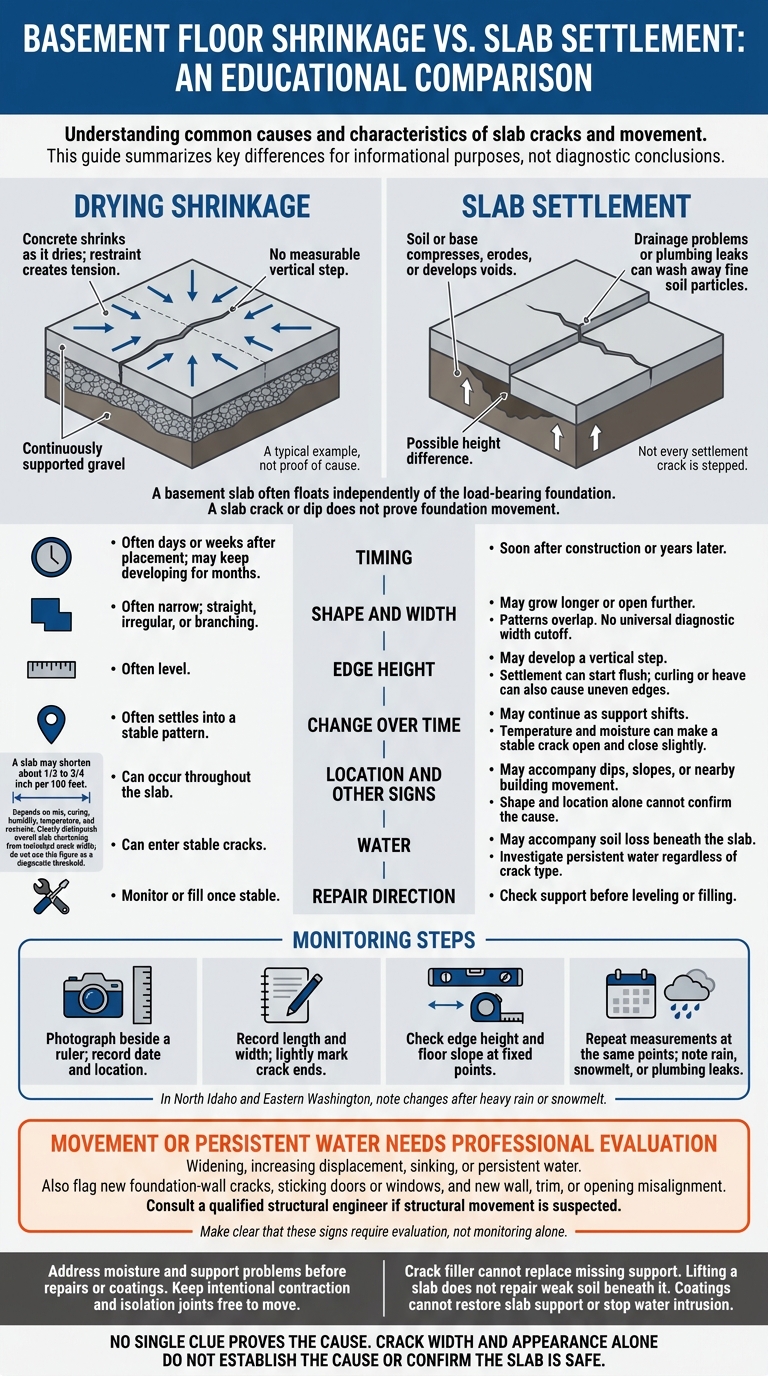
Basement Floor Cracks: Shrinkage vs. Settlement
Shrinkage Cracking in Concrete | Chemical, Autogeneous, and Drying Shrinkage explained!
sbb-itb-a0e5ae3
Drying Shrinkage: Why Concrete Cracks as It Dries
Concrete paste shrinks as it dries. When the subbase, walls, or columns hold a slab in place, tension builds and cracks can form. Drying shrinkage is not proof of soil movement. That’s why shrinkage cracks often appear in otherwise sound slabs.
Over long runs, a slab may shorten about 1/2 to 3/4 inch per 100 feet. The amount depends on the mix, curing, humidity, temperature, and restraint. Contraction joints create planned weak points where cracks can form, but they don’t stop shrinkage.
When Shrinkage Cracks Appear and How They Look
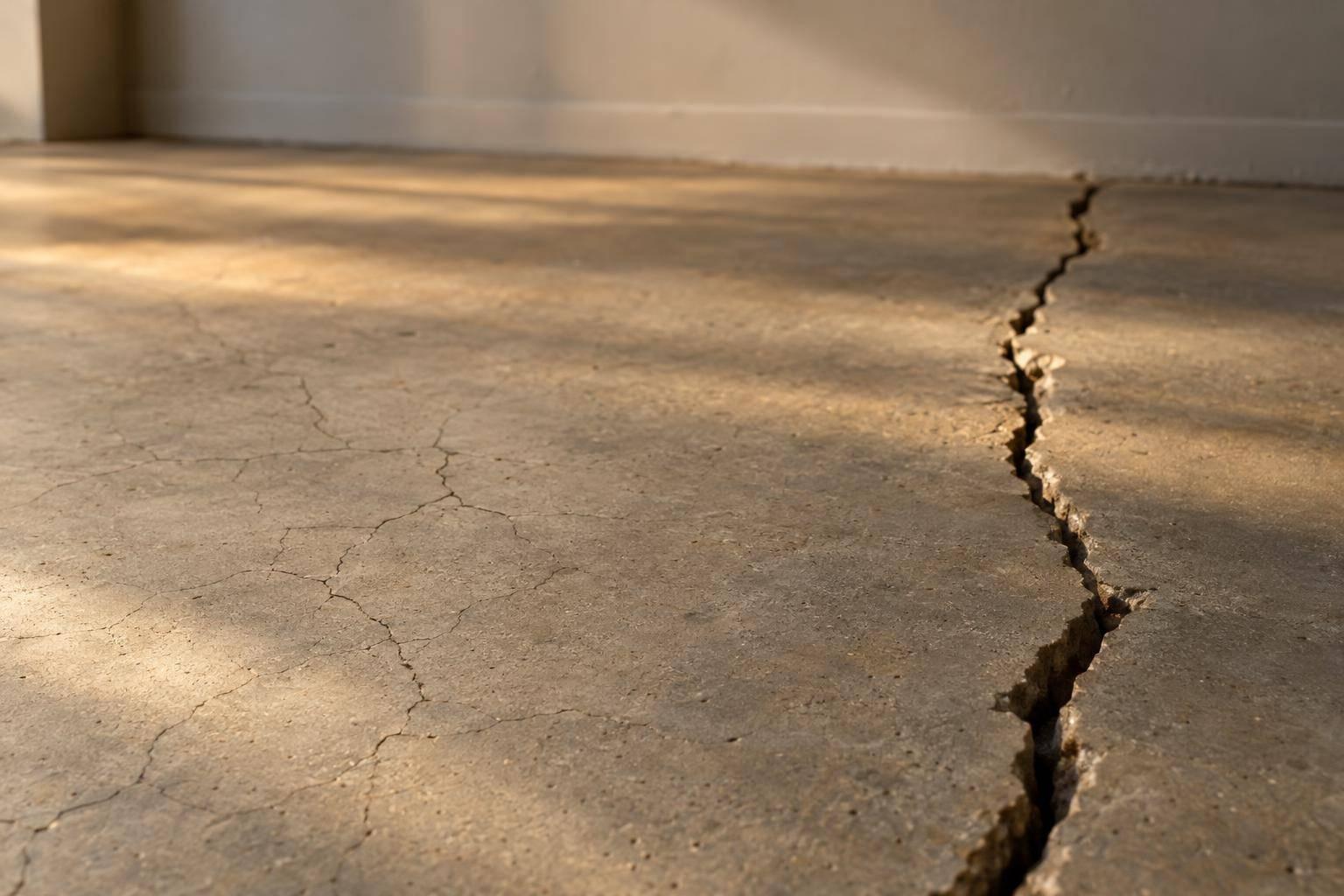
Cracks may appear within days or weeks and keep developing for months. Drying-shrinkage cracks can be straight, irregular, or branching, with openings that vary along their length.
Flush Edges and Changes Over Time
Edge height helps distinguish shrinkage from settlement, but it doesn’t tell the whole story. “Flush” means the two edges have no measurable vertical step. Flush edges and little change over time point toward shrinkage, but they don’t rule out settlement. A settlement crack can start flush, and a slab can shift or rotate before a step appears. Changes in temperature and moisture can also make a stable crack open and close slightly.
Note indoor humidity and whether dampness follows rain, snowmelt, or plumbing use. Water intrusion needs investigation even when the crack stays level and unchanged. Look for staining, white mineral deposits (efflorescence), or musty odors. These signs point to a moisture problem that should be fixed before repairs or coatings.
Slab Settlement: When Support Beneath the Floor Shifts
If a crack doesn’t fit the pattern of shrinkage, check for lost support beneath the slab. Slab settlement occurs when the soil or base below it compresses, erodes, or develops voids. Poor drainage and plumbing leaks can wash away fine soil particles.
A basement slab often floats independently of the load-bearing foundation. That means a crack or dip in the slab does not prove the foundation has moved. Isolation joints let the slab move separately, so the slab and foundation each need their own evaluation.
When Settlement Cracks Appear and How They Look
Settlement cracks may appear soon after construction or years later. As support beneath the slab changes, cracks often grow longer or wider. Cracks that appear later, widen over time, and show measurable height differences between their edges point more strongly to settlement. But shape and location alone aren’t enough to confirm it. Check floor elevations and the history of movement.
Uneven Edges, Sloping Floors, and Other Movement
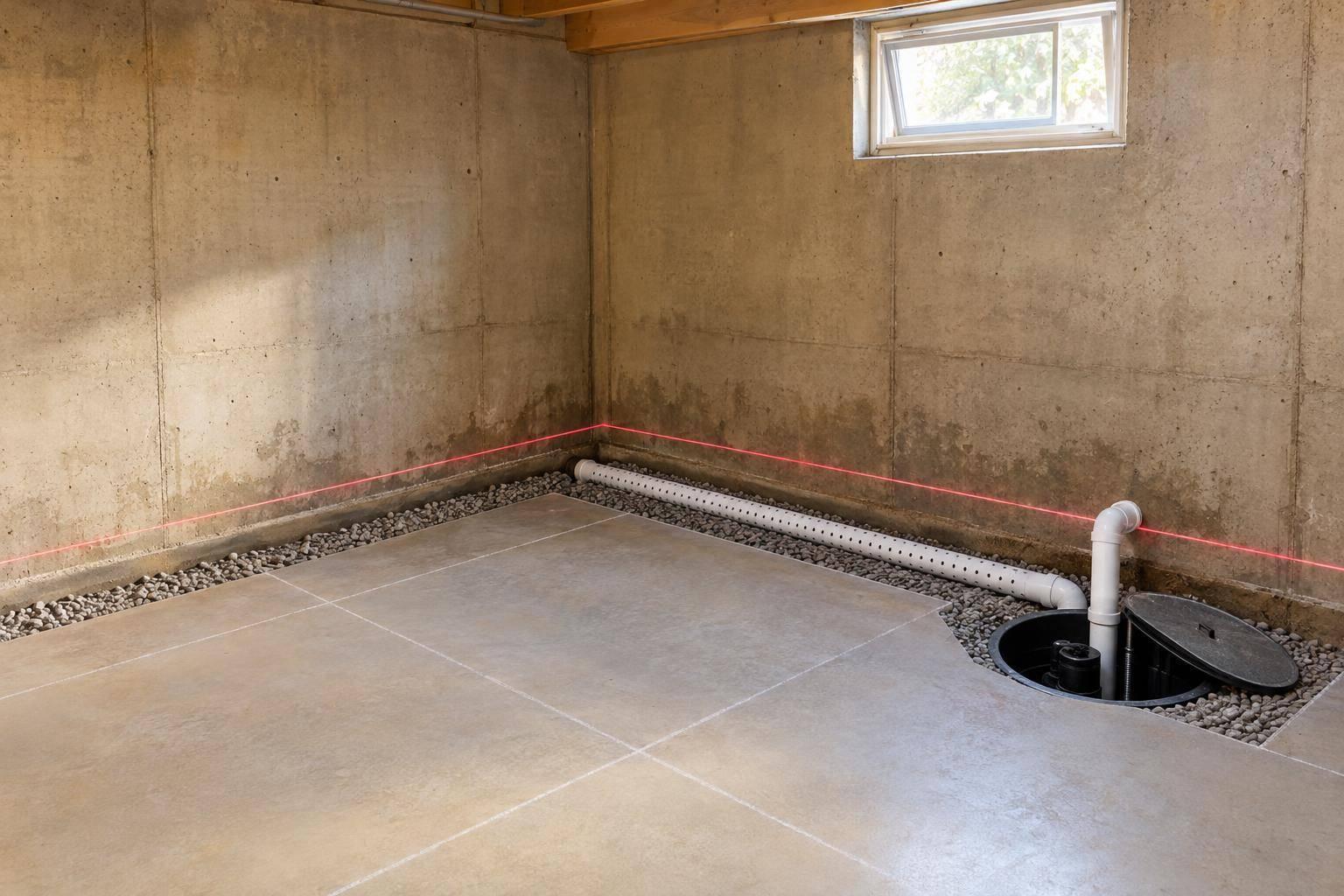
A vertical step, dip, or changing floor slope calls for a closer look. Curling or heave can also leave uneven edges, so one edge sitting higher doesn’t prove the other side has settled. Use a straightedge or laser level to measure elevations at fixed points, then compare readings over time.
Crack filler cannot replace missing support, and lifting a slab does not repair weak soil beneath it. These signs of movement tell you more than the crack’s appearance alone. If movement continues, foundation-wall cracks develop, doors or windows stick, or walls, trim, or openings show new misalignment, have a structural professional assess the problem before filling cracks or applying quality basement flooring coatings.
Compare Crack Clues and Plan Repairs
Drying Shrinkage vs. Slab Settlement: Comparison Table
Use this table to narrow down the likely cause – not confirm it. If the clues overlap, monitor the crack before choosing a repair.
| Observation | Drying shrinkage | Slab settlement | Interpretation |
|---|---|---|---|
| Timing (age) | Days to weeks after placement | Early or years later | Compare with construction history |
| Shape and pattern | Straight, irregular, or branching | Irregular or clustered near sinking | Patterns overlap |
| Width | Often narrow | Narrow, wide, or increasing | No universal diagnostic cutoff |
| Height difference | Often flush | May show a vertical step | Also possible with curling or heave |
| Change over time | Often stabilizes | Progresses or stabilizes with support | Track crack activity |
| Water entry | Possible through stable cracks | Can accompany lost support | Investigate water sources |
| Location | Throughout the slab | Near poorly supported areas | Check surrounding support |
| Other movement | Usually no other building symptoms | Floor depressions or related symptoms | Assess wall or door changes |
| Repair direction | Monitor or fill stable cracks | Address support before leveling or filling | Match repairs to cause and activity |
Track Cracks and Watch for Warning Signs
If the cause is unclear, keep a record of how the crack changes. Photograph each crack with a ruler, then record its date, location, length, and width. Lightly mark the crack ends. Repeat measurements at the same points, checking edge height and floor slope too.
In North Idaho and Eastern Washington, note any changes after heavy rain, snowmelt, or plumbing leaks. Check nearby walls and doors as well. Widening, increasing displacement, sinking, or persistent water calls for professional evaluation, not monitoring alone. Consult a qualified structural engineer if you suspect structural movement.
Address Crack Causes Before Coating
Choose a repair once you’ve identified the likely cause. A stable shrinkage crack may need only monitoring or a movement-compatible filler. First, distinguish cracks from intentional contraction or isolation joints: repairs must allow those joints to move as intended. Address water sources separately.
If you suspect settlement, check drainage, leaks, soil support, voids, and crack activity before choosing stabilization, leveling, or replacement.
Thoroughly inspect concrete for stability and moisture before coating. A coating from Croc Coatings can improve appearance and make cleaning easier, but it cannot restore slab support or stop water intrusion.
Conclusion: Confirm Slab Stability Before Finishing
Stable cracks with flush edges suggest shrinkage. Cracks that shift or change need investigation. Crack width and appearance alone don’t establish the cause or confirm the slab is safe.
Document the crack and determine its cause. Address any support or moisture problems before choosing a repair, and apply a coating only after confirming stability.
FAQs
How long should I monitor a basement floor crack?
Monitor a basement floor crack for at least 30 days to check whether it’s dormant or active. Mark and date its endpoints, or mark both sides, to track changes in width or height.
Treat the crack as active if it widens more than 0.02 inches (0.5 mm) in a week, develops a new height difference, or shows moisture again. Get a professional evaluation before moving ahead with coating repairs.
How can I tell settlement from slab curling?
Use a long level or straight board to check whether the slab has settled or shows surface curling or shrinkage. Settlement causes uneven movement, leaving one side of a crack higher than the other. Shrinkage cracks are usually fine, stable, and flat, with no height difference.
Settlement points to shifting soil or voids beneath the slab. Have a professional assess it before applying protective floor coatings.
How do I know a repaired slab is ready for coating?
A repaired slab is ready for coating when repairs are fully cured and stable and the surface meets cleanliness and moisture requirements. Crack repairs, spalls, and patches should sit flush with the surrounding concrete and feel hard – not soft under pressure.
Check that the surface is clean, porous, and free of oil or old adhesives. Confirm that moisture test results fall within the coating manufacturer’s limits, and check repairs again for movement.