I’d start with the loaded carts and their wheels – not the coating. Map tight turns, stopping points, and drop zones, then choose a coating system rated for those conditions. Pair it with approved mats where impacts repeat, clear routes, and equipment checks.
Here’s what I’d confirm before work starts:
- Floor condition: Repair damaged concrete and joints, and address moisture before coating.
- Coating details: Get written thickness, impact and abrasion data, cleaning limits, and warranty terms.
- Mat fit: Check rolling-load approval, stable edges, and compatibility with the coating.
- Traffic timing: Get separate cure times for people, loaded carts, and heavy equipment.
- Upkeep and safety: Inspect high-traffic mats daily or each shift, maintain wheels, and keep exits clear.
My rule: floor protection and worker safety need separate checks. <u>A tough coating cannot fix an overloaded cart, moving slab, or unsafe route.</u>
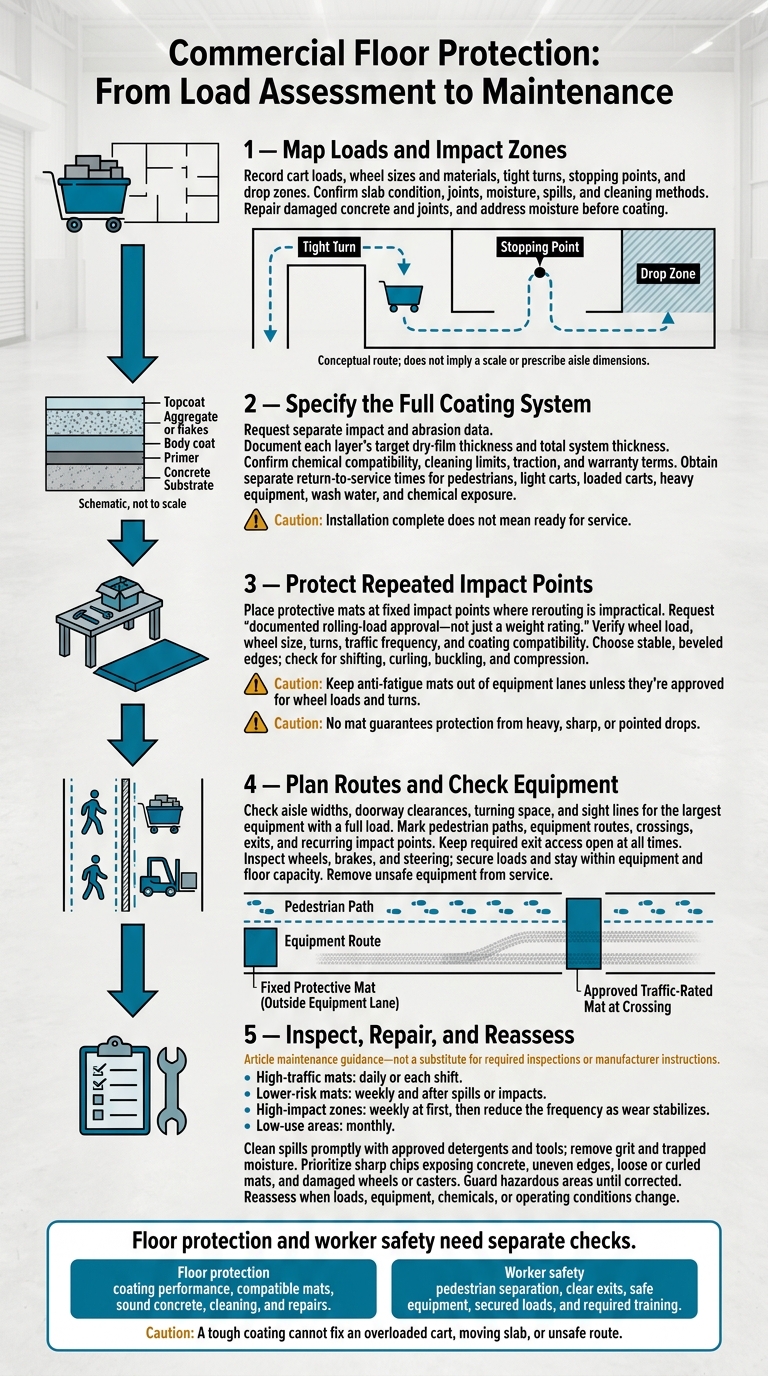
Commercial Floor Protection: From Load Assessment to Maintenance
Is Epoxy Flooring Impact Resistant?
sbb-itb-a0e5ae3
Choose Coatings for Impacts and Rolling Loads
Once you know where carts and equipment hit hardest, choose a coating system that suits those loads.
Match Coating Properties to Floor Conditions
Specify the full coating system: primer, body coat, aggregate or flakes, and topcoat. Give the installer details about cart loads, wheel sizes and materials, turning points, spills, and cleaning methods. Impact performance depends on the system’s thickness, its bond, and the concrete beneath it. A thin coating cannot increase slab capacity or prevent damage from every concentrated impact.
| Exposure | Required coating characteristics | Documentation to request | Key limitation |
|---|---|---|---|
| Dropped stock | Tough, well-bonded system with enough thickness | Impact test results, tested thickness, repair method | Sharp or heavy drops can still chip the system |
| Wheel abrasion | Abrasion resistance and compatibility with wheel material | Abrasion test method, traffic assumptions, maintenance limits | Straight rolling tests may not reflect repeated pivoting |
| Equipment contact | Strong adhesion and resistance to shear and scuffing | Bond-strength data, load guidance, joint details | Cannot make up for weak concrete |
| Chemicals and spills | Resistance to the specific substances used | Chemical chart with concentration, temperature, and contact-time limits | Chemical resistance does not cover every substance |
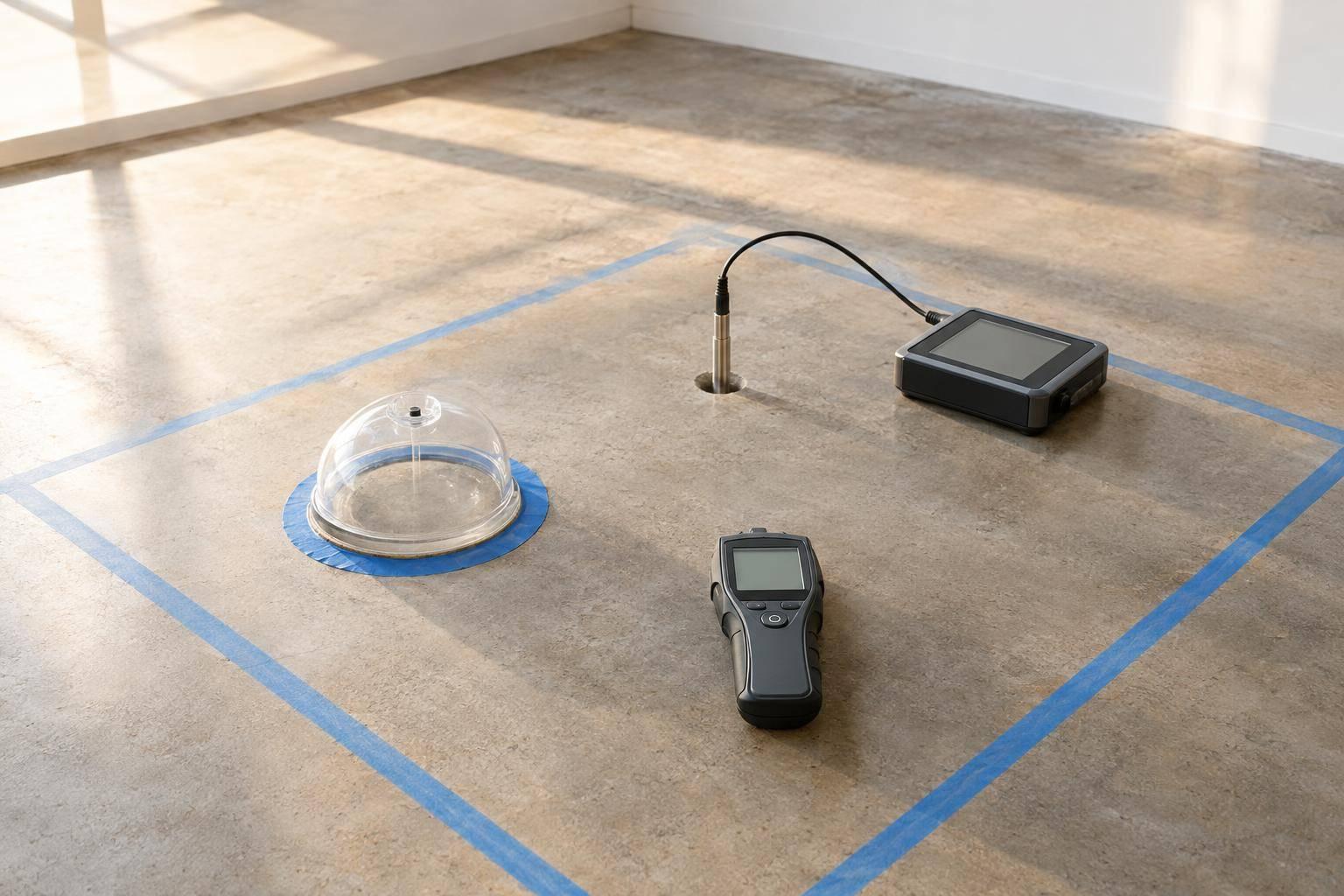
| Moisture | System suited to measured slab moisture | ASTM F2170 results, acceptance limits, mitigation plan | Excess moisture can cause blistering or bond failure |
| Traction | Texture suited to expected wet or greasy conditions | Slip-resistance test method, aggregate details | Texture can trap soil and does not eliminate slips |
| Cleaning | Compatibility with detergents, disinfectants, and equipment | Approved dilutions, temperatures, pressure limits, and cleaning schedule | Aggressive cleaning can damage the finish |
Ask for separate impact and abrasion data. For spills, name the exact cleaner, sanitizer, oil, or solvent rather than using a broad label like shop chemicals. Include its concentration and contact time. Also confirm whether the coating allows cleaning with automatic scrubbers, hot water, or steam.
Confirm Surface Preparation, Thickness, and Cure Times
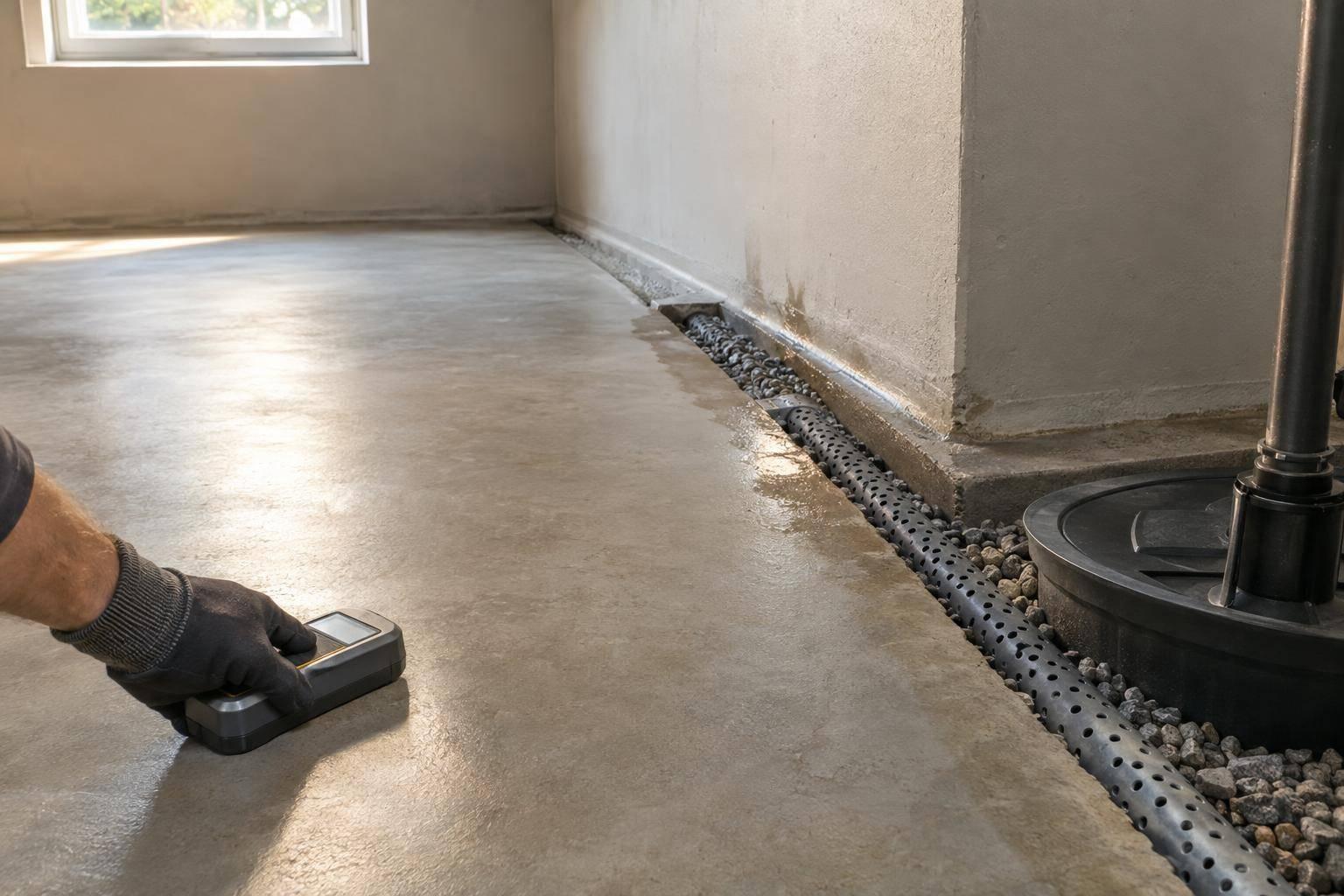
Require mechanical preparation, a documented concrete surface profile, removal of contaminants that could prevent bonding, and concrete moisture testing against the manufacturer’s limits. Get written methods for treating cracks and joints, including which joints must remain free to move.
The specification should give each layer’s target dry-film thickness and the total system thickness. It should also confirm that the build suits your loaded carts or equipment.
Installation complete does not mean ready for service. The handover should state when the floor can handle foot traffic, light carts, loaded carts, heavy equipment, wash water, and chemical exposure. Those times must follow the product’s cure schedule and actual slab conditions – not a generic one-day claim.
Where impacts repeatedly hit the same spots, protect those areas directly.
Review Croc Coatings’ Commercial Specifications
Croc Coatings offers the Penntek Evolution industrial coating system for businesses in North Idaho and Eastern Washington. To check it against these requirements, request current technical data for impact, abrasion, chemical compatibility, traction, temperature limits, and rolling-load service. Ask for a proposal that names the exact system build, return-to-service schedule, and applicable commercial warranty terms.
Place Protective Mats Where Needed
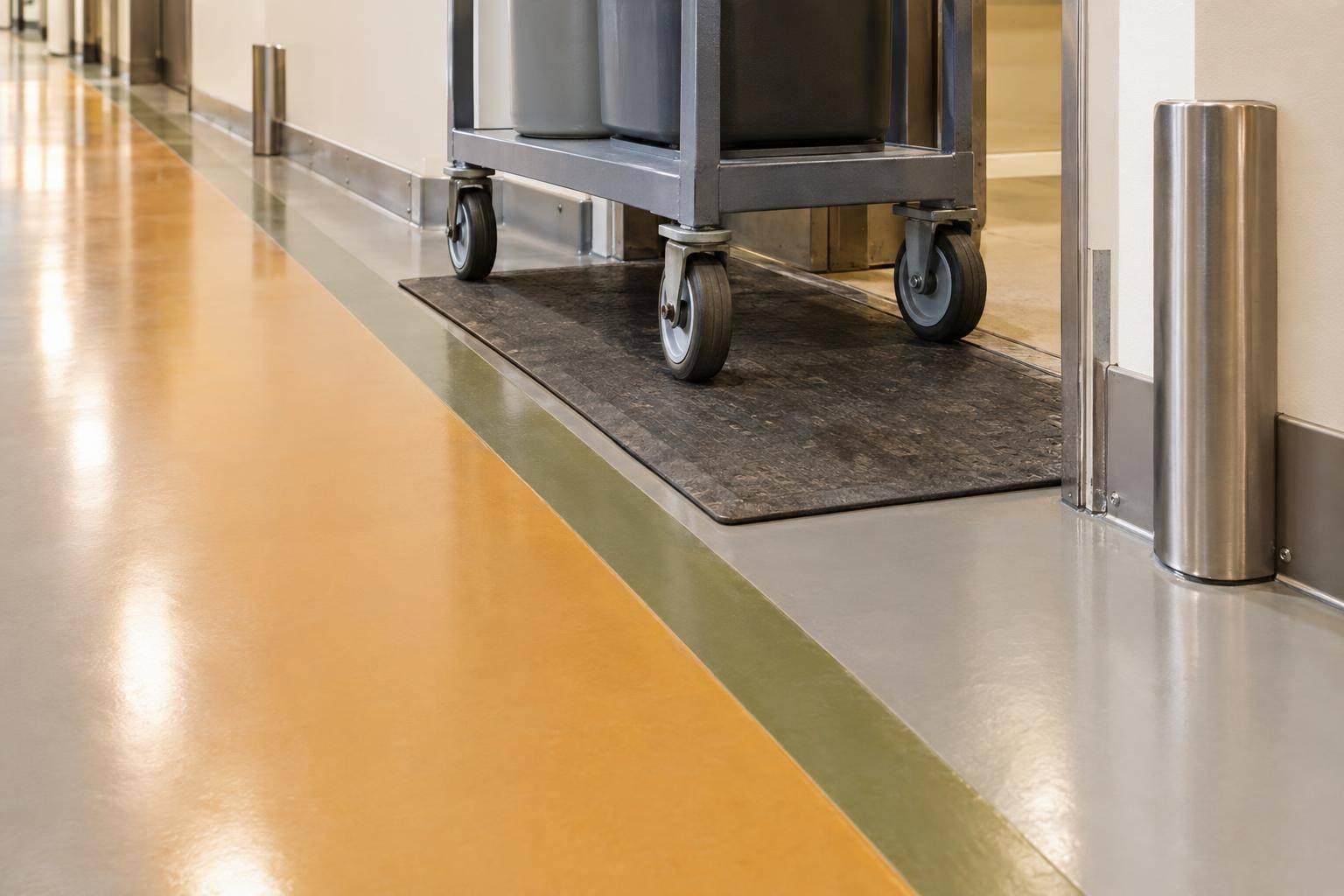
Place mats only at fixed impact points, such as unpacking benches, drop zones, and service stations, where rerouting is impractical. Mats cushion routine contact; high-traffic floor coatings handle the rest. If repeated drops or cart contact hit the same spot, position the mat directly at that point. No mat guarantees protection from heavy, sharp, or pointed drops: objects can puncture the mat or transfer impact to the concrete.
Compare Coated Floors and Mat Types
Protective mats cushion routine drops and handling. Anti-fatigue mats reduce fatigue from standing, but they don’t automatically provide impact protection. Keep anti-fatigue mats out of equipment lanes unless they’re approved for wheel loads and turns.
| Mat type | Best location | Protection | Limitations | Inspection needs | Equipment compatibility |
|---|---|---|---|---|---|
| Fixed-area protective mat | Unpacking stations, drop zones, service benches | Cushions routine drops; limits localized abrasion | Can trap liquids, shift, or deform; vulnerable to sharp drops | Edges, underside, moisture, cuts, compression | Keep clear of wheels unless approved |
| Traffic-rated mat | Cart crossings, staging points, equipment service zones | Withstands approved rolling loads and wheel contact | Excessive loads or turning forces can cause failure | Ruts, crushed areas, shifting, damaged edges | Verify wheel load, size, turns, and traffic frequency |
Check Mat Load Ratings, Edges, and Compatibility
Ask for documented rolling-load approval – not just a weight rating. Provide the wheel load, wheel size, turns, traffic frequency, and expected impact exposure. Small, hard casters concentrate force, while pivoting adds shear. Choose mats with beveled edges and a flat, stable profile that resists shifting, curling, buckling, and compression.
Confirm that the backing, dyes, plasticizers, and adhesives work with the floor coating. Check resistance to moisture, oils, chemicals, and the cleaning method you’ll use. For drainage mats, check that the openings and underside allow drainage and cleaning without trapping debris.
Mat condition matters as much as mat type. Inspect high-traffic mats daily or each shift. Check lower-risk mats weekly and after spills or impacts. Lift mats safely, remove grit, dry trapped moisture, and inspect the coating for discoloration, softening, or peeling. Remove curled, torn, slippery, or unstable mats that weaken floor protection or create walking hazards.
Plan Traffic and Reduce Handling Risks
Once impact zones are mapped, plan routes to keep traffic away from the same high-wear spots.
Keep Routes Clear and Floor Transitions Smooth
Measure aisle widths, doorway clearances, turning space, and sight lines for the largest equipment with a full load. Mark pedestrian paths, equipment-only routes, crossings, exits, and recurring impact points. Direct traffic around protected mat zones, leaving enough clearance at tight turns and crossings. Keep required exit access open at all times, and check routes during busy periods – not just when the room is empty.
Repair hazardous surfaces or block access before use. Flag uneven thresholds, holes, and loose coating, then repair or barricade them before traffic resumes. After storms, remove tracked-in moisture, deicing residue, and grit from entrances.
Marked routes are only part of the job. Equipment condition also affects whether traffic can move safely without damaging the floor.
Maintain Equipment and Secure Loads
Inspect equipment, including brakes and steering. For powered equipment, also check forks, hydraulics, controls, and warning devices. OSHA’s powered industrial truck requirements call for examinations before service, at least daily, and after each shift for round-the-clock use. Remove unsafe equipment from service. Follow manufacturer instructions for non-powered carts.
Keep loads centered, secured, and within both equipment and floor capacity. Check the force needed to push or pull loads at ramps, turns, and thresholds. Reduce load weight or use mechanical assistance when needed.
Forklifts and powered pallet jacks require trained, authorized operators. OSHA requires operator performance evaluations at least once every three years, plus refresher training when unsafe operation, incidents, or relevant changes show a need.
Distinguish Floor Protection From Injury Prevention
Floor protection and worker safety need separate controls. One does not replace the other.
| Floor protection | Worker injury prevention |
|---|---|
| Select coatings for impacts and rolling loads. | Separate pedestrians and equipment; control blind corners. |
| Use compatible, appropriately rated mats. | Maintain wheels, brakes, forks, and hydraulics. |
| Repair or barricade damaged transitions. | Secure loads and stay within capacity. |
| Clean spills, grit, and deicing residue. | Keep aisles and exits clear. |
| Inspect coating, joints, and recurring impact zones. | Provide required training; address pushing, pulling, and lifting demands. |
A durable floor still needs safety controls to address collisions, unstable loads, poor visibility, and improper equipment use.
Conclusion: Confirm Specifications and Plan Maintenance
Complete a Preinstallation Checklist
Once the coating, mats, and routes are set, check the site details before installation:
- Confirm slab moisture, drainage, equipment loads, wheel types, traffic points, spill exposure, and approved cleaning methods.
- Check impact zones, completed repairs, mat locations, and equipment access.
- Verify aisle widths, door clearances, ramps, thresholds, and drainage elevations.
- Approve return-to-service timing before scheduling installation.
Then finalize the written system specifications. Request site-specific specifications from Croc Coatings, including primer and topcoat details, application thickness, environmental limits, cure schedule, approved cleaning chemicals, use limits, and commercial warranty terms.
Require separate return-to-service times for pedestrians, carts, and pallet jacks or other equipment. An installation completion date alone doesn’t tell you when the floor can handle each type of traffic.
Set Inspection Schedules and Repair Priorities
Assign responsibility for cleaning, inspections, repairs, and mat replacement to help the floor withstand cart and equipment impacts. Inspect high-impact zones weekly at first, then reduce the frequency as wear stabilizes. Check low-use areas monthly and high-traffic mats daily or each shift.
Clean spills promptly using approved detergents and tools, and keep the floor clean and dry. Save dated repair photos and logs. OSHA requires regular walking-working surface inspections, additional inspections as necessary, and hazards to be repaired or guarded before use.
Address sharp chips that expose concrete, uneven edges, loose or curled mats, and damaged wheels or casters first. Guard hazardous areas until the problems are corrected.
Reassess coating limits, mat placement, routes, and inspection frequency whenever loads, equipment, chemicals, or operating conditions change. Get a site-specific professional assessment for recurring damage or slab-capacity concerns. Document installation checks and inspection routines from day one to help extend floor life, and track floor maintenance separately from safety controls.
FAQs
How can I tell if impact damage needs spot repair or recoating?
Check regularly for chips, cracks, thinning, or loss of surface texture, especially in high-traffic areas. Look for bubbles or changes in appearance, too – these may point to adhesion problems.
If you spot any of these signs, ask a professional whether the surface needs a spot repair or recoating. Regular professional inspections and early attention can help keep minor damage from turning into costly, large-scale failures.
How can I reduce cart collisions in tight spaces?
Use color-coded walkways, forklift lanes, and high-visibility floor markings to keep pedestrian paths separate from vehicle routes. Clear traffic planning organizes movement and helps operators stay aware of their designated routes.
Croc Coatings’ Penntek Evolution system offers impact resistance and customizable textures for traction. Impact resistance helps protect the floor. Traction and traffic planning help support safer movement, but floor protection and worker injury prevention are separate concerns.
Which caster types are gentlest on coated floors?
Casters with softer, high-quality polyurethane or rubber treads are generally the gentlest choice for coated floors. These treads cushion contact, reducing pressure at each contact point and limiting abrasion. Steel or rigid plastic wheels concentrate pressure in small areas, which can cause ruts or surface damage over time.
Larger-diameter wheels also spread weight more evenly, helping reduce scuffing and early coating wear.