Impact-resistant coatings are engineered to protect surfaces from heavy impacts, mechanical stress, and wear. These coatings are made with materials like epoxy, polyurea, and polyurethane, offering superior flexibility and durability compared to standard coatings. For example, polyurea coatings can stretch up to 600%, absorbing impacts without cracking.
Key Takeaways:
- Why They Matter: Regular coatings fail under heavy loads or sudden impacts. Impact-resistant coatings distribute force, preventing cracks and maintaining surface integrity.
- Applications: Used in garages, warehouses, industrial plants, and transportation infrastructure, they handle everything from vehicle weight to chemical exposure.
- Features: They combine strength, flexibility, and resistance to chemicals, moisture, and temperature swings (20°F to 250°F).
- Types: Options include comparing epoxy and polyurea impact resistance, as well as polyaspartic coatings (fast curing).
- Maintenance: Easy to clean, long-lasting, and customizable with UV-resistant or slip-resistant finishes.
Bottom Line: These coatings protect surfaces in demanding environments, reduce maintenance costs, and extend the lifespan of floors and equipment. Proper installation is crucial for optimal performance.
Which Concrete Coating Should You Use? | FULL COMPARISON
sbb-itb-a0e5ae3
Features and Benefits of Impact-Resistant Coatings
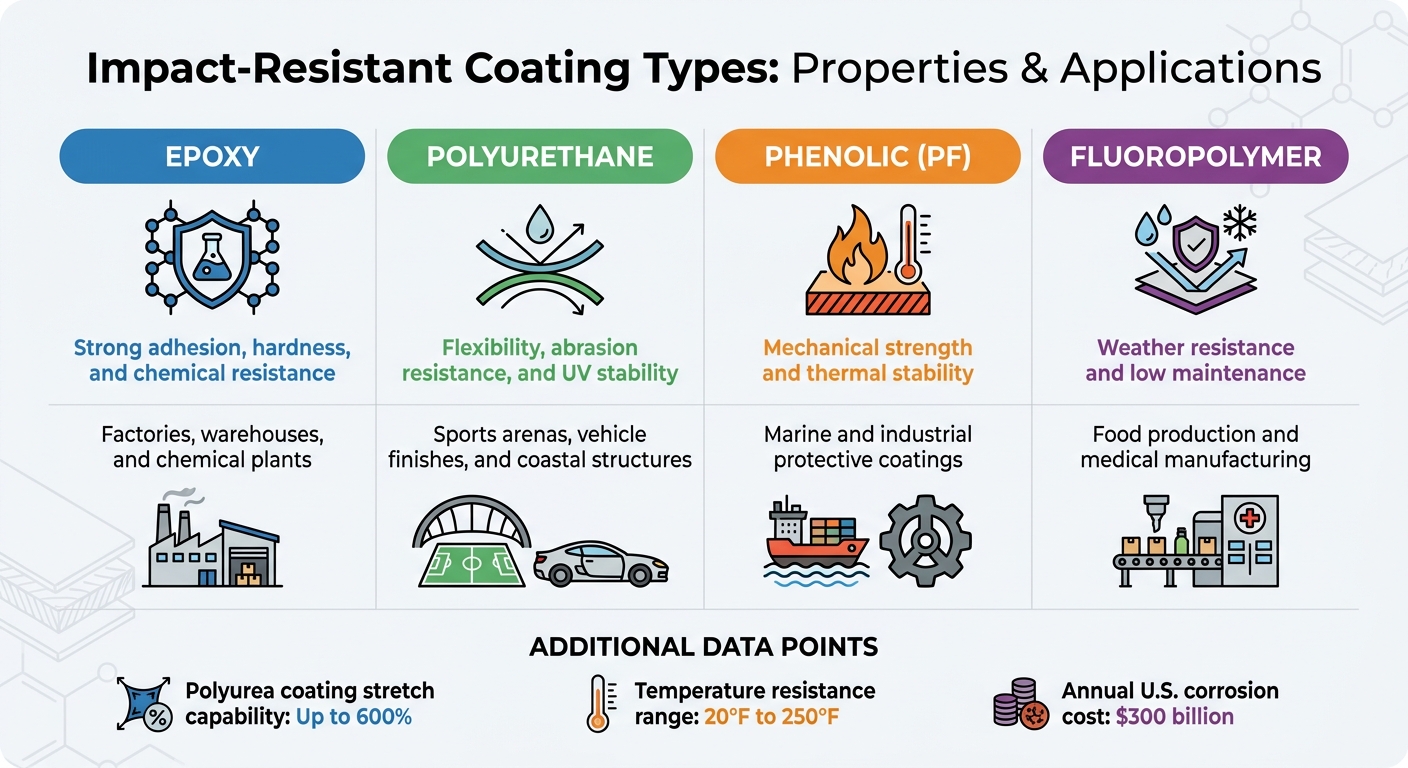
Impact-Resistant Coating Types Comparison: Epoxy vs Polyurethane vs Phenolic vs Fluoropolymer
Strength and Durability
Impact-resistant coatings owe their toughness to their carefully engineered chemical structures. For example, epoxy resins cure into solid, impermeable layers capable of withstanding heavy machinery and constant foot traffic. This strength comes from chemical cross-linking, which creates tightly bonded molecular networks that offer exceptional mechanical resilience and protection against environmental damage. To perform at their best, epoxy formulations need precise qualities like effective wetting, minimal shrinkage, and stable dimensions.
Meanwhile, polyurethane resins bring a balance of flexibility and abrasion resistance, allowing them to bend without cracking under stress, vibration, or movement of the surface they protect. To further enhance their durability, manufacturers often add reinforcing additives such as elastomers, tougheners, or mineral fillers. This approach boosts elongation, as well as peel and tear strength, ensuring the coating can handle impacts without failing.
| Resin Type | Key Benefit | Optimal Environment |
|---|---|---|
| Epoxy | Strong adhesion, hardness, and chemical resistance | Factories, warehouses, and chemical plants |
| Polyurethane | Flexibility, abrasion resistance, and UV stability | Sports arenas, vehicle finishes, and coastal structures |
| Phenolic (PF) | Mechanical strength and thermal stability | Marine and industrial protective coatings |
| Fluoropolymer | Weather resistance and low maintenance | Food production and medical manufacturing |
These mechanical properties not only improve impact resistance but also help prevent cracking and chipping.
Protection Against Cracking and Chipping
To resist cracking and chipping, effective coatings must combine hardness with flexibility. Philip Allen, Senior Technical Service Engineer at ITW Performance Polymers, highlights the difficulty of achieving this balance:
Creating a coating that will do both of these things, resist sliding abrasion and not shatter if hit hard, is a challenging problem to solve.
Modern solutions often involve hybrid systems, such as epoxy-urethane blends. These combine the flexibility and impact resistance of urethane with the abrasion resistance of epoxy. In some cases, coatings are made tougher by embedding microscopic rubbery particles or elastomers into a hard epoxy resin. Additionally, film thickness plays a key role – thicker coatings provide a greater buffer, making it harder for wear or impact to reach the underlying surface.
When coatings fail, the consequences can be costly. Damage from impact or abrasion often leads to corrosion, which costs the U.S. nearly $300 billion annually. Repairing or replacing industrial equipment like grinding mills can take days, but a protective epoxy coating can often restore functionality within 2 to 3 hours. Beyond their toughness, these coatings simplify maintenance and ensure long-term reliability.
Easy Maintenance and Extended Lifespan
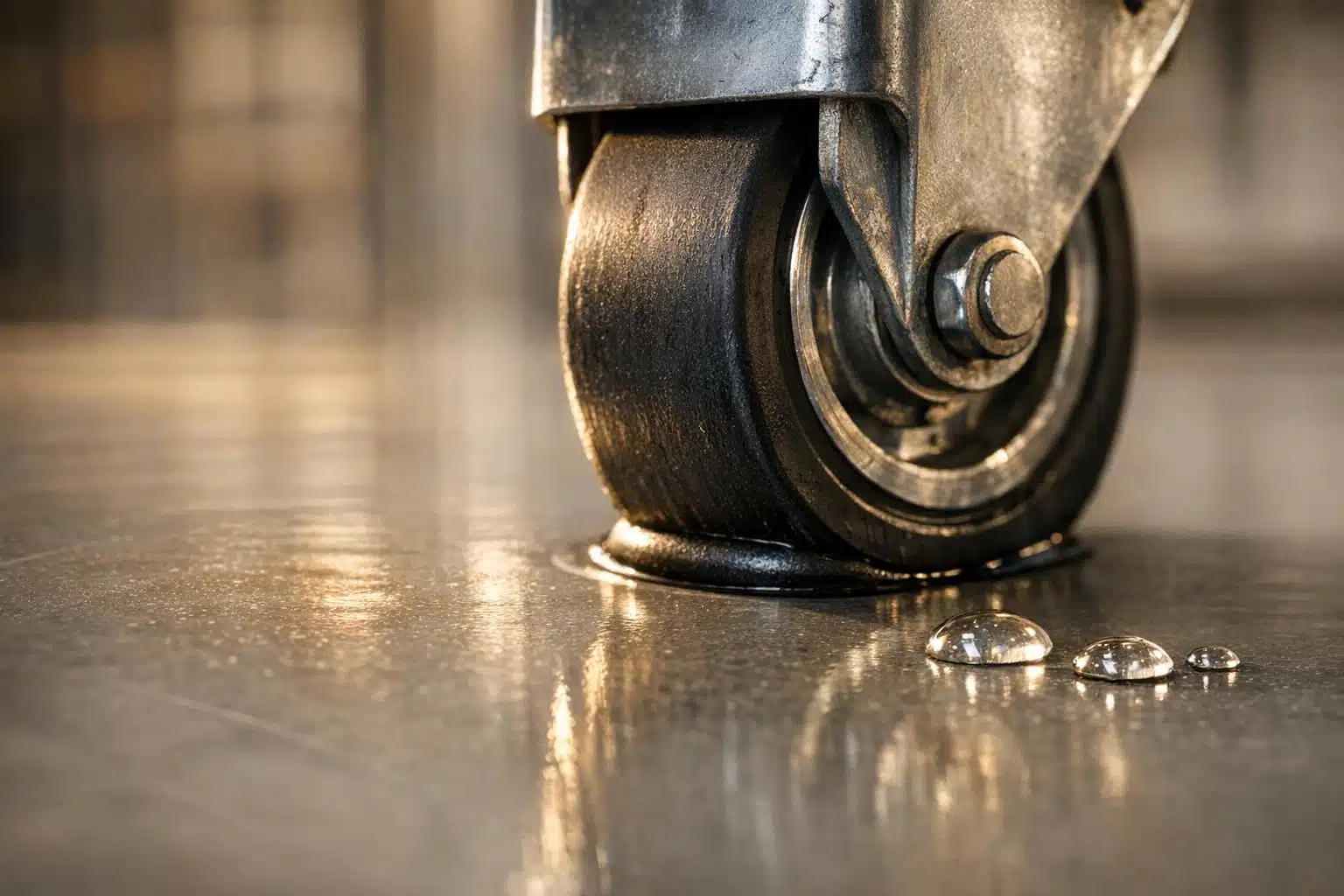
Impact-resistant coatings are designed for easy upkeep. Their smooth, non-porous surfaces repel oil, chemicals, and salts, making spills easy to clean and helping maintain their appearance over time.
However, proper installation is critical to ensure durability. Steps like surface preparation, precise mixing, and curing at the correct temperature are essential to prevent premature failure. For outdoor applications, UV-stable topcoats like aliphatic polyurethanes are crucial to avoid "chalking", a degradation process that weakens the coating over time. While premium coatings such as polysiloxanes may cost two to three times more than standard options, they deliver better value by reducing maintenance needs for infrastructure like bridges and dams. Additionally, polyaspartic coatings cure quickly, often ready for heavy use within 24 hours, minimizing downtime and allowing spaces to return to service faster.
Types of Impact-Resistant Coatings
Epoxy Coatings
Epoxy coatings are a go-to option for industrial and residential floors in high-load environments. They offer impressive hardness and chemical resistance, though they can become brittle under intense impacts.
Specialized epoxy formulations tackle extreme conditions by enhancing durability against chemical exposure, moisture, and thermal stress. For instance:
- Epoxy novolac resins combine high impact and abrasion resistance with excellent chemical and heat tolerance, making them ideal for demanding environments.
- Phenolic epoxies are tailored for chemical processing plants, where they handle aggressive substances with ease.
- Epoxy polyamides excel in damp or submerged areas due to their superior moisture resistance.
- Epoxy polysiloxane hybrids shine in applications like marine structures and wastewater treatment facilities, offering top-tier corrosion protection.
These variations ensure epoxy coatings remain versatile for a wide range of industrial needs, ranking among the top industrial floor coatings available today. Next, let’s explore polyurea and polyaspartic coatings, known for their flexibility and quick curing times.
Polyurea and Polyaspartic Coatings
Polyurea and polyaspartic coatings bring a different set of advantages to high-impact environments. Unlike epoxy, these coatings are more flexible and abrasion-resistant, allowing them to absorb impacts without cracking. Their rapid cure times make them perfect for projects with tight deadlines. For example, polyaspartic topcoats can handle foot traffic in as little as 2 to 4 hours at 70°F, and some systems allow heavy equipment use within just 2–3 hours.
One standout example is the Penntek Evolution system, used by Croc Coatings. This polyaspartic-based solution is four times stronger than standard epoxy, offering quick installation and long-lasting durability. It’s particularly well-suited for garage floors, commercial spaces, and industrial facilities where downtime needs to be minimized. Additionally:
- Aromatic polyurethanes are effective for submerged structures.
- Aliphatic polyurethanes provide strong UV resistance, making them great for outdoor applications.
For projects requiring added texture and thickness, quartz broadcast systems provide an alternative worth considering.
Quartz Broadcast Systems
Quartz broadcast systems take a different approach by embedding graded quartz sand or aluminum oxide particles into the coating. This creates a semi-rigid, textured membrane that’s 125 to 250 mils thick – much thicker than standard epoxy films, which usually range from 4 to 10 mils. This added thickness delivers excellent mechanical protection against heavy loads and impacts.
These systems are particularly effective in wet or chemical-prone environments. They offer inherent slip resistance with a wet dynamic coefficient of friction (DCOF) of 0.42 or higher, meeting National Floor Safety Institute standards without needing extra anti-slip agents. Their layered design not only boosts durability but also ensures safety. Plus, their impervious and non-absorbent nature makes them compliant with USDA and FDA standards for food-contact adjacent surfaces, as well as healthcare facility guidelines.
Whether for industrial floors or healthcare settings, quartz systems provide a reliable, heavy-duty solution.
Where to Use Impact-Resistant Coatings
Residential Uses
Croc Coatings provides impact-resistant solutions designed to protect high-traffic areas in homes, such as garages, patios, and basements, from everyday wear and tear. Their Penntek Evolution system, which is four times stronger than standard epoxy, offers both durability and a polished look.
Garage floors benefit greatly from these coatings, especially when exposed to heavy equipment or stored items. Patios and pool decks gain improved slip resistance and are easier to maintain, standing up well to outdoor furniture and weather conditions. In basements, these coatings protect against moisture, create easy-to-clean surfaces, and resist stains from storage or recreational gear.
While ideal for residential spaces, these coatings also excel in tougher commercial and industrial environments.
Commercial and Industrial Uses
In demanding spaces like warehouses, manufacturing plants, and retail facilities, choosing the right industrial floor coatings is critical. Industrial-grade floor coatings are built to handle forklift loads of up to 10,000 lbs per wheel and compressive strengths ranging from 6,000 to 10,000 psi. Quick-curing systems are especially valuable in these settings, allowing operations to resume in as little as 1–4 hours.
For industries like chemical processing and battery manufacturing, Novolac epoxy systems provide resistance to concentrated acids and can withstand thermal stress up to 300°F. Transportation infrastructure, including highway bridges, locks, and dams, also relies on these coatings to resist both physical impacts and environmental damage. The stakes are high – coating failures that lead to corrosion cost the U.S. nearly $300 billion each year.
These coatings also play a vital role in protecting against moisture and chemical exposure.
Moisture and Chemical Protection
Industrial environments often expose floors to chemicals, moisture, and extreme temperatures that can quickly degrade untreated surfaces. Novolac epoxy systems, with their ability to handle pH levels from 1 to 12, are perfect for areas storing hazardous materials or processing chemicals. Cementitious urethane coatings, which endure temperature swings from 20°F to 250°F, are essential in food processing plants that require frequent steam cleaning.
These coatings create a barrier that prevents water infiltration and chemical damage to concrete. This is particularly important in secondary containment areas, where EPA regulations mandate chemically compatible coatings to avoid environmental contamination. Marine structures face similar challenges, as ship decks must withstand both heavy impacts from dropped equipment and constant exposure to salt water.
Selecting and Installing Impact-Resistant Coatings
How to Choose the Right Coating
Picking the right coating depends on what challenges your floor will face. For example, static loads – like storage racks or heavy machinery – require coatings with high compressive strength. On the other hand, dynamic loads from forklifts or dropped tools call for coatings with greater flexibility (higher elongation) to absorb the impact.
Chemical exposure is another factor to document carefully. Take note of the specific chemicals, their concentrations, and temperatures, as higher heat can speed up chemical damage and weaken coatings. Additionally, the strength of your concrete sets the baseline for how well any coating will perform. Make sure to assess concrete surface profile, compressive strength, and moisture vapor emission rates before making a final choice.
For areas prone to frequent impacts, polyurea or MMA coatings are great options due to their flexibility, offering elongation rates of 20%–100%. In more demanding environments, like chemical processing or battery storage facilities, Novolac epoxies excel. These can handle harsh acids (pH 1–12) and temperatures up to 300°F.
Cost and longevity are also important to weigh. Cementitious urethane mortar systems cost about $8–$15 per square foot and can last 10–20 years, while thin-film epoxy coatings are more affordable at $2–$5 per square foot but may need reapplication every 3–5 years. For industrial applications, coatings typically need a minimum pull-off strength of 200 psi, though heavily trafficked areas might require 400 psi or more.
Finally, even the best coating won’t perform well without proper installation and maintenance. These steps are crucial to get the most out of your investment.
Installation Process and Best Practices
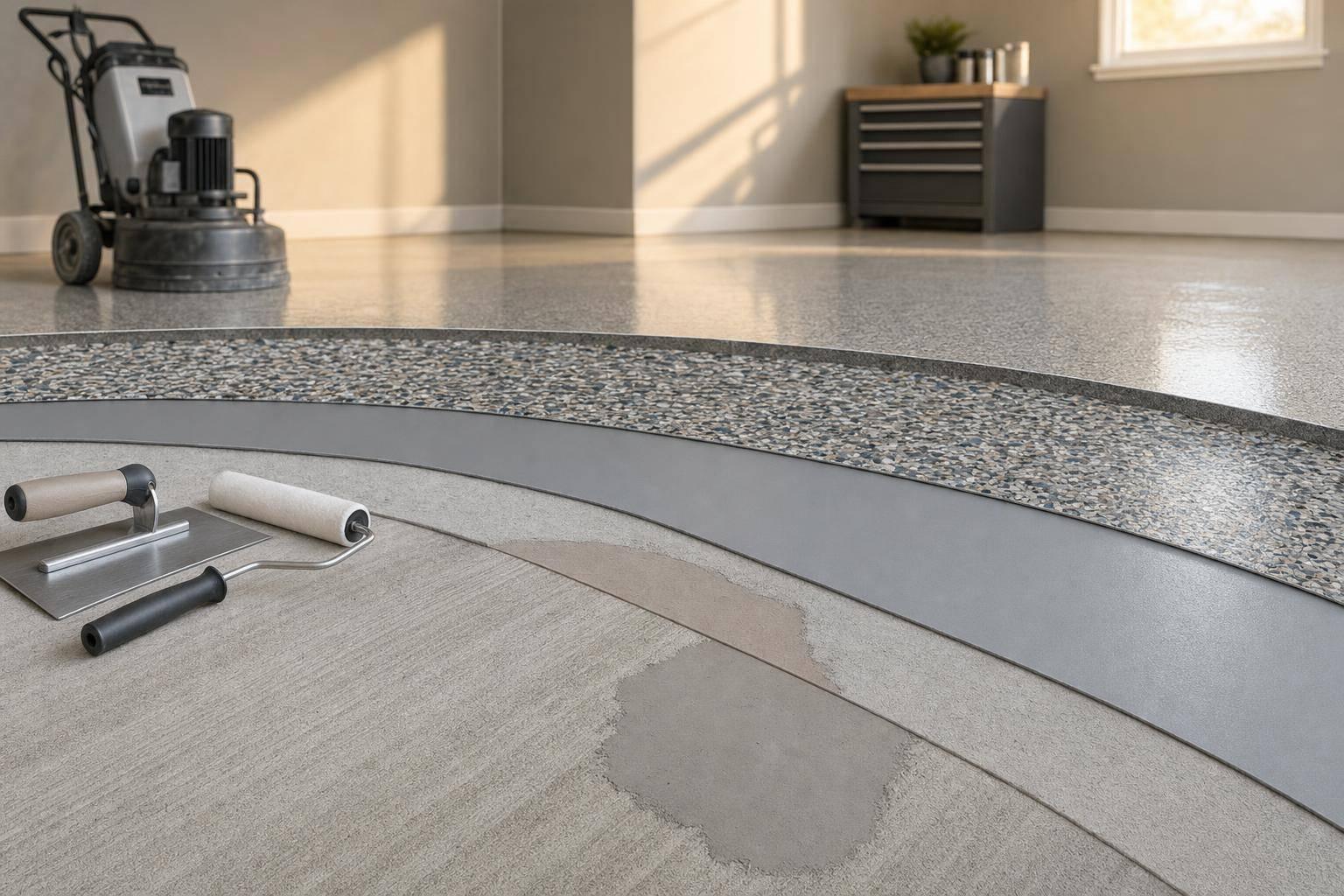
Proper surface preparation is the foundation of any durable coating – especially in high-stress environments. Heavy-duty coatings typically need a Concrete Surface Profile (CSP) of CSP-4 to CSP-6. For heavily stained floors, shot blasting is highly effective, while diamond grinding works better for minor surface flaws. To tackle edges and corners, hand grinding is essential; this prevents peeling in areas where large equipment can’t reach and stress tends to concentrate.
As Crane Engineering emphasizes:
Skipping proper surface preparation compromises your coating’s longevity. – Crane Engineering
Once the surface is mechanically profiled, all dust and debris must be removed. A primer is then applied to seal and strengthen the concrete, followed by fine sanding to create the perfect surface for the top coat to adhere. Don’t forget to caulk joints at floor-wall intersections – this step keeps dirt out and extends the coating’s life.
For example, Croc Coatings uses its Penntek Evolution system, which is four times stronger than standard epoxy and can be installed in just one day. This system even comes with a lifetime warranty for residential applications. After installation, ongoing maintenance is crucial to keep the coating performing at its peak.
Maintaining Your Coating for Long-Term Performance
Regular upkeep is essential to keep your coating in top shape, especially in areas exposed to heavy impacts. A smooth surface reduces abrasion, allowing debris to slide off more easily. For outdoor applications, protecting epoxy coatings from direct sunlight is critical, as UV rays can cause chalking and wear.
Before putting the coating under heavy use, confirm it’s fully cured using tests like hardness or solvent rub testing (ASTM D5402). Keep an eye out for signs of corrosion or damage from impacts, as these indicate the coating may need attention. In high-abrasion areas, beaded epoxy systems with ceramic fillers can offer longer-lasting protection between maintenance cycles.
Some advanced coatings also allow for a quick return to service – equipment can sometimes be back in use within 2 to 3 hours, minimizing downtime. With the right care, your coating can stand up to even the toughest conditions.
Conclusion
Impact-resistant coatings are essential for protecting floors against heavy loads, constant traffic, and harsh conditions. Without these protective layers, surfaces are prone to cracking and corrosion – issues that contribute to nearly $300 billion annually in corrosion-related damage across the United States. A properly chosen coating not only extends the lifespan of your flooring but also minimizes maintenance and ensures smooth operations. However, achieving these benefits requires professional installation, including meticulous surface preparation, accurate mixing, consistent thickness application, and controlled curing conditions.
When selecting a coating, it’s important to match the system to your specific needs. For example, epoxy coatings offer excellent chemical resistance, polyurea systems provide flexibility, and polysiloxane options excel in UV protection. Additionally, consider both performance and environmental standards to ensure the system aligns with your application requirements.
In North Idaho and Eastern Washington, Croc Coatings provides the Penntek Evolution system, a solution that’s four times stronger than standard epoxy and can be installed in just one day. This system also includes a lifetime warranty for residential projects, offering unmatched durability and the ability to withstand everything from heavy machinery to everyday wear – without sacrificing appearance.
Impact-resistant coatings are more than just a protective measure – they’re an investment that reduces downtime, cuts repair expenses, and safeguards your assets over the long term. With certified professionals handling the installation and understanding the science behind coating systems, you can trust these solutions to perform reliably in even the toughest environments.
For floors that endure the demands of high traffic and heavy use, consult with certified coating experts. They’ll help you design a system that balances cost and long-term value, ensuring your surfaces remain durable and effective for years to come.
FAQs
Which coating is best for forklifts and dropped tools?
The most effective coating for forklifts and dropped tools is an extra-heavy-duty epoxy or resin coating specifically made for industrial floors. These coatings shield concrete from the impact, wear, and damage caused by heavy loads and falling tools, providing lasting durability in demanding environments.
How do I know if my concrete is ready for coating?
To get your concrete ready for coating, make sure it has completely cured – this usually takes about 28 days for new concrete – and is in good structural condition. The surface should be clean, free of contaminants, and properly prepped. This includes cleaning, repairing any damage, and profiling the surface. Don’t forget to check for moisture vapor emissions and surface irregularities to ensure a smooth and lasting application.
How long before I can drive or place heavy equipment on it?
Impact-resistant coatings need a few days to fully cure before they can handle heavy use, such as driving vehicles over them or placing heavy equipment. The curing time varies based on the specific product and the conditions during application. Be sure to check and follow the manufacturer’s instructions to achieve the best durability and performance.