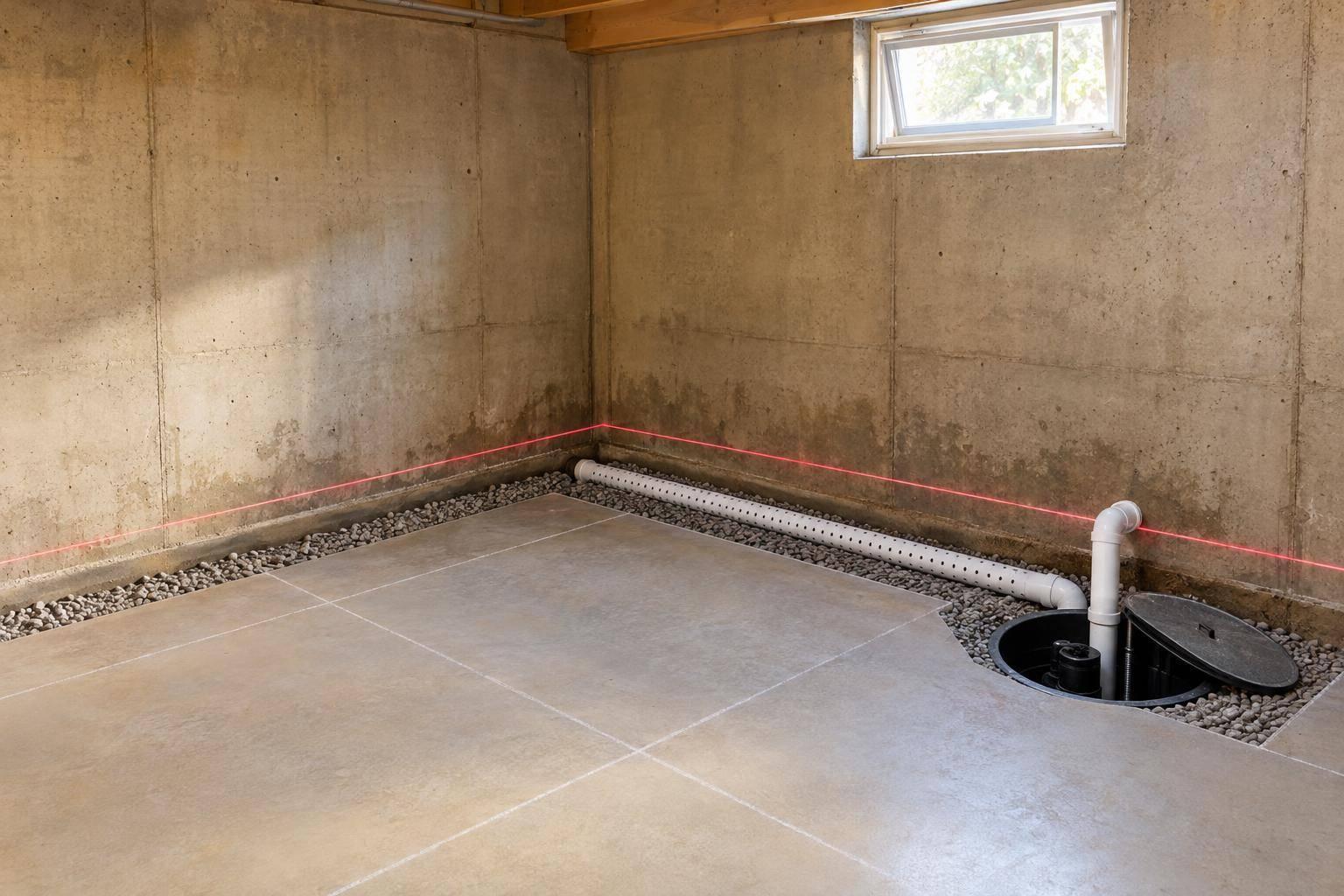
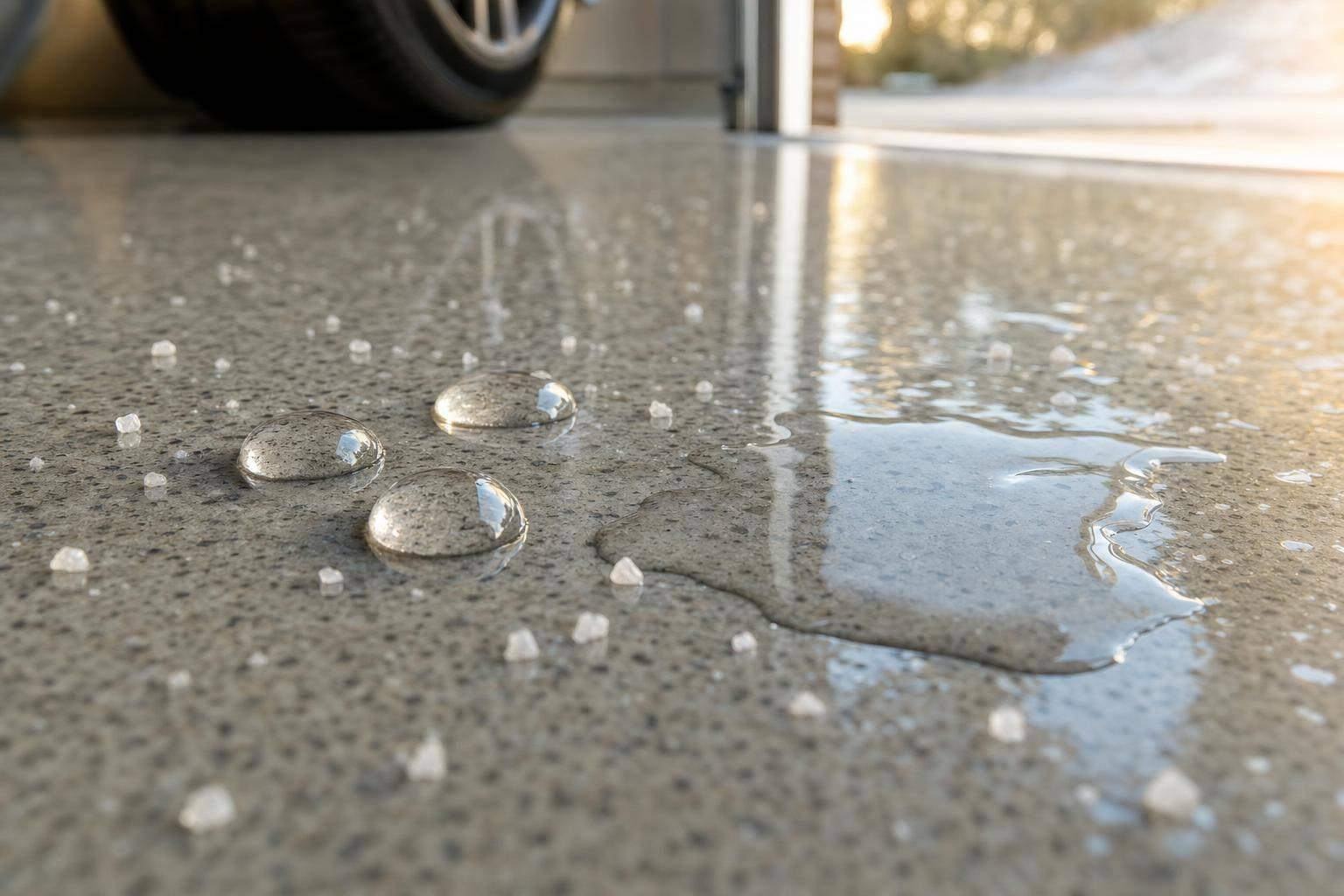
Salt damage starts when dirty meltwater sinks into bare concrete. Once that happens, freeze-thaw stress, traffic, and grit can turn a smooth floor into a stained, pitted, flaky surface.
Here’s the short version:
- Bare concrete absorbs salt water
- Water expands about 9% when it freezes
- That pressure can lead to pitting, scaling, and cracks (which may require you to repair cracks in load-bearing concrete before coating)
- Road salt residue often shows up first in tire tracks and near the garage door
- Choosing one of the top industrial floor coatings helps keep salt and moisture on top, where cleanup is much easier
If I’m looking at a garage or shop floor in places like Coeur d’Alene, Spokane, or the Tri-Cities, I’d pay attention to three things first: white salt residue, small pits, and dark damp spots that don’t dry fast. Those are common signs that moisture is getting into the slab.
A coated floor works in a simple way: it creates a sealed top layer over the concrete. That helps cut down how much brine, slush, and de-icer can soak in. Penetrating sealers can lower absorption, but a full coating system also helps with surface cleanup, stain control, and winter wear from tires and grit.
| Surface Type | Salt Exposure | Moisture Behavior | Common Result |
|---|---|---|---|
| Bare concrete | Salt hits the slab directly | Soaks in through open pores | Stains, pitting, scaling |
| Penetrating sealer | Salt still contacts the surface | Less absorption than bare concrete | Some protection, but not a full surface shield |
| Full coating system | Salt stays on top of the finish | Very little moisture gets in | Easier cleanup and less winter damage |
Bottom line: if you want to slow salt damage, the main goal is to stop salty water from getting into the concrete in the first place. The rest of the article explains how that damage starts, what to look for, and why coatings help block it.
Fixing a Salt Damaged Garage Floor
sbb-itb-a0e5ae3
How Salt, Brine, and De-Icers Damage Bare Concrete
When salt-heavy meltwater hits bare concrete, it doesn’t just sit on top. It seeps into the pores and stays there instead of drying fast. And once that moisture gets inside, the trouble starts below the surface.
Porous Concrete Soaks Up Contaminated Moisture
Concrete is porous, so it pulls in water along with the salt and de-icing chemicals mixed into it. Those materials keep the concrete damp, increase permeability, and wear down the slab from the inside out. Since de-icing salts attract moisture, the surface zone stays wet longer than it normally would.
That matters because the wetter the slab stays, the closer it gets to the saturation level where freezing begins to crack the concrete. In plain English: the concrete holds onto dirty, salty water, and that sets the stage for damage. Knowing how to protect concrete from salt damage is essential for maintaining structural integrity.
How Freeze-Thaw Cycles and Daily Traffic Speed Up Damage
Once salty water is inside the pores, changing temperatures take over. Water expands by about 9% when it freezes, and in a saturated pore system loaded with salt, that expansion pushes small cracks through the cement paste and the bonds around the aggregate.
Over time, especially through repeated winters, that pressure turns into surface flaking and shallow pitting. You’ll usually see it first in the same problem spots:
- tire tracks
- the garage threshold
- low areas where meltwater tends to puddle
Traffic adds another layer of wear. Every time a vehicle rolls in and out, tire loads flex the top layer of the slab and widen the microcracks that freeze-thaw stress already started. Then grit and sand from the road act like sandpaper, scraping away the thin cement paste and exposing fresh concrete to the next round of salty meltwater.
That’s why the damage tends to show up in the same places again and again: tire paths, slab edges, and the garage door entry point, where traffic and meltwater hit at the same time. Salt-resistant concrete coatings are made to stop that cycle by keeping salty moisture on the surface.
What Salt Damage Looks Like on Real Floors
Salt damage usually shows up little by little. By the time you can see it, the concrete below the surface may already be taking a hit. That’s why it helps to know the early signs. Spotting them sooner can save you from a much bigger repair job later.
Warning Signs: Stains, Pitting, Flaking, and Efflorescence
The first thing most people notice is a white, chalky, or powdery film on the floor. It often shows up in tire tracks and near the garage door, where slush, snowmelt, and road salt get dragged in first. This is called efflorescence. It happens when moisture moves through the concrete, brings dissolved salts to the surface, and leaves them there after the water dries up.
Next, keep an eye out for small pits or shallow craters, especially where cars sit or roll most often. These marks come from repeat salt contact mixed with freeze-thaw pressure. If you start seeing flaking or scaling, the problem has gone past light surface wear. At that point, the top layer isn’t just stained or scuffed. It’s starting to break down.
Another sign is dark patches that stay damp after cleaning. Concrete has pores, so it can soak up salty water and let it back out slowly. That can leave areas that still look wet even when the rest of the floor seems dry.
If the residue keeps coming back, the surface feels rougher, or cracks start getting bigger, the floor is still wearing away. Once that starts, the main job is simple: stop salt and moisture from sinking in any farther.
Bare Concrete vs. Salt-Damaged Concrete vs. Coated Concrete
Here’s the fast way to spot the difference.
| Category | Bare Concrete | Salt-Damaged Concrete | Coated Concrete |
|---|---|---|---|
| Appearance | Smooth to slightly rough; uniform gray | Blotchy, uneven; roughened; exposed aggregate; visible pits and flaking | Smooth, consistent, sealed finish |
| Moisture Absorption | Absorbs water readily through open pores | Absorbs moisture more easily as surface loss increases | Moisture stays on top; minimal absorption |
| Common Defects | Minor staining, surface dust | Pitting, scaling, efflorescence, widening cracks | Few salt-related defects under normal use |
That’s the big difference. Bare concrete takes in water. Damaged concrete takes in even more. A coated floor keeps that salty mess on the surface, where it’s easier to clean up before it starts the whole cycle again.
How Floor Coatings Block Salt Damage
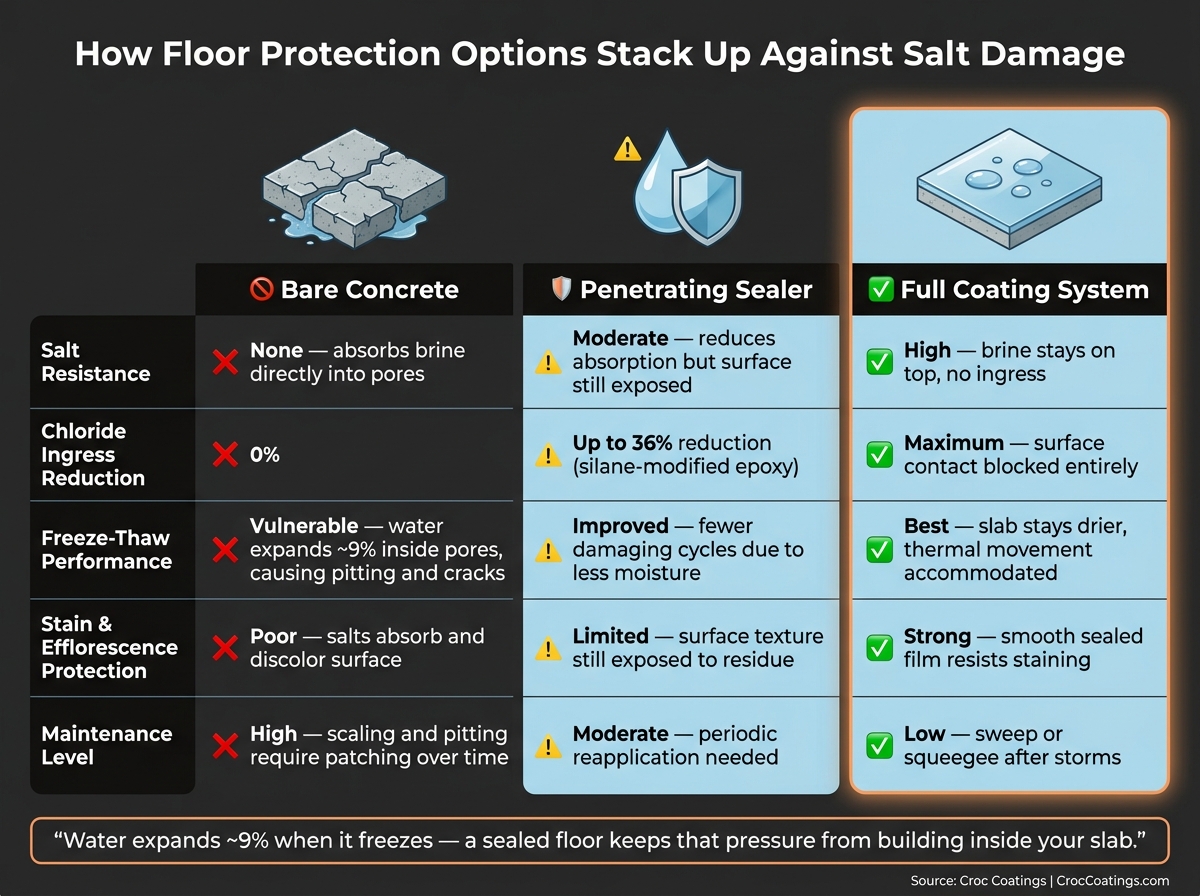
Bare Concrete vs. Sealer vs. Full Coating: Salt Damage Protection Compared
A professionally installed floor coating changes the whole equation. Instead of letting salt and meltwater sink into the concrete, it keeps that mess on the surface where you can clean it up.
How a Surface Barrier Stops Moisture Intrusion
A resinous coating seals concrete pores and micro-cracks, which helps stop salty meltwater from soaking into the slab. Melted snow, road slush, and de-icing chemicals stay on top of the floor instead of wicking down into the concrete. That means the slab stays drier and is much less likely to pit, scale, or crack. Put simply, winter slush is far less likely to turn into damage below the surface.
The smooth, dense finish helps here too. After a storm, salty residue can be swept, mopped, or squeegeed away instead of sitting inside the concrete and slowly wearing it down.
Why Coatings Hold Up Under Winter Traffic
Once the slab is sealed, the next problem is wear from traffic and weather. Grit tracked in by tires scrapes along the surface, especially in tire paths and near the garage threshold. On top of that, temperature swings make the slab expand and contract, while salt keeps the surface wet for longer. That can lead to more freeze-thaw cycles each season than many people realize.
High-quality polyurea and polyaspartic coatings are made for this kind of abuse. They stay tough and flexible at low temperatures, which helps them handle small slab movement and thermal strain without cracking. When the coating is installed the right way, it can stand up to tire traffic, grit, and winter temperature shifts.
Penetrating Sealers vs. Full Coating Systems
Penetrating sealers, usually silane- or siloxane-based, work differently. Instead of creating a film on top, they reduce how much water the concrete absorbs. A 40% silane treatment has been shown to cut chloride ingress in the top concrete layer by about 26%, while a silane-modified epoxy treatment cut it by 36%. So yes, sealers help limit absorption. But full coating systems go a step further by blocking surface contact and making cleanup much easier.
The table below shows how the three options stack up in salt-exposed spaces.
| Protection Factor | Bare Concrete | Penetrating Sealer | Full Coating System |
|---|---|---|---|
| Salt Resistance | None; absorbs brine readily | Moderate; reduces absorption but doesn’t block surface contact | High; brine stays on top, no ingress |
| Stain Protection | Poor; salts and minerals absorb and discolor | Limited; surface texture still exposed | Strong; smooth film resists staining |
| Freeze-Thaw Performance | Vulnerable; trapped water expands and damages slab | Improved; less moisture enters, fewer damaging cycles | Best; keeps the slab drier while helping accommodate thermal movement |
| Maintenance | High; scaling and pitting require patching over time | Moderate; periodic reapplication may be needed | Low; sweep or squeegee after storms |
That gap shows up fastest in garages and workspaces that deal with repeated winter traffic.
Long-Term Floor Protection With a Professional Coating System
Once salt damage begins, stopping it early costs less than fixing concrete later. Patching spalled areas can get expensive fast, and it doesn’t deal with the root problem. A good coating helps cut repair costs over the life of the floor.
Why Penntek Evolution Works Well in Cold-Weather Garages and Workspaces
Professional systems like Penntek Evolution are made for the kind of wear garages in North Idaho and Eastern Washington deal with every winter: road salt, freeze-thaw cycles, oil drips, and daily tire traffic. In salt-resistance testing, polyaspartic coatings showed minimal change after 30 days in a 3% sodium chloride solution. That lines up with what happens in a garage after a winter drive, when brine drips off a vehicle and sits on the floor.
Its 4x stronger than epoxy durability matters too. Professional polyaspartic systems often last 15–20+ years when installed the right way, which helps prevent early peeling in harsh winter conditions. In plain terms, that can mean fewer repair bills and less time dealing with floor problems.
For homes and work areas, speed matters just as much as protection. Croc Coatings installs Penntek Evolution in one day and backs residential projects with a lifetime residential warranty. For homeowners in Coeur d’Alene, Spokane, LC-Valley, and Tri-Cities, that means getting the floor protected without turning the garage into a multi-day job site. Proper preparation for a 1-day coating ensures the installation goes smoothly. Upkeep is simple after storms: just sweep or mop.
Conclusion: Salt Stays on Top When Concrete Is Properly Protected
A professional coating keeps salt, brine, and de-icers on the surface, where you can clean them up before they stain, pit, or freeze inside the slab. The slab stays drier, freeze-thaw damage is minimized, and the floor holds up under real-world use – salt, slush, oil, and all. For a homeowner or small business owner, sealing concrete off from winter contaminants is the most practical way to protect that investment over the long term.
FAQs
Can salt-damaged concrete be coated?
Yes, salt-damaged concrete can be coated if the surface is prepared the right way first. Salt left in the slab can weaken adhesion, which is why prep matters so much.
That prep usually starts with a close inspection of the slab, followed by crack repair and diamond grinding to create a clean, porous surface the coating can bond to.
Once the concrete is ready, a flexible, non-porous system like Penntek Evolution polyurea coating can help guard the slab against more salt damage, moisture intrusion, and freeze-thaw stress.
How do I know if my garage floor is absorbing salt water?
Look for staining, white cloudy patches, or pitting with small craters. Bubbling, blistering, peeling, or delamination can also be a sign that salt water and moisture are getting into the concrete.
If the floor stays dark and damp long after a storm or snowmelt, moisture has likely soaked into the slab. Another simple check: tape down a plastic sheet for 24 hours, then see whether vapor gets trapped underneath.
How often should a coated floor be cleaned in winter?
During winter, clean a coated floor on a routine basis by sweeping away dirt and grit, then mopping with warm water and a mild detergent. A good coating stands up well to salt and other messes, so there’s no need to bring out harsh chemicals.
For long-term protection, check the floor once a month for ice buildup or standing water, with extra attention around drains and expansion joints. If the surface gets hit with a lot of salt, clean it up as soon as you can.