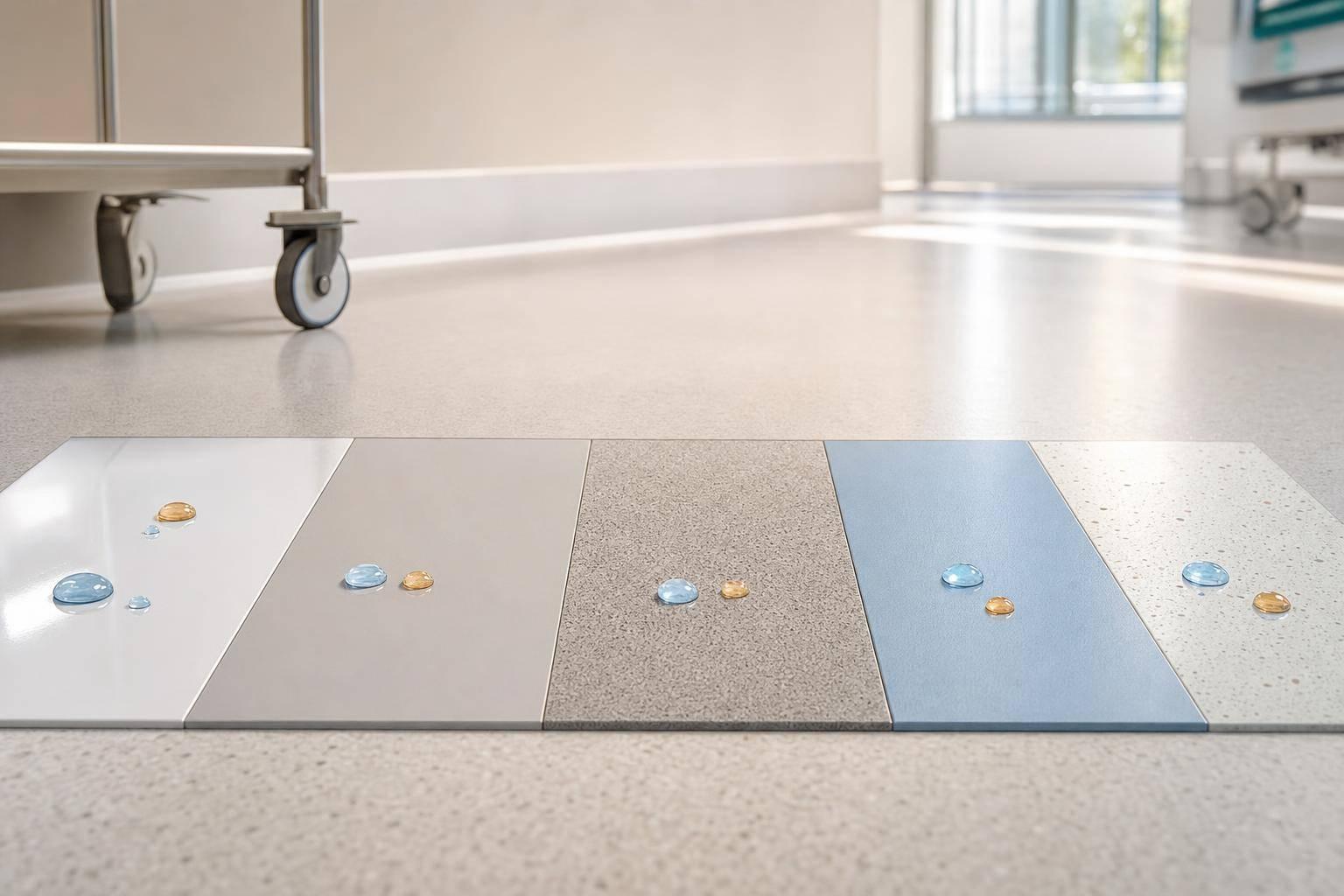
If your floor can’t handle disinfectants, moisture, and washdowns, it will fail sooner than you expect. I’d break the choice down this way: epoxy fits drier clinical spaces, polyurethane handles tougher cleaning and more movement, urethane cement is the best pick for wet, harsh washdown zones, and specialty resins fit the most aggressive chemical areas.
Here’s the short version in plain English:
- Epoxy works for many patient and clinical areas, but standard systems often top out at 3 lb/1,000 sq ft/24 hr moisture vapor emission or about 75% RH.
- Polyurethane holds up better under repeated hot cleaning and keeps its finish longer in busy spaces.
- Urethane cement can take hot-water or steam cleaning up to 266°F (130°C) and can often go over damp concrete.
- Sheet vinyl can work in lighter-use care areas, but seams and adhesive failure become a problem when slab moisture is too high.
- Novolac epoxy, vinyl ester, and MMA are for stronger acids, alkalis, solvents, and spaces where chemical spills or short shutdown windows drive the spec.
- In many cases, lifecycle cost comes down less to first price and more to downtime, recoats, moisture failure, and repair frequency.
What I’d focus on first:
- The actual chemicals used on the floor
- How often the floor gets scrubbed or washed down
- Whether the slab has moisture vapor drive
- How much downtime the space can handle
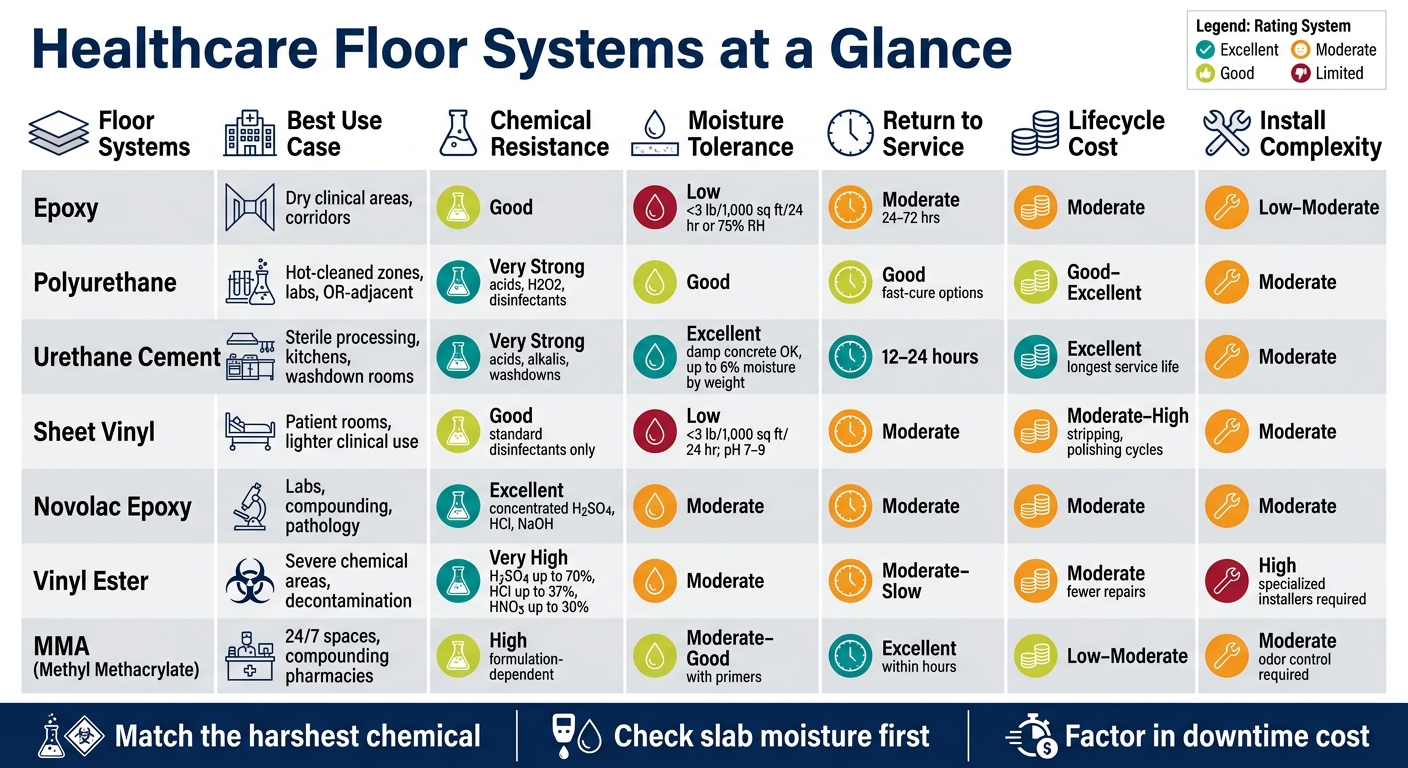
Healthcare Floor Systems: Chemical & Moisture Resistance Comparison
What’s the Best Chemical-Resistant Epoxy Flooring System?
sbb-itb-a0e5ae3
Quick Comparison
| System | Best Use | Chemical Hold-Up | Moisture Tolerance | Return to Service |
|---|---|---|---|---|
| Epoxy | Dry clinical areas, corridors | Good for routine cleaners and bleach | Low to fair | Moderate |
| Polyurethane | Hot-cleaned zones, labs, OR-adjacent spaces | Very strong across many cleaners and acids | Good | Good |
| Urethane cement | Sterile processing, kitchens, washdown rooms | Very strong for acids, alkalis, and washdowns | Very high | Often 12–24 hours |
| Sheet vinyl | Patient rooms, lighter clinical use | Good for standard disinfectants | Low | Moderate |
| Novolac epoxy | Labs, compounding, pathology | Very strong for concentrated acids and caustics | Moderate | Moderate |
| Vinyl ester | Severe chemical areas | Very high | Moderate | Moderate to slow |
| MMA | 24/7 spaces needing fast turnover | High, depends on formula | Moderate to good | Often within hours |
So if you want the short answer, it’s this: match the floor to the harshest chemical, the wettest slab condition, and the shortest shutdown window. That one decision usually matters more than the base material alone.
Epoxy, polyurethane, and urethane cement: coated concrete system comparison
Epoxy, polyurethane, and urethane cement don’t react to healthcare chemicals the same way. And that matters. Pick the wrong system for a hospital or clinic area, and you can end up with avoidable concrete coating failures, surprise shutdowns, and more money spent over time. Based on the criteria above, the tradeoffs are pretty straightforward.
| System | Acid Resistance | Alkali Resistance | Wear Under Repeated Cleaning | Moisture Tolerance | Install Speed | Lifecycle Cost |
|---|---|---|---|---|---|---|
| Epoxy | Good for mild to moderate acids; less reliable against strong oxidizers | Good for routine alkaline cleaners and bleach solutions | Durable, but can lose gloss under aggressive or hot cleaning | Fair; standard systems are moisture-sensitive | Moderate | Moderate; may need more frequent recoating in aggressive zones |
| Polyurethane | Excellent across many acids and cleaning chemicals | Excellent for caustic cleaners and disinfectants | Superior abrasion resistance and gloss retention | Good; forgiving of minor moisture and thermal movement | Good to excellent; fast-cure options reduce downtime | Good to excellent; color stability extends recoat intervals |
| Urethane cement | Excellent for organic and inorganic acids and harsh washdown chemicals | Excellent; handles aggressive alkalis and CIP chemistries | Excellent; engineered for thermal shock and constant washdowns | Excellent; can be installed on damp concrete | Good; many systems return to service quickly | Excellent; longest functional life in severe-service areas |
The sections below make it easier to see where each one works best in healthcare spaces.
Epoxy coatings: chemical resistance with moisture limits
For routine clinical floors, epoxy is the starting point. It performs well against bleach solutions, quaternary ammonium compounds, and standard detergents used in many care settings.
That said, epoxy has a clear weak spot: moisture. Standard epoxy systems are usually rated for no more than 3 lb/1,000 sq ft/24 hr under ASTM F1869 or 75% relative humidity under ASTM F2170. A high-performance epoxy primer can push that range to 15 lb/1,000 sq ft/24 hr and 95% RH, but that’s a specialty product, not standard-grade epoxy.
There’s another limit too. Strong oxidizing acids, including higher-concentration peracetic acid, can lead to softening, discoloration, or surface breakdown over time when the epoxy formula wasn’t made for that type of exposure. So while epoxy works well in many day-to-day spaces, it’s not always the safe bet for harder chemical conditions.
Polyurethane coatings: flexibility and hot-cleaning tolerance
For labs, pharmacies, and high-traffic corridors, polyurethane tends to handle hotter and tougher cleaning better. It stands up to a broader range of chemical exposure than epoxy, including strong acids, hydrogen peroxide, and the kinds of cleaners often used in lab and pharmaceutical settings.
It also does a better job resisting yellowing and chalking during hot cleaning. That can make a difference in spaces that get cleaned hard and often.
Another plus is flexibility. Floors move more than people think. Between temperature swings, slab movement, and the constant pressure of carts and equipment, rigid coatings can start to crack or pull away. Polyurethane has more give, which helps cut down on cracking and delamination in those conditions.
Urethane cement systems: best fit for harsh washdown areas
For decontamination rooms, kitchens, and sterile processing areas, urethane cement is made for rough washdown service. Some self-leveling urethane cement systems are rated to handle steam or hot water cleaning up to 266°F (130°C). They also resist organic and inorganic acids, alkalis, and salts, which lines up well with the demands of kitchens, decontamination rooms, and sterile processing.
This system also has a big edge when moisture is already in the slab. Urethane cement can be installed directly on damp concrete, which is a major plus in older healthcare buildings or in areas with known vapor drive issues.
Return-to-service time can also be solid. Some systems allow light foot traffic in 12 hours and light wheel traffic in 24 hours. Yes, the upfront price is higher than epoxy. But in severe-service spaces, the longer working life and lower failure rate often reduce lifecycle cost over time.
Sheet vinyl and specialty resin systems fill other needs where coated concrete by itself doesn’t do enough.
Sheet vinyl and specialty resin systems: where they fit in the comparison
Coated concrete handles most healthcare spaces well. But there are cases where sheet vinyl or a specialty resin system makes more sense. The dividing line usually comes down to seams, slab moisture, or chemical exposure.
Sheet vinyl over concrete: clean appearance but seam and maintenance trade-offs
Sheet vinyl is common in patient rooms, corridors, and general clinical spaces, especially where chemical exposure is mostly limited to standard hospital disinfectants. A heat-welded, sealed surface helps with infection control in busy areas. It also gives floors a clean, consistent look and can help with wayfinding. One detail matters here: the vinyl and adhesive need to match the facility’s actual disinfectant list.
The catch is that vinyl depends heavily on the concrete under it. If the slab has too much moisture or the pH is out of range, problems start fast. Manufacturers often call for moisture vapor emission rates of no more than 3 lb/1,000 sq ft/24 hr and concrete pH between 7 and 9. Go past those limits and adhesives can fail, which can lead to bubbling, edge curling, and open seams.
Those failed seams do more than look bad. They can trap contamination and create conditions that work against infection control goals.
Maintenance is another trade-off. Daily care means routine cleaning, but that’s not the whole story. Over time, sheet vinyl also needs deep scrubbing, stripping, and refinishing. Compared with resin floors, that usually means more work and more upkeep over the life of the floor.
When seams become a weak point, slab moisture is hard to control, or the chemistry gets harsher than vinyl can handle, specialty resins step in.
Specialty resin systems for severe chemical exposure
For concentrated acids, strong alkalis, or projects where shutdown time has to stay short, specialty resins cover the high-exposure end of the range. The main players are novolac epoxy, vinyl ester, and MMA (methyl methacrylate).
| System | Disinfectant Resistance | Acid & Alkali Resistance | Seam/Surface Durability | Moisture Tolerance | Install Speed | Maintenance Burden |
|---|---|---|---|---|---|---|
| Sheet vinyl | Good to very good for standard hospital disinfectants | Moderate; handles routine alkalinity and diluted oxidizers | Heat-welded, sealed surface; vulnerable to adhesive failure and seam lifting | Limited; depends on adhesive compatibility and slab moisture control | Moderate; requires substrate prep, adhesive cure, and seam welding | High; ongoing stripping, polishing, and recoating cycles |
| Novolac epoxy | High | Excellent; resists concentrated sulfuric, hydrochloric, and phosphoric acids plus high-concentration sodium hydroxide | Excellent; maintains gloss and integrity where standard epoxy softens or blisters | Moderate; substrate preparation and moisture control still matter | Moderate; longer cure than MMA | Moderate |
| Vinyl ester | High | Very high; handles concentrated sulfuric acid up to 70%, hydrochloric acid up to 37%, nitric acid up to 30%, and strong alkalis | Excellent surface durability | Moderate; requires careful moisture and temperature control during install | Moderate to slow; specialized installers and controlled conditions required | Moderate; high chemical resistance means fewer repairs |
| MMA | High to very high | High; formulation-dependent | Excellent | Moderate to good with appropriate primers | Excellent; returns to service in hours | Low to moderate; easy patch repair |
Novolac epoxy fits labs, pathology suites, and compounding spaces where strong acids are part of the job and a slightly longer cure time is acceptable. Put simply, it handles concentrated acid exposure better than standard epoxy.
Vinyl ester sits at the far end of the scale. It’s used in the toughest settings, like chemical labs or industrial-grade decontamination zones, where even novolac epoxy may not provide enough margin. It stands up to concentrated oxidizers and high-temperature acid exposure that would damage most other flooring systems. The trade-off is installation difficulty. It needs specialized installers, controlled cure conditions, and ventilation.
MMA makes sense when chemical resistance and short downtime are both must-haves, such as compounding pharmacies, 24/7 diagnostic labs, or circulation routes that can’t stay closed for long. These systems can return to service in hours, and some versions use moisture-tolerant primers for slabs that are less than ideal. The main issue is odor during installation, so scheduling and containment matter.
How to choose the right system for your cleaning cycles, moisture conditions, and downtime limits
The comparison above narrows the options. This section turns that into a practical, zone-by-zone pick. The main filter is simple: choose based on chemicals, slab moisture, and downtime – not just what looks good on a spec sheet.
Best fit by healthcare area and cleaning routine
Patient rooms and corridors often perform well with high-solids epoxy finished with a polyurethane topcoat. These areas usually deal with mild disinfectants and neutral cleaners, so that setup is often enough.
Labs, compounding pharmacies, and sterile processing areas are tougher on floors. They see harsher chemicals, which often makes urethane cement or a specialty resin the better call in the most aggressive spaces. Back-of-house washdown and dietary areas add another problem: thermal shock. In those conditions, standard epoxy is usually the wrong choice.
Use the table below to line up each healthcare zone with its chemical load, moisture risk, and service limits.
| Healthcare Zone | Recommended System | Chemical Profile | Moisture Tolerance |
|---|---|---|---|
| Patient rooms, corridors | High-solids epoxy + polyurethane topcoat | Mild disinfectants, neutral cleaners | Low; moisture-controlled slab preferred |
| OR suites, procedure rooms | Seamless epoxy or polyurethane | Frequent disinfection, body fluid exposure | Low to moderate with primers |
| Labs, pharmacies, sterile processing | Urethane cement or chemical-resistant epoxy | Strong acids/alkalis, enzymatic cleaners | High; urethane cement tolerates damp slabs |
| Dietary, kitchen, washdown areas | Urethane cement | Hot-water washdowns, degreasers, thermal shock | High |
| Severe-chemical labs, decontamination | Specialty resin (MMA, vinyl ester) | Concentrated acids, solvents | Moderate; depends on primer selection |
Downtime, repairs, and long-term floor care costs
Once you’ve matched the floor to the chemical exposure, downtime usually becomes the deciding factor. Even a short shutdown can get expensive in outpatient settings. Lost appointments pile up fast, rescheduling takes time, and staff can end up standing around waiting. That’s why many facilities pay more upfront for a fast-cure system like MMA or a moisture-tolerant urethane cement that can return to service within 12–24 hours, instead of going with a lower-cost epoxy that may need 24–72 hours before full use and chemical exposure.
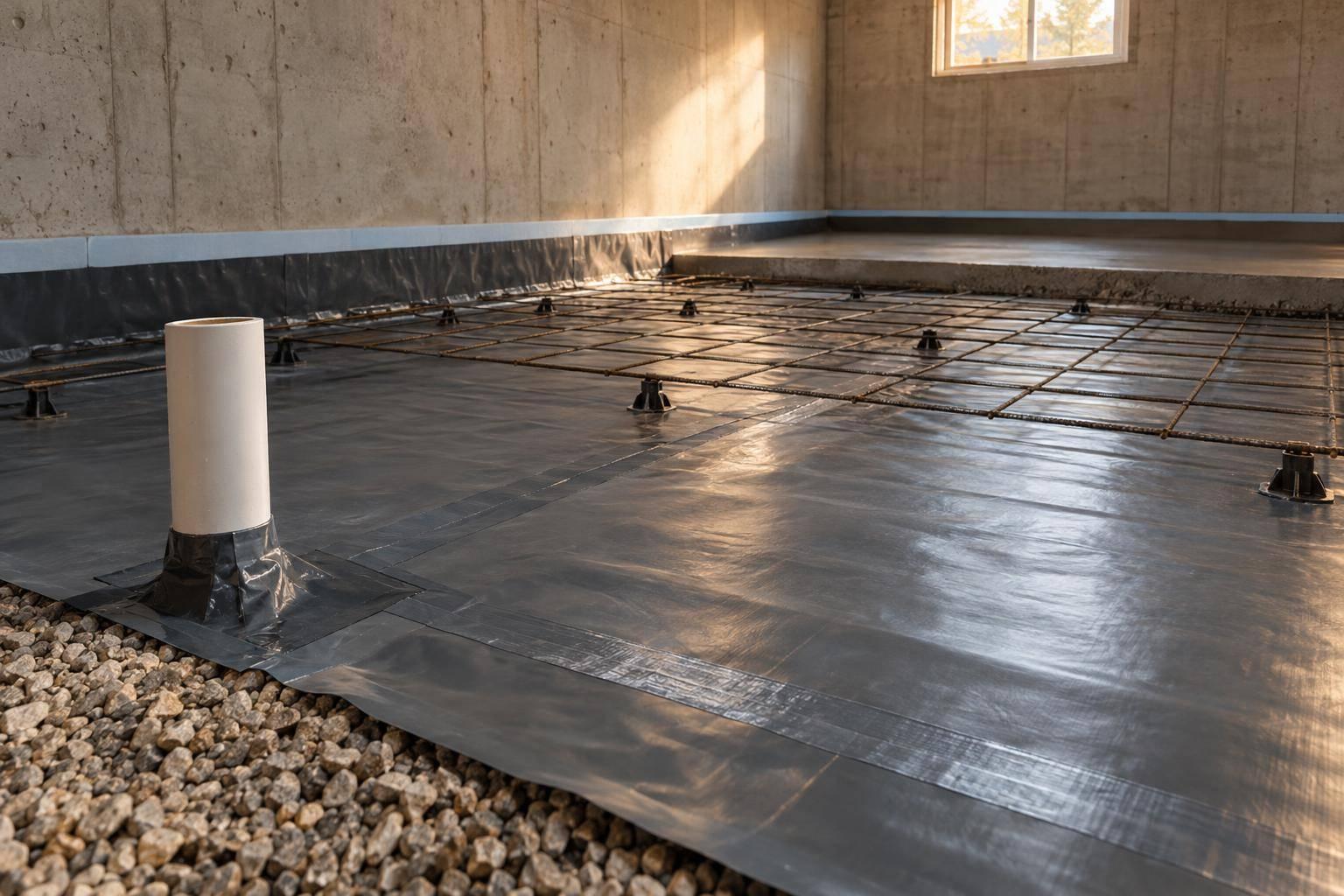
Moisture is the other cost that sneaks up on people. Older slabs, ground-level clinics, and spaces without vapor barriers carry a real risk of failure if the wrong system is installed. Urethane cement systems can tolerate concrete with up to 6% moisture content by weight – well above the point where standard epoxies tend to fail. Starting with a moisture-tolerant system can help you avoid a much bigger bill later for stripping, surface prep, and full reinstallation.
In practice, lifecycle cost is driven more by downtime, moisture-related failure, and maintenance frequency than by first price alone.
Conclusion: key takeaways for healthcare and commercial concrete floors
The main takeaway is simple: pick the floor based on the toughest condition it will need to handle. There isn’t one system that works best in every space, so it helps to compare industrial floor coatings side-by-side. The right choice depends on the chemicals in use, how aggressive the cleaning routine is, the slab’s moisture condition, and how much downtime the site can accept.
Final comparison summary
Epoxy is a good fit for dry areas with moderate exposure. Polyurethane suits spaces with hot cleaning and a need for more give. Urethane cement is often the top pick for harsh washdown zones. Specialty resins are used where chemical exposure is at its worst.
Here’s the quick recap:
| System | Best Fit | Key Limit |
|---|---|---|
| Epoxy | Dry clinical areas, corridors, general labs | Moisture-sensitive; avoid steam cleaning |
| Polyurethane | Hot-cleaning zones, operating rooms, decontamination areas | Still needs a well-prepared substrate |
| Urethane cement | Washdown areas, hospital kitchens, sterile processing | Higher upfront cost |
| Specialty resin | Severe chemical labs and pharma production | Higher installation complexity and specialized maintenance |
FAQs
How do I know if my slab has too much moisture?
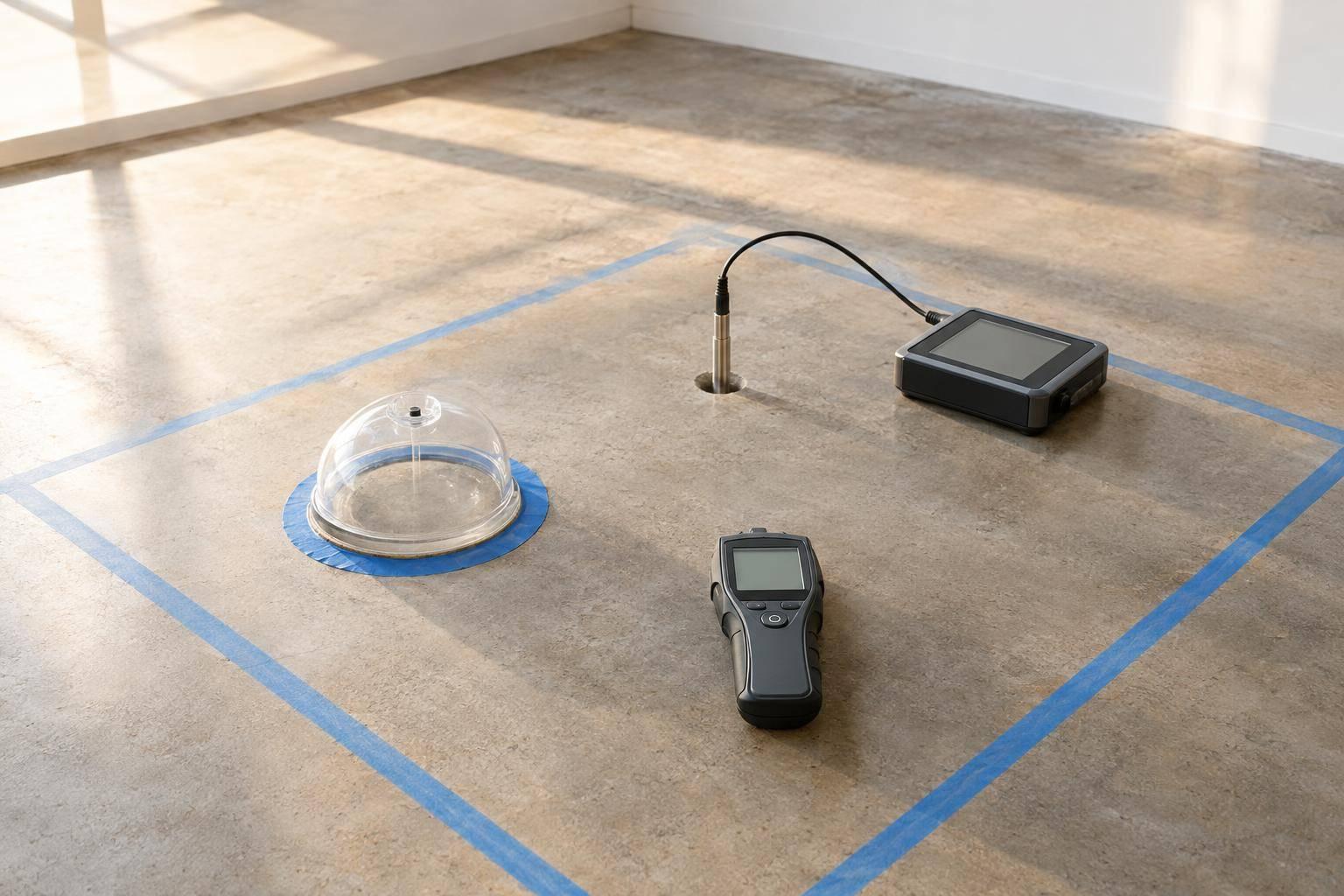
Have a professional test the slab before installation. If the Moisture Vapor Emission Rate (MVER) is above 3 to 5 pounds per 1,000 square feet per 24 hours, moisture is often too high.
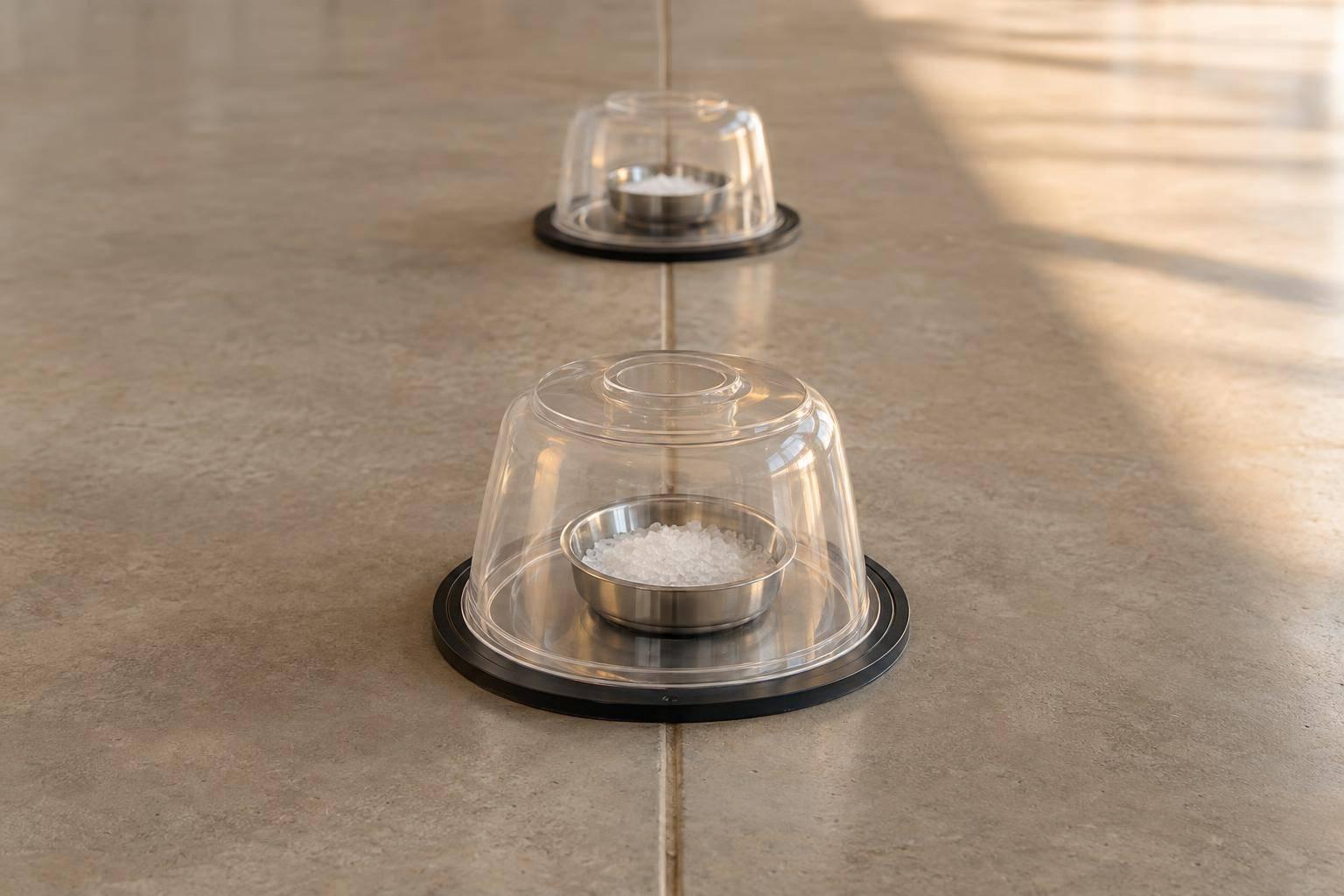
The most common tests are the calcium chloride test (ASTM F1869) and relative humidity probes (ASTM F2170). If in-slab relative humidity is above 80%, you can run into delamination, blistering, and early coating failure.
When should I choose urethane cement over epoxy?
Choose urethane cement instead of epoxy if your facility deals with harsh thermal shock, like daily steam cleaning or hot-water washdowns. It can handle temperatures from -40°F to 250°F.
That’s why it’s often used in food processing plants, commercial kitchens, and dairies. It stands up to lactic acid, citric acid, and caustic cleaners. By contrast, epoxy can soften under steady heat or start to delaminate as temperatures swing up and down.
Which floor system is best for fast return to service?
Penntek Evolution from Croc Coatings is the best choice for fast return to service because it uses a one-day installation process that helps cut downtime.
That matters for a simple reason: time off the floor costs you.
Old-school epoxy systems may need 24 to 72 hours or more to cure. By contrast, polyurea-based systems like Penntek Evolution are made for fast curing, often letting you get the space back in service the same day or the next day.