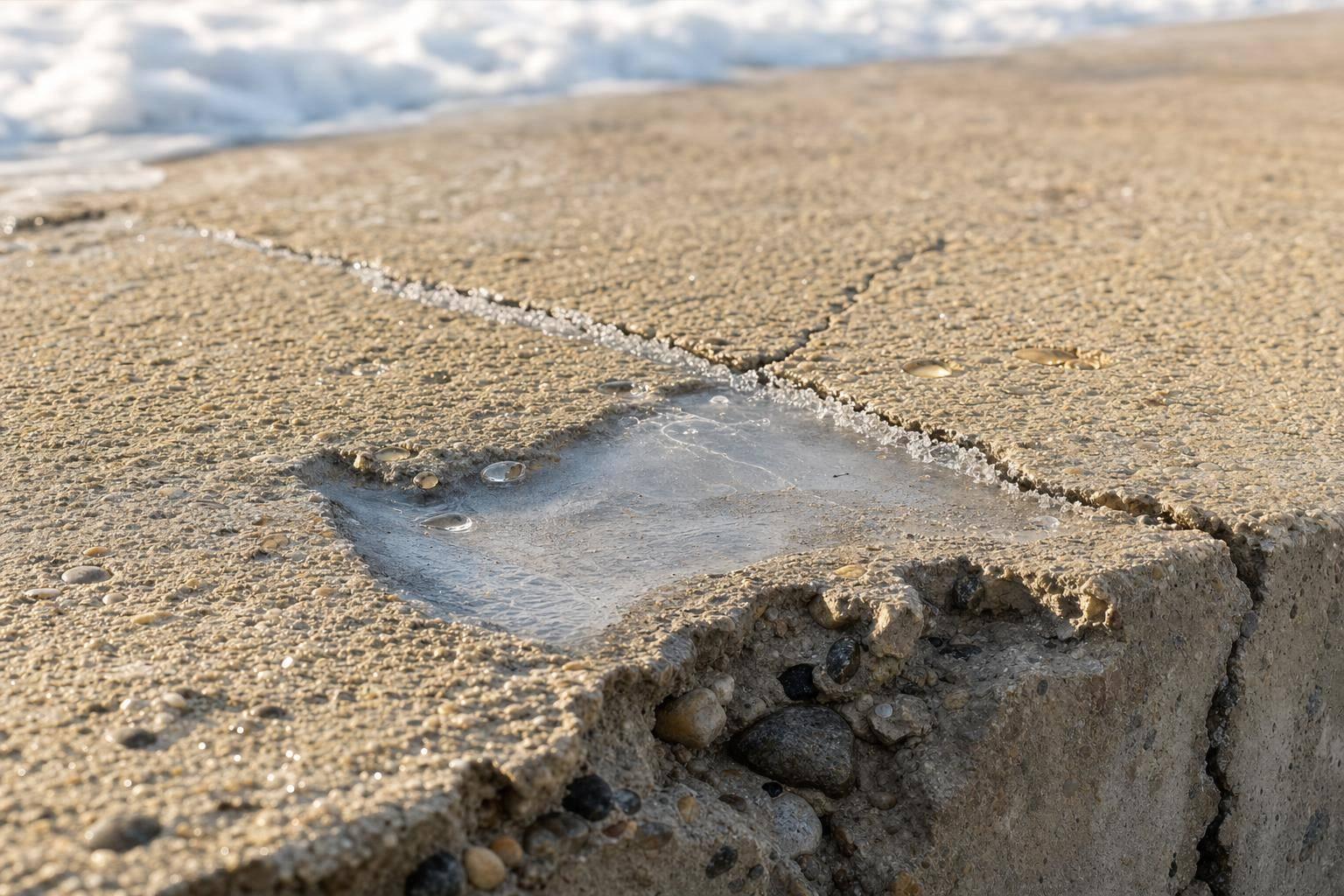
If water gets into concrete and the temperature drops to 32°F or lower, damage starts. The water freezes, expands by about 9%, and puts pressure on the slab from the inside. After repeat freeze-thaw swings, the surface begins to chip, flake, crack, and break apart.
Here’s the short version:
- Concrete absorbs water through pores, joints, cracks, and low spots.
- Freeze-thaw cycles repeat for months in places like Spokane and Coeur d’Alene.
- Surface damage gets worse each winter because broken concrete takes in more water.
- Deicing salts add more stress and can speed up scaling.
- The best way to slow damage is to keep water out with drainage fixes, crack repair, and a coating that stays bonded outdoors.
A few numbers make the problem clear:
- Spokane can see freeze-risk conditions from about October 6 to May 4
- Coeur d’Alene gets about 112 to 116 freezing nights per year
- Surface scaling often removes about 1/16 to 1/8 inch
- Deeper spalling can reach 1/4 inch or more
- Concrete damage tends to climb once saturation gets near 85% to 87% of pore space
Quick Comparison
| Surface Type | Water Entry | Winter Wear | UV Exposure | Upkeep |
|---|---|---|---|---|
| Uncoated concrete | High | High | N/A | High |
| Basic sealer or epoxy | Medium at first | Can peel or wear down | Can yellow or fade | Recoat every few years |
| Polyaspartic system | Lower | Better bond in freeze-thaw weather | Better outdoor color hold | Lower |
If I were explaining it in one line, I’d say this: freeze-thaw damage is mostly a water problem. If you stop water from getting in, you give the slab a much better shot at making it through winter without more surface loss.
sbb-itb-a0e5ae3
How Water Gets Into Concrete And Starts the Damage
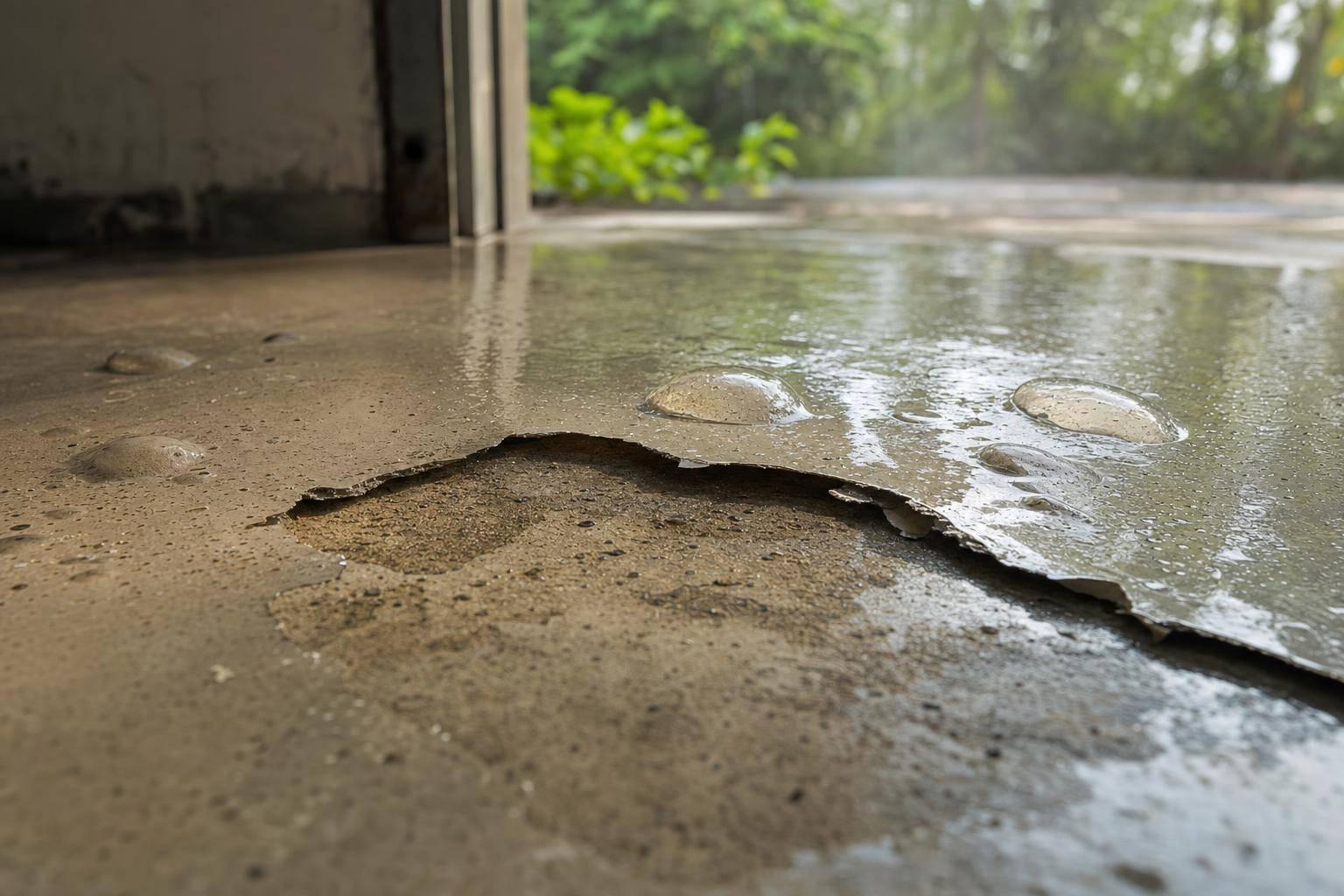
Concrete looks solid, but it has tiny pores that pull in moisture from rain, snowmelt, and humid air. On shaded patios in Coeur d’Alene or Spokane, those spots often stay dark and wet longer after a storm. That’s a plain sign that water has already soaked into the slab. Once that happens, the slab’s weak spots usually decide where damage shows up first.
Common Entry Points On A Patio Slab
Natural porosity is only part of the story. Water also gets in through surface flaws and joints. Control joints and construction joints can act like direct paths into the slab. Even hairline cracks from light settling or normal temperature shifts can let in enough moisture to cause serious internal damage over several winters.
Drainage issues make things worse fast. If a downspout sends roof runoff straight onto the patio, it keeps soaking the same area again and again. That can lead to early surface wear near the discharge point. A patio that sits flat, or slopes toward the house instead of away from it, lets water collect after rain or snowmelt. Those low spots, often called birdbaths, may freeze overnight, thaw in the daytime, and then freeze again. That cycle puts repeated stress on the same patch year after year. Those entry points leave moisture trapped inside the slab, setting up the surface loss that often shows up the next winter.
What Happens When Water Inside Concrete Freezes
Once water is trapped inside the slab, temperature becomes the main issue. When it drops to 32°F, that moisture freezes and expands inside tight pores. Pressure builds against the surrounding cement paste and aggregate. If that pressure gets past what the slab can handle, microcracks form or existing cracks spread. With each freeze-thaw cycle, those cracks open a bit more and start connecting with one another, turning small flaws into larger internal paths. That built-up pressure is what starts the surface breakdown covered next.
How Freeze-Thaw Cycles Break Down The Concrete Surface
Once freeze-thaw pressure reaches the surface, the slab starts to scale and spall. In plain terms, the top layer begins to fail first because trapped water below it keeps expanding.
Scaling, Flaking, And Spalling: What They Look Like
Scaling is often the first sign. The top 1/16 to 1/8 inch peels away in thin sheets or small chips, which exposes rough aggregate. At that point, the surface layer is already weakened.
Then the damage moves further. Pop-outs leave small round holes. Spalling breaks off bigger chunks, sometimes 1/4 inch deep or more, and leaves behind a rough, uneven surface that can turn into a trip hazard. These deeper breaks often show up first around edges, drains, and low spots where meltwater collects.
After the surface starts to break down, day-to-day patio use speeds things up. Snow shovels scrape it. Dragged furniture grinds it down. Foot traffic wears away the weak spots bit by bit. Deicing salts make scaling worse, especially sodium chloride and calcium chloride. They soak into the surface and make freeze-thaw damage hit harder. Lab studies found that 4% and 8% salt concentrations lead to especially high levels of concrete scaling.
Why Surface Damage Makes Each Winter Worse
Once the top layer is gone, the slab takes in more water and holds more meltwater and deicing residue. That’s the part that matters most: saturation. Research puts the critical saturation point at about 85–87% of total pore volume. Above that level, freezing water starts driving cracking and spalling. Once the surface opens up, the slab pulls in even more moisture before the next freeze, and the damage cycle speeds up each winter.
Why Weak Coatings Fail And What Works Better
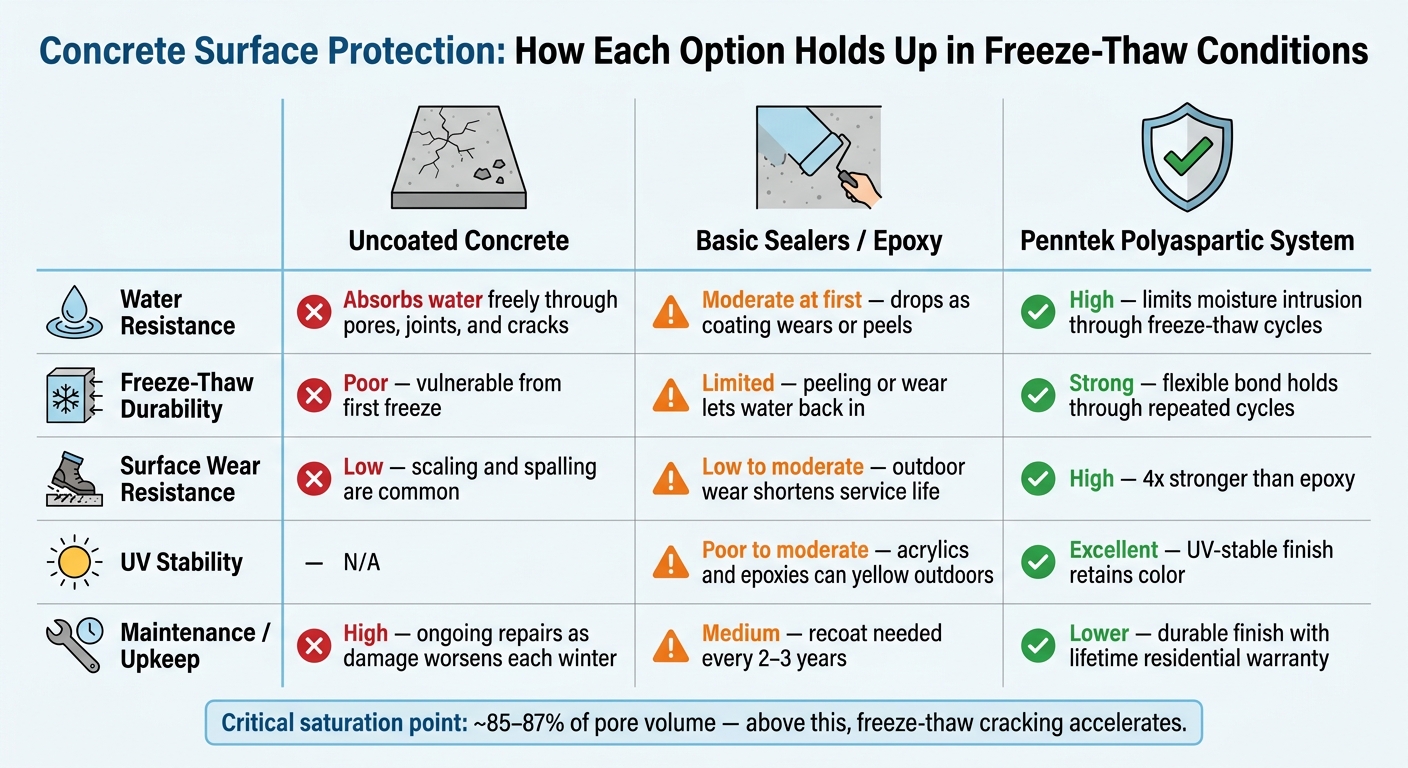
Uncoated Concrete vs. Basic Sealers vs. Polyaspartic Coating: Freeze-Thaw Performance
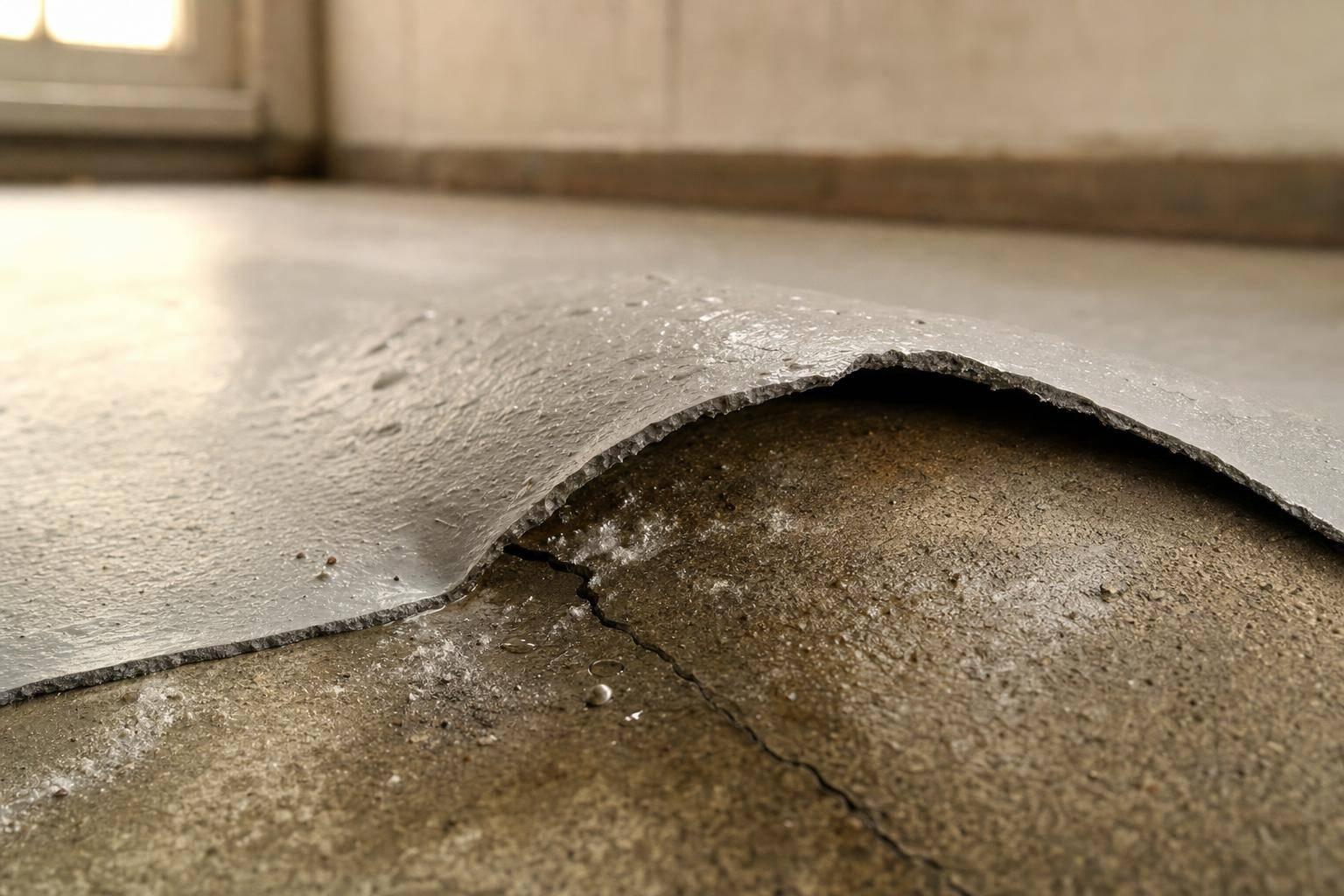
Once a surface opens up, the coating has one job: keep water out. If it can’t, the damage keeps moving. Water slips under the coating, freezes, and lifts the film. Then the gap gets bigger. That’s when you start seeing peeling, cracking, and worn-through spots. And once the coating breaks, water gets right back into the slab.
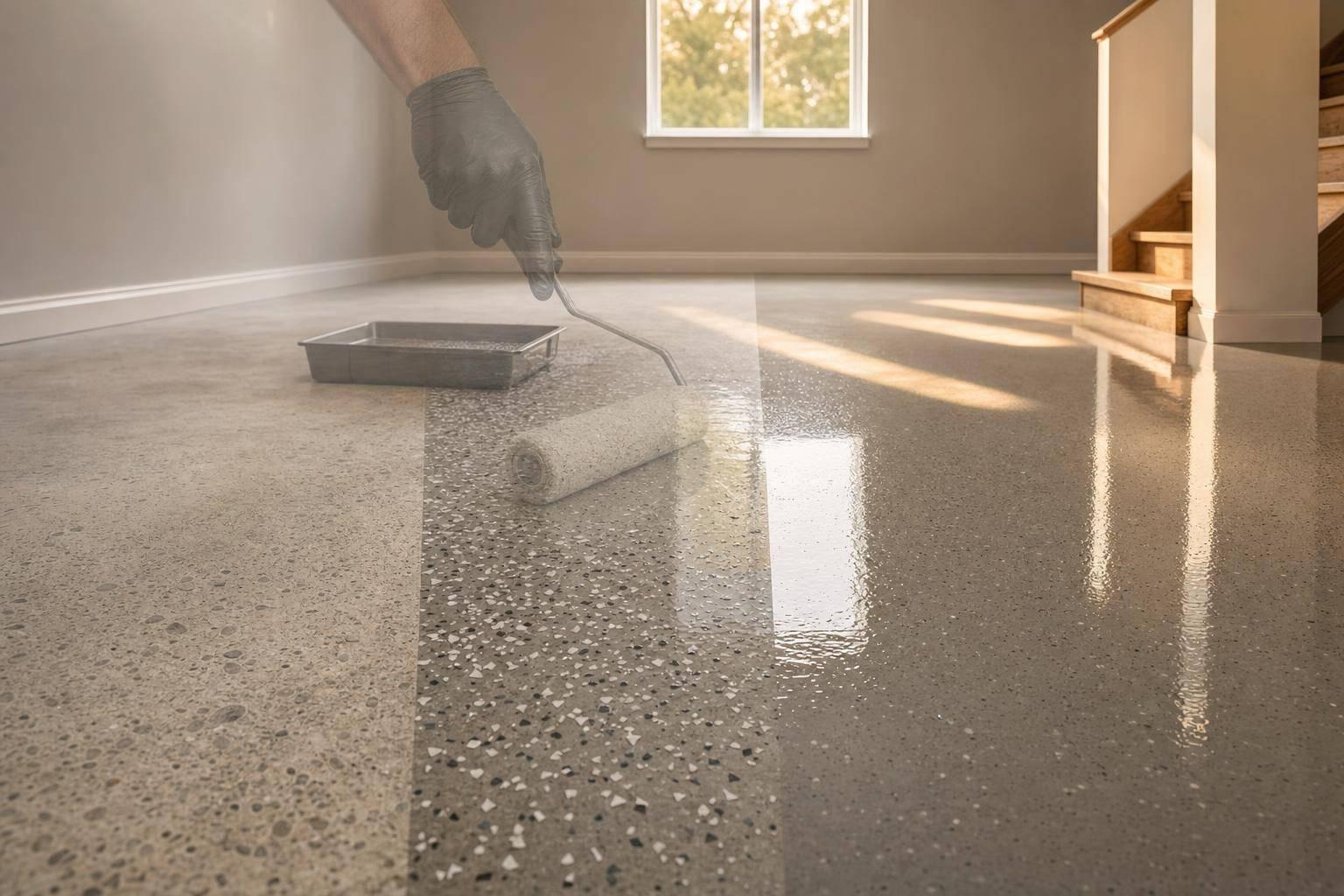
That’s why an outdoor coating has to stay bonded, flexible, and watertight through winter. Thin-film coatings and basic epoxies often don’t hold up outside for long. UV exposure can turn them yellow, and acrylic sealers often need to be reapplied after just 2 to 3 years. Polyaspartic coatings perform better here. Unlike standard epoxies, they stay flexible in low temperatures and keep their bond through repeated freeze-thaw cycles.
Croc Coatings installs Penntek Evolution in Coeur d’Alene, Spokane, the LC-Valley, and the Tri-Cities for patios and pool decks. The system is 4x stronger than epoxy, UV-stable, installed in one day, and backed by a lifetime residential warranty. Croc Coatings also offers a rubberized pool-deck finish for more traction and underfoot comfort.
Uncoated Concrete, Basic Sealers, And Penntek Systems Compared
The main difference comes down to this: after repeated freeze-thaw stress, does the surface still stay sealed?
| Feature | Uncoated Concrete | Basic Sealers (Acrylic/Epoxy) | Penntek System (Professionally Installed) |
|---|---|---|---|
| Water resistance | Absorbs water freely | Moderate, but drops as the coating wears | High – helps limit moisture intrusion |
| Freeze-thaw durability | Poor – vulnerable from the start | Limited – peeling or wear can let water back in | Strong – flexibility and adhesion hold through freeze-thaw cycles |
| Surface wear resistance | Low – scaling and spalling are common | Low to moderate – outdoor wear shortens service life | High – 4x stronger than epoxy |
| UV stability | N/A | Poor to moderate – acrylics and basic epoxies can yellow outdoors | Excellent – UV-stable finish |
Conclusion: Stop Freeze-Thaw Damage Before It Spreads
Freeze-thaw damage begins the moment water gets into concrete. After that, the pattern is pretty straightforward: water seeps in, freezes, expands, and makes the opening larger. What starts as light scaling can turn into spalling, and each winter adds more wear. At that point, the main job is simple: keep water out.
There’s good news, though. This cycle is often much cheaper to deal with early. A small repair now usually costs far less than waiting until a crack turns into a spalling joint.
Key Steps For Homeowners And Small Businesses
The next move is simple: cut down water entry before winter hits.
Start with drainage. Make sure the slab slopes at least 1/8 inch per foot away from the structure, and move downspouts so they don’t discharge onto the patio.
Then deal with cracks or scaling before the next freeze. Even small openings give water a straight path into the slab. Seal cracks with a flexible filler before winter.
It also helps not to leave outdoor concrete exposed through winter after winter. If a full coating system isn’t in the budget right now, a good sealer can buy you some time. For longer-term protection, a durable coating system is the strongest next step. Croc Coatings installs Penntek Evolution systems on patios and outdoor spaces across Coeur d’Alene, Spokane, the LC-Valley, and the Tri-Cities, with one-day installation and a lifetime residential warranty.
FAQs
How can I tell if freeze-thaw damage has already started?
Inspect the surface once a month for early warning signs like microcracks, chips, or peeling. Pay extra attention to expansion joints and drainage areas, since water tends to collect there first.
Also look for bubbling, blistering, delamination, ice buildup, or standing water. These issues can point to moisture getting in and early concrete damage.
Can a patio be repaired, or does it need replacement?
You don’t always need to replace your patio. If the slab has major structural damage or serious moisture problems, replacement may be the right call. But in many cases, a patio can be repaired and protected instead.
Croc Coatings repairs cracks and joints as part of its one-day installation process. Then the team applies the Penntek Evolution polyurea system, which helps bridge minor cracks and adds a tough, weather-resistant surface. That added layer can also help limit more freeze-thaw damage over time.
When should I seal or coat outdoor concrete before winter?
Seal or coat outdoor concrete before the first freeze hits. That simple step helps keep water out of open pores in the concrete. If water gets in, then freezes, it expands – and that can lead to cracks, chipping, and surface wear.
If you’re using a standard sealer, apply it only when the surface is fully dry and the temperature is at least 50°F. If you want longer-lasting protection, Croc Coatings offers the Penntek Evolution coating system, made for the Pacific Northwest climate.