Most industrial floors need medium texture, not the roughest finish. If I’m choosing for safety, cleaning, and traffic flow, I’d keep light texture for dry indoor areas, medium texture for production rooms, entries, and most aisles, and heavy texture only for wet, oily, or sloped zones like dock ramps and wash-down spaces.
Here’s the short version:
- Light texture: easiest to clean, easier on carts and pallet jacks, best for dry spaces when choosing anti-slip solutions for warehouses
- Medium texture: the best middle ground for many industrial areas
- Heavy texture: more grip in wet or greasy spots, but more dirt buildup and more scrub time
- Wet interior floors often use a target of 0.42 DCOF
- Docks and wet process areas may need wet SCOF of 0.6 or more
- Ramps can need up to 0.8 SCOF
- Texture, epoxy vs. polyurea coating thickness, aggregate size, and drainage all affect slip resistance
Industrial Floor Texture Levels: Light vs Medium vs Heavy Comparison Guide
Choosing and Applying Non-Slip Granules for Industrial Coatings
sbb-itb-a0e5ae3
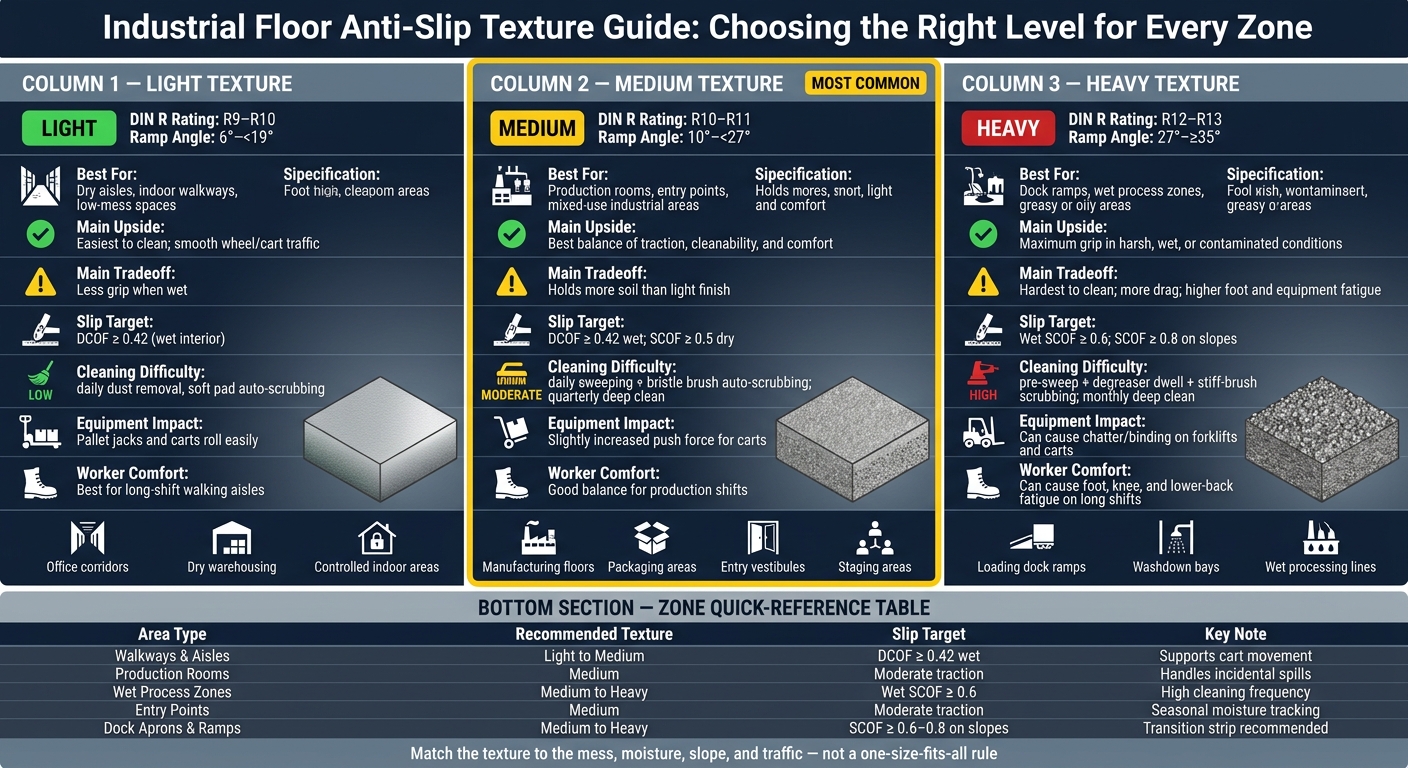
Quick Comparison
| Texture | Best for | Main upside | Main tradeoff | Common target range |
|---|---|---|---|---|
| Light | Dry aisles, indoor walkways, low-mess spaces | Easier cleaning and smoother wheel traffic | Less grip when wet | R9–R10 |
| Medium | Production rooms, entry points, mixed-use industrial areas | Good balance of traction, cleanability, and comfort | Holds more soil than light finish | R10–R11 |
| Heavy | Dock ramps, wet process zones, greasy areas | More grip in harsh conditions | Harder cleaning, more drag, more foot and wheel stress | R12–R13 |
If I had to boil the whole guide down to one point, it’s this: match the floor texture to the mess, moisture, slope, and traffic in each zone – don’t use one finish everywhere.
Industrial Slip Resistance Basics and Texture Ratings
Slip resistance on a coated concrete floor comes down to three things: surface roughness, broadcast aggregate, and drainage. Surface roughness is the fine texture of the coating itself. Broadcast aggregate – quartz, silica sand, or aluminum oxide particles added into the wet coat – gives the floor more bite underfoot. And drainage plays a big part, too. Even a textured floor can lose grip when a film of liquid builds up between the shoe and the surface.
DCOF is the field metric that tends to matter more because it measures friction while a person is already in motion. ANSI A326.3 sets 0.42 wet DCOF as the benchmark for level interior floors that may be walked on when wet. Higher targets apply to ramps or areas with oil.
The DIN 51130 R9–R13 rating system gives you a simple way to compare texture levels. It sorts floors by the angle at which a person walking on an oil-coated ramp starts to slip. The steeper the angle, the rougher the texture.
| DIN R Class | Approx. Ramp Angle | Texture Severity | Typical Use Case |
|---|---|---|---|
| R9 | 6°–<10° | Light | Dry indoor spaces, minimal contamination |
| R10 | 10°–<19° | Light to moderate | Occasional moisture, covered entries |
| R11 | 19°–<27° | Medium | Regular wet cleaning, light spills |
| R12 | 27°–<35° | Heavy | Oils, grease, food processing areas |
| R13 | ≥35° | Very heavy | Continuous heavy contamination, extreme industrial zones |
Use these ratings as a starting point. Then line them up with the amount of moisture, contamination, and foot or vehicle traffic in the space.
What Light, Medium, and Heavy Texture Mean in Practice
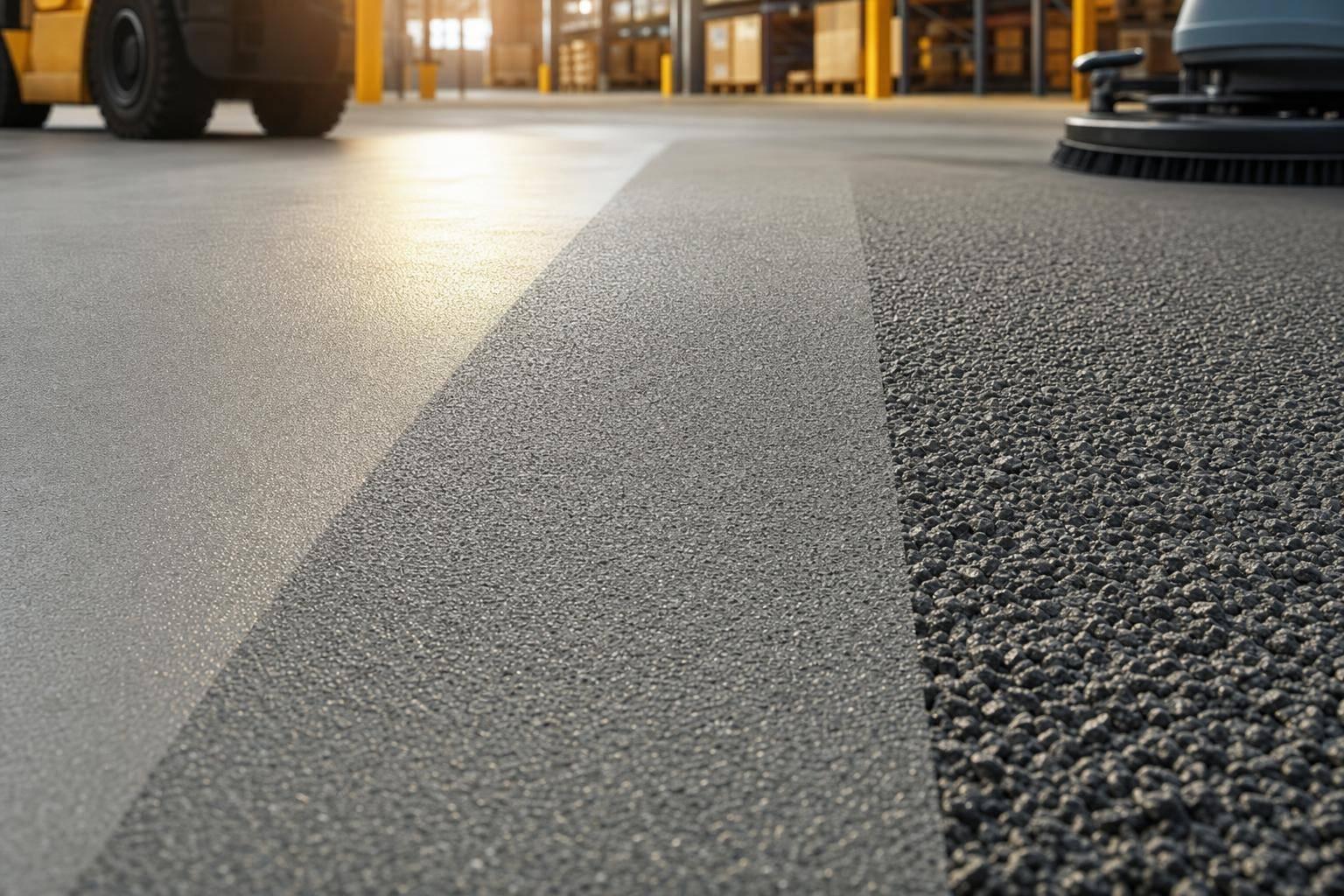
Light texture feels mostly smooth. There may be fine aggregate in the surface, but under work boots it’s barely noticeable. This type fits dry or slightly damp areas where easy cleaning is the top concern.
Medium texture is easier to feel. The aggregate comes through under normal work boots, but the floor can still be cleaned with standard autoscrubbers. It works well for intermittent moisture or light oil. In most cases, this lands in the R10–R11 range and fits general production and packaging spaces.
Heavy texture feels coarse right away. It’s meant for floors exposed to oil, grease, or near-constant moisture, which lines up with R12–R13 performance. The tradeoff is simple: these floors hold more soil, so they need tougher cleaning to stay sanitary and maintain their tested friction.
How Concrete Surface Profile Relates to Finish Selection
Before any coating is applied, the concrete has to be prepared to a set roughness level. That’s called Concrete Surface Profile (CSP). CSP affects both bond strength and the way the final texture turns out.
Thin-build systems – like standard polyaspartic or epoxy topcoats – usually need a lower CSP. If the profile is too aggressive, it can telegraph through the finish and leave texture that’s uneven, harder to clean, and less predictable for traction. Thick-build industrial systems, such as heavily filled broadcast coatings or trowel-applied mortars, need a higher CSP. That rougher base helps the coating and aggregate bond well enough to resist delamination under heavy loads.
Specify both the prep level and the finish target. That way, the whole system – from substrate to topcoat – performs the way you expect over time. Texture choice also affects cleaning effort and worker comfort, which the next section covers.
How Texture Affects Cleaning, Maintenance, and Worker Comfort
Once you’ve defined light, medium, and heavy texture, the next step is simple: figure out what each one changes on the floor. Texture affects traction, yes, but it also changes how hard the floor is to clean and how it feels to walk or drive over all day.
Cleaning Demands by Texture Level
Light textures are the easiest to clean because dirt and dust mostly stay on the surface. Medium textures hold more dust and light oil, which is why bristle brushes usually work better than pads. They can clean down into the surface instead of just skimming over it. Heavy textures take the most work. They usually need pre-sweeping, degreaser dwell time, and stiff-brush scrubbing.
Here’s the catch: if cleaning starts to slip, contaminants can fill the low spots, connect across the high spots, and cut friction even when the floor still looks textured.
| Texture Level | Cleaning Difficulty | Debris Retention | Typical Maintenance Needs |
|---|---|---|---|
| Light | Low | Minimal – soils sit on the surface | Daily dust removal; regular auto-scrubbing with soft pads and neutral cleaner |
| Medium | Moderate | Some trapping in fine texture | Daily sweeping and auto-scrubbing with bristle brushes; quarterly deep clean with stronger detergent |
| Heavy | High | Significant – grease and solids fill valleys | Pre-sweep, degreaser dwell time, slow stiff-brush scrubbing; monthly or more frequent deep clean |
Schedule matters. Cleaner choice matters too. Use products that work with the coating system, because harsh alkaline and acidic cleaners can soften the surface and wear the texture down over time.
How Textured Floors Affect Workers and Equipment Movement
The roughest texture isn’t always the right call, especially in dry, high-traffic spaces.
Heavy textures can create pressure points underfoot. Over long shifts, that can add to foot, knee, and lower-back fatigue. In dry production areas or long walking aisles, a medium texture often gives a better mix of safety and comfort, especially when paired with cushioned footwear or anti-fatigue matting at standing stations.
Equipment feels the difference too. Pallet jacks and carts move easily on light textures. Medium textures increase push force, especially with small, hard wheels. Heavy textures can cause chatter or binding, which slows movement.
Forklifts are even more sensitive. Solid tires and stiff suspensions pass surface irregularities straight into the machine and the operator, which increases vibration and tire wear. That’s why a medium profile often makes the most sense for main travel lanes. It helps with wet-condition traction without beating up the equipment. Heavier textures fit better in short, slow-speed areas like loading dock thresholds and wash-down rooms, where added grip is worth the trade-off.
Those trade-offs shape where each texture works best. The next step is matching light, medium, and heavy profiles to loading docks, walkways, production rooms, and entry points.
Matching Texture Levels to Specific Industrial Zones
Texture should follow the zone. A loading dock and an interior walkway don’t deal with the same hazards, so they shouldn’t get the same finish. Score each area for contamination, traffic, moisture, and underfoot comfort, then match the texture to that mix of risks. That’s the point where texture stops being a blanket rule and becomes a site-specific decision.
Loading Docks and Heavy-Traffic Service Areas
Dock aprons, ramps, and forklift approach zones are usually the highest-risk parts of the floor. They see rain, tracked-in snow, hydraulic fluid, and debris, so medium to heavy texture is the right starting point. For high-traction areas, aim for wet SCOF 0.6 or higher. On sloped ramps, the target should move up to SCOF 0.8.
A common setup is to use heavier texture at the ramp face and threshold, then move to a medium texture in the staging area. Add a short transition strip so the change in grip doesn’t feel abrupt.
Once the layout is mapped out, coating build and aggregate choice decide how well that texture stays in place over time. Use an industrial floor durability analyzer to find the best system for your environment.
Walkways, Production Rooms, and Entry Points
Interior aisles and controlled corridors usually don’t need heavy texture. Light to medium finishes are enough, with targets of wet DCOF 0.42 and dry SCOF 0.5. That gives you a floor that’s easier to clean, lets pallet jacks roll without extra drag, and helps keep fatigue in check during long shifts.
Production rooms usually call for medium texture because spills, overspray, and fine particulate are part of the day-to-day environment. Entry points also fit medium texture, since they have to deal with tracked-in moisture and changing seasonal conditions.
Use the table below as a quick starting point by zone.
| Area Type | Recommended Texture | Slip-Resistance Target | Key Notes |
|---|---|---|---|
| Walkways and aisles | Light to medium | DCOF ≥ 0.42 wet; SCOF ≥ 0.5 dry | Easy to clean; supports cart and pallet jack movement |
| Production rooms | Medium | Moderate traction | Handles incidental spills; scheduled cleaning needed |
| Wet process zones | Medium to heavy | Wet SCOF ≥ 0.6 | Higher cleaning frequency; stiff-brush scrubbing required |
| Entry points | Medium | Moderate traction | Moisture tracking from outdoors; seasonal conditions |
| Dock aprons and ramps | Medium to heavy | Wet SCOF ≥ 0.6; SCOF 0.8 on slopes | Rain, snow, and oil or hydraulic-fluid exposure; transition to medium at staging area |
Match the texture to the risk. Don’t over-roughen dry aisles, and don’t go too light on wet dock ramps.
The next step is picking the coating system that can hold that texture for the long haul, using a checklist for choosing high-traffic floor coatings to ensure lasting performance.
Selecting a Coating System and Finish for Long-Term Performance
How Coating Build, Aggregate, and Site Conditions Work Together
Once you’ve set the texture level, the next step is making sure the coating system can keep that finish in place under traffic and routine cleaning. This is where a lot can go wrong. If the build is off, you can lose the cleaning and comfort gains set up earlier. And when coating build and aggregate size don’t line up, the grit can either get buried in the film or wear loose over time. That match starts with coating thickness and aggregate size.
Here’s the basic fit:
- 60-grit aluminum oxide works with 1–3 mils DFT
- 36-grit fits 3–7 mils
- 24-grit is best for 5–10 mils
Material choice matters too. Aluminum oxide lasts longer than silica sand, which makes it a better pick for wet areas, chemical exposure, or zones with heavy traffic. From there, adjust for what the floor will actually face day to day: moisture, chemicals, and traffic intensity. Snow, rain, and mud during the year can push entry points and service areas into the medium or heavy texture range.
That doesn’t mean every part of the building needs the same system. In many cases, it makes more sense to vary the finish by zone. A production floor may do well with medium silica or aluminum oxide, while dock ramps and washdown bays may need a coarser broadcast. Before full installation, test patches in key spots help confirm both traction and cleanability.
Croc Coatings installs the Penntek Evolution system across North Idaho and Eastern Washington, using a 100% pure polyurea base coat with a polyurea/polyaspartic topcoat. That build bonds hard to concrete and stays flexible through temperature swings, which helps the floor perform when conditions move from cold to warm.
Conclusion: Match the Texture to the Space
Light texture keeps cleaning simpler and cuts down on fatigue in dry, controlled spaces. Medium texture fits the broadest range of industrial settings, including general manufacturing, warehousing, and production rooms where spills and forklift traffic are part of the day. Heavy texture earns its place only where slip risk is high enough to justify the extra cleaning effort, such as dock ramps, washdown bays, and wet processing lines.
The best finish gives you the traction you need without making cleaning or traffic more difficult than it has to be. When the traffic type, contamination level, maintenance plan, and safety target are clear, the texture choice usually becomes pretty obvious.
FAQs
How do I choose the right floor texture for each industrial area?
Match floor texture to each area’s traffic, moisture, and exposure with the CFT system.
- CFT-B (7–18 mils): best for walkways and production rooms
- CFT-C (19–30 mils): a fit for wet entry points
- CFT-D (31–50 mils): made for heavy-loading or contaminated zones
Also check DCOF:
- 0.42 minimum for interior spaces
- 0.65+ for ramps or inclined areas
What slip-resistance rating should I look for in wet or sloped spaces?
For wet, sloped spaces, aim for a minimum DCOF rating of 0.65.
Ramps, inclines, and similar areas carry more slip risk, so that higher mark helps provide the traction people need to move more safely.
In industrial settings, coatings with quartz-enhanced textures may also be used to get the right level of grip. Before you choose a coating, check that it meets these standards to support workplace safety and compliance.
How does floor texture affect cleaning, worker comfort, and equipment movement?
Floor texture affects safety, cleaning, and day-to-day efficiency. More texture usually means better traction, which matters a lot in wet or oily areas.
But there’s a trade-off. Rougher floors can trap dirt and debris, which makes cleaning harder and slower.
If the surface is too rough, it can also wear people down over the course of a shift. On top of that, carts and pallet jacks may take more effort to move, which can slow work and add strain.
The best move is to match the floor texture to the space. That way, each area gets enough grip for safer footing without making cleaning tougher or equipment movement less smooth.