Key Takeaways
- Cost by surface: A standard two-car garage runs $2,000–$5,800; patios average $1,400–$3,600; driveways $2,800–$7,200; basements $3,500–$13,500; pool decks $2,100–$5,400; and walkways $350–$1,350 — all based on professional polyurea installation at $7–$9/sq ft.
- Cost by material: Epoxy coatings range $5–$7/sq ft installed; polyurea (Croc Coatings’ specialty) runs $7–$9/sq ft and is 4x stronger than epoxy; polyaspartic runs $8–$12/sq ft; acrylic is the budget option at $3–$5/sq ft.
- DIY vs. pro: DIY saves $5–$10/sq ft in labor, but 80% of coating failures stem from improper surface preparation — the step DIYers most often get wrong.
- Calculator scope: The tool above estimates cost based on square footage, coating type, and install method. It does not factor in extreme surface damage, regional labor differences, or decorative add-ons — budget 15–40% extra for flakes and custom colors.
Concrete Coating Costs by Surface Type
Every concrete surface has its own size range, wear pattern, and preparation requirements — and those differences show up in the final bill. Below is what you can expect to pay for professional polyurea installation across the six most common residential surfaces.
| Surface | Typical Size | Installed Cost (Polyurea) | Key Cost Driver |
|---|---|---|---|
| Garage Floor | 400–600 sq ft | $2,000–$5,800 | Oil-stain remediation, expansion joints |
| Patio | 200–400 sq ft | $1,400–$3,600 | UV exposure, decorative flake add-ons |
| Driveway | 400–800 sq ft | $2,800–$7,200 | Surface area, vehicle-weight durability needs |
| Basement | 500–1,500 sq ft | $3,500–$13,500 | Moisture mitigation, vapor-barrier requirements |
| Pool Deck | 300–600 sq ft | $2,100–$5,400 | Slip-resistant texture, UV and chemical resistance |
| Walkway | 50–150 sq ft | $350–$1,350 | Narrow access, edge-detailing labor |
Garage Floors
Garage floors are the most common coating project — and the one with the widest price spread. A standard two-car garage (roughly 400 square feet) runs $2,000–$5,800 for professional polyurea installation. Three-car garages (600+ square feet) push into the $2,900–$8,600 range. The variance comes down to surface condition: floors with heavy oil staining, spalling, or old paint that needs grinding add prep labor.
If you’re specifically researching garage floor costs, our garage floor coating cost calculator goes deeper on garage-only pricing, including size-specific breakdowns and coating-type comparisons for that surface.
Patios
Patios typically run 200–400 square feet, landing at $1,400–$3,600 for polyurea. Outdoor exposure drives two cost factors here: UV-stable topcoats (standard with polyurea, which won’t yellow or chalk like epoxy) and decorative upgrades. Homeowners adding custom color blends or full-flake broadcast should budget an extra 15–40% on top of the base coating cost.
Driveways
At 400–800 square feet, driveways are among the largest coated surfaces — and the most demanding. They need enough film thickness to handle vehicle weight, hot-tire pickup resistance, and freeze-thaw cycles in North Idaho and Eastern Washington winters. Expect $2,800–$7,200 depending on square footage and whether the slab needs crack repair or leveling first. Polyurea’s flexibility makes it the better choice here over rigid epoxy, which can crack as the slab moves.
Basements
Basements are the wildcard: square footage varies enormously (500–1,500+ square feet), and moisture is the make-or-break variable. A dry, well-cured basement floor at 800 square feet might run $5,600–$7,200. But if moisture-vapor transmission is high, you’ll need a moisture-mitigation system before coating — adding $1–$3 per square foot. That pushes a large basement toward $10,000–$13,500. Skipping this step guarantees coating failure; it’s not a corner worth cutting.
Pool Decks
Pool decks demand slip resistance and chemical tolerance (chlorine, salt, sunscreen). At 300–600 square feet, polyurea runs $2,100–$5,400. The non-slip texture is built into the topcoat — you’re not paying extra for it — but decorative quartz or granite blends can add $1–$2 per square foot. UV stability matters here too; epoxy will chalk and yellow around a pool within a season or two.
Walkways
Walkways are the smallest surface, typically 50–150 square feet, running $350–$1,350. The cost per square foot runs higher than larger surfaces because the fixed costs of mobilization and edge detailing don’t scale down proportionally. Pairing a walkway with a patio or driveway project is the most cost-effective approach — the contractor is already on site.
Concrete Coating Cost by Material Type
The coating material you choose is the single largest factor in both upfront price and long-term value. Here’s how the four main options compare.
| Coating Type | Material Cost/sq ft | Installed Cost/sq ft | Lifespan | UV Stable | Best For |
|---|---|---|---|---|---|
| Acrylic | $1–$3 | $3–$5 | 3–5 years | Yes | Light-use patios, walkways |
| Epoxy | $3–$7 | $5–$7 | 10–15 years | No | Indoor garages, basements |
| Polyurea | $4–$8 | $7–$9 | 20+ years | Yes | All surfaces, indoor and outdoor |
| Polyaspartic | $5–$10 | $8–$12 | 15–20 years | Yes | High-traffic commercial, rapid-cure needs |
Epoxy
Epoxy is the coating most homeowners have heard of — and for good reason. At $5–$7 per square foot installed, it’s the entry point for durable concrete protection. It bonds well, resists chemicals, and handles garage traffic. The tradeoffs: epoxy cures slowly (days, not hours), turns yellow under UV exposure, and becomes brittle over time — making it a poor choice for outdoor surfaces or freeze-thaw climates. See our full epoxy-vs-polyurea cost comparison for a deeper breakdown.
Polyurea
Polyurea is what Croc Coatings installs — and the performance gap with epoxy is substantial. It’s up to 4x stronger, cures in hours instead of days, stays flexible through freeze-thaw cycles, and won’t yellow in direct sun. At $7–$9 per square foot installed, it costs more upfront but lasts 20+ years with a lifetime manufacturer warranty. For homeowners planning to stay in their home, the lifecycle math favors polyurea: recoating epoxy every 10–15 years adds up fast.
Polyaspartic
Polyaspartic is polyurea’s faster-curing cousin — it can be walkable in under an hour, which is why commercial contractors love it for overnight jobs. At $8–$12 per square foot installed, it’s the most expensive option. For residential use, the speed advantage rarely justifies the premium over standard polyurea unless you have a hard deadline. Our best-garage-floor-coating comparison walks through when polyaspartic earns its keep.
Acrylic
Acrylic is the budget entry point at $3–$5 per square foot installed. It’s water-based, goes down fast, and looks fine for light-duty surfaces. But with a 3–5 year lifespan — and zero chemical or abrasion resistance — it’s a temporary cosmetic fix, not a protective floor. Most homeowners who start with acrylic end up replacing it with a polyurea or epoxy coating within a few years.
What Factors Drive the Final Price?
Even with the calculator giving you a solid baseline, several variables move the needle on your actual quote. Here’s what contractors look at.
Surface Preparation
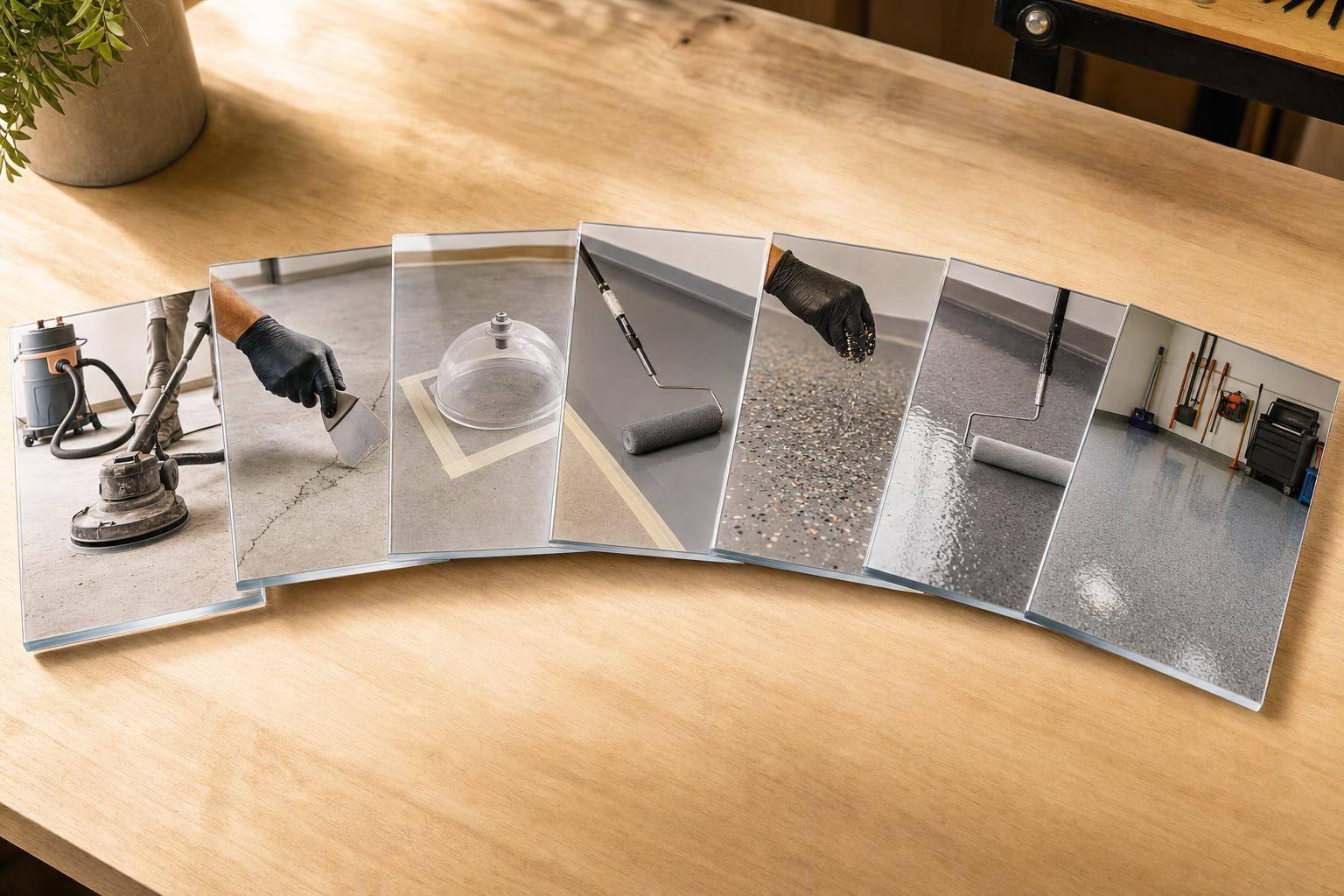
This is the single biggest variable — and the one most estimates gloss over. If your concrete is clean, sound, and uncoated, prep might cost $0.50–$1 per square foot (diamond grinding and profiling). But if the slab has old paint, adhesive residue, efflorescence, or active moisture, prep can run $2–$4 per square foot. Here’s the stat every homeowner should know: 80% of floor coating failures are caused by improper surface preparation, with application issues at 15% and material defects at just 5%. The prep line item isn’t where you want the lowest bid. Read our full surface preparation guide for what proper prep actually involves.
Square Footage
Larger projects cost more in total but less per square foot — the fixed costs of mobilization, equipment, and setup spread across more area. A 200-square-foot patio might run $8–$9 per square foot, while an 800-square-foot basement from the same contractor could drop to $7 per square foot.
Coating Material
As covered above, your material choice swings the per-square-foot price by $2–$7. But price isn’t the whole story — lifespan, warranty coverage, and UV stability are the real value drivers.
Labor: DIY vs. Professional
Labor accounts for $5–$10 per square foot of a professional quote. You can eliminate that by going DIY — but you also eliminate the warranty, the equipment, and the expertise. More on that tradeoff below.
Decorative Add-Ons
Full-flake broadcast, metallic finishes, custom color matching, quartz blends, and saw-cut scoring all add cost — typically 15–40% above the base coating price. These are aesthetic upgrades, not structural ones, so they’re entirely optional. Our cost-factors breakdown details which add-ons deliver the most visual impact per dollar.
Regional Labor Rates
National cost guides use averages that don’t reflect local markets. In North Idaho and Eastern Washington — Croc Coatings’ service area covering Coeur d’Alene, Spokane, Sandpoint, and the Tri-Cities — labor rates run below coastal metros but above the national median. That means a national website’s "average garage coating cost" may understate what you’ll actually pay by 10–20%. Getting a local quote is the only way to pin down the real number.
DIY vs. Professional Installation: The Real Cost Comparison
On paper, DIY looks like the clear winner. You buy the kit for $200–$600, spend a weekend on it, and save $5–$10 per square foot in labor. A 400-square-foot garage: $2,000–$4,000 saved. That’s real money.
Here’s what the spreadsheet doesn’t show:
Equipment rental. Diamond grinders, shot blasters, industrial vacs, and moisture meters aren’t in the kit box. Renting proper surface-prep equipment runs $100–$300 per day — and you’ll need it for at least a day.
The 80% problem. Industry research shows that 80% of coating failures trace back to surface preparation — not the coating material itself. DIYers typically underestimate what "clean and profiled" concrete actually requires. A floor that looks clean to the naked eye may still have invisible contaminants, moisture, or a weak surface layer that prevents bonding. When the coating peels in six months, the money you saved on labor goes into removal and re-coating — which costs more than doing it right the first time.
No warranty. Professional polyurea installations through Croc Coatings carry a lifetime manufacturer warranty. A DIY kit comes with whatever the hardware store offers — typically 90 days to a year, and only covering material defects, not application failures.
Time and risk. A professional crew installs a garage floor in one day. A DIY job typically eats a full weekend — plus cure time — and still may show roller marks, uneven thickness, or missed spots. For outdoor surfaces, the weather window adds another layer of risk that pros manage daily.
The honest answer: DIY can work for a small, low-stakes surface like a utility-room floor or a walkway where appearance doesn’t matter much. For garages, patios, basements, and pool decks — surfaces you’ll look at and use every day — the long-term savings of professional installation justify the upfront premium. Read our full DIY-vs-pro comparison for a deeper dive.
How to Use This Calculator
The calculator at the top of this page gives you a realistic starting range — not a binding quote. Here’s how to get the most from it:
- Measure your square footage. Length × width in feet. For irregular shapes, break the area into rectangles and add them together. Round up — it’s better to overestimate slightly.
- Choose your coating type. Epoxy, polyurea, or acrylic. The calculator adjusts material and labor costs for each.
- Select install method. "Professional" factors in labor at regional rates. "DIY" strips out labor but keeps material costs.
- Review the estimate. The number you see covers standard installation on concrete in good condition. It does not include: severe crack repair, moisture mitigation, decorative upgrades, or substrate leveling.
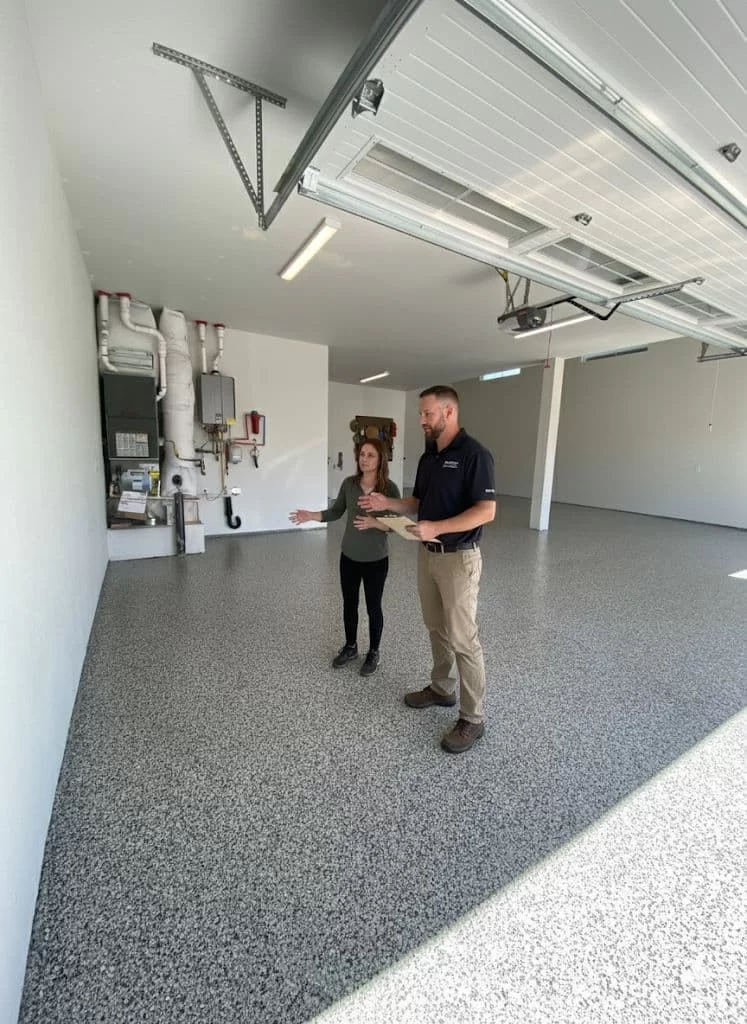
What comes next. The calculator gives you a budget. An exact quote requires an in-person look at your concrete — its condition, moisture levels, and any hidden issues that affect the job. Croc Coatings offers free in-home consultations across North Idaho and Eastern Washington. There’s no obligation, and you’ll walk away with a firm price, not an estimate. Financing is available at 0% interest for 12 months for qualified homeowners.
Frequently Asked Questions
How much does concrete coating usually cost?
Across all surface types and materials, professional concrete coating runs $5–$12 per square foot installed. Epoxy sits at the low end ($5–$7/sq ft), polyurea in the middle ($7–$9/sq ft), and polyaspartic at the high end ($8–$12/sq ft). For a typical two-car garage at 400 square feet, that translates to $2,000–$5,800 depending on material choice and floor condition.
How much does it cost to epoxy a 20×20 garage floor?
A 20×20 garage is 400 square feet. At $5–$7 per square foot for professional epoxy installation, expect $2,000–$2,800. If the floor needs heavy prep — old paint removal, oil-stain treatment, crack repair — the total can reach $3,200–$3,600. Note that polyurea at $7–$9 per square foot brings the same floor to $2,800–$3,600, and the difference buys you 4x the durability and a lifetime warranty.
Is concrete coating worth the money?
For most homeowners, yes — but it depends on the coating you choose. A quality polyurea coating at $7–$9 per square foot protects the slab from moisture, salts, oils, and freeze-thaw damage for 20+ years. Over that lifespan, replacing spalled or cracked concrete would cost far more. The math is less favorable for acrylic ($3–$5/sq ft, 3–5 year lifespan) — you’ll pay to redo it several times over the same period. Our long-term savings analysis breaks down the 20-year cost of each option.
How long do concrete coatings last?
Lifespan varies sharply by material: acrylic lasts 3–5 years, epoxy 10–15 years, polyaspartic 15–20 years, and polyurea 20+ years. UV exposure, traffic level, and surface preparation quality all affect real-world longevity. Professional polyurea installations with proper prep routinely outlast their warranty period — which, in Croc Coatings’ case, is a lifetime manufacturer warranty.
How much would it cost to coat 1,000 square feet?
At $7–$9 per square foot for professional polyurea, 1,000 square feet runs $7,000–$9,000. At epoxy pricing ($5–$7/sq ft), the same area runs $5,000–$7,000. Large projects like this — typically a full basement or oversized driveway — often benefit from a lower per-square-foot rate due to scale efficiencies. An in-person quote will reflect the actual condition of the slab, which is the real cost driver at this size.