Concrete control joints are critical for managing cracks in floors, but leaving them unfilled can lead to damage like spalling and debris buildup. Two popular materials for filling these joints are polyurea and epoxy, each with distinct advantages depending on your needs.
Key Takeaways:
- Polyurea: Cures in 1–2 hours, handles extreme temperatures (down to -40°F), and offers superior abrasion resistance, making it ideal for high-traffic and cold storage areas. However, it requires precise application and is harder to remove.
- Epoxy: Easier to apply manually, bonds to damp concrete, and is simpler to remove, but it cures slower (4–8+ hours) and wears faster under heavy traffic.
Quick Comparison:
| Feature | Polyurea | Epoxy |
|---|---|---|
| Cure Time | 1–2 hours | 4–8+ hours |
| Temperature Range | Down to -40°F | Above 32°F–40°F |
| Durability | High abrasion resistance | Moderate abrasion resistance |
| Flexibility | Up to 400% elongation | 25%–90% elongation |
| Service Life | 10–15+ years | 5–10 years |
| Cost | $7–$12/sq. ft. | $3–$7/sq. ft. |
For faster results and long-term durability, polyurea is the better choice, especially in demanding environments like warehouses or freezers. Epoxy works well for less critical areas where ease of application and removal are priorities.
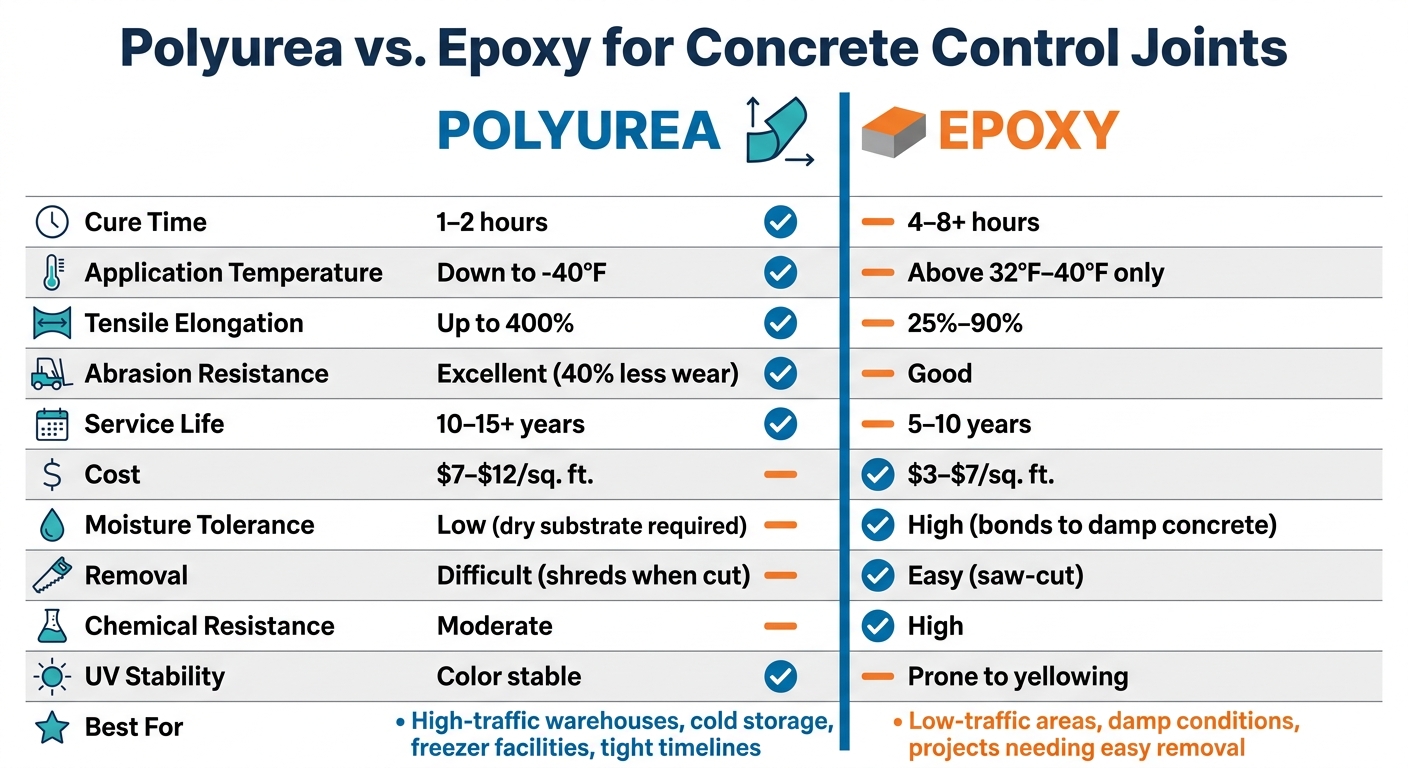
Polyurea vs Epoxy Control Joint Fillers: Side-by-Side Comparison
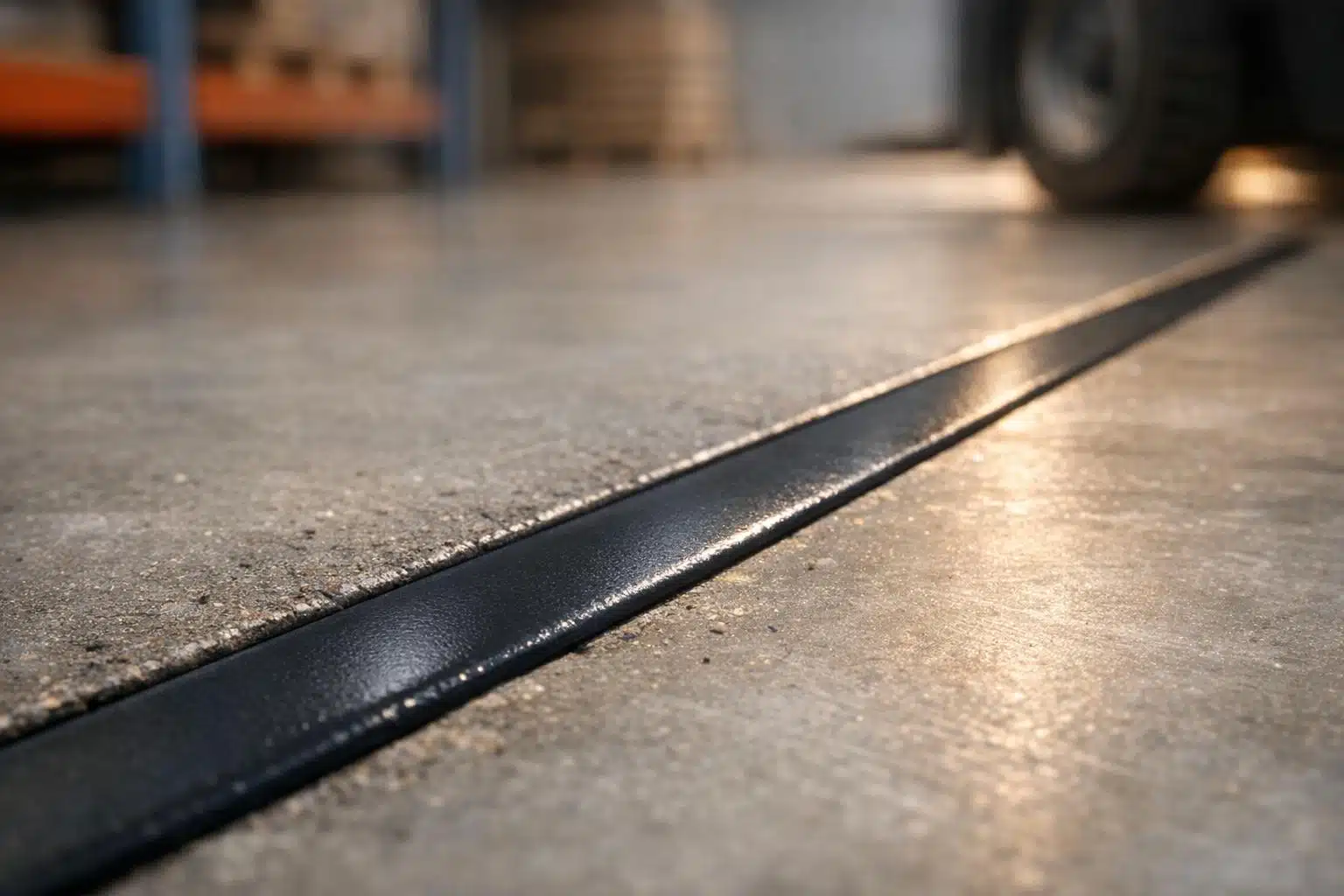
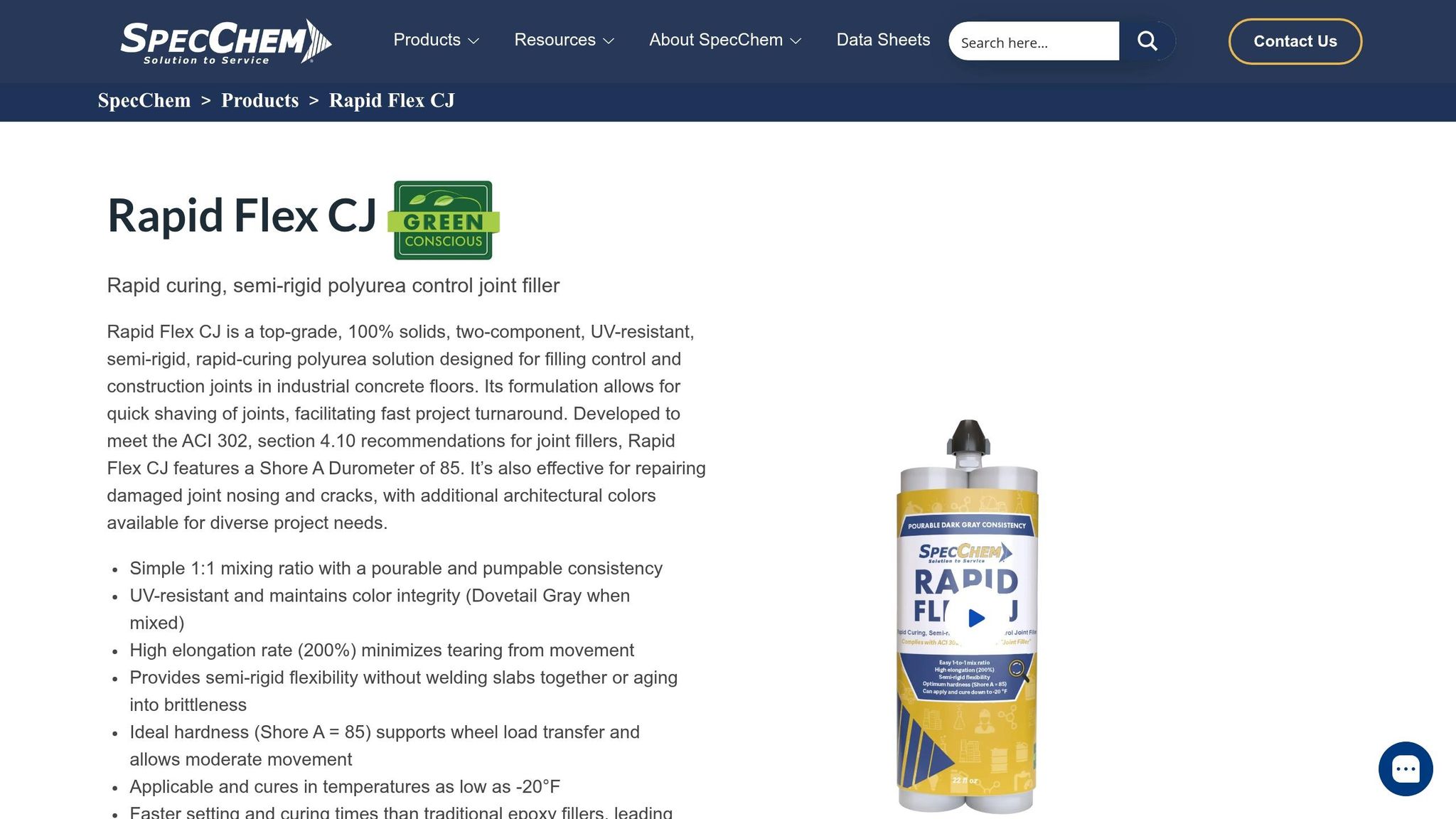
Rapid Flex CJ Semi-rigid, Rapid-curing, Polyurea Control Joint Filler: Application
sbb-itb-a0e5ae3
1. Polyurea Joint Fillers
Polyurea is a two-component thermoset material that cures quickly through a chemical reaction rather than relying on evaporation or temperature changes. This makes it ideal for facilities where downtime needs to be minimized.
Some of its standout features include fast curing, flexibility, durability, and the ability to perform well in extreme temperatures, making it one of the top industrial floor coatings available.
Cure Time
One of polyurea’s biggest advantages is how fast it cures. Joints can be reopened to traffic in just 1–2 hours. Its pot life, measured in mere seconds, requires the use of specialized equipment like a meter-mix pump (e.g., Model C). After application, the material can be shaved flush with the floor, saving time and labor during installation.
Flexibility
Polyurea strikes a balance between hardness and flexibility, effectively protecting joint edges while accommodating the natural movement of concrete slabs. With a tensile elongation of 200% to 400%, it can stretch under tension without cracking. Its lateral expansion is limited to 5%–15%, which prevents excessive separation. Even when separation does occur, polyurea detaches cleanly on one side, unlike the uneven cracking patterns seen with more rigid materials.
Abrasion Resistance
Polyurea outperforms epoxy fillers in abrasion resistance. In Taber abrasion tests, it demonstrates 40% less weight loss after 1,000 cycles compared to epoxy fillers. John Bors of ChemCo Systems highlights this durability:
"Tested in a standard Taber test rig, they [polyureas] may exhibit 40% less weight loss after 1000 cycles than control joint epoxies."
This exceptional durability makes polyurea a go-to choice for industrial and warehouse floors, where constant traffic from forklifts and steel-wheeled carts can wear down other materials.
Traffic Readiness
Polyurea also excels in cold environments, curing at temperatures as low as -25°F. This makes it especially useful for cold storage facilities and walk-in freezers. Once applied and shaved flush, it creates a smooth, seamless surface across the joint. Equipment can roll over it without catching edges, reducing the risk of further concrete damage or disruptions.
2. Epoxy Joint Fillers
Epoxy is a two-part system designed for filling control joints. Unlike polyurea, it offers a longer working time, making it easier to apply manually without needing specialized equipment like a meter-mix pump.
Cure Time
Epoxy takes longer to cure compared to polyurea, often requiring several hours or even days to fully set. It needs ambient temperatures above 32°F to 40°F to cure properly. This sensitivity to temperature makes it less ideal for cold storage or freezer environments.
Flexibility
Epoxy is considered semi-rigid, with an elongation rate of about 25%. However, it struggles when joint expansion exceeds 5%–8%, often failing in a leap-frog pattern under such conditions.
Abrasion Resistance
Epoxy fillers typically achieve a Shore A hardness of 80 to 85, meeting the minimum standard for concrete floor joint fillers. This level of hardness provides excellent edge protection in settings with heavy point loads, such as steel-wheeled pallet jacks. According to John Bors of ChemCo Systems:
"Most semi-rigid epoxies are harder (higher durometer) than comparable polyureas. This may be a critical factor in uses when there is high point loading across floor joints such as the steel wheels on some pallet jacks."
That said, Taber abrasion tests indicate that epoxy experiences about 40% more weight loss than polyurea, highlighting a potential drawback.
Traffic Readiness
The slower curing process of epoxy means joints remain inaccessible for longer periods, potentially delaying project completion. On the plus side, epoxy bonds well to damp or slightly contaminated concrete, as minor moisture doesn’t interfere with its polymerization. If a replacement is ever needed, epoxy can be cleanly removed with a saw, unlike polyurea, which tends to shred when cut. These factors make epoxy a solid choice for some applications, though its limitations should be carefully considered.
Pros and Cons of Each Material
Polyurea and epoxy are both strong contenders for flooring solutions, but their strengths shine in different scenarios. Your choice should depend on factors like temperature, traffic levels, and specific floor requirements.
Polyurea stands out for its speed. According to Gary Gutierrez, Owner of American River Caulking Inc.:
"Because polyureas… cure so quickly, we can fill the joints during a lunch hour, and the concrete slab can be returned to service that afternoon."
This rapid curing process makes polyurea ideal for projects with tight timelines. It also offers superior polyurea vs epoxy freeze-thaw resistance in extreme cold, with some formulas curing at temperatures as low as -40°F. This makes it a popular choice for freezer warehouses and cold storage facilities. However, polyurea has its challenges. It demands strict moisture control and precise mixing – even a small error (3%–6%) can lead to foaming and reduced performance. Additionally, removing polyurea is no easy task; it tends to shred when cut with a saw.
Epoxy, on the other hand, offers flexibility and ease of application. It can bond to damp concrete, has a wider margin for application errors, and is much easier to remove when repairs are needed. However, epoxy’s curing process is slower, often requiring extra time and even a return visit for a second application. As Gutierrez explains:
"Applying epoxy usually takes two applications, which would require my work crew to return the next day after curing."
Epoxy’s service life ranges from 5 to 10 years, compared to polyurea’s 10 to 15+ years. Still, it offers strong chemical resistance and is easier to work with in certain conditions.
Here’s a side-by-side comparison to make the differences clearer:
| Feature | Polyurea | Epoxy |
|---|---|---|
| Cure Time | 1–2 hours to traffic | 4–8+ hours |
| Application Temp | Down to -40°F | Generally above 32°F–40°F |
| Tensile Elongation | Up to 400% | 25%–90% |
| Lateral Expansion | 5%–15% | 5%–8% |
| Abrasion Resistance | Excellent (40% less wear than epoxy) | Good |
| Chemical Resistance | Moderate | High (acids, solvents, oxidizers) |
| UV Stability | More color stable | Prone to yellowing |
| Moisture Tolerance | Low (dry substrate required) | Higher (bonds to damp concrete) |
| Service Life | 10–15+ years | 5–10 years |
| Removal | Difficult (shreds) | Easy (saw-cut) |
Polyurea offers unmatched speed, flexibility, and durability, while epoxy shines in chemical resistance, moisture adaptability, and ease of removal. The best choice depends on your specific floor conditions and how much downtime your project can handle.
Conclusion
Polyurea offers exceptional performance for control joints in high-traffic environments. Its impressive hardness and abrasion resistance ensure reliable protection even under the most demanding conditions.
Sid Arthur, Owner of Sid’s Sealants, highlights its benefits:
"For high-traffic warehouses and loading docks, forklift wheels and forks can hit the concrete slab control joints all too often, causing big spalls. [Polyurea] provides additional protection from heavy, hard wheel dollies and forklift traffic."
While the upfront cost of polyurea ranges from $7–$12 per sq. ft. compared to epoxy’s $3–$7, its 15–20+ year lifespan significantly reduces long-term expenses. In the same 20-year span, epoxy may require 4–6 replacements, whereas a single polyurea application often lasts the entire period. This durability, coupled with reduced maintenance downtime, makes polyurea a cost-efficient choice for demanding settings.
John Bors of ChemCo Systems emphasizes another key benefit:
"Since time is money and finishing the floor is one of the last steps prior to opening, the faster cure speed of the polyurea is often the most valuable benefit."
From its quick curing time to its extended service life, polyurea outperforms epoxy in both performance and economic value. For cold storage facilities, freezer warehouses, or any setting where minimizing downtime is critical, polyurea’s ability to cure at temperatures as low as -40°F and return to service within hours makes it an ideal solution.
For more details about how polyurea can enhance the durability of your concrete joints, visit Croc Coatings or check out the Croc Coatings YouTube channel for in-depth videos.
FAQs
Do I need to fill control joints at all?
Filling control joints is a smart way to extend the life of a concrete slab. These joints are designed to handle movement caused by temperature changes or shrinkage, but if left unfilled, they can collect debris or develop cracks and spalling over time. Using fillers like polyurea not only protects the slab from damage but also allows the joints to flex with movement. This makes polyurea a great choice, especially for areas with heavy traffic or industrial use.
What prep is required before applying polyurea?
Before applying polyurea, it’s important to make sure the surface is thoroughly cleaned and free of contaminants such as dust, dirt, grease, or oil. Proper preparation is key to achieving strong adhesion and long-lasting durability for the coating. Skipping this step can compromise how well the polyurea bonds and functions.
Can polyurea be repaired or removed later?
Polyurea can indeed be repaired or removed, but success hinges on proper surface preparation and application. If the surface isn’t clean or has contaminants, issues like separation from the substrate can occur. Taking the time to prepare the surface thoroughly ensures a stronger bond, reduces the risk of problems, and makes any necessary repairs or removal much simpler in the future.