If your polyurea floor fails, a lifetime warranty can save you from a big repair bill and a lot of guesswork. In most cases, the main covered issues are peeling and delamination, while damage from dropped tools, polyurea vs. epoxy for concrete crack repair, and some moisture-related problems is often on you.
Here’s the short version:
- Polyurea floors are built for hard use in garages, patios, basements, shops, and light commercial spaces.
- Even so, repairs still happen from impact, chemicals, hot tires, UV, water, and freeze-thaw stress.
- A lifetime residential warranty can help if the problem is tied to coating failure, not normal wear or accidental damage.
- Most approved repairs are local patch-and-recoat jobs, not full replacements.
- Polyurea can stretch about 400% to 600% before breaking, which helps it handle slab movement better over time.
- Over 15–20+ years, a warranty-backed floor may cost less to own than bare concrete or a coating with no warranty.
If I were checking a floor issue, I’d focus on three things first:
- What kind of damage is it?
- Does the written warranty cover that type of failure?
- Do I have photos, install records, and the warranty paperwork ready?
A lifetime warranty does not make a floor damage-proof. But it does make repairs more predictable, cuts surprise costs, and gives you a clear next step when something goes wrong.
Problems with a Polyurea Concrete Coating (or Polyaspartic)
sbb-itb-a0e5ae3
Common Polyurea Floor Problems That Lead to Repairs
Most polyurea repairs come down to surface damage in one spot, not a failed concrete slab underneath. That distinction matters. If the damage stays limited to a small area, the fix is often pretty simple. Here are the issues that most often lead to repairs.
Impact, Abrasion, and Surface Wear From Daily Use
Dropped tools like wrenches and drills can chip the coating. Heavy equipment dragged across the same route over and over can leave scuff marks or worn tracks, especially near a garage door threshold or along a pallet jack path in a commercial space.
With a properly installed polyurea system, this kind of damage usually stays in the top layer. That makes it much easier to patch without dealing with the slab itself.
Not every repair starts with impact, though. Some start with contamination, which is a common way to prevent polyurea coating failures before they start.
Chemical Exposure, Hot Tires, and Edge Peeling
Polyurea stands up well to oil, gasoline, and salt. But if spills sit too long, they can stain the surface or soften the topcoat. Strong cleaners and battery acid are the most common causes of this kind of surface damage when they’re left in place.
Hot tire pickup is another red flag. It usually points to poor surface prep, contamination, or too much moisture in the slab, not normal day-to-day wear. The same goes for peeling at thresholds or joints. In most cases, that traces back to prep or moisture trouble rather than ordinary use.
Exterior slabs deal with a different mix of problems, with weather and moisture leading the list.
Outdoor Weather Damage in North Idaho and Eastern Washington
Outdoor slabs in North Idaho and Eastern Washington take a beating from UV exposure, freeze-thaw cycles, and water intrusion. A UV-stable polyurea topcoat can handle those conditions well, but water can still slip in through an unsealed crack, a low spot, or a damaged section near a downspout.
Once water gets under the coating and freezes, it can lead to blistering or lifting.
That’s why these damage patterns matter so much when it’s time to look at warranty terms for a repair.
How a Lifetime Warranty Changes the Repair Process
Polyurea Floor Warranty Repairs vs. No Coverage: Cost & Risk Breakdown
Knowing what your warranty covers – and what it doesn’t – can change everything when a floor fails. Once damage shows up, the repair process usually comes down to one thing: does the issue fit the warranty terms?
A warranty gives you a clearer path when that moment comes. Instead of starting from scratch, you already know the rules, the contact point, and the basic repair route.
What Lifetime Coverage Typically Includes and Excludes
For a polyurea floor, a lifetime warranty generally covers failures such as peeling and delamination. That’s the kind of problem people usually worry about most.
Just as important are the items that are often left out. Damage from dropped tools, moisture issues that weren’t handled during prep, and slab movement or cracking usually aren’t covered. Claims can also be denied if moisture testing or surface prep was skipped.
That last point matters more than many homeowners think. A warranty is only as good as the install behind it.
Who stands behind the warranty matters too. A manufacturer-backed warranty – like the one behind the Penntek Evolution system used by Croc Coatings – gives you added support if the installer is no longer in business.
What a Warranty Repair Typically Looks Like
The process is usually simpler than homeowners expect. You contact the installer, then an inspection is scheduled to see whether the damage falls under coverage.
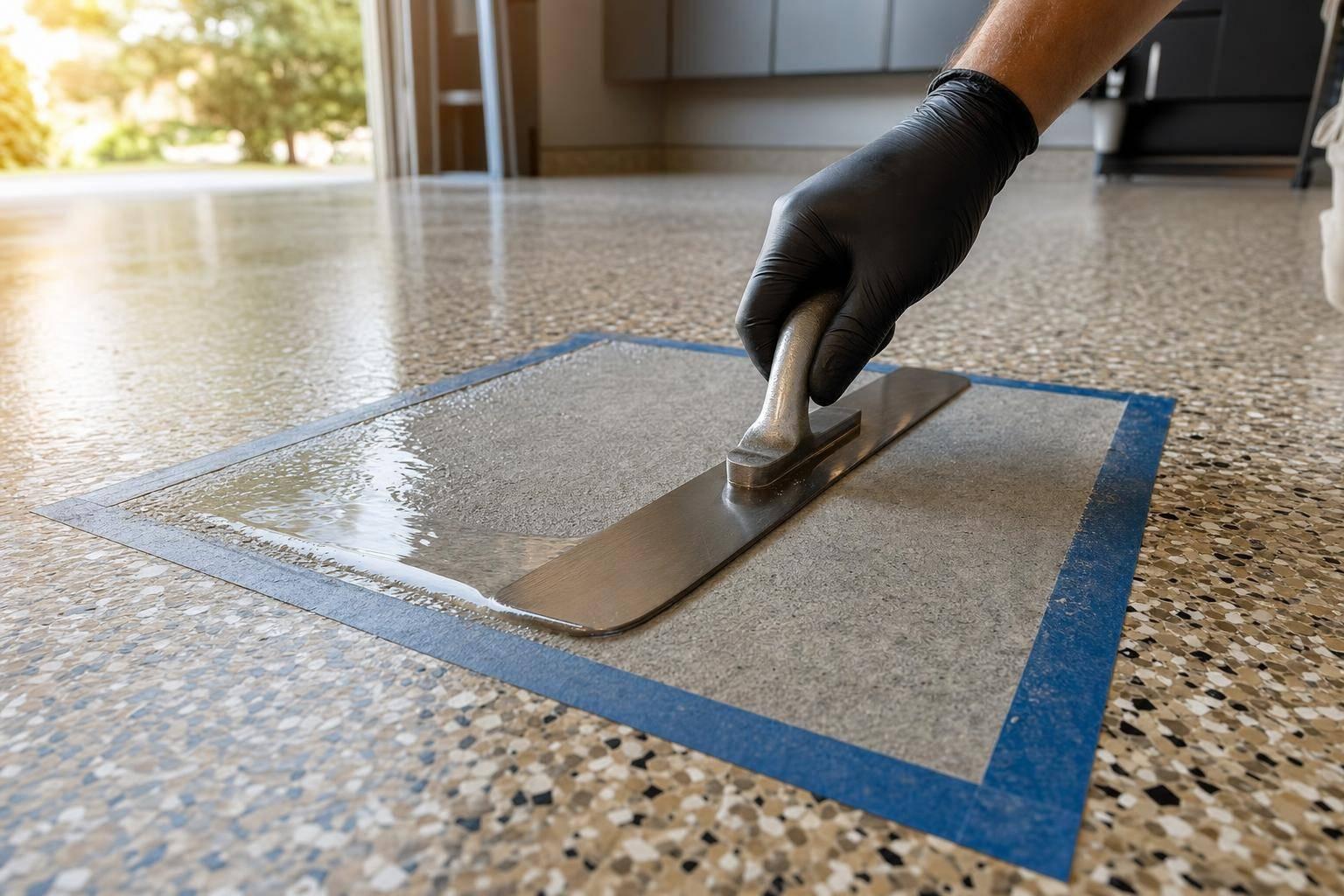
If the claim is approved, the repair is often local instead of a full redo. The damaged area is prepped, and that section is recoated. Since polyurea cures fast, the floor can often go back into service the same day.
That short turnaround affects polyurea vs. epoxy warranty and cost differences, which the next section covers.
Warranty Repairs vs. Repairs Without Coverage
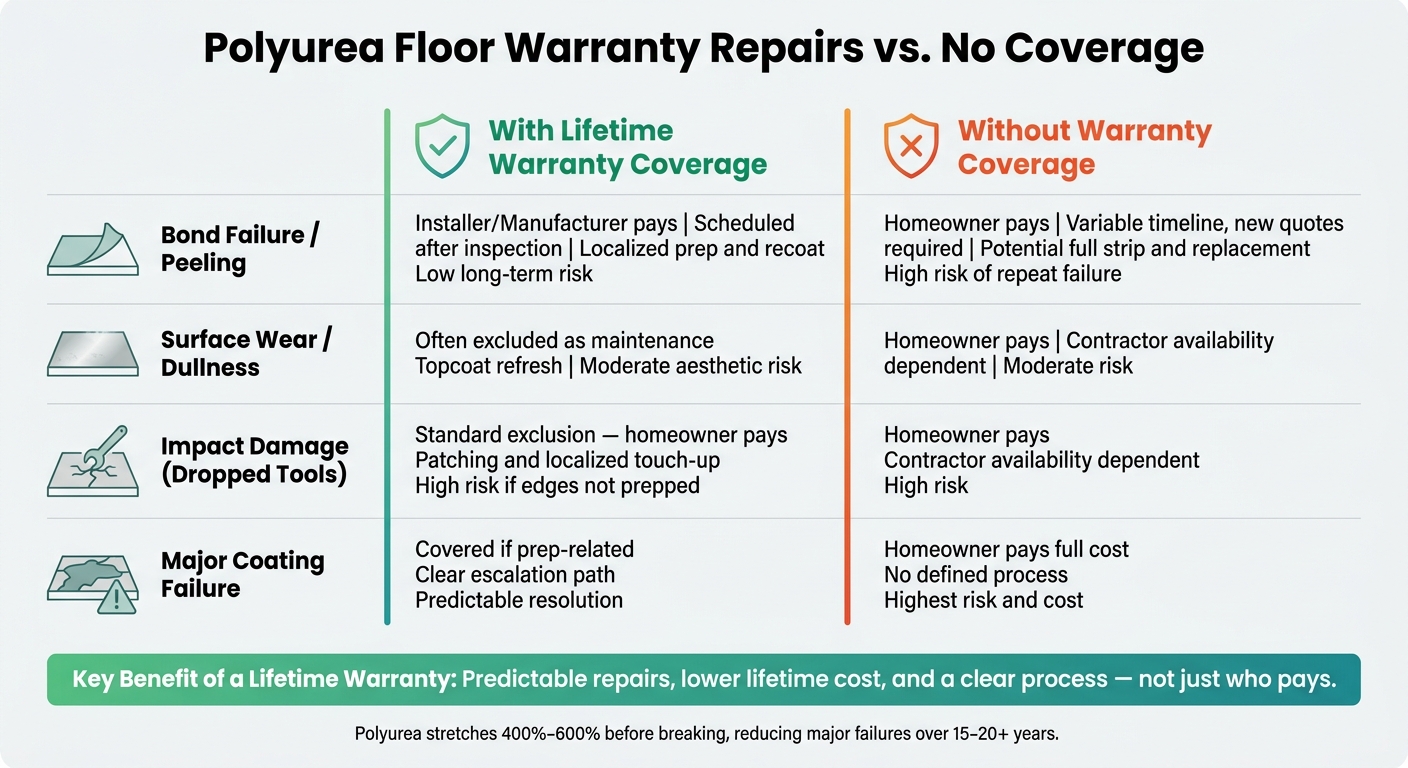
The table below shows how coverage changes the repair experience in four common cases:
| Scenario | Who Pays | Typical Response Time | Scope of Repair | Long-Term Risk |
|---|---|---|---|---|
| Bond Failure (Peeling) | Installer/Manufacturer (under warranty) | Scheduled after inspection | Localized prep and recoat of affected section | Low; system integrity is restored |
| Surface Wear/Dullness | Homeowner (often excluded as maintenance) | Dependent on contractor availability | Topcoat refresh | Moderate; purely aesthetic |
| Impact Damage (Dropped Tools) | Homeowner (standard exclusion) | Dependent on contractor availability | Patching and localized touch-up | High; if not prepped, edges may peel |
| Major Failure (No Warranty) | Homeowner | Variable; requires new quotes | Potential full floor strip and replacement | High; risk of repeat failure if prep is poor |
The biggest change a warranty brings isn’t only about who pays. It’s about predictability. You know who to call, what the next step looks like, and about how long the process may take.
Without coverage, every repair can feel like a whole new project. You’re getting new quotes, waiting on timelines, and taking on more out-of-pocket cost. The main upside of coverage is simple: more predictable repair handling and lower lifetime cost.
Long-Term Durability and Cost Benefits of a Lifetime-Backed System
Why Polyurea Systems Need Fewer Major Repairs Over Time
When a floor is installed the right way, one of the biggest payoffs is simple: fewer major repairs later.
Polyurea stands up well to wear, impact, chemicals, and freeze-thaw movement. That means most damage tends to stay small instead of turning into big failures. In North Idaho and Eastern Washington, that matters a lot. Temperatures can swing from well below freezing in winter to hot summer afternoons, and concrete moves with those changes.
Polyurea can stretch 400% to 600% before breaking, which helps it move with the slab instead of cracking or lifting at the edges. That flexibility is a big reason these systems tend to hold up better over time.
How Strong Warranty Programs Support Better Installation Standards
That kind of long-term performance doesn’t happen by accident. It depends heavily on how the floor is installed, and a warranty-backed job tends to push the installer to do the work right from the start.
A lifetime warranty puts pressure on prep from day one. If a floor fails because of poor prep, that issue comes back to the installer. So there’s a clear reason to be thorough with a concrete surface prep inspection:
- Mechanical grinding
- Crack repair
- Moisture testing
- Using matched coating materials
Croc Coatings uses the Penntek Evolution system, which is made for high-use, freeze-thaw-prone floors in the Inland Northwest. A one-day install also helps cut the chance of dust, debris, or moisture interfering with the bond.
Put plainly, the discipline needed to stand behind a floor for the life of the home usually leads to a better result from the start.
Lifetime-Backed Polyurea Floor vs. Bare Concrete or Non-Warrantied Coating
Lower repair frequency only means so much if it doesn’t also cut long-term cost. That’s where the numbers tend to tilt in favor of a lifetime-backed system.
Bare concrete stains, creates dust, and wears down faster. Over time, that often means repeated crack patching, sealing, and repainting. Non-warrantied coatings usually come with a mid-range upfront price, but they can peel or develop hot tire pickup after only a few years. Then you’re paying for re-coats that can come close to the cost of doing it right the first time.
A lifetime-backed polyurea floor costs more upfront. But over a 15–20+ year span, fewer major failures and lower out-of-pocket repair costs can make total ownership cost lower than either bare concrete or a coating without a warranty.
Protecting Your Warranty and Planning Simple Repairs
Records, Maintenance, and Early Warning Signs to Watch For
Small floor problems are a lot easier to deal with when you catch them early and keep a paper trail. Set up a warranty folder with your written warranty, installation date, floor color or flake blend details, and any records showing professional surface prep and moisture testing. Keep the written warranty with your install records. That paperwork can help show there’s a defect before a small issue turns into a dispute over the whole floor.
Daily care is pretty simple. Sweep up debris on a regular basis, and clean spills quickly, especially oil, gasoline, or road salt, before they sit on the surface. Keep an eye out for bubbling, peeling, delamination, cracking, chipping, discoloration, or unusual wear patterns in certain spots. If bubbling shows up, report it right away. It can point to moisture vapor under the coating.
If something does go wrong, good documentation can move the claim review along faster.
What to Include for Faster Repair Approval
When you contact your installer about a possible warranty issue, give them enough detail to review it without a lot of back-and-forth. Include:
- Wide-angle and close-up photos of the affected area
- The specific location on the slab, such as near the garage door or in the center of the basement floor
- The date you first noticed the issue
- Any recent exposure to heavy equipment, harsh chemicals, extreme temperature shifts, or moisture
That kind of detail helps sort out whether the problem falls under the warranty or sits outside the coverage terms.
Conclusion: What a Lifetime Warranty on Polyurea Floors Is Actually Worth
Polyurea floors are tough, but they’re not damage-proof. A lifetime warranty helps cut down the uncertainty when something goes wrong. You know who handles the issue, how the repair process works, and how fast it may be addressed.
For homeowners and small business owners in North Idaho and Eastern Washington, that peace of mind matters. Seasonal temperature swings can put real stress on floor coatings over time, which is why the Penntek Evolution system from Croc Coatings is built for the region’s conditions. Keep your records in one place, stay on top of basic care, and report issues early to make repairs easier.
FAQs
How do I know if my floor issue is covered?
Croc Coatings’ warranty covers specific performance failures, including peeling, chipping, cracking, delamination, and UV-related yellowing or fading. It also includes 10-year protection for automotive spills like oil or gasoline, as long as you clean them up within 20 minutes.
The warranty applies to manufacturing defects and installation-related performance issues. But it doesn’t cover physical damage, such as scratches, burns, or impact marks. It also doesn’t cover structural concrete issues like cracking or settling.
For the fine print, check your warranty documents or contact Croc Coatings directly.
What should I do before filing a warranty claim?
Before you file a warranty claim, check two things first.
Make sure you activated the warranty by registering it within 30 days of installation. Then confirm that you followed all cleaning and maintenance guidelines, since improper care can void your coverage.
Next, pull together your installation paperwork and any records of professional maintenance. Once you have those on hand, contact your contractor and explain the issue clearly.
Can a small damaged area be repaired without replacing the whole floor?
Yes. Small damaged spots can often be repaired without replacing the whole floor.
For warranty-covered problems like peeling, chipping, or delamination, Croc Coatings usually fixes or replaces only the damaged areas instead of tearing out parts of the floor that are still in good shape.
Check your warranty documents or contact Croc Coatings to see if your case qualifies.