Revamp Your Outdoor Space with a Patio Coating Planner
Transforming your patio doesn’t have to be a daunting task. With the right tools, you can achieve a professional-looking finish that boosts your outdoor space’s appeal and durability. A well-planned approach to coating your patio floor ensures you pick the perfect materials and design and quantities, saving you time and money on the project.
Why Planning Matters for Patio Finishes
Every patio is unique—whether it’s the size, the surface type, or the vibe you’re going for. That’s where a thoughtful planning tool comes in handy. By calculating the exact area and matching it with a suitable product, you avoid overbuying or running short mid-project. For instance, knowing whether your concrete deck needs an acrylic layer or if your wooden patio requires polyurethane can make all the difference in longevity and aesthetics.
Tips for a Flawless Application
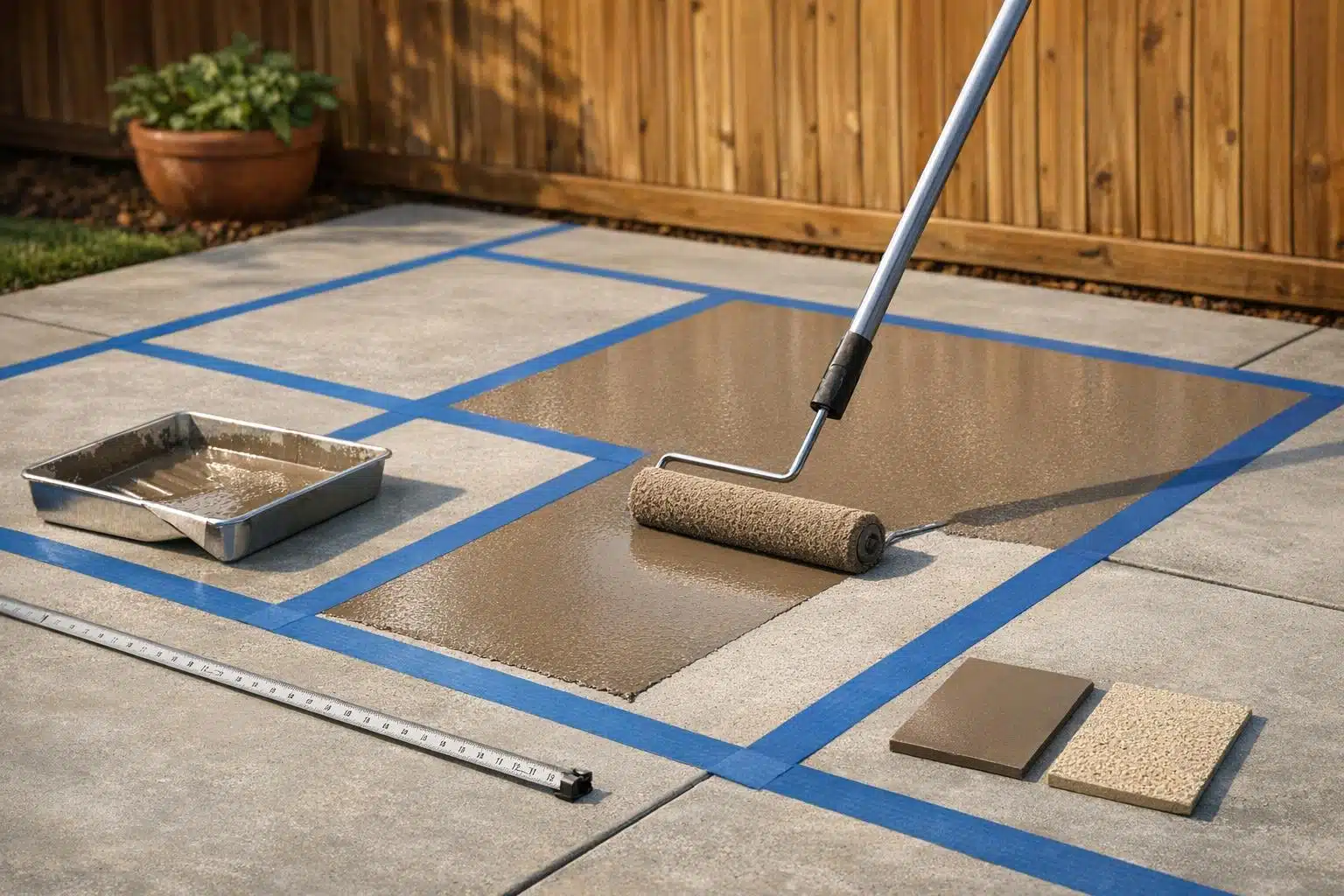
Before you start, check the weather forecast—coatings need dry, mild conditions to set properly. Prep your surface with proper cleaning and testing, and consider a test patch to see how the finish looks. With these steps, your outdoor area will not only look stunning but also stand up to the elements for years. This is especially important if you need weatherproof coatings for harsh climates.
FAQs
How accurate is the coating quantity estimate?
Our tool uses a standard coverage rate of 250 square feet per gallon, which is a solid baseline for most coatings. But keep in mind, actual coverage can vary based on your patio’s condition, porosity of the material, and how many layers you apply. If your surface is rough or you’re planning multiple coats, you might need a bit more. It’s always a good idea to grab an extra gallon just in case!
Which coating works best for my patio material?
It really depends on what your patio is made of. For concrete, we usually suggest an acrylic coating—it’s durable and holds up well outdoors. Stone surfaces pair nicely with a sealant to protect against weathering, while wood often benefits from polyurethane for a tough, long-lasting finish. Our tool will recommend the best match based on your input, but feel free to consult with a local expert if your patio has unique quirks.
Does the finish type affect the coating process?
Yes, the finish—whether matte, satin, or glossy—can influence both the look and application. Matte finishes are great at hiding small imperfections but might need a little extra care during cleaning. Glossy finishes enhance shine and are easier to wipe down, though they can show scratches more easily. Satin sits in the middle with a subtle sheen. Our tool offers a quick tip based on your choice to help you plan the application and maintenance.