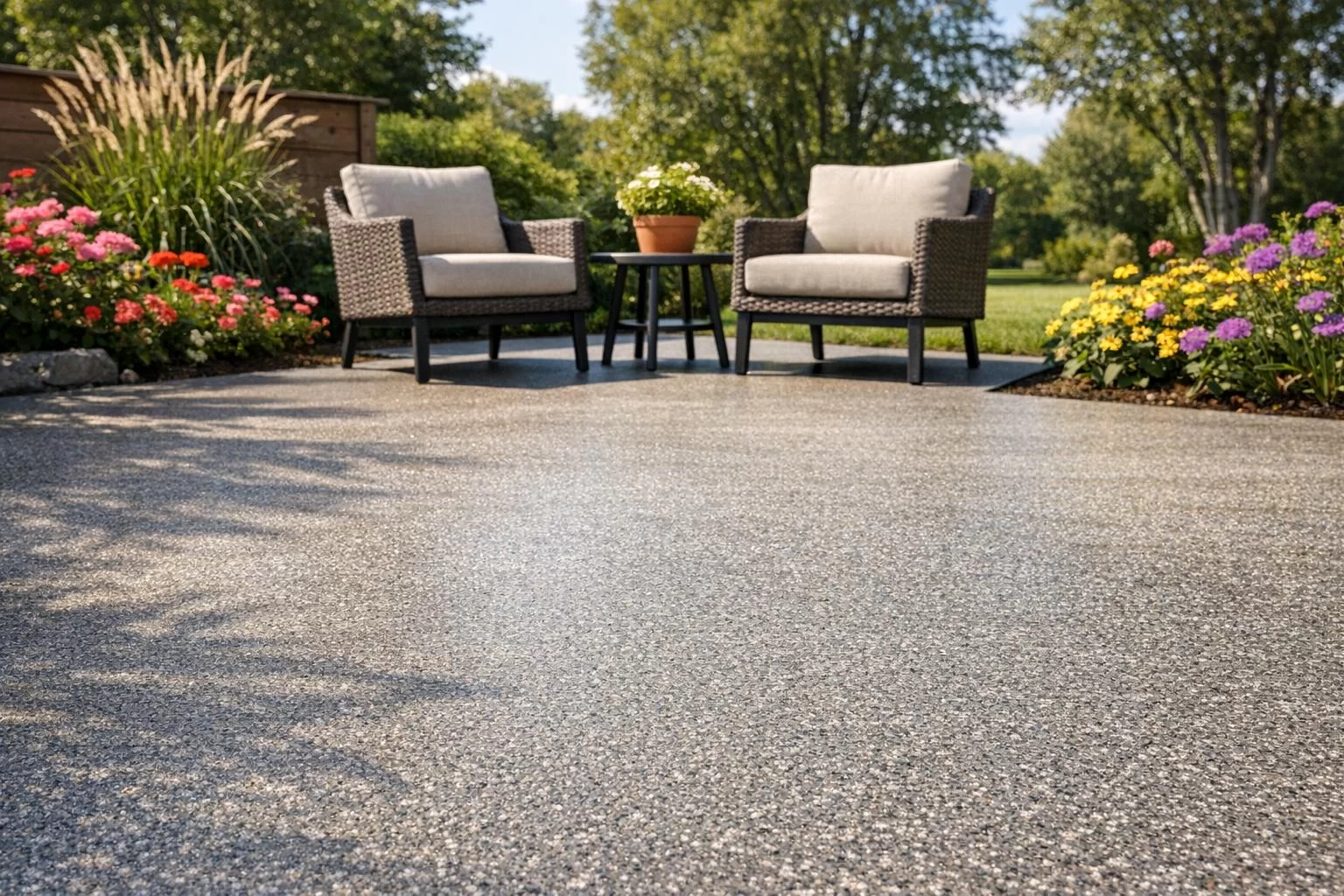
Once you have determined your safety needs, you can budget for slip-resistant patio coatings to ensure your project remains cost-effective.
Keep Your Patio Safe with the Right Slip Resistance
When it comes to outdoor spaces, safety is everything. A patio should be a place for relaxation, not a spot where slips and falls lurk around the corner. That’s where understanding the right friction level for your surface coating comes in. Whether your area is constantly exposed to rain or tucked away in the shade, choosing a protective layer with adequate grip can make all the difference. You can also use our patio coating design selector to find the perfect style and texture for your space.
Why Safety Ratings Matter for Outdoor Surfaces
Wet concrete or slick stone can turn dangerous fast, especially if young kids or older adults are using the space. Environmental factors play a huge role—think about how often your patio sees water or how much foot traffic it gets. A tailored approach to surface protection ensures you’re not just guessing but making an informed choice. Tools like our estimator simplify this by analyzing your specific conditions and suggesting a friction coefficient that fits.
Beyond the Basics
Don’t stop at just picking custom patio coatings. Regular maintenance, like clearing debris or checking for wear, keeps your outdoor area secure over time. With a little care and the right safety measures, your patio can stay a worry-free zone for years.
FAQs
Why does slip resistance matter for patio coatings?
Slip resistance is crucial because patios can get slick, especially when wet. A good coating with the right friction level prevents falls, particularly for vulnerable folks like kids or seniors. Think of it as a safety net—without it, a simple rainstorm could turn your outdoor space into a hazard. Our tool helps you pick a rating that matches your specific setup.
How is the slip resistance rating calculated?
We look at a few key factors: where your patio is located (shaded or exposed), the material it’s made of, and who’s using it most often. Exposed, wet areas or spaces used by children or the elderly get a higher risk score, so we suggest a stronger friction coefficient (0.6 or above). Shaded spots with general use might only need a moderate rating (0.4-0.5). It’s all about balancing safety with your unique situation.
Can I trust the recommended rating for my patio?
Absolutely, though it’s a starting point. Our recommendations are based on standard safety guidelines for outdoor surfaces, factoring in real-world risks like weather and user needs. That said, every patio is different, so consider consulting a local contractor for a hands-on assessment if you’re unsure. We’re here to guide you, but your specific conditions might need a tweak or two.